
Tool 04 · Foundation
Presence
Your body is at the table. Your attention is in the email you sent at four. Twenty seconds brings you back.
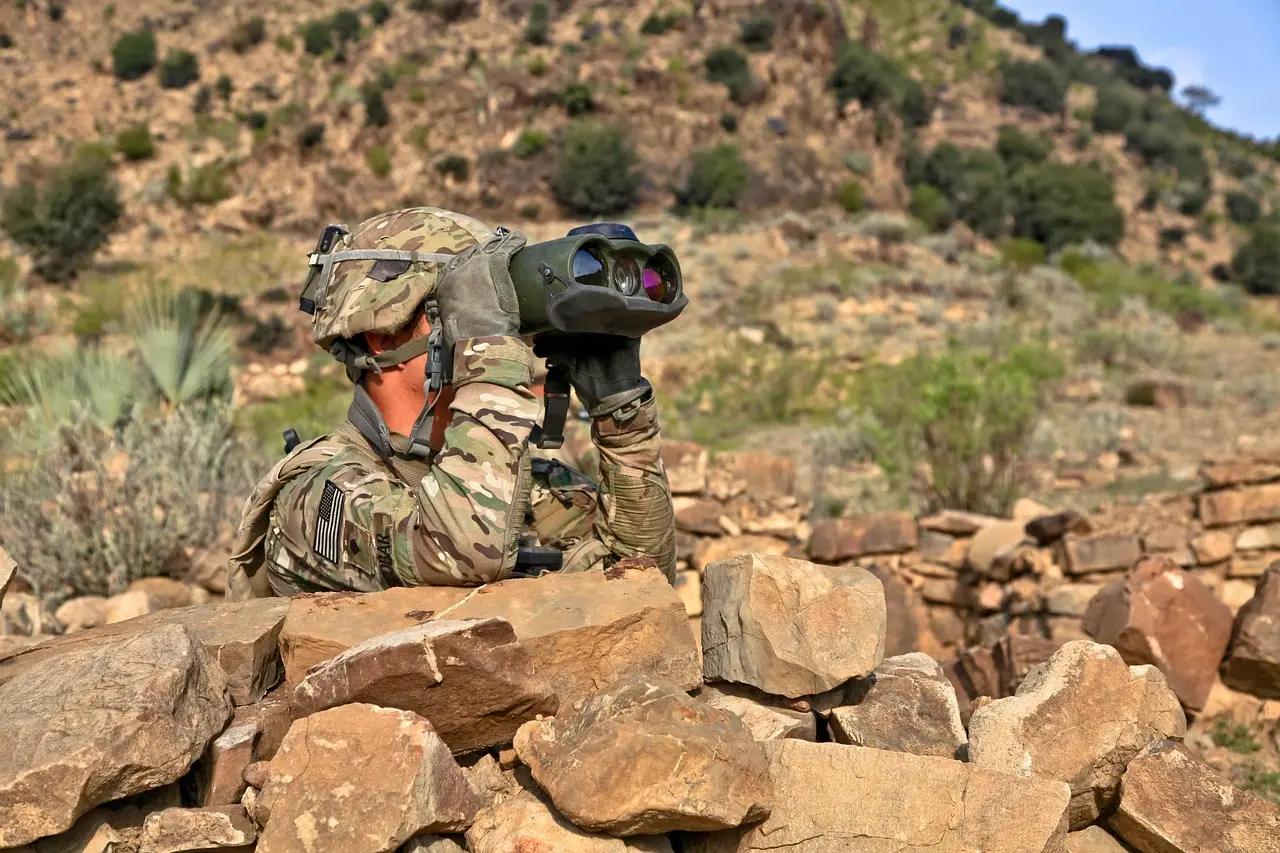
The Marine Corps stood up its Combat Hunter program in 2007 because of a specific and expensive failure. Marines were walking past the signals that preceded an ambush — the street that had emptied, the shopkeeper who had shut early, the one man watching them instead of ignoring them. They were physically on the patrol and mentally somewhere else, and that gap was measured in casualties.
What the training did not do was tell them to concentrate harder. Exhortation had already been tried and does not survive contact with the fourth hour of a patrol. Instead it taught men to name what their senses were reporting, out loud, on a schedule, until observation stopped being a mood and became a procedure. Baseline, then anomaly. What is normal here, and what is not. Marines who ran it started reading ground the way a tracker does, and the change was not that they cared more. It was that they had been handed a repeatable way to put their attention somewhere specific.
The same gap runs through an ordinary life at much lower stakes and much higher frequency. A man is at his own dinner table with his attention still inside an email he sent at four, and the people in front of him can tell, because attention is visible and everyone reads it. Left alone, attention drifts to whatever is unresolved — that is its default, not a personal failing. Naming what the senses are actually reporting is the fastest way to hand it a location, because the senses only ever report from here.
Twenty seconds, three channels, and you are back in the room your body never left.
The Twenty-Second Return
Three senses, named deliberately, put your attention back in the room your body is already in.
- 1Name three things you can see. Say them silently, specifically.
- 2Name two things you can hear that you had filtered out.
- 3Name one thing you can feel — the chair, the floor, your jaw.
- 4Take one breath without managing it. Just notice it happen.
- 5Return to the conversation. Twenty seconds, start to finish.
Presence is not a mood, it is an address. Attention has to be somewhere, and left alone it goes to whatever is unresolved. Naming sensory detail is the fastest way to hand it a location, because the senses only ever report from here.
You are not in the room. Your body is at the table. Your attention is in the email you sent at 4 p.m. She asked you something twenty seconds ago and you are assembling an answer from context rather than from listening.
When to Reach for It
Presence isn’t something you owe every second of every day. It’s something specific moments demand and don’t get, because your attention has already left the room before your body caught up. Reach for it here:
- Your daughter is telling you about her day and you’re nodding along while mentally finishing the email you left open on your laptop.
- Your friend is telling you something hard — a diagnosis, a job loss, a marriage falling apart — and you’re already reaching for your own similar story to tell him.
- You’re in a work meeting, nodding, while your phone sits face-up on the table and your eyes drift to it every time it lights.
- You’re lying next to your partner in bed, both of you on your phones, no conversation, and it’s been like this most nights this month.
- You walk in the front door still running the last conversation from work, and your kid runs up to show you something, and you look at it without actually seeing it.
Every one of these moments looks harmless from the outside. Nobody’s shouting. Nothing’s on fire. That’s exactly what makes presence the tool nobody reaches for in time — the cost of skipping it doesn’t show up as a single dramatic failure. It shows up as a slow accumulation, a person across the table who has quietly learned that your attention is not something they can count on, long before either of you would call it a crisis.
There’s a second category worth naming, distinct from the interpersonal one: moments where you’re not disconnected from another person but from your own body and your own senses. You eat lunch at your desk and couldn’t describe what it tasted like. You drive home and arrive with no memory of the last ten minutes of road. You walk through a genuinely nice evening — good weather, no urgent problem, nothing wrong — and somehow experience none of it, because your attention was three hours ahead, rehearsing tomorrow. Presence applies here too, and arguably it’s the harder version to catch, because there’s no other person in the room to notice you’ve left.
The Mechanism
People read absence with more precision than either of you realizes. A half-second delay before you respond. Eyes that flick toward a screen and back. A question answered with the wrong level of detail — too generic, because you caught the last three words instead of the whole sentence. None of this requires conscious detection on the other person’s part. Their nervous system clocks it the way it clocks any mismatch between what someone is saying and how someone is actually attending, and it files the conclusion before either of you has spoken another word: I am not the priority right now.
Presence works because it closes that gap. When your attention is fully on one person, in one place, doing one thing, you produce responses built from what actually happened instead of from a guess at what probably happened. Your questions land on the real thing instead of the adjacent thing. Your face does the small, unconscious work of matching what you’re hearing — a flicker of concern, a genuine laugh a half-beat after the joke instead of on a delay. None of that is performable at scale for very long. It’s a byproduct of actually being there, and its absence is just as legible as its presence, whether or not anyone in the room could name what’s missing.
There’s a compounding effect underneath the single-moment version. Every conversation where you were fully there gets banked as evidence. Every one where you weren’t gets banked too. Nobody keeps a literal tally, but the sum shows up eventually as a felt sense of whether you’re a safe place to bring something that matters — the kind of question a person decides before they consciously ask it, usually by testing you with something small first and watching how you handle it.
There’s also a cost that runs the other direction, back onto you, that most explanations of presence skip entirely. A mind constantly split across the present moment and some other place — the next task, the last conversation, a hypothetical future problem — never gets the chance to actually finish processing anything. Half-attended experiences don’t fully encode. You accumulate a life full of moments you were technically present for and can barely remember, because your attention was never fully on any single one of them long enough to store it properly. Presence isn’t only a gift you give other people. It’s the mechanism by which your own life becomes something you actually lived instead of something that happened somewhere nearby while you were thinking about something else.
What Most Men Do Instead
He’s listening to reply, not to understand. Somewhere around the second sentence of what the other person is saying, a second track starts running in his head — not “what is he telling me” but “what am I going to say back.” By the time the other person finishes, he’s not responding to their actual point. He’s responding to the point he predicted they’d make, three sentences ago, which is close enough most of the time that nobody notices the substitution — until the moment it isn’t close enough, and the response lands sideways, and the other person has to explain themselves twice.
He also does something that looks like presence and isn’t: he maintains eye contact and nods at the right intervals while his mind runs an entirely separate errand. Call it performed attention. The body language checklist gets satisfied — face forward, eyes on target, periodic nod — while the actual attentional resource has left the building. This one is dangerous specifically because it’s convincing. He believes his own performance, walks away thinking he was present, and only learns otherwise when he’s asked a follow-up question about something he supposedly just heard and has nothing.
A third pattern shows up mostly with his phone. It’s face-down, which he’s decided counts as put away. It buzzes. He doesn’t pick it up — that would be obviously rude — but some fraction of his processing capacity is now allocated to wondering who it was and what it said, running in the background for the next several minutes whether or not he’s aware of the drain. The conversation continues. He’s in it less than he was ninety seconds ago, and neither he nor the other person could point to the exact moment it happened.
Underneath all three habits sits a quiet, mostly unexamined belief: that presence is passive, that it costs nothing extra to give, that being physically in the room is most of the job. It isn’t. Presence is an active expenditure of a finite resource, and treating it as free is exactly how it gets spent on the wrong things without anyone deciding to spend it that way.
A fourth pattern deserves its own mention, because it looks like the opposite of distraction and functions the same way: he’s fully attentive, but he’s attentive to fixing. The other person is halfway through describing a problem and he’s already three moves into a solution, waiting for a pause to deliver it. He believes this is presence — he’s tracking every word, after all — but what he’s tracking is the problem, not the person. The moment he interrupts with the fix, the other person learns the same lesson a distracted man teaches, just by a different route: that what they were actually saying mattered less than what he was going to do about it.
What It Looks Like Done Right
Call him Marcus. Tuesday evening, his daughter is nine, and she’s been talking for two minutes about a disagreement with a friend at school — the kind of story that, to an adult ear, sounds like nothing, resolved itself an hour later, no lasting damage. Marcus has had a long day. There’s a message from his boss he hasn’t answered, sitting in his pocket, and he can feel the pull of it the entire time she’s talking.
He puts his phone in the other room before she starts, not during — the decision happens before the conversation, not in the middle of it, because he’s learned that trying to set the phone down once someone’s already talking means half the conversation is spent negotiating with himself about it instead of listening. He gets down to her eye level instead of half-listening from across the kitchen while he loads the dishwasher.
When she finishes, he doesn’t reach for the first available response — “that sounds tough, sweetie” — the kind of line that could apply to literally anything she might have said. He asks one specific question pulled from something she actually said: “What did you say back when she said that in front of everyone?” The question only exists because he was tracking the actual content, not the general shape of a nine-year-old having a hard day.
She answers, and something shifts in how she’s talking — faster, more detail, the story opening up instead of winding down, because she’s just registered, without being able to say so, that he actually heard the specific thing that stung. The conversation runs four more minutes than it would have otherwise. He never says the words “I’m listening.” He doesn’t need to. The question already said it.
Compare that with a version of Marcus who’s technically in the room — phone face-down on the counter, half his attention still composing the reply to his boss. That Marcus says “that sounds tough, sweetie,” and it isn’t wrong, exactly. It’s just generic enough that she can feel the generic in it, even at nine, even without the vocabulary to explain what she’s feeling. The conversation ends thirty seconds later than it needed to, not four minutes longer. The difference between those two versions of Marcus isn’t effort or love — both versions love her the same amount. The difference is entirely where his attention actually was.
Notice what present Marcus didn’t do. He didn’t announce that he was being present — no “okay, I’m putting my phone away so I can really listen to you,” a line that turns the moment into a performance about his own effort. He didn’t over-invest either, turning a two-minute playground disagreement into a twenty-minute therapeutic excavation of her feelings about friendship. He matched the scale of his attention to the scale of what she brought him. That match is itself part of the skill — presence isn’t maximum intensity applied everywhere. It’s the right amount of attention, fully given, to whatever is actually in front of you.
The message he unlocked from his boss was still sitting there when the conversation ended, four minutes later than the version where he half-listened. He answered it in ninety seconds, easily, because nothing about it had actually required his attention during those four minutes — it had only felt urgent because it was reachable. That’s usually the trade being weighed, even if it never gets named out loud: something reachable versus someone in front of you, and reachable wins by default unless a man deliberately chooses otherwise, ahead of time, before the pull starts.
How to Know It’s Working
Check these against your last real conversation — not a hypothetical one, the actual last time someone was talking to you about something that mattered to them. Answer each one specifically, with a real memory attached, not a general impression of how you usually show up.
- Can you repeat, close to word for word, the specific thing they said that mattered most — not the topic, the actual sentence — or only the general shape of what they were talking about?
- Where was your phone during the conversation? Not whether it buzzed — where it physically was, and whether you knew.
- Did your first response answer the thing they actually said, or the thing you predicted they’d say based on how the sentence started?
- At any point, did you catch your own attention drifting and pull it back on purpose, or did you not notice it had left until the conversation was already over?
- On a scale of one to five, how much of the conversation could you reconstruct in detail an hour later — not the topic, the actual texture of what was said?
Four or five strong answers means you were actually there. A weak showing on the first one — not being able to reconstruct the specific sentence — is the single most reliable tell. General topic recall is cheap and requires almost no attention. Specific sentence recall requires you to have actually been listening in real time, and it’s very hard to fake after the fact.
One more check worth running, less about the conversation and more about you: how did your body feel by the end of it? Genuine presence has a physical signature — a kind of settled tiredness, the ordinary cost of having actually used your attention rather than let it idle. Distraction dressed up as presence tends to feel oddly light afterward, almost restless, because very little was actually spent. If you walk away from a supposedly attentive conversation feeling like you have surplus energy you didn’t use, that’s worth investigating rather than taking as a good sign.
Failure Modes
- If you find yourself nodding and maintaining eye contact while running an entirely separate mental thread, you are performing presence, not practicing it — and the performance eventually gets caught by a follow-up question you can’t answer. Catch the drift and say so out loud: “Sorry, say that again, I drifted.” That costs less than getting caught faking it.
- If you’re mentally rehearsing your response while the other person is still talking, you are doing conversational preparation, not listening — and your response will answer the sentence you predicted instead of the one that was actually said. Drop the rehearsal. Trust that you’ll have something to say once they’ve actually finished; you almost always do.
- If your attention only shows up for the parts of the conversation that are interesting to you, and drifts for the parts that matter more to the other person, you are being present selectively, which the other person experiences as being present conditionally — and conditional presence reads, eventually, as no presence at all. Track where your attention drifts and notice whose interest it’s tracking.
- If you keep your phone within reach “just in case,” you are treating presence as the default state that a notification is allowed to interrupt, when it needs to be the other way around — the conversation is the default, and the phone is the thing that has to earn its way back into the room. Put it somewhere you’d have to stand up to reach.
- If you’re fully present but only when the conversation is going well, and you check out the moment it turns toward conflict or something uncomfortable, you are doing fair-weather presence — the exact conditions under which presence matters most are the ones your attention is fleeing. Notice the urge to leave the room mentally the instant things get hard, and stay one extra beat past where you’d normally check out.
- If you’re present with strangers and acquaintances — genuinely engaged at a dinner party, fully attentive with a colleague — but noticeably less present with the people you see every day, you are spending your best attention where it’s cheapest to give and rationing it where it’s actually needed. Familiarity makes presence feel optional because the relationship seems durable enough to survive the neglect. It usually is, for a while. That’s what makes this failure mode so easy to run for years without consequence, right up until it isn’t.
Progression
Beginner. Practice with low-stakes, short conversations — the barista, a coworker asking how your weekend was, a call with your mother that usually runs on autopilot. The only goal at this level is noticing when your attention has left, because most men have never trained that specific awareness and can’t catch the drift in real time yet. Pick one conversation a day, five minutes or less, and afterward ask yourself honestly whether you were actually there the whole time or only for the parts you found interesting.
Keep the stakes low on purpose. You’re not trying to perform well in front of anyone yet. You’re building the sensor — the internal flag that fires the moment your attention has quietly left the room — and that sensor needs dozens of low-cost reps before it’s reliable enough to trust under real conditions.
Under load. Move to conversations with real emotional weight — a friend telling you something difficult, a disagreement with your partner, a conversation with your kid about something that actually worries him. This is where presence gets expensive, because the instinct to check out is strongest exactly when someone needs you most present. Being fully there when the topic is uncomfortable, when your own defensiveness is rising, when part of you would rather be anywhere else — that’s the actual skill being tested here, not the version that only shows up when conversation is easy.
Expect this level to feel harder than it sounds. Attention doesn’t just wander under load — it actively wants to leave, toward planning your own response, toward defending yourself, toward the exit. Noticing that pull without acting on it is most of what this stage is training.
A specific marker for this stage: track how long you can stay present after the other person says something that stings — a criticism of you, a piece of news you didn’t want, an accusation that lands somewhere true. Most men’s presence collapses at exactly that instant, replaced by internal rehearsal of a defense. The skill at this level isn’t avoiding the sting. It’s staying attentively in the room for the ten or fifteen seconds immediately after it, before you’ve decided what to say back.
Advanced. Sustain presence across an entire evening or a full day with someone, not just single conversations — a full dinner with your family, a weekend with your partner, a day where your phone stays in another room for hours at a stretch instead of minutes. This is where presence stops being a skill you deploy in individual moments and becomes a baseline you operate from, the thing that has to be interrupted rather than the thing you have to remember to activate.
Few men train to this level, because the return on any single hour of it is invisible — nobody claps when you’re present for an entire Sunday. The return shows up months later, as a family that has quietly learned your attention is a reliable thing, not a lucky exception on the days you happened to have the bandwidth.
At this level you’ll also notice presence starting to run in reverse — other people around you becoming more present themselves, without any instruction from you, simply because sustained attention tends to be contagious in a room. A partner who’s spent years half-competing with a phone for your focus will, slowly, put her own down more often once she’s stopped needing to compete for it. That shift isn’t guaranteed and isn’t the reason to do the work. But it’s a common enough side effect that it’s worth naming as evidence the discipline is actually landing, not just costing you something with no return.
What’s Next
Presence is hardest to hold exactly when your body is flooded — angry, anxious, defensive — because that’s when attention naturally narrows to the threat instead of the person in front of you. Box Breathing is the tool that widens it back out; run three cycles before a conversation you already know will be hard.
Presence is also a trained skill, not a personality trait, and it responds to the same structure any trained skill does — deliberate reps, under increasing difficulty, over time. See Deliberate Practice for how to actually build a skill instead of hoping it improves on its own.
And presence is, underneath everything else, the first phase of observation — you cannot orient or decide well on information you weren’t actually present enough to take in. The OODA Loop starts with observing accurately, and accurate observation is impossible from a mind that’s already left the room.
Start with one conversation today. Not a plan, not a commitment to next week — one conversation, phone in another room, attention on the actual sentences instead of the topic. Notice what you catch that you would have missed. That single data point is worth more than a week of reading about why presence matters.
Editorial StandardsCorrectionsMedical DisclaimerAbout Our ContentAffiliate DisclosureSite Map
Run the Drill
- 1
Practice the one-conversation rule
Pick one conversation today — five minutes or less, low stakes, a barista, a coworker, a call with your mother — and commit to being only in that conversation. Put your phone in another room before it starts, not face-down beside you. Don't formulate your response while the other person is still talking; listen for what they're actually saying, not for the pause where you get to speak. Afterward, ask yourself honestly whether you were there the whole time or only for the parts you found interesting. This is the beginner rep: you're not performing well for anyone yet, you're training the internal sensor that notices the moment your attention has left the room.
- 2
Build the arrival ritual
Make the decision to remove the distraction before the conversation starts, not once it's already underway — trying to set the phone down mid-conversation means half the exchange gets spent negotiating with yourself instead of listening. Before you walk in the door, before she starts talking, put the phone in another room and decide who needs your attention next. The pull toward whatever is reachable always beats the person in front of you by default unless you choose otherwise ahead of time. Get down to eye level with the person rather than half-listening from across the room while you do something else with your hands.
- 3
Practice sensory anchoring under pressure
When you feel your attention pulled toward defending yourself or planning your exit — especially right after someone says something that stings, a criticism, unwanted news, an accusation that lands somewhere true — stay in the room for the next ten to fifteen seconds before you decide what to say back. Most men's presence collapses at that exact instant, replaced by internal rehearsal of a comeback. If your body is flooded — angry, anxious, defensive — run three cycles of box breathing before the conversation to widen your attention back out instead of letting it narrow to the threat. The skill is staying attentively in the room through the sting, not avoiding it.
- 4
Eliminate one distraction source per week
Identify the one distraction source doing the most damage to your presence this week — most often the phone kept within reach 'just in case' — and remove it. Put it somewhere you'd have to stand up and walk to reach, not face-down on the table beside you, because a phone that's merely face-down still runs a background process wondering who buzzed and what they said. Presence has to be the default state that a notification interrupts, not the other way around. Track for one week how many times you'd normally have glanced at it, and notice how many of those moments were actually urgent versus just reachable.
- 5
Debrief on presence, not productivity
After your next real conversation, check yourself against what actually happened, not your general impression of how you show up. Can you repeat close to word for word the specific sentence that mattered most, not just the general topic? Where was your phone, and did you know? Did your first response answer what they actually said, or what you predicted they'd say? Did you catch your attention drifting and pull it back, or not notice until the conversation ended? An hour later, could you reconstruct the actual texture of what was said, not just the subject? Weak recall of the specific sentence is the most reliable sign you weren't fully there.