
Tool 11 · Mastery
Process Visualization
Rehearse the sequence, not the outcome. The win is not the thing you practise — the steps are.
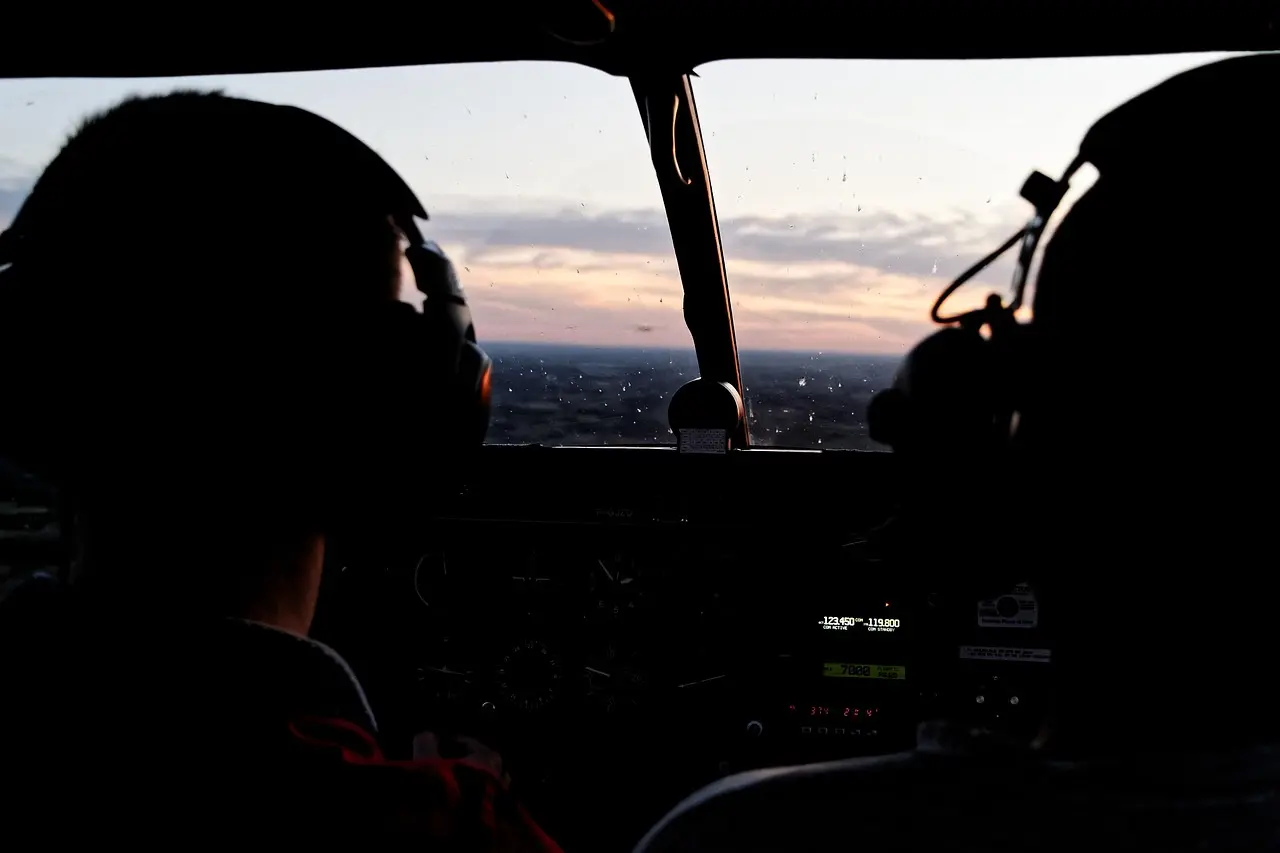
Military aviators call it chair flying, and there is nothing metaphorical about the name. A student pilot sits in an ordinary chair with his hands on controls that are not there and runs the sequence in real time — every switch, every radio call, every emergency memory item, out loud, at the speed it would actually happen. He does it until the sequence lives in his hands rather than on a laminated card he would have to find and read.
The practice is close to as old as military aviation and it survives because of what it does under failure. When the engine actually quits, the pilot who has chair-flown the procedure four hundred times does not retrieve it from memory. Memory is the first thing to go. He simply does it, because the pathway was built somewhere that stress does not reach as quickly. What he is never rehearsing during any of this is the landing, the debrief, or anyone’s approval. He is rehearsing the steps, including the ones where it goes wrong.
Men who visualise the win and skip this have it exactly backwards, and the research is unkind about it: picturing the outcome gives the nervous system a share of the reward without the work, and measurably reduces the effort people put in afterwards. Fantasy is not a rehearsal, it is an advance. The sequence is the only part you control and the only part you will be running when it starts, which makes it the only part worth practising.
Rehearse the Sequence
Rehearse the steps, not the trophy. The steps are the only part you control.
- 1Write the sequence as physical actions, in order, start to finish.
- 2Close your eyes and run it in real time. No fast-forwarding.
- 3Include the friction — the hostile question, the cold room, the nerves.
- 4Rehearse the recovery, not just the clean run. You will need that one.
- 5Five minutes, the night before and the hour before. Then stop.
Outcome fantasy and process rehearsal do opposite things. Picturing the win gives your nervous system the reward without the work and measurably reduces effort afterwards. Picturing the sequence builds the pathway you will actually be running when it starts.
What Process Visualization Actually Is
Process visualization is the mental rehearsal of the specific steps, obstacles, and contingencies required to achieve a goal — not the goal itself. Chris Hadfield proved what that’s worth 250 miles above Earth. Floating outside the International Space Station on a spacewalk, his eye suddenly filled with a mix of anti-fog solution and tears. Then his other eye did the same. He was completely blind, tethered to a hurtling metal box, with nothing between his face and the void but a pressurized suit. He didn’t panic. He opened a purge valve, let oxygen flow across his eyes, and waited. His vision returned in minutes. He finished the spacewalk.
That composure wasn’t luck or nerve. It was the product of thousands of hours spent on the ground rehearsing not the spacewalk going well, but the spacewalk going wrong — eye contamination, suit breach, communication failure — until the response to blindness in orbit was already loaded before it happened. Call that the Simulation Premium: the measurable advantage that comes from mentally rehearsing the process, especially its failure points, instead of the outcome.
This is one of 12 Mindset Tools in the Resilient Wisdom system, and it’s the one most people think they’re using when they’re not. Outcome visualization — picturing the trophy, the promotion, the finish line, the ideal body — creates a neurochemical reward for something that hasn’t happened yet. That reward reduces drive. Process visualization does the opposite: it pre-loads the resistance, the difficulty, and the adaptive responses, so encountering them in reality feels like a repeat. The Simulation Premium isn’t a metaphor. It’s a measurable neural phenomenon. And it changes performance in ways that show up in brain scans, strength tests, competition results, and operating room complication rates.
When to Reach for It
- You’ve got a hard conversation tomorrow and you keep picturing it going well instead of picturing what you’ll actually say.
- You’re about to walk into a room where you already know something will go wrong, and you don’t know yet what you’ll do when it does.
- You’ve rehearsed the outcome — the promotion, the win, the apology accepted — a dozen times and never once rehearsed the moment right before it, where things could still fall apart.
- You froze the last time something didn’t go according to plan.
- You’ve got fifteen minutes alone before something that matters and you’re about to spend them scrolling instead of preparing.
If two or more of those are true, close the tabs, sit down, and run the sequence in your head before you run it for real. Five minutes of process visualization tonight costs less than the twenty minutes of adrenaline-fogged improvisation waiting on the other side of walking in unrehearsed.
The Neuroscience of the Simulation Premium
In 1995, Harvard neuroscientist Alvaro Pascual-Leone ran an experiment that should have ended the “visualization is just positive thinking” argument permanently. He had one group practice a five-finger piano exercise for two hours a day over five days. A second group only imagined playing the same exercise — same duration, same schedule, never touching a keyboard. Brain scans showed that the motor cortex controlling those fingers expanded in both groups. People who only imagined playing rewired their brains in the same way people who actually played did. Mental rehearsal doesn’t prepare a person psychologically. It physically restructures the neural architecture of the brain.
Guang Yue’s team at the Cleveland Clinic pushed this further in 2004. Volunteers who spent twelve weeks doing “mental contractions” of their little finger — imagining flexing it with maximum effort, fifteen minutes a day, five days a week — increased finger strength by 35%. They never touched a weight. The brain learned to recruit more muscle fibers through imagination alone. This is where the Simulation Premium begins to look less like a mental trick and more like a training modality with measurable physiological effects.
But there’s a critical caveat in this research that almost nobody talks about. The neurological gains from mental rehearsal correlate with the quality and specificity of the visualization, not its emotional intensity. The volunteers who imagined flexing a finger didn’t get stronger by imagining the feeling of having strong fingers. They got stronger by imagining the precise motor sequence of flexing that specific muscle with specific effort. Process, not outcome.
The Simulation Premium comes from the detail and the difficulty, not the aspiration.
This is why outcome visualization — despite feeling powerful — is, at best, useless, and at worst, actively counterproductive. Vividly imagining achieving a goal registers as a shadow of the satisfaction that would come from actually achieving it. A neurochemical reward for something that hasn’t been done. That reward reduces drive. Gabriele Oettingen at New York University ran multiple studies confirming this: people who spent time vividly fantasizing about positive outcomes exerted less effort afterward than people who received no motivational input at all. The fantasy substituted for the work. The Simulation Premium evaporates the moment rehearsal shifts from process to outcome.
The mechanism that makes process visualization work is neural pre-loading. Mentally rehearsing a specific sequence of actions — including the points where the sequence gets difficult, unexpected, or requires adaptation — builds the response pathways before the event happens. When the event arrives and the expected difficulty materializes, there’s no improvising from scratch. It’s the execution of a plan the nervous system has already partially run. The surprise is diminished. The hesitation disappears. The Simulation Premium cashes out in the gap between “never been here before” and “been here a hundred times in my mind.”
In a landmark study at the U.S. Olympic Training Center, 90% of Olympic athletes and 94% of Olympic coaches reported using visualization as a core training tool. The athletes who described their visualization practice in more detail — who visualized specific technical elements, failure scenarios, and adaptive responses — outperformed those who described more general or outcome-focused visualization. The Simulation Premium scales with specificity. Vague rehearsal produces vague preparation. Detailed rehearsal produces detailed readiness.
There’s another dimension of this science that connects to every other tool in this system. Process visualization compresses the OODA Loop — the Observe-Orient-Decide-Act cycle that governs all performance under pressure. Pre-loading a scenario through mental rehearsal speeds up the Observe phase (recognition, because it’s been seen before), speeds up the Orient phase (the context and options already considered), and collapses the Decide phase toward automatic. The person who has visualized the process doesn’t just perform better in the moment — he lives in a faster version of real time. That’s the full Simulation Premium: not just better outcomes, but a compressed decision cycle that makes the gap between stimulus and effective response smaller than it is for anyone who skipped the rehearsal.
Process visualization also connects directly to Extreme Ownership. Mentally rehearsing the moment that requires stepping forward, owning the problem, and directing the response removes the hesitation that comes from encountering that moment cold. The decision about what kind of man shows up in that situation has already been made — in the mind, in advance. The live moment is just the execution of a decision already made. Bias for Action becomes easier after mental rehearsal for the same reason: uncertainty is the primary cause of hesitation, and visualization reduces uncertainty by pre-loading the most likely scenarios and the responses to them. Working the Problem is faster when the problem has already been worked in the head. Every tool in the mindset toolkit hits harder when deployed by someone who has rehearsed its application before the pressure arrives.
The neuroscience also explains why outcome visualization is worse than nothing in high-stakes situations. When Chris Hadfield was preparing for his spacewalk, visualizing himself completing it successfully would have produced a mild neurochemical reward and a false sense of readiness. Visualizing the eye contamination scenario produced something different: a pre-built response, a calm familiarity with the feeling of “this is wrong,” and a behavioral pathway that bypassed the panic response entirely. The Simulation Premium is earned by rehearsing the failure, not by imagining the success. Counterintuitive. Also one of the most important principles in this entire system.
The Mechanism Behind the Five-Step Protocol
The five-step drill above — walking the process instead of the outcome, war-gaming the failure points, including the sensation of difficulty, rehearsing at real-time speed, debriefing against reality — isn’t five separate techniques. It’s one mechanism: build a mental model detailed enough that when reality arrives, it feels like the second time through, not the first.
Most people skip steps three and four. A basic plan gets walked through, maybe one failure point gets identified, but the suffering never gets visualized and no real time gets invested in the critical moments. Those are precisely the steps that separate performance-changing visualization from the kind that feels productive and accomplishes nothing. The Simulation Premium is earned in the discomfort and the tedium. Comfortable and quick visualization practice isn’t building the premium. It’s performing a ritual.
The protocol pairs naturally with Box Breathing as an entry practice. One cycle of 4-4-4-4 before closing the eyes suppresses the Default Mode Network — the part of the brain that wanders and self-references — and sharpens attentional focus. Scattered attention produces blurry rehearsals. A breath-anchored mind produces high-definition ones. The difference in the quality of mental imagery between a distracted visualization and a focused one is the difference between a first-day sketch and a finished architect’s drawing. Both technically depict the same thing. Only one captures enough detail to be useful when standing in front of the real building.
For Deliberate Practice, the protocol serves as a diagnostic. Running the visualization and hitting a point where the mental model breaks down — where what comes next is unclear, or the rehearsed response doesn’t feel adequate — that’s the weakness Ericsson’s research says to target. Visualize to identify the failure point. Practice physically to address it. The Simulation Premium and deliberate practice form a feedback loop: visualization finds the gaps, physical practice closes them, better performance creates a higher-fidelity mental model, and the next visualization is more accurate.
What Most Men Do Instead
Most men do visualize. They just visualize the wrong thing.
You picture the deal closing. You picture the applause. You picture her saying yes, the board nodding, the number on the scale. You run the highlight reel — the best-case version, in soft focus, with the hard part edited out — and it feels like preparation because it’s vivid, because it produces an actual physical sensation of confidence sitting there on the couch. That sensation is real. It’s also a reward your brain just handed itself for nothing, which means it needs less of that reward later, which means less drive to go get it for real.
You skip straight to after. The presentation goes well in your head, so you never rehearse what you’ll say when someone interrupts you with a hostile question in minute four. The hard conversation goes well in your head, so you never rehearse what you’ll say when she doesn’t respond the way you scripted. Reality doesn’t run the highlight reel. Reality runs the whole tape, including the part where the plan meets a person who didn’t read it.

And when the moment arrives and it doesn’t match the highlight reel — because it never does — you’re improvising from zero, in public, for the first time, at the worst possible moment to be doing it for the first time.
What It Looks Like Done Right
Call him Ray. Thirty-six, sitting in his car at 8:50 PM in his own driveway, engine off, ten minutes before he walks in to tell his wife he lost his job that afternoon. He doesn’t picture her taking it well. He pictures the actual sentence: “I need to tell you something, and I need you to let me finish before you say anything.” He pictures her face going still. He pictures the specific question she’s most likely to ask first — not “is everything going to be okay” but “how much do we have saved” — and he decides, right there in the driveway, exactly how he’ll answer it: with the number, not a reassurance. He walks in at 9:00 PM. She asks the exact question he rehearsed. He already knows what he’s going to say — not because he’s calm, but because he already spent his panic in the driveway, alone, where it didn’t cost him anything.
Or picture a man named Greg, forty-eight, an assistant coach, fifteen minutes before halftime of a game his team is losing by eleven. He doesn’t picture the comeback. He pictures the locker room door opening on fifteen tired seventeen-year-olds who already believe they’ve lost, and he pictures the exact three sentences he’ll say before anyone else speaks — in order, out loud, twice, alone in the tunnel. When the door opens, he doesn’t need to find the words. He already has them.
Or a man named Deshawn, twenty-nine, a paramedic three months into the job, sitting in the cab of the ambulance during a slow stretch of the night shift. He runs a mental drill his training officer taught him: pick one call type — cardiac arrest, single-vehicle collision, overdose — and walk through his own hands doing the work, in order, out loud under his breath, including the part where the family is screaming and he has to keep working anyway. He does this most nights, for a call that may or may not come. Six weeks later, a call comes. His hands already know the order. The screaming doesn’t slow them down, because he already knows what screaming sounds like from the inside of that scene.
How to Know It’s Working
- Did today’s session include at least one moment where things went wrong, not just where they went right? (yes / no)
- Could you describe, specifically, the first sentence or first action of the thing you rehearsed — not just the feeling of doing it? (yes / no)
- On a scale of 1 to 5, how much of the rehearsal happened at the actual pace the real thing will happen? (higher is better)
- When the real thing happened, did any part of it feel like a repeat instead of a surprise? (yes / no)
- Afterward, could you name one specific gap between what you visualized and what actually happened? (yes / no)
Four or five yes answers, with a high number on the pacing question, means the Simulation Premium is being built. Fewer than that, and what happened was a daydream with better posture.
When It Isn’t Working
You visualize the win every time and you’re still anxious walking in.
You rehearsed the conversation and the other person said something you never considered, and you froze.
You’ve visualized the hard conversation for two weeks and still haven’t had it.
Your visualization sessions feel easy and pleasant, start to finish.
You compressed a twenty-minute presentation into a ninety-second mental highlight reel.
You never debrief afterward — you just move to the next thing.
Progression
- Beginner. Visualize something low-stakes and near-term — tomorrow’s gym session, a routine phone call — for five minutes, focusing only on the first physical action: picking up the phone, tying the shoes. The goal is building the habit of picturing steps instead of outcomes, and getting comfortable with a rehearsal that includes at least one small stumble.
- Under load. Visualize a genuinely difficult upcoming event — the hard conversation, the presentation with real stakes — including at least one failure point and the recovery from it. Ten to fifteen minutes, seated, eyes closed, no music, no distraction. This is where outcome drift shows up hardest, because the stakes make the highlight reel more tempting, not less.
- Advanced. Run a full real-time rehearsal of a high-stakes event, including multiple war-gamed failure points, followed by a written debrief afterward comparing what was rehearsed to what happened. This is Nicklaus’s routine before every single shot of his career, and Gawande’s routine before every complex operation — run as a discipline, not an occasional exercise. At this stage the rehearsal itself should feel like real work, not like relaxation.
Three Elite Performers Who Built the Simulation Premium
The Simulation Premium isn’t theory. It’s what elite performers independently discovered across domains that have nothing to do with each other. Here are three case studies where the premium is measurable, documented, and directly attributable to process visualization over outcome visualization.
Chris Hadfield: Emergencies Made Boring
Hadfield flew three space missions, commanded the International Space Station, and performed two spacewalks. He will say without hesitation that the most important skill he developed was visualization — specifically, the kind that made emergencies feel like repetitions of something already done a hundred times. Before every mission, Hadfield and his crew spent thousands of hours visualizing specific emergency sequences: not “handle the emergency calmly” but “reach for the emergency checklist with the left hand while the right hand moves to the communication panel. Key the mic and say these exact words. Move to this panel and turn this valve. The crewmate does this while I do that.” The sequence is choreographed at individual hand movements, rehearsed until automatic, visualized until the actual emergency — if it arrives — is just another repetition of something already run.
The Simulation Premium Hadfield accumulated wasn’t about confidence or calm. It was about removing surprise from situations that would paralyze unprepared people. When his eye filled with liquid 250 miles above Earth, the response was already loaded. The fear didn’t disappear — Hadfield has said explicitly that he was afraid. But the competence overrode the fear because the competence was already there, built in advance through visualization. That’s the premium in its purest form: not absence of fear, but presence of a response that doesn’t wait for the fear to pass.
Jack Nicklaus: Going to the Movies Before Every Shot
Jack Nicklaus won 18 major championships — more than any golfer in history. He dominated professional golf for two decades. And he had a process visualization practice he described with unusual precision. Before every shot, Nicklaus ran what he called “going to the movies.” He would stand behind the ball and visualize the entire shot in sequence: first, the ball landing at the exact spot intended. Then the film reversed — the ball in flight, tracing the arc backward to the club face. Then the swing that produced that ball flight: the takeaway, the backswing, the transition, the impact position, the follow-through. Every shot was pre-played in complete, reverse-engineered sequence before his body moved.
Crucially, Nicklaus was not visualizing outcomes. He wasn’t imagining himself holding the trophy. He was visualizing the mechanical process of each individual swing — the body movements, the club path, the ball flight. He did this for every single shot of every single round of his career. Hundreds of thousands of shots. Each one rehearsed as a process before execution. Asked what percentage of golf was mental, Nicklaus said ninety percent. Asked specifically about visualization, he said he never hit a shot — not even in practice — without first seeing it clearly in his mind. The physical talent was necessary. The Simulation Premium, accumulated shot by shot over decades, is what turned that talent into 18 majors.
Atul Gawande: Operating Before Operating
Atul Gawande is a surgeon, a Harvard professor, and one of the most respected voices in modern medicine. In his writing about surgical performance, he describes something the best surgeons share: they operate on the patient in their minds before they operate on the patient in reality. The night before a complex procedure, Gawande reviews imaging and mentally walks through the operation step by step. First incision here. Retract the tissue in this direction. Identify the anatomical landmark. Where’s the danger zone — the nerve that can’t be touched, the artery that can’t be nicked? What if the anatomy doesn’t match the imaging? What’s the backup when the primary approach fails?
He specifically visualizes the moments where things can go wrong — because in surgery, things always can. The bleeder that wasn’t visible on imaging. The adhesion from a previous surgery that changes the entire approach. The moment when the plan has to be abandoned and improvisation takes over with a human life in the balance. Gawande pre-builds responses to those moments so that when they happen, the response is already queued. This is not optional for surgeons operating at his level. The data confirms that surgeons who walk into the OR cold — relying on technical skill and real-time problem-solving without mental rehearsal — have higher complication rates when unexpected anatomy or equipment failures arise. The Simulation Premium shows up in the complication rate. In surgical outcomes. In the difference between “been here before in my mind” and “never seen anything like this.”
Three different domains. Three performers at the absolute peak of their fields. All of them independently arrived at the same conclusion: the Simulation Premium is built by rehearsing the process, especially the parts that fail, and it cashes out in the moments when the unexpected arrives and the unprepared person freezes while the prepared one executes.
The Three Ways People Accidentally Destroy the Simulation Premium
The Simulation Premium is easier to sabotage than to build. Here are the three most common ways people do it.
- Trap 1: Outcome drift. The process visualization starts and within thirty seconds it’s the finish line getting pictured instead. The brain wants the shortcut — the dopamine hit of imagining success without the work of imagining the grind. Outcome drift is continuous and automatic. Catching it means monitoring the content of the visualization: not currently inside a difficult step of the process means the drift has already happened. The diagnostic is simple — does the visualization include moments of wanting to quit? Failure scenarios? The specific physical or emotional sensations of difficulty? If not, that’s daydreaming in a comfortable chair, dressed up as preparation. The Simulation Premium lives in the difficult steps. Every moment spent on the trophy is a moment not spent building the premium.
- Trap 2: Substitution — letting visualization replace action. The scenario gets run in the mind so thoroughly it starts to feel like the thing already happened. The difficult conversation gets rehearsed so many times that the urgency to actually have it fades. The training program gets visualized so completely that it feels already started. This is the most dangerous trap because it feels like diligence. Preparation time is being invested. Thoroughness is happening. What’s actually happening is using the comfort of rehearsal to avoid the discomfort of execution. The Simulation Premium is preparation, not substitution. A visualization practice not followed by action within 24 hours has become a refuge from reality. The Bias for Action principle is the antidote: the moment the protocol has been run, the next action on the responsibility list goes into the calendar. Not someday. This week. The rehearsal earns the right to act. It doesn’t replace the act.
- Trap 3: Perfectionist scripting. The process gets visualized in so much detail, with so much specificity, that a script has been written instead of a strategy. The conversation goes exactly one way in the mind, and when the other person says something the script didn’t anticipate, the entire preparation collapses because a play got rehearsed, not a framework. The Simulation Premium is built through scenario range, not scenario precision. Visualize the most likely variations of the critical moments. Build the decision trees that branch at the major choice points. The goal is to reduce surprise, not eliminate it — because surprise can never be eliminated, and preparing for exactly one version of reality leaves a person unprepared for every other version. The OODA Loop is the right mental model here: orient around the range of likely scenarios, not the single perfect one. The Simulation Premium is range-weighted, not precision-weighted.
The diagnostic for all three traps is the same: when was the last time a genuine moment of failure, struggle, or adaptive improvisation got visualized? When was the last rehearsal of struggling and continuing? When did the discomfort in the visualization last actually get felt, rather than skated past? Mental rehearsals that always go smoothly — always winning in the mind, the conversation always landing exactly right, the workout always exhilarating rather than grinding — mean fan fiction is being written, not preparation. Reality arrives unsanitized. The Simulation Premium is only as good as the accuracy of the simulation. Build it from honest material or don’t bother building it at all.
The Uncomfortable Truth About Positive Visualization
The entire positive visualization industry — the vision boards, the affirmations, the “see yourself succeeding” coaching culture — is built on a fundamental misreading of how mental rehearsal actually works. It captures the form (closing the eyes and imagining something intensely) while discarding the function (preparing the nervous system for the actual difficulty of execution).
The 1996 Everest disaster makes the cost of this misreading concrete. Rob Hall and Scott Fischer were two of the most experienced high-altitude guides in the world. Their clients had paid $65,000 each to stand on the summit of Everest. They had visualized the summit with extraordinary vividness. The photos imagined. The feeling imagined. The stories imagined telling once home. That outcome vision was so emotionally charged that it overrode every process signal screaming “turn around.”
The turnaround rule was 2 PM. Not at the summit by 2 PM meant descending regardless. Multiple climbers pushed past it. Some summited at 4 PM — two hours past the safety deadline — because the outcome vision was stronger than the process rule. They hadn’t visualized turning around at 1:55 PM with the summit visible. They hadn’t rehearsed the moment of choosing between the dream and the protocol designed to keep them alive. A storm moved in. Eight people died, including both guides. Not because the mountain was unclimbable, but because outcome visualization had consumed the process awareness that was supposed to keep them safe.
“Just visualize success” is not a neutral piece of advice. In high-stakes situations where a specific process exists to manage risk, outcome visualization actively undermines adherence to that process. The Simulation Premium is the opposite framework: not “see yourself succeeding” but “see yourself executing the process, including the moment when the process demands sacrificing the outcome to preserve safety, resources, or long-term capacity.” That’s a harder thing to visualize. It’s also the only visualization that actually works when the stakes are real.
The Simulation Premium Across the Full Toolkit
The Simulation Premium doesn’t operate in isolation. It amplifies every other tool in the mindset system by pre-loading the scenarios in which those tools need to be deployed.
With Extreme Ownership: Ownership is hardest in the moment when the pressure arrives and everything wants to deflect. Visualize that moment in advance — the instinct to blame, the temptation to minimize, and then the decision to own the outcome and direct the response. When that moment arrives in reality, the decision about who to be in it has already been made. The Simulation Premium turns a value (taking ownership) into a pre-loaded behavioral response.
With Prioritize and Execute: When a situation falls apart and multiple problems demand attention simultaneously, the person who has mentally rehearsed triage scenarios executes the framework faster. Visualize the overwhelming moment — three things on fire, five people watching, the clock running — and rehearse the discipline of stopping, identifying the highest-priority problem, and executing on it completely before moving to the next. The Simulation Premium makes the framework automatic rather than effortful.
With Commanding Presence: Rehearse presence before it’s needed. Visualize using the Threshold Protocol — the deliberate pause, the full arrival, the deployment of attention — in the specific environments where it matters most. Rehearsing commanding the room in the mind lets the body default to it physically. The rehearsal programs the default. The Simulation Premium turns a behavioral intention into a behavioral habit.
With Kaizen: The Simulation Premium compounds through iteration the same way kaizen does. Each rehearsal-debrief cycle produces a more accurate mental model. Each more accurate mental model produces a higher-fidelity rehearsal. The improvement is incremental, nearly invisible day to day, and transformative over months. The 66-day habit formation research applies directly: the Simulation Protocol becomes automatic — a reflex rather than a discipline — around the two-month mark. Before that, it requires deliberate initiation. After that, no significant challenge gets faced without first running it through the mental simulation engine.
What’s Next
Three tools pair directly with process visualization. Box Breathing is the two-minute entry ritual that sharpens the visualization before it starts. Bias for Action is what turns the rehearsal into the real thing within 24 hours, instead of letting it become a substitute for it. And the OODA Loop is the decision framework the rehearsal is actually pre-loading — visualization is what makes each phase of that loop faster when the pressure is real.
Editorial StandardsCorrectionsMedical DisclaimerAbout Our ContentAffiliate DisclosureSite Map
Run the Drill
- 1
Pick tomorrow's hardest task and walk through it step by step
Pick tomorrow's hardest task — not the routine meeting, the conversation you're dreading or the workout that's going to hurt — and close your eyes to walk through it step by step, start to finish, in order. See yourself preparing, walking into the room, sitting down, opening your mouth and saying the actual first sentence, not a vague sense of 'going well.' This is process visualization, not outcome visualization: you are rehearsing the sequence of actions, not the feeling of having already succeeded. Picturing the trophy produces a false reward that reduces your drive; picturing the specific steps builds the neural pathway you'll actually use.
- 2
Visualize the failure points, not just the plan
Identify three specific points where tomorrow's plan can break, then mentally rehearse exactly what you'll do at each one. If the client says no in the first thirty seconds, what's your next move? If you get interrupted with a hostile question, what do you say? Don't just picture one script — rehearse at least three different reactions the other person or the situation might throw at you. Research on Olympic athletes shows the ones who visualize specific failure scenarios and adaptive responses, not just the plan going well, are the ones who outperform. Vague rehearsal produces vague preparation; naming the break points produces readiness for them.
- 3
Include the sensation of difficulty
Don't visualize yourself gliding through the hard thing effortlessly — visualize yourself struggling through it. See yourself at the exact point where you want to quit: minute forty-five of the negotiation, rep eight of the set, the moment the other person says something you didn't expect. Feel the specific physical or emotional sensation of that difficulty before it happens in reality. If your rehearsal feels easy and pleasant start to finish, you skipped this step — don't end the session until you've felt, even briefly, the discomfort the real moment will bring. The premium comes from the difficulty, not the aspiration.
- 4
Rehearse in real time for critical moments
For anything high-stakes — the interview, the hard conversation, the competitive event — run the visualization at the actual speed it will happen, not fast-forwarded or summarized into a ninety-second highlight reel. If the presentation is twenty minutes, spend twenty minutes visualizing it, including the boring parts. This will feel tedious; that tedium is the point, because a summarized rehearsal doesn't build the same neural pre-loading as one run at real pace. Sit, close your eyes, remove music and distraction, and give the full block of time the actual event will take before you consider the rehearsal complete.
- 5
Debrief the visualization against reality
After the event happens, spend two minutes comparing what you visualized to what actually happened. Where were you right? Where were you wrong? Name one specific gap between the rehearsal and reality — a question you hadn't anticipated, a reaction you didn't expect. Write it down. Skipping this debrief is skipping the step that makes the practice compound: each gap you name is data that makes tomorrow's visualization sharper and more accurate than today's. Without it, you're just running the same rehearsal on repeat instead of building a progressively higher-fidelity mental model.