
Tool 05 · Execution
Prioritize & Execute
Fifteen things are screaming. Only one of them exists for the next hour. Pick it and let the rest go dark.
Prioritize and Execute is one of the four laws of combat that Task Unit Bruiser operated under in Ramadi, and it was written for a very particular moment: the one where everything goes wrong simultaneously. A vehicle disabled, a casualty down, effective fire from two directions, and a radio that has chosen this minute to stop working. Four problems, all urgent, all real, and a man in charge of solving them who has one mind and two hands.
The instruction was blunt. Do not try to solve all of it. Determine the highest priority, say it out loud so that every man is working the same problem, execute it, then reassess from the situation that now exists rather than from the plan you walked in with. Saying it out loud is not a formality — it is what stops four men independently solving four different things. And reassessing from scratch matters because the moment the first problem is handled, the ranking changes.
What was second is rarely still second.
The civilian version arrives on an ordinary Tuesday as fifteen items that are all marked urgent, and the failure is almost never picking the wrong one. It is refusing to pick at all — spreading an hour thinly across all fifteen, delivering none of them, and finishing the day convinced it was a busy one. A deliberate second-best choice, executed to completion, beats the best choice left sitting in the queue. The discipline is not in choosing well. It is in letting the other fourteen go dark while you work.
Sixteen Things, One Hour
Everything is urgent. Exactly one of them exists for the next hour.
- 1Write the list. All of it. Get it out of your head and onto paper.
- 2Ask one question of each: what breaks first if this waits an hour?
- 3Circle the single worst answer. That is the priority. Only that.
- 4Turn the rest dark — close the tabs, silence the thread.
- 5Execute for one hour. Then re-triage from scratch, not from memory.
The failure is almost never picking the wrong one. It is refusing to pick at all and dividing an hour across fifteen things, which delivers none of them. A deliberate second-best choice, executed, beats the best choice left in the queue.
Prioritize and execute means solving exactly one problem at a time, with your full attention, in the order actual consequences dictate — and refusing every instinct to split that attention no matter how many other fires are burning around it.
The Night Jocko Willink Discovered the Focus Budget
Ramadi, Iraq, August 2006. Jocko Willink, commander of SEAL Task Unit Bruiser, is in the tactical operations center when the radio delivers three words that collapse every plan: troops in contact. Not one emergency — three, simultaneously. A squad pinned down by machine-gun fire. An Army platoon taking casualties from an IED. A sniper team reporting an enemy element flanking the pinned squad from the east. One radio. One voice. Every instinct told him to address all three at once.
He did the opposite. He stopped, took one breath, and asked a question that would reshape his career: Which problem, if I ignore it for the next sixty seconds, gets someone killed? The flanking element — those fighters reach the sniper team, men die. The pinned squad had cover and could hold. The IED casualties were already being treated. He redirected the Quick Reaction Force to intercept the flanking element. One problem, one order. Then close air support for the pinned squad. Then casualty evacuation for the IED victims. Three crises, solved sequentially, inside four minutes. Every man came home alive that night.
Not because Willink was the smartest commander in the battlespace. He understood something most people learn too late, if they learn it at all: attention is a finite daily currency, and every priority beyond your top one spends from a budget that’s already empty. He later distilled the discipline into a phrase that became a foundation of modern leadership doctrine: prioritize and execute.
Three-Foot World: The Narrower Case of the Same Skill
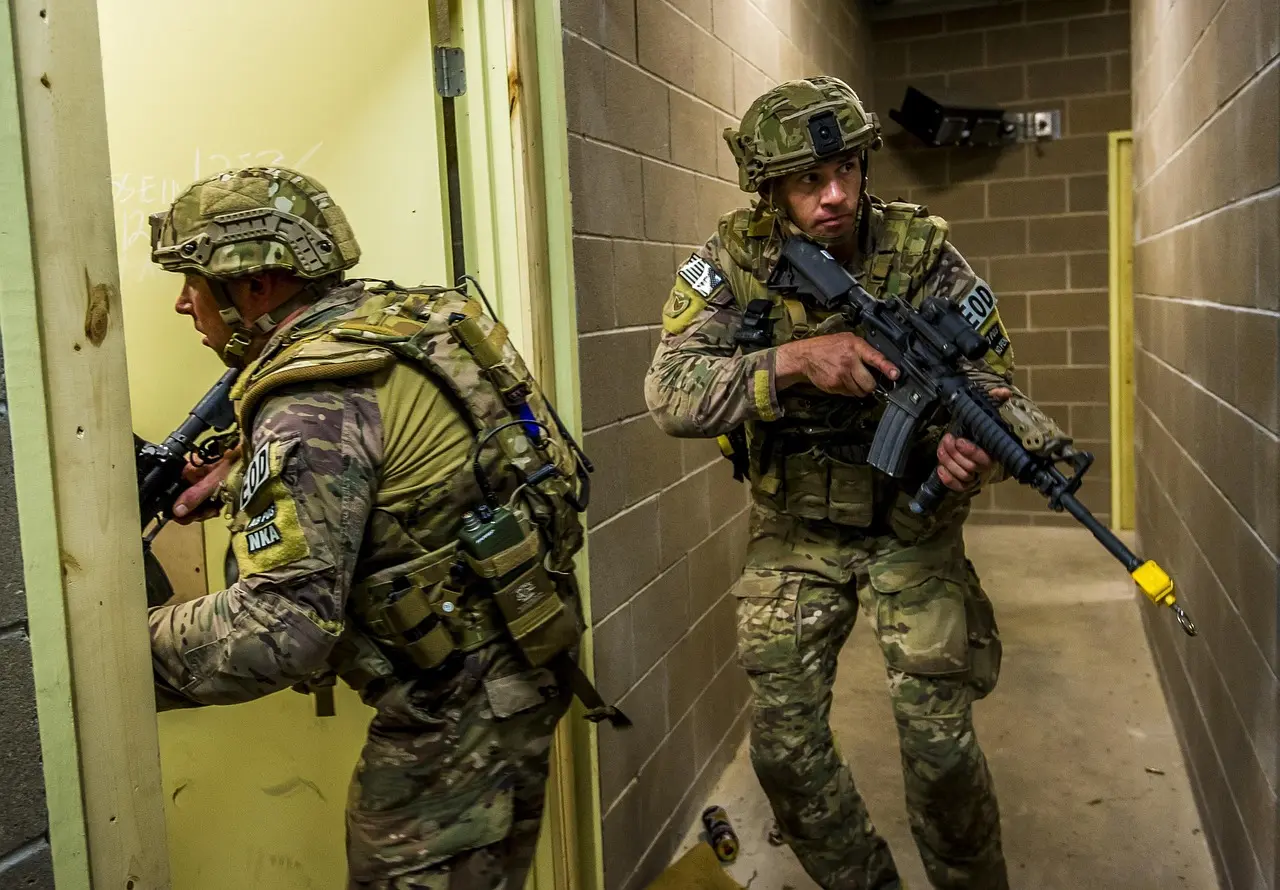
A building’s on fire and the hallway is smoke. You don’t solve “the building is on fire.” You solve this door, this handle, this breath, this next three feet of floor. A man gets a diagnosis and the whole future collapses into an unmanageable blur — he doesn’t work “the diagnosis.” He works the next phone call, the next form, the next question for the doctor sitting three feet in front of him. Three-Foot World is prioritize and execute with the list removed, because in genuine overload there isn’t time to make one. It’s the emergency version. Prioritize and Execute, as taught below, is the standing version — for the Tuesday afternoon with five problems and enough time to rank them. Same discipline, calibrated to how much time you actually have.
Use Three-Foot World the instant panic has already narrowed your vision — work with the narrowing instead of fighting it. Use the full Prioritize and Execute protocol below when you have even sixty seconds to step back and list. Most crises give you more of those sixty-second windows than they feel like they do.
The Core Truth: You Cannot Spend What You Don’t Have
What separates operators from casualties, builders from spinners, comes down to one blunt fact: you cannot solve more than one problem at a time. You can pretend you can. Attempt it. You’ll fail, every time, in ways you might not even notice until the wreckage is visible.
The human brain processes one conscious decision stream. One. Not a weakness to overcome with caffeine or willpower. The architecture of the machine you’re running on.
Think of daily cognitive capacity as a Focus Budget — a finite pool of high-quality attention that partially replenishes with sleep and depletes with every decision, every task-switch, every unresolved problem competing for mental airtime. The budget is real whether you track it or not. Most people spend it like unlimited credit. It isn’t. The debt collector shows up as shallow work, bad decisions, emotional reactivity, and the slow erosion of capability everyone notices but nobody correctly attributes.
Prioritize and execute is the operating system that turns this constraint into an advantage. Instead of fighting the single-channel architecture, you weaponize it. Feed the entire Focus Budget into one problem — the right one, the most dangerous one, the one with the highest cost of delay — and resolve it. Then move to the next. Convert a chaotic multi-front war into a series of decisive engagements you win one at a time.
This isn’t time management. Time management rearranges your calendar. This is cognitive triage under fire. The discipline of choosing which fires to let burn — temporarily, strategically, deliberately — so you can fully extinguish the one that will actually destroy you.
When to Reach for It
You don’t need a battlefield. Reach for prioritize and execute the moment you notice any of these:
- You have fifteen things open — tabs, texts, half-written emails — and you’re doing none of them.
- Your kid needs help with homework, your phone is buzzing with a work escalation, and dinner’s burning, all in the same ninety seconds.
- You’ve rewritten the same to-do list three times this week and it hasn’t gotten one item shorter.
- Someone asks “what are you working on right now” and you can’t answer in one sentence.
- You finish a full day of being busy and can’t name a single thing that’s actually resolved.
Any one of those is the signal. Stop, list, rank, and spend your full Focus Budget on the top item — before you touch anything else.
The Neuroscience of Why Splitting Your Attention Destroys Your Prioritize and Execute Capacity
The military figured out prioritize and execute through centuries of combat. Neuroscience arrived at the same conclusion through brain scanners. The convergence is total: splitting attention under pressure doesn’t divide effectiveness. It destroys it.
Dr. Earl Miller, neuroscientist at MIT’s Picower Institute for Learning and Memory, has spent two decades studying what the brain actually does during so-called multitasking. His findings are unequivocal. “People can’t multitask very well,” Miller told NPR, “and when people say they can, they’re deluding themselves.” What feels like simultaneous processing is rapid sequential switching — the prefrontal cortex toggling between tasks, losing context with every switch, rebuilding the mental model from scratch each time. Subjectively, seamless. Objectively, catastrophic. You feel productive. You aren’t.
The cost of that switching isn’t trivial. Dr. Gloria Mark, professor of informatics at UC Irvine, spent years tracking knowledge workers in real office environments. Her research, in her 2023 book Attention Span, found that after an interruption, it takes an average of 23 minutes and 15 seconds to fully re-engage with the original task. Workers typically pass through two entirely different tasks before returning to the first. Each switch erodes the quality of the work. Each switch elevates stress hormones. Each switch depletes the decision-making capacity you’ll desperately need when the problems are real and the stakes are high.
That 23-minute recovery cost is a Focus Budget killer. Switch tasks four times an hour and you haven’t done an hour of work. You’ve done four partial tasks, generated roughly 90 minutes of recovery overhead, and produced the cognitive equivalent of assembling four different puzzles at once and finishing none of them.
Roy Baumeister, social psychologist at Florida State, established the concept of decision fatigue through experiments beginning in the late 1990s. He demonstrated that making decisions depletes a finite mental resource — willpower, self-control, emotional regulation, and sustained attention all draw from the same pool. Every task-switch is a micro-decision: what do I work on now? Every one drains the tank. By the time the genuinely critical decision arrives — the one that actually matters — you’re running on fumes. Which is why deep sequential work beats scattered multitasking even when total hours match.
The research maps directly onto the Focus Budget. Every distraction, a withdrawal. Every task-switch, a fee. Every unresolved problem parked in working memory, a standing charge. The budget depletes whether you’re working hard or spinning ineffectively. The difference is whether the withdrawals buy something real or just generate fees.
A structural piece most people miss. Adam Gazzaley, neuroscientist at UC San Francisco, uses fMRI imaging to study how the brain handles information overload. His research shows the prefrontal cortex — the seat of planning, judgment, and deliberate decision-making — physically reduces its activity when too many competing demands show up simultaneously. Not metaphorically “overwhelmed.” Measurably less active. The brain responds to too many priorities by literally running a reduced version of its highest-order functions. That’s the foggy, slightly stupid sensation of a day spent spinning, unable to make a clear decision about anything, including lunch.
This is the neurological basis for Willink’s pause in Ramadi. Under three simultaneous emergencies, the pause wasn’t a luxury. It was the prerequisite for effective decision-making. Without it, his prefrontal cortex runs at reduced capacity while three people wait for guidance that could save their lives. Sixty seconds of stillness — the highest-ROI sixty seconds of the entire engagement. The ratio holds in your life too. Stop before you spin. List before you act. Rank before you move.
One more piece of science worth its own line: a 2011 study in Cognition by Alejandro Lleras at the University of Illinois found brief diversions actually restore sustained attention during long tasks — but only when intentional and bounded. Uncontrolled interruptions destroy focus. Intentional breaks restore it. Implication: a structured prioritize-and-execute system with deliberate reassessment intervals beats both constant spinning and rigid single-task lockdown. Build in the breaks. Keep them intentional. Never let a notification pick your break for you.
The Focus Budget: Why Attention Is the Only Currency That Matters
Here’s the mirror moment: 47 browser tabs open. Not because 47 things are needed. Every time something might be useful, a new tab opens instead of a decision getting made about whether it’s actually important. The tabs are a visual monument to the Focus Budget in bankruptcy. Not managing 47 things. Managing exactly zero things, with 47 tributes to avoided prioritization sitting open.
The Focus Budget — attention as a finite daily currency, every priority beyond the top one spending from a budget already empty — is the central concept making prioritize and execute work in practice, not just theory.
Here’s the budget in concrete terms. Most knowledge workers get roughly four to six hours of genuinely high-quality cognitive work a day — thinking clearly, deciding well, producing work worth keeping. Past that threshold, the reserves are running on fumes in name only. Decisions in hour seven are measurably worse than decisions in hour two. The email at 6 PM carries more edge and less judgment than the one at 9 AM. Not a motivational metaphor. What the data shows.
Most people spend the first two hours of the budget on email, Slack, and everyone else’s priorities. They arrive at the work that actually matters — real consequences, real thought required — with a budget already spent on administrative noise. Then they wonder why the hard stuff feels so hard. The hard stuff didn’t get harder. You just showed up to it broke.
The Focus Budget also carries a hidden fee structure most people never see. Every unresolved priority parked in working memory — the conversation you’re avoiding, the decision you’re not making, the project you haven’t started — occupies what cognitive scientists call an “open loop.” Open loops drain Focus Budget continuously, even while you’re not actively thinking about them. Running in the background like apps you forgot to close. No notifications pop up. The drain is constant. Which is why you can sit down to focused work and feel exhausted before writing a single sentence: the budget’s already spent on five open loops competing for background processing.
The prioritize and execute protocol is budget management. List every open loop. Rank by cost of delay. Close the most expensive one first. Not productivity optimization. Solvency. Getting yourself out of cognitive debt so the budget can actually go toward work that matters instead of servicing interest on seventeen problems held open at once.
A confession worth including: a solid year got spent managing one particular Focus Budget like a person who’d never heard the concept existed. Three major projects, a dozen smaller obligations, and the consistent feeling of working constantly while accomplishing nothing. Not an effort problem — the work was genuinely hard. The problem was the Focus Budget getting vaporized on task-switching overhead before any of it reached work that would’ve moved the needle. Paying 80% in fees, keeping 20% for actual work. Listing everything, ranking it, blocking three hours for the top item alone produced more in one morning than the previous three days combined. Not smarter overnight. Just stopped spending from an empty account and finally funded what mattered.
The Prioritize and Execute Protocol: 7 Steps to Spend Your Focus Budget Well
The operational method for deploying prioritize and execute daily. Works in combat, corporate crises, family emergencies, and the mundane grind of a Tuesday afternoon with sixty unread emails, a sick kid, and a boss who just moved up the deadline. The method doesn’t change with the severity. The stakes change. The protocol stays the same.
-
Stop and externalize every open loop. The moment overwhelm hits — the spinning sensation, too many demands competing, chest tightening, brain darting between problems without solving any — stop all movement. Don’t try solving anything in this state. The amygdala’s hijacked the prefrontal cortex; you’re on threat detection, not rational processing. Sixty seconds. Write down every single thing demanding attention — every task, every obligation, every unresolved problem, every conversation being avoided. All of it. Off the working memory, onto paper or a screen. This single act cuts the Focus Budget drain immediately, because the brain no longer has to hold the inventory. The page holds it. Now the brain can think. Controlling your emotions under pressure as a practice makes this pause instinctive instead of forced.
-
Rank by cost of delay, not urgency. Urgency is a liar. The “URGENT” email is almost never the most consequential item on the list. The squeaky wheel gets the grease; the silent bearing failure brings down the machine. Rank every item by one criterion: what happens if this goes unaddressed for the next 24 hours? Highest cost of delay — deteriorates fastest, causes the most irreversible damage, removes the most options if ignored — goes to the top. Not the loudest problem. Not the most emotionally charged. The most consequential. Gene Kranz at Mission Control during Apollo 13 didn’t start with whatever system generated the most alarms. He started with electrical power, because without power every other system was irrelevant. Ask what’s the “power” in your current situation.
-
Spend your Focus Budget entirely on number one. This is where discipline lives, and where most people break. Top priority identified. Now work it. Only it. Don’t check problem three while solving problem one. Don’t split attention for any reason. Give problem one everything until it’s resolved, or taken as far as it can go and now needs something external — another person’s response, a result you have to wait for — before advancing further. Only then move to number two. This will feel irresponsible. It’ll feel like abandoning real fires. It is. Temporarily. Strategically. That temporary ignoring of lesser fires is exactly what lets you fully extinguish the biggest one. A fire truck doesn’t spray five buildings at once. It picks the one threatening the most lives and puts that out first.
-
Communicate the priority stack to everyone affected. A team — at work, at home, wherever others are involved — tell them the priority order explicitly. “Right now we’re solving X. Y and Z are real, they matter, but they wait until X is handled.” Two things happen. First, everyone’s Focus Budget aligns on the same problem, killing the scattered inefficiency of each person chasing whatever feels urgent to them individually. Second, it gives explicit permission to temporarily ignore lesser problems — permission most people won’t grant themselves without hearing it from a leader. This is where Extreme Ownership intersects with prioritize and execute: you own the decision about what matters most, and you own the consequences of what gets delayed.
-
Execute with a time boundary. Assign a specific block of focused time to the top priority. Not “I’ll work on this until it’s done” — that’s how nine hours vanish on problem one while problems two through five metastasize. Set the boundary: “Two hours of total focus. At the end, I reassess the entire stack.” Prevents perfectionism from masquerading as discipline. The goal isn’t perfectly solving the priority. It’s reducing it from the biggest threat to a managed situation, then moving to the next one. Reassessment at the boundary matters because conditions change. What was priority two at 9 AM might be priority one by 11. The stack isn’t static. Reality updates it. So must you.
-
Reassess and re-rank after each resolution. Top priority complete or sufficiently addressed — don’t automatically slide into whatever was number two. Stop. Look at the whole list again. Something changed? A new problem emerged? Something that was number four now escalated to number one because two hours went into the original top priority? Re-rank the entire stack on the same cost-of-delay criterion. Attack the new number one with the same total commitment. This is the OODA Loop applied to personal execution — a continuous cycle of observation, orientation, decision, action keeping your effort aligned with current reality, not the reality that existed when the list was first made.
-
Debrief on Focus Budget efficiency, not output volume. End of each day, one question: “Did I work sequentially, or did I spin?” Be ruthlessly honest. Spinning feels productive — busy brain, many problems touched, constant motion. Sequential work is productive — things completed, priorities advanced, decisions made that stuck. Track how many task switches happened in a single focused hour. Every switch is a Focus Budget fee. Ten switches in an hour isn’t one hour of deep work. It’s sixty minutes of shallow thrashing plus recovery overhead. Reduce the switches. Lengthen the focus blocks. Same debrief discipline behind the 21-day discipline reset: honest self-assessment, no self-deception.
 Seven steps. List. Rank. Focus. Communicate. Time-bound. Reassess. Debrief. The complete prioritize and execute protocol. Simple steps. Executing them means resisting a deeply ingrained psychological pull — the discomfort of knowing other problems exist and aren’t getting addressed. Embrace the discomfort. The discomfort is the discipline. The discipline is the skill.
What Most Men Do Instead
Most men, hit with five problems at once, don’t pick one. They open five browser tabs, mentally, and try to keep all five spinning. A reply here, a glance there, a half-decision on a third thing, back to the first before it’s finished. It feels like coverage. It’s actually the fastest way to guarantee none of the five gets solved today. The tell is a very specific kind of exhaustion at the end of the day — not the tired of hard work done, the tired of a dozen things touched and nothing closed.
Call him Raymond, thirty-eight, runs the warehouse floor for a regional distributor. Monday, 7am: a truck’s late, a forklift’s down, and HR just texted about a no-call-no-show. Raymond’s default is to text the driver, radio maintenance, and call HR — all inside four minutes, none of it finished, all three now half-open in his head for the rest of the shift. By 9am he’s handled nothing and started nine things.
What It Looks Like Done Right
Same Raymond, same Monday, three months later. Truck’s late, forklift’s down, HR text lands. He stops at his desk for ninety seconds — not longer — and writes all three on the whiteboard behind him. Cost of delay: forklift down stalls four other jobs immediately, that’s first. Truck’s late but there’s a two-hour buffer before it matters, that’s second. The no-call-no-show is a conversation, not an emergency, that’s third. He calls maintenance, stays on the line until a tech is actually walking over, then hangs up. Only then does he text the driver. The HR conversation waits until his 11am break, exactly where it belongs. By 9:15, the forklift’s running and he’s touched three problems in the right order instead of nine in the wrong one.
Nothing about Raymond’s Monday got easier. What changed is that his attention went where the consequences were, in the order the consequences demanded, instead of wherever made the most noise first.
The Proof: How Andy Grove Saved Intel by Spending His Focus Budget on One Thing
1985. Intel was dying. The company that invented the modern semiconductor industry was getting destroyed by Japanese competitors manufacturing memory chips faster, cheaper, higher quality than Intel could match. Revenue collapsing. Layoffs accelerating. The board pressing for answers. Intel was fighting simultaneously on a dozen fronts — memory chips, microprocessors, cost-cutting, market share defense across multiple product categories — and losing everywhere.
CEO Andy Grove and co-founder Gordon Moore stood in Grove’s office and asked each other a question that became one of the most famous in business history: “If we got kicked out and the board brought in a new CEO, what would he do?”
The answer was obvious. Get out of memory chips. Focus entirely on microprocessors.
So they did it. Grove made the most consequential prioritize and execute decision in corporate history. Killed the memory chip business — the product that built Intel, that defined the company’s identity, employed thousands — and redirected every resource, every dollar of corporate Focus Budget, into microprocessors. One priority. Total commitment. Everything else cut, sold, or shut down.
The result was the most successful corporate transformation of the twentieth century. Intel’s microprocessor business generated the Pentium processor, dominated the personal computer revolution, turned Intel into one of the most valuable companies on Earth. Market cap grew from roughly $4 billion in 1985 to over $200 billion by the late 1990s.
Grove’s decision wasn’t a strategic insight nobody else could see. Every analyst in the industry knew microprocessors were the future. What Grove had that his competitors lacked was the discipline to execute — the willingness to let the memory chip fire burn completely so he could pour every resource into the microprocessor opportunity.
Worth noting: in the year after Grove’s decision, Intel’s revenue dropped sharply as the memory chip business wound down. Investors panicked. Employees left. The press wrote obituaries. The quarterly numbers looked catastrophic. Grove held the line, understanding something quarterly thinkers don’t: the cost of maintaining two priorities isn’t twice the cost of one. It’s the cost of both, plus switching overhead, plus diluted execution on each, plus the strategic confusion that stops anyone from committing fully to either. Intel’s competitors maintained multiple priorities through that period. They lost.
One priority. Fully resourced. Everything else waits or dies. Prioritize and execute at corporate scale. The principle’s identical at personal scale — a man committing his entire Focus Budget to one career path, one skill set, one business model outperforms the man splitting the same budget across three “just in case” options. Not because focus is magic. Because compounding requires a base to compound from, and scattered effort produces no base.
How to Know It’s Working
After your next real attempt, answer these five about what actually happened:
- Did you write the full list down, or did you rank it in your head while already mid-task?
- Did you rank by consequence, or by whichever problem was loudest?
- Did you finish or meaningfully advance the top item before touching the second?
- Can you name, right now, exactly how many times you switched tasks during the block?
- Did you reassess at the boundary you set, or did you just keep going until something forced you to stop?
Four or five yes answers, the discipline is holding. Two or fewer, you listed the problems but never actually stopped spinning between them — the list didn’t change your behavior, it just documented the chaos.
When It Isn’t Working
If your to-do list has been the same length or longer for months and you keep reorganizing it — recategorizing, color-coding, migrating it to a better app — you are doing it wrong.
If you start on problem one, get ninety seconds in, then jump to problem three because it “just got worse,” then to problem five because of a comment someone made this morning, you are doing it wrong.
If “why can’t I get anything done” has become a new item on the list, you are doing it wrong — you’ve let the failure become its own problem, which just burns more of the budget you don’t have.
If you never actually stopped to write the list — you ranked it silently in your head while already three tasks deep — you are doing it wrong.
The Counterintuitive Truth About Prioritize and Execute: Do Less, Not More
The assumption everyone makes about overwhelm is volume. Too many tasks, too many demands. Logical solution: work harder, sleep less, batch the emails, speed up. The entire productivity industry runs on this premise — that the gap between where you are and where you need to be closes with more throughput.
Wrong premise.
Overwhelm isn’t a volume problem. It’s a Focus Budget allocation problem. Not too many items to complete — too many items drawing on a finite budget simultaneously. The solution to a budget allocation problem is never “earn more money.” It’s “stop buying things that don’t matter.”
Peter Drucker, the most influential management thinker of the twentieth century, said it plainly: “There is nothing so useless as doing efficiently that which should not be done at all.” Most items on the overwhelm list shouldn’t get done. Not delegated. Not deferred. Eliminated. They’re tasks that feel important because they’re present, not because they’re consequential. Fires extinguishing themselves the moment attention stops feeding them. Obligations inherited from a version of life that no longer exists, commitments made out of guilt, projects continuing out of inertia rather than strategy.
The real discipline of prioritize and execute isn’t solving problems faster. It’s the courage to look at the list and cross off items that don’t belong there. Real discipline includes saying no to existing commitments, not just new ones. Every item removed from the list is Focus Budget returned to what remains. The math is multiplicative, not additive. Removing one task doesn’t free up just the time that task took. It frees the time, plus the switching cost, plus the decision overhead, plus the ambient anxiety of knowing it’s sitting there undone. Elimination is the highest-use move in the prioritize and execute toolkit.
When Willink advises leaders drowning in operational complexity, his first move is never “work harder.” Always: “What can you eliminate?” Cut the patrol producing no intelligence. Cancel the meeting generating no decisions. Stop tracking the metric nobody acts on. The leaders resisting this step — and most do, since eliminating commitments means admitting they were mistakes — stay stuck in the spiral. The leaders who execute it typically find 30-40% of their current workload was consuming Focus Budget without proportional results. Cutting that 30-40% doesn’t shrink output. It concentrates capacity on the 60-70% that actually moves the mission, and concentrated capacity produces dramatically better results.
The research backs it. A 2019 study in Nature Human Behaviour by Leidy Klotz at the University of Virginia found humans carry a strong cognitive bias toward addition — instinctively adding to solve problems rather than subtracting. Asked to improve a design, participants added features. Asked to stabilize a structure, they added supports. Removal almost never occurred as the first solution, even when it was clearly more effective. Your overwhelm is a design problem. The brain’s default solution: add more systems, more apps, more accountability structures. The actual solution is usually removing items from the stack until the budget’s solvent. Subtract first. Add only what the freed capacity makes room for.
Progression
- Beginner. Practice the protocol on low-stakes days first — the ordinary Tuesday with four small problems, not the day everything’s on fire. Write the list. Rank by cost of delay. Work the top item for a fixed thirty minutes. The goal isn’t a hard test yet. It’s building the reflex of stopping to list before you start solving.
- Under load. Run it on days with real competing pressure — three work problems and a family obligation landing at once, a boss and a spouse both wanting an answer in the next hour. Now the communication step matters: tell people the order out loud. “I’m on X first, Y after.” Notice how much harder it is to hold the line when someone’s waiting on the thing you ranked second.
- Advanced. Three-Foot World territory — genuine crisis, multiple simultaneous emergencies, no time to write anything down. This is Willink’s Ramadi version: the list happens in your head in under five seconds, and the discipline is entirely in the sequencing and the refusal to split attention once you’ve picked. You don’t get here by starting here. You get here by running the beginner and under-load versions enough times that the sequencing becomes automatic before the stakes ever get this high.
How Prioritize and Execute Connects to the Full Mindset Toolkit
Prioritize and execute doesn’t operate in isolation. It’s one of twelve core tools in the Resilient Wisdom system, and each amplifies the others. Here’s how to deploy them together.
With Working the Problem: Prioritize and execute tells you what to solve first. Working the Problem tells you how — decompose the top priority into subproblems, work each piece, verify before advancing. Sequence: rank the full problem set with prioritize and execute, then apply Working the Problem to the top item until resolved or blocked.
With Box Breathing: Overwhelm hits and the brain’s spinning, emotional mastery tools are the circuit breaker. One cycle of box breathing — four seconds in, four hold, four out, four hold — slows the spin enough for the prefrontal cortex to re-engage. Then list. Then rank. Then focus. The breath opens the gap between panic and discipline. Without it, the default is fighting the loudest fire instead of the most dangerous one.
With Extreme Ownership: Own the priority decision. Choosing to let four fires burn while extinguishing the one that matters most — that’s your call. Own it. Someone asks about the fires not being fought, the answer’s direct: “I know. That’s number three on the stack. We’re finishing number one first.” The fault-versus-responsibility distinction is critical here — not responsible for having too many simultaneous problems. Responsible for deciding which one gets the full Focus Budget.
With The OODA Loop: The reassessment step in the prioritize-and-execute protocol is the OODA Loop applied to the priority stack. Observe the current state of all problems. Orient on which is now most consequential. Decide to focus on it. Act with complete commitment. Loop back. Not just a tactical tool — the rhythm of the whole prioritize-and-execute system.
With Process Visualization: Before starting on the top priority, sixty seconds visualizing working through the solution — not the outcome, the process. Sitting down, making the call, having the conversation, writing the report. Primes the brain for execution, reduces the resistance that turns hard priorities into procrastination.
With Deliberate Practice: The prioritize-and-execute skill itself improves through structured repetition. Running the full protocol — list, rank, focus, time-bound, reassess, debrief — daily for 30 days converts it from a deliberate process into an automatic reflex. Not a coincidence or a metaphor. That’s how the neural pathways form. Wanting the kind of presence that comes from genuine clarity under pressure means building it through reps, not insight.
Kaizen applied here: no need to execute the protocol perfectly from day one. Just slightly better this week than last. A 1% weekly improvement in Focus Budget allocation compounds dramatically over a year. The growth mindset framework isn’t just about tolerating failure. It’s treating the prioritize-and-execute skill as something built through practice, not a trait you either have or don’t.
What’s Next
- Working the Problem — prioritize and execute tells you what to work first; this is how you actually break that top item into pieces you can move.
- Box Breathing — run this before you list anything, if the overwhelm is loud enough that you can’t think clearly enough to rank.
- The OODA Loop — the reassessment step above is this tool in miniature; learn the full cycle if your priorities shift fast.
Run the Drill
- 1
When overwhelm hits, stop and list
The moment you feel the spinning — the sensation of too many problems, too many demands, too little time — stop moving. Do not try to solve anything yet. Take sixty seconds and write down every single thing that is demanding your attention: every task, every obligation, every unresolved problem, every conversation you're avoiding. All of it, off your working memory and onto paper or a screen. This single act cuts the drain on your attention immediately, because your brain no longer has to hold the inventory — the page holds it instead, freeing you to actually think clearly about what comes next.
- 2
Rank by consequence, not urgency
Urgency is a liar. The email marked "urgent" is almost never the most consequential thing on your list. Rank every item by a single criterion: what happens if this doesn't get addressed in the next 24 hours? The problem with the highest cost of delay — the one that deteriorates fastest, causes the most irreversible damage, or removes the most options if ignored — goes to the top. Not the loudest problem. Not the most emotionally charged one. Ask what the equivalent of "electrical power" is in your situation, the thing everything else depends on, and put that first.
- 3
Solve number one completely before touching number two
This is where the discipline lives. You have identified the top priority. Now work it. Only it. Do not check on problem three while you're solving problem one. Do not peek at your email while you're having the difficult conversation. Do not split your attention for any reason. Give problem one everything you have until it is resolved, or taken as far as it can go without something external you're waiting on. Set a fixed time boundary — for example, two hours of total focus — before you reassess anything. Only then move to problem two.
- 4
Communicate the priorities to anyone affected
If you have a team — at work, at home, anywhere — tell them the priority order explicitly. "Right now, we are solving X. Y and Z are real and they matter, but they wait until X is handled." This does two things: it aligns everyone's effort on the same problem instead of each person chasing whatever feels urgent to them individually, and it gives explicit permission to ignore the lesser problems for now — permission most people won't grant themselves without hearing it from someone in charge. Say it out loud, not just in your own head.
- 5
Debrief on focus, not output
At the end of each day, ask: "Did I work sequentially or did I spin?" Be honest. Spinning feels productive — busy, many problems touched, constant motion. Sequential work is actually productive — things completed, priorities advanced, decisions made that stuck. Track how many times you switched tasks in a single focused hour. Every switch is a cost — research shows it takes an average of 23 minutes to fully re-engage with the original task after an interruption. Ten switches in an hour isn't deep work, it's shallow thrashing. Reduce the switches and lengthen your focus blocks tomorrow.
Conquer Chaos Crush: Your Questions Answered About Prioritize and Execute
What does prioritize and execute mean in practice?
A decision-making framework from Navy SEAL combat leadership: facing multiple simultaneous problems, identify the single highest-consequence threat, direct all available resources and attention toward solving it, resolve or reduce it to a managed state, then move to the next problem. The critical discipline is refusing to divide attention across problems simultaneously. In daily life: list everything competing for attention, rank by cost of delay rather than urgency or emotional charge, work the top item with complete focus before touching the second. Codified by Jocko Willink in Extreme Ownership, drawn from his combat experience in Ramadi, Iraq, and since adopted by business leaders, athletes, and high-performers across every domain.
How do you prioritize and execute when everything feels equally urgent?
When everything feels equally urgent, the emotional state is misreporting the actual hierarchy of threats. Strip the emotion away with one question: “If I could only address one of these in the next two hours, which resolution would have the greatest positive impact on my life in 30 days?” That’s the priority. Everything feeling equally urgent is a symptom of overwhelm, not a reflection of reality. In genuine triage — an ER, a combat zone — professionals train to look past the noise and identify the real severity hierarchy. Some problems are loud but survivable. Some are quiet and lethal. Which one creates irreversible damage ignored for 48 hours? Irreversibility always outranks volume.
What is the Focus Budget, and how does it relate to prioritize and execute?
Daily cognitive attention as a finite currency — roughly four to six hours of genuine high-quality thinking per day — and every priority beyond the top one spends from a budget already empty. It’s why prioritize and execute works: fund one problem with the entire remaining budget, get quality results. Split the same budget across five problems, get five underfunded, shallow engagements solving nothing. Decision fatigue research by Roy Baumeister and attention research by Earl Miller at MIT both confirm it — the budget’s real, the depletion measurable, and the only strategy maintaining decision quality throughout the day is sequential focus over parallel spinning.
Can you use prioritize and execute for personal problems, not just work ones?
Completely domain-agnostic. Works for a health crisis, a financial emergency, a family conflict, a relationship breakdown — any situation where multiple serious problems demand simultaneous attention. The personal application often needs more discipline, since personal problems carry heavier emotional weight. Relationship struggling, health declining, finances strained at once — the emotional charge makes it nearly impossible to deliberately set three aside while focusing on one. The Focus Budget math doesn’t change because the problems feel personal. Splitting the budget across all four guarantees shallow, ineffective responses to each. Focusing fully on the most consequential one first produces dramatically better outcomes across every domain. The discomfort of strategic ignoring always beats the failure of total ineffectiveness.
How do you handle new urgent problems that emerge while you’re working your top priority?
The most common failure point in the protocol. The rule: new problems go on the list, not into the current focus block. New emergency surfaces mid-execution on priority one, write it down immediately — closes the open loop, removes it from working memory, stops it draining the Focus Budget — then return to the current priority. End of the focus block, reassess the full list including the new item. Genuinely outranks the current priority by cost-of-delay, reorder the stack. Doesn’t, it waits its turn. Only exception: a genuine life-safety emergency, which supersedes the protocol entirely. A colleague’s impatient Slack message doesn’t qualify, regardless of exclamation points.
How do you know when to reassess your priorities mid-execution?
Reassess after every completed priority, at every pre-set time boundary, and whenever new information materially changes the field. The priority stack is a snapshot of reality at a specific moment. Reality moves. A rigid refusal to reassess is as dangerous as constant switching — it locks onto a priority that may no longer be most consequential. The discipline’s in the rhythm: complete focus during the execution block, structured reassessment at the interval, re-rank if conditions changed, re-focus on the new top priority with the same commitment. The OODA Loop applied to personal execution — continuous calibration, never reactivity.
What’s the fastest way to start using prioritize and execute if you’ve never done it before?
Tomorrow morning, before email, before the phone, three minutes writing down every open problem competing for attention. Circle the one item with the highest cost of delay — the one getting worse fastest if ignored. Block 90 minutes, work only that item. Ninety minutes up, reassess, pick the new top item. That’s it. No app, no system, no framework requiring three weeks of optimization. A piece of paper, a pen, the discipline not to open email for 90 minutes. Run it 30 consecutive days and the Focus Budget management becomes automatic. Most people notice a dramatic shift in output quality within the first week — not because the work got easier, because they stopped paying Focus Budget fees on problems they weren’t solving anyway.
Why does prioritize and execute feel uncomfortable even when it’s clearly working?
Because the brain’s threat-detection system treats unaddressed problems as active dangers, regardless of whether they’re genuine emergencies right now. Focus entirely on priority one and deliberately ignore priorities two through five, and the amygdala registers those open loops as threats, generating anxiety proportional to how many there are, not how consequential. Same mechanism that makes it hard to enjoy a vacation with work undone at home. The discomfort isn’t a signal the approach is wrong. It’s the feeling of doing the right thing while the nervous system argues otherwise. Managing that discomfort is the actual skill. The stoic framework for emotional mastery earns its keep here — feel the anxiety, acknowledge it, don’t act on it. The discomfort of strategic focus always beats the exhaustion of chronic spinning.
Editorial StandardsCorrectionsMedical DisclaimerAbout Our ContentAffiliate DisclosureSite Map