
The year is 480 BC. A force of 300 Spartans, 700 Thespians, and a handful of allied Greek soldiers is holding a narrow coastal pass called Thermopylae against an invading Persian army of somewhere between 100,000 and 300,000 men. King Leonidas knows the math. He’s known it since he chose which 300 men to bring. He selected only soldiers who had living sons — men whose bloodline would continue after the battle. Not because they were the most expendable. Because they were the most complete. Men who had done what men are supposed to do: build the next generation, protect the community, discharge their obligation to the future. He brought them here to die at the gates of civilization so Athens and Sparta would have time to organize a real defense. Not to survive. To matter.
Every one of those men knew this on the march to the pass. They arrived prepared to do something almost no modern man has ever been asked to do: spend themselves entirely in service of something they would not live to see. No cameras. No recognition ceremony. No LinkedIn post about a personal growth journey. Just the hot sun, the weight of bronze, and the absolute clarity of a man who knows exactly why he’s standing exactly where he’s standing.
That clarity — not the courage, not the strength, not the tactical skill, but the clarity — is what the warrior’s code is actually about. And it’s the single thing most men in 2025 are missing. Not strength. Not drive. Not intelligence. Clarity. The kind that only shows up when a man stops organizing his life around his own comfort and starts organizing it around something that’ll outlast him. The warrior’s code of masculinity isn’t a training program. It’s a commitment structure. Without it, everything else — the ambitions, the relationships, the fitness, the sense of self — is built on sand.
Call it the Thermopylae Test: would you stand at your post if there were no chance of personal reward? Not as a theoretical exercise. As a diagnostic for how you’re actually living your life right now. Most men, if they’re honest, will not like the answer they find.
The Moment: The Day You Realize You’re Surviving, Not Living
Call that moment — the quiet Tuesday erosion — the Drift. Not depression. Not failure. Just the gradual accumulation of days spent reacting to whatever was in front of you without ever deciding what you were building. The Drift doesn’t announce itself. It arrives through small substitutions: convenience over commitment, distraction over difficulty, comfort over contribution. Ten years of small substitutions and a man wakes up one morning genuinely unsure what he’s fighting for.
Men who’ve gone through serious hardship — job loss, divorce, illness, addiction, the kind of suffering that strips everything away — almost universally describe the aftermath the same way. Not as destruction. As clarification. The Drift ends because it has to. The crisis forces the question the Tuesday never quite finished asking: what am I actually here for? The men who rebuild strongest aren’t the ones who bounce back fastest. They’re the ones who answer that question with enough specificity that it becomes a load-bearing structure. Not “I want to be a good dad” — that’s a wish. “I am going to be present at dinner four nights a week, coach the Saturday games, and never let my kids doubt that I chose them” — that’s a code. Codes don’t drift. Wishes do.
The warrior’s code of masculinity begins exactly there, in that gap between the wish and the code. It’s the moment a man stops narrating his intentions and starts building his structure. And the structure is always built around three things — not strength, not success, not status, but duty, purpose, and service. Those three form the architecture. Everything else is furniture.
The Mechanism: What Happens to a Man Without a Code
In 2019, researchers at the Rush University Medical Center published a longitudinal study following more than 1,300 men and women for up to seven years. The finding that got the attention: participants with a strong sense of purpose had a 2.4 times lower risk of Alzheimer’s disease. But the finding underneath that finding matters more here. Purpose — operationally defined as “the tendency to derive meaning from life’s experiences and possess a sense of intentionality and goal directedness” — was the single strongest predictor of cognitive resilience, stronger than education, stronger than social engagement, stronger than physical activity. Men running without a code weren’t just unsatisfied. They were biologically deteriorating faster.
Viktor Frankl, the Austrian psychiatrist who survived Auschwitz and built his entire clinical framework from what he observed in the camps, made this same observation decades earlier without the neuroimaging. The prisoners who survived longest weren’t consistently the youngest or strongest. They were the ones who had something to be responsible for beyond their own survival — a person waiting for them, a piece of work left unfinished, a mission not yet completed. Frankl called this the will to meaning, and he spent the rest of his career documenting what happens when it’s absent: existential vacuum, the felt sense of inner emptiness that modern men mostly know as that Tuesday 2 PM feeling, but that, at scale and over time, produces depression, addiction, aggression without direction, and the particular quiet despair that doesn’t look like despair from the outside because it still pays the mortgage on time.
Testosterone is part of this story too, and not in the way fitness influencers usually tell it. Research from Harvard Medical School and the Salk Institute consistently shows testosterone isn’t primarily a strength hormone. It’s a status-seeking and risk-taking hormone — it rises in men who are competing for something, protecting something, or building something. A man without a mission doesn’t have a testosterone problem. He has a purpose deficit that manifests as a hormone deficiency. The body isn’t malfunctioning. It’s responding accurately to the inputs it’s receiving. Fighting for nothing means it stops loading you with the chemistry of a man fighting for something. This is the mechanism the warrior’s code activates that no supplement addresses: genuine purpose produces genuine biology. Not metaphorically. Measurably.
There’s one more piece here that most men never connect, and it’s the one that changes everything. The same brain research that mapped purpose to cognitive health also documented what psychologists call behavioral confirmation: when a man defines himself by a code — duty, protection, provision, service — he filters every decision through that identity, and the accumulation of those filtered decisions builds the person he claimed to be. The code isn’t a description of who you are. It’s the blueprint for who you become. Warriors in every tradition from the Bushido code of the Japanese samurai to the Roman legion’s sacramentum military oath to Marcus Aurelius’s Stoic journal understood this. The code comes first. The man follows.
The Lie: What Modern Culture Got Catastrophically Wrong About Masculine Duty
The lie isn’t that masculinity needs refinement. It does. Every warrior tradition in history built codes precisely because raw masculine energy without direction is destructive. The Spartans weren’t savages; they were the most disciplined soldiers in the ancient world because they had the most demanding code. The lie is the specific claim that the solution to undisciplined masculine energy is less masculine energy. Every actual solution throughout human history has been the same: more direction, more code, more structure, more mission. Not less intensity — redirected intensity.
Substitute comfort for the warrior’s code, and here’s what you get. A 2021 American Psychological Association survey found 40% of men reported having no close friends — none — a figure that has tripled since 1990. A 2023 Pew Research Center analysis found men with no sense of purpose were twice as likely to report chronic loneliness as men with a clear sense of direction. Male suicide rates are four times higher than female rates and rising. Male educational attainment is declining. Male labor participation sits at historic lows. These aren’t individual pathologies. They’re the population-level results of a generation of men who received no coherent code and filled the vacuum with whatever was comfortable and available. The data doesn’t suggest men need to be more comfortable with who they are. It suggests they need something worth being uncomfortable for.
The specific lie about duty is that it’s a burden — something imposed on men from outside that limits their freedom. Precisely backwards. Duty is the thing that creates freedom. A man without duty has infinite options and no direction. He’s free the way a compass needle is free when there’s no magnetic north: pointing anywhere, and therefore pointing nowhere. Duty is the magnetic north. It doesn’t limit movement. It gives movement meaning. The 300 Spartans at Thermopylae weren’t enslaved by their duty to defend Greece. They were, in the truest sense, free — because they knew exactly what they were doing and exactly why, and there’s no freedom more complete than that.
The Protocol: The Warrior Code Operating System for Daily Life
- Provision: What did you do today to build the material and financial security of the people in your care? This doesn’t require wealth. It requires intentional effort toward it. One job application sent. One skill built. One financial decision made with the next five years in mind, not the next five minutes.
- Protection: What did you do today to keep the people in your care physically, emotionally, and psychologically safe? Protection in a modern context means maintained boundaries, threats addressed before they became crises, the kind of calm a family or team anchors to under pressure modeled consistently. It means being the man who doesn’t flinch when hard information arrives.
- Presence: Were you actually there for the people who needed you, or physically in the room and mentally elsewhere? Presence is the most underrated of the three obligations and the one most consistently abandoned by men who are otherwise performing well on provision. You can earn the income and miss the kid. The warrior’s code considers that a mission failure regardless of the bank balance.

Pillar One: Mission Definition. A code begins with a mission statement specific enough to be operational. Not “I want to be a better man” — that tells you nothing about what to do at 6 AM. The mission statement follows one format: I exist to [specific action] for [specific people] so that [specific outcome]. Two examples of the difference between a wish and a mission. Wish: “I want to provide for my family.” Mission: “I exist to build financial security for my wife and children so they never have to choose between safety and opportunity.” Wish: “I want to be a leader.” Mission: “I exist to develop the men around me so that the team becomes more capable because I was in it.” The mission statement isn’t permanent — it evolves as a man does. But it has to be specific enough that any given hour of the day can be measured against it: does this advance the mission or not? If the answer is consistently no, that’s a calendar problem, not a motivation problem.
Pillar Two: The Three-Obligation Duty Structure. Every day, a man operating under the warrior’s code has three standing obligations, regardless of how he feels about them: provision, protection, and presence. Non-negotiable outputs. Not aspirations.
Every evening, run a thirty-second audit against these three. Not journaling — an audit. Three questions, three answers, one corrective action identified for tomorrow. Not therapy. After-action review, the same process every military unit uses to convert daily experience into improved capability. Do it for ninety days and life looks different than it does now. Not because of harder work. Because of directed work.
Pillar Three: Brotherhood. The lone-wolf warrior is a Hollywood construction with no historical basis. The Spartan phalanx worked because each soldier’s shield covered the man to his left. Break the formation and both die. The Roman contubernium — a unit of eight soldiers who ate, slept, trained, and fought together — was the foundational structure of the most effective military organization in history. The samurai operated within hierarchies of mutual obligation that created accountability structures in both directions: master to student, student to master. No warrior tradition in recorded history was built on isolation. All of them were built on brotherhood.
For a modern man, brotherhood means three to five specific men who are building something with their lives. Not drinking buddies. Not men who validate your excuses. Men who will tell you when you’re slipping, show up for the 5:30 AM session committed to, and ask the question your comfort would rather leave unanswered: are you advancing your mission or just maintaining? Find these men. If they don’t exist yet, build them. Reach out to one man this week — someone respected, someone who seems to be living with a code. Say plainly that something real is being built here and a standing accountability conversation is wanted — monthly, minimum. The first conversation will feel slightly awkward. The compound effect over a year is irreplaceable. A man without brothers has a theory of the warrior’s code. A man with brothers has a practice of it. There’s no loneliness epidemic among men who have genuine brothers. There’s only isolation among men who never built the formation.
The Proof: Stoicism and the Warrior Code Tested Under Real Pressure
Marcus Aurelius became Roman Emperor in 161 AD, inheriting the largest empire in the Western world at a moment of genuine crisis: plague, military threats on multiple frontiers, a court full of political complexity, and a personal constitution that, by his own private writings, wasn’t built for combat. He had chronic illness. He preferred philosophy to war. He didn’t want the role. He took it anyway and spent the last decade of his reign on the frozen Danubian frontier, personally leading legions through conditions that would have broken most men physically and mentally.
What makes Aurelius remarkable isn’t that he survived. It’s that during the hardest years of his life, commanding armies in brutal conditions while managing an empire from a tent, he wrote the Meditations — private journal entries never intended for publication — and not a single one is a complaint. Not one. Every entry is a reorientation toward duty. Every entry is the same man, in different words, saying the same thing: you know what needs to be done; stop finding reasons not to do it. Entry after entry, year after year, from a man who had every legitimate reason to feel sorry for himself: “Begin the morning by saying to thyself, I shall meet with the busy-body, the ungrateful, arrogant, deceitful, envious, unsocial. They are all thus because they cannot tell good from evil.” And then: return to work. That’s the Thermopylae Test passed in real time, not in a training simulation. A man with the power to avoid his duty entirely, choosing it anyway, every day, because his code was more real to him than his discomfort.
The data supporting the Aurelius approach comes from several directions. A 2010 study published in Applied Psychology: Health and Well-Being by researchers at the University of Rochester found that pursuing intrinsic goals — goals tied to personal values, relationships, and contribution rather than external rewards — produced significantly higher levels of well-being, vitality, and positive affect compared to extrinsic goal pursuit, even when the extrinsic goals were achieved. This is the research version of what Aurelius was demonstrating: a man organized around duty and service, even when it’s hard, reports higher life satisfaction than a man organized around acquisition and status, even when he gets what he was chasing. The warrior’s code isn’t a sacrifice of happiness. It’s the most reliable road to it — which is exactly the kind of insight that sounds counterintuitive until it gets tested on an actual life.
James Mattis, retired United States Marine Corps General and former Secretary of Defense, served for forty-four years under a code he could articulate with precision. Asked the source of his equanimity under pressure, Mattis gave an answer that surprised the interviewer: the reading. He’d spent decades building a personal library, and the Stoics were central to it — Aurelius, Epictetus, Seneca. Not as intellectual exercise but as operational preparation. “With all the books in the world to read,” he said, “the only ones I have no time for are the ones where somebody wants to tell me this is not how the world works.” The warrior’s code doesn’t need idealism. It needs the clarity to see exactly how the world works and decide to show up for it anyway.
The Hard Truth: The Forging Process Is Not Comfortable, and It Is Not Supposed to Be
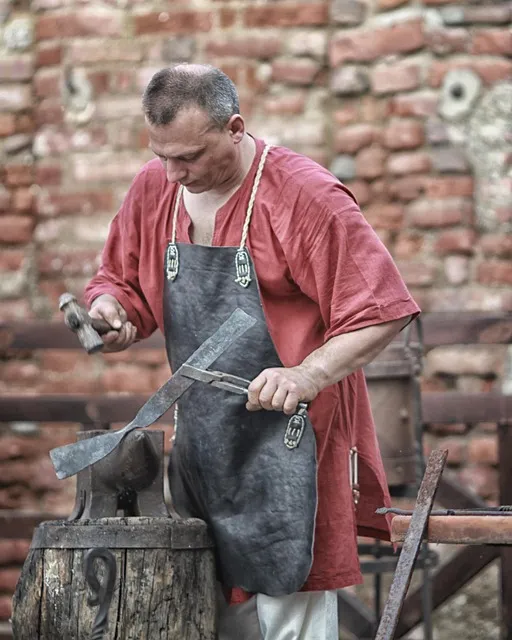
Steel does not become a blade by sitting in an ambient-temperature room. It becomes a blade by going into fire, taking repeated hammer blows on an anvil, getting quenched in cold water, and going back into the fire. Skip any step and the result is scrap metal — softer, less defined, unable to hold an edge when it actually matters. The forging metaphor is overused in men’s content precisely because it’s accurate. Character doesn’t improve through addition. It improves through pressure applied to the right places, repeatedly, without the option to stop when it hurts.
The hard truth the warrior’s code demands you hear is this: the modern world is specifically engineered to let you avoid the forge. Every convenience that removes friction — and friction is where character builds — is also, subtly, removing the conditions under which real men develop. A person can now go through an entire year without a single genuinely difficult conversation, without sustaining physical discomfort for more than a few minutes, without doing anything that requires tolerating uncertainty without reaching for a phone. An entire emotional life can be managed through a screen. Accountability can be avoided for years by staying busy enough to never stop and audit yourself. The technology is neutral. The consequence of using all of it to maximize comfort is staying soft at exactly the point where life will eventually demand hardness.
There’s a concept in metallurgy called work hardening. Repeatedly stress a metal below its breaking point, and its internal crystal structure reorganizes — the material gets denser, harder, more resistant to deformation under load. The same process operates in human neurobiology. Controlled, voluntary exposure to difficulty — physical training, cold exposure, fasting, uncomfortable conversations, sustained focus without stimulation — produces measurable changes in the prefrontal cortex, increases in stress tolerance, reductions in baseline cortisol, and the development of what researchers call psychological flexibility: the ability to stay functional under conditions that would previously have caused shutdown. Not metaphor. Documented biology. The warrior’s code is, at its core, a deliberate work-hardening protocol for the self.
Here’s where the caveats belong, because a code without intellectual honesty is dogma, not discipline. The forge has real limits. A man dealing with a genuine medical condition, a real disability, or catastrophic loss isn’t failing the warrior’s code by struggling. The code demands you carry what you can and build capacity to carry more. It doesn’t demand performing stoicism over broken bones. The difference between the warrior and the man who merely performs being one is this: the warrior knows the difference between the suffering that builds him and the suffering he’s supposed to address and heal. He doesn’t confuse the two. He carries the first and treats the second.
Every man has both. The code helps sort out which is which.
And the honest answer to the question most men are secretly asking — what if I try to live by a code and fail at it repeatedly? — is that failure is the mechanism, not the exception. Aurelius failed his code regularly. He writes about it. The Spartans lost at Thermopylae. The code isn’t a performance standard either met or missed. It’s a direction faced. On the days it’s gotten right, there’s advance. On the days it’s failed, there’s a debrief — identify what broke down, face the direction again tomorrow. The man who faces the direction consistently over decades, failing and correcting and advancing, becomes something the man who never tried could never recognize in a mirror. The forge doesn’t guarantee the blade. It guarantees the process that makes the blade possible. That’s the best offer life makes.
The FAQ: Warrior Code Masculinity — Questions Answered Directly
What exactly is the warrior’s code of masculinity, and is it just machismo rebranded? The warrior’s code is a structured set of obligations a man voluntarily accepts toward the people and communities in his care — provision, protection, presence, and service to something beyond himself. Nothing to do with aggression, dominance hierarchies, or the performance of toughness. Every major warrior tradition in history — Stoic Rome, Bushido Japan, the Spartan agoge — was fundamentally concerned with self-discipline and service, not displays of strength. The men who reduce it to machismo are usually men who’ve read neither the primary sources nor the research on what purpose-driven living actually produces in terms of health, longevity, and relationship quality.
How does a man define his personal mission if he has no idea what he is fighting for? Start with the Deathbed Audit. Imagine being eighty-five and taking the last conscious breaths. From that vantage point, what would go unregretted — not doing, not building, not protecting? The answer to that question is the mission in rough draft. Then apply the specificity test: can a stranger read the mission statement and understand what’s happening on a Tuesday? If not, it’s still a wish. Refine it until it passes the Tuesday test. Most men find the rough draft in about twenty minutes. The refinement takes most of a lifetime, which is appropriate — the code should grow as the man does.
How does the warrior’s code apply to fatherhood specifically? Fatherhood is perhaps the clearest modern application of the warrior’s code, and research from the Fathers and Sons Project at Stanford University confirms what most men sense intuitively: children with present, engaged, purposeful fathers have measurably better outcomes across every metric researchers track — academic performance, mental health, relationship stability, career achievement, and the ability to tolerate adversity without collapse. The mechanism is modeling. A child who watches his father face difficulty with dignity, honor obligations even when inconvenient, and build something with consistent effort over time, absorbs those patterns at a cellular level. The best gift a father gives his children isn’t money, isn’t educational opportunity, isn’t even stability. It’s the sight of a man who lives by a code. That sight is the inheritance that compounds across generations.
Isn’t this warrior code just another way to pressure men into being stoic and never asking for help? No — and this matters. The warrior’s code doesn’t require emotional suppression. It requires emotional discipline, a different thing entirely. Suppression means pretending the feeling isn’t there. Discipline means feeling it fully and deciding how to respond rather than reacting automatically. The brotherhood principle — the contubernium of three to five close men — is built specifically for the moments a man can’t carry the weight alone. Asking brothers for help when needed isn’t weakness within a warrior code. It’s a competency. The Spartan who broke the phalanx formation to fight individually was the one who got killed. The man who mistakes isolation for strength is misreading the code. The emotional intelligence required for genuine brotherhood is part of the warrior’s development, not a deviation from it.
How does service fit into the warrior code for men who are not in the military or emergency services? Service in the warrior’s code isn’t a profession. It’s an orientation — the decision to organize a life’s energy around the benefit of others rather than exclusively around personal accumulation. A man can practice it as a father who builds character rather than just compliance in his children, as an employer who develops his people rather than just extracting their labor, as a neighbor who maintains the social fabric rather than just benefiting from it, as a mentor who passes what he’s learned to men who need it. Research from the University of Michigan’s Survey Research Center found that men who scored highest on measures of altruistic social behavior had a death rate 2.5 times lower over a five-year period than men who scored lowest — independent of health status, age, and other variables. Service isn’t a character virtue layered on top of the warrior’s code. It’s the mechanism through which the code generates its health and longevity benefits.
What is the Thermopylae Test and how do I apply it to my actual life? The Thermopylae Test is a single diagnostic question: would this be done if no one would ever know, there were no external reward, and there were genuine personal cost? Applied to daily life, it quickly reveals which actions are code-driven and which are performance-driven. A man who coaches his kid’s team because the visibility is nice fails the test. A man who coaches because his son needs the consistency and he has the skill to provide it passes it. A man who works hard because his boss is watching fails the test. A man who works hard because his family depends on the result passes it. Run the test regularly on your motivations and a gradual shift follows — from external to internal orientation, from performance of the warrior’s code to actual embodiment of it. The shift is subtle and slow. Also permanent, once it happens.
How long does it take to build genuine purpose, and what does the research say? Purpose isn’t found — it’s built through action, specifically through the accumulation of decisions that align with stated values. Patrick Hill and Nicholas Turiano’s research, published in Psychological Science in 2014, tracked 6,163 participants over fourteen years and found participants who reported higher purpose at baseline had lower mortality rates throughout the follow-up period. But the mechanism of purpose development was behavioral, not cognitive: purpose grew strongest in individuals who took on increasingly challenging obligations and discharged them consistently. In practical terms: nobody waits to feel a sense of purpose before taking on meaningful obligations. Meaningful obligations get taken on, and purpose develops in response to fidelity toward them. The code produces the feeling — not the other way around.
How does the warrior’s code intersect with the current male loneliness epidemic? The loneliness epidemic and the purpose deficit are the same crisis wearing different masks. A man without a code has no basis for genuine brotherhood, because brotherhood in the warrior tradition is built on shared mission, not shared entertainment. Men who report the lowest levels of loneliness in research surveys are consistently men who belong to something beyond themselves — a family being actively built, a community being actively served, a craft or discipline being actively developed in the company of others. The code is the antidote to loneliness not because it says “connect with people,” but because it gives a reason worth connecting around. Genuine brotherhood can’t be manufactured with other purposeless men. It gets built by finding men fighting for something real and fighting alongside them. That’s the formation. That’s the cure.
The Practical Framework: Applying Warriors Code Duty Purpose In Real Life
LISTEN ›
The Power Within- Cultivating an Inner Locus of Control for a Life of Resilience and Purpose [EP3]
FROM THE LIBRARY ›
References
Editorial StandardsCorrectionsMedical DisclaimerAbout Our ContentAffiliate DisclosureSite Map