
Anger has a reputation problem. Not because it’s destructive by nature — because most men were never taught what to actually do with it. Told to suppress it, and it exploded later. Told to express it, and it burned the house down. The real answer sits somewhere between those two poles, and it takes more sophistication than either camp wants to admit.
Anger is energy. One of the most powerful emotional states a human being has access to. It sharpens focus, floods the system with adrenaline, gets the body ready to act. The problem was never the anger itself. The problem was the total absence of training in how to channel it. A fire in a furnace heats a house. The same fire on the living room floor destroys one. The fire isn’t the issue. The containment system is.
These 75 quotes come from warriors, philosophers, psychologists, athletes, and men who understood that anger isn’t the enemy. It’s raw material. Channeled correctly, it builds empires, protects families, fuels the kind of focused aggression that turns impossible situations into victories. Channeled badly, it destroys relationships, careers, and eventually the body itself. Read these. Study them. Start building a containment system worthy of the fire inside.
Understanding Anger: What It Actually Is

“Anger is an acid that can do more harm to the vessel in which it is stored than to anything on which it is poured.” — Mark Twain
Twain mapped the chemistry of unprocessed anger. It doesn’t damage the person you’re angry at — it corrodes you from the inside. Blood pressure. Sleep. Relationships. All casualties of anger that got held instead of channeled. The acid analogy is precise: it doesn’t care what it touches.
“Anyone can become angry — that is easy. But to be angry with the right person, to the right degree, at the right time, for the right purpose, and in the right way — that is not easy.” — Aristotle
Twenty-four centuries ago, Aristotle nailed the challenge. Anger itself isn’t the problem. Misaimed, disproportionate, poorly timed anger is. The goal isn’t eliminating it — the goal is mastering the deployment. Five variables. Most men are managing zero of them consciously.
“Speak when you are angry and you will make the best speech you will ever regret.” — Ambrose Bierce
Every man has that email. That sentence he can’t take back. Bierce understood: anger makes you eloquent and reckless at the same time. It gives you the words and removes the judgment needed to evaluate them. The combination is devastating.
“Anger is a wind which blows out the lamp of the mind.” — Robert Green Ingersoll
When anger takes over, the prefrontal cortex — the part of the brain running judgment, planning, consequence evaluation — goes offline. You’re operating with reduced cognitive capacity, and that’s not a metaphor. That’s the neurological cost of uncontrolled rage. Which is exactly why so many decisions made in anger look obviously wrong the morning after.
“Anger, if not restrained, is frequently more hurtful to us than the injury that provokes it.” — Seneca
Seneca wrote an entire treatise on anger two thousand years ago. His central insight: the reaction often does more damage than the provocation. The man who can see that in real time — while the anger is still rising — has a decisive advantage. Emotional discipline begins right at that moment of recognition.
“The opposite of anger is not calmness, it’s empathy.” — Mehmet Oz
This reframes the whole conversation. You don’t overcome anger by suppressing it into calm. You overcome it by understanding the human being standing in front of you. Empathy doesn’t excuse the behavior — it widens the lens you’re responding from. And a wider lens means better decisions.
“Anger is never without a reason, but seldom with a good one.” — Benjamin Franklin
Franklin spotted the trap: anger always feels justified. It always has a story. But the story is usually a surface narrative hiding a deeper wound — fear, shame, helplessness. The man who can see past the story to the wound has real power, over both himself and the situation.
“For every minute you remain angry, you give up sixty seconds of peace of mind.” — Ralph Waldo Emerson
Emerson did the math. Anger is expensive. Every minute spent in rage is a minute stolen from clarity, creativity, connection. The question is whether the thing you’re angry about is worth what it’s costing you, minute by minute.
“Holding on to anger is like drinking poison and expecting the other person to die.” — Attributed to various sources
The most repeated anger quote in existence, and for good reason. The person you’re furious at is probably sleeping fine tonight. You’re the one with elevated cortisol, disrupted sleep, a shortened lifespan. The grudge is killing you. Not them.
“Anger is a valid emotion. It’s only bad when it takes control and makes you do things you don’t want to do.” — Ellen Hopkins
Hopkins drew the line in the right place. Anger as information is useful. Anger as a decision-maker is catastrophic. The goal is to feel it fully without letting it drive the car. Passenger or driver — the choice happens faster than most men think.
“Men are like steel. When they lose their temper, they lose their worth.” — Chuck Norris
Norris earned the right to say this. A martial arts champion who understands that the man who can’t control his emotional temperature has a structural flaw undermining everything else he’s built. Steel bends under pressure. It doesn’t shatter — unless the temperature gets high enough.
Channeling Anger: Turning Fire Into Fuel
Knowing anger is energy is one thing. Knowing what to do with that energy in the ninety seconds after it fires is another. Here’s where the practical architecture starts. The men quoted below weren’t calm by nature — they were disciplined by choice, and there’s a real difference. Calm by nature means you rarely get tested. Disciplined by choice means you get tested regularly and pass anyway. The quotes ahead are operational. Each one describes the specific move to make when the fire comes up.
“I don’t have to attend every argument I’m invited to.” — Unknown
Possibly the most underrated anger management tool ever articulated. Someone provokes you. The surge hits. And then a choice: engage or decline. The ability to decline isn’t weakness — it’s the ultimate flex of emotional sovereignty. Not every invitation deserves a reply.
“Man should forget his anger before he lies down to sleep.” — Mahatma Gandhi
Gandhi wasn’t being sentimental. Sleep quality, cortisol regulation, next-day cognitive function — all compromised when a man goes to bed angry. Processing anger before sleep isn’t soft. It’s operational hygiene. Skip it and the cost shows up in tomorrow’s decisions.
“It is wise to direct your anger towards problems — not people; to focus your energies on answers — not excuses.” — William Arthur Ward
Ward found the most productive use of anger: aim it at the problem, not the person. Anger at problems generates solutions. Anger at people generates enemies. The target chosen determines the outcome received. Choose deliberately.
“When angry, count to ten before you speak. If very angry, count to one hundred.” — Thomas Jefferson
Jefferson wasn’t being cute. He described what modern neuroscience now confirms — the amygdala hijack lasts roughly ninety seconds. Create any delay at all and the rational brain gets time to come back online. Ten seconds might save a relationship. A hundred might save a career.
“He who angers you conquers you.” — Elizabeth Kenny
Every time someone provokes you and you lose composure, you’ve handed them control of your nervous system. They pressed a button, you responded on command. That’s not strength. That’s programming. The man who doesn’t react has broken the program. Weaponizing your rage starts by removing other people’s access to the trigger.
“Get mad, then get over it.” — Colin Powell
Powell led in environments where angry men make fatal decisions. His formula is brutally efficient: feel it, acknowledge it, move past it. Don’t suppress it. Don’t indulge it. Process and get back to work. The brevity of the instruction is the point.
“The best fighter is never angry.” — Lao Tzu
Ask any experienced martial artist. The angry fighter is sloppy, predictable, wasting energy on emotion that should be going to strategy. The calm fighter reads the situation, conserves energy, strikes with precision. Anger feels powerful. Calm is dangerous. Those aren’t the same thing.
“I use the negativity to fuel the transformation into a better me.” — Beyoncé
Anger is fuel. The only real question is what it’s aimed at. Aim it at the person who wronged you, get a fight. Aim it at building the thing they said couldn’t be built, get a legacy. The fuel’s identical. The direction is everything.
“Never respond to an angry person with a fiery comeback, even if he deserves it. Don’t allow his anger to become your anger.” — Bohdi Sanders
Anger is contagious. Someone else’s rage can infect you in seconds if attention isn’t paid. The disciplined man notices when another person’s emotional state is trying to hijack his own, and refuses the transfer. That refusal is a skill. It takes practice.
“In times of great stress or adversity, it’s always best to keep busy, to plow your anger and your energy into something positive.” — Lee Iacocca
Iacocca saved Chrysler from bankruptcy. Not through calm reflection — through anger channeled into relentless action. The man who takes his rage and pours it into productive work has found an energy source that doesn’t run dry.
“Anger is just anger. It isn’t good. It isn’t bad. It just is. What you do with it is what matters.” — Jim Butcher
Butcher stripped the morality out of anger. Not a sin. Not a virtue. A signal. What happens after the signal fires — that’s where character shows itself. Two men can feel the exact same intensity of anger and land on entirely different outcomes, depending on what they do in the next ninety seconds.
“Revenge is not always sweet; once it is consummated we feel inferior to our victim.” — Emile Cioran
Cioran named the dark truth about revenge: it promises satisfaction and delivers emptiness. The man who channels his anger into revenge discovers the act makes him smaller, not larger. Build instead of destroy. The returns are better, and they compound.
The Cost of Uncontrolled Anger
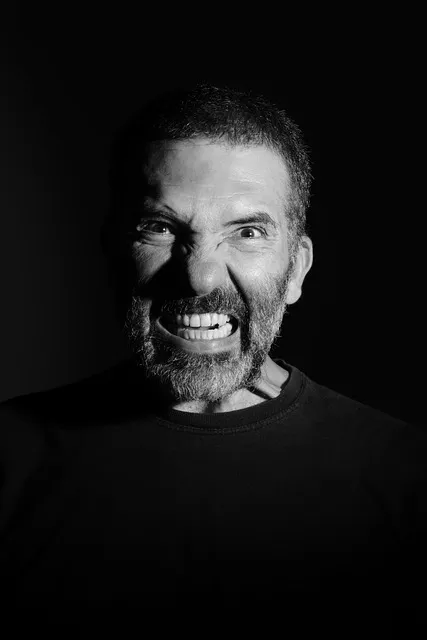
“How much more grievous are the consequences of anger than the causes of it.” — Marcus Aurelius
The emperor-philosopher who ruled Rome and still took time to examine his own anger. Aurelius understood the provocation is almost always smaller than the damage the reaction causes. The ratio is always wrong when anger’s in charge. His solution wasn’t suppression. It was perspective.
“The angry man will defeat himself in battle as in life.” — Samurai Proverb
Samurai understood anger on the battlefield is a death sentence. An angry swordsman overcommits, misreads timing, opens himself up. Same principles apply in negotiations, relationships, anywhere strategy outweighs force.
“An angry man opens his mouth and shuts his eyes.” — Cato the Elder
Two thousand years old and still dead accurate. Anger makes you vocal and blind at once. Say more than you should while seeing less than you need to. That combination is how men destroy things they spent years building — in a single conversation, a single sentence.
“Resentment is like taking poison and then waiting for the rat to die.” — Malachy McCourt
McCourt knew resentment from the inside. Holding anger against someone who’s moved on is self-harm dressed up as justice. The only person suffering from the resentment is the one holding it. The rat left long ago.
“Anger makes you smaller, while forgiveness forces you to grow beyond what you are.” — Cherie Carter-Scott
Anger contracts the world. Narrows focus to a single target, erases everything else from view. Forgiveness expands it. Not because the other person deserves it — because a man deserves the bigger world that opens up once the contraction ends.
“The sharpest sword is a word spoken in wrath.” — Gautama Buddha
Words in anger cut deeper than any weapon, because they come from someone who knows exactly where you’re vulnerable. The man who weaponizes intimacy through angry words has broken something no physical force could touch. And those words don’t come back.
“Bitterness is like cancer. It eats upon the host.” — Maya Angelou
Angelou used the medical metaphor on purpose. Chronic anger and bitterness aren’t just emotional states. They’re physiological ones. Elevated cortisol. Chronic inflammation. Cardiovascular damage. The body doesn’t distinguish between anger at a traffic jam and anger at a genuine threat. Biology responds to both identically.
“A man who can’t control his temper is like a city with broken-down walls.” — Proverbs 25:28
A city without walls is defenseless. A man without emotional containment is the same — exposed to anyone who knows how to provoke him. Temper is a perimeter. Breach it easily and nobody near you is safe either.
“Anger is the enemy of non-violence and pride is a monster that swallows it up.” — Mahatma Gandhi
Gandhi tied anger to pride directly. Most anger gets triggered by wounded pride — someone challenged your status, disrespected your authority, questioned your competence. Release the grip on pride and anger loses most of its fuel supply. The fire needs that specific oxygen to keep burning.
“Whatever is begun in anger ends in shame.” — Benjamin Franklin
Franklin mapped the trajectory. The decision made in anger. The action taken in rage. And then the aftermath — the shame of knowing you were better than that and chose not to be. Every man knows this cycle. The question is whether it gets broken before it breaks something else.
“Anger dwells only in the bosom of fools.” — Albert Einstein
Einstein, a man who understood energy better than anyone alive in his century, recognized that sustained anger is an inefficient use of human energy. The wise man processes it and redirects. The fool lets it take up permanent residence. Over a decade, the difference in output is staggering.
Anger as Information: Listening to the Signal

“Usually when people are sad, they don’t do anything. They just cry over their condition. But when they get angry, they bring about a change.” — Malcolm X
Malcolm X saw anger as a catalyst. Sadness immobilizes. Anger mobilizes. The civil rights movement wasn’t powered by sadness — it was powered by righteous anger aimed at specific injustice. The key word is aimed. Unfocused anger burns everything indiscriminately. Aimed anger changes things.
“Anger is a signal, and one worth listening to.” — Harriet Lerner
Lerner spent decades studying anger in relationships. Her insight: anger is diagnostic. It tells you a boundary got crossed, a value got violated, a need got ignored. Suppressing the signal doesn’t fix the problem. It just delays the explosion and takes away your ability to address the actual cause.
“There are two things a person should never be angry at: what they can help, and what they cannot.” — Plato
Plato’s logic is airtight. Fix it if you can — anger’s unnecessary. Can’t fix it — anger’s useless. Either way, it adds nothing but suffering to the equation. Step one is always figuring out which category applies.
“Anger is a tool for change when it challenges us to become more of an expert on the self and less of an expert on others.” — Harriet Lerner
Lerner again, cutting deeper. Anger usually shows up wearing the mask of “they did something wrong.” But the most useful information in the anger is almost always about you — your expectations, your wounds, your unspoken needs. The most courageous move is looking there first.
“Every day we have plenty of opportunities to get angry, stressed or offended. But what you’re doing when you indulge these negative emotions is giving something outside yourself power over your happiness.” — Joel Osteen
Strip everything else away and the insight holds: every emotional reaction to an external event is a power transfer. The question is whether your internal state should be controlled by traffic, coworkers, and social media algorithms. The inner locus of control doesn’t coexist with chronic reactivity.
“I was angry with my friend: I told my wrath, my wrath did end. I was angry with my foe: I told it not, my wrath did grow.” — William Blake
Blake captured the paradox in four lines. Expressed anger dissipates. Suppressed anger metastasizes. The man who can articulate his anger — not scream it, articulate it — is the one who can actually resolve it. The distinction between expression and articulation is the entire skill.
“The greatest remedy for anger is delay.” — Thomas Paine
Paine helped start a revolution, so urgency was not a foreign concept to him. But he also understood that most anger-driven decisions get made in the first ninety seconds — the amygdala window. Introduce any delay and the rational brain reactivates. Simple remedy. Takes practice to execute.
“If you are patient in one moment of anger, you will escape a hundred days of sorrow.” — Chinese Proverb
One moment of patience. A hundred days of consequences avoided. That’s the return on investment of emotional regulation. No financial instrument on earth offers that ratio. Men who understand this start treating patience not as a virtue but as a strategy.
“The angry people are those people who are most afraid.” — Robert Anthony
Anthony cut to the substrate. Under anger, almost always, sits fear. Fear of being disrespected. Fear of losing control. Fear of being seen as weak. The man who can identify the fear under his anger has found the actual target — and it’s never the person standing in front of him. This is what why anger hits hard actually means once you look underneath it.
“Anger is a momentary madness, so control your passion or it will control you.” — Horace
Horace called anger what it is: temporary insanity with a time limit. It passes. Always. The damage done during that window, though, is permanent. The man who can ride out the madness without acting from it has mastered something ancient and essential.
“Anger begins with folly, and ends with regret.” — Pythagoras
Pythagoras, the father of mathematics, applied his precision to human emotion. Foolish beginning plus unchecked escalation equals guaranteed regret. The only variable that changes is whether the anger gets acted on, or gets let pass through like weather.
Anger and Strength: The Warrior’s Relationship with Rage

“A warrior does not give up what he loves, he finds the love in what he does.” — Dan Millman
Millman’s peaceful warrior philosophy holds that the truly strong man doesn’t fight his anger — he transforms it. The love of mastery, of growth, of becoming better, channels the aggressive energy into something constructive. The anger becomes the engine instead of the accident.
“In the middle of difficulty lies opportunity.” — Albert Einstein
The moment of maximum anger is often the moment with the most potential for change. Anger tells you something needs to be different. The opportunity lives in deciding what that something is — and building it instead of breaking something else. The difficulty and the opening are the same event.
“The world needs anger. The world often continues to allow evil because it isn’t angry enough.” — Bede Jarrett
Jarrett, a Dominican friar, made the case for righteous anger. There are things in this world that should make a man angry — injustice, cruelty, exploitation, the deliberate degradation of everything worth protecting. The problem isn’t anger at evil. The problem is anger at inconvenience. Learn the difference and guard it carefully.
“To be angry is to revenge the faults of others on ourselves.” — Alexander Pope
Pope spotted the inversion: someone else makes a mistake, and you punish yourself with rage. Sentencing yourself for their crime. Not justice. Self-inflicted damage dressed up as a moral response. The error doesn’t require anyone’s suffering to be resolved.
“I don’t usually lose my temper, but if I get angry, it’s true — I’m scary.” — Eva Mendes
The rare anger of a controlled person is terrifying precisely because it’s rare. The man who never loses his temper, and then does — that’s the man the room listens to. Frequency cheapens impact. When the calm man speaks from anger, everyone understands something real just happened.
“Anger is the ultimate destroyer of your own peace of mind.” — Dalai Lama
The Dalai Lama has been in exile for over sixty years, his country occupied, his people dispersed. If anyone has cause for sustained anger, it’s him. His finding after decades of practice: anger destroys the angry person first. Peace of mind is the first casualty, and usually the most expensive one.
“People won’t have time for you if you are always angry or complaining.” — Stephen Hawking
Hawking spent his life in a wheelchair, unable to move most of his body, producing work that redefined humanity’s understanding of the cosmos. He chose not to be angry. If he could make that choice from his circumstances, the rest of us have considerably less justification for chronic rage about ordinary frustrations.
“No man can think clearly when his fists are clenched.” — George Jean Nathan
Literally and figuratively true. Tension in the body correlates with rigidity in the mind. Unclench the hands and the thinking starts to open. The physical state drives the mental state more than most men realize — which is why nervous system regulation isn’t optional equipment for a man who wants to think clearly under pressure.
“Anger and intolerance are the enemies of correct understanding.” — Mahatma Gandhi
Gandhi drew the direct line: you can’t understand a situation you’re furious about. Anger narrows the lens to a single frame. Understanding requires the wide angle. Can’t have both at once. Choose which one’s needed for what’s being attempted.
“Do not let your anger lead to hatred, as you will hurt yourself more than you would the other.” — Anger Proverb
Anger is an event. Hatred is a lifestyle. The man who lets a moment of anger calcify into sustained hatred has signed up for a life sentence of cortisol, isolation, and diminished capacity. Every physiological system in the body pays rent on that decision. Not worth it.
“Conquer the angry one by not getting angry; conquer the wicked by goodness; conquer the stingy by generosity, and the liar by speaking the truth.” — Dhammapada
The Buddhist text lays out the counterintuitive strategy: meet anger with calm, wickedness with integrity, greed with generosity. Not because it’s morally superior — because it works. The man who refuses to match energy breaks the cycle entirely and controls the dynamic from that point forward.
Anger and Purpose: The Productive Use of Rage
The difference between destructive rage and productive fury isn’t intensity. It’s direction. The men in this section found a way to take the same energy that destroys relationships and careers and aim it at something worth building. Athletes who trained through it. Leaders who turned it into decision-making clarity under pressure. Artists who turned wounds into work. Same fuel as the version that burns things down. Only the channel changes.
“Use your anger. It was meant to make you productive, not destructive.” — Doc Zantamata
Zantamata articulated the fundamental reframe: anger has a designated purpose, and that purpose is constructive. Let it turn destructive, and the tool’s been misused. Every time the surge hits, the question isn’t how to stop it. It’s where to aim it.
“Anger is energy. Harness it.” — Unknown
Stripped to its core, this is the entire philosophy. Energy isn’t good or bad — it’s neutral until it has a direction. The gym exists partly because men figured out that physical training converts emotional energy into something useful, and leaves you calmer, stronger, clearer on the other side. That process works. Use it.
“Nothing is so aggravating than calmness.” — Oscar Wilde
Wilde is being funny, but the insight holds. In conflict, genuine composure destabilizes an aggressive opponent more than matching aggression does. It removes the dance partner the provocation needed. Stay calm and the other person’s anger has nowhere to escalate toward. Often turns back on itself.
“Where there is anger, there is always pain underneath.” — Eckhart Tolle
Tolle mapped the architecture. Anger is always a secondary response. The primary response is pain — and the pain preceded the anger by anywhere from five seconds to thirty years. The man who can feel the pain directly, without routing it through anger first, has eliminated the most destructive step in the sequence. This is what transforming anger actually requires at the operational level.
“Anybody can become angry — that is easy; but to be angry with the right person and to the right degree and at the right time and for the right purpose, and in the right way — that is not within everybody’s power and is not easy.” — Aristotle
Aristotle earns a second appearance because this version includes the full scope of what mastery requires. It’s not enough to get the person right. The degree, the timing, the purpose, and the method all need calibrating simultaneously. A lifetime practice. Not a technique deployed once.
“Holding anger is a poison. It eats you from inside. We think that hating is a weapon that attacks the person who harmed us. But hatred is a curved blade. And the harm we do, we do to ourselves.” — Mitch Albom
Albom’s metaphor is precise in its geometry. A curved blade strikes the person swinging it. Anger aimed at someone who hurt you curves back and wounds you instead. Not a spiritual observation. A description of how chronic anger operates on the human nervous system. The damage is physiologically real.
“When you squeeze an orange, orange juice comes out — because that’s what’s inside. When you are squeezed, what comes out is what’s inside.” — Wayne Dyer
Dyer’s question is worth sitting with: under pressure, what comes out? The answer reveals the interior architecture more accurately than any amount of self-reporting. Anger management is, fundamentally, the project of changing what’s inside so that pressure produces something different than it currently does.
“Be selective in your battles. Sometimes peace is better than being right.” — Unknown
Selective engagement isn’t cowardice. It’s strategic thinking about which conflicts deserve energy. The man who fights every battle wears himself out and loses the ones that actually matter. Choose battles the way a good general chooses terrain — deliberately, with real consideration for what a victory actually costs.
Forgiveness and Letting Go: The Final Level
Forgiveness is the hardest skill in this entire body of work, and the one most men resist hardest. The resistance usually comes from a misunderstanding of what forgiveness actually is. It’s not agreement. Not approval. Not pretending nothing happened. It’s a unilateral decision to stop making the past the landlord of the present. The man who can’t forgive is paying rent to someone who no longer lives in the building. The quotes below come from people who understood what was at stake — not sentimentally, practically. Forgiveness as a path to resilience isn’t a soft idea. It’s one of the hardest, most consequential things a man can do.
“The weak can never forgive. Forgiveness is the attribute of the strong.” — Mahatma Gandhi
Read that again. Forgiveness isn’t weakness. It’s the ultimate display of strength. The weak man holds the grudge because he can’t afford to let it go — it’s all he has. The strong man releases it because he’s got something better to build with the freed-up energy.
“When you forgive, you in no way change the past — but you sure do change the future.” — Bernard Meltzer
Meltzer clarified what forgiveness actually does. Doesn’t erase what happened. Doesn’t excuse it. Releases the obligation to carry it forward. The past stays exactly the same. The future opens up. The accounting changes dramatically without a single historical fact being altered.
“Darkness cannot drive out darkness; only light can do that. Hate cannot drive out hate; only love can do that.” — Martin Luther King Jr.
King wasn’t being naive. He was being strategic. Meeting anger with anger produces escalation, and escalation eventually produces destruction. Meeting anger with something stronger — purpose, unwavering principle, the refusal to become what you’re opposing — produces transformation. He proved it at scale, in front of the entire world.
“You will not be punished for your anger, you will be punished by your anger.” — Attributed to the Buddha
The universe doesn’t punish anger. Doesn’t need to. Anger punishes itself, through insomnia, hypertension, broken relationships, missed opportunities. The sentence is built into the crime. No external enforcement required.
“Not forgiving is like drinking rat poison and then waiting for the rat to die.” — Anne Lamott
Lamott’s version of the poison metaphor is the most visceral one out there. Choosing to ingest something toxic on the theory it’ll somehow harm someone else. It won’t. Everyone knows it won’t. Every day the grudge gets held, only one person is drinking. Release the cup.
“Forgiveness does not change the past, but it does enlarge the future.” — Paul Boese
Boese captured the practical value. Forgiveness isn’t about the past — that’s fixed. It’s about reclaiming the energy, the attention, the mental bandwidth the grudge was consuming. That reclaimed capacity is the future. Every hour spent in resentment is an hour stolen from the construction project ahead.
“To forgive is to set a prisoner free and discover that the prisoner was you.” — Lewis B. Smedes
Smedes found the hidden prisoner. The person who wronged you seems like the captive of your anger. They’re not. They’ve moved on. You’re the one still locked in the cell of resentment, keeping the jailer’s schedule, spending your days tending a prison that holds only you. Forgiveness is the key — and it was always in your hand.
“Resentment is the poison you drink hoping someone else will die.” — Attributed to various sources
A variation on the theme, because it bears repeating from every angle. Chronic resentment isn’t a relationship with the person who wronged you. It’s a relationship with a memory, conducted at ongoing physiological cost, while the actual person moves through their life unburdened. The math doesn’t work in your favor.
“Forgive others, not because they deserve forgiveness, but because you deserve peace.” — Jonathan Lockwood Huie
This repositions forgiveness where it belongs — something done for yourself, not for the person who wronged you. They don’t need to deserve it. Don’t need to ask for it. Don’t need to acknowledge what they did. Forgiveness isn’t for their benefit. It’s for the peace on the other side of it. The transaction doesn’t require their participation.
Sources & Further Reading
Common Questions About Anger Quotes Men

Is anger always bad?
No. Anger is a natural, healthy emotion that signals boundary violations, injustice, or unmet needs. The problem isn’t the anger — it’s what gets done with it. Channeled into action, anger has fueled social movements, athletic performances, creative breakthroughs. Uncontrolled, it destroys relationships and health. The goal is mastery, not elimination. The man who tries to eliminate anger has misunderstood the problem from the start.
How do I control my temper in the moment?
Create a delay. Count to ten. Take three deep breaths. Leave the room for ninety seconds. The amygdala hijack — the neurological state that makes a person reactive — lasts roughly ninety seconds. Any technique that puts a pause between trigger and response gives the prefrontal cortex time to re-engage. The pause is the whole game. Once the rational brain’s back online, the decision about how to respond belongs to the man, not to his nervous system’s emergency protocols.
What is the difference between anger and aggression?
Anger is an emotion — an internal state. Aggression is a behavior — an external action. A man can feel intense anger without being aggressive. He can also be aggressive without being angry (cold, calculated aggression is often more dangerous than hot rage). Emotional intelligence means experiencing anger fully while choosing the behavioral response deliberately. The gap between feeling and action is where character gets built or abandoned.
Why do men seem to struggle with anger differently than women?
Men don’t necessarily experience more anger — they’re socialized to express it differently. Men are culturally permitted to express anger but discouraged from expressing sadness, fear, or vulnerability. So a lot of men funnel every negative emotion through the single outlet of anger. The man who can identify “I am actually afraid” or “I am actually hurt” instead of defaulting to anger has broken a pattern that costs most men dearly — in relationships, health, self-understanding.
Can physical exercise help manage anger?
Significantly. Exercise reduces cortisol, increases endorphins, provides a physical outlet for aggressive energy, and improves the neurological capacity for emotional regulation. Studies consistently show regular physical activity reduces both the frequency and intensity of anger episodes. The gym is anger management that actually works — not because it suppresses the emotion, but because it gives the energy somewhere to go that doesn’t destroy anything.
What is the connection between anger and fear?
Under most anger, dig far enough, and there’s fear. Fear of losing control. Fear of being disrespected. Fear of being seen as weak or inadequate. Anger is often fear in its most aggressive costume — presents as strength while concealing vulnerability. The man who learns to identify the fear beneath the anger has found the actual source of the problem, which is the only place it can genuinely get resolved. Treating the anger without finding the fear underneath is treating symptoms while the cause keeps operating.
How long does anger actually last in the body?
The acute neurological response — the amygdala hijack — lasts roughly ninety seconds. After that, if the anger is still there, it’s a choice. Re-triggering the response by continuing to think the thoughts that produced it. The initial surge is involuntary. Everything after ninety seconds is a decision, even when it doesn’t feel like one. This matters enormously: with practice, the cycle can be interrupted after the first wave passes, before the decision to sustain the anger even gets made.
Does suppressing anger work?
No. Suppression isn’t the same as processing. Suppressed anger accumulates pressure until something forces a release — usually at the wrong moment, toward the wrong target, with disproportionate intensity. The physiological effects of chronic suppression — elevated cortisol, cardiovascular stress, immune suppression — are well documented. The alternative to suppression isn’t uncontrolled expression. It’s processing: acknowledging the anger, identifying what it’s communicating, and choosing a deliberate response that addresses the underlying issue without creating new damage.
The Architecture of Mastery: From Reading to Living These Principles
Quotes endure because they compress hard-won wisdom into portable form. Each one in this collection represents thousands of hours of lived experience, failure, recovery, and eventual clarity, distilled into a single sentence. But reading quotes isn’t the same as internalizing them. The difference between motivation and transformation is what happens after the quote stops feeling exciting.
Most people consume quotes the way they consume social media — a brief surge of recognition followed by nothing. Want these to actually change behavior? Build a system. Write one quote on a card each week. Put it where it gets seen daily — bathroom mirror, car dashboard, phone lock screen. At the end of the week, evaluate honestly: did that principle get lived, or just admired? The honest answer each week is the entire curriculum.
When a quote hits in the chest, that’s not random. The nervous system identified something in those words that maps onto an unresolved tension already sitting there. The quotes that move a man most are diagnostic — pointing directly at the thing that needs work, the truth being avoided, the permission that’s been waited on. Pay attention to which ones create resistance. The ones that irritate the most are usually carrying the most accurate information about where the actual work is.
The implementation protocol is simple: identify the specific principle the quote encodes. Translate it into one concrete daily action. Commit to that action for fourteen days. Fourteen days is the minimum threshold for a behavior to start forming a neural groove. Fourteen days of deliberate practice on a single anger-related principle produces more real change than fourteen months of aspiring to general emotional improvement. The specificity is the mechanism. Mastering your emotions isn’t a mood or a resolution. It’s a skill, built exactly this way — one specific practice, repeated until automatic, then the next one.
The men who’ve genuinely mastered their anger describe the same arc: a period of failure and recognition, then a period of deliberate practice, then a period where the old reactions simply stop arising with the same force. Not a personality transplant. The replacement of an automatic response with a trained one — the same process by which any physical skill gets acquired. The angry man doesn’t become calm by wanting to be calm. He becomes calm by practicing the specific actions calm men take, thousands of times, until those actions are more automatic than the rage used to be.
The 75 quotes above aren’t decoration. They’re a map. Follow it.
FROM THE LIBRARY ›
Read Transforming Anger: How to Channel Rage Into Something Useful.
Read Why Anger Hits Hard: The Hidden Struggle You’re Not Talking About.
Read Weaponize Your Rage: Master Your Anger, Command Your Power.
Read Emotional Discipline: Turning Trauma Into Triumph Through Self-Regulation.
Read Iron Will to Let Go: Forgiveness as the Hidden Path to Unshakable Resilience.
Read Emotional Intelligence: The Hidden Key to Real Power.
Related: The 90-Second Rule: How to Sit With Rage Without Acting on It or Stuffing It Down
Related: Unbroken Summary: Key Takeaways and What to Do Next