
Thomas and the Gray Corridor
Picture a man — call him Thomas — thirty-one and miserable in a way he couldn’t name. He’d done everything correctly by every standard he’d been given. Bachelor’s degree, then a master’s. A job with a salary that would have stunned his parents at his age. A girlfriend who was, by every external measure, exactly what you’re supposed to want. He went to the gym four days a week. He had a healthy diet. He read. He was, by the consensus of everyone around him, a man who had it together.
He’d describe his life, if you asked him honestly, as a gray corridor. Not painful. Not dark. Gray. The same day, the same goals, the same weekend routines, the same conversations, the same polished surface over an interior that felt increasingly distant and increasingly small. He wasn’t unhappy, he’d say. He had no right to be unhappy. But he also wasn’t alive in any way that felt like it mattered to him.
He’d come across a passage from Nietzsche’s Thus Spoke Zarathustra, the section on the Last Man, and it hit him like a physical blow. He sat with the book for an hour after reading it, recognizing the description with a clarity that disturbed him. He was the Last Man. He’d optimized for comfort. He’d arranged his life to minimize friction, minimize risk, minimize discomfort of every kind. He’d achieved the exact life the modern world tells you to want, and it felt like a cage.
This is episode two hundred and four of Resilient Wisdom. I’m Vladislav Davidzon. Today we’re going to talk about the most important thing Friedrich Nietzsche got right: the concept of self-overcoming, what he called Selbstüberwindung. And we’re going to apply it to the actual problem you might be living with right now. That’s the problem of having built a comfortable life that does not challenge you into becoming more than you currently are. We’re building what I call the Self-Overcoming Protocol. It’s a concrete framework for identifying where you are voluntarily diminishing yourself. It shows you what it takes to genuinely expand beyond your current limits. And it explains why the adversity you’re avoiding is precisely the material required to build the man you want to be.
I want to be clear about what this episode is not. It’s not a philosophical lecture. It’s not a graduate seminar on German idealism. I’m going to take one specific idea from Nietzsche. It’s one he developed across multiple works, and one his most careful interpreters have consistently identified as central. I’m going to translate it into practical architecture for you, if you’re living the gray corridor Thomas was living. We’re using the idea because it’s true, not because Nietzsche said it.
What Nietzsche Actually Said
- What am I for?
- What am I building toward?
- What am I willing to suffer for?
- What would I be willing to become that I am not yet, and what would have to die in me for that becoming to be possible?

The idea that matters most for you is self-overcoming. In Thus Spoke Zarathustra, Nietzsche writes:
And life itself confided this secret to me: “Behold,” it said, “I am that which must always overcome itself.”
Self-overcoming, Selbstüberwindung, is not self-improvement in the modern sense of the word. It’s not optimization. It’s not incremental betterment of your existing self. It’s the repeated destruction of the self you’ve become, in order to make space for the self you’re capable of being.
The distinction matters enormously to you. Self-improvement assumes the continuity of a self that’s being improved. Self-overcoming assumes that your genuine growth requires the repeated death of the comfortable, stable identity you’ve constructed, not a pleasant renovation of it, but a genuine confrontation with its limitations that forces a transformation rather than an upgrade.
Nietzsche was not writing self-help. He was writing a diagnosis. He observed that the dominant tendency of human beings, especially those living in modern, comfortable, secure conditions, is to build a self that minimizes suffering and maximizes stability, and then to defend that self against every challenge. He called the endpoint of this tendency the Last Man. That’s the creature who has eliminated adversity, avoided greatness, and chosen warmth over fire. He lives in a state of perpetual blinking comfort, with no higher purpose than the continuation of that comfort.
Nietzsche’s question was not “how do I self-improve?” His question was aimed at you directly: what are you for? What are you building toward? What are you willing to suffer for? What would you be willing to become that you are not yet, and what would have to die in you for that becoming to be possible?
These are not comfortable questions for you to sit with. They are, however, the right questions. Ask yourself these, specifically, before you go any further:
And if you’re living in a gray corridor right now, if you have the job, the girlfriend, the gym routine, the podcast habit, and still feel like something essential is missing, you already know the answer. You’re living the answer to a version of Nietzsche’s question you haven’t asked yourself honestly yet.
The Last Man in the Modern World
Nietzsche’s Last Man has specific characteristics that translate to your world with unsettling accuracy. He’s comfortable. He’s safe. He avoids extremes of commitment, of ambition, of passion, of suffering. He has opinions but no convictions. He has preferences but no values he’d pay a real cost to honor. He’s pleasant. He’s agreeable. He’s productive in ways adequately rewarded by existing systems. He doesn’t create new systems. He doesn’t overturn existing ones. He lives, blinking, in the light of others’ fires, having never built one of his own.
The modern version has specific features Nietzsche couldn’t have predicted for you. The Last Man of 2026 consumes vast amounts of content about growth and self-improvement without changing in any concrete way. He knows the vocabulary of mindset tools and emotional intelligence and high performance. He’s read the books. He’s listened to the podcasts. He can discuss the concepts fluently at dinner parties. He hasn’t, however, done the thing all that content is pointing toward: the sustained, uncomfortable, identity-threatening work of genuine self-overcoming.
He is, in the most precise sense, using the consumption of growth content as a substitute for growth itself. Your engagement with ideas about becoming more provides just enough stimulation to prevent the genuine discomfort that would force you to actually change. This is not a character flaw in you. It’s a trap modern media environments have constructed so elegantly that it’s nearly invisible from the inside.
Research supports this in ways Nietzsche couldn’t have anticipated. A 2011 study by Laran and Janiszewski in the Journal of Consumer Research found that simply planning to pursue a goal can reduce actual goal pursuit. They called it “goal licensing,” the phenomenon by which engaging in preparatory goal-related behavior creates the feeling of progress that reduces the urgency of actual progress. Reading about discipline does not develop discipline in you. Thinking about your ambitions does not advance them. Discussing your growth does not produce growth. Only the action that’s uncomfortable, that risks failure, that forces genuine confrontation with your current limits, does that for you.
The Last Man reads about self-overcoming. The man engaged in self-overcoming is too busy with the actual work to read very much about it.
The Last Man reads about self-overcoming. The man engaged in self-overcoming is too busy with the actual work to read very much about it.
Notice which one you’ve been this year.
Daniel and the Comfort Ceiling
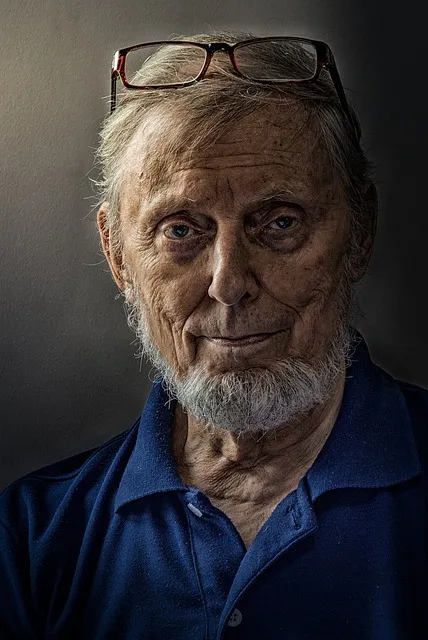
He’d describe that business crisis period with detail and color that’s absent from how he describes everything else in his life. The stakes had been real. The outcome had been genuinely uncertain. He’d been required to reach beyond what he knew he could do and find out whether more was available to him. It had been there, but only because the circumstances forced him to access it. Left to his own comfort management, he’d never have chosen the risk level that produced that growth.
Daniel had hit what I call the comfort ceiling: the point where your life is so well-managed that the natural feedback mechanism of adversity, the mechanism that forced you to grow every time before, is no longer operational. You’ve solved the problems. There are no more problems of sufficient magnitude to force your genuine development. You’re as capable as you currently need to be. And the gap between your current capability and your potential keeps widening, invisibly, while you manage your comfort.
The comfort ceiling is particularly insidious because it looks like success to you. The metrics all look good. The bank balance is healthy. The relationship is stable. The career is progressing adequately. Nothing is broken. Nothing is failing. And yet something is deeply wrong in you, in a way that’s very hard to name, because all the named categories are fine.
What’s wrong is precisely what Nietzsche diagnosed: you’re not overcoming. You’re managing. And management, however competent, is the opposite of growth. Growth requires that you encounter something you cannot currently handle and develop the capacity to handle it. Management ensures you never encounter anything you cannot currently handle. The two projects are mutually exclusive at the margins, and if you’re like most men in comfortable modern lives, you’ve chosen management so thoroughly that the overcoming has stopped entirely in you.
Ask yourself, right now, where your own comfort ceiling sits. Not in the abstract. In the specific texture of your actual week. What’s the last thing you did that genuinely scared you, where the outcome was uncertain and the stakes were real to you? If you can’t answer that quickly, you already have your answer about where you stand. If the honest answer is something that happened years ago, you’ve been living on the far side of your own comfort ceiling for longer than you’ve probably wanted to admit to yourself. That’s not a moral failing in you. It’s a predictable consequence of a well-managed life. But it is, precisely, the thing this protocol is built to interrupt in you.
What Self-Overcoming Actually Requires
- The willingness to encounter a genuine limit. Not an inconvenience, not a discomfort, but a genuine confrontation with something you currently cannot do, cannot handle, or cannot be. This is harder to arrange than it sounds in a modern comfortable life specifically designed to eliminate genuine limits. You have to actively seek the encounter with your own insufficiency, not wait for it to arrive naturally, because in a managed life it often won’t come to you.
- Staying with the confrontation rather than solving it around the edges or avoiding it with a workaround. Your temptation when you encounter a genuine limit is to find a path that goes around it rather than through it. Workarounds preserve the limit and route around it. Self-overcoming requires going through it. This means tolerating the period of genuine inadequacy in you, the period where you’re trying to do something you cannot yet do, and failing, and continuing anyway.
- The willingness to let the current version of yourself die in the process. This is the part Nietzsche was most insistent about, and the part modern self-help culture has most thoroughly sanitized. Growth that doesn’t require the death of something you currently are is not self-overcoming. It’s self-expansion, a comfortable addition of new capabilities to an unchanged self. Self-overcoming requires that the process change the nature of who you are, not just the dimensions of it.
Let’s get specific about what this actually requires from you, because most contemporary appropriations of Nietzsche’s idea go wrong here. They stop at the dramatic gesture and miss the substance underneath it.
Self-overcoming is not the same as hard physical training, though hard physical training can be a component of it for you. It’s not the same as taking a cold shower, though the discipline you develop there can be foundational. It’s not the same as starting a business, climbing a mountain, or any other external challenge, though all of these can be contexts for genuine self-overcoming in your life.
Self-overcoming has three specific requirements for you:
What dies in you? Usually the comfortable story about who you are and what you’re capable of. The identity structures you’ve built around avoiding the genuine confrontation. The self-concepts that have served as explanations for why certain things are not for you, not your thing, not within your range. You don’t discard these voluntarily. They’re dissolved by an encounter with something they cannot explain and cannot accommodate.
This is why genuine self-overcoming almost always involves a period of significant disorientation in you. Your old identity has dissolved before the new one has fully formed. This gap, the period between the death of the old self and the emergence of the new one, is exactly the period men try to skip with premature resolution. The disorientation of genuine growth is too uncomfortable for most men. They resolve it quickly by retreating to familiar territory, or by constructing a premature new identity before the old one has been fully metabolized. The result is a shallow transformation that doesn’t hold.
Marcus and the Man Who Wasn’t There

Here’s what the partner meant, and what Marcus eventually understood, painfully and over months. Marcus had developed a comprehensive system of engagement that looked like genuine presence but wasn’t. He said the right things. He asked good questions. He responded to emotional content in meetings with appropriate empathy. But he’d never, in six years of close professional relationship, actually been vulnerable about anything that mattered to him. He’d never admitted uncertainty about something that genuinely scared him. He’d never shown his actual thinking process on a problem where the stakes were real, only the polished conclusions. He’d been a performance of a present man, not an actually present man.
This was his limit. Not intelligence. Not skill. Not work ethic. His limit was genuine presence in conditions of uncertainty and vulnerability. He’d overcome in every domain that could be overcome through effort and competence. He’d never overcome in the domain where the cost was genuine exposure.
His self-overcoming process, which he undertook seriously over about eighteen months, looked like this: he identified the specific situation types where he retreated into the performance of presence rather than actual presence. He began forcing himself to stay with those situations rather than resolving them through the performance. He started having conversations where he didn’t know the answer and said so, without immediately filling the uncertainty with analysis. He shared genuine doubt with people he’d previously have only ever shown certainty to. He was terrible at all of this at first, awkward, over-corrected, sometimes made himself more vulnerable than the situation warranted, a kind of overcorrection from years of under-vulnerability.
The man who emerged from eighteen months of this was substantively different from the man who entered it. Not improved. Different. The polished competence was still there, but it was no longer the whole person. It was one dimension of a person who was genuinely present, genuinely uncertain when uncertain, genuinely affected by things worth being affected by. His professional relationships became deeper. His personal relationships became genuinely intimate for the first time in his adult life.
And the process required exactly what Nietzsche described: the death of the performance of competence as a substitute for actual presence. The identity he’d built around being the most composed man in the room had to die before the actually present man could emerge. That death was not pleasant. It was disorienting, embarrassing, and costly in ways he hadn’t fully anticipated. It was also, he’d say, the most important thing he ever did.
You probably have your own version of Marcus’s specific limit, even if the domain looks completely different in your life. Maybe yours isn’t presence in professional settings. Maybe it’s presence with your own children, or your own partner, or your own father, in the specific moments where the performance of competence would be so much easier for you than the actual exposure of not knowing. Find your version of it before you move on. You’ll know it by the same signature Marcus had: you’re good at it, everyone tells you you’re good at it, and something in you knows the goodness is a shield rather than the real thing.
Architecture One: Mapping Your Comfort Zones
- What are the three things in your life that you’ve been meaning to do or address for more than a year? Not things that are genuinely impossible for you, things you’re capable of doing and keep choosing not to do. Why aren’t you doing them? What’s the actual cost you’re avoiding by not doing them?
- Where in your life do you consistently route around a difficulty rather than through it? Where do you find the workaround, the alternative, the elegant path that doesn’t require you to confront the specific thing that would require you to change?
- What would the people who know you best say is your most significant limitation, the thing you’re most able to see about yourself but consistently underaddress? Answer this by actually asking them rather than imagining their answers, because the answers you imagine will be self-flattering in ways that undercut the purpose of the exercise.
- Where is your life most managed versus most genuinely uncertain? Where do you face real risk of failure? If the answer is nowhere, your comfort ceiling is already operational.
The protocol has four architectures for you. Each addresses a specific domain where self-overcoming is both most needed and most systematically avoided by modern men. Apply them in sequence or in parallel, the work in each domain reinforces the others. But don’t skip any of them, because the domains you most want to skip are almost certainly the ones where your most important work is located.
You cannot overcome what you haven’t mapped. This first architecture requires a genuine, honest inventory from you of the specific areas of your life where you’ve engineered comfort so thoroughly that genuine growth has become impossible.
This is harder than it sounds, because the comfort zones of capable, accomplished men are not in the obvious places. You may train hard, work hard, maintain difficult relationships without complaint. Your comfort zones are in the specific types of challenge you systematically avoid. The business risk you have a hundred reasons not to take. The conversation you’ve been planning to have for two years but keep finding reasons to defer. The creative project you’re absolutely going to start when conditions are right, which they never quite are. The skill you know you need but avoid acquiring, because not having it is a better explanation for your limitation than acquiring it and discovering you’re still limited.
Here are the diagnostic questions for Architecture One:
Architecture Two: Designing Genuine Adversity
Once you’ve mapped your comfort zones, you need to deliberately engineer adversity in those specific zones. Not generic adversity, targeted adversity that puts genuine pressure on the specific limits you’ve identified in yourself.
This requires that you understand the difference between discomfort and adversity. Cold showers are discomfort. A sales call where you genuinely might fail, and the failure has real stakes, is adversity. Early morning workouts are discomfort. Presenting something you’ve built to people who are qualified to judge it, and whose judgment matters, is adversity. Discomfort builds your tolerance. Adversity builds your capacity. The Self-Overcoming Protocol requires adversity from you, not just discomfort, though discomfort is the entry point that builds the tolerance for adversity.
Understanding how your brain responds to genuine adversity is critical here. The work on dopamine and reward processing in adversity contexts shows that your brain’s response to genuine challenge, the kind that engages the full capacity of your cognitive and emotional systems, is categorically different from its response to artificial discomfort. Genuine adversity, where the outcome is uncertain and the stakes are real, produces a neurological engagement state that comfortable challenge does not produce in you. This state is uncomfortable. It’s also, neurologically, exactly the condition under which your genuine capability expansion occurs.
The practice of extreme ownership is directly relevant here for you: taking full responsibility for your outcomes in adversity contexts means you cannot explain failure away, which is precisely the condition required for genuine learning and growth. If you can always find an explanation for your failures that locates the cause externally, you’ve engineered yourself out of the adversity that produces self-overcoming.
Architecture Three: The Discomfort Window
One of the most reliable obstacles to your self-overcoming is failing to distinguish between productive discomfort and counterproductive overwhelm. Genuine self-overcoming requires you to operate in the zone where the challenge exceeds your current capability but not by so much that the encounter produces nothing but paralysis and retreat.
Psychologist Mihaly Csikszentmihalyi’s flow research provides relevant structure here. Flow, the state of optimal engagement and growth, occurs when challenge level slightly exceeds skill level. Too far below your skill level and you’re bored. Too far above it and you’re paralyzed. Your self-overcoming zone is the uncomfortable zone just above your current capability, challenging enough to require genuine development, not so far above your current range that the gap becomes demotivating.
Here’s the practical implication for you: when you’re designing adversity, don’t jump from your current comfort to the furthest possible stretch in one step. A man who’s avoided all genuine adversity for ten years and decides to launch a new business, move countries, and end a relationship simultaneously is not engaging in self-overcoming. He’s overwhelm-seeking, and overwhelm produces a different kind of retreat than comfort does. Your progression into genuine adversity should be deliberate, structured, and calibrated to produce a growth response rather than a shutdown response in you.
The box breathing and nervous system regulation tools are not separate from this architecture. They’re the physiological platform that makes it possible for you to tolerate the discomfort window without retreating. If your nervous system activates into full fight-or-flight at the first sign of genuine challenge, you cannot sustain the confrontation with your limits long enough for self-overcoming to occur. Your regulation skills are the prerequisite that makes the adversity exposure functional for you.
Architecture Four: The Identity Accounting
The fourth architecture is the one most specific to Nietzsche’s insight, and the one most absent from modern self-improvement culture. It requires your periodic, deliberate examination of the identity structures you’ve built, the stories about who you are and what you’re for. The specific purpose is identifying which of those stories are serving your continued growth, and which are serving your current comfort at the expense of your potential.
Identity structures that serve your comfort tend to share a common feature: they explain why the thing that would require genuine self-overcoming is either not necessary or not for you. “I’m not the kind of person who…” “I’ve tried that and it didn’t work for me…” “That approach works for some people but…” “I’m too old, too established, too far along to…” All of these are comfort-serving identity structures. They’re not necessarily false. They may accurately describe your current capability and preference. But when you use them to close off the possibility of genuine self-overcoming in a specific domain, they’ve become limitations masquerading as self-knowledge.
The Identity Accounting asks you: which of my current self-descriptions are accurate observations about who I am, and which are defenses against who I might have to become? This is not a rhetorical question. It requires genuine honesty from you, and the specific willingness to sit with the discomfort of recognizing that some of your most cherished self-descriptions are actually sophisticated avoidance mechanisms.
Richard and the Identity That Had to Die

He’d never developed deep professional expertise, because elite physical training had always provided a more immediate and more visceral confirmation of his value. He’d never built genuinely intimate relationships, because the respect that physical excellence commanded had filled the space where earned relational depth would otherwise have been required. He’d never grappled seriously with questions of purpose or meaning beyond performance, because performance metrics provided an unambiguous answer to “how am I doing?” that meaning-based questions do not.
The injury forced what Nietzsche called the death of the existing self on him. Richard couldn’t avoid it. The identity structure built around physical capability was no longer available to him as a comfort mechanism. He was left with everything he’d avoided confronting for nearly three decades, all at once, at forty-four, in a body that no longer did what it had always done.
His self-overcoming began not with a plan but with the recognition that the identity that had to die had already died. The only question left for him was whether he’d build something real in its place or spend the rest of his life mourning what had gone. He chose, not easily and not without significant periods of genuine despair, to treat the enforced collapse of his identity as the adversity that Nietzsche’s protocol requires. It was the genuine confrontation with a limit he’d previously routed around so successfully he didn’t even know it was there.
Two years later he’d built a professional expertise he’d describe as the most genuinely engaging intellectual work he’d ever done. He had relationships substantively more intimate than anything in his previous adult life. He had a relationship with his own body that was honest rather than demanding, respecting what it could do rather than resenting what it couldn’t. He was not the man he’d been at forty-two. He was a different man who’d emerged from the forced death of an identity that had been limiting him for decades.
The injury was not good. The loss was real. But the self-overcoming it forced was something he’d say he couldn’t imagine achieving voluntarily, because the identity it required dissolving was one he’d have defended indefinitely against any voluntary challenge.
The Will to Power, Correctly Understood
You cannot talk about Nietzsche and self-overcoming without addressing the most misunderstood concept in his work: the will to power. It’s been interpreted as a drive for domination, for mastery over others, for the kind of aggressive assertion of strength that certain political movements found convenient in the 1930s. This is a profound misreading, and you should discard it entirely.
Nietzsche’s will to power is not the will to power over others. It’s the will to the power of self-mastery, the drive toward the continuous overcoming of your own limitations in the service of becoming what you’re capable of becoming. The power he’s describing is the power to transform yourself, not to control others.
This distinction matters for you and for the whole protocol, because the misreading turns Nietzsche into a justification for exactly the kind of dominance behavior that is, ironically, a comfort mechanism. Dominating others requires no self-overcoming from you. It requires only your willingness to impose your current self on those who cannot resist. A man who controls others because he cannot control himself has not understood Nietzsche’s point at all.
The will to power, in the self-overcoming sense, is your drive to keep encountering the edge of what you currently are and to keep refusing to let that edge be permanent. Not to be satisfied with the version of yourself that exists today. Not to defend your current self against challenges that would require it to change. To treat every genuine encounter with your limitations as material for the next stage of what you’re capable of being.
This requires what Nietzsche called amor fati, the love of fate, the love of the necessity that includes difficulty, failure, loss, and the dissolution of the comfortable self. Not the passive acceptance of adversity but the active embrace of it as the precise material from which your genuine growth is made. Men who practice extreme ownership of their outcomes are doing something adjacent to this, though from a more practical angle: taking full responsibility for results removes your option of explaining failure externally, which forces the internal confrontation that self-overcoming requires.
The Danger of Misapplication

If you hear this framework and respond by blowing up your stable life, ending your relationship, quitting your job, making drastic unplanned changes, you are not engaging in self-overcoming. You’re engaging in flight from comfort, which is different. Flight from comfort is impulsive, externally directed, and avoids the specific internal confrontation that self-overcoming requires from you. It exchanges one set of external circumstances for another without the deliberate encounter with the specific internal limits that this protocol identifies.
Genuine self-overcoming is more often quiet than dramatic. It’s the daily commitment to staying in the specific discomfort you’ve identified as the location of your genuine limits. It’s the conversation you keep having even though it would be much easier to stop. It’s the project you keep working on even though the progress is slow and the external rewards aren’t yet visible. It’s the identity you keep challenging even though the challenging feels destabilizing and the current identity would be much more comfortable if left intact.
The drama of a man who blows up his life and calls it self-overcoming is often a more sophisticated comfort mechanism than the stability he was fleeing. External crisis is easier to manage than internal confrontation for you. External crisis has clear actions and clear metrics. Internal confrontation has nothing but the discomfort of genuine encounter with your limits, and the slow, uncertain work of growing beyond them.
The Questions You’re Probably Asking
Let me deal with what’s probably coming up for you right now.
You might be wondering whether Nietzsche is too problematic to take life advice from. The misappropriation of Nietzsche by twentieth-century fascism was a deliberate falsification that scholars spent decades correcting. The actual ideas, particularly self-overcoming, will to power as self-mastery, and amor fati, are not ideologically contaminated. They’re phenomenologically accurate descriptions of how your genuine growth actually works. Take the idea because it’s true, not because Nietzsche was a flawless person or because he has ideological cachet. He was brilliant, often wrong, frequently contradictory, and ultimately more useful to you as a diagnostic than as a prescription. Use the diagnosis. Build your own prescription from it.
You might be wondering how to distinguish a genuine comfort zone you should challenge from a boundary you should respect. The distinction is between avoidance and genuine incompatibility. A comfort zone is a domain where you’re capable of more than you’re currently doing but are avoiding the effort, risk, or discomfort required to do it. A genuine limit is where the cost genuinely exceeds the value for your specific life and circumstances. Here’s the honest test: would you be comfortable having someone you respect examine your reasons for not doing the thing? If the honest answer is no, if the reasons wouldn’t survive that scrutiny, it’s a comfort zone. If the honest answer is yes, it may be a genuine limit worth respecting.
You might be worried that overcoming causes damage, to a relationship, a career, important things. Genuine self-overcoming is not reckless. It’s calibrated. Architectures Two and Three in this protocol are specifically designed to help you find the adversity that produces growth without producing damage through overwhelm or impulsivity. That said, if you never risk any damage, you’re not genuinely overcoming. There’s no path to genuine growth that’s entirely without cost to you. The question is whether the cost is proportionate, whether it’s aimed at something genuinely worth building toward, and whether you bear it deliberately rather than have it imposed by an impulsive decision. Architecture One’s mapping work is specifically designed to identify the domains where your growth is most valuable and where the adversity is most productively aimed.
You might already be pushing hard, working long hours, training hard, and wonder if that’s self-overcoming. Possibly, but probably not if you’ve been doing it comfortably for years. The defining feature of self-overcoming is your encounter with genuine limits, the edge of what you currently are. If your current hard work sits comfortably within your established capability, it’s work, not self-overcoming. The identity accounting in Architecture Four is specifically designed for men like you who are working hard and not growing: it asks where the work is comfortable and where the genuine limit is. A man who works sixty-hour weeks but has never had an honest conversation with his business partner about the fundamental tensions in their collaboration is working hard at the managed version of his professional life, not overcoming. The overcoming is in the conversation he keeps avoiding.
You might be wondering how self-overcoming relates to the rest of the Resilient Wisdom framework. Self-overcoming is the philosophical foundation everything else is in service of. The mindset tools, the physical training, the nervous system regulation work, all of these are most powerful for you when they’re in service of a genuine confrontation with your limits, not as ends in themselves. A man who practices box breathing to manage comfort is doing something different from a man who uses it as a physiological platform for sustained engagement with genuine adversity. The tools are the same. Your purpose is different. Self-overcoming provides the purpose that makes all the other tools genuinely transformative for you rather than just optimizing.
The Neuroscience of Staying With It
- Productive discomfort. Genuine stretch, engagement with something that exceeds your current capability. This is what you’re targeting.
- Overwhelm. The gap between challenge and capability is too large for you right now. This is what you’re calibrating to avoid.
- Mere inconvenience. Not self-overcoming at all, no matter how it feels in the moment. You can dismiss it without concern.
Let me add something that deserves more examination, because the relationship between Nietzsche’s self-overcoming and the modern concept of adversity response is not just philosophical for you. It’s neurological, and understanding the neurology makes the protocol more actionable.
Research by Jamieson and colleagues, published in 2012 in the Journal of Experimental Psychology, showed that how you interpret physiological arousal during a stressful challenge determines whether the arousal improves or impairs your performance. People who were taught to reframe the arousal of stress as their body preparing for a challenge showed significantly better performance. They also showed more positive physiological markers than those who interpreted the same arousal as anxiety to be managed or suppressed, and tried to calm themselves down instead. This is directly relevant to you: the discomfort of genuine adversity is not a signal for you to retreat. It’s the physiological signature of your genuine development occurring in real time.
If you interpret your discomfort in the self-overcoming zone as evidence that you’re doing something wrong, you’re systematically undermining the protocol. Your discomfort is not a warning. It’s a compass. It points directly at the location of the genuine limit you’re engaged with. Losing this discomfort through premature resolution or retreat means you’ve returned to the comfort zone. Staying with it means you’re in the exact location where your growth is occurring.
This has a practical implication for how you approach the adversity architectures in this protocol. Do not try to reduce the discomfort. Try to learn to read it accurately. The specific quality of productive discomfort, the stretch of genuine engagement with something that exceeds your current capability, is distinguishable from the discomfort of overwhelm and the discomfort of mere inconvenience. The first is what you’re targeting. The second is what you’re calibrating to avoid. The third is not self-overcoming at all, and you can dismiss it without concern.
Learning to distinguish these three qualities of discomfort is itself a component of self-overcoming for you, and it takes practice. Here are the three you need to keep separate in your own head:
Most men in comfortable modern lives have lost the ability to make this distinction, because all discomfort has been treated as equivalent, all as signals to retreat, manage, or medicate. Rebuilding your discriminating relationship with discomfort, one that lets you seek the productive version while calibrating away from the overwhelming version, is one of the practical skills this protocol develops in you.
It connects directly to the nervous system regulation work that appears throughout this framework. The goal of regulation in this context is not to eliminate your arousal. It’s to develop your capacity to remain cognitively functional and behaviorally deliberate in the presence of significant arousal. If you can remain present and purposeful in a high-arousal state, not calm, but regulated, you can engage with genuine adversity for the duration required for self-overcoming. If you can only function in low-arousal states, you haven’t developed this capacity, and you’ll consistently retreat from adversity precisely when it’s most productive for you to remain.
The Nietzschean Critique of Modern Self-Help
I want to say something that might be uncomfortable if you’re a regular consumer of growth content, including this podcast. Nietzsche would have had a specific and unflattering diagnosis of modern self-help culture, and he wouldn’t have been entirely wrong about you either.
The self-help industry has taken the language of self-overcoming and packaged it in a form that requires no genuine overcoming from you. It’s taken the vocabulary of growth and made it comfortable. It’s turned engagement with ideas about becoming more into a substitute for actually becoming more. And in doing so, it’s produced a generation of men who are genuinely more informed about personal development than any previous generation, and genuinely less transformed by it.
This isn’t primarily the industry’s fault. It’s a demand problem. You want the idea of transformation without the cost of genuine transformation, and so does everyone else buying this content. The industry provides what’s demanded. And the demand is driven by the same human tendency Nietzsche identified in the Last Man: your preference for comfortable warmth over genuine fire, for the performance of becoming over the actual experience of it.
Here’s the test of whether this episode, or any growth content, is actually serving your self-overcoming rather than substituting for it: does it change what you do in the specific domain of your identified limits? If listening to this episode produces a new thought that you carry into your day and use as the basis for a different and more difficult choice than you’d otherwise have made, it served its purpose for you. If it produces a satisfying intellectual engagement you discuss with someone, file away as interesting, and use as the basis for no changed behavior, it’s been another sophisticated comfort mechanism for you. One more piece of evidence that you know what you should be doing, which is the most comfortable possible substitute for doing it.
Nietzsche would tell you to close the podcast. Go find the thing you’re avoiding. Stay with it. Let what needs to die, die. See what emerges. That’s the protocol. That’s the only protocol that ever worked. Everything else is commentary.
One pattern shows up consistently in men who’ve genuinely done this work. Not men who’ve talked about it or consumed content about it. Men who’ve actually done it. They describe a specific experience that’s nearly impossible to understand from the outside: the loss of the fear of becoming. Before your genuine self-overcoming, the prospect of significant personal change feels threatening. There’s something to lose, your current self, with its familiar patterns and established identities and reliable comfort mechanisms. Your resistance to self-overcoming is not primarily laziness. It’s a genuine attachment to your current self that reads the possibility of transformation as a form of death.
After genuine self-overcoming, this changes in you. Men who’ve experienced genuine identity dissolution and re-emergence, who’ve actually lived through the disorienting period between the death of the old self and the formation of the new one, report that their fear of becoming significantly diminishes. Not because future transformations will be comfortable. Because they now know that what emerges on the other side of genuine self-overcoming is better than what existed before, and that the fear they felt about the process wasn’t proportionate to the actual cost.
This is what Nietzsche meant by amor fati, the love of fate. Not the passive acceptance of what happens to you, but the genuine embracing of the necessity that includes difficulty, dissolution, and transformation, because you know from direct experience that these are the precise conditions of genuine becoming. If you’ve genuinely overcome once, you have the evidence to overcome again, more readily, and with less resistance. If you’ve never genuinely overcome, you have only theory and fear.
This protocol is designed to give you your first genuine experience of self-overcoming, the one that converts the abstract concept into a lived understanding of what it actually feels like and what it actually produces in you. Once you have that experience, the protocol becomes self-sustaining. You no longer need convincing to seek adversity. You have the evidence. You know what it produces. And you also know, from the direct experience of having survived it, that what you were afraid of losing was much less valuable than what you gained by losing it.
The self you are currently defending so carefully is not worth defending at the cost of the self you could be.
That’s the deepest truth in Nietzsche’s self-overcoming concept for you. Not that you should be stronger or more disciplined or more willing to suffer. But that the self you’re currently defending so carefully is not worth defending at the cost of the self you could be. Your current self is not the ceiling. It’s a floor you can build from. But only if you’re willing to let it be transformed by genuine encounter with the limits of what it currently is.
The Evidence Behind the Protocol
Before we close, let me address you if you’re skeptical of the philosophical framing here. You don’t need to accept Nietzsche as an authority to find this protocol useful to you. You don’t need any position on nineteenth-century German philosophy at all. The core mechanism this protocol is built on is empirically supported regardless of its philosophical source: you grow when you encounter genuine challenges that exceed your current capabilities and stay with those challenges long enough to develop new capacities. You stagnate when you engineer your life to eliminate genuine challenge. This is supported by decades of psychological research on skill development, resilience, post-traumatic growth, and the neuroscience of capability expansion.
Researcher Ann Masten at the University of Minnesota has spent her career studying resilience across diverse circumstances. Her finding, consistent across decades of research, is that resilience is not a trait you either have or lack. It’s a capacity built through exposure to manageable adversity and successful coping. The word manageable is critical here, and it maps precisely onto the discomfort window concept in Architecture Three. The implication for you is direct: if you’ve been protected from all genuine adversity by the comfort-engineering of modern life, you haven’t had the opportunity to build the resilience that adversity exposure produces. You’re not less resilient by nature. You’re less resilient by circumstance, and that circumstance is at least partly within your control to change.
Angela Duckworth’s research on grit, the combination of passion and persistence for long-term goals, shows that grit is developed through sustained engagement with challenges difficult enough to require genuine effort and uncertain enough that failure is possible. Comfortable progress builds technical skill. Adversity in pursuit of meaningful goals builds grit in you. The distinction between these two types of development is precisely the distinction between self-improvement and self-overcoming.
Stanford psychologist Carol Dweck’s growth mindset research, while often applied in educational contexts, has a direct implication for you here. The belief that your abilities are fixed and predetermined is what Dweck calls a fixed mindset. The belief that your abilities can be developed through sustained effort and learning from failure is a growth mindset. Which one you hold predicts whether you engage with or retreat from genuine challenge. Fixed mindset men find clever ways to avoid challenges that might reveal their limits. Growth mindset men seek challenges precisely because the encounter with limits is where their development occurs. The Self-Overcoming Protocol, correctly understood, is an operationalization of growth mindset principles in the specific context of your adult development as a man. It adds one Nietzschean insight on top: genuine growth requires more than incremental skill-building. It involves the periodic dissolution and reconstruction of identity itself.
These are not soft ideas for you to file away. They’re supported by substantial empirical research. And they all point toward the same prescription: find the genuine limit, stay with it, let it change you. The man you become through that process is more capable, more purposeful, and more genuinely alive than the man who managed his comfort successfully. That’s the case for the Self-Overcoming Protocol regardless of whether Friedrich Nietzsche ever wrote a word.
Physical Training as Entry Point
One dimension I want to leave you with ties directly back to the rest of the Resilient Wisdom framework. Self-overcoming and physical training are not the same thing. But physical training done correctly, with genuine adversity rather than comfortable repetition, is one of the most reliable entry points into the self-overcoming experience, if you’ve lost access to genuine challenge in other domains of your life.
The reason physical training works this way for you is not primarily about testosterone or physical capability. It’s about the specific quality of encounter it provides you. Picture yourself thirty seconds from the end of a genuinely maximal effort. Not a comfortable hard effort. The actual limit of what you currently can do. In that moment, you’re in direct contact with the edge of your current self, in a way that’s unambiguous and unmediated. There are no explanations available to you. There are no workarounds. There’s only the gap between what you’re currently capable of and what the effort requires, and your choice to close that gap or retreat from it.
Men who develop the habit of regularly encountering this specific experience, not just being tired, but being genuinely at their limit, report that it transfers to other domains of their lives. Your capacity to stay with genuine difficulty rather than finding the exit develops through repetition in any domain where you encounter genuine limits. Physical training is accessible, immediate, and provides you daily opportunities for the adversity encounter that other domains may offer less frequently.
This is why the physical training component of the Resilient Wisdom framework is never about aesthetics for you and always about the adversity relationship. The goal is not a body that looks a certain way. The goal is the repeated, deliberate encounter with genuine limits. That’s what builds your psychological capacity: the tolerance for discomfort, the ability to stay present in high-arousal states, the developing evidence base of having overcome before. That capacity is what makes every other domain of self-overcoming more accessible to you.
Nietzsche was not a physical training enthusiast. He was famously unhealthy and spent much of his adult life ill. But his insight about the will to power as self-mastery finds one of its most reliable expressions in the specific quality of effort that genuine physical training requires of you. The will to keep going when the limit is genuinely encountered. The willingness to let the current version of your physical capability be exceeded and reformed. This is self-overcoming in miniature, practiced daily, and its effects do not stay contained within the gym.
Purpose Is Created, Not Found
There’s one final dimension to self-overcoming that’s arguably the most important for you: the relationship between self-overcoming and genuine purpose. Nietzsche’s philosophy is fundamentally purposivist. His critique of the Last Man isn’t just that he’s comfortable, but that he’s purposeless. He has no answer to the question “what am I for?” that survives honest examination. His life is a management project for him, not a directed project. It goes somewhere only in the sense that it continues until it ends.
Purpose in Nietzsche’s framework is not discovered by you. It’s created by you, through the repeated act of choosing what to become, paying the cost required for that becoming, and living the values that choice expresses. Purpose is the trail you leave behind you in genuine self-overcoming, not the destination you’re trying to reach. This is counterintuitive if you’ve been taught that purpose is found, that there’s a specific thing you’re meant to be doing and your task is to identify it.
The practical implication is that waiting until you find your purpose before engaging in self-overcoming is a refined comfort mechanism for you. Purpose does not precede your engagement. It emerges from it. Begin the genuine confrontation with your limits. Stay with the adversity long enough for real growth to occur. Let what needs to die dissolve, and build from what remains. Do that, and you find purpose not as an abstract conviction but as a lived experience: the experience of moving in a direction that’s genuinely yours, chosen by the full weight of who you are, rather than the managed surface of who you’re trying to appear to be.
This is the deepest argument for the Self-Overcoming Protocol as your correct response to the gray corridor problem. Thomas didn’t lack purpose because he hadn’t discovered it. He lacked purpose because he hadn’t created it through the genuine acts of self-directed becoming that Nietzsche identified as its source. The creative project he began working on was not his purpose. It was the context in which purpose was being generated, through genuine encounter with limits and genuine development beyond them. Purpose was not the thing he found. It was the trail being laid down by the work itself.
You will not find the answer to “what am I for?” in a podcast episode, a book, or a conversation, however good. You’ll find it, create it, more accurately, in the sustained, honest, uncomfortable work of genuine self-overcoming in the specific domain of your actual life. This protocol gives you the structure. The work is yours. The purpose that emerges from it is genuinely yours, in a way nothing discovered or assigned or externally provided can ever be.
That’s the Nietzschean answer to your gray corridor. Not that you need a new set of circumstances. Not that you need to find your calling. But that you need to begin the genuine act of becoming, with the specific material of your specific life, right now, today, in the domain where the genuine limit lives and the genuine work awaits you.
Start the Structure, Not the Motivation
Let me speak directly to you if you’re already aware there’s a specific domain in your life where genuine self-overcoming is required and you’ve been avoiding it. You know exactly what I’m describing. You’ve known for some time. Your avoidance has its own sophisticated architecture. It’s a set of well-developed explanations: why now isn’t the right time, why the conditions aren’t quite right yet, why there’s a preparatory step that still needs to happen before you can begin the actual thing.
This sophistication is itself evidence against you. A genuine obstacle doesn’t require elaborate explanation. You don’t have fifteen good reasons why you can’t walk through a locked door. You can’t walk through it, full stop. Your elaborate reasoning is the fingerprint of a comfort mechanism, not of a genuine limit. The very fluency with which you can explain why you’re not yet doing the thing is evidence that you’re doing something more intellectually demanding than the thing itself would require. You’ve redirected the cognitive energy that could go toward doing it into constructing justifications for not doing it.
The protocol’s response to this is not motivational for you. It’s structural. Don’t try to want to do it more. Don’t try to build more enthusiasm or more inspiration or more conviction in yourself. Instead, build the external architecture that makes doing it the path of least resistance for you. Make not doing it harder than doing it. Remove the optionality of not doing it through commitment mechanisms, accountability structures, or irreversible first steps. The prefrontal cortex that builds self-overcoming architectures is the same prefrontal cortex that constructs elegant avoidance reasoning in you. Use it to build a structure that overrides its own avoidance tendency. This is what Ulysses did. It’s what every person who’s successfully moved through genuine self-overcoming has done in some version.
The research on commitment and self-regulation supports this approach for you. Studies by Ariely and Wertenbroch, published in 2002 in Psychological Science, showed that people who set external deadlines and constraints for themselves performed significantly better on complex tasks than those who relied on intrinsic motivation alone. Self-overcoming is not a motivation problem for you. It’s a structure problem. Build the structure. The motivation follows from the engagement, not the other way around.
Start now. Not tomorrow. Not after the next preparatory step. Whatever the specific domain of your identified comfort ceiling, take the first structural step today, the step that makes the next step harder to avoid than to take. Map your comfort zones with the four diagnostic questions. Identify your genuine limit. Design one adversity encounter in that specific domain for the next seven days. Make a commitment to a specific person about what you’ll do and when. Then do it, with the nervous system regulation tools in place to help you stay with the discomfort rather than retreating from it.
If you start today, however imperfectly, you’ve already separated yourself from the man who reads about starting. Nietzsche had a word for the gap between knowing and doing. He called it nihilism. It’s the state of knowing what values and what growth are required and doing nothing about it, the paralysis of the man who knows the path and does not walk it. The Last Man is not ignorant of what he’s failing to become. He knows, dimly, and blinking, in the warmth of his comfort, and does nothing.
You have the knowledge. Now build the structure. Walk the path. Be different from the version of yourself who started this episode. That’s the whole of it. That’s what Nietzsche was right about.
Write the structural step down before you close this episode, not after. Put a date on it. Put a name next to it, the specific man who’ll know if you did it or didn’t. That single act, small and almost administrative, is the difference between men who genuinely begin this protocol tonight and men who agree with everything they just heard and change nothing about tomorrow.
Brotherhood and the Standard You Hold
One final thought on the men around you. One of the mechanisms by which modern comfort culture self-perpetuates is social. When the men around you are all at the same comfort ceiling, none of them are modeling self-overcoming. The social pressure runs toward normalization of managed comfort rather than genuine development. If you’re in a social group where everyone is comfortable, you tend to feel less urgency about your own comfort ceiling, because the external cue that something is being missed is absent for you.
This is why the brotherhood you choose matters to your self-overcoming in ways that aren’t obvious from the outside. A group of men all engaged in genuine self-overcoming is one of the most powerful development environments available to you. They challenge each other honestly. They hold each other to the specific work they’ve identified as their limit work. They refuse to normalize comfortable stagnation in each other. The social pressure that normally runs toward comfort gets inverted: the discomfort of not growing in a community of men who are growing becomes greater than the discomfort of growing itself.
We’ll be talking about brotherhood construction in depth in episode two hundred and thirty-four. But the connection to self-overcoming is direct for you: find men who are actually doing the work, not just talking about it. Let the quality of their engagement raise the standard for your own. Hold yourself to the standard of being worth their genuine accountability, and hold them to yours. This isn’t the same as finding a mastermind group or a productivity accountability partner. It’s finding men who won’t let you off the hook when you explain why you’re not yet doing the thing your genuine limit requires. Those men are rare and worth building toward.
Thomas eventually found two men who understood what he was working toward. Their presence in his life, their specific unwillingness to accept his sophisticated explanations for why the creative project wasn’t progressing, was more motivating to him than any framework or any philosophy on its own. The social accountability of genuine brotherhood is one of the most underutilized tools in your self-overcoming arsenal. Use it. Build it. The protocol works better with witnesses who care enough to call your avoidance by its name.
Build the Man
Thomas, from the opening of this episode, eventually came to a useful conclusion about his gray corridor. He identified that the specific domain where he’d engineered out all genuine adversity was in his creative work. He had an ambition to build something that required him to learn skills he didn’t have, to put something in the world that could be judged, to work toward an outcome that was genuinely uncertain. Everything else in his life was managed. This one domain remained genuinely open, genuinely risky, genuinely requiring something he wasn’t yet.
He didn’t quit his job. He didn’t blow up his relationship. He added three hours a week of genuinely uncomfortable work toward the creative project. He maintained the uncomfortable quality of those three hours against his own very sophisticated instinct to make them comfortable. Over eighteen months, he built something that changed his experience of his own life substantially. Not because the project succeeded by external metrics, it had partial success and partial failure. Because the work itself put him in genuine contact with his limits and required him to grow beyond them repeatedly. The gray corridor became something with more texture and more light. Not because the circumstances changed but because he changed in relation to them.
That’s the Self-Overcoming Protocol. Not a dramatic transformation. Not a personality reconstruction. A sustained, deliberate, honest engagement for you, with the specific places where you’re currently choosing comfort over capacity. And a willingness to keep choosing differently, long enough for the person who emerges to be genuinely more than the person who started.
Nietzsche was right about this one thing: you are not finished. The question is what you’ll do with the unfinishedness. Build your map. Design the adversity. Stay in the discomfort window. Do the identity accounting. The man on the other side of your genuine self-overcoming is not someone you can fully imagine from here. That’s precisely the point.
Thomas is still in his gray corridor in some ways. He may always be, partly. This work doesn’t produce a permanent arrival at some ideal state. But the texture of his life is different now. The quality of his engagement is different. He is, most importantly, different from who he was when the corridor felt like a cage. The corridor itself is the same. He is not. That’s exactly the point. That’s exactly what Nietzsche was right about.
You picked up this episode carrying your own version of Thomas’s corridor, whether you named it to yourself that way or not. You have a domain in your own life where you’ve engineered comfort so completely that growth has quietly stopped happening in you, and some part of you has known this for longer than you’ve admitted out loud. That domain is not a mystery to you. You could name it right now if you were honest with yourself for thirty seconds. The protocol you just heard is not complicated. It does not require a new philosophy degree or a dramatic life event to begin. It requires you to name the domain, map the specific comfort you’ve engineered inside it, design one piece of genuine adversity that fits inside the discomfort window rather than overwhelming you, and stay with it long enough for something in you to change. That is the whole mechanism. Everything else in this episode was in service of helping you trust that mechanism enough to actually use it.
Men who do this consistently, over years rather than months, describe their lives less as a single transformation and more as a habit of continuous re-encounter with their own edges. The corridor never fully disappears for any of them. What changes is their relationship to it. What was once a cage becomes, gradually, a place they pass through on the way somewhere they chose. That is not a small difference. It is, in fact, the entire difference this protocol is designed to produce in your own life, one genuine encounter with your own limits at a time.
Build the practice. Build the capacity. Build the man through the daily encounter with genuine limits. This is the Self-Overcoming Protocol. This is what Nietzsche was right about. Now go act on it. This is Resilient Wisdom. Do the work that costs something. Let what needs to die, die. Build from what remains. I’m Vladislav Davidzon.
Related: The Scarcity Mindset: How Growing Up Poor Programs Your Brain Forever
Editorial StandardsCorrectionsMedical DisclaimerAbout Our ContentAffiliate DisclosureSite Map