
Marcus and the Man Who Wasn’t Broken
Picture a man, call him Marcus, twenty-nine. He lived in a two-bedroom apartment his parents subsidized, ate takeout five nights a week, and worked a remote job that required four hours of actual effort a day. His sister would tell you the strange part: he didn’t look broken. He looked comfortable. He had a Netflix queue three hundred titles long. A gaming setup worth four thousand dollars. Noise-canceling headphones, blackout curtains, a weighted blanket, a standing desk he never once stood at. Every friction-reducing tool modern life could offer, sitting in one apartment. And he was, by every clinical and social measure you could apply to him, slowly dying inside. Not from poverty. Not from abuse. Not from trauma. From the complete and total absence of hardship.
You probably know a version of Marcus. Maybe you are a version of Marcus, in one specific corner of your life even if not the whole of it. Say his sister reaches out because Marcus hadn’t left his apartment in eleven days. Not for groceries, he had those delivered. Not for exercise, he had a stationary bike he used as a coat rack. Not for human contact, he had Discord. He wasn’t depressed in the way depression gets diagnosed. He wasn’t suicidal. He was something harder to name and harder to fix: a man who had optimized his environment so thoroughly against discomfort that his nervous system had forgotten what it was built to do. And the result wasn’t peace. The result was a creeping, sourceless dread that no comfort could cure, because comfort was the disease.
This episode is about that disease, and about you, specifically, wherever you fall on the spectrum between Marcus and someone who has never had this problem. It’s about why the most dangerous thing in the modern world is not fentanyl, or social media, or political polarization, though those are all real. The most dangerous thing is comfort itself, engineered, relentless, ambient comfort, and what it’s doing to a species designed, at the cellular and psychological level, to suffer productively. You’re going to get the science, the philosophy, the hard data, and the case studies that prove this. And you’re going to get a framework for doing something about it in your own life before comfort finishes the job on you.
The Comfort Trap: How Optimization Became a Cage

Taleb’s core argument is this: systems that need volatility to thrive get harmed by its absence. Your body is one such system. Your psyche is another. When you protect a child from every scraped knee, you don’t produce a safer child. You produce a child whose pain tolerance, problem-solving capability, and self-confidence are all calibrated to an environment that does not exist. When you protect yourself, as an adult, from every professional setback, every difficult conversation, every physical discomfort, you don’t produce a happier version of you. You produce a version of you catastrophically unprepared for the setbacks, conversations, and discomforts that will come regardless of your preferences.
Michael Easter, in “The Comfort Crisis,” took Taleb’s theoretical framework and made it empirical and visceral. He spent a month hunting caribou in the Alaskan wilderness with minimal gear, minimal communication, and maximum exposure to cold, hunger, exhaustion, and boredom. Not as a stunt. As a scientific inquiry. What he found, and what the research he assembled around that experience confirms, is that your nervous system requires what he calls misogi: a sufficiently challenging ordeal that forces you to discover what you’re actually capable of. Without periodic exposure to genuine hardship, you develop a deeply distorted sense of your own capacity. You believe you’re fragile because you’ve never tested yourself. And because you believe you’re fragile, you avoid the tests that would prove you wrong. It’s a self-reinforcing delusion, and comfort is the mechanism that maintains it in you.
Easter cites research from the Centers for Disease Control showing that physical inactivity, the most obvious byproduct of comfort culture, kills more Americans annually than smoking does. A sedentary body is a body in slow structural collapse. But his more interesting data concerns what happens to you psychologically when you deliberately reintroduce hardship into your own life. Subjects who completed a misogi challenge, one genuinely hard thing a year with a fifty percent chance of failure, reported dramatically higher life satisfaction and reduced anxiety. They reported a reconstituted sense of purpose that pharmacology and therapy had failed to give them. The conclusion is blunt: the cure for modern meaninglessness is not more comfort for you. It’s less.
Hormesis: The Biology of Productive Suffering
Here’s the biology, before you go any further with me, because this is not metaphor. This is mechanism. The principle is called hormesis, and it’s one of the most important and most ignored concepts in modern medicine. Hormesis is the phenomenon where your biological response to a low or moderate dose of a stressor is the opposite of your response to a high dose. Small amounts of heat stress make your cells more heat-resistant. Small amounts of radiation exposure trigger DNA repair mechanisms that make your cells more radiation-resistant. Small amounts of toxins, exertion, cold, hunger, and psychological stress all trigger adaptive responses that leave you stronger than you were before the stress arrived.
The research here is extensive and unambiguous. Exercise is hormesis: you damage muscle fibers, and the repair process builds them thicker. Intermittent fasting is hormesis: caloric restriction triggers autophagy, the cellular cleanup process that removes damaged proteins and organelles. Cold exposure is hormesis: the cold shock response activates norepinephrine release, increases your metabolic rate, and fortifies your mitochondrial function. Sauna is hormesis: heat shock proteins produced during sauna sessions protect your cardiovascular tissue from subsequent thermal and ischemic damage. Even moderate psychological stress, the kind produced by challenging work, difficult conversations, or competitive environments, triggers neuroplastic changes that make your brain better at handling future stress.
What happens when you eliminate the stressor entirely? The adaptive machinery it activates goes dormant in you. The repair processes hardship triggers stop running. Your system does not maintain baseline. It regresses. This is why astronauts returning from the International Space Station can barely walk: remove gravity, and the musculoskeletal system has no reason to maintain bone density or muscle mass, so it doesn’t. This is why people who sleep in temperature-controlled rooms every night of their lives have far higher rates of metabolic dysfunction than people in less climate-controlled environments. This is why children raised in sterile environments have dramatically higher rates of autoimmune disease: your immune system requires bacterial challenge to calibrate correctly. Comfort is not neutral for you. Comfort, in sufficient quantities, is destructive. Your body cannot tell the difference between comfort you earned and comfort you simply arranged for yourself. It only registers the absence of demand, and it responds to that absence the same way every time, by quietly withdrawing capacities it no longer believes you need.
Taleb’s phrase for the opposite of hormesis is touristification: sanitizing an experience to remove all genuine risk, unpredictability, and difficulty, leaving a smooth, managed, inert simulacrum that produces none of the benefits of the original. Modern life is a comprehensive touristification project, and you are living inside it. We’ve touristified food for you: ultra-processed, infinitely palatable, requiring zero hunting or preparation. We’ve touristified movement: elevators, cars, delivery services. We’ve touristified social interaction: curated, asynchronous, consequence-free. We’ve touristified work: remote, flexible, performance-managed to minimize conflict. And we are now beginning to touristify suffering itself for you, through pharmacology, therapy culture, and the systematic pathologizing of every form of negative emotional experience.
David and the Corner He Engineered Himself Into
Picture a man, call him David, forty-four, a regional director for a logistics company. By every external measure, he’d won. Corner office. Six-figure salary. A house with a three-car garage in a suburb where the schools were excellent and the crime rate was negligible. A personal assistant who managed his calendar, a meal kit service that managed his nutrition decisions, a financial advisor who managed his investment portfolio. He’d reduced the friction in his life to near zero. What he was having, if you sat him down and looked closely, was not a midlife crisis. It was a comfort-induced identity collapse.
David had not experienced a genuine professional setback in seven years. His company’s growth trajectory had insulated him from hard decisions. His team was competent, so he rarely had to manage a performance problem. His assistant handled conflict before it ever reached him. His calendar was structured to minimize unplanned demands. He had, without intending to, built a life that required almost nothing from him. And the result was a man who had forgotten what he was made of, not because he was weak, but because he hadn’t been asked to be strong in so long that the question felt unanswerable to him.
What David needed, and what no amount of executive coaching, mindfulness retreats, or salary increases could give him, was the re-imposition of genuine difficulty. Not manufactured difficulty. Not team-building ropes courses. Actual stakes. Actual failure risk. Actual uncertainty. If you’re sitting somewhere in David’s position right now, comfortable, competent, quietly hollow, this next part is for you specifically. Say over the course of eighteen months, he deliberately took on three high-risk projects with real probability of failure. He restructured his mornings to include daily cold exposure and heavy physical training. He eliminated his personal assistant for six months to rebuild his own organizational capacity. He spent two weeks in the wilderness with minimal gear. None of it was comfortable. All of it was necessary. By the end of that period, he was a different man, not because anything external had changed, but because he’d reintroduced the stress his organism required to function at full capacity.
The Stoics Knew This Two Thousand Years Ago
The Stoic philosophers weren’t working from neurobiological data. They didn’t have cortisol studies or hormesis research or fMRI scans. But they arrived at the same conclusion through direct observation of human character: voluntary discomfort is not punishment. It is maintenance. It is the practice by which you keep your capacity for hardship calibrated to the hardships life will inevitably impose on you.
Marcus Aurelius, writing in the private journals that became “Meditations,” was relentless on this point. As emperor of Rome, a position of almost incomprehensible comfort and power, he deliberately slept on hard surfaces, ate simple food, wore modest clothing, and subjected himself to the same physical training as his soldiers. Not as performance. Not as public relations. As private discipline. His journals make clear he understood something most modern people refuse to accept: the man who cannot endure discomfort cannot be trusted. Not by others. Not by himself. Because he has never found out what he is made of. And a man who does not know what he is made of is not a reliable instrument in any situation that demands reliability from him.
Seneca was more practical in his prescriptions. In his letters to Lucilius, he’s explicit about it.
“Set aside a certain number of days during which you shall be content with the scantiest and cheapest fare, with coarse and rough dress, saying to yourself the while, is this the condition that I feared.”
He recommended periodic voluntary poverty, a few days each month of eating the food of the poor, wearing simple clothes, sleeping without luxury, not as asceticism but as inoculation for you. The fear of losing comfort, he argued, is more debilitating than actually losing it. The man who has voluntarily experienced scarcity does not fear scarcity. The man who has only ever known abundance lives in constant, low-grade terror of its loss. Seneca’s prescription destroys that terror by making it real and survivable for you.
The modern wellness industry has inverted this wisdom entirely. It’s taken the Stoic insight that discomfort is manageable and survivable, and turned it into a product: a managed, supervised, expensive, comfortable experience of simulated discomfort that gives you none of the benefits of the real thing. A cold plunge in a heated spa facility with a professional attendant is not voluntary hardship. A meditation retreat with organic catering and Egyptian cotton sheets is not voluntary poverty. The simulation of hardship inside total safety is not the same as hardship. Your nervous system is not fooled by it.
Stress as Teacher: Kelly McGonigal’s Evidence
Kelly McGonigal, a health psychologist at Stanford, ran a study that became one of the most cited and most misunderstood pieces of research in the popular psychology canon. She tracked thirty thousand adults over eight years, asking them how much stress they’d experienced in the past year and whether they believed stress was harmful to their health. The mortality data was striking: high stress was associated with a forty-three percent increased risk of dying, but only in people who believed stress was harmful. People who experienced equivalent amounts of stress but did not believe it was inherently damaging showed no increased mortality at all. In fact, they had among the lowest mortality rates in the entire study, lower even than people who reported very little stress.
McGonigal’s conclusion, which she elaborated in “The Upside of Stress,” is not that stress is good for you. It’s that your relationship with stress, your interpretation of it, your framing of it, determines whether it builds you or breaks you. The stress response itself is physiologically neutral: it’s a mobilization of resources to meet a perceived demand. Elevated heart rate, constricted blood vessels, cortisol release, these are preparation signals for you, not damage signals. Whether they produce damage depends largely on whether you interpret them as signs of your own capability or signs of threat. If you interpret stress as threat, you experience a threat response with all its associated health costs. If you interpret stress as challenge, you experience a fundamentally different physiological profile: vasodilation rather than vasoconstriction, DHEA release rather than pure cortisol, social engagement rather than social withdrawal.
The implication for comfort culture is direct and it applies to you specifically. If you’ve been systematically protected from stress, you haven’t been protected at all. You’ve been deprived of the repeated experiences through which the stress-as-challenge interpretation gets built in a person. You’ve never learned, because you’ve never been allowed to learn, that stress is survivable, that difficulty is temporary, that hardship is information rather than punishment. So when stress inevitably arrives for you, as it always does, you meet it with a threat response that makes it more damaging than it needed to be. The comfort, in other words, made you more vulnerable to the exact thing it was supposed to protect you from.
 McGonigal also cites research on what she calls stress inoculation: deliberate, graduated exposure to stressors in a controlled context, as a means of building your stress tolerance. Military SERE training, survival, evasion, resistance, and escape, uses this principle explicitly. Surgeons who trained in high-volume, high-stress environments perform measurably better under pressure than surgeons who trained in lower-stress environments. First responders who regularly practice high-fidelity simulations of mass casualty events perform better during the real thing. The pattern is consistent for you too: the way to become more capable of handling hardship is to handle more hardship.
There is no shortcut. There is no comfortable path to stress resilience.
Elena and the Athlete Who Retired Into Dysfunction
Picture a woman, call her Elena, twenty-six, retiring from competitive swimming. She’d trained twice a day since she was eight years old. She’d competed at the national level. She’d structured her entire life around the pursuit of physical excellence in an environment of relentless, structured difficulty: early mornings, physical exhaustion, competition, failure, recovery, competition again. When a shoulder injury ended her competitive career, she found herself in a world that offered her nothing analogous to any of it.
She’d describe the transition as the most disorienting experience of her life. Not the injury itself. The comfort. She had time to sleep in. She had no mandatory training. She had social freedom she’d never previously experienced. And within eight months, she was sitting in a therapist’s office describing anxiety, purposelessness, and a persistent sense that nothing in her life mattered. The therapy, working from a comfort-first model, focused on helping her reduce her stress load, establish boundaries, practice self-compassion, and resist the urge to over-extend herself. It made her worse.
What Elena needed, and what she eventually figured out for herself, was not less stress. It was structured stress of a different kind. Say she began training for ultra-endurance cycling events. She enrolled in a competitive MBA program. She took a job that required her to present quarterly to senior executives in a company where she knew nothing about the industry. None of it was comfortable. All of it was necessary. The structure of voluntary hardship was the medicine she’d been missing. The comfort-first approach had been the distraction.
This pattern, elite performers collapsing into dysfunction when removed from structured challenge, is documented extensively in the sports psychology literature. The military has its own version too: veterans returning from deployment environments of extreme intensity and clear purpose frequently describe civilian comfort as disorienting and even destabilizing. For many, the core problem isn’t the trauma alone, though that is real for some. It’s the removal of the hormetic stress that had been defining their experience of existence. They weren’t broken by hardship. They were functional because of it. And comfort is what broke them.
Todd Kashdan and the Psychological Flexibility Problem
Todd Kashdan is a researcher at George Mason University. He’s spent his career studying what he calls psychological flexibility: your capacity to act in accordance with your values even when doing so is uncomfortable, uncertain, or emotionally difficult. His work, compiled in “Psychological Flexibility” and a substantial body of peer-reviewed research, draws a sharp distinction you should hold onto: psychological health is not the same as psychological comfort.
Comfort culture, Kashdan argues, systematically optimizes for the latter while producing deficits in the former. A psychologically comfortable person has successfully arranged their environment to minimize negative emotional experience. They avoid difficult conversations. They stay in familiar environments. They pursue low-stakes relationships. They choose occupations that match their existing skills rather than demanding new ones. They are, in the narrow sense, comfortable. But they are psychologically rigid. When circumstances inevitably demand flexibility from them, a job loss, a health crisis, a relationship failure, a major life transition, they have no adaptive capacity to draw on. Adaptive capacity is built through practice, and they’ve been avoiding the practice their whole life.
Kashdan’s research on curiosity as a core psychological variable is particularly relevant to you here. Curiosity, he argues, is not primarily an intellectual trait. It’s an approach behavior: your willingness to move toward the unknown, the uncertain, the potentially threatening. People high in curiosity are not comfortable in novel situations. They’re interested in them. They can tolerate the discomfort of not knowing, the anxiety of uncertainty, the friction of learning something new. People low in curiosity, who’ve optimized their lives for comfort, experience novelty as threat. They don’t explore. They contract. And contraction, in a changing world, is a slow path to irrelevance and dysfunction.
Kashdan also cites research on what he calls experiential avoidance: the class of behaviors aimed at reducing, avoiding, or escaping unwanted internal experiences, thoughts, feelings, memories, physical sensations. Experiential avoidance is, in one sense, the psychological description of what comfort culture is doing to you specifically. Constant phone checking is experiential avoidance of boredom. Alcohol is experiential avoidance of anxiety. Overwork is experiential avoidance of relationship intimacy. Binge-watching is experiential avoidance of the quiet in which real self-reckoning happens. The more effectively you avoid negative experience, the more fragile your psychological architecture becomes. The negative experiences don’t disappear. They accumulate in you, unarticulated and unprocessed, until they become unmanageable.
The Voluntary Hardship Protocol
What follows is not a theory. It’s a framework built from the research above, the case studies above, and the ancient wisdom modern science has now confirmed. The Voluntary Hardship Protocol is a structured approach to reintroducing productive stress into a life that has been over-optimized for comfort, and it operates on four levels for you: physical, cognitive, social, and temporal. Each level addresses a different domain of capacity that comfort erodes in you specifically.
- Physical hardship. Deliberately impose physical stress on your body every day: workouts with meaningful failure probability, cold exposure that actually feels cold, hunger that isn’t immediately remedied, manual labor that produces real fatigue. If you’re not occasionally wondering whether you can finish, you’re not in the hormetic zone.
- Cognitive hardship. Deliberately pursue cognitive challenges with meaningful failure probability: a new language, an unfamiliar instrument, a discipline outside your professional domain. Passive information consumption, podcasts, articles, videos, is not cognitive hardship for you. It is cognitive tourism.
- Social hardship. Deliberately engage in social situations that are uncomfortable for you: difficult conversations you’ve been avoiding, public speaking, leadership roles where you have no established authority, relationships with people who will challenge your thinking. Social comfort is one of the most insidious forms of comfort because it looks like preference. It is not preference. It is fear that has been renamed.
- Temporal hardship. Deliberately remove the comfort technologies that insulate you from boredom, silence, and the experience of your own interior. Scheduled periods without phone, without entertainment, without the constant sensory stimulation modern life provides you as default. Boredom is not a problem for you to solve. It is a signal to read.
The Protocol requires one more element from you: the annual misogi, borrowed from Easter’s framing. Once a year, undertake something with a genuine, non-trivial probability of failure, something that requires extended preparation, has meaningful stakes, and demands more from you than your current capacity can comfortably deliver. The misogi isn’t about suffering for its own sake. It’s about calibration for you: finding out where your actual limits are, as opposed to where your comfort-managed assumptions tell you they are. Those two locations are almost never the same. The gap between them is the capacity you’ve allowed comfort to steal from you.
Your Own Comfort Audit
Stop for a second before you keep going, and take an honest inventory of your own week, because everything so far has been research and case studies about other people, and none of it matters until you turn it on yourself. Walk through your last seven days. How many of your meals did you cook yourself, from raw ingredients, versus how many arrived already prepared or barely required you to do anything? How many conversations did you have that you actually dreaded going into, and had anyway, versus how many did you quietly avoid, telling yourself it wasn’t the right time? How many nights did you fall asleep with a screen in your hand rather than sitting with your own thoughts for even ten unstructured minutes? None of these questions are meant to shame you. They’re meant to show you where your own comfort architecture actually sits right now, today, not in some abstract sense but in the specific, countable choices of your actual week.
Now do the harder version of this audit. Where in your life have you started calling avoidance a boundary? Where have you started calling stagnation stability? Where have you started calling the absence of any real test “being at peace,” when what you actually mean is that you have arranged things so nothing can touch you? These are not the same thing, and you know the difference in your body even when your vocabulary tries to blur it. A boundary protects something you’re actively building. Avoidance just protects you from having to find out whether you could build it at all. Be honest with yourself about which one you’ve actually been practicing, because the entire rest of this episode only works if you’ve done this part first, on yourself, before you try to apply any of it to anyone else in your life.
Marcus and the Return
Back to Marcus. His sister’s call was not a therapy referral. It was a request for a direct conversation. And what needed saying to him was not what he expected. Not his feelings. Not his childhood. Not his boundaries or his self-compassion practice. What he needed to hear was that his nervous system was starving, and that the food it needed was discomfort. He had eleven days of evidence that his strategy of comfort-maximization was producing the exact opposite of what he wanted from his own life.
Marcus was smart enough to hear it. He was also desperate enough. When you have been comfortable for long enough and it still isn’t working, you become receptive to the idea that comfort is the problem. He started the next morning with a cold shower. Not because cold showers are magic. Because the decision to do something uncomfortable, and the execution of that decision, is a proof of concept. It proves to your nervous system that discomfort is survivable. That is not a small thing when you’ve spent years proving the opposite to yourself.
Over the following six months, Marcus eliminated the delivery apps and started cooking. He terminated the streaming subscriptions and started training for a half-marathon. He moved out of the subsidized apartment and took a job in a city where he knew no one. He had three conversations with his parents that were deeply uncomfortable and produced, eventually, a more honest relationship than they’d had in years. None of it was easy. None of it was supposed to be. The point was never ease. The point was rebuilding a man who’d been dismantled by the very thing that was supposed to protect him. If you are looking for the exact moment his life changed, you will not find one. There was no single dramatic morning. There was only the accumulation of many small, uncomfortable Tuesdays, stacked on top of each other, until one day the man doing them was simply a different man than the one who started.
The last word was that Marcus had completed the half-marathon, moved into his own apartment, and was sleeping without the weighted blanket. He described feeling more alive than he had in years. That’s not a coincidence. That’s hormesis. That’s a human organism doing exactly what it was designed to do when given the inputs it was designed to require.
The Institutionalization of Fragility
Before we go further, it’s worth naming the forces actively working against you here, not because they’re malicious, but because they’re profitable. The comfort industry is enormous. It includes wellness, entertainment, food delivery, remote work infrastructure, pharmaceutical management of discomfort, and the broader therapeutic-industrial complex. These are industries that profit from your belief that discomfort is a problem to be solved, rather than a capacity to be developed. They have a financial interest in your fragility, because your fragility is their customer base.
The educational system compounds this for the next generation coming up behind you. Schools in most Western countries have systematically reduced the physical demands, competitive structures, and failure-tolerance that characterized education for most of human history. Grade inflation protects students from the experience of failure. Safe space policies protect students from the experience of challenging ideas. Content warnings protect students from the experience of difficult material. Each protection gets justified by the comfort-first framework: discomfort is harmful, therefore it should be minimized. The result is graduates trained to believe discomfort is a symptom of a hostile environment rather than a signal of productive challenge. They enter the workforce, and life, catastrophically unequipped for what’s waiting for them there.
Taleb has a term for the people who advocate for this kind of systemic comfort-protection: fragilistas. They’re not stupid. They’re not malicious. They’re operating from a framework that sounds compassionate but produces, at scale, populations less capable of handling the real world, which remains, regardless of what the comfort industry would prefer, genuinely difficult. No amount of optimization eliminates the fact that relationships end, bodies fail, careers collapse, and the people you love die. The question was never whether you’ll encounter hardship. The question is whether, when it arrives, you’ll have anything to meet it with.
What Comfort Has Stolen and How You Get It Back
 Here’s the honest accounting. Comfort, pursued as an end in itself, steals six things from you:
- Your pain tolerance, which is also your capacity for discipline and delayed gratification.
- Your stress response calibration, leaving you physiologically overreactive to normal demands.
- Your self-knowledge, because you can only learn what you’re made of by testing what you’re made of.
- Your purpose, because purpose is forged in demanding pursuits, not comfortable ones.
- Your relationships, because genuine intimacy requires the vulnerability of genuine need.
- Your time, because a life spent avoiding discomfort is a life spent circling the arena rather than entering it.
Getting it back requires three things from you:
- Honesty. Look at where you’ve been avoiding difficulty and name it as avoidance rather than preference.
- Intention. Construct a deliberate protocol, the framework above, for reintroducing discomfort in graduated, sustainable doses.
- Duration. Understand that the adaptive process takes time. You do not rebuild hormetic capacity in a week.
You rebuild it over months and years of consistent, voluntary engagement with difficulty. There is no comfortable path to this outcome for you. That is, precisely and deliberately, the point.
The ancient Stoics had a phrase, amor fati, love of fate. Not passive acceptance of whatever happens to you. Active embrace of the full texture of your existence, including and especially its difficult dimensions. Modern comfort culture has rewritten this for you as amor facilitas, love of ease. The substitution is not neutral. If you love fate, you can handle anything, because you’ve made peace with difficulty as the actual structure of existence. If you love ease, you’re always one setback away from collapse, because you’ve built your entire identity on the fiction that difficulty can be permanently avoided. When it cannot, and it never can, you have nothing left.
The Neuroscience of Seeking: Why Comfort Breaks the Brain
Jaak Panksepp mapped the primary emotional systems of the mammalian brain. He identified what he called the SEEKING system as the most fundamental of your emotional drives, more basic than fear, more basic than lust, more basic than care. The SEEKING system is the neural architecture of your motivated curiosity: the drive to explore, to investigate, to pursue, to solve. It’s the engine that makes a rat run a maze, a dog nose through a field, you stay up until two in the morning trying to solve a problem you don’t actually need to solve. It is not activated by receiving reward. It is activated by pursuing reward. The moment of getting is not your moment of greatest neural activation. The moment of almost-getting, of on-the-verge-of-finding-out, of pressing forward into uncertainty, that is when your SEEKING system fires most vigorously.
Modern comfort culture is, in neurological terms, a SEEKING system suppressor for you. The frictionless environment, where food arrives without hunting, entertainment arrives without effort, social connection arrives without vulnerability, professional advancement gets engineered to minimize failure risk, offers you outcomes without pursuit. And outcomes without pursuit do not satisfy your SEEKING system. They produce what Panksepp described as the neural signature of loss: the abrupt termination of the dopaminergic seeking circuit that leaves you not satisfied but depleted, not fulfilled but empty. This is why the person who has everything delivered feels less satisfied than the person who had to work for equivalent outcomes. This is why the child given every toy they want is not happier than the child who earned one toy through sustained effort. Acquisition without pursuit is not what your brain was built for. The system requires the chase.
Apply this to your own professional environment. Remote work, productivity tools, and digital communication have collectively optimized your workplace to minimize uncertainty, reduce ambiguity, and make outcomes more predictable and reliable. That sounds like improvement. It is improvement in narrow operational terms. But it’s a SEEKING system suppressor in psychological terms for you. The workplace optimized for reliable output has been de-optimized for the psychological engagement that makes you feel your work matters. You are not more productive in a highly optimized, low-uncertainty environment. You are more efficient and less engaged. That distinction is not trivial. Efficiency produces output. Engagement produces meaning. And meaning is what prevents the kind of ambient existential dread Marcus was experiencing in his two-bedroom apartment with its noise-canceling headphones and its four-thousand-dollar gaming rig.
The practical implication is direct for you. Say you’ve optimized your environment to the point where you rarely encounter genuine uncertainty about your ability to succeed at what’s in front of you. You’ve suppressed your own SEEKING system, and the satisfaction your work and your life should provide is now structurally unavailable to you. You will produce output. You will not experience meaning. The fix is to reintroduce genuine uncertainty into your daily environment, genuine challenge with genuine failure probability. Not manufactured uncertainty. Actual uncertainty. The project you’re not sure you can complete. The conversation you’re not sure you can have. The physical challenge you’re not sure you can meet. Your SEEKING system does not fire for the certain. It fires for the possible.
The Convenience Economy and the Collapse of Capability
Michael Easter documents something in “The Comfort Crisis” that deserves more attention than it’s received in popular discourse: the systematic erosion of human capability that follows from the systematic removal of difficulty. You are, he argues, measurably less capable than your ancestors by a wide range of physical and cognitive metrics. You walk fewer steps, carry less weight, handle less difficult terrain, tolerate less cold and heat, and push through less sustained discomfort than any previous human population for which comparable data exists. And the capability loss is not limited to the physical. Your attention span is shorter, your tolerance for ambiguity is lower, your capacity for sustained solitary effort is diminished, and your pain tolerance, physical and psychological, is at historic lows.
This is not nostalgia for a harder world. It’s a statement about the relationship between challenge and capacity in you specifically: you maintain the capabilities you use and lose the ones you don’t. Your organism did not evolve for a frictionless environment. It evolved for an environment that required daily engagement with physical challenge, wayfinding uncertainty, social friction, and the sustained metabolic and cognitive effort of finding food, building shelter, managing relationships, and handling genuine physical risk. Remove these demands, and the capacities they maintained, the capacities that constitute your actual ability to handle what life will impose regardless of your preferences, atrophy in you as surely as muscles on a bedridden patient.
Easter’s solution is not to eliminate modern convenience. It’s for you to deliberately, systematically, strategically reintroduce the challenges convenience has removed from your life. He calls this choosing hardship: the voluntary imposition of sufficient physical and cognitive challenge to maintain the adaptive machinery comfort is steadily dismantling in you. The specific challenges matter less than the principle: they must be genuine, they must require real effort, and they must have real failure probability. Walking on a treadmill watching Netflix is not sufficient for you. Hiking a trail in genuinely challenging conditions, without GPS, carrying real weight, in weather that requires genuine physical coping, that is sufficient. The discomfort has to be real for the adaptation to be real.
Your body is not fooled by the simulation of difficulty.
There’s a generational dimension to this Easter documents with particular care. Each generation of Americans has, on average, been less physically capable than the previous one. The current generation of young people is the first in American history that is, by standard physical fitness metrics, less fit at age eighteen than their parents were at age eighteen. That’s not a minor data point. It’s evidence of a trajectory. If the comfort escalation continues, each subsequent generation will inherit less physical and psychological capacity than the one before it. That compounds across time into a population progressively less capable of responding to the difficulties civilization will inevitably produce, regardless of how aggressively it pursues comfort in the meantime.
George and the Son Whose Fragility Taught Him Something
George was a forty-seven-year-old contractor who’d grown up poor in rural West Virginia and worked physically demanding jobs from the age of fourteen. He’d arrived at middle age with a rough-hewn competence at physical labor, at problem-solving, at managing discomfort, that he regarded as simply normal. He had a son, Daniel, sixteen, who’d grown up in a very different environment: suburban, comfortable, well-resourced, and protected from the physical difficulty that had characterized George’s own formation.
The trigger was a camping trip. George took Daniel on a three-day backpacking trip in the Appalachians, moderate terrain, reasonable weather, nothing extreme. Daniel broke down in tears on the afternoon of the first day because his feet hurt and the pack was heavy and he was hungry, since they’d eaten only what they could carry. George watched his son disintegrate over conditions he himself, at sixteen, would have regarded as a moderately easy Tuesday, and he understood something that had been forming slowly in his mind for years.
This was his failure as a father, not his son’s failure as a person.
He’d given Daniel every material advantage and had inadvertently withheld the most important one: the regular experience of challenge met and survived. He redesigned their lives going forward. The camping trips became annual, then seasonal, then occasional weekend affairs. Daniel got a job, real work, physical work, not a neighborhood lawn service. George involved him in renovation projects where the standard was professional and the consequence of error was visible and real. He stopped solving problems Daniel could solve himself. He stopped softening consequences that were natural results of Daniel’s choices. He stopped protecting him from the weather, the disappointment, the physical exhaustion, and the boredom that constituted normal life for most of human history and that Daniel had been successfully insulated from for sixteen years.
It took three years. Not a dramatic transformation, not a single breakthrough, three years of gradually increasing demands on a young man whose capacity for meeting those demands expanded as they were applied. Daniel at nineteen was not the same person as Daniel at sixteen, and the difference was not time. It was the systematic reintroduction of productive hardship into a life that had been protected from it. He enlisted in the Navy the year after he graduated high school. His father was not surprised. He’d been preparing for that kind of life for three years. He was ready for it in a way that would have been genuinely impossible for him at sixteen.
The Philosophical Error at the Root of Comfort Culture
There’s a philosophical error at the foundation of comfort culture worth naming directly to you, because until it’s named, its consequences can’t be fully understood. The error is the conflation of happiness with the absence of suffering. If you believe happiness is the absence of suffering, that the goal of a well-lived life is the elimination of pain, discomfort, friction, and difficulty, then comfort culture is not a failure. It’s a success. It’s produced, by that definition, the happiest population in human history. Lower rates of absolute poverty. Lower rates of physical pain from untreated illness and injury. Lower rates of exposure to violence and natural catastrophe. By the metric of reduced suffering, you’re doing well.
The problem is the metric itself is wrong. Happiness, understood not as the absence of negative experience but as the presence of meaning, engagement, purpose, and the sense that your existence matters and contributes something, is not produced by the removal of your suffering. It’s produced, in large part, by the course of it. Viktor Frankl, writing from the extreme of this understanding, from Auschwitz, argued that meaning is not found in comfortable circumstances but in the choice of how you respond to whatever circumstances confront you. Your capacity to find meaning in difficulty is not a coping mechanism that helps you survive bad times. It is the primary mechanism through which your life acquires the texture and depth that make it worth living. Remove the difficulty, and you remove not just the pain but the meaning that the course of pain produces in you.
Aristotle called the highest form of human happiness eudaimonia, a word often translated as flourishing or well-being but whose literal meaning is closer to the activity of the soul in accordance with its highest virtue. Eudaimonia is not a feeling. It’s not a state. It is an activity, the activity of being what you are most fully capable of being, which requires the exercise of your highest capabilities, which requires circumstances demanding enough to call those capabilities out of you. If you’ve arranged your circumstances to require nothing of your highest capabilities, you are not flourishing. You are subsisting. You may be comfortable. You are not, in Aristotle’s sense, happy. And no amount of additional comfort will make you happy, because additional comfort is not the input that produces the output you’re actually seeking.
Sit with that for a moment, because it cuts against nearly everything your environment is telling you to want. You have been sold, your entire life, a vision of success that terminates in ease: work hard now so you can relax later, earn enough so you never have to struggle again, optimize your life until nothing demands anything of you. That vision is not a lie exactly. It is a trap built from a half-truth. Ease is a wonderful thing to have earned, temporarily, after genuine effort. Ease as a permanent destination, as the entire point of the exercise, is the exact mechanism that hollows you out. You were never actually chasing rest. You were chasing the feeling that comes from having met something real and not been broken by it. Rest was never going to give you that feeling, no matter how much of it you accumulated.
Building the Protocol Into Your Life: Specifics That Work
You already have the Voluntary Hardship Protocol’s four pillars. Here’s the specific implementation the research and the case studies above support, the concrete decisions that determine whether you actually build this into your life or whether it stays a good idea you never apply.
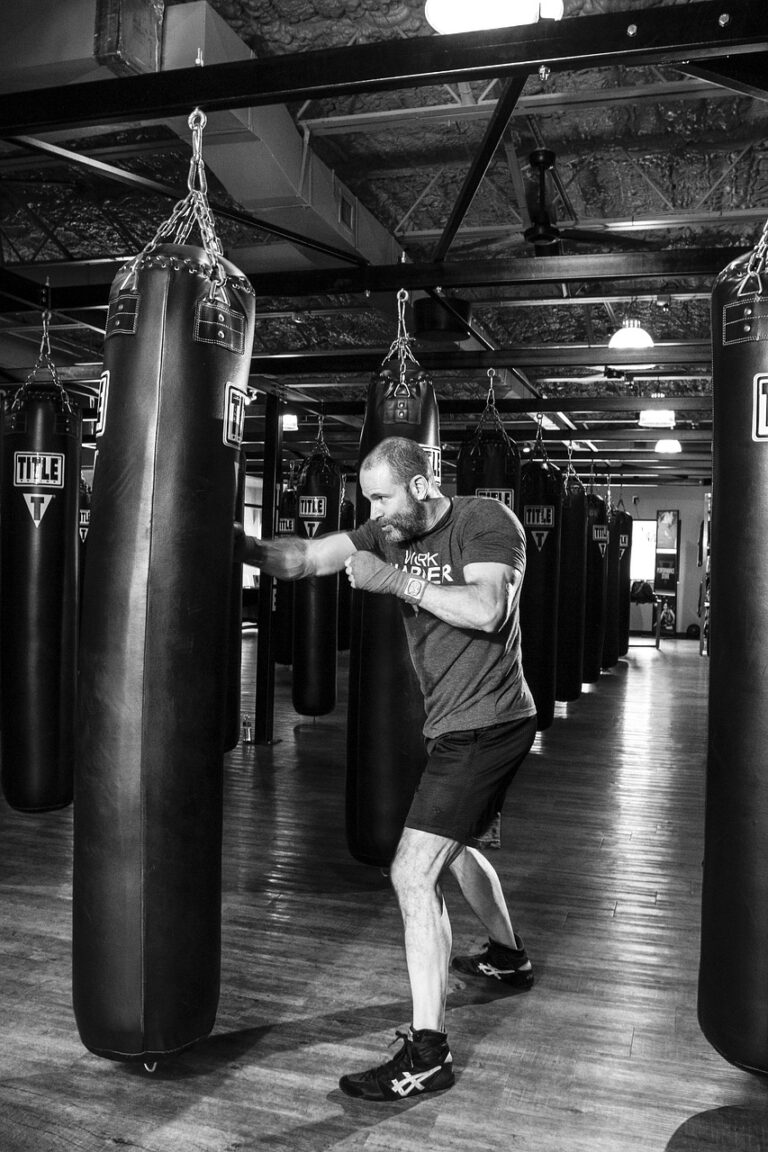
On the physical level, the threshold for hormetic benefit in your training is a stimulus strong enough to disrupt homeostasis, to produce excess post-exercise oxygen consumption, delayed onset muscle soreness, and the adaptive response that follows genuine physical stress. That means training genuinely hard, not training mildly uncomfortable. If you’re currently sedentary or moderately active, this means progressive resistance training with genuine loading, metabolic conditioning with genuine intensity intervals, and at least one genuinely challenging physical endeavor a year that tests your current limits. The cold exposure research is clear on your dosing: three to four times a week, water at approximately fifteen degrees Celsius, for three to four minutes a session, produces the hormetic benefits documented in the research. Less produces insufficient stimulus for you. More isn’t necessarily better either, the curve flattens after approximately eleven minutes a week of total cold water immersion.
On the cognitive level, the most effective form of hardship for most adults is deliberately learning a skill genuinely outside your current competence domain. Not reading about new topics, reading is valuable but low-friction. The high-friction cognitive challenges that produce the greatest benefit for you require production rather than consumption. Learning a musical instrument to performance standard. Learning a language to conversational fluency. Learning a technical skill that requires sustained problem-solving in a domain where your current knowledge is insufficient to handle without genuine struggle. The research on deliberate practice, from Anders Ericsson at Florida State University, is unambiguous. The stimulus for your cognitive development is not time spent in the domain. It’s time spent at the edge of your current competence, the uncomfortable zone where mistakes are frequent and correction requires genuine effort from you.
 On the temporal level, scheduled removal of comfort technologies works better as a daily practice than a periodic retreat. If you do a digital detox weekend once a quarter, you have not built tolerance for discomfort. You’ve had four uncomfortable weekends a year separated by quarterly doses of your digital comfort. If you build a daily practice of one to two hours of undistracted solitude, no phone, no screen, no background audio, you’ve built a genuine practice of being alone with your own mind. That practice, sustained over months, produces the interiority comfort technology is currently dismantling in you. It produces your capacity for self-reflection, genuine creativity, and the kind of deep personal honesty that’s only possible when you’re not managing your own internal experience with constant external stimulation.
“The impediment to action advances action. What stands in the way becomes the way.” — Marcus Aurelius, Meditations
That’s not a motivational poster line. It’s a description of mechanism: the obstacle you engage with rather than circumvent is the training ground for the capacity that will define your life. Marcus Aurelius did not write this from theoretical philosophy. He wrote it as emperor during the Antonine Plague, during constant military campaigns, during the management of an empire at the edge of its governance capacity. He wrote it as a man who had every resource available to avoid difficulty and chose, deliberately and repeatedly, to engage with it instead. The result was not misery. The result was the most capable, most admired, and most philosophically lucid ruler in Roman history. The voluntary hardship was the mechanism. The capacity was the output. That is the deal comfort culture is declining on your behalf right now, unless you decide to decline comfort culture instead. You get to make that choice today, this week, in the specific decisions you make about your own body, your own schedule, your own conversations. Nobody is going to make it for you, and nobody is going to notice if you don’t, because comfort culture does not punish you for staying comfortable. It simply lets you drift, quietly, into the version of Marcus sitting in his apartment, and it will not send you a warning first.
The Metrics of a Comfort-Free Life
How do you know if the Voluntary Hardship Protocol is actually working for you? Not by how uncomfortable you feel, discomfort for its own sake is not the goal. Not by how much you’ve eliminated from your life, asceticism is not the framework. The metrics are positive: expanding capacity, not just enduring challenge. Here’s what to watch for over the six to eighteen months of taking this seriously.
- Your relationship with boredom.
- Your stress response profile.
- Your relationship with failure.
- Your sense of time.
If you implement this successfully, you’ll find over time that boredom transforms from an aversive experience into a neutral or even welcome one. Boredom is the antechamber of creativity, the state in which your SEEKING system, deprived of external stimulation, begins to generate its own. If you can be bored without immediately reaching for a device, you’ve re-accessed your own interior as a resource. That is not a minor development. It’s the foundation of every significant creative and intellectual achievement in human history, and it’s currently being dismantled by the smartphone more efficiently than any previous technology has dismantled anything else.
If you’ve been implementing the protocol for six months, you’ll notice that your stress response is faster to activate, less intense at its peak, and faster to return to baseline than it was before. This is the hormetic benefit of repeated stress exposure: your system becomes more efficient, not just more tolerant. Stressors that previously produced prolonged activation in you, an important meeting, a difficult conversation, a physical challenge, will produce proportionate and rapidly resolved responses instead. This is not emotional blunting. It’s calibration: your nervous system responding in proportion to the actual demand rather than the novelty and threat-value of any departure from comfortable baseline.
If you’ve been practicing voluntary hardship, regularly attempting things with genuine failure probability, you’ll have a fundamentally different relationship with failure than you would if you’d been optimizing for success in low-stakes environments. Not a comfortable relationship. Not an indifferent one. A functional one: failure is information for you, not identity. It’s data about the current gap between your present capability and your required capability. It’s the instruction set for your next phase of deliberate practice. If you can fail without losing your sense of yourself as capable and improving, you’ve been failing regularly enough that failure has become familiar to you. That familiarity is not complacency. It’s the prerequisite for sustained effort in the face of repeated setbacks, which is the prerequisite for everything significant any human being has ever accomplished. Think about the last time you actually failed at something that mattered to you, out loud, in front of other people, and had to keep going anyway. If you cannot remember one recently, that tells you something important about how narrow the range of your recent life has become, and how overdue you are for exactly the kind of test this Protocol is asking you to seek out again.
And people who implement this consistently report a phenomenon that’s hard to explain until you’ve experienced it yourself: your sense of time expands. Not literally, the days are still twenty-four hours. But they feel fuller, more substantial, more densely inhabited. The research on this comes from the psychology of memory: your memories form at moments of novelty and challenge. The day you did something genuinely hard is a day that will occupy more subjective memory space for you than the day you were comfortable. The year you attempted something significant and difficult will feel, in retrospect, like a longer, richer year than the year you stayed safely within your established routines. A comfort life that minimizes memorable events is, in subjective temporal terms, a short life for you, not because it ends sooner but because it contains less. Voluntary hardship is, among other things, the technology for making your life feel as long and as full as the years you’re actually living deserve.
The Objections You’re Already Making
You might be wondering whether some comfort is healthy, and where the line sits between necessary rest and harmful comfort-seeking. Yes, recovery is a genuine physiological requirement for you. The hormetic model is not all-stress-all-the-time. It’s stress followed by recovery, which produces the adaptation. The problem is not rest. The problem is rest without the preceding stress, which means your recovery process has nothing to recover from and starts operating as simple deconditioning instead. The line is this: comfort that follows genuine effort is recovery. Comfort that substitutes for genuine effort is avoidance. Most people in modern life have too much of the latter and too little of the former. This framework is not about eliminating comfort from your life. It’s about earning it.
You might be thinking about people who’ve experienced genuine trauma, and wondering whether voluntary hardship could be harmful for them specifically. Trauma is real, and the nervous system’s response to it is real. But the evidence does not support protecting traumatized people from all subsequent stress indefinitely. Post-traumatic growth, the documented phenomenon of people becoming more capable, more purposeful, and more psychologically resilient after processing trauma, is not produced by comfort. It’s produced by graduated re-engagement with challenge in a context of sufficient safety. What that graduated re-engagement looks like, and at what pace, is something to work out carefully and specifically for each person’s own history. What the research is clear about is that more protection from difficulty, indefinitely extended, is not itself the answer.
You might be wondering what the annual misogi actually looks like for an ordinary person, since it doesn’t require flying to Alaska to hunt caribou. The requirement is that the challenge be genuinely hard for you, requiring extended preparation, carrying meaningful failure probability, and demanding more than your current comfortable capacity can deliver. For some of you, this is a fifty-mile hike. For others, it’s completing a graduate degree while working full-time. For others, it’s starting a business, having a long-avoided family confrontation, or performing publicly in a domain where you have no established competence. The specific form matters less than the genuine difficulty and the real stakes involved. Your nervous system is not fooled by a task designed to be completed without real struggle.
You might be wondering how to apply this Protocol without burning out or damaging your own health. The dose makes the medicine. Hormesis operates on a curve: too little stress produces no adaptation, the right amount produces growth, too much produces damage. Your protocol should be graduated. You do not go from sedentary to running marathons in week one. You do not go from avoiding all conflict to having every avoided conversation simultaneously. The principle is progressive overload: incrementally increase the demand, allow for recovery, then increase again. Ask yourself a simple monitoring question: am I adapting? Am I becoming more capable, more confident, more functional in the domains I’m challenging? If yes, your dose is right. If you’re deteriorating across the board, you’re overdoing it. Most of you, starting from a high-comfort baseline, will find the initial doses feel extreme, but your system adapts faster than you’d expect.
You might be wondering whether what’s said here is a critique of comfort-seeking specifically, or a critique of every framework that helps a person cope with difficulty. It’s the former, and it’s worth being precise about the distinction. There is a real difference between an approach that helps you become more capable of tolerating discomfort and one that’s oriented entirely toward helping you avoid discomfort. The research on acceptance-based approaches, which are explicitly about building your capacity to tolerate difficult internal experience rather than eliminating it, shows dramatically better long-term outcomes than approaches oriented purely toward symptom elimination. The distinction matters to you, and it is not a minor one.
And you might be wondering whether there’s real evidence that people who live harder lives are actually happier. The relationship between hardship and well-being is complex but consistently points in a direction that contradicts comfort-culture assumptions. Research on what’s called the emodiversity of emotional experience, the richness and variety of emotional states a person regularly accesses, is instructive here. People who report a wider range of both positive and negative emotional experience have better health outcomes, stronger immune function, and higher subjective well-being scores than people who report primarily positive emotional states. The relationship between challenge, growth, and subjective meaning is even stronger: Viktor Frankl’s logotherapy, Csikszentmihalyi’s flow research, and Martin Seligman’s positive psychology all converge on the same finding. Meaning, which correlates more strongly with long-term life satisfaction than happiness does, is produced by your engagement with significant challenges, not by the achievement of comfort. The comfortable life is not the meaningful life. Your own memory, examined honestly, will likely confirm it: the periods of your life you remember as most fully lived were not the most comfortable ones.
The Final Argument
Every major philosophical tradition that’s produced lasting wisdom about the good life has reached the same conclusion through different routes: the comfortable life is not the meaningful life. The Stoics practiced negative visualization and voluntary hardship specifically because they understood that dependence on comfort was a form of slavery. The person who cannot function without their accustomed conditions is less free than the person who has proven, through repeated test, that they can function in adverse ones. Buddhist philosophy treats attachment to pleasurable states as a primary source of suffering, not because pleasure is wrong but because attachment to its continuation prevents genuine engagement with the full range of human experience. The Spartan tradition, however distorted in popular culture, was built on the insight that the capacity to endure and prevail is more valuable than the condition of never being tested.
None of these traditions are arguing that suffering is a virtue. They’re arguing for something more specific and more operationally useful to you. Regular, voluntary engagement with challenge, as a practice that builds your capacity to be fully human. Not just the comfortable parts of human experience, but the whole range: the difficult, the uncertain, the physically demanding, the emotionally costly. Whoever has this capacity has something that cannot be given to them, cannot be inherited, and cannot be purchased. It must be built through exactly the process this Protocol describes: regular, deliberate, increasing engagement with what is genuinely hard.
You have the biology for this. Your ancestors, every single one of them, across the entirety of the human evolutionary record, lived lives of far greater hardship, physical demand, and genuine adversity than you face in your daily existence. The capacity for it is not somewhere you have to go find. It’s in you already, waiting to be activated. Comfort culture has convinced you that the baseline of ease is the natural state and any departure from it is the exception. The evolutionary record says the opposite: the baseline is challenge, and the capacity to meet it with competence and equanimity is your most fundamental human capability. You are not being asked to become something you’re not. You are being asked to become what you already are.
We will be back next week.
Start where you are. Start small. Start today. Add one deliberate difficulty to your week, one thing genuinely hard for you, that you’d naturally avoid, sitting right at the edge of your current capability. Do it with full presence and full effort. Then add another. Build the Protocol over weeks and months. Watch what happens, not only to your capacity for hard things, but to your capacity for everything. The relationships that require vulnerability. The work that requires sustained effort. The presence of mind that every other domain of a deliberate life requires from you. The evidence is consistent and compelling: the hard things make the rest of your life better. They do not take from it. They fund it.
You will face resistance. Not just from your own nervous system but from the people around you, from a culture organized around the elimination of discomfort, one that treats any deliberate engagement with hardship as eccentric, masochistic, or unnecessary. Ignore it. The culture is wrong in the specific way only a very comfortable culture can be wrong: it mistakes the conditions of its own ease for wisdom, and mistakes the absence of challenge for the presence of flourishing. You will know it’s wrong from the inside, the first time you finish something genuinely hard and feel the specific quality of satisfaction that only comes from that. Not the pleasure of comfort. Not the relief of ease. The deep, settled, unchallengeable satisfaction of having been tested and not broken. That satisfaction is not available in the comfort life. Nothing in the comfort life approximates it. Once you’ve felt it, you will not want to go back to a life that never offers it to you. You already know this about yourself, somewhere underneath the comfortable arrangements you’ve made. You will start noticing, everywhere, the difference between people who have chosen this and people who haven’t. It shows in how they carry setbacks, how they show up for other people, how steady they are when something genuinely goes wrong. Go find it. It is waiting exactly where you left it, whenever you’re ready to go get it back for yourself.
One final word before you go do something about this. You do not need permission to start. You do not need the perfect protocol, the perfect misogi, the perfect schedule for your cold exposure and your cognitive challenge and your difficult conversation. You need to close this episode and do one uncomfortable thing today, something small enough that you can actually complete it, real enough that it costs you something to do. Call the person you’ve been avoiding. Take the cold shower. Sign up for the class that scares you a little. Walk instead of drive, carry instead of order delivery, sit with the silence instead of reaching for the phone. Tomorrow, do another one. That is the entire practice, repeated for the rest of your life, and there is no version of it that arrives fully formed. You build it exactly the way you build everything else worth having: one uncomfortable decision at a time, for longer than feels reasonable, until the discomfort itself becomes the thing that tells you you’re finally doing something real.
For the attentional framework that voluntary hardship requires, there’s the episode on the science of flow state. The negotiation skills needed to build hardship into a life with competing demands draw on the episode on negotiation as a life skill. All the additional frameworks for building a deliberately difficult and deliberately meaningful life are gathered in the Mindset Toolkit.
Editorial StandardsCorrectionsMedical DisclaimerAbout Our ContentAffiliate DisclosureSite Map