
Marcus had everything a man is supposed to want. Thirty-four years old, senior project manager at a construction firm, good salary, a house in the suburbs, a girlfriend who wanted to get married. He’d done every checkbox in the approved sequence. Graduated college, got the job, got promoted, bought the car, started shopping for rings. And he was completely, absolutely hollow inside. Not depressed in a clinical way. Not broken in an obvious way. Just… empty. Like a building with all the right floors and no one living in any of them. He sat across from me at a barbecue, beer in hand, and said something I’ve never forgotten: “I feel like I’ve never actually become a man. I just got older.” That sentence stopped the conversation cold. Because every man in earshot knew exactly what he meant.
I wanted to dedicate a full episode to this because it is the kind of subject that deserves more than a surface treatment. That feeling — that gnawing, unnamed sense that something essential was skipped — is epidemic among men today. It’s not weakness. It’s not a psychological disorder. It’s the predictable result of a civilization that systematically dismantled the machinery that turns boys into men, then acted surprised when men stopped knowing who they were.
Today we’re going to talk about rituals, initiations, and rites of passage. Not as anthropological curiosities. Not as tribal nostalgia. As biological and psychological necessities that your nervous system is still wired to need, whether the modern world provides them or not. We’re going to look at Men Need Rituals: What The Evidence Reveals
I’m going to give you a framework at the end of this episode called The Modern Rite Protocol — a structured approach to engineering the initiatory experiences your development requires. But first, you need to understand why this matters at the deepest level. And for that, we start with a man named Arnold van Gennep.
The Three-Phase Architecture of Human Transformation

He called them separation, transition, and incorporation. The first phase strips you from your old identity. The second phase throws you into a liminal space where you’re neither what you were nor what you will become. The third phase reintegrates you into the community with a new identity recognized by everyone around you.
Separation. Liminal space. Incorporation. This is the universal grammar of human transformation. Van Gennep found it in birth rituals, marriage ceremonies, initiation rites, funeral customs, seasonal festivals, and military inductions. The specific content varied wildly by culture. The structure never did.
Here’s why this matters for you personally: your brain is wired for this structure. Evolution built it in. The nervous system requires marked transitions to update its model of who you are. Without the ritual architecture, the psychological update doesn’t fully install. You go through experiences, you accumulate years, but the internal registry doesn’t reflect the changes. You remain — at some deep structural level — the person you were before.
Marcus, the man at that barbecue, had technically crossed every threshold. Boy to adult. Student to worker. Single to partnered. But none of those transitions had been marked, witnessed, ritualized, or confirmed by his community. He’d moved through the rooms of his life without anyone saying: “You are now different. The old version is gone. This is who you are now.” And so the update never took.
Victor Turner, the British anthropologist who built on van Gennep’s work in the 1960s, added a crucial dimension with his concept of liminality. The word comes from the Latin limen, meaning threshold. Turner argued that the middle phase — the liminal period between old identity and new — was not merely transitional. It was the engine of transformation itself. He described liminal entities as being “neither here nor there; they are betwixt and between the positions assigned and arrayed by law, custom, convention, and ceremony.”
In indigenous cultures, this liminal period was engineered with precision. The boy was taken from his mother’s world, brought into the wilderness or a dedicated initiation space, subjected to ordeals that pushed him past his previous limits, and held there — in that uncomfortable, formless, identity-stripped space — until something in him reorganized. Turner called this communitas: a temporary dissolution of hierarchy and individual ego in service of collective transformation.
The ordeal was not sadism. It was pharmacology. The neurological stress of genuine challenge, physical hardship, sleep deprivation, isolation, and fear triggers a cascade of hormonal and neurological events that make the brain radically more plastic — more capable of reorganizing itself around a new identity. Without sufficient challenge, the transformation doesn’t have the chemical substrate it needs to take hold.
This is the dirty secret that the modern world doesn’t want to acknowledge: you cannot grow without being genuinely challenged. Not inconvenienced. Not uncomfortable in a mild, manageable way. Challenged at a level that makes your previous understanding of yourself feel inadequate. The culture that tells you you’re already enough, you don’t need to change, you just need to believe in yourself — that culture is not protecting you. It’s preventing your development.
What Robert Bly Actually Said (Before He Was Caricatured)
Robert Bly published Iron John in 1990, and it became a phenomenon. It also became a punching bag. Men drumming in the woods, weekend retreats, middle-aged men crying over fairy tales — the mockery was relentless and effective at burying the actual content of Bly’s argument, which was serious, specific, and increasingly well-supported by subsequent research.
Bly’s central claim was not that men should be more emotional or more sensitive. His claim was that the absence of older men in young men’s lives — specifically, older men willing to guide young men through tests and ordeals and genuine challenge — was producing a generation of what he called “soft men.” Not physically soft necessarily. Soft in the sense of unfinished. Men who had not completed the journey from the mother’s world to the father’s world to their own authentic standing.
The Iron John story, the Grimm fairy tale that structures Bly’s book, is about a boy who finds a wild man imprisoned under water in the forest, steals the key from under his mother’s pillow, releases the wild man, and is then taken by that wild man into the forest to undergo a long apprenticeship. The wild man is not a monster. He’s a guide. He represents the older male wisdom that can only be transmitted through direct contact with someone who has already made the journey.
Bly’s diagnosis: the Industrial Revolution severed the intergenerational transmission of masculine wisdom by removing fathers from proximity to their sons. When men worked farms or craftsmen’s workshops, sons worked alongside fathers and grandfathers and uncles for years. They watched adult men navigate difficulty, solve problems, handle loss, manage anger, lead and follow. That observation alone — watching a man you respected handle a hard situation — transmitted more than any classroom instruction ever could.
The factory system and then the office system relocated work away from the home and the family farm. Fathers disappeared for eight to twelve hours a day into spaces their sons never saw. The transmission broke. And the break has been accumulating across generations ever since.
Daniel was twenty-six when he came to one of our events. His father had been present physically but checked out emotionally — a pattern Bly called the “remote father,” available in body but not in the ways that counted. Daniel had never seen his father fail at something and recover. Never seen him admit he didn’t know something and then figure it out. Never seen him lead with anything other than a kind of quiet, defended silence. So Daniel had no template for how a man deals with hardship. He had no witnessed model of masculine resilience. He’d built his adult identity entirely from peers his own age and from screens. And he felt, at twenty-six, that he was making everything up, that there was no ground under his feet, that he was performing adulthood without actually inhabiting it.
The question Bly raises — and doesn’t fully answer — is where a man in a post-traditional society goes to find this initiation. The old structures are gone or vestigial. The church confirmation doesn’t cut it. The bar mitzvah is real for Jews but often culturally reduced to a party. The military initiates some men, but the modern military’s relationship to masculinity is its own complicated story. College rituals are mostly about social belonging, not identity transformation. Fraternity hazing is initiation without wisdom — ordeal without elder guidance.
This is the gap. And it’s not a small one.
Michael Meade and the Water of Life

Meade’s central argument is deceptively simple: every young man has a wound, and every young man has a gift, and the purpose of initiation is to connect the wound to the gift. Not to heal the wound in the therapeutic sense — to neutralize it, process it, transcend it. To use the wound as the precise instrument of the man’s contribution to the world.
This is a radically different frame than therapy. Therapy, at its worst, treats the wound as a problem to be solved. Meade treats it as a doorway. The man who lost his father young and carries abandonment may be exactly the man equipped to mentor other boys who lost their fathers. The man who grew up in violence and chaos may carry the map of that territory that others need. The wound and the gift are not opposites. They’re the same thing, seen from different angles.
Initiation, in Meade’s framework, is the process of discovering this. It requires the boy to go into the wound — not avoid it, not medicate it, not reframe it into something more comfortable — and find what’s on the other side. This is why initiation requires an ordeal. The ordeal forces the initiand to the edge of his known capacities. At that edge, something deeper becomes available. The deeper thing is the gift.
Meade tells stories of young men he’s worked with in juvenile detention and prison settings — young men who had engaged in serious violence, who had survived serious violence, who had never had a single adult take a genuine interest in their inner life. And what he finds, reliably, is that these men — beneath the performance of hardness, beneath the survival strategies, beneath the violence — are carrying something real. Some insight, some capacity, some perspective that the world needs and that they were born to offer.
But they can’t access it without being seen by someone who already knows how to look. The elder’s gaze is not therapeutic. It’s recognizing. It says: I see what you’re carrying. I’ve seen it before. Here’s what it’s for.
James was thirty-one, a veteran of two combat deployments, when he talked to me at length about what he’d found and lost in the military. The military had given him the most powerful initiation available in modern life. It had stripped his civilian identity, put him through genuine physical and psychological ordeals, given him brothers who had seen him at his worst and best, and sent him home with a transformed sense of who he was. And then it had dropped him, unceremoniously, back into a world that had no container for what he’d become.
The incorporation phase — van Gennep’s third phase — had never happened. Nobody in civilian life had witnessed the transformation and confirmed the new identity. His family saw him as the same person who’d left. His community didn’t understand what he’d been through. He couldn’t talk about it. The initiation had taken place, but the community hadn’t received the initiated man. He was stuck in liminal space, years after the ordeal, still betwixt and between. That’s a textbook description of a lot of what gets diagnosed as PTSD in veterans — not just trauma, but incomplete initiation.
Campbell’s Hero’s Journey as Diagnostic Tool
Joseph Campbell’s The Hero with a Thousand Faces, published in 1949, documented the same initiatory structure across mythology: the hero’s journey. Call to adventure, crossing the threshold, road of trials, supreme ordeal, reward, road back, resurrection, return with the elixir. Campbell argued this structure wasn’t just a storytelling convention. It was a map of the psyche — the universal human experience of transformation projected onto narrative form.
What Campbell’s work reveals is that the initiatory structure is not primitive or tribal. It’s human. It runs through every culture’s mythology because it maps something real about how the human psyche grows. The stories are instruction manuals. The hero’s journey is the operating manual for your own transformation, written in the language of symbol and archetype because that’s the language the deeper mind speaks.
Campbell was particularly interested in the threshold guardians — the forces that block the hero at every major transition. In mythology, these are monsters, tests, temptations. In real life, they’re internal: the voice that says you’re not ready, you might fail, people will judge you, you should wait until conditions are better. Every man who has felt that pull — that backward drag when he’s on the edge of a genuine challenge — has met his threshold guardian.
The hero doesn’t defeat the threshold guardian by becoming braver. He defeats it by becoming clearer — by becoming so committed to the call that the fear of staying the same outweighs the fear of moving forward. This is why initiation requires a decision point. A moment of genuine choice. The ordeal only transforms you if you choose to go through it, knowing it will be hard, when you could choose not to.
Campbell’s framework also illuminates why modern male culture fails so consistently at this. The modern world is extraordinarily good at eliminating threshold guardians. Friction has been optimized out of every domain. Food delivery eliminates the friction of cooking. Streaming eliminates the friction of choosing. Dating apps eliminate the friction of approaching. Automation eliminates the friction of skilled labor. Every eliminated friction is a eliminated micro-ordeal — a small call to competence and perseverance that no longer exists.
A man can now, technically, live an entire adult life without ever being genuinely blocked, genuinely challenged, genuinely tested in a way that requires real growth to overcome. He can be comfortable. He can be entertained. He can be medicated and distracted and numbed. What he cannot be, through that path, is initiated. He cannot be transformed. He cannot become, in the deepest sense of the word, a man.
This is not a moral judgment. It’s a developmental observation. The absence of genuine challenge produces genuine developmental arrest. Not always visible from outside. Often extremely visible from inside. The hollow feeling Marcus described. The sense of performing adulthood without inhabiting it. The suspicion that something essential was skipped.
The Neuroscience of Ritual Transformation

Elevated arousal — the kind produced by physical challenge, social exposure, genuine risk, and ordeal — primes the amygdala and hippocampus for encoding. High-arousal experiences are disproportionately encoded in long-term memory. The brain treats them as survival-critical information and burns them in with extra intensity. This is why the men who go through genuine ordeals — military basic training, serious athletic competition, wilderness survival, a major business failure, a life-threatening illness — often describe those experiences as the most formative of their lives. The brain treats high-stakes experience differently. It consolidates those memories more deeply and attaches more identity weight to them.
Cortisol and testosterone interact in interesting ways during challenge. Short-burst cortisol elevation — the stress of acute challenge — primes the reward system for the satisfaction of overcoming. Men who complete genuine ordeals experience a neurochemical payoff that is qualitatively different from ordinary pleasure. It’s not just relief. It’s a recalibration of self-concept: “I am the kind of person who can do that.” That new self-concept becomes the foundation for future confidence and risk-taking.
The social witness dimension of ritual adds another neurological layer. Human brains are exquisitely sensitive to being seen and recognized by other humans, particularly by those we respect. Mirror neurons activate during witnessed performance. The experience of being seen going through something hard — by people who matter, who understand what you’re doing — creates a different kind of memory than going through it alone. The community witnessing is not decorative. It’s part of the mechanism.
This is why solo challenges, while valuable, are not complete substitutes for community-witnessed initiation. The man who runs a marathon alone in training is changed by it. The man who runs a marathon in front of thousands of witnesses, crossing a finish line, being seen and confirmed — that experience has additional identity weight. The crowd isn’t just celebration. It’s the incorporation phase completing.
Sleep deprivation, which features in many traditional initiations, has a specific neurological effect relevant here: it dramatically increases emotional salience. The sleep-deprived brain assigns more emotional significance to experiences, which means those experiences are encoded more deeply. Not randomly. Specifically the experiences that occur during the deprivation become foundational memories. Many of the men I know who describe particular military experiences as identity-forming went through those experiences under conditions of significant sleep deprivation. The neurobiology was working in the service of the initiation.
What Happens Without Initiation: The Evidence
The absence of male initiation is not a theoretical problem. It produces measurable, predictable outcomes across populations.
Anthony Stevens and John Price, in their work on evolutionary psychiatry, argue that male adolescent behaviors that the modern world treats as pathological — gang formation, risk-taking, violence, deference to male peer hierarchies over adult authority — are actually initiatory behaviors misfiring in the absence of proper channels. The adolescent male nervous system is primed for initiation. If formal initiation doesn’t occur, the drive finds informal expression.
Gang initiation rites follow the van Gennep structure almost perfectly: separation from the family world, a liminal period of testing and trial by the group, incorporation into a new identity with recognized status. The violence is not the point. The transformation structure is the point. The gang offers what the mainstream culture failed to provide: a witnessed, marked, communally-confirmed transition into a recognized identity with clear status, belonging, and purpose.
David Gilmore, in his cross-cultural study Manhood in the Making, found that cultures with strong male initiation rites reliably produced men with higher social cohesion, clearer role definitions, stronger intergenerational bonds, and lower rates of male-on-male violence. The initiation wasn’t just personal development. It was social technology — a way of producing men who knew what they were for and how they fit into the larger fabric of the community.
Cultures without strong male initiation — including modern Western culture — show predictable deficits: extended adolescence, unclear role boundaries, high rates of male loneliness and purposelessness, and what sociologists call “identity diffusion” — a chronic inability to commit to a stable self-concept.
The data on male loneliness alone is alarming. A 2021 Survey Center on American Life report found that the percentage of men with no close friends went from 3% in 1990 to 15% in 2021 — a fivefold increase in thirty years. Men are increasingly isolated, increasingly purposeless, increasingly disconnected from any community that knows them and confirms them. This is the initiation vacuum expressing itself in demographics.
And here’s the feedback loop: men who never got initiated don’t know how to initiate their sons. The father who never went through the fire doesn’t know how to put his son through the fire in a structured, guided way. The wound becomes transgenerational. The absence compounds. Each generation of un-initiated men produces more un-initiated men, with decreasing access to the older wisdom that could break the cycle.
Case Study: The Man Who Engineered His Own Initiation

Thomas did something that I think is instructive. He stopped waiting for the initiation to arrive. He designed it himself. He did a forty-eight-hour solo wilderness fast — no food, no phone, no companion — as his separation phase. He spent those forty-eight hours at a location that meant something to him, intentionally reviewing his life to that point, acknowledging what he was leaving behind. He wrote a letter to his younger self and burned it. He named, explicitly, the version of himself he was releasing.
For his ordeal phase, he did a solo thru-hike of a difficult mountain route — five days, above-treeline sections, weather that got genuinely dangerous on day three. He told me that on day three, soaked, cold, not entirely sure he was going to be okay, he crossed something internally. Some threshold of reliance on his own capacities that he’d never reached before. The man who came down that mountain had different evidence about himself than the man who’d gone up.
The incorporation phase was the most deliberately engineered. He gathered seven men he respected — his father, his mentor, three close friends, his business partner, and his older brother — and he told them what he’d done and what it meant and who he intended to be on the other side of it. He asked each of them to say something that confirmed or challenged his vision. Three of them cried. All of them said things he still carries today.
Thomas is not a mystic. He’s a businessman. He doesn’t talk about this experience in woo-woo terms. He talks about it in terms of internal architecture: “I built a foundation I could build on. Before that, I was building on sand.” The ritual structure worked not because it was magic but because it provided what van Gennep’s research showed all transformative transitions require: a marked separation from the old identity, a genuine ordeal that tested and reorganized his self-concept, and a community witness that confirmed the new identity.
His sons, now fourteen and eleven, are already being introduced to progressively more challenging experiences. Not hazing. Not cruelty. Structured, elder-guided challenges that mark development. At fourteen, his older son did a solo overnight in the woods — his idea, his preparation, Thomas there at the start and end but not during. The boy came home different. Not dramatically, not visibly to everyone. But Thomas knew. And the boy knew. And that knowing — that internal confirmation — is the beginning of what Marcus never got.
The Modern Rite Protocol
Here is the framework I’ve developed from studying van Gennep, Turner, Bly, Meade, and Campbell, and from working with men across a range of ages and situations. It’s not a weekend workshop. It’s an architecture for engineering the initiatory experience your development requires, using what’s available to you right now.
The Modern Rite Protocol has five components that map onto the classical three-phase structure with modern-specific additions.
Component One: Name What You’re Leaving Behind. Every initiation begins with a genuine death — the death of a previous identity or a previous limitation. Before you can be transformed, you have to get clear on what the transformation is from. This requires specific, honest naming. Not “I want to be better” but “I am leaving behind the man who avoids conflict because he fears rejection.” Not “I want to grow” but “I am ending my relationship with the excuse that I don’t have enough time.” The separation phase of traditional initiation involved literal removal from the old world. Your version involves cognitive clarity: you are intentionally releasing a version of yourself that no longer serves.
Write it down. Be specific. Make it a statement, not a vague aspiration. Burn the paper if that helps — the physical act of marking the ending matters to the brain in ways that purely mental commitments don’t. The ceremony doesn’t have to be elaborate. It has to be real.
Component Two: Design a Genuine Ordeal. The ordeal has to be genuinely hard for you specifically. Not generally hard. Not impressive to others. Hard in the way that requires you to meet a version of yourself you haven’t met yet. For some men, this is physical — a military-style challenge, an endurance event, a wilderness experience. For others, it’s social — a public performance, a difficult conversation they’ve been avoiding for years, a creative vulnerability they’ve been suppressing. For others, it’s economic — launching the thing they’ve been afraid to launch, ending the security they’ve been hiding behind.
The ordeal must have three qualities: genuine difficulty (you don’t know for certain you can do it), genuine stakes (something real is on the line), and genuine completion (a clear endpoint where you either succeeded or didn’t). Vague challenges with no clear endpoint don’t function as ordeals. The brain needs a discrete event it can encode as “I faced this and came through the other side.”
Component Three: Seek an Elder Witness. Find at least one man who is further along the path than you — not necessarily older in years, but more tested, more developed, more integrated in the area where you’re seeking transformation. Tell him what you’re doing and ask him to witness it. Not to help you do it. To see you do it. The elder witness function is not advice. It’s recognition. The elder says: I see what you’re attempting. I’ve seen it before. I’ll be here when you come through.
If you can’t find this man in your immediate circle, look harder. Mentors, coaches, therapists with martial backgrounds, religious figures who’ve been tested, veterans, business leaders who’ve failed and rebuilt — the men who can fill this function are not absent from modern life. They’re just not organized into the elder council that traditional societies maintained. You have to seek them individually. The seeking is itself part of the initiation.
Component Four: Enforce the Liminal Period. Between the decision to undertake the ordeal and its completion, enforce a period of intentional liminality. This means consciously holding the in-between state. Don’t resolve the discomfort prematurely. Don’t distract yourself back into normalcy. Sit with the discomfort of being someone who has decided to change but has not yet changed.
In practice, this often means reducing the noise that keeps you from feeling the full weight of the transition. Less social media, less entertainment, less numbing. More silence, more reflection, more contact with the gravity of what you’re attempting. Traditional initiations enforced this through physical isolation. Modern men can approximate it through intentional restriction of distraction during the liminal period.
Component Five: Conduct the Incorporation Ceremony. This is the most neglected element in modern self-improvement culture. Men do hard things alone, feel transformed by them, and then return to their normal lives without any communal confirmation of the transformation. The result is that the transformation is only half-installed. The internal update happened but the social update didn’t. Other people still treat you as the old version, and without the social confirmation, the new identity is fragile.
The incorporation ceremony is simple but requires courage: gather the men who matter to you and tell them what you did, what it meant, and who you are on the other side. Ask them to hold you to it. Invite them to name what they see in you. The ceremony can be as simple as a meal where you have this conversation. It doesn’t require drums or sweat lodges or anything elaborate. It requires honesty and presence and the willingness to be seen.
The five components together constitute a complete initiatory cycle. Depending on the depth of the transformation you’re seeking, you may need multiple cycles over years. Major life transitions — the transition to fatherhood, the transition through major loss, the transition into the second half of life — each warrant their own complete cycle. The Modern Rite Protocol is not a one-time event. It’s a repeating structure for the rest of your adult life.
Initiation and Fatherhood

This doesn’t mean designing elaborate rituals for your children to go through. It means consistently creating the conditions for genuine challenge, genuine mastery, and genuine witness. It means letting them do hard things without rescue. It means being the elder presence that says “I see you doing this hard thing and I believe you can do it” rather than the overprotective presence that eliminates all friction.
Research on authoritative parenting — the style that combines high warmth with high expectations and genuine challenge — consistently shows better outcomes across every dimension of child development than either permissive or authoritarian approaches. The initiatory structure is embedded in what we know produces healthy development. Warmth plus genuine challenge plus confirmed competence. That’s the ancient formula dressed in modern research language.
Specifically for boys: mark their transitions. When your son turns thirteen, do something that says this year is different from last year. Create a challenge that requires something from him that twelve required nothing of. Take him somewhere that strips the familiar comforts. Have a conversation with him — in front of other men who know him — about who he’s becoming and what you see in him and what you expect from him. Not a lecture. A recognition.
Robert, a father of three boys who came through one of our events, described what he called “threshold conversations” with his sons. At each significant age — thirteen, sixteen, eighteen — he takes each son on a solo trip, just the two of them, to somewhere that requires physical effort. A camping trip, a long hike, a road trip with work involved. And somewhere in the middle of that trip, he has a specific kind of conversation: “What do you think being a man means? What do you think you’re capable of that you haven’t tried yet? What’s the hardest thing you’ve done so far? What do you think the hardest thing you’ll ever do will be?” Not performance. Genuine inquiry. And then he tells his son what he sees in him. Not praise — recognition. Specific, witnessed recognition of qualities he’s observed in the boy over years.
His oldest son is now twenty-two. Robert told me that when his son was going through a serious professional setback at twenty-one, the son called him and said: “Dad, I keep going back to what you said at the lake when I was sixteen. About what you saw in me. That’s the thing I’m holding onto right now.” The incorporation ceremony, years earlier, had installed something that was still bearing weight in a crisis. That’s what elder witness does. It doesn’t just feel good in the moment. It builds structure that holds through the hard times.
When to Start and What to Do Monday Morning
I want to be direct about the practicalities. Because this material is easy to read and feel moved by and then return to the same life without changing anything. Don’t do that. Here’s what to do with this.
First: Identify your current life stage. Are you in a major transition right now — relationship change, career change, fatherhood, mid-life reassessment? Or are you in a relatively stable period? Major transitions are the obvious opportunity for a full Modern Rite Protocol cycle. Stable periods are when you build the practices and relationships that will make the next transition more navigable.
Second: Identify your initiation debt. What transitions have you moved through without proper marking? The end of your childhood. The beginning of your adult working life. Becoming a father. A major failure or loss. Write them down. Not to dwell on them but to acknowledge them as uncompleted cycles. Sometimes simply naming the incomplete transition — “I became a father seven years ago and I never fully made that transition consciously” — begins an integration process that had been stalled.
Third: Identify one specific ordeal to undertake in the next ninety days. One thing that is genuinely hard for you, has genuine stakes, has a clear endpoint, and will require you to meet a version of yourself you haven’t met yet. Commit to it now. Tell someone about it now. The commitment activates the initiatory process. The liminal period begins the moment you make a genuine commitment to a genuine challenge.
Fourth: Find your elder. If you don’t have a mentor, find one. Not a life coach with a website. A man who has been through something that you haven’t been through yet and come out the other side with integrity intact. The search for the elder is itself part of the initiation. It requires you to admit that you need guidance, which requires a kind of humility that is itself a threshold many men have trouble crossing.
Fifth: Build your community of brothers. The incorporation ceremony requires witnesses. If you don’t have men in your life who know you well enough to confirm your transformation, building those relationships is itself an initiatory project. The work of building genuine male friendship as an adult is hard, underrated, and essential. Start it now, before you need it.
The Deeper Stakes

Every healthy society in history has depended on a supply of initiated men — men who know who they are, what they’re for, and how they fit into the larger fabric. Men with genuine identity don’t need external confirmation of their worth. They don’t seek status through domination or compensation through addiction. They don’t need to tear other men down to feel adequate. They contribute because contribution is what they’re for, and they know that with the certainty that only genuine initiation provides.
The epidemic of male purposelessness, male violence, male addiction, male suicide — these are not random. They’re the predictable product of a culture that systematically dismantled the machinery of male development and then acted surprised when men started breaking down. The male loneliness epidemic and the male purpose crisis are the same crisis wearing different clothes.
Van Gennep showed us that humans require ritual architecture for genuine transformation. Turner showed us that the liminal state — the place of genuine not-knowing — is the engine of growth. Bly showed us that the absence of elder male wisdom creates a specific developmental wound that accumulates across generations. Meade showed us that the wound and the gift are connected, and that initiation is the process of making that connection. Campbell showed us that this structure is the universal grammar of human growth, written into mythology because it’s written into us.
You are not broken because you feel un-initiated. You are responding exactly as you’re supposed to respond to a genuine developmental absence. The feeling is information. The information is: something real is missing, and you can build it.
Marcus, the man at the barbecue, did eventually build it. He spent two years in a deliberate process of self-initiated transformation — a major career change that required genuine risk, a mentorship relationship with an older man he’d been avoiding approaching, and a gathering of his closest friends where he told them, for the first time, what he actually wanted from his life and asked them to hold him to it. He told me, a year after that gathering, that he finally understood what it felt like to live inside his life rather than watch it from outside.
That’s what this is about. Not achievement. Not performance. Not becoming some idealized masculine type. Living inside your life. With full presence, full commitment, full awareness of who you are and what you’re for. That’s what initiation is supposed to give you. And it’s never too late to claim it.
The Brotherhood Deficit: What Research Says About Male Peer Bonds
One of the reasons the initiation void is so deeply felt by modern men is that it sits inside a broader collapse of male peer culture. The brother-bonds that sustained men through previous centuries — the guild, the military unit, the trade fellowship, the church brotherhood, the fraternal lodge — were not optional social amenities. They were the structural tissue of masculine identity. They answered the question “who am I” in a social register, not just a personal one. A man knew who he was partly because he knew where he stood among his brothers. He had a recognized rank. He had acknowledged competencies. He had a place in a hierarchy that he’d earned through demonstrated capacity.
That infrastructure is nearly gone. What replaced it is social media performance and professional hierarchy — both of which simulate belonging without providing it. A man with two thousand LinkedIn connections and zero men who would drop everything to help him move or sit with him in a hospital waiting room is not socially connected in any way that matters to his identity or his wellbeing. He has the appearance of social capital without the substance of it.
David Gilmore’s cross-cultural research reveals that in virtually every traditional society studied, male identity was constituted in large part through recognized standing within a male peer group. The man who was respected by his brothers — who had demonstrated the specific qualities his culture valued in men and had been publicly recognized for them — had an identity foundation that no amount of private achievement could substitute for. Private achievement without public recognition within a male peer context is like a tree with deep roots and no visible trunk. You know the roots are there. Nobody else does. The confirmation that builds lasting identity confidence is social, not solitary.
This is one of the reasons that military veterans often describe their service years as the most identity-anchoring of their lives, even when those years involved significant hardship and danger. The military provided what modern civilian life cannot: a clear hierarchy of demonstrated competence, a visible recognition of earned status, and a brotherhood of men who had been through the same fires and knew what the recognition meant. When that structure ended at discharge, the identity foundation it had provided often went with it. The re-entry crisis many veterans experience is not only about trauma. It’s about the loss of the identity architecture that military culture had provided and civilian culture cannot replicate.
The Modern Rite Protocol’s incorporation ceremony addresses this specific deficit. When you gather your community of brothers and present your transformation — when you tell them what you did and who you are on the other side and ask them to hold you to it — you are approximating the recognition function that traditional brotherhoods provided automatically. You are creating, deliberately and temporarily, the witnessed identity confirmation that your nervous system is wired to need and your culture has stopped providing. Done once, it’s a significant event. Done as a recurring practice at each major life transition, it begins to build the kind of male peer community that can provide the ongoing recognition infrastructure that traditional societies took for granted.
Christopher lived in the same suburb for nine years and knew his neighbors by face and first name. He had colleagues he ate lunch with three times a week. He coached his son’s youth football team for four seasons. And when he went through a serious business failure at forty-five — not just a setback, a genuine collapse — he had nobody to tell. Not because he had no relationships. Because none of those relationships had been built to the depth where failure could be shared. He was surrounded by people who knew the performing version of him, and he had no community that knew the real one. The absence of initiated brotherhood is precisely this: the absence of the container deep enough to hold a man’s real life, not just his public presentation of it.
The male suicide statistics are not unrelated to this phenomenon. Men in crisis who have genuine brotherhood — even one or two men who know their real situation and can witness their actual struggle — show dramatically different outcomes than men in crisis who have only surface relationships. The witness function that traditional initiation was designed to build into the fabric of male community is, in its absence, a genuine mortality risk factor. This is not hyperbole. It is the predictable consequence of removing a biological necessity from the environment and then being surprised when health deteriorates.
Seasonal Rituals and the Architecture of the Year
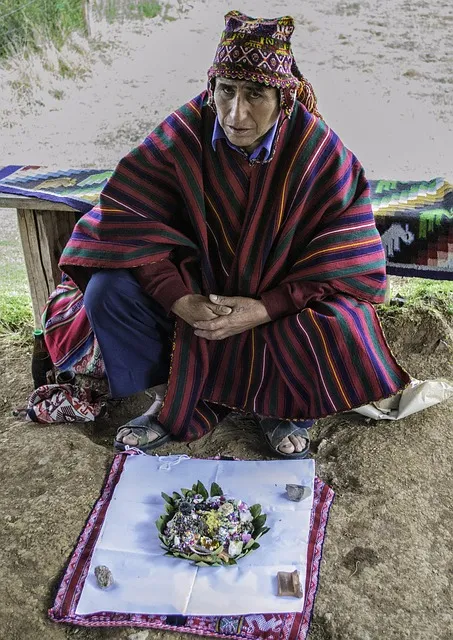
Modern men live primarily in unmarked time. The year turns over on December 31st, which is marked by countdown clocks and alcohol rather than any genuine reflection on what is ending and what is beginning. Birthdays, which should function as annual identity review ceremonies, are mostly occasions for celebration or mild dread, not structured reflection. The result is that most men experience time as an undifferentiated flow — months and years passing without conscious relationship to what they mean, what they’ve contained, what they’re completing.
Building seasonal rituals into your year is not mystical or eccentric. It’s the application of van Gennep’s structural insight at the temporal level: marking time makes time meaningful. Michael Meade recommends annual death-and-rebirth ceremonies — a formal review at year’s end of what you’re releasing, followed by a naming of what you’re carrying forward. Not New Year’s resolutions, which are about behavior change. A ritual review of identity: who have I been this year? What has this year asked of me? What am I no longer? What am I becoming?
The specific form is less important than the genuine engagement. Some men do this alone in writing. Some do it with a small group of brothers. Some mark it with physical action — a difficult hike completed at year’s end as a way of physically closing the chapter. The content varies. The structure is consistent: review what was, name what is ending, declare what is beginning. The naming and declaring function exactly as the separation and incorporation phases of van Gennep’s structure. Even compressed into a ceremony of hours rather than days, the ritual architecture produces real psychological effects. The year that has been reviewed and released is experienced differently from the year that simply ran out.
Marcus, eventually, built a practice of this. Every year on his birthday, he takes a solo half-day — no phone, coffee and a journal, somewhere he can think without interruption — and does what he calls his “annual reckoning.” He reviews the year against the version of himself he’d declared at the previous birthday. He acknowledges what he accomplished and what he didn’t. He names what he’s carrying forward and what he’s putting down. And then he writes a single paragraph about who he intends to be in the coming year — not what he intends to do, but who he intends to be. He told me that this practice, which takes about three hours once a year, has done more to give his life a sense of intention and arc than any professional goal-setting he’s ever done.
The practice works because it answers the question that initiation is ultimately about: who am I, and am I becoming who I intend to be? When you build ritual architecture around that question — when you ask it formally, at marked intervals, with genuine engagement — you are maintaining the developmental conversation with yourself that transformation requires. You are preventing the drift into unmarked time that is the enemy of intentional identity development.
There is also the question of what to do with the parts of the year that resist marking — the long middle stretches between the clear beginning and ending of things. Traditional cultures didn’t only mark the major transitions. They marked the small ones: the weekly Sabbath, the monthly lunar cycle, the passing of seasons through incremental ceremonies. Every culture that anthropologists have studied closely has far more ritual than the major-transition ceremonies that typically get discussed. The scaffolding of everyday life in traditional societies was dense with small marking ceremonies — not elaborate, not requiring significant time, but consistently signaling: this moment is distinct from the moments before it, this transition has been acknowledged, we have noted that time has passed.
For modern men, the small ritual practices that create this scaffolding might be: a consistent way of starting the workday that is distinct from leisure time. A consistent practice that marks the transition from work to home — the ten-minute walk, the cold shower, the specific music, something that signals to the nervous system that a new context has begun. A consistent weekly practice that marks the end of the working week and the beginning of the recovery period. These small marking ceremonies are not theatrical. They are functional. They create the architecture of differentiated time that traditional ritual structures provided and modern schedules have dissolved.
The Fourth Case Study: When the System Breaks Down Entirely
I want to tell you about Kevin, because his story represents the failure mode that happens when the initiation deficit is compounded by the specific wounds of his generation. Kevin was twenty-eight when I first heard his story through a mutual connection. He’d grown up without a father present — not absent through death or divorce but absent through progressive physical and emotional withdrawal, a man who had retreated from his family into alcohol and work and eventually a second family in another state. Kevin had no male elder in his life from age twelve onward. His mother was present and loving and genuinely trying, but she could not transmit what she didn’t have — the masculine wisdom and the witnessed identity confirmation that only another initiated man can provide.
Kevin had done everything that young men in his situation typically do: he had accumulated credentials (community college, then a four-year degree, then a professional certification) with the hope that achievement would provide what absence had taken. He’d built a lean, disciplined physical practice because the gym was the one place he felt genuinely competent. He’d had a series of relationships that ended, consistently, around the point where the woman wanted more emotional depth than he knew how to provide. He was intelligent, self-aware, genuinely trying, and moving through life with the constant low-grade conviction that something essential was missing and he had no idea where to find it.
What happened to Kevin, eventually, came through the most unlikely of channels. He signed up for a fire-service volunteer training program in his community — not for any deep reason, mostly because it seemed interesting and it was physical. The program ran for sixteen weeks, twice a week in the evenings, with weekend practical sessions. By week four, he was in an environment that was providing, for the first time in his adult life, everything that van Gennep’s three-phase structure requires. He was being stripped of his civilian comforts (the training was physically demanding and socially challenging in ways that his ordinary life never was). He was in genuine liminality — genuinely uncertain whether he’d make it through, genuinely untested by standards that mattered. And the training officers, most of whom were career firefighters in their forties and fifties, were exactly the elder presences Bly’s work describes: men who had been through genuine ordeals, who knew what competence under pressure looked like, and who had a clear and exacting standard they applied to the men in front of them.
Kevin graduated the program and was incorporated into the volunteer company. At the ceremony — which he described as the most significant moment of his adult life to that point — his training officer said, in front of the assembled company, “This man showed up every time. When it was hard, he showed up. When he wanted to quit, he showed up. That’s what we are. That’s who he is.” Kevin told me, years later, that those two sentences had done something to him that he hadn’t been able to articulate and hadn’t been able to forget. Someone who had witnessed him in a genuine ordeal had named what he saw. The recognition had landed somewhere that all the credentials and accomplishments in the world had not reached.
The wound in Kevin’s story — the missing father, the absent elder witness through his entire adolescence — was not healed by the fire service experience. It was still there. What changed was that he’d found a path to the gift on the other side of it. Meade’s framework: the wound and the gift are the same thing, seen from different angles. Kevin’s wound was the absence of a father who stayed. His gift, which the fire service revealed, was an extraordinary capacity for showing up for people who needed him — a loyalty and reliability under pressure that came directly from having had to build his own stability without the support that should have been provided. The wound was the source of the gift. The initiation was the process of making that connection.
He’s thirty-eight now. Still with the volunteer company. Has trained three cohorts of new recruits. His training style is recognizable to anyone who knows the Bly-Meade framework: demanding, uncompromising on standards, and genuinely invested in the men he’s training in a way that goes beyond program completion. He is the elder he never had. He is passing forward what he finally received. That’s the cycle, when it works. That’s what initiated men are for.
The Crisis of Uninitiated Men at Scale: What a Society Looks Like Without Them

David Gilmore’s cross-cultural study of manhood — spanning North Africa, the Middle East, Europe, Asia, and the Americas — found one consistent pattern: in every culture that maintained strong male initiation rites, the initiated men were the primary carriers of what he called “the cultural compact.” They were the men who enforced norms, protected the community’s boundaries, transmitted values to younger generations, and constituted the stable core that the community could rely on in crisis. Their initiation was not only for their personal development. It was for the community’s survival. The community invested in their transformation because it needed what they became.
The community’s need is still there. The investment has stopped. And so the supply of men who know what they are for, who have been tested and confirmed and incorporated into a community that relies on them — that supply has been declining for generations. What fills the gap is a variety of unfinished-male behaviors that are increasingly visible: the forty-year-old man with no clear purpose who orbits social media seeking the validation that community recognition would have provided. The young man who finds his initiation in the extremism of a political or ideological movement that provides ordeal, brotherhood, and identity confirmation in a single package. The gang that offers exactly the van Gennep structure — separation, liminal testing, incorporation into a new identity — without any of the elder wisdom that would direct that transformation toward genuine contribution.
The radicalization pipeline that pulls young men into various forms of extremism is, at its structural level, an initiation offer. It provides a clear identity, a community of brothers, a sense of special knowledge, a clear enemy that defines who you are by contrast, and the feeling of being part of something that matters and requires real commitment. These are all genuine human needs. They are the needs that proper initiation is designed to meet. When proper initiation is absent, the needs remain, and predatory structures offer to meet them. Understanding this doesn’t excuse the extremism. It explains the recruitment success and suggests what the prevention would require: not counter-messaging, but counter-offer. The man who has been genuinely initiated — who has a real identity, a real community, a real purpose — is not susceptible to the recruitment offer because his genuine needs are already met.
This is not a political argument. It’s an anthropological one. Turner’s liminality research, Meade’s clinical work with gang members and prisoners, Gilmore’s cross-cultural data — they all point to the same conclusion: uninitiated men are dangerous to themselves and, in aggregate, to their communities. Not because they are bad men. Because they are men in liminal space — in the formless, unmoored state between identities — with no elder guidance and no community container to hold the transition. Liminal space without structure is not harmless. It is the condition in which the most destructive decisions are made and the most vulnerable recruitment occurs.
Every initiated man, therefore, has a responsibility that extends beyond his own development. He has the responsibility to transmit — to serve as the elder witness, the guide through ordeal, the confirming community for younger men who are in the liminal space he once occupied. Not as a job. As a natural consequence of having received what he received. Robert Bly said that the gift of the elder to the young man is not advice. It is recognition. “I see what you are. I’ve seen it before. I know what it’s for.” That recognition — specific, witnessed, grounded in the elder’s own experience of the fire — is the rarest and most valuable thing one man can give another. And it only flows from the initiated to the initiating. You can only give what you’ve received. This is why the work described in this episode is not optional for men who want to contribute something real to their communities and to the men who will follow them.
The question of what men are for — the deeper purpose question that initiation is designed to answer — is addressed throughout this site. The male friendship deficit that makes the incorporation ceremony so difficult to execute is addressed in Episode 85. The practices that build the daily discipline to sustain initiatory commitments are covered in the discipline and habits section of this library.
What People Ask About Men Need Rituals
- I’m in my forties. Is it too late for initiation to mean anything? No. Van Gennep’s research shows that humans require initiatory processes at every major life transition, not just in adolescence. The mid-life transition — roughly thirty-five to fifty for most men — is one of the most significant and least ritualized in modern culture. Men in their forties who undertake genuine initiatory processes often describe them as more powerful than anything they experienced in youth, precisely because they have more accumulated identity to reorganize. The stakes are higher; the transformation goes deeper. The Modern Rite Protocol is explicitly designed for adults who missed earlier initiations or who are navigating major life transitions at any age.
- What if I don’t have access to older male mentors? This is a genuine problem in modern atomized life, and I won’t pretend it’s easy to solve. Several approaches: veterans’ organizations, religious communities with genuine elder structures, professional trade associations where older practitioners mentor younger ones, martial arts dojos where the seniority hierarchy is real and respected, online communities with a physical meetup component that connect men across age ranges. The search itself — the active pursuit of elder wisdom — is part of the initiatory process. It requires humility and persistence and the willingness to admit you need guidance. Many men find that when they make their need known honestly, elders appear who had been available all along but unasked.
- My wife/partner thinks this is unnecessary — men’s retreat stuff. How do I handle that? You don’t need to convince her. You need to do what you need to do, and the results will speak for themselves. Most partners who initially resist the idea of men’s work or structured male development change their position after seeing the man they’re with actually change. The resistance often isn’t to the concept but to the fear that you’ll come back different in a way that disrupts the existing dynamic. That fear is legitimate. You might come back different. That’s the point. Have an honest conversation about what you’re seeking and why you believe it matters, and then proceed. You don’t need permission to do your own development work.
- How do I apply this to my sons without making it feel forced or weird? The key is that genuine challenge never feels forced if it’s genuinely calibrated to the boy’s level. The problem isn’t challenge — kids respond to real challenge with engagement and pride. The problem is challenge that’s either too easy (no meaning) or too hard with no support (traumatizing). The principle is progressive overload: gradually increasing challenges that require increasingly more from the boy, with your presence at the edges but not in the middle of the experience. Start small. An overnight camping trip where he sets up his own shelter. A project that requires him to figure something out without your help. A difficult conversation you require him to have himself rather than having it for him. Build from there. The initiation of sons is not an event. It’s a methodology sustained over years.
- Is therapy a substitute for initiation? Good therapy and genuine initiation serve related but different functions. Therapy is primarily diagnostic and healing — it addresses wounds and helps the patient understand their patterns. Initiation is primarily generative and transformative — it creates new capacity and confirmed identity. A man who has done good therapeutic work is often more ready for genuine initiation because he’s cleared some of the accumulated debris. But therapy alone, without genuine challenge and community witness, rarely produces the complete identity update that initiation provides. The two are complementary, not interchangeable. Many of the most transformed men I know have done serious therapeutic work AND serious initiatory work. The combination is powerful. Neither alone is sufficient for complete development.
The Stoic practices that complement initiatory work are worth exploring alongside this framework. The resilience principles that make ordeal navigable are documented elsewhere in this library. The deeper questions of purpose and meaning that initiation is designed to answer are addressed throughout this site. Discipline and habit architecture supports the liminal period of the Modern Rite Protocol.
The uninitiated man is not less than other men. He is unfinished. And an unfinished man in a world that needs finished men is the central tragedy of our time. — adapted from Michael Meade
Related: Sauna and Cold Plunge: The Contrast Protocol
References