
The Korengal Valley
Before we get into your protocol, let me show you the extreme version of the point I’m about to make about your own life. In 2010, the writer Sebastian Junger was embedded with American troops at a remote outpost in the Korengal Valley in Afghanistan, one of the most dangerous assignments of the entire war. He watched men who, by the standards you’d apply to your own life, had every reason to be destroyed. Combat. Deprivation. The constant proximity to death, the kind you will hopefully never know. The knowledge that people were actively trying to kill them, something you have probably never had to carry. By any measure you’d apply to yourself, these men should have been falling apart.
They weren’t. They were functioning at a level you, in peacetime, rarely approach. Their bonds were extraordinary, more than you’ve likely ever had. Their loyalty to each other was absolute. They were, in Junger’s account, among the most psychologically healthy communities of men he’d ever observed, healthier than you and your friends probably are right now, not despite the shared hardship and danger, but because of it.
Hold that image, because you’re going to need it. When they came home, a lot of them fell apart. The structure that had held them together, the shared mission, the constant mutual dependence, the clarity of who they were to each other, dissolved the moment they returned to civilian life. They’d been part of something, the exact thing you’re missing right now. Now they were individuals again, floating in the affluent, comfortable, fundamentally disaggregated world of modern American life, the same world you’re floating in. They had everything their civilian counterparts had, and they were miserable in a way their civilian counterparts, and probably you, rarely understood.
Here’s what you need to take from that, before anything else, and hold onto for the rest of this hour. Junger’s book “Tribe” argues that what these men were missing wasn’t peace. It was exactly what the outpost had provided: a small, tightly bonded group of people who needed each other, who shared real stakes, who had a clear common purpose and a clear understanding of what they owed each other. They were missing, in other words, a tribe. And the missing wasn’t metaphorical for them. It was producing measurable psychological damage in men who’d survived actual combat intact.
This episode is about what’s happened to male tribal structures in modern life. It’s about why you’re suffering the consequences, whether you’ve named it or not. And it’s about what I’m calling the Tribal Reconstruction Protocol, in practice, for men willing to do something real about the isolation that’s quietly defining their lives.
Before we go further, ask yourself something. When did you last spend real, unhurried, face-to-face time with a group of men who genuinely know you? Not a work happy hour. Not a group chat. Not a fantasy football league where the only real content is trash talk. Real time, with real men, where you were actually known. If you can answer that easily, with a specific memory from the last month, you’re rarer than you think. If you had to think hard, or if the honest answer is “I can’t remember,” you’re exactly who this episode is for. Stay with me. You’re going to need what’s coming.
What We Mean by Tribe
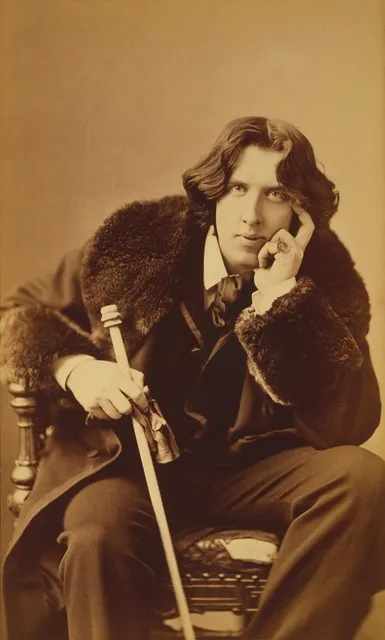
E.O. Wilson, the evolutionary biologist, argued in his research on human social instincts that humans are a eusocial species. You evolved not as a solitary individual but as a member of a tightly knit group. Your psychology is deeply calibrated for group living, in a way that makes sustained isolation genuinely damaging to you. The social instinct isn’t a preference or a nice-to-have. It’s a biological requirement, as basic as your need for sleep. Deny it long enough and things break.
Wilson observed that the human group size for optimal social functioning, the number of people with whom genuine mutual knowledge and accountability is possible, sits somewhere between fifty and two hundred. This range recurs across human cultures across time: the hunter-gatherer band, the military unit, the village, the early church congregation, the monastery. These are the structures inside which real tribal bonds form. Not the nation-state. Not the corporation. Not your social media following. The actual face-to-face community where people know each other’s names, know each other’s circumstances, and carry real stakes in each other’s welfare.
You didn’t inherit this arrangement by choice, and neither did your father, and neither will your sons unless you interrupt it. For most of human history, men inhabited this scale of community automatically. Their social world was the village, the guild, the regiment, the neighborhood. They didn’t have to build tribe. They were born into it, or it was built around them by the structures of premodern life. The destruction of those structures, through industrialization, urbanization, mobility, digital substitution, has left you as something evolution never designed you to be. An effectively solitary animal. Trying to get through an intensely social world without the social infrastructure that makes getting through it possible.
You did not choose this arrangement, and it helps you to know that. You weren’t born defective at connection. You were born into a world that quietly dismantled the scaffolding your psychology assumes will be there, then told you that whatever discomfort you feel about it is a personal failing you should manage privately. It isn’t a personal failing. It’s a structural absence, and structural absences get fixed by building structure, not by managing your feelings about not having any. Keep that distinction in your head as you listen to the rest of this. You are not broken. Your environment is missing something you’re owed, and you can go build it.
Robert Putnam and the Measurement of Collapse
Robert Putnam’s “Bowling Alone” documented, for you and everyone like you, what he called the collapse of social capital in America. It’s the measurable decline in every form of civic, social, and community participation over the second half of the twentieth century. Bowling leagues. Rotary clubs. Parent-teacher associations. Church attendance. Dinner parties with neighbors. Every form of regular, face-to-face, non-commercial social engagement, Putnam measured them all, and they were all declining, by significant percentages, over several decades.
Putnam was careful to point out that the internet wasn’t yet the primary driver when he wrote the book in 2000. The data he was analyzing predated the smartphone entirely. The collapse was happening before digital substitution became the primary mechanism. The forces he identified were more structural. Suburbanization and the car culture removed people from walkable social environments. The rise of the two-income household removed the slack time community participation requires. The professionalization of everything replaced amateur civic associations with professional service providers. And television made sitting in your house consuming entertainment more immediately satisfying than walking across the street to engage with a neighbor.
What Putnam’s data showed, and what you’re almost certainly living the tail end of, is that men were losing something they hadn’t been given adequate language to name. The specific social structures, the men’s organizations, the workplace communities, the neighborhood networks, the religious communities, that had once provided automatic tribal context were dissolving. And unlike women, who had strong social networks that compensated for institutional decline, men’s social lives were organized around those specific structures in ways that left them particularly exposed once the structures went away.
The numbers since “Bowling Alone” haven’t improved. The proportion of men who report having no close friends has increased dramatically. The proportion who report having a friend they could call in a genuine crisis has declined substantially. The loneliness statistics among men are alarming by any public health measure, and loneliness produces health outcomes comparable to smoking fifteen cigarettes a day, and significantly worse than obesity. This isn’t a metaphor. The tribal collapse is producing measurable physical damage in you and men like you.
Sit with that comparison for a second, because it’s not a rhetorical flourish. If a doctor told you that a habit of yours carried the mortality risk of a pack of cigarettes a day, you would treat it as a five-alarm problem in your life. You would make real changes. You would tell your wife about it. You would probably tell your friends, if you had enough of them to tell. Loneliness carries that same weight in the data, and you are very likely walking around with it right now without having once treated it as the five-alarm problem it actually is for you. That’s the gap this episode is trying to close. Not information. Urgency.
The Veterans Who Built a New Outpost
Here’s what this can look like for you in practice. Picture a composite group, eight veterans in a mid-sized Midwestern city, who met through a shared connection. A mutual friend had served with two of them and introduced everyone at a barbecue. They were scattered across different industries, different neighborhoods, different life stages. What they had in common was the experience of tight-unit military service, the acute sense of what that community had given them, and the persistent hollow feeling of its absence in civilian life.
They started meeting for breakfast on Saturday mornings. No agenda at first, just coffee, food, and the specific quality of conversation that men who’ve shared genuine stakes can have with each other. Within a month, they’d added a group training session on Saturday afternoon. Within three months, they had an informal system of accountability: if you were struggling, you said so at breakfast. If you were struggling and didn’t say so, someone else at the table named what they were observing.
Two years later, notice what this group actually delivered for its own men, because it’s the same thing you’d get. This group of eight had handled a combined ten significant individual crises: a divorce, a business failure, a cancer diagnosis, two job losses, a son’s substance problem, the death of a parent, and several others. Not by providing solutions but by providing presence, showing up at the hospital, driving someone to the lawyer’s office, sitting with someone in the specific way that only men who don’t need to fill silence can sit. They’d built something none of them had consciously designed and all of them recognized as essential. They’d built a tribe.
These veterans describe it, in terms you’d recognize, with a consistency that’s striking. It’s the closest thing to unit life they’ve experienced since leaving the service. Not because of the stakes, nobody’s being shot at over Saturday breakfast, but because of the quality of mutual knowledge, mutual obligation, and genuine accountability the group has developed over time. They know each other. They show up for each other. They tell each other the truth. By Junger’s definition, that’s exactly what tribe is. And it was built deliberately, by men who knew what they’d lost and decided to build it back.
Notice what actually made this work for them, because it’s the part you can copy directly. It wasn’t a shared war. It was a shared willingness to show up on a schedule, repeatedly, without an excuse elaborate enough to matter. You don’t need combat to build this. You need a table, a time, and men willing to sit at it more than once. If you’re waiting for something dramatic enough to justify building a group like this in your own life, you’re waiting for a permission slip that was never coming. The permission is yours to grant yourself, starting with one Saturday.
Ray Oldenburg and the Death of Third Places
- They’re accessible and accommodating. You don’t need an invitation or a reservation.
- They have regulars. The same people show up reliably over time.
- They’re informal and undemanding. There’s no performance pressure on you.
- Conversation is the primary activity.
- They produce a sense of belonging available to anyone willing to show up consistently.
Ray Oldenburg introduced the concept of “third places” in his 1989 book “The Great Good Place.” These are the spaces that are neither home, your first place, nor work, your second place. They’re the informal gathering grounds where community forms on its own: the pub, the barbershop, the coffee house, the diner, the park bench, the town square. These are the places where you run into neighbors, where conversations happen without an agenda, where the social fabric of a community gets continuously renewed through repeated, casual, face-to-face contact.
Third places share specific characteristics, and Oldenburg identified them as essential to their social function.
Men’s third places specifically, the barbershop, the hardware store where men lingered, the bar with its regular crowd, the lodge, the union hall, have been disappearing from American life for decades. The barbershop got replaced by the salon and the appointment-based cut shop where you’re in and out in twenty minutes. The neighborhood bar got replaced by the restaurant where you need a reservation and the bill arrives before you’re done talking. The hardware store got replaced by the big box store, where anonymity is total and lingering is unwelcome. The lodge and the union hall got replaced by nothing in particular.
When third places disappear, you don’t automatically build replacements. You withdraw. You watch sports on television and imagine it’s community. You scroll social media and imagine it’s connection. You have hundreds of contacts and a handful of conversations that never go below the surface. You are, in the most literal sense Oldenburg describes, placeless, without the informal gathering ground that community needs to renew itself continuously through casual contact.
Think about where you’d actually go, right now, tonight, if you wanted to run into people you know without arranging it in advance. For most men your age, the honest answer is nowhere. There is no such place in your life anymore. That absence is not neutral. It is costing you something real every single week, in the accumulated total of casual contact you’re simply not having, contact that used to renew your sense of belonging in the background without you ever having to schedule it. You have to schedule it now. That’s the whole shift, and it’s on you to make the schedule.
The Digital Trap: Why Social Media Doesn’t Work

The parasocial relationships social media produces, the sense of connection with people who don’t actually know you exist, activate the same neural pathways as real connection, briefly, without providing the actual social goods genuine relationship delivers. This creates what researchers describe as a connection trap. You feel momentarily less lonely after social media use while actually getting more isolated over time, because the digital substitute is crowding out the time and energy real relationship requires.
Check your own phone right now, honestly, and you’ll probably see the pattern in yourself. How many people did you message today versus how many people did you actually sit across from? You know the answer before you check. You’re particularly susceptible to this trap because digital interaction requires much less of the vulnerability genuine male community demands of you. You can participate in an online forum, score points in a comment section, accumulate followers, and never once be seen, really seen, by another person. The anonymity is comfortable. It’s also, functionally, the opposite of tribe. Tribe requires being known. Digital communities, for the most part, don’t know you. They know your content.
Christakis’s research also documents something important for you about the mechanism through which real social networks deliver their benefits: contagion. Behaviors, emotions, and even health outcomes spread through social networks via direct contact. The health benefits of having healthy friends, the mood-lifting effect of time with genuinely happy people, the behavior-changing effect of being part of a community with high expectations, these work through physical presence and repeated real-world contact. They don’t work through screens. The physics of the mechanism require bodies in the same room.
The Corporate Professional Who Found His Men’s Group
Here’s another version of what you might be living right now without naming it. Picture another composite, call him Alan. Seventeen years in financial services in Chicago. His social life was entirely work-adjacent, colleagues, clients, professional events. He had a wife, two kids, a gym membership he used erratically. He was forty-four, professionally successful, and privately convinced something important was missing that he couldn’t name. He’d describe himself as surrounded by people and fundamentally alone.
You might already know a man like the colleague who changed everything for Alan. A colleague mentioned, almost as an aside, that he was part of a men’s group that met monthly. Alan’s initial reaction was dismissal. It sounded like the kind of earnest self-help activity he’d been conditioned to regard with polite skepticism. But his colleague was someone he respected, and he agreed to attend once, out of curiosity.
What he found wasn’t what he expected, and it likely isn’t what you’d expect either. The group had been meeting for six years. It included eight men from various industries and backgrounds. The format was simple. Each person had twenty minutes to speak about what was actually going on in his life, not the professional or social curated version, the real version. Everyone else listened. There was no advice-giving unless explicitly asked for. After everyone had spoken, there was open conversation.
You can probably guess how Alan’s first meeting went for him, because it’s likely how yours would go too. Alan says the first meeting was one of the most uncomfortable experiences of his adult life. He talked for twenty minutes about his work achievements without once touching anything real. He knew it while he was doing it. He watched the other men listen with genuine attention, and not one of them tried to one-up him, advise him, or change the subject. He watched other men say things he’d thought privately for years and never said aloud. He left feeling relieved and exposed at once, like a window had been opened in a room that had been sealed too long.
He kept going. Three years later, he describes the group this way.
“The most important professional and personal development I’ve done in my adult life. More than MBA-level executive education. More than every business book I’ve ever read.”
Not because the group taught him skills or gave him advice. Because it gave him the specific experience of being genuinely known by other men, of having witnesses to his life who knew the actual story, not the curated one. That experience, whatever the mechanism underneath it, isn’t optional for you. It’s one of the things you’re built to need, and that modernity has systematically removed from you.
Ask yourself, honestly, whether you have an equivalent to Alan’s group in your own life right now. Not a professional network. Not old friends you text on birthdays. A room where you say the real version instead of the curated one, and other men actually hear it. If you don’t have that room yet, you now know what it looks like when it works, and you know it took Alan exactly one uncomfortable first meeting to find out he’d been missing it his whole adult life. Your first meeting is one phone call away from you too.
The Tribal Reconstruction Protocol
Here’s the protocol itself, six components. They build on each other, and they require sustained commitment from you over months and years, not a single decisive action. Building genuine tribe is slow work, done right. If you expect fast results, you’ll be disappointed. If you commit to the process, you’ll find, twelve to twenty-four months in, that you have something you can’t imagine having lived without.
- Face the actual inventory. You almost certainly overestimate the quality of your social connections. You count acquaintances as friends, collegial relationships as close friendships, and social media contact as social life. Start with the honest assessment: how many men in your life could you call tonight and say “I’m struggling” and receive genuine presence in return? Not logistics. Not advice. Presence. For most men, the honest answer is zero or one. That number is your baseline.
- Find the seed group. Tribe gets built around a seed, a small initial group of three to five men with whom genuine connection is possible for you. You’re not starting a social organization. You’re finding two or three other men willing to be honest about the deficit and willing to do something real about it. The criteria aren’t professional success or social status. The criteria are genuine commitment to something beyond surface-level interaction, availability for regular face-to-face time, and the basic trustworthiness that makes real conversation possible.
- Create regularity. The most important structural element of any genuine community is regularity. Weekly beats monthly. The same time, the same place, a reliable structure you can organize your life around. The first five or six sessions will be awkward for you. The group needs to find its rhythm. The awkward early sessions are necessary, they’re the initiation cost all genuine community requires. Push through them. The depth comes later.
- Create shared stakes. The tribal bond is strongest when it forms around shared stakes, when the group is doing something together that matters, that carries real consequences, that creates the conditions for genuine mutual dependence. This can be a training program with collective goals, a community service project that requires real effort, a business or professional collaboration, or the shared intellectual project of working through hard questions together with real accountability. The content matters less than the genuine stakes. Men doing something real together, that requires something real from each of them, form bonds that men merely associating don’t.
- Build the accountability structure. Genuine tribal membership includes accountability, the expectation that how you’re actually doing is the group’s business, and that the group will tell you the truth about what it observes. This is different from judgment. It’s closer to the accountability a good coach provides: honest observation, specific feedback, the refusal to accept comfortable rationalization as genuine explanation. Build this structure explicitly. Agree that honesty is the norm, that advice-giving is invited rather than assumed, and that the purpose of the group’s attention to each member’s life is genuine good rather than social performance.
- Expand gradually. Once your seed group has found its rhythm, usually around six to twelve months in, growth becomes possible without losing the intimacy. Bring in one or two additional men who fit the culture. Not rapidly. Organically, through existing relationships and genuine vetting. The optimal size for this kind of community sits somewhere between six and fifteen. Below six, the absence of any one member collapses the group’s energy. Above fifteen, the intimacy that makes real accountability possible starts to dilute. Find the right size for your specific group and protect it.
The Church Men’s Group That Actually Worked
Here’s one more composite worth knowing, if you’re picturing this inside your own church or faith community. Call him Pastor David. Twelve years running men’s ministries before he finally admitted most of what he’d been doing wasn’t working. The pancake breakfasts. The one-day retreats. The study groups. Men showed up, were polite, learned something, and went back to their lives of functional isolation. Nothing changed. The groups disbanded. New groups formed, ran the same cycle, disbanded again.
Notice where his insight actually came from, because you can go find the same kind of source. The insight that changed his approach came from an unexpected source, a conversation with a Marine Corps veteran in his congregation who described how unit cohesion gets built in the military. Not through lectures on the importance of brotherhood. Not through team-building exercises. Through shared hardship, shared stakes, and the specific intimacy that comes from being genuinely dependent on each other in conditions that matter.
Take note of the three elements he used, because you can copy all three. He rebuilt the men’s group around three elements. A monthly service project that required real physical effort and real stakes. They partnered with a shelter and took responsibility for specific outcomes, not just participation. A weekly small group of six, capped at six, meeting in rotating homes with a structured check-in format and explicit accountability norms. And an annual challenge event, one physically and mentally demanding multi-day experience the group trained for together over the preceding six months.
Look at what changed for the men in his group, because you can expect a similar shift for yourself. The retention rate went from twenty percent to over eighty percent. The depth of the relationships went from polite familiarity to something multiple members described as the most important male friendships of their adult lives. And the reported impact on men’s lives outside the group, on marriages, on work performance, on health behaviors, on how they related to their children, was measurably different from anything the previous format had produced.
If you’re part of any organized men’s group right now, church-affiliated or otherwise, and it feels like the pancake breakfast version instead of the version that actually changed something, you now have the diagnostic for why. Ask yourself whether your group has real stakes attached to it, something that costs you effort and carries a consequence if you don’t show up. If the honest answer is no, that’s fixable, and it’s fixable by you specifically. You don’t need to wait for a pastor or an organizer to rebuild it. You can be the one who proposes the shared project that gives your existing group actual teeth.
His conclusion was blunt: men don’t need to be taught about community. They need to be put in conditions that require community to form. The teaching is irrelevant. The conditions are everything. Build the conditions and the rest follows with a reliability that’s almost mechanical. Fail to build the conditions, and no amount of teaching, facilitation, or inspirational content makes the slightest difference for you.
Take that lesson seriously for your own situation, because it cuts against the way you’ve probably been thinking about this. You’ve likely been waiting to feel more like a “community” kind of guy before you go build one, as though the desire has to arrive first and the structure follows. It’s backwards. Build the structure, weekly, with shared stakes, and the feeling of belonging will arrive because the conditions produced it, not because you willed it into existence. Stop waiting to feel ready. Build the container. Let it do the work on you that you can’t do on yourself through sheer intention.
The Physical Dimension: Men’s Bodies and Tribe

E.O. Wilson’s research on human social evolution emphasizes this specifically for men. The evolved male bonding mechanisms are activity-centered. Men bonded over the hunt, the construction of shelter, the defense of territory. The conversation happened alongside the activity, not instead of it. If you try to build community purely through conversation, it often feels effortful and artificial in a way the same depth of connection built through shared physical effort doesn’t.
This is one of the reasons the military produces such powerful male bonds. The shared physical hardship is the mechanism. The conversation becomes available because the hardship has already created the trust. You can approximate this in civilian life. Training groups. Adventure challenges. Wilderness experiences. Physical building projects. The specific activity matters less than the genuine shared effort and the mutual dependence it creates.
If you’re building the Tribal Reconstruction Protocol and you’re not including a physical component, you’re leaving one of the most powerful bonding mechanisms unused. Add the physical element. Train together, build something together, challenge yourselves together. Let your bodies do some of the work the conversations can’t do alone.
Think about the men in your life you’ve bonded with fastest and deepest, and you’ll probably notice a pattern. It was rarely a conversation over coffee that did it. It was the move, the job, the team, the deployment, the project, the thing you sweated through together. You already know this mechanism works on you, from your own life, even if you’ve never named it. Use what you already know. Pick a physical thing to do with the men you’re trying to build tribe with, and let the sweat do half the work your words can’t.
The Questions You’re Actually Asking
Let me answer some things you might be turning over right now, because I hear versions of these constantly.
You might be an introvert wondering whether the tribal thing is really necessary for you. It is. Introversion is a preference for the stimulus level of social interaction, not a preference for its absence. You need genuine relationship just as much as an extrovert does, in different quantities and with different recovery requirements, but you still need it. The loneliness research documents that introversion doesn’t protect you against the health consequences of social isolation. What introversion might legitimately affect is the size and format of your tribe. A smaller group with more structured interaction may suit you better than a larger, unstructured community. But you still need it. The question isn’t whether. It’s how.
You might have tried joining groups before and had it never stick, and you’re wondering what you’re doing wrong. Most organized groups fail to provide the conditions for genuine tribal bonding, regularity, shared stakes, accountability, and enough time together for real mutual knowledge to develop. If you’ve been joining social groups and they’re not sticking, the issue is probably not you. It’s the format. Find or build something with the structural elements we’ve discussed: regular face-to-face time, genuine shared stakes, explicit accountability norms, and enough patience to push through the inevitable early awkwardness. The awkward phase isn’t evidence that it’s not working. It’s the cost of entry into genuine community.
Maybe your friends from college are scattered across the country, and you’re wondering whether long-distance friendship is even worth maintaining. Yes, and also insufficient on its own. Long-distance friendships with men who genuinely know you are worth enormous effort for you to maintain. They provide a form of being known that local convenience friendships don’t easily replicate. But they can’t substitute for the regular, face-to-face, body-in-the-room presence local tribal membership provides. Think of your long-distance relationships as an essential part of your social portfolio, not the whole portfolio. Build the local tribe in addition to maintaining those connections, not as a replacement for them.
You might not be a veteran, and you might not have a shared history of hardship with other men, and you’re wondering whether you can still build something real. Absolutely. Shared history is one route to tribal bonding, not the only one. The shared history that makes veterans’ bonds so strong is really just a proxy for the underlying mechanism: mutual knowledge, shared stakes, and genuine accountability developed over time. You can build the same underlying thing without the military history. The key elements are time, enough of it, spent in genuine contact rather than surface interaction, and stakes, doing something real together that requires something real from both of you. Start where you are, with who you have, around something that matters enough to create genuine stakes. The bond follows from the conditions, not from the history.
And you might be wondering how to approach other men about this without it feeling weird. Most men are significantly more open to genuine male connection than they appear to be, and significantly more starved for it than they’re willing to admit. The approach that works best is direct and specific, not abstract. Something like: “I’m putting together a small group of guys who meet regularly, we train together on Saturday mornings and get dinner once a month. Would you be up for it?” Concrete, specific, low-pressure, no requirement to discuss feelings or admit need. Most men will say yes to that, even if they’d recoil from a more emotionally explicit version. Start with the activity. The depth follows.
What Tribe Actually Provides
It’s worth being specific about what genuine tribal membership provides you, because the vague invocation of “community” doesn’t quite capture it. The functional benefits of real male tribe are concrete and measurable.
- A reality check. Other men know enough about your life to tell you when you’re wrong, not about abstract beliefs, but about the specific story you’re telling yourself about your own situation.
- Crisis infrastructure. When things go genuinely wrong for you, health, financial, relational, loss, you don’t face it alone. Specific men show up at the hospital, make the call, handle the logistics, sit with you at two in the morning when the sleep won’t come.
- A mirror. You see yourself more accurately because you’re continuously seen by people who know you, and your self-image gets calibrated against the observations of others with direct access to reality.
- Meaning. The specific meaning that comes from being genuinely necessary to other people, from knowing your presence makes a real difference to real people who depend on it.
Take the reality check first. When you’re in a genuine tribe, other men know enough about your life to catch it when you’re wrong. The man who’s been telling himself his drinking is fine has men around him who know differently. The man who’s been rationalizing not dealing with his marriage has men who can see the rationalization for what it is. This isn’t intrusive. It’s one of the primary functions of genuine community, and it’s entirely unavailable to you if you’re living without one.
Then there’s crisis infrastructure, which you will need whether you plan for it or not. Not in the abstract sense of you knowing people care, but in the concrete sense of you having specific men who’ll show up for you. This infrastructure is health-protective in the most literal way. Men who have social support recover from medical events faster, have lower mortality from cardiac events, and have significantly lower suicide rates than men who are socially isolated.
The mirror function matters too, and it applies directly to you. If you’ve never been genuinely known by other men, you are operating right now on an unchecked self-image that may bear little relationship to who you actually are. That’s uncomfortable for you to hear and essential for you to know, both at once.
And then there’s meaning, which is the dimension Junger’s research illuminates most clearly. The thing the veterans had in the Korengal Valley that they lost when they came home wasn’t the adrenaline or the mission itself. It was the specific meaning that comes from being genuinely necessary to other people. That experience of genuine necessity is one of the deepest sources of meaning available to you as a human being, and it’s structurally unavailable to you in isolation. Tribe is where you find it.
The Slow Violence of Male Isolation
What’s happening to you and men like you around social isolation isn’t being treated as the public health crisis it actually is. Men dying of drug overdoses, men dying by suicide, men dying of heart disease at rates significantly higher than women and significantly higher than previous generations, these are the physical expression of a social pathology. Men without tribe are men without one of the primary buffers against the stresses that turn into illness, addiction, and self-destruction.
This isn’t a call for you to see yourself as a victim. You are not a passive recipient of forces beyond your control. The tribal collapse is in significant part a story of choices, individual and cultural. Choices that made solitary consumer identity feel like enough to live on. Choices that made the idea of sitting in a men’s group and being honest about your life seem more embarrassing than the alternative of sitting alone with the same problems for another year. Those choices can be revisited by you. The isolation can be addressed. The tribe can be built.
But it requires a different set of priorities than the ones most men in modern life have been operating with. It requires treating the building of genuine male community as a serious priority for you, rather than an optional add-on to the real business of career and family. It requires investing time and energy in relationships that don’t produce immediate professional payoff. It requires the specific vulnerability of letting other men see you as you actually are, not as you’re performing to be. These requirements feel like costs. They’re investments. The return is the difference between a life supported by genuine community and a life managed alone. That gap between those two outcomes is wider and more consequential than most men understand, until they’re on one side of it looking at the other.
Build the tribe. Not because it’s easy. Because it’s necessary. Because you’re built for it. Because the evidence of what happens to men who don’t is all around you. And because the evidence of what’s possible for men who do, the veterans’ Saturday breakfast group, Alan’s men’s group, Pastor David’s rebuilt church community, is equally all around you if you’re willing to look at it.
The Historical Record: What Happens When Tribe Disappears

This finding replicates across different populations and contexts, and it applies to you whether or not you’ve ever served. E.O. Wilson’s broader evolutionary research shows that eusocial species placed in non-eusocial conditions, isolated from their group structure, show measurable behavioral and physiological deterioration. The mechanism isn’t metaphorical. It’s neurobiological. Sustained social isolation activates the same stress pathways as physical threat. Your body doesn’t clearly distinguish between being alone in a dangerous world and being physically endangered. Both produce the cortisol and inflammation profiles of chronic stress. Both, sustained long enough, produce the same damage in you.
Here’s a piece of context that puts your own life in perspective. The specific historical moment when male tribal structures in America most visibly collapsed, in Putnam’s data, the late 1960s through the 1990s, correlates with the beginning of the male health crisis subsequent decades have documented. The rise in male suicide rates. The rise in male substance abuse. The rise in male loneliness and the downstream health consequences of loneliness. These correlations don’t prove causation at the individual level. They’re consistent with a hypothesis, that the tribal collapse is producing the health crisis, that has significant supporting evidence behind it.
If you want to argue that you don’t need community, that self-sufficiency is adequate, that the tribal thing is soft, you’re arguing against the evolutionary record of your own species and the health data of your own demographic. The argument doesn’t hold up. The evidence isn’t on your side. Self-sufficiency is a virtue. Isolation is not self-sufficiency. It’s deprivation. And if you confuse the two, you’re not being strong. You’re being wrong.
Notice if you felt a flicker of defensiveness reading that last paragraph. A lot of men do, because you were probably raised to hear “you need other people” as a quiet accusation of weakness. Flip it around for yourself. You need food, water, and sleep, and nobody calls you weak for that. You need other men, on the same biological terms, and the only thing that’s changed is that you’ve been taught to feel ashamed of one need and not the other. Drop the shame. Keep the need. It’s yours, it’s real, and acting on it is not a concession. It’s just accurate self-knowledge.
The Rite of Passage Gap
Here’s something worth naming plainly about your own life. Every traditional culture in recorded human history has had formal rites of passage that initiated boys into the responsibilities and expectations of adult male community membership. You almost certainly never had one. The specific forms vary, endurance trials, knowledge transmission, symbolic death and rebirth, but the function stays consistent. The passage marks the boy as now belonging to the men, accountable to the men’s standards, and deserving of the men’s protection and solidarity.
Modern secular culture has largely abandoned formal male initiation, and you were probably handed adulthood without any moment that marked it as yours. High school graduation is a ceremony without a test. Bar mitzvahs are religious ceremonies that exist alongside, not instead of, the secular developmental trajectory. Military service initiates some men but has been reduced to a small minority. The result is a generation of men who were never formally initiated into anything. Men who moved from boyhood to adulthood without a moment of communal acknowledgment that the transition had occurred. Without being told explicitly by the men of the community what was expected of them. Without the ceremony that would have made the transition real for everyone watching.
Junger comments on this directly, and it’s worth you hearing it plainly. The tribal structures that produce the strongest male bonds in military service function partly as the initiation civilian culture didn’t provide. The shared hardship, the mutual testing, the arrival at the moment when you’ve proven something to yourself and to the other men, these are the experiential components of genuine initiation. They work. They produce the bond and the belonging that a formal ceremony without a real test can’t produce.
Rebuilding tribal structure for you, as an adult man, is partly a rite of passage question for you too. Men who go through genuinely demanding shared experiences, the training challenge, the wilderness expedition, the intensive community service project, report a quality of bond that’s experientially similar to what initiated males in traditional cultures report. The mechanism is the same. The shared trial produces the belonging. Belonging produces the tribal bond. The tribal bond produces the psychological support infrastructure Junger documented in the Korengal Valley. Build the shared trial. Let the rest follow.
Practical Steps: Starting This Week
The gap between you understanding the tribal need and you doing something real about it is wide, like it is for most men. Here are the concrete first moves for you.
- Make the inventory. Write down every man in your life who genuinely knows you. Not acquaintances, not colleagues you get along with, not people you’ve had one good conversation with. Men who know the real story. How many? Be honest. That number is your starting point.
- Identify one man in your life with whom genuine depth is possible but hasn’t yet been developed. Call him this week. Not text, call. Suggest meeting regularly. Make it concrete: “Want to grab breakfast on the first Saturday of the month?” The first invitation is the hardest. After it, momentum takes over.
- Find or create one shared physical challenge for your existing male relationships. A training program, a hiking trip, a challenge event you prepare for together. Schedule it. The physical component isn’t optional for you. It activates bonding mechanisms conversation alone doesn’t reach.
- If you have no existing male relationships to develop, identify one organized context where you can meet men with potential for genuine connection. A serious training facility. A veterans’ group, if that applies to you. A faith community with serious men’s programming. A professional organization that meets regularly face to face. Show up consistently for three months before you judge whether it’s working.
- Read Junger’s “Tribe.” It’s short, under two hundred pages. It names what’s happening and what’s possible with a clarity that’s hard for you to dismiss.
The tribe won’t build itself. The culture won’t build it for you. The atomizing forces are too strong and too economically reinforced for you to expect the environment to create what your psychology requires. You have to build it deliberately, from the ground up, with other men willing to choose the uncomfortable but necessary work of genuine community over the comfortable but ultimately hollow alternative.
The men who do this work, who build the tribe, who maintain it over years, who let it shape them, describe a quality of life that men living in isolation genuinely can’t imagine. Not because they have more things. Because they have more belonging. And belonging is not a luxury for you. It’s the thing. Everything else is infrastructure for it or distraction from its absence.
Build it. Start this week. The first move is a phone call. Make it.
The Online-Offline Gap
There’s a real role for digital tools in your tribal reconstruction, and it’s worth acknowledging directly. The argument against digital substitution isn’t an argument against digital tools as organizational infrastructure. The distinction matters for you.
Using digital communication to maintain relationships between in-person meetings, the group chat that keeps your Saturday breakfast group connected through the week, the video call that bridges the distance when someone travels, isn’t the problem. That’s digital as infrastructure for physical community, and it works. Using digital communication as a substitute for in-person time, as your primary mode of connection rather than the connecting tissue between real meetings, is where the substitution fails to deliver the psychological goods tribal membership requires.
Maybe you’ve had the experience of an online community, a forum, a Discord server, a group chat, providing what feels like genuine tribal membership. The question worth asking yourself honestly is: what specifically is it providing that you couldn’t live without? If the answer is intellectual stimulation from shared discourse, an online community can genuinely provide that. If the answer is the sense of being genuinely known and genuinely supported by people who’ll show up in your actual life, that’s what physical community provides, and digital community can’t replicate it.
Use digital tools to find people and maintain connections. Use physical presence to build the bonds that matter. Your phone isn’t the enemy of tribe. It’s a potentially useful tool in the hands of a man who knows what he’s actually building. The question is always: is this digital interaction building toward physical connection for you, or is it substituting for it? The honest answer to that question in your own life tells you whether you’re using the tool correctly.
The Suburb That Built a Village

Within two years, this group of five men had expanded to twelve households and had a community infrastructure none of their surrounding neighbors had, the kind you don’t have yet either. They had shared resources, shared childcare arrangements, shared professional networks that produced three job referrals, and the specific quality of daily contact Oldenburg described in his analysis of third place communities. They’d built a neighborhood that functioned like a village, in a physical environment designed, by the logic of suburban architecture, to prevent villages from forming.
“We didn’t plan it. We just stopped treating proximity as enough for community and started treating it as an opportunity. Most of my neighbors still don’t know each other. We made a choice they didn’t make. That’s the whole difference.”
Proximity is a raw material for you. It doesn’t automatically produce community. It produces the possibility of community, which becomes actual community only through the sustained, deliberate choice to invest in it. Modern suburban design, the smartphone, the two-income household, the privacy culture of contemporary American life, all of these work against you converting proximity into community. Overriding them requires a deliberate choice on your part to treat the building of community as a priority rather than a byproduct.
Ryan’s neighborhood made that choice. The results speak for themselves. The choice is available in your neighborhood too. It’s available in your workplace, your gym, your faith community, wherever you have enough proximity to enough men to begin the work. What Ryan’s story establishes is the minimum viable starting point: five men, a knocked door, a borrowed tool. From that seed, with enough intention and enough time, everything else can grow for you too.
Look at your own street, your own building, your own block for a second. There are men within walking distance of you right now who you’ve never had a real conversation with, and some of them are almost certainly hungry for exactly what Ryan’s neighborhood built. You don’t need five men and a plan. You need one knock. Pick the neighbor whose name you actually know, and go borrow something you don’t need. See what happens. You might be starting your own version of this by next weekend.
The Long View: What You’re Actually Building
We’ve covered a lot of terrain for you in this episode. Junger’s research on military tribal bonds. Putnam’s data on social capital collapse. Oldenburg’s framework for third places. Christakis on the physics of real social networks. E.O. Wilson on the evolutionary architecture of human social needs. Case studies of men who built real community under difficult conditions.
What I want to close with is the long view, what you’re actually building when you build genuine male tribe, and why it’s worth the considerable effort from you.
You’re building the primary support structure for the second half of your life. The crises that are coming, illness, loss, professional disruption, relationship difficulties, the slow accumulation of grief every man carries as he ages, are navigable with community and almost impossibly heavy without it. The tribe you build in your forties and fifties is the infrastructure that will carry you through your sixties and seventies in a way your individual resilience alone cannot. You cannot be strong enough alone to handle everything that’s coming for you. No man is. The men who try are the men Junger found falling apart in civilian life, not because they were weak, but because they were alone when they needed community most.
You’re building a model for the men who come after you too. Your sons, your grandsons, the younger men in your community who are watching how men of your generation get through this, they’ll build based on what they see in you. If what they see is isolation, they inherit isolation. If what they see is deliberate, intentional, high-functioning male community, they inherit the model and the permission to build it themselves. Erikson’s generative function, transmitting what matters to the generation coming after you, applies to community-building as much as anything else in your life.
And you’re building your own quality of life in the most direct sense available to you. The friendships, the belonging, the specific joy of being genuinely known by men who’ve chosen to know you, these aren’t secondary goods. They’re the primary goods. The career, the physical health, the financial security, these are the infrastructure that makes your life possible. The genuine community is the life itself. Build it with the urgency it deserves.
Picture yourself twenty years from now for a second, because this is the version of you all of this is actually for. Are you surrounded by men who know your real story, who’d show up at two in the morning without being asked twice, who’ve watched you change and stuck around anyway? Or are you alone with a full calendar and a phone full of numbers nobody actually calls? You get to decide which one of those men you become, and the deciding starts with what you do this week, not someday. The twenty-years-from-now version of you is being built right now, out of choices exactly this small.
Sebastian Junger ended “Tribe” with a question worth you sitting with yourself: what would it take to build a society that provides the community and belonging humans have always needed? His tentative answer was that it would require some form of shared sacrifice and shared stakes. It would require the willingness to be genuinely dependent on and obligated to one another, rather than maintaining the fiction of individual self-sufficiency modern life has elevated to a virtue. That’s probably right. And the work begins not at the societal level but at the level of five men, a knocked door, a Saturday morning, and the decision to choose each other. Start there. Build from there. The society follows from the community, and the community follows from the choice. Make the choice.
When Tribe Requires You to Be Vulnerable First
There’s a specific barrier standing between you and tribal reconstruction that most discussions of male community skip over, because it’s uncomfortable to name directly. The barrier is this: genuine community requires someone to go first. Someone has to be the first to be honest, the first to admit difficulty, the first to ask for real help rather than the polished version of help that preserves everyone’s dignity and changes nothing.
You aren’t, as a category of man, trained to go first. You’re trained to respond. To match the emotional register of the room. To not display need that hasn’t been signaled as acceptable by the presence of someone else’s need first. This means that in a room full of men who all need community, and none of whom will admit it, the collective need stays invisible. The community never forms, even though every individual in the room would have said yes to it if directly asked.
Someone has to break the pattern, and it might as well be you, this week, with one man you already trust more than you’ve let yourself admit. In the veterans’ Saturday group, one man admitted at the third breakfast that he wasn’t doing well and didn’t know who else to tell. In Alan’s men’s group, someone at the sixth meeting finally said the thing he’d been carefully not saying for five meetings. In Ryan’s neighborhood, someone knocked the first door. In every genuine community that’s formed around men who needed it, someone went first.
That person is available to be you. It doesn’t require a dramatic declaration or the discomfort of an unprepared audience. It requires one honest sentence to one man who’s likely to receive it, more likely than you think, because he almost certainly has the same need he hasn’t admitted to you or to anyone. One honest sentence. “I’ve been thinking I need more genuine connection with other men, and I’m not sure I know how to build it.” That sentence, said to the right person, can start everything for you.
The community you need will not build itself. The culture will not build it for you. The only person who can start it is you. And starting it requires you to go first. That’s the whole barrier. Name it, see it for what it is, and go first anyway.
You have almost certainly rehearsed the reasons not to say the honest sentence. It’ll be awkward, you tell yourself. He might not know what to do with it, you tell yourself. You’ll look weak in front of a man whose opinion matters to you, you tell yourself. Run every one of those objections forward to their actual worst case, and you’ll notice none of them are as bad as another decade of the isolation you’re already living inside. You already know this in your body, even if you haven’t said it out loud yet. Say it out loud. To one man. This week. Not when you feel ready. Now.
The Tribe Is Not Optional
Let me close this section with a blunt statement for you. The politeness with which male loneliness and social isolation usually get discussed hasn’t produced urgency in the men, like you, who most need it.
The tribe is not optional for you. It’s not a lifestyle preference. It’s not a personality-dependent nice-to-have that some men need and others don’t. It’s a biological and psychological requirement of the species you belong to. It’s documented by evolutionary biology, supported by health research, and confirmed by sociological data. And it’s validated by the testimony of every man who’s experienced genuine community and every man who’s experienced its absence.
Without tribe, you carry a structural vulnerability, to illness, to addiction, to depression, to the specific kind of purposeless drift Erikson called stagnation, and that shows up, at scale, in the public health data on male mortality. Not because you’re weak. Because you’re alone in a way you weren’t designed to be alone.
You have the capacity to address this yourself, starting today, with the man closest to you, whoever he is. Not by wishing culture were different or that community were easier to find. By making the deliberate choice to build it, starting with whoever’s closest, investing the time and consistency and occasional vulnerability genuine community requires, and protecting what you build with the seriousness it deserves.
The tribe is how men were designed to live. The atomized individualism of modern Western life is an experiment in living against that design. The experiment is producing data. The data says it’s not working. The alternative is available to you. Choose it.
You get to decide, this week, which side of that experiment you keep living on. Nobody is going to check in on you about this decision. No one is going to schedule the phone call for you or knock on your neighbor’s door on your behalf. That is both the hard part and the good part. It means the responsibility is entirely yours, and it also means the power to change it is entirely yours too. Nobody standing between you and this. Just you, a phone, and a choice.
Male Friendship Across Life Stages
One practical dimension of tribal reconstruction that deserves specific attention is how it changes across the different phases of your adult life. The barriers to building genuine community, and the opportunities available, are different for a man in his thirties than for a man in his fifties. Understanding the specific landscape of each phase helps you calibrate your approach.
If you’re in your thirties and early forties right now, the primary barrier is usually time and the competing demands of young families and career acceleration. You’re often operating at maximum load, small children, mortgage pressure, career-building. The inclination toward community is present but consistently deferred. The error is to keep deferring it. The men who build genuine tribal infrastructure in their thirties are building it for the hardest decades ahead. Their forties and fifties. That’s when career crises, health scares, marriage difficulties, and aging parents converge with a frequency isolated men can’t adequately handle. Build it while the stakes feel manageable to you. It’ll be there when the stakes aren’t.
If you’re in your mid-forties and fifties instead, the barrier shifts for you. The time pressure hasn’t entirely resolved but it’s eased. What’s harder now is social confidence. Men who haven’t built these friendships through their thirties often approach their fifties convinced the window has closed, that genuine male friendship is something that forms when you’re young and you missed it. That’s false. The research on loneliness and social connection shows clearly that genuine adult friendships formed in midlife are as psychologically valuable as those formed earlier. They just require more deliberate intention from you, because they lack the structural scaffolding of school or early career proximity. The window hasn’t closed. It’s just asking you to be more intentional.
In your sixties and beyond, the barriers to community formation reduce in some ways and increase in others for you. Reduced: time pressure eases significantly with retirement and the empty nest. Increased: you’ve often accumulated decades of social habits, patterns of privacy, self-sufficiency, surface-level engagement, that are deeply grooved and require deliberate work from you to override. The men who get through this period well are almost invariably the ones who maintained or built genuine community through their fifties. They arrive at their sixties with existing relationships that have the depth to support the transitions ahead. They don’t have to build from scratch once the structural supports of career and active parenting are gone.
The right time to build the tribe was ten years ago. The second best time is now. Whatever stage you’re at, there are men around you with the same need you have and the same reluctance to act on it. Be the one who acts first. Start the thing. Show up consistently. Protect what you build. At every stage of your adult life, this is the right move. There’s no stage at which it’s too late for you, and no stage at which it takes care of itself. It requires choice, at every stage, and the choice is always available.
Whatever your excuse has been, you’ve probably already spotted it somewhere in this episode. Too busy. Too late. Not my personality. Already have enough people in my life. Test that excuse against what you now know. You’re not too busy, you’re deferring. It’s not too late, the window doesn’t close, it just asks more of you. It’s not your personality, introverts need this too, just in a different shape. And you almost certainly don’t have enough people, not the kind who’d show up at two in the morning. Whatever you were telling yourself, you now have the counter-argument. Use it on yourself.
The Quality Question: What Makes Community Real
Not all community is created equal, and you need to know the difference before you invest years in the wrong kind. There’s a significant difference between two kinds of groups. One has members, a coordinator, and regular meetings, and produces no genuine bond. That’s organizational community. The other has people who genuinely know each other and carry real stakes in each other’s welfare. That’s tribal community. Understanding what distinguishes the two matters practically for you if you’re building something real rather than going through the motions.
The distinguishing feature of real tribal community, as Junger identifies it, and the standard you should hold your own relationships to, is mutual necessity. The community is real when each person’s presence matters to the others, when the bond is something you notice when any one member is absent, when the stakes of the relationship are high enough that absence carries weight. Organizational membership without mutual necessity produces a list of names, not a tribe. Mutual necessity gets built through shared stakes, shared difficulty, and enough time for the dependency to become real.
You can test the quality of your existing male relationships against this criterion. If you stopped showing up, would it matter? Not to the logistics of the group, would it matter to the people? Would someone call? Would someone notice the absence and take it personally rather than just procedurally? If yes, you have the beginning of something real. If no, you have organizational membership without tribal bond, which means the work of building the real thing is still ahead of you.
This isn’t a judgment. It’s a diagnostic for you. Organizational membership is often the container in which tribal bonds form, given enough time and enough genuine contact. The question is whether you’re building toward the real thing or settling for the organizational proxy. Men who settle for the proxy, who satisfy the social instinct at the organizational level while never going deeper, are, in Putnam’s terms, bowling in a league but never actually making friends. The activity is real. The bond isn’t. Both are available to you. Only one provides what you actually need.
“The thing that was great about those guys wasn’t the mission. It was that we were genuinely necessary to each other. In civilian life I’ve never found that again except in places where I chose to build it.” — a veteran quoted in Sebastian Junger’s “Tribe”
That’s the precise truth of what you’re building when you build a real tribe. Genuine necessity. People who need you specifically, not just a body in the seat. People you need specifically, not just a warm social environment. That level of mutual necessity doesn’t form quickly for you. It forms through time and stakes and honesty and showing up when it would be easier not to. It’s worth every bit of that cost. Ask any man who has it.
Build it. The tribe is waiting for you to start building it. The first move is a knocked door or a phone call. The last move is everything else that follows from there. Begin.
The Accountability Structure: How Tribe Makes You Better
There’s one more dimension of genuine male tribe worth developing fully. It may be the most practically important one for you, if your primary motivation isn’t just community but growth. Call it the accountability function.
Real tribal community isn’t merely supportive in the emotional sense. It’s demanding, in a way ordinary social comfort isn’t. Real tribal membership means your people know what you’ve said you’re going to do and will ask you about it. It means the story you’re telling yourself about your life, the rationalizations, the comfortable explanations for why things haven’t moved, the impressive-sounding partial truths, gets checked against the knowledge of people who can see it from outside. It means you’re held to a standard social isolation would let you quietly abandon.
If you build genuine tribe, you’ll likely find that the accountability function becomes one of the primary sources of value it gives you, more valuable, often, than the emotional support. The friend who says, “you told me three months ago you were going to have that conversation with your wife, did you?” is doing something for you that a book or a podcast can’t. He’s applying the specific pressure of mutual expectation in a context where you care about the relationship enough to be moved by it. That pressure changes your behavior in ways private resolve doesn’t.
Build the accountability into your tribe deliberately. Not as surveillance. As mutual care, the expression of genuine interest in each other’s development, and the expectation that showing up for the group includes showing up for the commitments you’ve made to yourself with the group as witnesses. This is what distinguishes a genuine men’s community from a social club. Both are valuable. Only one produces genuine change in you. The difference is whether the group holds you to something real or simply provides a comfortable place to spend time. Build the one that holds you to something real. You’ll be grateful for it, even on the days when the gratitude is hard for you to access.
Build it. Start this week. The tribe you build now is the infrastructure for the rest of your life. You are built for this. Go find your men, or become the man who starts the finding. Either way, begin.
You now have everything you need to start. You have the diagnosis: you’re isolated in a way your biology never expected you to be. You have the protocol: inventory, seed group, regularity, shared stakes, accountability, gradual growth. You have the examples: veterans at breakfast, Alan in his men’s group, Pastor David’s rebuilt ministry, Ryan’s neighborhood. And you have the one thing none of the rest of this matters without: your own willingness to go first. Everything else was information. This last part is on you.
Editorial StandardsCorrectionsMedical DisclaimerAbout Our ContentAffiliate DisclosureSite Map