
Sitting Still Was Never How You Think Best
Somewhere in the past ten thousand years, your species developed the practice of sitting still to think. It’s a relatively recent innovation in your evolutionary history, and by the evidence of many of history’s most productive thinkers, it’s not the default mode that produces your best thinking either.
“All truly great thoughts are conceived while walking.” — Friedrich Nietzsche, Twilight of the Idols
Charles Darwin walked his gravel thinking path twice daily and credited those walks with some of his most significant breakthroughs. Jean-Jacques Rousseau wrote that he could only meditate when he was walking. His mind went blank when he stopped, and moved only when his feet did. Soren Kierkegaard walked the streets of Copenhagen daily and connected his walking directly to his writing output. Steve Jobs held walking meetings. Mark Zuckerberg holds them too. Jeff Weiner scheduled walking time as a deliberate productivity practice.
The convergence of philosophical tradition, modern research, and practical evidence is pointing at something real for you. Walking is not merely transportation. Under specific conditions, with specific practices, it’s one of the most powerful cognitive, creative, and emotional tools available to you. Today you’re building what we’ll call the Ambulatory Clarity Protocol, a structured framework for turning your daily walk from a pleasant but vague activity into a deliberate practice with specific, measurable returns across multiple parts of your life.
This is also an episode about meditation for you, but not the sitting-still version that a lot of men find culturally uncomfortable, physically difficult, or just temperamentally wrong for them. Walking meditation is the alternative form of contemplative practice. It gives you many of the same neurological and psychological benefits as seated meditation, while folding into the daily movement you already have, or already want to have. It’s the practice with the lowest barrier to entry, the highest incidental benefit, and some of the most consistent positive reports from men who found other contemplative practices inaccessible. Let’s build it for you, piece by piece.
Why Walking Works: The Neuroscience

Marily Oppezzo and Daniel Schwartz at Stanford published a 2014 study on this. They measured creative output, specifically divergent thinking, the kind of ideation that generates multiple novel solutions to open-ended problems. It increased by an average of 81% during walking compared to sitting. The effect persisted right after walking too. People who’d just walked produced more creative output once they sat down than people who’d been sitting the whole time. The effect was specific to walking. It wasn’t produced by being moved in a wheelchair, which suggests it was the locomotion itself doing the work, not just the change of scenery or posture.
The mechanism isn’t fully understood, but several contributing factors have been identified for you. The rhythmic bilateral motor activity of walking appears to facilitate left-right brain communication through the corpus callosum, the bundle of fibers connecting your brain’s two hemispheres. Creative synthesis, which involves connecting information stored in different neural regions, benefits from that increased communication. Walking at a moderate pace also produces a specific level of arousal, one researchers describe as the optimal zone for creative ideation. It sits below the high-arousal state of intense exercise, which narrows your focus. It sits above the low-arousal state of rest, which reduces activation. It’s your creative sweet spot, in physiological terms.
The second major cognitive effect of walking is attentional restoration for you, the replenishment of the directed attention capacity that sustained mental work drains. Kaplan’s Attention Restoration Theory identifies “soft fascination,” the effortless, low-demand engagement of walking in natural environments, as the primary restorative mechanism at work. Your eyes move continuously during a walk without the directed, sustained focus that screen-based work demands. The visual field keeps changing, capturing attention without requiring deliberate direction from you. The auditory environment of natural settings, birdsong, wind, water, provides a similar pattern of effortless engagement. The result is restored executive attention for you, without the additional depletion that directed-attention activities would produce. A twenty-five minute walk in a natural setting produces measurable improvements in your attention that can last hours afterward.
The third effect is emotional regulation. Walking activates the same bilateral stimulation mechanism that EMDR therapy uses to process difficult emotional material. The alternating left-right stimulation of walking appears to help you process emotionally charged experience in a way that reduces its intensity while keeping the information intact. Many people find that problems or emotional difficulties that felt stuck and intractable while sitting become more workable during a walk. Not because the problem has changed. Because the bilateral stimulation has changed the way your brain is processing it.
The Five Modes of the Protocol
The protocol gives you five distinct modes of walking practice, each serving a different function for you. You learn to pick the mode that matches the specific purpose of a given walk, which turns what might otherwise be a uniform activity into a flexible toolkit you can reach for.
Mode one: open awareness walking. This is your foundational practice, and the right starting point for you if you’re new to any of this. The instruction is deliberately simple. Walk at a comfortable pace, without a device, and let your attention rest on the sensory experience of the walk itself, the feeling of the ground under your feet, the movement of your body, the sounds and sights around you. When your mind wanders, and it will, notice the wandering and gently bring attention back to the sensory experience of walking. That’s the whole practice.
The simplicity is deceptive for you. Done consistently, this trains a decentering capacity, the ability to observe the contents of your own mind from a position of stable awareness, rather than being fused with those contents. Every time you notice your mind has wandered and bring attention back to the present, you’re doing a repetition of that decentering exercise. Over hundreds of repetitions, the capacity strengthens in you. A man who’s practiced open awareness walking for three months can notice his inner critic’s commentary arising and observe it without getting swept by it. He can notice anxiety thoughts about the future and note them without escalating them. He can be genuinely present in a conversation, because the habit of presence has been trained in him daily. Twenty to thirty minutes is the session length that produces maximum benefit for you. That’s long enough for the first wave of mental noise, the backlog of thoughts about your day’s demands, to pass, and for the deeper, more integrated awareness of genuine contemplative experience to start showing up. Sessions under fifteen minutes still help you, but they rarely reach the depth that makes the practice worth sustaining.
Mode two: problem incubation walking. This is your deliberate use of the walk’s creative enhancement effect for a specific intellectual problem. Spend five minutes before the walk clearly defining the problem you want to work on. Write it down. Specify the constraints. Name the specific question you most need answered. Then start the walk, and deliberately let go of actively managing the problem in your head. Let your mind move freely while the problem stays in the background. Trust the incubation process to do its work on you.
The research on incubation, the process by which your brain keeps working on problems below the level of conscious attention, shows that directed conscious effort isn’t the only or even the most effective mode of problem-solving for complex, creative problems. Incubation produces different insights than directed analysis does. It accesses different neural pathways. It draws connections that deliberate focus, by its nature, has trouble making, because deliberate focus narrows what you’re looking at. The walk creates the conditions your brain needs for incubation: movement that occupies the motor system, a sensory environment that captures soft fascination, and the absence of external demands that lets background processing run without interruption. The ideas that show up in the last ten minutes of a problem incubation walk are frequently the ones that were genuinely stuck, now unstuck. Carry a small notebook, or use a voice recorder at the walk’s end, to catch what came to you.
Mode three: emotional processing walking. This uses the bilateral stimulation and attentional restoration effects of walking to process difficult emotional material for you: anxiety, grief, anger, relational friction, accumulated stress, in a way that reduces its intensity while preserving what it’s telling you. Before the walk, briefly name what you’re carrying emotionally. Not analyze it, just name it. “I’m carrying anxiety about the project presentation and unresolved frustration from the conversation with my partner.” Then walk, and let the feelings be present without either suppressing them or amplifying them through deliberate analysis. Let them be there while you move. Feel them in your body. Notice them without engaging them. Walk through them rather than around them.
Many people find that emotions that felt overwhelming before the walk feel more manageable by its end, not because the circumstances changed, but because the walking metabolized some of the physiological charge in you. The cortisol anxiety generates has a physical half-life that walking accelerates. Your body processes some of what the sitting position was accumulating. The bilateral stimulation begins the integrative work. The result is often a sense of having more room around the feeling for you. The same information is still there. The same situation still requires your attention. But the felt sense of being flooded or overwhelmed drops enough that clear thinking and good decisions become possible again.
Mode four: gratitude and appreciation walking. This one may sound the softest of the five, but it has some of the strongest research behind it. Gratitude practice has been studied extensively, and it consistently produces measurable improvements in wellbeing, positive affect, sleep quality, and relationship satisfaction. Walking gratitude practice combines the neurological benefits of walking with intentional focus on what’s genuinely good in your life right now. The practice: for the duration of the walk, deliberately notice one specific thing per minute that you’re genuinely grateful for, and spend thirty seconds actually experiencing the gratitude rather than just mentally checking a box. Not listing gratitudes mechanically. Inhabiting them briefly, with the full sensory and emotional experience of the thing, held for thirty seconds, before you move to the next one.
Specificity matters here for you. “I’m grateful for my family” is too abstract to produce the felt sense of gratitude the research shows you actually need for the wellbeing benefits. “I’m grateful for the specific moment this morning when my daughter told me about her dream at breakfast, and the particular way she laughed at the end of it” is specific enough to produce a genuine felt response in you. The walk’s natural sensory richness gives you additional material too, the quality of the light, the particular character of the morning air, the specific sound of the street at that hour. There’s always more to include than you’d think, once your attention turns specifically toward what’s present and valuable, rather than what’s absent and deficient.
Mode five: deliberate unfocus walking. This final mode has no agenda for you at all. It’s the intentional allowing of your mind to go where it goes, without the direction of open awareness walking and without the specific problem of incubation walking. It’s about as close as you can deliberately manufacture to the mental equivalent of daydreaming while in motion. No phone, no podcast, no objective. Just walking, and whatever arises spontaneously in your mind without direction from you.
The challenge of this mode for most professional men is that it feels actively uncomfortable at first. Your mind generates a strong preference for purposeful activity, and deliberate unfocus violates that preference directly. The discomfort is the exact signal telling you the mode is needed. It means your directed-attention system has been so dominant for so long that your default mode network has been chronically suppressed, and the deliberate unfocus is what’s required to restore your access to it. Persist through the initial restlessness. The distinctive quality of what arises in genuine unfocus, the unexpected memories, the surprising connections, the sense of perspective on long-running situations in your life, is your default mode network doing its integrative work. It’s worth the discomfort of the transition into it.
Richard and the Mind He Optimized Away
Picture a man in his mid-forties, a management consultant. Call him Richard, a composite built from a pattern that shows up constantly in high-functioning men who’ve never once questioned the speed of their own thinking, not one specific man I sat across from. He described his intellectual style as fast, analytical, and decisive. Those qualities had built a strong career. Over fifteen years of professional practice, they’d also left him with almost no experience of the slower, more associative, more mysterious thinking that produces genuine strategic insight, rather than competent execution of frameworks he already had.
“I optimized away the interesting parts of my own mind.”
That’s how he put it, once he could see it clearly enough to say it. He came into this work not with a crisis, but with a nagging sense that his output had plateaued. The solutions he was producing were technically sound, but no longer surprising, no longer genuinely creative. His clients were satisfied. He wasn’t. He wanted to know why the best work of his twenties and early thirties, work that had felt genuinely exciting to produce, had given way to work that felt competent but hollow to him now.
The audit of his life revealed the problem. No unstructured time, anywhere in it. Every waking hour was directed: professionally productive, socially engaged, or media-consuming. His default mode network had essentially no operational window left. The incubation capacity that had produced the creative synthesis he remembered from earlier in his career required conditions his current daily life systematically prevented from ever existing.
The fix, in this composite, started with Mode Five, deliberate unfocus walking, thirty minutes daily, no device, no agenda. The first two weeks were uncomfortable for him. He kept generating to-do lists in his head instead of genuinely releasing into unfocus. By week three, something shifted. He described it as remembering how to daydream. Ideas started arising on the walks that were qualitatively different from anything structured analysis had ever given him. One idea that came to him in week four became the central thesis of a client engagement that was received as the most original work that client had seen from any consulting firm in years. One thirty-minute daily walk. One protected window for his mind to run in its integrative mode. The return was a career-level breakthrough that had been out of his reach for years, until the conditions for it finally existed.
What happened to Richard is worth examining a little further, because the pattern generalizes to you if any part of his story sounded familiar. He wasn’t lacking intelligence, and he wasn’t lacking effort. He was lacking a specific kind of unstructured time that his entire adult life had systematically eliminated, one deliberate optimization at a time, each one individually reasonable, all of them together devastating to the exact capacity he needed most. That’s the trap worth naming for you directly. Every individual decision to fill a gap with something productive feels correct in the moment. Read one more article instead of staring out the window. Answer one more email instead of sitting with an unfinished thought. Each decision, on its own, is defensible. The sum of a decade of those decisions is a mind with nowhere left to wander, and a career that quietly stops generating anything genuinely new. Richard’s recovery wasn’t dramatic. It was thirty minutes, protected daily, for months, until the capacity that had been dormant in him came back online.
Walking as Nervous System Practice
Beyond the cognitive effects, the Ambulatory Clarity Protocol functions as a daily nervous system regulation practice for you. Think about the specific physiological profile of a twenty to thirty minute walk at moderate pace: mild cardiovascular elevation, sustained rhythmic movement, low to moderate environmental stimulation. That combination produces a distinctive autonomic signature in you. It supports the parasympathetic recovery that chronic stress and high cognitive demand otherwise deplete in you.
John Ratey at Harvard Medical School, whose book “Spark: The Revolutionary New Science of Exercise and the Brain” synthesized decades of research on exercise and neurology, documents the specific brain changes aerobic exercise, including walking, produces. Increased BDNF, Brain-Derived Neurotrophic Factor, sometimes called Miracle-Gro for the brain. New neuron generation in your hippocampus. Improved neurotransmitter balance, including serotonin and dopamine. A reduction in cortisol and inflammatory markers. The walk doesn’t need to be intense to produce these effects for you. The clinical data shows the cognitive and mood-relevant changes occur at walking pace, not only at running pace or higher intensities.
Here’s the practical implication for you. Your daily walk is simultaneously a cognitive enhancer, an emotional regulation tool, a creative catalyst, and a nervous system maintenance practice, all at once. It’s probably the highest return-per-unit-of-time physical activity available to you. Thirty minutes of daily walking, particularly in a natural or semi-natural environment, without a device, produces effects across more domains of your function than any comparable time investment you could make. The research case for making it non-negotiable in your life is as strong as the case for any health or performance practice available to you.
Making It Automatic: The Habit Itself
- Habit stacking. Attach the walk to an existing daily anchor you already do automatically, after morning coffee, before entering the office, after dinner.
- Social accountability. Walk with a partner, or simply tell one other specific person that you’re committing to the practice.
- Tracking. A simple calendar mark for each completed walk gives you low-effort accountability, and the loss-aversion effect makes breaking a visible streak genuinely uncomfortable.
- Implementation intention. Write down specifically when, where, and for how long you’ll walk tomorrow, not just a general intention to walk more.
The specific behavioral challenge with a daily walking practice is the same as with any daily practice for you: it’s easy to begin, and easy to stop. The first week runs on novelty and usually goes fine. The second week is where the practice hits the friction of ordinary life, the day that’s genuinely too full, the weather that’s genuinely discouraging, the competing demand that feels genuinely urgent. How you handle those early friction points decides whether the practice becomes habitual for you, or stays permanently experimental.
Phillippa Lally and colleagues at University College London studied habit formation directly. They found that the median time to habit automaticity, the point where a behavior requires minimal deliberate decision-making from you, is sixty-six days. The range runs from eighteen to two hundred fifty-four days, depending on how complex the behavior is and on individual differences between people. Walking once daily in a consistent time slot and environment sits at the simpler end of that range. Most people reach habit automaticity for daily walking within thirty to sixty days of consistent practice, which means your first two months require the most deliberate effort from you, and everything after that becomes increasingly self-maintaining.
Here are the accountability strategies the research supports for you during that early habit-formation window.
Each of these increases completion rates in the research on habit formation. Combined, they’re usually enough to carry you through the sixty-day habituation period, to the point where the walk starts maintaining itself. Use them. The practice is worth the investment of your first sixty days. Build the accountability structure, and let it carry you until the practice carries itself.
Integrating the Protocol Into the Rest of Your Life
The Ambulatory Clarity Protocol works best for you when it’s woven into the existing structure of your day, rather than added as a separate commitment on top of everything else. The men who sustain the practice are the ones who found a natural integration point for it. A walk that replaced part of a commute. A walking meeting that replaced a conference call. A post-dinner walk that replaced screen time. A morning walk that preceded the workday as a deliberate transition into it. The practice doesn’t need to add time to an already full schedule if you integrate it as a replacement for lower-value activities inside the same time windows you already have.
Walking meetings deserve specific advocacy here, because they’re underused and produce distinctive advantages for you in professional contexts. Research at Stanford found that people walking side by side produced five point six times more creative output in a collaborative problem-solving exercise than people sitting face to face across a table. The reduced formality of side-by-side movement, combined with the bilateral stimulation and soft fascination of the walk, creates a conversational environment that’s simultaneously more relaxed and more generative than the conference room. Walking meetings work best for you in one-on-one conversations, brainstorming, feedback conversations, and mentoring. They don’t work well for presentations requiring shared screens, large groups, or highly formal negotiations. Within those limits, they’re among the most productive meeting formats available to you, and the one that folds this whole protocol into your professional life most naturally.
When Walking Meetings Work For You, and When They Don’t
Walking meetings deserve a specific, honest look at where they actually help you and where they’ll just frustrate everyone involved. Not every conversation belongs on foot. Knowing the difference is what makes the practice sustainable for you at work, instead of a gimmick you try once and abandon.
- One-on-one conversations, where you don’t need a shared screen or a shared document in front of you.
- Brainstorming and open problem-solving, where the goal is generating options rather than converging on a single decision quickly.
- Feedback conversations, where the side-by-side positioning takes some of the pressure off direct eye contact for both of you.
- Mentoring conversations, where the relaxed, unhurried pace supports the kind of honest talk that a conference room schedule tends to compress.
- Presentations that require a shared screen, a whiteboard, or documents you both need to look at simultaneously.
- Large group discussions, where more than two or three people make walking-and-talking logistically difficult.
- Highly formal negotiations, where the record of what was said and the precise wording matters enough that you need to be seated and taking notes.
- Anything requiring privacy from a public setting, if your walking route isn’t private enough for what you need to say.
Within those boundaries, walking meetings are among the most productive formats available to you, and the one that folds this whole protocol into your working life without requiring you to carve out any additional time for it.
What the Studies Add Up To
It’s worth walking you through a few more specific findings here, because the evidence for this practice is stronger and more precisely applicable to your life than most summaries suggest. Each of these adds a different piece to the picture.
A 2012 study by Blumenthal and colleagues at Duke found that thirty minutes of walking, three times a week, produced antidepressant effects equivalent to sertraline, the medication known as Zoloft, at six months. The walking group actually had significantly lower relapse rates than the medication group once treatment ended, with better outcomes still visible at ten months. Here’s the implication for you. Walking isn’t a mild mood-support activity you do on the side. At adequate dosage and consistency, it’s a clinically significant intervention in its own right, with effects that hold up over time in a way medication alone sometimes doesn’t.
Research by Lambourne and Tomporowski in 2010 synthesized seventeen separate studies on exercise and cognitive performance. They found that aerobic exercise produced significant improvements in executive function, processing speed, and memory recall. The effect was particularly strong for moderate-intensity activities, which is walking’s exact domain, and it was more consistent when researchers measured cognition after exercise than during it. That detail matters for you. It suggests the primary cognitive benefit of your walk is the state it leaves you in afterward, not necessarily the thinking that happens mid-stride, though you’ll get some of that too.
Put these findings next to the Stanford creativity research, the Miyazaki forest-bathing research, and the Erickson hippocampal volume research, and the cumulative picture is a practice with remarkably broad-spectrum efficacy for you. Walking simultaneously addresses your mood, your executive function, your creativity, your memory, your cognitive aging, your stress management, and your attentional restoration, all at once. No pharmacological intervention touches all of those domains simultaneously, at essentially no cost, with no side effects. No dietary intervention produces effects across that range either. From the evidence available, walking is one of the most comprehensively beneficial things you can do with thirty minutes of your day. This protocol just gives that practice the intentional structure that converts its benefits from occasional to consistent, and from generic to targeted at exactly what you need.
Walking for the Conversations You’ve Been Avoiding
The five modes are mostly solo practices, but the social dimension of walking deserves your attention too. Walking side by side with another person creates a distinct relational dynamic that face-to-face conversation doesn’t. The shared movement, the side-by-side positioning, the common experience of moving through the same space at the same pace, creates a form of coordinated attention researchers call synchrony. Behavioral synchrony, the alignment of movement, rhythm, and attention between two people, is associated with increased trust, cooperation, and social bonding in research across species, from birds to primates to you.
The relational walk, deliberately choosing to walk alongside someone you want to connect with, repair something with, or simply be present to, is an underused relationship technology for you. Fathers who walk with their adolescent kids find conversations that were impossible at the dinner table suddenly open up on the move. Managers find that difficult feedback lands easier to give and to receive when both people are moving side by side instead of sitting across a table from each other. Friends reconnect on long walks after short coffee-shop meetings had produced nothing but logistics between them. The walking context isn’t magic. But it changes the physiological and relational dynamics enough to make certain kinds of conversation more possible for you than they are in static, face-to-face settings.
If a hard conversation you need to have has felt inaccessible sitting down, try walking it instead. If a disclosure you need to make has felt too confrontational under direct eye contact, walk while you say it. If a mentoring relationship feels stiff and formal, move it onto a walk. The ambulatory context doesn’t change what needs to be said. It changes the physiological state of the two people saying and hearing it, and that shift is often the difference between a conversation that actually moves something forward for you and one that just feels like another unproductive meeting. This connects directly to the broader work in our resilience principles section, where the same theme runs through: the conditions you create around a difficult moment often matter as much as the words themselves.
The Device-Free Requirement
This deserves its own attention, because it’s the instruction most consistently ignored, and the one most critical to everything else this episode has told you. The specific experience of walking without earbuds or a phone produces a qualitative shift in your walk within the first five minutes. It’s hard to describe to you if you haven’t tried it, and immediately recognizable to you if you have. The ambient audio environment of the world around you, the birds, the wind, the distant traffic, the particular acoustic quality of the space you’re moving through, all of it becomes available to you. It isn’t available in the same way when audio content is masking it. Your mind, with no external content to process, initially produces a flood of its own material instead: the backlog of thoughts, concerns, and to-do items that were waiting for an unoccupied processing window inside you. That first wave passes, usually within the first ten minutes, and what follows it is the qualitative shift that makes this practice distinctive for you.
Many men describe it as the first genuine silence they experience in their entire day, not the absence of sound, but the absence of externally-directed cognitive demand on them. Your mind is present without being occupied. That experience is unfamiliar enough at first to feel uncomfortable to you. With repeated practice, it becomes the most valued part of your day, the window where genuine mental clarity and creative emergence actually become possible, in a way no other daily activity gives you.
This connects to the default mode network research you’ve already heard about in this episode. The device-free walk, particularly in a natural environment, is one of the most reliable and accessible ways you have to activate that network in daily life. Think about the material that surfaces during a device-free walk. The unexpected memories. The surprising connections between disparate problems. The sudden clarity about a relationship or decision that had felt murky to you. All of it is your default mode network doing the integrative work it does whenever it isn’t suppressed by external input demands. That material is valuable to you. It’s available only under the conditions this protocol creates. That’s why the device isn’t optional here. It’s the single variable that determines, more than any other, whether your walk produces this protocol’s effects, or merely the cardiovascular benefits of movement alone.
The Journal You Should Keep
One practical addition worth building into your practice: a structured end-of-walk reflection, five to ten minutes, that captures what the walk surfaced before your day’s demands re-engage and the material recedes from you. Three questions cover most of what matters.
What arose during this walk, in terms of content, insights, or emotional material. What mode was the walk primarily in for you: open awareness, incubation, processing, gratitude, or unfocus. And what specific follow-up action, if any, does the material call for from you. That’s the whole structure. Nothing elaborate.
This three-question reflection, done within ten minutes of finishing your walk, converts what would otherwise be a transient experience into captured material you can act on, reference, and track over time. Many men who keep this journal find that reviewing three months of entries produces a striking picture of their own mind’s default preoccupations, their creative patterns, and the specific conditions that produce their best thinking. That picture is itself a form of self-knowledge that’s genuinely difficult for you to access any other way. Build the practice. Keep the journal alongside it. The compounding value of this combination, extended across years, is one of the more significant investments available to you in your own development.
The Nature Prescription

Yoshifumi Miyazaki at Chiba University in Japan, building on the Japanese concept of shinrin-yoku, forest bathing, has documented the physiological effects of time in forested environments with real precision. A twenty-three minute walk in a forest reduces cortisol by an average of 12.4% compared to walking in an urban setting. The effects on natural killer cell activity, a key component of your immune function, persist for up to thirty days after a significant nature immersion experience.
The attentional restoration effects of natural versus urban environments have been measured across dozens of studies, and natural environments consistently win by large margins.
 Here’s the practical recommendation for you. Prioritize natural environments for your walk whenever they’re accessible to you. A park, a tree-lined street, a body of water, any setting with living organisms and nonlinear visual patterns, all of it is meaningfully better for you. Better for your attentional restoration. Better for your emotional regulation. Better than an equivalent walk on an urban street with heavy traffic and mostly built infrastructure. The difference isn’t subtle. The research shows effects that are large by the standards of psychological and physiological measurement. If you have reasonable access to natural settings, prioritizing them for your daily walk is one of the most efficient health interventions available to you. If your environment limits that access, seek it out for a longer weekly walk instead, once a week in a natural setting, still meaningfully better than none at all. Your nervous system is calibrated to natural environments. Giving it regular access to them is maintenance for you, not luxury.
You don’t need wilderness for this to work on you. The research on urban green space is nearly as encouraging as the research on deep forest immersion, and far more relevant to how most men actually live. A city park with mature trees. A tree-lined residential street instead of a commercial strip. A walk along a river or canal instead of along a six-lane road. Small differences in your route produce measurable differences in what the walk gives back to you. If you’re auditing your own weekly routine right now, look honestly at the routes you default to. Most men walk the most convenient route, not the most restorative one, simply because nobody ever told them the two were different. Now you know. Choose the tree-lined block over the parking lot, even if it costs you two extra minutes. Those two minutes are doing more for you than you’d expect.
Take a few minutes, right now, and actually map this out for yourself. Pull up a map of the area around your home or your office and trace two or three possible walking routes you haven’t tried. Look for parks, waterfronts, tree cover, anything with living, irregular texture to it rather than straight lines and hard edges. You’re not looking for the most scenic route in the abstract. You’re looking for the most restorative route available to you specifically, given where you actually live and work. Once you’ve identified it, use it. Make it your default rather than an occasional treat you save for weekends. Your nervous system doesn’t distinguish between a weekday and a weekend. It responds to what it’s actually exposed to, every single day, regardless of what day of the week it happens to be.
Answering What You’re Already Asking
Let’s work through the questions you’re probably already forming, one at a time.
Maybe you’re thinking: I walk regularly and it doesn’t seem to produce the effects you’re describing, what am I doing wrong. The most common reason a regular walker doesn’t experience these effects is the device. Walking while you’re consuming podcasts, music, or other audio content prevents your default mode network from activating, blocks attentional restoration, and blocks the incubation effect entirely. The device-free condition isn’t a preference for you to consider. It’s the essential requirement for most of what this protocol produces. Walk without the phone and without earbuds for four consecutive days, and notice the difference in what the walk gives you back. The second most common reason is speed. Walking too fast for comfortable conversation, or with the purpose-driven energy of a fitness walk rather than the explorative, open quality of a contemplative one, shifts your neurological profile toward high-arousal exercise instead of the moderate-arousal state the protocol targets. Slow down a bit. Let the pace be genuinely unhurried for once.
Maybe you’re thinking: how does this compare to seated meditation. The evidence base for seated meditation is larger and more developed, particularly for attentional training. Walking meditation produces many similar benefits through different mechanisms, and it’s more accessible if you struggle with the physical discomfort of extended sitting, the cultural associations meditation carries for you, or a temperamental resistance to enforced stillness. The two practices complement each other rather than compete. Men who practice both typically report that each supports the other. If you’re choosing between them, walking meditation is generally the lower-barrier entry point for you, more likely to become a sustainable daily practice. For men who’ve never been able to sustain any contemplative practice at all, the walking format almost always succeeds where seated formats have previously failed them.
Maybe you’re thinking: what about running, does it produce the same effects. Running produces different effects for you. At high intensities, running shifts your brain into a different arousal state, more focused, more absorbed in the physical demand. That state produces excellent mood benefits and real post-exercise cognitive enhancement for you. But it doesn’t produce the same open, associative, incubation-friendly state that moderate-pace walking creates while you’re actually doing it. Many runners describe the middle miles of a longer run producing something similar to Mode Five’s effects, once the physical intensity settles into a comfortable rhythm for them. That experience is real and valuable, and it doesn’t require you to give up running. But walking, specifically, at its characteristic moderate pace, produces the specific cognitive signature that makes the five modes possible for you. Run for its many benefits. Walk for the protocol’s specific ones. The ideal, for you, is both.
Maybe you’re thinking: can I combine this with journaling. Yes, and many practitioners adopt it spontaneously once they start. Five to ten minutes of writing immediately after the walk, capturing what arose during it, is a natural and valuable extension for you. The walk surfaces material that wouldn’t have shown up in a sitting-and-staring-at-a-blank-page session. Writing it down right after captures that material while it’s fresh, before the demands of your day re-engage your directed attention and the walk’s material recedes from you. The combination of walking and writing is one of the most productive creative practices documented across the history of intellectual and artistic work, and it only costs you thirty minutes of walking time and a notebook. Build it in if it fits your day. The returns compound: the walk produces the material, the writing locks it in.
Maybe you’re thinking: what if my climate makes outdoor walking difficult for much of the year. That constraint is real for a lot of men, and it deserves honest engagement rather than dismissal. Several adaptations preserve most of the protocol’s effects for you in weather-restricted contexts. Indoor walking in large spaces, shopping malls, large office buildings, covered walkways, preserves the bilateral stimulation and moderate aerobic benefits. The attentional restoration effects from natural environments are reduced but not eliminated indoors. Some research suggests even viewing images of natural environments during an indoor walk produces partial restoration effects. For extended cold or wet periods, investing in outdoor gear that makes walking comfortable in most weather is one of the most cost-effective health investments you can make. Most men discover, once properly equipped, that weather that used to stop them is actually quite walkable. The protocol is designed to adapt to your actual life rather than ideal conditions. Adapt it. Use it. Partial implementation is still substantially better for you than none.
One more adaptation worth naming for you specifically, if your schedule rather than your climate is the constraint. Split walks count. Two fifteen-minute walks, one in the morning and one in the evening, don’t replicate a single thirty-minute session exactly, but they preserve most of the bilateral stimulation and a meaningful share of the attentional restoration. If your day genuinely can’t hold one unbroken thirty-minute block, don’t let that stop you from doing the practice at all. Take the fifteen minutes you have twice. The research on cumulative daily movement generally supports this kind of splitting for physical health benefits, and the anecdotal reports from men using this protocol suggest the cognitive and emotional benefits hold up reasonably well too, even if a single unbroken session remains the gold standard when your schedule allows for it.
What Your Walk Actually Owes You
Let’s be honest with you about the timeline, because the last thing this episode should do is set you up for disappointment on day four. You will not feel transformed after your first walk. You might not feel much of anything different at all, and that’s normal for you, not a sign the practice is failing. The nervous system changes, the BDNF increases, the hippocampal growth, none of that happens on a single-session timescale. What you can expect from your first week is smaller and more honest: a slightly different quality to your afternoon, a thought that surfaces on the walk that you wouldn’t have had at your desk, a few extra minutes of quiet in a day that otherwise has none. That’s not underwhelming. That’s exactly what week one is supposed to give you.
Your second week usually brings something a little more distinct. You start noticing the absence of the walk on days you skip it, a kind of static that builds up in you that wasn’t there before you had something to compare it against. By week three, for most men, the practice starts producing the material this whole episode has been describing to you: the idea that arrives unbidden, the emotional knot that loosens, the sense of your own mind as a place you can actually spend time in rather than a machine you’re constantly operating. None of this requires you to do anything more sophisticated than showing up and leaving the phone behind.
The sophistication is in the consistency, not the technique.
Walking and the Aging Brain
For men in the second half of their lives, this protocol carries an added urgency that the general framing may not fully convey to you. The cognitive aging research is unambiguous. Your brain changes significantly after fifty, and the rate and trajectory of that change is substantially influenced by lifestyle factors that stay almost entirely within your control. Walking is one of the most consistently powerful of those factors available to you.
A study by Erickson and colleagues at the University of Pittsburgh looked at adults aged fifty-five to eighty. Those who walked forty minutes three times a week for a year showed a two percent increase in hippocampal volume, compared to a stretching control group. That’s a striking outcome, because your hippocampus typically shrinks with age, and most interventions just slow that shrinkage rather than reversing it. The walking was growing brain tissue in older adults. BDNF, the neurotrophin supporting the survival and growth of your neurons, is particularly important as you age, because BDNF production naturally declines with age, and a meaningful share of age-related cognitive change is attributable to that decline.
Walking is one of the most reliable ways to stimulate BDNF production without any pharmaceutical intervention at all.
If you’re starting or renewing a walking practice later in life, the research is genuinely encouraging for you. Your brain maintains the capacity for growth and adaptation throughout your life, given the right stimulation. You are never too old to begin this. A practice begun at fifty produces a meaningfully different cognitive aging trajectory than no practice at all. Begun at forty, it’s even better. At thirty, better still. But the compound interest runs from your first day forward, whenever that day is. Begin whenever you’re reading this. Walk for the ideas. Walk for the mood. Walk for the relationships in your life. Walk for the brain you’ll need working well at seventy-five. All of it is served by the same thirty-minute daily investment from you.
If you’re in your fifties or sixties reading this and thinking it’s come too late for you, it hasn’t. Every man in this episode who built a lasting practice started somewhere, and none of them started as young men who’d been doing this their whole lives. You start where you are, with the body and the brain you actually have today, not the one you had at thirty. The research doesn’t ask you to have started earlier. It only asks you to start now. The version of you at seventy who began walking at fifty-five is meaningfully better off than the version of you at seventy who never began at all. That’s the whole comparison that matters to you. Make it in your own favor, starting today.
The Ancient Practice, The Modern Proof
Walking as a contemplative practice predates the scientific research on it by millennia. The Peripatetic school of ancient Greek philosophy, literally the walking-around school, was named for Aristotle’s habit of teaching while he walked. Kinhin, the Buddhist walking meditation practice, is one of the oldest formal contemplative disciplines in the world, practiced continuously for over twenty-five hundred years and only now validated by neuroscience Aristotle’s students could never have imagined. The Islamic tradition of walking the covered courtyards of the mosque as a meditative practice. The Quaker tradition of contemplative walking in nature. The Jesuit practice of the Examen carried out during evening walks. Across wildly different cultural and spiritual traditions, the connection between walking and contemplative depth has been discovered independently, again and again.
That cross-cultural convergence matters for you the same way any cross-cultural convergence matters. When independent traditions, using different theoretical frameworks and serving different ultimate purposes, arrive at the same practice, it suggests they’ve discovered something real about how you, as a human organism, actually work. Modern neuroscience isn’t inventing walking meditation. It’s giving you the mechanistic account of why a practice humans have been doing for thousands of years actually works. The bilateral stimulation, the default mode network activation, the attentional restoration, the BDNF production, these are the explanations. Ancient practitioners already knew the effect from direct experience. The walk clears your mind. It opens something in you. It produces a quality of awareness that sitting still rarely reaches with the same ease.
What If You Hate It at First
Some men try open awareness walking and find it genuinely unpleasant for the first several sessions, more unpleasant than this episode may have prepared you for. If that’s you, here’s what’s actually happening, and why it doesn’t mean the practice is wrong for you. Your mind has been trained, over years, to treat unstructured time as a problem to be solved rather than a state to be inhabited. The discomfort you feel on an early walk isn’t the walk’s fault. It’s the withdrawal symptom of a mind that’s been running on constant input for a very long time, suddenly asked to run on nothing at all. That withdrawal is uncomfortable in the same way any withdrawal is uncomfortable, and it passes the same way too, with consistent exposure over days rather than a single heroic session.
If the discomfort is specifically restlessness, a felt need to check your phone, to listen to something, to fill the silence, try a modified version for your first week. Walk with a single, simple task for your attention to rest on that isn’t a screen: counting your steps in blocks of a hundred, or naming the colors you see as you pass them. This isn’t full open awareness practice, and it’s not meant to be permanent for you. It’s a bridge, a way to give your restless mind something small to hold onto while it relearns how to tolerate unstructured time. Most men who use this bridge for a week or two find they no longer need it. The mind settles. The silence stops feeling like a threat and starts feeling like relief. Give yourself that transition if you need it. There’s no penalty for needing a bridge into a practice that everything in your life up to now has actively worked against.
The Writers Who Knew This Long Before the Research
The relationship between walking and creative output has been documented so consistently across so many domains that it’s worth a brief survey for you. It shows you the pattern isn’t specific to any one field or era.
“Methinks that the moment my legs begin to move my thoughts begin to flow.” — Henry David Thoreau
Thoreau walked four miles daily through the Concord woods, and considered it as essential to his writing as the writing itself. Ludwig van Beethoven took daily walks through the Viennese countryside with a notebook, and many of his most significant musical ideas arrived on those walks and were captured there. Charles Dickens walked ten to twenty miles a day through London, calling the city his laboratory and the walk his editorial process. Immanuel Kant kept such a regular afternoon walk through Königsberg that his neighbors reportedly set their watches by his appearance on the street. William Wordsworth walked an estimated one hundred eighty thousand miles across his lifetime, composing entire poems aloud while walking before he ever transcribed them at his desk. Visitors described him as almost incapable of composing while sitting still.
These men aren’t outliers in the history of intellectual and creative work. They’re representative of a pattern that spans centuries, continents, and creative fields. Walking wasn’t supplementary to their output. It was the operational condition for their most significant work. The Stanford research validates what they already knew through direct experience. The walk produces a specific cognitive state you can’t reach through desk work alone. That state generates material for you, insights, connections, images, that the desk work then develops and executes. The walk is the first half of your creative process. The desk is the second. Running only the second half is like trying to bake bread without ever letting the dough rise. The chemistry stays incomplete. The product turns out adequate, never what it could be. Give your own process both halves. Walk to think. Sit to build.
Walking for the Relationships That Matter
One underappreciated application of this protocol is what it does for your relational intelligence, the capacity underneath the repair work, the vulnerability practice, and the help-seeking reframe covered elsewhere in this series. Open awareness walking, sustained over weeks and months, builds a specific attentional capacity in you. It transfers directly into your relationships. The ability to be genuinely present with another person, without the parallel processing of your own response, your own reaction, your own agenda running underneath the conversation.
Daniel Goleman at Rutgers has been enormously influential in emotional intelligence research. He identifies empathic accuracy, the ability to accurately perceive and track another person’s emotional state, as a core component of social intelligence. It’s a predictor of relationship quality, leadership effectiveness, and conflict resolution ability. Empathic accuracy requires the same genuine attentional presence this protocol trains through daily, non-judgmental, non-reactive observation of your own moment-to-moment experience. Say you’ve practiced open awareness walking. You’ve trained the capacity to notice without reacting, to observe without evaluating, to be present without planning ahead. You’re bringing a more developed version of that same capacity into your conversations, your leadership, and your closest relationships.
Walking meditation is, in this sense, relational training disguised as physical activity for you. The attention you train on the sensory environment of the walk is the same attention you bring to the person across from you later. The decentering capacity you build by observing your own thoughts without being swept by them is the same capacity that lets you hear your partner’s account of their experience without immediately defending yourself. The equanimity that builds through regular contemplative practice is the foundation genuine emotional attunement gets built on. Build it on the walk. Deploy it in the relationship. The transfer isn’t automatic, it takes deliberate intention to carry the practice’s qualities into your interpersonal life, but the underlying capacity is the same one, and it strengthens with use in either context.
The 28-Day Start
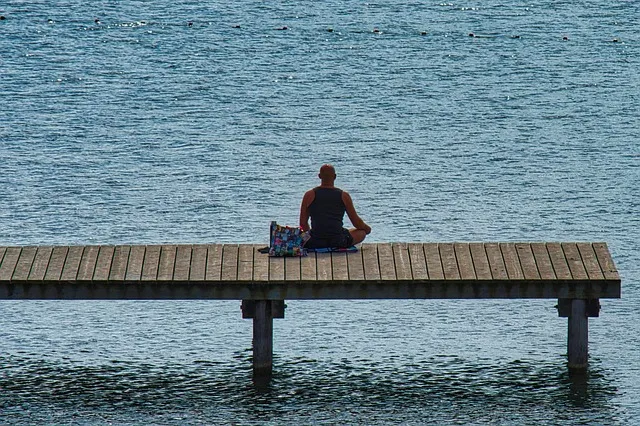
- Days one through seven. Open awareness walking only, twenty-five minutes, device-free, as natural an environment as you can access. No agenda, no specific mode, just the practice of walking and returning attention to the senses when it wanders.
- Days eight through fourteen. Add one problem incubation session per week, on a day when a specific problem is particularly live for you. Continue open awareness walking on the other days.
- Days fifteen through twenty-one. Experiment with emotional processing walking on a day when something is emotionally alive and worth walking through for you.
- Days twenty-two through twenty-eight. Try deliberate unfocus walking for one session. Start noticing which modes produce which effects, and which ones matter most in your specific life.
After twenty-eight days, you’ll have enough direct experience to know what the practice produces for you specifically. Any generic description in a podcast or a book is inevitably imprecise about the exact quality of your own walking practice. Your experience is the most important data you have. At twenty-eight days, you have enough of it to build an intentional ongoing practice, shaped by what you’ve actually found rather than what you were told to expect. That’s the honest version of this work. It begins with a framework, and becomes something specific to you through direct experience. Begin the twenty-eight days today. The walk is waiting on you.
A note on what to expect from yourself during those twenty-eight days, because your own resistance will show up, and it helps to recognize it in advance rather than mistake it for evidence that the practice isn’t working for you. You will have days where you genuinely don’t want to go. You will have days where the walk feels boring, or pointless, or like an indulgence you can’t justify against everything else demanding your time. That resistance is not information about whether the practice is right for you. It’s information about how thoroughly your life has been organized around constant, visible productivity, and how unfamiliar unstructured time has become to you. Walk anyway, on those days especially. The days you least want to go are frequently the days that teach you the most about why you needed to. Notice that pattern in yourself. It tells you something true about where you’ve been living, and about what this practice is actually correcting in you.
The Five-Minute Version, for Constrained Days
For days you genuinely can’t find thirty minutes, not as a long-term accommodation but as an occasional adaptation, there’s a shortened version. It preserves the most essential elements of the protocol and still gives you meaningful partial benefit. Five minutes, device-free, walking as slowly as your environment allows, with full sensory attention to the experience. No audio, no phone, no agenda. Just five minutes of present-moment ambulatory awareness for you.
This shortened version won’t produce all of the protocol’s effects for you. It won’t reach incubation depth. It won’t provide adequate attentional restoration. It won’t produce the emotional processing longer walks give you. Here’s what it will produce instead. A measurable break in directed cognitive demand. A brief bilateral stimulation that reduces the physiological charge of accumulated stress. And the habit signal that keeps the practice alive as part of your identity, even on days when the full version isn’t possible for you. That identity signal matters for how durable the habit becomes in you. “I’m someone who takes a walk every day” holds up better across hard circumstances than “I take walks when I have time.” The five-minute version on constrained days keeps the identity intact while the full practice waits for a better window.
The research on very short breaks backs this up for you, even outside the walking-specific literature. A 2011 study by Ariga and Lleras at the University of Illinois found that brief diversions from a task dramatically improved performance on long-duration cognitive work. Participants who took short breaks maintained their focus far better across an extended task than participants who worked straight through without one. The implication extends directly to your five-minute walk. Even a very brief period of non-directed ambulatory activity can break the performance-degrading rigidity that sustained, uninterrupted cognitive work produces in you. Something is always better than nothing here. Build the full practice for your normal days. Deploy the five-minute version on the exceptional ones. Let neither substitute for the other, but let both serve their function inside the same overall practice.
What This Does for Your Mind Over Decades
The Ambulatory Clarity Protocol is most powerful as a daily habit sustained over years for you. The short-term benefits, the creativity boost, the attentional restoration, the emotional processing, are available to you from the first practice session. The deeper benefits, the default mode network recovery that produces genuine integration and perspective, the accumulated decentering capacity that builds real mindfulness skill, the neurological health benefits including hippocampal maintenance and reduced dementia risk, are benefits of years, not days.
Darwin walked his thinking path until he died at seventy-three, producing transformative scientific work through the final decade of his life. Bertrand Russell walked daily and published significant philosophical work into his nineties. That pattern is not coincidence. The walk is the sustainable daily practice that maintains the physical substrate of your cognitive function, the circulation, the neurotrophic factors, the hippocampal volume, that makes intellectual productivity across a long life possible for you. Build the daily walk not as a current-moment productivity fix but as a multi-decade investment in the quality and duration of your productive life. The compound return on thirty minutes a day, sustained over forty years, is an investment no financial portfolio can match for you. The brain you’ll have at seventy is being built by the decisions you’re making right now. Make the one that matters most.
Begin Today
Before you move to the next thing, the next podcast, the next email, the next task, here’s a direct invitation. Take ten minutes and go outside. Not to walk for exercise. Walk with the specific intention of being present in it. Leave the phone inside. Walk at a pace you could sustain for an hour. Let your attention rest on the sensory experience: the ground, the air, the sound of the environment around you. When your mind produces a thought, notice it, let it pass, and return to the sensory experience again. Ten minutes. Device-free. That’s the first practice of everything you’ve heard in this episode. That’s the beginning for you.
From that beginning, with repeated daily investment, something significant builds in you: in your cognitive capacity, your emotional regulation, your creative output, your physical health, and the quality of your daily experience of your own life. The evidence is comprehensive and consistent. The investment is thirty minutes a day. The return compounds, and it lasts you a lifetime. Nothing else you can do with thirty minutes serves your brain, your mind, or your life better. Nothing does.
Walking is the one practice that requires nothing from you except the willingness to begin. No equipment, no gym membership, no training partner, no special time slot. Just you, and the next thirty minutes, and the decision to spend them without a screen, without audio content, without the digital world’s constant demand on your attention. That decision, made daily, produces the full range of what this protocol offers you. It builds your brain. It restores your attention. It processes your emotions. It enables your creativity. It maintains the physical infrastructure of a long, productive life for you. It does all of this for the same thirty minutes most men spend each day on their phones, unable to describe what they got back from the investment. The comparison makes itself, once you’re willing to see it clearly. Choose accordingly. Walk today. Walk tomorrow. Build the practice that builds everything else in you.
Say it plainly to yourself, one more time, before you close this out. You already have thirty minutes somewhere in your day. You are already spending them on something. The only real question in front of you is whether you’re going to keep spending them on whatever currently absorbs them, or redirect them toward the single highest-return activity available to you at essentially zero cost. You don’t need new equipment. You don’t need a new schedule built from scratch. You need a door, a pair of shoes you already own, and the decision to leave your phone behind for half an hour. Everything else in this episode was in service of that one decision. Make it today, and then make it again tomorrow, and let the compounding do the rest of the work for you over the months and years ahead.
You know what to do now. You know why it works, you know what it costs you, which is almost nothing, and you know what it gives back, which is more than almost anything else available to you. The rest is just you, a door, and the next thirty minutes. Go.
Walking is one thread in a larger pattern of how you design your own life. Our lifestyle section explores how men can architect their daily environments to systematically support clarity, creativity, and sustainable performance over the long run. Your legs are a thinking tool you already own. Start using them that way.
Maybe you’re still skeptical. Maybe this sounds too simple to you, too soft, not enough like the disciplined, effortful work you associate with actually improving your life. That skepticism is worth taking seriously, and it’s worth answering directly rather than waving away. You’ve probably been trained to distrust anything that doesn’t feel like it costs you something. Walking doesn’t burn like a hard workout. It doesn’t demand the willpower a strict diet demands. It doesn’t have the visible markers of progress a spreadsheet or a scoreboard gives you. None of that makes it less real. The research you’ve just heard, the Stanford creativity data, the hippocampal growth in older adults, the mood effects rivaling medication, the habit science, none of it is soft. It’s some of the most consistently replicated evidence in the entire field of human performance. The intervention is simple. The effects are not small. Those two facts can both be true at once, and in this case, they are.
You don’t need to believe any of this on faith. You need to test it against your own life, honestly, for twenty-eight days, and let your own experience tell you what the research already suggests. That’s not a leap of faith from you. That’s the same empirical standard you’d apply to anything else you were deciding whether to build into your life. Give it the twenty-eight days. Then decide for yourself, with your own data, whether this belongs in your life going forward.
And if you’re the kind of man who needs a reason beyond your own wellbeing to actually follow through on something, here’s one more for you. Everyone around you benefits when you do this. The version of you who takes his daily walk is more present with his kids, more patient with his partner, more creative and less reactive at work, and simply easier to be around than the version of you running on suppressed attention and unprocessed stress. This isn’t only a gift you give yourself. It’s a gift you give everyone whose life intersects with yours. Keep that in mind on the days your own motivation runs thin.
Editorial StandardsCorrectionsMedical DisclaimerAbout Our ContentAffiliate DisclosureSite Map