
4:47 AM on the Danube Frontier
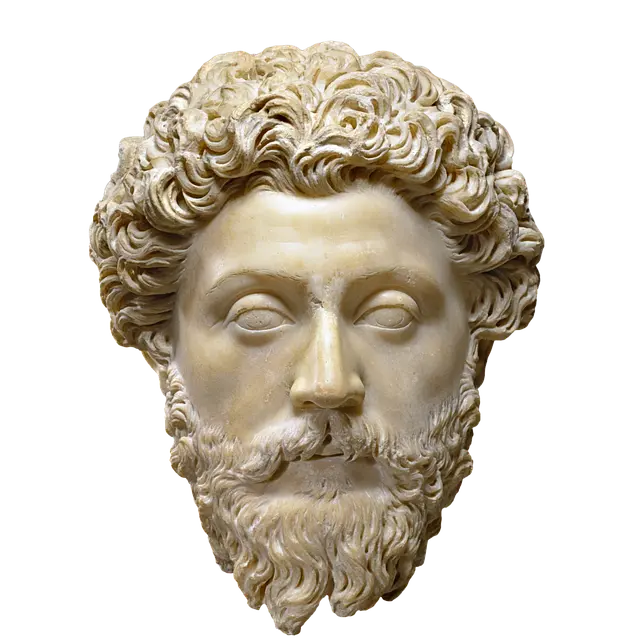
It’s 4:47 in the morning in a Roman army tent on the Danube frontier. The Germanic campaign has been grinding on for two years. Disease has killed more legionaries than combat has. The supply lines are stretched thin. The political situation back in Rome is unstable. And the man writing in his private journal right now is Marcus Aurelius, emperor, supreme commander, the most powerful human being alive at that moment in history.
“You have been putting these things off for too long. You have wasted the grace that was given to you. From every point of view it is time to understand what cosmos you are a part of, what governor of the cosmos you emanate from, that there is a limit to the time assigned to you, and if you don’t use it to clear away the clouds from your mind, it will be gone — and you will be gone — and there will be no second chance.” — Marcus Aurelius, Meditations
He’s not writing that for you. He’s writing it for himself. A man operating under the most extreme conditions of pressure and responsibility in the ancient world. Fighting daily to stay calibrated against the drift toward softness, self-deception, and the comfortable lies that power always makes available to the man who holds it. He had every reason to believe his own mythology. He had the material capacity for every indulgence the ancient world could provide him. Instead, he wrote about his own failures. About his impatience. About his vanity. About the gap between the man he was and the man he intended to be.
This is Stoicism operating exactly as it was designed to operate. Not as a philosophy for men who want to seem sophisticated at a dinner party. Not as a tool for passively accepting whatever happens to you. Not as a framework for people who need to feel better about problems they’re unwilling to actually solve. This is a combat system, built by and for people who lived under conditions of genuine adversity, who needed mental tools that worked under real pressure rather than philosophy that just sounded good in calm air.
If you’ve dismissed Stoicism as irrelevant, abstract, or passive, you’ve dismissed something you’ve never actually encountered. What you dismissed was a quote on a phone wallpaper. What the actual tradition contains is two thousand years of battlefield-tested cognitive technology, verified independently by modern psychology, used by military commanders and hospice workers and men rebuilding their lives after catastrophic loss. This hour is about what it actually is, and how you use it.
Why You’ve Dismissed Stoicism, and Why That’s Expensive
- Stoicism means suppressing your emotions. The Stoics distinguished with precision between involuntary emotional responses, what they called “proto-passions,” automatic reactions that occur before conscious thought, and voluntary emotional assent, the choice to let an emotion actually drive your actions. The goal of Stoic practice isn’t for you to feel nothing. Marcus Aurelius grieved the deaths of his children. Seneca wrote about loneliness with raw honesty. Epictetus described the physical experience of fear in detail. The goal isn’t the absence of emotion in you. It’s refusing to be enslaved by what you feel, keeping the capacity to choose your response, rather than having the response chosen for you by whatever you happen to be feeling in the moment.
- Stoicism is passive fatalism. The dichotomy of control is the most foundational Stoic concept there is, and it gets almost universally misread by you as “accept everything you can’t change.” The actual principle is more precise and more demanding than that. Accurately identify what’s actually within your influence, direct your full energy there, and release your attachment to outcomes you cannot determine. Releasing attachment is not the same thing as the absence of effort. A Stoic carpenter does his best work on the joint. He doesn’t determine whether the client will like the result. He controls the work. He doesn’t waste energy on what he doesn’t control. That redirects your energy more efficiently. It doesn’t redirect it away from action.
- Stoicism requires you to have a naturally calm temperament. Every major Stoic writer acknowledged their own emotional volatility in their own texts. Seneca’s essay “On Anger” opens with an admission that he has an anger problem. Marcus Aurelius’s Meditations are a record of someone fighting impatience, pride, and frustration daily. Epictetus wrote about desire, grief, and fear at length because he experienced them himself. Stoic practice isn’t for men who are naturally placid. It’s for men who aren’t, but who need to function with greater effectiveness regardless. The practice is exactly as useful to you if you’ve got a hair trigger as it is to the man who’s naturally measured, more so, actually.

That conclusion costs you. Because what’s on the other side of that door isn’t decorative philosophy. It’s a functional system for maintaining mental and behavioral discipline under exactly the conditions you’re facing right now. Career pressure, relationship difficulty, loss, injury, the grinding demand to produce results in a world that does not care about your effort level.
The actual Stoics were not men of leisure theorizing from safety. Marcus Aurelius governed an empire at war for most of his twenty-year reign. He dealt with military campaigns, plague, political conspiracy, the deaths of multiple children, and the constant pressure of a role that had killed more capable men before him. He wrote the Meditations not as philosophy for publication, the text was private, never meant to be read by anyone else, but as daily recalibration notes for a man fighting to stay functional under load.
Epictetus was a slave. His owner, Epaphroditus, broke his leg deliberately, just to demonstrate his power over him. Epictetus’s response, by his own account, was to tell Epaphroditus calmly that the leg was breaking. When it broke, he simply noted that he’d said it would. Then he went on with his life. This isn’t a story about suppressing pain. It’s a story about a man who had developed such clarity about what was and wasn’t within his control that external violence couldn’t touch the part of him that actually mattered. He later built one of the most respected philosophical schools in the ancient world, starting from a broken leg and a slave’s legal status. Think about what that means for you and your excuses.
Seneca served as advisor to Nero, an emperor who eventually ordered him to commit suicide. Seneca had weathered exile, the deaths of people he loved, financial ruin, and the perpetual instability of life spent adjacent to unchecked power. He wrote about anger, grief, time, friendship, and fear with the specificity of someone who had actually spent those things, not just theorized about them from a distance. His letters to Lucilius, one of the most intimate philosophical correspondences ever recorded, read like a man talking honestly to you about hard things, not a philosopher constructing arguments about them.
The dismissal of Stoicism also contains a specific irony, if you’re the kind of man who prides himself on mental toughness. Stoicism is the most demanding self-development practice in the history of Western thought. It requires daily interrogation of your own reasoning under the assumption that your reasoning is frequently wrong. It requires you to voluntarily expose yourself to discomfort for the specific purpose of not being controlled by comfort. It requires you to consistently subordinate what feels good right now to what you actually value. It’s harder than going to the gym. It requires more discipline than most things you’d describe as difficult. If you’ve found it boring or irrelevant, you’ve typically only encountered the Instagram caption. The actual practice is nothing like the caption.
Before we go any further, three specific myths need to be taken apart.
What Modern Research Actually Found
Stoicism survived two thousand years, not through institutional preservation, but through demonstrated utility. The ideas kept getting rediscovered because they kept working. Modern scholarship has documented that utility with the rigor of contemporary academic methods, and the findings are unambiguous, and they matter for you specifically.
Donald Robertson is a cognitive behavioral therapist and researcher who’s spent his career documenting the structural overlap between Stoic practice and CBT. His book How to Think Like a Roman Emperor, published in 2019, is the most rigorous modern treatment of that overlap. Robertson’s finding is specific. The techniques that CBT identified empirically as effective for managing psychological distress, cognitive reappraisal, decentering, behavioral activation, are functionally identical to techniques described in Stoic texts written two thousand years before Aaron Beck developed cognitive therapy in the 1960s. The Stoics arrived at the same conclusions through philosophy instead of experiment. That’s not a coincidence. That’s convergent validation, and it should matter to you.
Cognitive reappraisal, the technique of examining and revising the interpretation you place on events, is what Epictetus was describing in the opening line of the Enchiridion.
“Men are disturbed not by events, but by their opinions about events.” — Epictetus, Enchiridion
Decentering, observing your own thoughts as thoughts rather than facts, is Marcus Aurelius’s practice of examining his own judgments before accepting them. Behavioral activation, maintaining purposeful action despite negative emotional states, is the Stoic discipline of action: acting from your values regardless of how you feel in the moment.
Massimo Pigliucci is a philosopher and biologist at the City University of New York, who published How to Be a Stoic in 2017 and has continued developing contemporary Stoic philosophy through his writing and through the Modern Stoicism organization. His core contribution is applying rigorous philosophical analysis to the question of which elements of ancient Stoic metaphysics are actually necessary for the practical utility of the ethical framework. His answer: the practical techniques work for you regardless of whether you accept Stoic cosmology. The dichotomy of control, negative visualization, and the daily examination produce their effects through psychological mechanisms that are independent of ancient Greek physics.
William Irvine, a philosopher at Wright State University, published A Guide to the Good Life: The Ancient Art of Stoic Joy in 2008, still the most practically oriented modern introduction to Stoic technique available to you. Irvine focuses specifically on the psychological mechanisms embedded in Stoic practice and the conditions under which they’re most effective for you. His work on negative visualization is the most thorough modern treatment of how deliberate contemplation of loss affects your appreciation and your resilience.
Ryan Holiday deserves separate treatment, because his contribution is categorically different from the academic researchers’. Holiday isn’t a philosopher. He’s a practitioner and a translator. His books brought Stoic philosophy to millions of contemporary men who would never have picked up a primary source on their own. The Obstacle Is the Way in 2014. Ego Is the Enemy in 2016. The Daily Stoic, also in 2016. Stillness Is the Key in 2019. The criticism that his work oversimplifies is partly valid and entirely irrelevant to its value to you. The function of Holiday’s work is the introduction, the on-ramp that sends you toward the depth available in the primary sources. Without the on-ramp, most men never find the road.
The research on Stoicism also intersects directly with neuroscience in ways that matter to you practically. Your prefrontal cortex, the region responsible for rational deliberation, value-based decision making, and impulse control, gets functionally suppressed under acute stress. Your amygdala, responsible for threat response, takes over. Automatic behavior replaces chosen behavior. The point-of-impact Stoic protocol you’re about to learn, breath, control audit, response selection, is designed to interrupt that sequence in you and allow your prefrontal cortex to re-engage before your amygdala drives the action. This isn’t mystical. It’s neurological. The pause creates the window. The window gives you the choice.
Sit with what that actually means for you, because it’s easy to hear “neurological” and file the whole idea under abstraction. It isn’t abstract. It’s the difference between the version of you that sends the email at midnight and the version of you that reads it again in the morning and deletes it. It’s the difference between the version of you that says the thing you can’t take back and the version of you that holds still for four seconds and then says the thing that actually gets you what you want. You have lived both versions of yourself. You know the gap between them isn’t a gap in your character. It’s a gap in your timing. Your amygdala fires in milliseconds. Your prefrontal cortex, the part of you capable of weighing consequences, considering the other person in front of you, remembering your own stated values, needs longer than that to come back online. Every Stoic technique you’re about to learn is, underneath the philosophy, a tool for manufacturing that extra handful of seconds for yourself on purpose, instead of hoping you get lucky and stumble into them by accident. That’s why the ancient language and the modern research are pointing you at the same target. Marcus Aurelius didn’t have an MRI machine to tell him this. He had two decades of watching himself fail in the same predictable ways and building a system to catch himself earlier each time. You have the advantage of both: his two thousand years of field notes on his own mind, and the confirmation from people who’ve since measured what his method actually does to a nervous system under load. Use both of them. Neither one alone gets you all the way there.
The Three Pillars

Pillar One: The Discipline of Desire
The discipline of desire addresses one question for you: what do you want, and is what you want actually worth wanting? The Stoics identified three categories of things.
- Goods: virtue, wisdom, justice, courage. These are genuinely worth wanting, because they’re entirely within your control and they constitute the actual kind of person you are.
- Indifferents: health, wealth, reputation, pleasure. These aren’t genuinely good or bad in themselves. They’re worth preferring when they’re available to you, and worth accepting without devastation when they’re not.
- Dispreferred indifferents: illness, poverty, pain, social rejection. Worth avoiding when avoidance is reasonable for you. Not worth treating as catastrophic when avoidance isn’t possible.
If you’re the modern man who’s attached his core emotional wellbeing to preferred indifferents, career success, physical appearance, social status, relationship outcomes, you’ve made the exact category error the Stoics specifically warned you against. You’ve placed your happiness in things that can be removed from you by circumstances entirely outside your control. The fragility that produces in you isn’t weakness of character. It’s an architectural error. The discipline of desire corrects the architecture: calibrate your deepest wants to what’s genuinely within your control, and treat everything else as a preference rather than a necessity.
The dopamine crisis that characterizes contemporary male psychology is, in Stoic terms, a discipline-of-desire failure at industrial scale. The constant availability of superstimuli in your life, pornography, social media, processed food, instant entertainment, has calibrated your reward system to want things that are, in Stoic terms, not worth wanting. Not because they’re morally wrong, but because they’re outside your control to reliably obtain, they diminish in value the moment you obtain them, and they erode your appetite for the things that are genuinely worth wanting. The Stoic response to your dopamine crisis isn’t willpower. It’s desire recalibration: deliberately practicing wanting less of the things you cannot reliably control and more of the things you can.
Pillar Two: The Discipline of Action
The discipline of action addresses a different question: what should you do, and how do you do it regardless of the external obstacles in front of you? The Stoic answer is structurally identical to Jocko Willink’s concept of extreme ownership: you are responsible for every action within your power. The obstacles are real. The obstacles don’t remove your responsibility. The discipline of action is acting from your values, completely, without excuse, regardless of how unfavorable your external conditions actually are.
Marcus Aurelius governed an empire in plague conditions, with Germanic tribes pressing the border, with political instability in Rome, and with the constant awareness that he could be assassinated by anyone with access to his food or his physicians. He governed anyway. Not because the conditions weren’t terrible. Because governing well was within his control, and abandoning the responsibility wasn’t an option consistent with his values. The external conditions were the test. They were never the excuse.
The discipline of action also contains what Epictetus called the “reserve clause,” the mental qualifier that accompanies every intention you form. “I will complete this project, unless something prevents me that’s outside my control.” The reserve clause isn’t a hedge against your own commitment. It’s a structural acknowledgment that every outcome has two components: your execution, which is within your control, and external circumstances, which are not. Attaching the reserve clause to your intentions protects you from the crushing disappointment of perfect effort producing an imperfect outcome, not by reducing your effort, but by locating your measure of success in the execution rather than the result.
The prioritize and execute framework is the operational expression of the Stoic discipline of action. Once you’ve accurately assessed what’s actually within your control, the actions available to you, the effort you can apply, the quality you can bring, prioritizing and executing inside that domain is straightforward. The confusion shows up when you try to prioritize and execute across a domain that includes outcomes you don’t control. “Get the promotion” cannot be prioritized and executed by you, because getting the promotion depends on factors outside your control. “Do the work that merits promotion” can be prioritized and executed completely by you. That reorientation, from outcome to process, is the entire game.
Pillar Three: The Discipline of Assent
The discipline of assent addresses a third question: what do you believe, and is what you believe actually true? The Stoics were early epistemologists in the practical sense, intensely concerned with the accuracy of the beliefs that drove behavior. Their observation: most human suffering isn’t produced by events. It’s produced by the beliefs you attach to events. The event is neutral. The belief, “this is catastrophic,” “this proves I am worthless,” “this will never end,” “this is an attack on my dignity,” produces the suffering in you. The discipline of assent is the practice of noticing when you’re assenting to a belief, and asking yourself whether the belief is actually accurate.
Marcus Aurelius instructs himself repeatedly in the Meditations to strip events of the interpretations added to them. “Loss” is a fact. “Catastrophic loss” is an interpretation. “She rejected me” is a fact. “I am unworthy of love” is an interpretation. “The deal fell through” is a fact. “My judgment is permanently compromised” is an interpretation. The discipline of assent is the practice of separating the fact from the interpretation, and examining the interpretation before you accept it.
Robertson’s CBT research documents that the automatic interpretations most men attach to adverse events have specific cognitive distortion patterns, catastrophizing, mind reading, overgeneralization, personalization, patterns that are reliably inaccurate and reliably produce distress in you. The Stoic discipline of assent is the philosophical predecessor to CBT’s cognitive restructuring: the practice of examining your automatic interpretations for accuracy before you let them drive your emotional responses and your behavior.
The Daily Stoic Combat Protocol
Theory produces nothing by itself. The value of understanding the three pillars is that it makes the daily practice legible to you. The Daily Stoic Combat Protocol is a structured daily practice. It deploys the three pillars at the three critical moments of every day you live. Before the day begins, when you can set direction. During the moments of pressure, when that direction actually gets tested. And at the end of the day, when you can assess and recalibrate.
The protocol requires twenty minutes total on a normal day for you. It doesn’t require extended meditation. It doesn’t require a philosophy background. It requires honesty from you, and the discipline to execute the structure even when you don’t feel like it. Especially when you don’t feel like it, because the days you don’t feel like it are exactly the days the protocol actually matters most.
The Morning Protocol: Building Your Garrison
Marcus Aurelius’s Meditations begin, in Book II, with this instruction to himself.
“When you wake up in the morning, tell yourself: the people I deal with today will be meddling, ungrateful, arrogant, dishonest, jealous, and surly. They are this way because they cannot tell good from evil. But I have seen the beauty of good and the ugliness of evil, and have recognized that the wrongdoer has a nature related to my own.” — Marcus Aurelius, Meditations
That’s not pessimism. That’s preparation. Marcus doesn’t walk into his day surprised by human difficulty. He’s already processed it. He’s already decided how he’ll respond to it. The difficulty, when it arrives, meets a prepared mind. That’s exactly what your morning garrison is for.
Your morning garrison has three components. Execute them in five to ten minutes, before the day has demanded anything from you.
Component one: premeditatio malorum. Identify one realistic adverse event that could happen to you today. Not the worst possible catastrophe, one specific, plausible difficulty. A meeting that could go badly. A conversation that could become a conflict. A project obstacle that could surface. A rejection that could arrive. Spend two minutes walking through it in your mind. Not catastrophizing, walking through it with one specific question: if this happens, what response would be consistent with your values and effective for your actual goals? Pre-process the emotional load. Arrive at the event, if it actually happens, with partial processing already complete and a provisional response already selected.
Component two: the intention statement. Write or state explicitly, out loud if you can, because vocalization requires a commitment from you that silent thought doesn’t, one statement of how you intend to behave today. Not what you intend to achieve. How you intend to behave. Something like this: I will respond to frustration with patience. Or this: I will complete what I committed to, regardless of whether I feel motivated. Or this: I will communicate directly, including when the direct communication is unwelcome. The intention is a behavioral contract you’re making with yourself. It gives you a standard to evaluate your actual performance against in your evening examination.
Component three: the dichotomy inventory. Identify one situation in your current life where you’re directing emotional energy toward an outcome outside your control. This should take you less than thirty seconds, there’s usually an obvious candidate. Name it explicitly. I am anxious about whether the client will renew the contract. Or, I am angry about whether my father will acknowledge what he did. Or, I am frustrated about whether my performance review will reflect my actual work. Then identify the action within your control that’s relevant to that situation. Commit explicitly to executing that action today. Then practice, deliberately, for thirty seconds, releasing your attachment to the specific outcome. Not indifference to the outcome. Release of the belief that your anxiety about the outcome is somehow serving it.
The Point-of-Impact Protocol: Three Breaths
The point-of-impact protocol is the most critical piece of all this, and the hardest for you to actually execute. It deploys in real time, under conditions of emotional activation, before that activation drives an automatic response out of you. It’s most needed in exactly the moments when it’s most difficult for you to remember to use it. That’s not a design flaw. That’s the nature of practice itself. The protocol becomes available to you under pressure through repetition, not through understanding how it works, but through having executed it enough times that it’s retrievable when your nervous system is activated.
Seneca’s instruction in “De Ira” is direct.
“The best corrective of anger is delay.” — Seneca, De Ira
Not suppression. Delay. The interval between your trigger and your response is the entire game. The three-breath intervention creates that interval in you, neurologically. Three full breath cycles, four counts in, hold four, out four, produces measurable changes in your heart rate variability and your prefrontal cortex engagement within ninety seconds. The box breathing technique gives you a structured framework for this exact physiological interruption, with documented effects on your autonomic nervous system. The breath isn’t the solution to your problem. It’s the mechanism that creates the window for the solution to operate in.
After the three breaths, run the control audit: is the outcome I’m reacting to within my control? If the answer is no, if your anger or your anxiety is directed at something you cannot determine, the question becomes: what action within my control is relevant to this situation, and am I executing it? Redirect. Release the attachment to the outcome. Execute the action.
If the answer is yes, the outcome is partially or fully within your control, the question becomes: what response is most consistent with my stated values and most effective for the goal I actually have? Not the emotionally satisfying response. The effective one. Those are often different things for you. The emotionally satisfying response to being publicly criticized by a colleague is to hit back with equal or greater sharpness. The effective response, the one that actually serves your professional reputation, your working relationship, and your long-term goals, is frequently the measured, direct, undefensive one. The protocol makes that effective response available to you by inserting enough cognitive space for you to choose it.
The Evening Protocol: Your After-Action Review
- Discipline of Desire — did your wants serve you today? Where did your desires extend to outcomes outside your control, and did that drive anxiety, frustration, or counterproductive behavior in you? Did you spend emotional energy on things you cannot determine, other people’s opinions, external validation, specific results from investments you made? Was there a desire in you, for recognition, for comfort, for certainty, that drove a choice inconsistent with your values? This isn’t about whether having those desires is wrong. It’s about whether they drove the bus when they shouldn’t have been driving.
- Discipline of Action — did your actions reflect your values today? Compare your actual behavior against your morning intention statement. Where did they align? Where did they diverge? Be specific with yourself. The standard isn’t perfection, Marcus Aurelius was explicit about the counter-productivity of excessive self-criticism. The standard is honesty. “I said I would be patient and I was impatient twice” is useful information for you. “I am fundamentally defective because I was impatient twice” is neither accurate nor useful. Record your divergences without a narrative about what they mean about your character. They’re information about your behavior, not your identity.
- Discipline of Assent — did you accept false beliefs today? Where did you assent to an interpretation of events that the facts didn’t actually warrant? Did you decide someone was hostile on ambiguous evidence? Did you catastrophize an outcome that was setback-level rather than catastrophe-level? Did you accept a story about your own permanent limitations based on a single performance? The Stoic discipline of assent requires you to examine the gap between what actually happened and the narrative you constructed around it, and ask honestly whether that narrative was accurate or just convenient.
Seneca describes the Stoic evening examination in detail in his essay “On Anger.”
“I use this privilege myself; daily I plead my cause before the bar of self.” — Seneca, On Anger.
The examination isn’t self-flagellation. It’s honest accounting. That distinction matters to you. Self-flagellation is unproductive, it produces shame in you without information, and it discourages the honesty that accurate self-assessment actually requires. Honest accounting produces information you can use. That information is useful to you tomorrow. The purpose of your evening examination is calibration, not punishment.
Three questions, corresponding to Epictetus’s three disciplines.
Ryan and the Job Search Spiral

Six weeks in, with no offer, the spiral started. He began over-preparing for interviews in ways that made him stiff, rehearsing answers instead of having actual conversations. He began interpreting delays in response as rejection. He began spending hours on LinkedIn monitoring the activity of companies he’d applied to. He began catastrophizing about his own employability, using language that was demonstrably false given his actual track record: I’ll never find anything in this market. They can tell I’m desperate. Everyone my age is getting screened out.
The Stoic diagnosis here is immediate, and it might sound familiar to you. Ryan had fused his emotional state to an outcome, the job offer, that he could influence but never fully control. The resulting anxiety was producing behavior that was actively counterproductive to the very outcome he wanted. He was less effective in interviews because he was trying to control the interviewer’s response instead of executing a quality conversation. He was telegraphing desperation because he was experiencing desperation, and the desperation was a direct product of treating the offer as a necessity instead of a preference.
The correction, which Ryan applied with the help of a mentor who’d studied the tradition, redirected his attention entirely to the actions within his control, and practiced active release of attachment to the specific outcome of each specific interaction. The actions within his control: preparation quality, communication clarity, relationship investment in his network, follow-up professionalism, the quality of the work product he was producing for his portfolio. The outcome, whether any specific company made him an offer, was not within his control, and was not worth spending his emotional energy on.
He applied the morning garrison daily for three weeks before the shift became noticeable to him. The premeditatio malorum, walking through a rejection scenario every morning, processing the emotional load in advance, meant that when rejections actually arrived, they arrived to a mind that had already partially processed them. His anxiety about individual outcomes diminished, not because the outcomes mattered less to him, but because he’d stopped treating them as catastrophic. He received an offer eleven weeks after beginning the practice. More importantly, he describes his professional confidence as fundamentally restructured: he stopped measuring his competence by whether any specific company wanted him, and started measuring it by the quality of the work he was actually doing. That’s the part that was actually controllable, for him and for you.
Stoicism Under the Most Extreme Conditions
The test of any mental framework isn’t how it performs when conditions are comfortable. Anyone can maintain equanimity when nothing’s at stake. The real test is what happens when the stakes are existential, when the loss is real, the circumstances are genuinely terrible, and your normal psychological resources are overwhelmed.
Viktor Frankl documented this in Man’s Search for Meaning, though he didn’t use Stoic vocabulary to describe it. The men who survived the Nazi concentration camps without complete psychological destruction were disproportionately the ones who maintained a sense of meaning, agency, and internal purpose that was independent of their external circumstances. That’s the Stoic dichotomy of control operating under literally the most extreme conditions imaginable to you: the external circumstances are entirely outside your control. Your response to those circumstances, the attitude you choose, the meaning you construct, the values you act from in whatever small space of action remains available to you, is within your control, and it cannot be taken from you.
James Stockdale, a U.S. Navy admiral and prisoner of war in North Vietnam for eight years, explicitly credited Stoic philosophy, specifically Epictetus, with his psychological survival. He’d read Epictetus before his capture. He applied the dichotomy of control daily during his imprisonment. He described it as the single most practically useful mental framework available to a man in the conditions he was living in.
“I never lost faith in the end of the story.” — James Stockdale
He said that, distinguishing himself from the optimists around him who set specific dates for rescue and fell apart when those dates passed without one. He maintained direction without attaching himself to a specific outcome timeline. That’s Stoic practice under actual combat conditions.
The nervous system regulation protocols that complement Stoic practice matter most in exactly these extreme conditions, because the cognitive techniques of Stoicism require your prefrontal cortex to be available, and extreme stress shuts your prefrontal cortex down. The sequence matters here: physiological regulation first, for you, breathe, ground yourself, stabilize, then cognitive Stoic practice. Not the other way around. Attempting to apply the discipline of assent to a nervous system that’s in acute traumatic response isn’t Stoicism. It’s denial, dressed up in philosophy. Your nervous system has to be stable enough for deliberate thought before deliberate thought is even possible for you.
Thomas and the Nine Days in the ICU

At fifty-one, he had a cardiac event that put him in the ICU for nine days. The cardiac event wasn’t within his control. The recovery timeline wasn’t within his control. Whether his company survived his absence wasn’t within his control. Whether his family managed without him wasn’t within his control. Every domain he’d organized his identity around, his capacity to execute, to produce, to be the man his organization depended on, was removed from him overnight, involuntarily, with no warning and no recourse.
He describes the experience this way: the first time in his adult life when there was nothing to do. He couldn’t work his way out. He couldn’t optimize his way out. He couldn’t will his way out. All he could do was show up to each hour with whatever character he actually had. He spent the nine days of that hospitalization in the most sustained encounter with the dichotomy of control of his entire life. The only thing within his control was how he occupied his own mind.
He’d never read the Stoics before that. A physician gave him the Gregory Hays translation of the Meditations during his recovery. He describes reading it as recognizing something he’d half-arrived at through necessity, and now finally seeing the map for the territory he’d been stumbling through blind. The recognition, that the framework he’d been forced to adopt in the ICU was the same framework Marcus Aurelius had been deliberately practicing in a tent on the Danube nearly two thousand years earlier, was clarifying for him.
He returned to his company four months later, and describes his leadership now as fundamentally different, not softer, more precise. He stopped spending energy on outcomes he couldn’t control. He stopped treating his own anxiety about results as productive work. He got much better at identifying what he could actually influence and doing that thing completely. His company’s performance in the three years following his return was the best in its entire history. Not because he worked harder, he actually worked less. Because he stopped working on things that weren’t within his control, and directed everything toward the things that were.
This is the pattern the research documents over and over. Men who encounter the dichotomy of control through genuine adversity, rather than through philosophical reading, often describe it as the most significant shift in their professional and personal effectiveness. The adversity does something the reading alone cannot: it makes the concept real instead of theoretical. The goal of deliberate Stoic practice is to produce that same shift in you, without requiring a cardiac event to deliver the lesson.
Stoicism and Your Masculine Identity
The contemporary crisis of masculine identity is, in Stoic terms, a discipline-of-desire failure compounded by a discipline-of-assent failure. You’ve been taught to want things that are outside your control, status, admiration, physical dominance, female attention, and to accept the belief that the presence or absence of those things determines your worth. The fragility that produces in you isn’t a character defect. It’s a philosophical error, one that’s been systematically reinforced by a culture that profits from men who are insecure, reactive, and easily manipulated by appeals to their desire for external validation.
Stoicism offers you the corrective. Not because it eliminates those desires in you — desires for status and connection and recognition are human, not pathological — but because it relocates the foundation of your masculine worth into something that’s actually within your control. Virtue. Character. The quality of the choices you make under pressure. Marcus Aurelius had absolute power and chose to govern with integrity. Epictetus had no power at all and chose to develop wisdom instead. Both men arrived at the same place through completely different circumstances: a sense of worth grounded in what they were, not in what they had or what other people thought of them.
The mindset tools that most effectively complement Stoic practice converge on this same reorientation for you: from external to internal locus of evaluation, from outcome to process, from what you have to what you actually are. That shift isn’t a retreat from ambition. Marcus Aurelius was one of the most effective governors in Roman history. The shift is from fragile ambition, which requires specific external outcomes to sustain your sense of worth, to durable ambition, which pursues specific outcomes from a foundation of self-evaluation that’s independent of whether those outcomes ever arrive.
The culture offers you two templates for handling emotional difficulty. The first: suppress it and soldier on. Push the feeling down, stay functional, never acknowledge the load. This works for you until it doesn’t, until the accumulated pressure produces an eruption that’s disproportionate to its immediate trigger, or a withdrawal that’s inexplicable to the people around you. The second: express it and process it. Identify and articulate the emotional experience, explore its origins, sit with it. This is often useful, and it sometimes becomes its own trap for you, endless processing that never actually arrives at action.
Stoicism offers you a third template: acknowledge what’s real, direct your energy to what you can actually influence, act from your values regardless of outcome, and maintain forward momentum. It doesn’t require you to suppress anything, you’re not pretending the difficulty doesn’t exist. It doesn’t require endless processing from you either, your examination has a specific structure and a specific purpose, which is calibration for action, not the processing of feeling as an end in itself. It’s the template that two thousand years of application, and the validation of modern cognitive science, suggest is most durable for you when you’re operating under sustained pressure.
When Stoicism Becomes an Excuse
Pigliucci addresses this with precision in How to Be a Stoic: Stoicism is not a philosophy of resignation. The dichotomy of control does not instruct you to accept all circumstances as fixed. It instructs you to accurately assess what’s within your power to change, and then change it, releasing your attachment to outcomes you cannot determine. The “acceptance” in Stoicism is acceptance of facts that cannot be changed, the past, other people’s choices, external circumstances beyond your influence. It is not acceptance of situations that are within your power to address.
The test for you is direct: is the thing you’re “accepting” actually outside your control? Or is it within your control, just uncomfortable for you to engage with? If you’re tolerating an underperforming employee you could address, you’re not practicing Stoicism. You’re practicing avoidance. If you’re staying in a work environment that’s genuinely destructive because “I can’t control where I work,” you’re not practicing Stoicism. You can control whether you leave. If you’re not investing in your health because “my genetics are outside my control,” you’re not practicing Stoicism. Your daily choices about sleep, nutrition, and movement are within your control, and they’re the primary determinants of your own health outcomes.
“The Stoic question isn’t ‘should I accept this?’ The Stoic question is ‘what can I actually do here, and am I doing it?’ If you are using Stoicism to avoid answering that question, you are not practicing Stoicism. You are borrowing its vocabulary to avoid its demands.”
The accurate application of the dichotomy of control to any situation you’re facing begins with an honest question: is this situation within my power to change? If the answer is yes, the Stoic prescription is to change it, with your full commitment, without attachment to the specific form the change takes. If the answer is no, the Stoic prescription is to release your attachment to the outcome and direct your energy to what’s within your control. There’s no middle option for you that qualifies as Stoic practice.
Michael’s Four Years of Avoidance
Picture a different man, call him Michael. He’s forty-four, lives in Nashville, and discovered Stoicism at thirty-eight. He engaged with it seriously, read the primary sources, read Holiday and Irvine and Robertson, discussed the philosophy at length with anyone who’d listen. He had genuine intellectual command of the framework. And he deployed it, for four years, as the most sophisticated rationalization for inaction he’d ever developed.
His business was underperforming by clear and measurable metrics. His application of Stoicism: I can’t control the market conditions. His marriage had been deteriorating through years of mutual disengagement, both of them working quietly around the growing distance between them. His application: I can accept this relationship with equanimity, I can’t control her choices. His health had declined steadily from inadequate sleep and a sedentary work life. His application: the body is a preferred indifferent, I don’t need to let it consume my attention.
Every application sounded technically Stoic. None of them actually were. The business underperformance was addressable, he could cut the underperforming division, restructure the team, change the strategy. Those were within his control. The marriage deterioration was addressable, the hard conversation his wife had been asking for was within his control to initiate, even if the outcome of that conversation wasn’t. His health was entirely within his control in the areas that mattered most: sleep discipline, exercise, and the daily dietary choices he was actually making.
The mentor who broke the pattern had studied the philosophy formally, and the correction was direct: you’re using the vocabulary of the discipline of desire to avoid the discipline of action. The Stoics don’t teach acceptance of situations you have the power to change. They teach directing your full effort to what you can influence, and releasing your attachment to outcomes you cannot determine. In every case you’re describing, the action you’re avoiding is within your control. The outcome of that action is not. The Stoic move is to take the action fully and release your attachment to the specific outcome, not to skip the action and call it acceptance.
Michael restructured his business over eighteen months, shut down the underperforming division, refocused the company on its core capability, replaced leadership in two departments. He had the hard conversation with his wife, which led to twelve months of difficult rebuilding and eventually to a marriage both of them describe as substantially better than anything in the preceding decade. He built a physical practice, consistent enough to produce measurable results within six months. He’d been using Stoicism as a philosophy of inaction. It’s actually a philosophy of directed action. He’d used the vocabulary to avoid the point, for four years, and once he saw it, he couldn’t unsee it. Neither, probably, can you, now that you’ve heard it laid out this plainly, for you, about you.
Voluntary Discomfort: The Physical Practice
The Stoics weren’t body-deniers. They were body-realists who understood that the relationship between your physical comfort and your mental discipline isn’t coincidental. Epictetus trained his students in voluntary austerity, deliberate deprivation of comfortable things, not because comfort is morally wrong, but because attachment to comfort is operationally dangerous to you. If you can’t function without your preferred temperature, your preferred food, your preferred level of social stimulation, you’re controlled by those preferences in ways that will eventually compromise your performance when those preferences aren’t available to you.
Seneca’s practice was voluntary poverty: periodically live for three to five days as though you’d lost everything. Minimal food. No luxury items. Sleep on the floor if you have to. Not as self-punishment, as exposure for yourself, deliberately chosen.
“I see now that poverty is not to be feared. After these days I always return to my comfortable life with more appreciation for it and less fear of losing it.” — Seneca, Letters to Lucilius.
The mechanism is identical to modern exposure therapy: controlled exposure to a feared stimulus reduces the power of the fear response in you. This is something you do to yourself, deliberately, on your own terms, for you, by you, not something anyone does to you.
The practical protocol for you: weekly voluntary discomfort. This isn’t a dramatic gesture. It’s a consistent practice of choosing one hard thing per week that has no external requirement attached to it, that you choose entirely for the purpose of expanding your own relationship with discomfort. Cold water immersion. An extended fast. A day without your phone. Physical challenge at the edge of your current capacity. Sleep deprivation training. The specific form matters less to you than the consistency and the deliberateness of the choice.
The research on deliberate discomfort exposure is strong. Stoic voluntary hardship practices produce measurable effects on your psychological resilience, specifically, your capacity to maintain performance under adverse conditions, that are independent of any philosophical beliefs you hold about the practice. You don’t need to believe in Stoic cosmology for cold water immersion to expand your stress tolerance. You need to do it consistently enough for your nervous system to calibrate itself to a wider range of acceptable conditions.
The connection to the broader project of nervous system regulation is direct for you: your nervous system’s threat response is calibrated to your habitual environment. If you habitually live in comfort, you experience mild discomfort as a significant threat. If you regularly choose discomfort, you recalibrate your own threat response, what registers as threatening to you shrinks, and what remains available to you as composed, chosen behavior under pressure expands. This isn’t toughness as a personality trait. It’s a trainable capacity in you, with a specific mechanism.
Anthony and the Grief That Became a Habit
Picture one more man, call him Anthony. He’s forty-eight, lives in Philadelphia. His younger brother died in a motorcycle accident three years before the story we’re walking through now. The grief was real and appropriate and full. Anthony didn’t try to Stoic his way out of it in the immediate aftermath. He let the acute grief have its space.
The problem arrived at the one-year mark. The acute phase had passed, but Anthony remained functionally absent, present physically for his children, his wife, his work, but not actually there. He describes it as grief that had become a habit rather than a process. He was no longer grieving his brother. He was maintaining grief as an identity. It was protecting him from the demand to be present in his own life, and he’d confused that protection with respect for his brother.
The Stoic framework he applied came specifically from Seneca’s letter to a man named Marullus, written on the death of Marullus’s son. Seneca’s argument isn’t that grief is inappropriate. Grief has a productive form. It honors what was lost, clarifies what you value, and deepens your appreciation for what remains. And it has a destructive form. That one becomes permanent, produces identity instead of process, and ultimately dishonors the person who’s gone by making their death the organizing principle of the living person’s existence.
Anthony’s protocol: one hour a day of deliberate, contained grief. Deliberate, he chose when it happened rather than letting it ambush him throughout the day. Contained, it had a start and an end. Honest, he didn’t perform grief or suppress it within that hour; he felt whatever was actually present for him. Outside that hour, he directed his attention to the actions within his control. He finished a woodworking project his brother had been building when he died. He began mentoring his brother’s teenage son the way his brother had been starting to. He returned to full presence with his own children.
Stoicism didn’t reduce the grief, he said. It gave it a container that wasn’t destructive. He found that grief with a purpose, grief that was going somewhere, that was producing something that honored his brother, was sustainable for him in a way that grief without direction never was. The Stoic distinction between appropriate grief and grief-as-identity isn’t theoretical to you if you’ve ever lost someone. It’s the practical difference between mourning that processes and mourning that becomes its own permanent condition.
The Meditations as Your Operational Manual
The Meditations of Marcus Aurelius is the most important primary source in the Stoic tradition for you, and for a specific reason: it’s a record of failure, not mastery. Every entry is Marcus writing to himself about the gap between his ideals and his own behavior, and returning to the work of closing that gap. The book isn’t a display of philosophical achievement. It’s a daily exercise in calibration by a man who kept drifting and kept returning.
Book II, Chapter 4.
“Remember how long you have been putting off these things, and how often you have been given a period of grace and have not used it.” — Marcus Aurelius, Meditations
That’s not a philosopher in command of his practice. That’s a man confronting his own procrastination, writing the confrontation down because the writing forces an honesty that internal monologue doesn’t.
Book VI, Chapter 2.
“Here is a rule to remember in future, when anything tempts you to feel bitter: not ‘This is misfortune,’ but ‘To bear this worthily is good fortune.'” — Marcus Aurelius, Meditations.
That’s not calm acceptance of adversity from a position of equanimity. That’s a man actively fighting his own interpretation of events, choosing a different narrative through deliberate effort because the automatic narrative was producing bitterness he’d decided wasn’t useful to him.
Book VIII, Chapter 7: “Don’t be ashamed of needing help. You have a task to do and like a soldier storming a wall you may not be able to do it alone. If an impediment stops you in your work, solve it yourself or let someone help you. Don’t feel shame either way.” That’s not a man who’s mastered self-sufficiency. That’s a man actively correcting his own pride in real time, reminding himself that the goal is mission accomplishment, not the appearance of requiring no assistance.
The operational value of the Meditations, for you, is precisely this: it shows you what Stoic practice looks like in a real life, under real pressure, from a real man who was failing regularly and returning to the work daily. It isn’t an aspirational text about what it would feel like to have mastered the philosophy. It’s a working document from inside the practice, which is messy, imperfect, repetitive, and entirely achievable for you.
The Gregory Hays translation, published by Modern Library in 2002, is the most accessible modern rendering and the recommended starting point for you. One or two entries a day, not cover to cover. The practice of reading Marcus is itself a form of the daily examination for you: encountering his instructions to himself as instructions to yourself, noting where his self-identified failures correspond to your own, measuring your current practice against his standard.
You might be wondering whether the ancient Stoics actually lived by what they wrote, or whether this is all aspirational language from men who never struggled the way you do. Imperfectly, and by their own accounts. Seneca was wealthy, and he explicitly acknowledged the tension between his philosophical commitments and his own lifestyle in his letters. He didn’t defend the tension. He identified it as his own failure to fully implement what he taught. Marcus Aurelius’s Meditations are a record of his ongoing failure to meet his own standards. The Stoics weren’t hypocrites claiming to have mastered what they taught you. They were practitioners who knew the gap between their ideals and their behavior, and chose honest documentation of that gap over the pretense of mastery. That’s actually the most rigorous possible endorsement of the practice available to you, specifically you, right now. It’s strong enough to merit returning to daily for decades, which means it was producing genuine results, but demanding enough that even the most sophisticated practitioners never stopped needing it.
Stoicism and Your Anger: The Seneca Protocol
- The perception of harm. The harm you’ve perceived may be unintentional, or smaller than it registers to you in the moment.
- The attribution of intent. The intent you’ve attributed to the other person may be entirely absent, invented by your own threat-activated mind rather than actually present in them.
- The desire for retaliation. The retaliation you want produces consequences for you that are rarely worth the temporary satisfaction it provides.
Anger is the emotional domain where Stoic practice is simultaneously most useful to you and most resisted by you. Most resisted, because anger is the one emotion contemporary masculine culture has consistently protected. It feels like strength to you. It produces a sense of power in you. And it’s socially legible as a masculine response in a way that fear or grief simply aren’t. Most useful, because anger is the emotion most reliably driving the behavior you later regret, the relationship damage, the professional consequences, the physical escalations anger produces are disproportionate to any benefit it actually delivers to you.
Seneca’s “De Ira,” On Anger, is the most thorough pre-modern treatment of anger as a psychological phenomenon, and the most practically useful to you. His core finding: anger always feels justified to you from the inside, and that feeling of justification is precisely what makes it dangerous. You don’t experience yourself as out of control when you’re angry. You experience yourself as responding appropriately to a genuine injustice. That self-assessment, by Seneca’s analysis, is almost always partially wrong and often dramatically wrong, the injustice is real, but your response isn’t proportionate to it, and your response causes you damage that exceeds any damage you inflict on its target.
Seneca’s diagnostic: anger is a judgment that harm has been done to you deliberately, and that it must be avenged. Three components.
The Stoic practice with anger is to interrogate each component before you respond, not to determine whether your anger is “valid,” but to determine whether the response it’s driving in you is effective and consistent with your values.
The practical protocol: when your anger activates, three questions before any response.
- Is the harm I’ve perceived actually real?
- Is the intent I’ve attributed accurate, or is it the interpretation my threat-activated mind defaulted to?
- What response would best serve my actual goals, not the response that delivers emotional satisfaction to me in the moment, but the response that produces the outcome I actually want and is consistent with the character I intend to have?
These three questions, asked in the gap created by your three-breath intervention, transform your anger from a driver into information. The anger tells you something was wrong. The three questions determine what you actually do about it, for you, every single time.
Building the Practice That Lasts
The Daily Stoic Combat Protocol produces its effects through accumulation, not through individual inspired deployments. A man who understands the framework intellectually and applies it brilliantly during one week of motivated engagement will see less benefit than a man who applies it imperfectly but consistently over six months. The mechanism is repeated neural pathway reinforcement, the same mechanism by which any skill gets built in you. The practice isn’t the insight. The practice is the repetition.
The most common failure mode is predictable, and you should know it in advance so you can recognize it when it happens to you. You read, you feel the resonance, you practice intensely for two to three weeks. Then you encounter a moment of acute pressure where the protocol doesn’t get deployed, because your prefrontal cortex is offline and your nervous system is driving the action. You fail to apply the framework. You conclude that it doesn’t work under real pressure. You abandon the practice. This is the practice performing exactly as expected. The protocol failing under acute pressure is not evidence that it doesn’t work for you. It’s evidence that two to three weeks of practice isn’t enough to make the pattern retrievable under activation. The practice is working. It needs more repetitions from you.
Marcus Aurelius returned to the same instructions in the Meditations repeatedly, patience, equanimity, resistance to flattery, maintenance of the daily practice, across years of writing to himself. He wasn’t mastering these things on the first encounter. He was reinforcing the neural pathway, making the return faster, making the drift less extreme each time. Book II wasn’t the last time he needed to remind himself to practice. The entire twelve-book structure is evidence of a man who needed to return to the same instructions repeatedly across decades. That’s not failure. That’s what the practice actually looks like, for him and for you.
Start with one component. Your morning intention statement, one explicit behavioral commitment, stated aloud, before the day makes any demands on you, costs you two minutes and immediately begins the shift from outcome-based to process-based self-evaluation that’s the foundation of the entire Stoic practice. Do that alone for thirty days. Track your own compliance. Notice the days you didn’t state an intention and the days the intention was stated but not followed. The evidence accumulates in your own experience. Then add the three-breath intervention. Practice it in low-stakes situations for yourself, minor frustrations, small irritations, before you need it in the high-stakes ones. Build your own retrievability. Then add the evening examination. Build the complete protocol incrementally, the way any durable skill gets built in you: one component at a time, with enough repetition at each stage that the next component gets added to a foundation instead of a void.
You might be wondering, at this point, whether all of this is just toxic positivity with ancient branding. It’s the opposite, actually. Toxic positivity denies your negative reality. It insists on reframing your circumstances as better than they are. It suppresses your authentic negative responses. And it produces the fragility of a man who has no capacity for adversity, because he’s spent all his energy pretending adversity doesn’t exist. Stoicism engages your negative reality directly. The premeditatio malorum practice is a deliberate daily contemplation of loss and difficulty. The evening examination requires honest acknowledgment of your own failure. The dichotomy of control begins with an accurate assessment of what’s genuinely bad and outside your power to change. Stoicism doesn’t pretend things are fine for you. It asks what you’re going to do about the things that aren’t fine, and separates that question from the things you can’t do anything about at all.
And if you’re carrying a chronic anger problem, not occasional anger but a sustained pattern of it, here’s what you should know. Chronic anger is almost always a discipline-of-desire problem. The anger sustains itself because the desire driving it is also sustained in you — the desire for outcomes to be different than they are, for people to behave differently than they do, for circumstances to be controlled that cannot be controlled. The Stoic approach begins with a desire audit: what specifically are you wanting that’s outside your control, and what’s the cost to you of continuing to want it? Seneca’s prescription for you isn’t an anger management technique. It’s desire recalibration: asking yourself honestly whether the things producing your anger are actually within your influence, and if they’re not, whether the anger is serving any goal for you at all. In most cases, it isn’t. Your anger is a protest against facts that aren’t going to change in response to the protest. Recognizing that, really recognizing it, not just understanding it intellectually, is the beginning of the work for you.
The research and the testimony of practitioners across two thousand years consistently documents the long-term outcome. A man who’s less driven by circumstances he cannot control. More effective at directing energy to what he actually influences. More durable under sustained pressure. More honest with himself about the gap between his values and his behavior. Not a perfect man. A more functional one. The goal isn’t for you to arrive somewhere final. The goal is to keep moving in the right direction, correct course when you drift, and maintain the practice long enough that the drift gets smaller and the return gets faster. That’s what Marcus was doing in his tent on the Danube frontier, nearly two thousand years before you were born. That’s all Stoicism has ever asked of anyone. It’s all it’s asking of you now.
Give yourself permission, right now, to start small and stay imperfect for a long time. You are not going to read this and become a different man by Thursday. You are going to forget the morning garrison three days out of your first ten. You are going to feel the anger rise before you remember there’s a protocol for it at all, more than once, probably more than a dozen times, before the pause starts arriving on its own. That’s not you failing the practice. That’s the practice, working exactly the way it worked on a man in a tent on a frontier two thousand years ago, who also forgot, who also drifted, who also had to come back to the same page and write the same reminder to himself again. The only real failure available to you here is deciding, after the third missed morning or the fifth mishandled argument, that the whole thing doesn’t work for a man like you. It works. It just works on the timeline of a life, not the timeline of a week. Judge it in a year, not in a day. Come back to it tomorrow morning, whether or not you managed it today. That return, more than any single technique in this hour, is the actual practice.
One sentence, stated aloud before your day begins: not what you intend to achieve today, but how you intend to behave. Start there. Do it for thirty days before you add anything else. The foundation that builds makes everything that follows more stable for you.
We will be back next week.
Editorial StandardsCorrectionsMedical DisclaimerAbout Our ContentAffiliate DisclosureSite Map