
The Trap Inside Success
There’s a version of success that’s also a trap, and you’ve probably already felt it. It looks like this. You reach a goal you worked hard for, and having reached it, you’re supposed to feel complete. Satisfied. Arrived. Instead you feel the familiar pull toward the next thing, the quiet restlessness that doesn’t respect accomplishment, the sense that the destination you were aiming for shifted the moment you actually reached it. What was the horizon is now the ground beneath your feet. And somewhere ahead, another horizon.

Think about the last time you actually hit a goal that mattered to you, a promotion, a physical benchmark, a financial number you’d been chasing for years. Remember the specific texture of that feeling, honestly, not the story you told other people about it. Was it the settled contentment you expected? Or was it something closer to a brief flash of satisfaction followed almost immediately by a quiet, nagging sense of what’s next? If it was the second one, you’re not broken. You’re describing exactly the experience this entire episode is going to help you understand and use, instead of chasing arrival after arrival and wondering why none of them ever finally land the way you thought they would.
I’m Vladislav Davidzon. The framework today is the Perpetual Growth Protocol. It’s a philosophical and practical architecture for understanding your own development not as a destination you reach but as an ongoing process of becoming, one that gives every chapter of your life its vitality and its direction. The unfinished man isn’t a man who’s failed to complete himself. He’s a man who’s understood that completion was never the point. Growth is the point. And the growth that’s genuine, that’s grounded in real self-knowledge and real commitment, never stops being available to you.
We’ll draw on the work of Dr. Carol Dweck at Stanford, whose growth mindset research gives you the cognitive foundation. Dr. Robert Kegan at Harvard, whose constructive developmental theory gives you the most sophisticated available framework for adult cognitive and identity development. Dr. Abraham Maslow, whose hierarchy of needs and self-actualization theory gave us the original framework for growth motivation. Dr. Mihaly Csikszentmihalyi, whose flow research documented what optimal experience requires and why it always involves being at the edge of your current capacity. And the Stoic philosophical tradition, which gives you the deepest available framework for understanding growth as a way of being rather than a destination.
Why Completion Isn’t the Point
The cultural framework for personal development you’ve absorbed is profoundly destination-oriented. Develop these skills. Achieve these goals. Fix these problems. Become this person. The implicit promise is that once enough development has happened, a state of satisfying completion becomes available to you. A version of yourself that no longer requires the effortful work of growth, because it’s arrived at the quality of life the work was aimed at.
That promise is false. Not because growth doesn’t produce genuine improvements in your life, it does, demonstrably and significantly. It’s false because the promise of completion fundamentally misunderstands the relationship between growth and your wellbeing. The research on what actually produces sustained wellbeing, Csikszentmihalyi’s flow research, Maslow’s research on being-needs, and the broader research on eudaimonic wellbeing, consistently shows that the quality of experience tied to genuine flourishing isn’t the comfortable satisfaction of arrival. It’s the engaged vitality of being at the edge of your current capacity. Flow, by Csikszentmihalyi’s definition, requires a challenge that slightly exceeds your current skill. The moment your skill fully masters the challenge, flow stops. A new challenge is required. The optimal human experience isn’t arrival. It’s the continuous process of extending your capacity into challenges that currently exceed it, over and over, in whatever domain of life you happen to be standing in at the time.
Think about the best periods of your own life so far, honestly, not the ones that looked best from the outside, but the ones that actually felt most alive from the inside. Chances are they weren’t the comfortable plateaus. They were the stretches where you were genuinely stretched, learning a new role, building something from nothing, training for something that scared you a little. That’s not a coincidence, and it’s not just nostalgia talking. It’s the flow research playing out in your own biography, whether or not you ever had language for it before now. It’s worth revisiting those specific periods deliberately, not just as fond memories, but as data about the exact conditions, the level of challenge, the stakes involved, the people around you, that produced your own most alive stretches of living. You can build more of those conditions on purpose. Most men never think to try.
Maslow’s distinction between deficiency motivation and being motivation is relevant here. Deficiency motivation is the drive to resolve a lack, to achieve what’s missing, to fix what’s broken, to reach a state of completeness. Being motivation is the drive toward actualization, toward fuller expression of your potential, deeper engagement with your values, richer contribution to the world around you. Deficiency motivation has a satiation point. When the lack is resolved, the motivation naturally fades. Being motivation has no satiation point. The fuller your expression of potential, the more deeply you feel the desire to express it further. The perpetual growth orientation is the being-motivation orientation, not driven by deficiency, but by the inexhaustible pull toward fuller actualization.
This distinction matters more than it might first appear, because the two motivations can look identical from the outside while producing completely different long-term outcomes in you. A man driven by deficiency motivation who hits his target often finds the achievement strangely hollow, because the lack it was meant to resolve was never really about the specific goal in the first place. A man driven by being motivation who hits the same target experiences it as one more genuine expansion, satisfying in itself and also a doorway to the next one. Notice which one is actually driving you right now, in the specific project or relationship or ambition you’re most preoccupied with today. Are you trying to fill a specific hole, prove a specific point, resolve a specific insecurity? Or are you pulled forward by something that has no bottom to it, a genuine expansion of what you’re capable of and what you can offer? Both motivations can produce real results. Only one of them will still feel alive to you after the goal is met. Knowing which one you’re actually running on changes how you should think about what comes after you get there.
Kegan’s Map of Adult Development
Robert Kegan’s constructive developmental theory gives you the most sophisticated cognitive framework available for understanding your own adult development as genuinely ongoing rather than arriving at some terminal adult stage. Kegan describes a sequence of increasingly complex orders of consciousness, ways of making meaning of yourself and the world, that represent genuinely qualitative advances in cognitive and emotional sophistication. His research shows that your development through these orders continues for as long as you engage in the specific reflective and relational experiences that catalyze it. There’s no terminal adult cognitive stage in Kegan’s framework. There’s always a more sophisticated order of consciousness available to you, if you do the work.
- The Third Order, the socialized mind: your identity, values, and self-worth are heavily shaped by the internalized expectations of the people and groups around you.
- The Fourth Order, the self-authoring mind: you’ve built an identity-generating system independent of any particular relationship, able to hold positions and make decisions from your own internally generated framework.
- The Fifth Order, the self-transforming mind: you can hold your own identity and framework as an object, examining and revising your own self-authoring system rather than being trapped inside it.
Most adults in contemporary Western societies operate somewhere between the third and fourth orders, with a smaller number reaching the fifth. The third-order man is good at meeting others’ expectations and reliable in relationships, but he struggles to hold a genuine position that conflicts with the people and groups that matter to him. The fourth-order man has built real autonomy: he can author his own life based on his own values and judgments, including decisions that conflict with what his reference groups want from him. The fifth order is a further transformation. You understand that your own frameworks for understanding the world are partial, historically situated, and limited in specific ways that genuine engagement with other frameworks can expand. This is where intellectual and spiritual humility stops being a performance and becomes a deeply felt recognition that your current understanding, however sophisticated, is always incomplete.
Most personal development work is aimed at helping you move from third to fourth order, from socialized to self-authoring consciousness. That’s genuinely important work. The deeper aim of this protocol, especially if you’ve already done significant third-to-fourth-order development, is the ongoing fourth-to-fifth-order work. The progressive development of your capacity to hold your own frameworks as objects. Remaining genuinely open to revising them through encounters with reality and different perspectives. Maintaining the intellectual and emotional humility that growth beyond your current understanding actually requires. That looks like being genuinely changed by a conversation instead of just having your existing position confirmed. Updating your fundamental assumptions, not just your surface opinions. Being a genuine learner in the deepest sense, not just acquiring new information but having the structure of your own understanding transformed by real encounter with what you don’t yet know. This is inexhaustible, because reality is always more complex than your current understanding of it. It’s always available, because genuine curiosity is always available to you.
Think about where you actually sit on this map right now, honestly. Most men who’ve built real professional and personal success have done real third-to-fourth-order work, whether or not they ever heard Kegan’s name. You’ve probably built your own internally generated framework, your own values, your own judgment, your own capacity to hold a position that disagrees with the people around you. That’s genuinely hard-won, and it deserves to be recognized as the real development it is. The question worth sitting with is whether you’ve quietly started treating that framework as finished, as the final word on who you are and how the world works, rather than as one more provisional structure with a next order still waiting past its edges. Most men stop exactly here, at the peak of their own self-authored confidence, precisely because it feels so hard-won that revising it feels like losing it. It isn’t. It’s the next thing to build. Kegan’s own research suggests that very few adults ever reach genuine fifth-order functioning, not because it’s unavailable to most people, but because the fourth order feels so much like arrival, after so many years of struggling to build a self that could hold its own ground, that almost nobody thinks to ask whether there’s a floor beyond it worth exploring. You’re being asked to ask that question now, deliberately, rather than assuming you’ve already reached the end of the map.
The Growth Mindset Foundation
Carol Dweck’s research at Stanford on fixed versus growth mindset has become one of the most widely applied findings in psychology, and it deserves more depth than the popular summary usually gives it. There’s a distinction at the base of everything else in this protocol. A fixed mindset is the belief that your abilities and qualities are fixed traits you either have or don’t. A growth mindset is the belief that they can be developed through effort, good strategies, and the right support.
A fixed mindset creates a particular relationship to performance and failure in you. Because you see your abilities as fixed, every challenge becomes a potential verdict on whether you have the relevant ability at all. Failure feels threatening because it suggests the ability’s absence. Success feels vindicating because it confirms its presence. This produces a recognizable pattern: you avoid challenges that might reveal a lack of ability, you give up quickly when obstacles appear, you treat criticism as an attack rather than information, and you feel threatened by other people’s success.
The fixed mindset is fundamentally organized around protecting your current sense of ability from evidence to the contrary.
A growth mindset gives you an entirely different relationship to the same experiences. Because you see your abilities as developable, challenges become opportunities to build them. Failure becomes information about your current limits, useful data for the development process, rather than a verdict on some fixed capacity. Effort is expected and valued because it’s the actual mechanism through which development happens. You seek criticism because it reveals exactly where development is most needed. Other people’s success inspires you because it demonstrates what development can actually produce. The growth mindset is organized around building rather than protecting.
Here’s the practical implication for you. A fixed mindset is the primary psychological barrier to your own ongoing development. It converts the uncomfortable experiences growth requires, challenge, failure, criticism, the discomfort of operating at the edge of your current capacity, into threats instead of opportunities. Developing and maintaining a growth mindset isn’t a one-time achievement. It’s an ongoing practice of catching your fixed-mindset responses when they arise and deliberately replacing them with growth-oriented ones. Dweck’s research shows mindset itself is not fixed. It’s developable through exactly this kind of deliberate practice. The meta-growth available to you is growth mindset itself: becoming more reliably oriented toward growth while you’re simultaneously growing in specific domains.
Dweck’s research also shows something important about where fixed mindset tends to hide: it’s usually strongest in exactly the domains where you have the most invested, professionally or personally, because those are the domains where your identity feels most exposed to the verdict a failure would represent. Take an honest inventory of your own recent behavior for a moment. Think of the last domain where you gave up faster than you wanted to, or avoided a challenge you could have taken on, or felt a flash of threat at someone else’s success instead of curiosity about how they did it. That’s your fixed mindset showing up, specifically, in a specific place, not as a general character flaw but as a learned response you can actually catch and replace, the same way you’d catch and correct any other habit you’d decided was no longer serving you. You don’t need to eliminate it everywhere at once. You need to notice it once, in one domain, and practice the replacement deliberately until it becomes as automatic as the pattern it’s replacing.
Growth as a Way of Being
The Stoic philosophical tradition gives you the deepest and most practically grounded framework I know for understanding growth as a way of being rather than a destination. Marcus Aurelius, writing in his private journal as the most powerful man in the Western world, returns repeatedly to the same theme. The practice of living in accordance with reason, virtue, and your own true nature is not a project to be completed. It’s a daily practice that is its own reward. The philosopher who has reached wisdom does not stop philosophizing. He philosophizes more deeply, more consistently, with more understanding of what the practice actually requires. The quality of your engagement, not any eventual state of completion, is the measure of a life well lived.
The Stoic concept of prohairesis, your capacity for intentional choice, for responding to events with reason and virtue rather than passive reaction, is the faculty that grows through the practice of Stoicism itself. Every situation, the Stoics argue, is an opportunity to exercise and develop your prohairesis. Choose the virtuous response when the reactive one is available. Maintain your composure when emotion pulls you toward disturbance. Act from your values when convenience pulls you toward compromise. This practice never ends, because new challenges always arise for you. Each one tests your prohairesis in new ways. Each, engaged with the right orientation, develops it further in you.
Seneca, writing to his friend Lucilius about the practice of philosophy, describes what I think is the deepest expression of this entire protocol.
“I am still sick, but I am making progress every day.”
The honest acknowledgment of your current imperfection, combined with a steady commitment to ongoing improvement, that’s the posture. Not “I will be whole when.” “I am unfinished, and I am working.” Not the pretense of arrival. The honest embrace of the ongoing journey. That embrace, which Seneca models even as the most sophisticated philosopher of his era, writing from a position of enormous learning and evident wisdom, is what this whole protocol is built around.
Notice how much permission that gives you, if you actually let it land. You don’t have to wait until you’re wise to start living like a man committed to wisdom. You don’t have to wait until you’re emotionally whole to start showing up with real emotional presence. You don’t have to wait until you’re the finished version of yourself to start acting from the values that version would hold. You don’t have to wait until your relationships are perfect to start showing up more honestly in them, or wait until your career is settled to start bringing more integrity to the work in front of you today. Seneca didn’t wait. He wrote “I am still sick” while genuinely being one of the wisest men of his age. That’s not false modesty. That’s the actual relationship every serious person has to their own development, at every stage, including the stages that look, from the outside, like arrival.
The Perpetual Growth Protocol
The Perpetual Growth Protocol has three continuous practices that together give you a way of engaging with your own development that doesn’t end when a specific goal gets met.
- The Edge Commitment: continuously seeking challenges that slightly exceed your present ability.
- Feedback Integration: building the channels and the receptivity that turn feedback into actual development.
- Values Anchoring: keeping your growth tied to what genuinely matters to you, not to validation or comparison.
Let’s take each one in turn.
The Edge Commitment
The first practice is your ongoing commitment to operating at the edge of your current capacity, to continuously seeking challenges that slightly exceed your present ability in the domains that matter most to you. Csikszentmihalyi’s flow research shows the optimal experience zone is exactly where challenge slightly exceeds skill. When challenge far exceeds your skill, you get anxiety. When your skill far exceeds the challenge, you get boredom. The perpetually growing man continuously moves his own challenge threshold to keep pace with his developing skill, holding the flow zone as an ongoing state rather than a rare peak experience.
The edge commitment requires a specific practice from you: regularly identifying the current edge in your most important domains and deliberately seeking the challenge that operates right at that edge. Not the comfortable challenge your current skills handle easily. Not the overwhelming challenge that produces helpless anxiety in you. The challenge that requires everything you currently have and reveals the specific next layer your development needs to address. This is a moving target, deliberately, because the whole point is that the edge you identify this month will very likely need to move again in six months, once the current one has been sufficiently absorbed into your ordinary capacity. In your professional domain, that’s the project that requires you to build new capabilities. In your relationships, that’s the conversation that requires more emotional depth than feels comfortable to you. In your intellectual life, that’s the text or problem that pushes past your current understanding into genuine difficulty. In your physical life, that’s the performance that demands more than your current training has prepared you for. The edge is different in every domain of your life. Finding it and committing to it deliberately is the actual practice.
This is uncomfortable to hear if you’ve spent years building competence in a specific field, because it means the work of finding your edge never actually finishes. Even genuine mastery doesn’t exempt you from this. It just moves the edge to a subtler, harder-to-see place. Take a minute right now and actually name your current edge in each of these domains, out loud or on paper, specifically. Not the vague sense that you should be doing more somewhere. The actual, named challenge that sits right at the boundary of what you can currently do. Most men can name their professional edge without much trouble, because that domain gets rewarded and measured constantly. Far fewer can name their relational edge, or their physical edge, or their intellectual edge, with the same specificity. That gap in specificity is itself diagnostic. Wherever you struggled to name it clearly, that’s probably the domain that’s been quietly neglected the longest.
Feedback Integration
The second practice is your continuous integration of feedback into your own development process. Ericsson’s deliberate practice research shows that feedback is the essential ingredient in skill development. Without accurate, timely feedback on the specific aspects of your performance that need improvement, repetition just produces automaticity, not growth. The pianist who practices incorrectly for ten thousand hours develops ten thousand hours of incorrect technique. The pianist with accurate feedback develops genuinely improving skill. Feedback is the guidance system that makes sure your effort is producing the development you’re aiming at instead of just reinforcing your current limitations.
 Feedback integration, for you, means a few specific things. Building feedback channels into every domain that matters to you, mentors, honest peers, performance metrics you can actually track. Developing the emotional receptivity to difficult feedback that Dweck’s research describes, instead of flinching from it. And building the specific reflective practices, journaling, regular review, structured self-assessment, that turn feedback into something actionable rather than something merely received and forgotten. If you seek feedback actively, receive it without defensiveness, and integrate it specifically into your development practice, you are growing faster than everyone around you who’s working equally hard without the same feedback quality. Feedback is not the enemy of your confidence. It’s the fuel of your genuine competence.
Think about how you actually receive feedback right now, honestly, in your body, before you’ve had time to compose a gracious response. Does something in you tighten and start building a defense before the other person has even finished their sentence? That reaction is normal, and it’s also exactly the reaction this practice asks you to work against, deliberately, every single time it shows up. You don’t have to eliminate the initial flinch. You have to build the habit of setting it aside long enough to actually hear what’s being offered to you, because the flinch, left unmanaged, will quietly cost you the exact information you most need.
Values Anchoring
The third practice is continuously anchoring your development to your authentic values rather than to external validation, social comparison, or whatever particular goals happened to organize a given chapter of your life. The deepest challenge here is maintaining your growth orientation as genuinely intrinsic, driven by authentic aspiration and genuine values. The alternative is drifting into the fixed-mindset performance orientation, where growth gets pursued mainly to demonstrate capability instead of to actually develop it.
The values anchoring practice means regular, honest engagement with a few questions. What am I growing toward, and why does that direction genuinely matter to me? Is this development serving my authentic values or my desire for validation and status? If no one would ever know about this growth, would I still pursue it? Answered with genuine honesty, these questions consistently separate perpetual growth that’s intrinsically motivating and genuinely sustaining from the performative development that exhausts itself the moment external validation isn’t available anymore.
Run this test on whatever you’re currently working hardest at. Would you still be doing it if nobody ever found out? Would you still be doing it if it never showed up on your resume, your social feed, or in a conversation where someone might be impressed? If the honest answer is no, that doesn’t mean abandon it immediately. It means you’ve found a place where your growth has quietly drifted from being-motivation into something closer to performance, and it’s worth deciding, consciously, whether to reconnect it to a real value or let it go.
“The finished man is the stopped man. The unfinished man is not failed, he is alive. Growth is not what you do when you are incomplete. It is what being alive actually means, if you are living with full intention and full honesty about how much further there is always to go.”
Living the Protocol
- You’re comfortable being a beginner in new domains, because beginners are learners and learning is the point.
- You seek criticism rather than avoiding it, because criticism is information and information is what development runs on.
- You’re genuinely interested in people who are better than you at things that matter, because their excellence is a development model rather than a threat to your status.
- You take your failures seriously enough to learn from them and lightly enough that they don’t define you.
The Perpetual Growth Protocol isn’t a project alongside the other projects of your life. It’s the orientation from which all your other projects proceed. If you’ve genuinely internalized this protocol, you approach every part of your life, your professional work, your relationships, your health, your intellectual life, your spiritual life, and your contribution to the world, with a consistent underlying attitude. I am always in process. I am always at an edge that can be further explored. I am always capable of a more adequate response than my current capacity provides. And I am always interested in the growth that genuine challenge and honest feedback make possible for me.
This orientation doesn’t produce restlessness or dissatisfaction with what you’ve already built. It produces something subtler and more genuinely valuable: a quality of engagement with the present that’s both appreciative and hungry, appreciative of how far the journey has brought you, hungry for the further development the edge reveals is possible. The Stoic tradition has a phrase for this quality: amor fati, the love of what is, combined with the will to make it better. Not resignation. Not manic striving. The genuine, joyful engagement with both your current state and the growth it’s always pointing you toward.
You’ve probably swung between these two failure modes at different points in your life without naming them. There was likely a period where you grasped, restlessly, at the next achievement, never quite settling into what you’d already built, always half-present because part of you was already living in the next milestone. And there was likely a period, maybe more recent, where you settled too far the other way, comfortable enough with what you’d built that the edge quietly disappeared from view. Amor fati is neither of those. It’s the harder, better thing in between: genuinely loving where you stand while genuinely wanting to keep moving.
You’ll recognize this orientation in yourself in a specific way once you’ve built it.
You are, in the deepest sense, continuously becoming, which means you’re continuously alive in the way genuine vitality actually requires.
The Relationships That Grow You
Your development doesn’t happen in isolation. Kegan’s own research consistently shows that transitions between orders of consciousness are fundamentally relational achievements. They happen inside what he calls holding environments, contexts that provide both support for your current developmental stage and challenge toward the next one. The holding environment that supports your third-to-fourth-order development is different from the one that supports fourth-to-fifth-order development, but both are relational. They involve specific people who see you more fully than your current self-concept allows. People who challenge the frameworks your development has already outgrown. People who provide the safety and support that make the risk of genuine transformation feel survivable to you.
That means this protocol has an inherently relational dimension for you. The relationships that most powerfully support perpetual growth are the ones Kegan describes through confirmation, contradiction, and continuity. Relationships where you’re genuinely seen and valued as you are. Where your current frameworks get challenged in ways that reveal their limitations. And where the relationship itself is stable enough to sustain the disorientation genuine development requires. These aren’t relationships of mere support, and they’re not relationships of mere challenge. They’re relationships where both happen at once, inside a container of genuine trust and genuine care.
Mentors who’ve developed further than you. People who model a more complex order of consciousness than you currently hold. Partnerships where genuine difference is honored instead of smoothed over. Friendships where your deepest assumptions get challenged with genuine respect. Communities of practice where the standard of work pushes you to your own edge. These are the relational contexts where your perpetual growth gets most powerfully supported. This takes real vulnerability from you, more than most men are comfortable admitting, because it means letting someone see the parts of your thinking that are still under construction rather than presenting only the finished, confident version. Seek them out. Invest in them. They aren’t available everywhere or automatically. They require cultivation from you, and the investment in building them is among the most valuable developmental investments you can make.
Take stock of your own relationships against these three criteria right now. Who in your life genuinely confirms you, sees you accurately and values what they see? Who genuinely contradicts you, challenges the parts of your thinking that have gone stale? And which of those relationships has the continuity, the years of built trust, to survive the disorientation that real contradiction produces? If you can name one or two people who do all three, you’re better resourced than most men ever get around to noticing. If you can’t name any, that’s not a verdict on you. It’s simply the next thing worth building, deliberately, starting with one honest conversation with someone you already half-trust.
Growth in Your Relationships Specifically
This protocol applies to every domain of your life. That includes, maybe especially, the relational one, the dimension where most men’s growth gets most arrested. The vulnerability required is highest there, and the cultural permission to acknowledge difficulty is lowest.
Your growing edge in relationships typically sits in the specific places where emotional patterns from earlier in your development are still most active and most limiting. If your automatic response to feeling criticized is defensiveness, that’s a growing edge in your capacity to receive feedback and stay open. If your automatic response to a demand for intimacy is withdrawal, that’s a growing edge in your emotional availability. If your automatic response to conflict is avoidance, that’s a growing edge in your capacity to handle disagreement with genuine engagement instead of retreat. These are among the most important, and most avoided, growth frontiers you have. They matter more than your professional edges in the long run, precisely because they touch the people whose opinion of you will still matter when the career achievements have faded into the background of your life.
Name your own automatic response right now, specifically, in the relationship where it shows up most. Not the version of yourself you present to people who don’t know you well. The actual, reflexive thing you do when someone you love gets close, criticizes you, or pushes back. Most men can name this in about ten seconds once they actually ask the question honestly, because the pattern has been running long enough that it’s not really hidden, it’s just unexamined. Naming it is not the same as fixing it. But you cannot work an edge you haven’t located, and this is very likely the most important edge you have.
 They get avoided for exactly the reason they matter: they involve the vulnerability of being seen in the specific places where your current capacity is insufficient. Feedback from the people closest to you, your partner, your close friends, your colleagues, about your impact on them in relationship, is often the feedback most likely to provoke a defensive response in you. That’s exactly why it’s the most important to integrate genuinely instead of deflecting.
Bring the same growth orientation to how you relate, how you communicate, how you manage conflict, how you express vulnerability, how you show up for the people who matter to you. Do that, and you will grow faster and more genuinely in your relationships than in any other domain of your life. Because relationships have real stakes for you. Because the feedback is immediate and direct. Because the growing edges are personally relevant to you in the deepest sense. And because the growth that happens in relationships produces the deepest, most sustained improvement in the quality of your life that any single dimension of development can provide.
Compare, honestly, the amount of deliberate attention you give your professional edge against the amount you give your relational one. Most men can describe, in specific detail, the skill they’re currently building at work: the course, the certification, the stretch project. Far fewer can describe, with anything close to that specificity, what they’re actually working on in how they show up for the people who matter most to them. That asymmetry isn’t an accident. Professional growth gets measured, rewarded, and socially reinforced. Relational growth mostly doesn’t, which means it only happens if you decide, deliberately, that it matters enough to pursue with the same discipline you already bring to your career.
What You’re Ultimately Growing Toward
Taken to its deepest level, this protocol inevitably arrives at a question that isn’t purely psychological or philosophical but genuinely spiritual for you: what am I ultimately growing toward? What’s the telos, the ultimate aim, that gives your perpetual growth its direction and its meaning?
Different traditions answer this differently. The Stoic tradition points you toward reason and virtue, the progressive embodiment of the rational, virtuous life. The Buddhist tradition points toward wisdom and compassion, the progressive awakening to the nature of reality and the suffering it contains, and the development of your capacity to alleviate that suffering. The Christian tradition points toward love and holiness, the transformation of the person through relationship with the divine into someone capable of genuine, selfless love. The humanistic psychological tradition points toward self-actualization, the progressive fuller expression of your uniquely human potential.
These traditions differ in their metaphysics and their practices. They converge, remarkably, on several themes relevant to you here. Genuine development moves you toward greater capacity for compassion and service. Toward greater wisdom and understanding. Toward greater alignment between your values and your actions. And toward what most traditions describe as some form of ego transcendence, the progressive loosening of the purely self-centered orientation that characterizes your earlier developmental stages. The direction isn’t toward a more capable ego. It’s toward a self that’s progressively more capable of genuine care for others, genuine understanding of reality, and genuine contribution to something larger than your own individual gain.
This spiritual dimension isn’t required for the protocol’s practical value to you. The growth mindset, the edge commitment, the feedback integration, and the values anchoring all produce genuine developmental benefits regardless of whether you embed them in a spiritual framework. But if your own life includes a genuine spiritual or contemplative dimension, that framework gives you the deepest and most sustaining motivational foundation available. The men who sustain the deepest and most genuine long-term development, across the widest range of ages and circumstances, are typically the ones with some form of genuine spiritual practice, something that connects their daily effort to a meaning larger than their own individual biography. Growth oriented toward genuine wisdom and genuine love, rather than toward performance and status, draws on resources of motivation and direction that a purely psychological framework can’t fully provide you. If that dimension is available to you, use it. Let it be the foundation the protocol’s practices run on. The growth will be deeper for it.
If none of these traditions currently hold much meaning for you, that’s not a disqualification either. What matters most is that you have some honest answer, in your own words, to the question of what your growth ultimately serves. Maybe it’s your children, and the kind of father you want them to remember. Maybe it’s a specific community you feel responsible to. Maybe it’s simply the conviction that a wasted human life, one that could have developed further and chose comfort instead, is a genuine loss, whether or not anything beyond this life is watching. Any of these can carry the weight this protocol needs, as long as you’ve actually examined it and chosen it rather than simply inherited it without ever questioning whether it still fits the man you’ve become. What it cannot run on indefinitely is nothing at all, growth with no destination beyond the next achievement, because that kind of growth burns out exactly when you need it most.
Making It Concrete
This protocol risks staying abstract for you unless it’s grounded in specific daily practices. Here’s the concrete architecture that makes the three continuous practices real and sustainable in your actual life.
- Morning reflection, ten to fifteen minutes before any media. What’s the current growing edge in what matters most right now? What feedback haven’t I fully integrated? Am I moving toward what genuinely matters to me today, or toward what’s comfortable?
- Weekly review, one hour at a consistent time. What challenges did I actually pursue? Did I integrate the feedback I received, or defensively resist it? How wide is the gap between what I value and how I actually behaved this week?
- Monthly assessment, two to three hours: where has genuine growth occurred, where has effort produced no real development, and what do I want to deliberately develop next month.
- Annual review, a full day: what have I genuinely become this year that I wasn’t at the start, and what developmental opportunity have I most consistently avoided, and why.
Together these give you the temporal architecture of perpetual growth: daily orientation, weekly calibration, monthly design, annual reckoning. Each operates at a different scale and reveals different patterns to you, patterns that are genuinely invisible at any single one of these timescales alone and only become visible once you’re tracking your own development across all four of them together. None of this is complicated. It requires the consistent time investment that most men consistently deprioritize in favor of more immediately urgent demands. That prioritization choice is the fundamental discipline question underneath this whole protocol. Make the time. The development it produces compounds indefinitely for you. The cost of not making it compounds just as steadily.
Start smaller than you think you need to if the full architecture feels overwhelming right now. Even the morning reflection alone, three questions, ten minutes, done consistently for a month, will show you more about your own patterns than most men learn about themselves in a decade of drifting through their days reactively. Most men who abandon a practice like this do so within the first two weeks, not because the practice failed them, but because they tried to run the full architecture, daily, weekly, monthly, and annual, simultaneously, and the sheer weight of it collapsed under its own ambition. You do not need all four layers running perfectly from day one. You need one layer running honestly, today, and the rest can build from there as the practice proves its own value to you through the specific insights it starts producing.
Being and Becoming at Once
The deepest philosophical challenge this protocol presents you with is a tension between two things that both seem essential. Your capacity to be fully present in the current moment, accepting what is, engaged with who you currently are. And your orientation toward continued becoming, the dissatisfaction with current limits that drives genuine development. How do you hold both at once? How do you simultaneously accept who you are and remain genuinely committed to becoming more?
The Zen tradition has a paradoxical formulation worth sitting with: before enlightenment, chop wood, carry water. After enlightenment, chop wood, carry water. The tasks are the same. Your relationship to them is different. The person who hasn’t found the middle way between grasping and aversion is doing the same tasks as the person who has, but experiencing them very differently. A fully developed perpetual growth orientation produces something like this in you: complete presence in your current task, your current relationship, your current challenge, combined with complete openness to learning from that presence what the next development requires. Not a restless distraction by the future. Not a clinging to the comfortable present. The full engagement of now, in service of the growth that now is always pointing you toward.
Csikszentmihalyi’s flow state is the empirical version of this philosophical ideal. In flow, you’re fully present, absorbed in the current challenge in a way that suspends self-consciousness and your sense of time, while also continuously extending your capacity at the edge of your current skill. The absorption and the development aren’t in tension in flow. They’re the same state, experienced simultaneously. Flow is both complete presence and perpetual growth folded into one undivided engagement with the task in front of you.
This protocol, at its most mature expression, is the practice of cultivating this unified state in yourself. Being fully present in the current moment. While maintaining the perpetual openness to learning and growth that genuine presence actually enables rather than prevents. This isn’t a contradiction resolved by philosophical sophistication. It’s a lived experience your practice makes available to you. The daily practices, the morning reflection, the edge commitment, the feedback integration, are in service of exactly this lived experience. They create the conditions where full presence and genuine growth happen together instead of alternating uncomfortably in you.
Notice the specific moments in your own week where you already touch this state without naming it. The conversation where you were so absorbed in the other person that you forgot to check the time. The physical effort where your body took over and your mind went quiet. The piece of work where hours disappeared and you looked up surprised. Those are not accidents, and they are not unrelated to each other. They are the same underlying state, showing up in different domains, and the practices in this protocol exist to help you find that state more deliberately instead of stumbling into it only when circumstances happen to align.
Why Difficulty Doesn’t Go Away
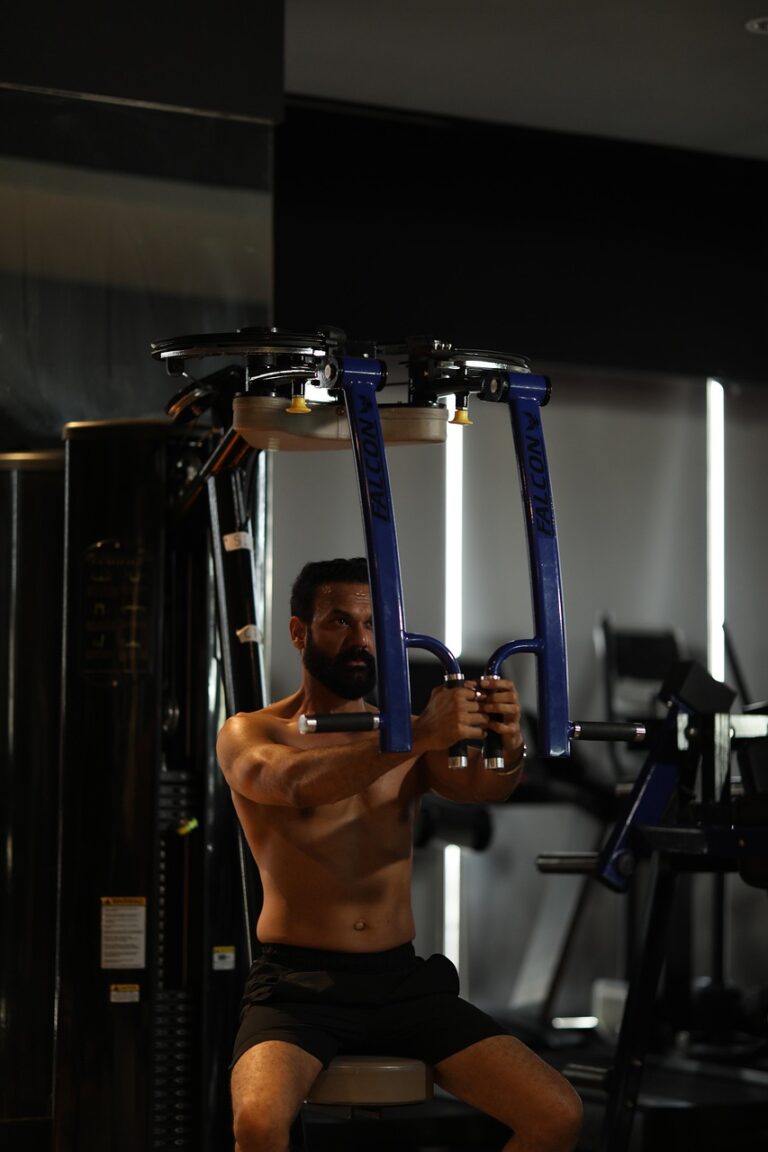 I want to be direct with you about the role of difficulty in this whole protocol. The cultural narrative around personal development often promises you that growth gets easier. That as you develop, the work of growing becomes less demanding, the challenges less uncomfortable, the path smoother. The research, and my own observation, suggest the opposite.
Genuine development doesn’t produce decreasing difficulty for you. It produces increasing capacity to engage with increasing difficulty. The challenges that fifth-order consciousness can handle aren’t easier than the ones fourth-order consciousness faces. They’re more subtle, more complex, and in some ways more demanding. They require you to hold more complexity simultaneously. They require you to tolerate more ambiguity. And they require you to maintain genuine openness in the face of frameworks a less-developed mind would have already resolved into settled certainty. Your growing edge doesn’t get easier as you develop. It gets more interesting. The challenges become worthy of you in ways earlier challenges simply weren’t.
This is genuinely good news for you, even though it won’t always feel like it in the actual moment of difficulty. The challenge that currently exceeds your capacity isn’t evidence you’re inadequate. It’s evidence you’re at your growing edge, exactly where this protocol intends you to be. The discomfort isn’t a signal to retreat. It’s the specific sensation of your own development happening in real time. Learn to recognize it as such. Let the discomfort of genuine challenge become a motivating signal for you instead of a retreat signal. The growth is there, inside exactly the discomfort you’re tempted to avoid. Move toward it. That movement is the practice. That practice is the protocol. That protocol, sustained indefinitely, is a life that’s genuinely, continuously, gloriously unfinished.
Think about the specific difficulty in front of you right now, whatever it is, professional, relational, physical, financial. Try, just as an experiment, reframing it in the terms this chapter has just given you. Not “why is this happening to me” but “this is the sensation of my own capacity being asked to expand.” That reframe doesn’t remove the difficulty. It changes your relationship to it. It moves the difficulty from something happening against you to something happening for you. It’s revealing exactly where your next layer of development actually lives. Sit with that reframe the next time something genuinely hard shows up.
Three Men Who Never Stopped
Three portraits of this orientation in practice, each showing you a different dimension of what it produces over years of genuine commitment.
Picture a retired professor of comparative literature in his early seventies, call him George, intellectually active for fifty years. He kept learning new languages into his late sixties. He began serious study of neuroscience in retirement. And at seventy-one, he was taking a formal course on computational biology. He described his own perpetual learning not as disciplined effort but as genuine compulsion.
“The moment I feel like I understand something, I get bored and have to find what I do not understand.”
His fifth-order capacity showed in how he talked about the frameworks he’d built over decades: as provisional structures, always partial, always revealing new questions at their edges rather than settled answers. He wasn’t performing intellectual humility. He genuinely found his own frameworks more interesting as questions than as answers. His professional work, the papers, the teaching, the books, was the organized output of a perpetually generative intellectual engagement that hadn’t declined at seventy-one, because it had never been organized around arriving at conclusions in the first place. It had always been organized around the process of genuine inquiry. This orientation, when it’s genuine, doesn’t require maintenance. It’s its own motivation. It runs itself.
Picture a second man in his early fifties, call him Marcus, who’d spent his twenties and thirties building considerable professional success through decisive confidence, high performance standards, and limited emotional expression. He was effective and respected and, by his own honest account, emotionally stunted, capable of genuine competence in every professional dimension and genuinely limited in his capacity for emotional depth, vulnerability, and relational intimacy. His developmental edge was the emotional domain he’d most successfully avoided for thirty years. A business failure in his late forties cracked something open in him, and rather than pushing through it the way he always had, he let himself sit with it honestly for the first time in his adult life. He found a small group of men willing to talk about what was actually happening inside them instead of trading war stories. And he started writing, every week, about what he actually felt instead of what he thought he should feel. The work was genuinely hard and genuinely transformative. By fifty-two, he’d developed enough emotional capacity to build his first genuinely intimate male friendship. He had a first honest conversation with his adult children about his regrets as a father. And he had a first genuine moment of vulnerability with his wife of twenty years, one she described, with tears, as the first time she felt he was actually there.
Picture a third man, a cabinetmaker in his sixties, call him John, working in wood since his early twenties, a master of his craft by any objective measure. He’d run a successful custom furniture business for thirty years, trained dozens of apprentices, had work in significant private and institutional collections. By most frameworks for personal development, he’d arrived in his domain. Asked, in an interview for a craft magazine, what he was currently working on developing, his answer was the ability to use wood’s grain to convey specific emotional qualities he hadn’t been able to achieve in previous work. He named specific pieces from twenty years earlier that were technically excellent and, by his current standard, a standard that had developed over the twenty years since, emotionally insufficient. His growing edge hadn’t disappeared with mastery. It had refined. The questions forty years of genuine craft engagement had opened were more specific, more subtle, and more interesting to him than the questions he’d been working on at twenty-three. The world never runs out of things to understand more deeply. You do not need forty years to start experiencing a version of this yourself. The man who understands this lives in a world of permanent creative abundance. The abundance is real. It’s always there, for you too, in whatever domain you’ve given your life to.
Read those three portraits again and notice what all three of these men actually share, underneath the surface differences of profession and age and domain. None of them were chasing a finish line. Each of them had, by any external measure, already finished, tenure, mastery, thirty years of respected practice. None of them experienced that as permission to stop. What changed for each of them, over decades, wasn’t whether they kept working. It was how much more specific, how much more interesting, and how much more their own the questions became. That specificity is what you’re actually building toward, in whatever domain matters most to you, whether it takes you five years or fifty to reach the version of it that’s genuinely yours. None of these three men were unusually gifted at the outset in ways that separated them from you. What separated them was decades of consistently choosing the harder, more interesting question over the comfortable, settled answer, applied so consistently that it eventually became indistinguishable from who they simply were.
Questions You’re Carrying
A few things worth answering directly before we close.
Let me answer a few of the questions this framework usually raises for men working through it seriously.
You might be wondering whether there’s a point at which you should just be satisfied with who you’ve become. Satisfaction and perpetual growth aren’t opposites. You can be deeply satisfied with what you’ve built while remaining genuinely interested in further building. The confusion is between contentment, a genuine quality of presence and appreciation for what is, and complacency, the loss of your development orientation dressed up as contentment. The goal is contentment without complacency: the capacity to be genuinely present with and grateful for your current state while staying curious about, and committed to, the further development your edge reveals is possible.
You might be wondering what to do if you don’t know what direction to grow in. Not knowing the direction is itself information. It suggests your values clarification and honest self-accounting haven’t gone deep enough yet. The values anchoring practice exists to address exactly this: regular, honest engagement with what genuinely matters to you and what genuine development would actually serve those values. Start with the values. The direction will emerge from honest engagement with them.
In practice, this usually means sitting down with a genuinely open question rather than reaching for the first plausible answer. What do you actually admire in other people, specifically, not generically? What would you regret not having attempted if you looked back on your life from its final years? What keeps quietly surfacing in your own thoughts, unbidden, even when you try to redirect your attention elsewhere? These questions, sat with honestly over days rather than answered reflexively in a moment, tend to surface a direction that a rushed brainstorm never will.
You might be wondering whether a perpetual growth orientation can lead you to neglect what you’ve already built. Yes, that’s a genuine risk. Growth orientation can become its own form of avoidance, always chasing the next horizon instead of investing depth in the current one. The antidote is the values anchoring practice. If your current relationships, commitments, and projects genuinely serve your most important values, they deserve depth of investment rather than restless horizontal movement. Genuine growth is often vertical, going deeper into a domain, rather than horizontal, constantly expanding into new ones. The depth orientation, sustained through the edge commitment applied inside your existing commitments, is often more growthful for you than the breadth orientation that jumps from thing to thing.
Check yourself honestly against this specific risk if you suspect it applies to you. Do you have a pattern of leaving relationships, jobs, or projects right around the point where the initial excitement fades and the harder, deeper work begins? That’s often the growth orientation being misapplied, mistaking the discomfort of depth for the absence of an edge, when in fact the deepest edges are almost always found by staying rather than by leaving. The new horizon always looks more exciting than the current one precisely because it’s unexamined. Examine the current one more closely before you assume the next one holds something better.
You might be wondering how to maintain a growth orientation through genuine failure or setback. The growth mindset practice matters most precisely here. A fixed mindset converts failure into a verdict and setback into self-definition. A growth mindset converts failure into information and setback into the specific challenge your current development needs to address. The practice looks like this. Catch the fixed-mindset interpretation when it arises in you: “this failure means I’m not capable of this.” Acknowledge the emotional response it produces. Then deliberately engage the growth-oriented alternative: “this failure is specific information about what I need to develop to do this better.” This is a practice, not a natural response for most men. It takes real effort, especially in the acute phase of a failure’s emotional impact. But it’s learnable, and the research shows growth mindset through failure is the single strongest predictor of eventual recovery in the domains that failure temporarily disrupts.
Think back to your own most significant professional or personal setback and notice, honestly, which interpretation you actually reached for in the immediate aftermath. Did you tell yourself a story about your own fixed inadequacy, one that quietly shaped your behavior for months or years afterward? Or did you manage, even partially, to extract the specific information the setback was offering you? Most men find they did some of both, defaulting to the fixed interpretation first and only later, sometimes much later, arriving at the growth-oriented one. Knowing that pattern about yourself means you can shorten that gap the next time, catching the fixed interpretation sooner and getting to the useful information faster.
And you might be wondering what the relationship is between perpetual growth and acceptance. This is the deepest question this protocol raises. The Stoic tradition and Buddhist philosophy, two of the most sophisticated frameworks for human development available, both hold that genuine growth requires accepting what cannot be changed as its necessary complement. Your growth orientation applies to what’s within your influence: your capacities, your character, your responses to circumstances, your contribution to the world. Your acceptance orientation applies to what’s outside your influence: the circumstances of your birth, the actions of other people, the outcomes of well-made efforts, the fundamental conditions of a human life. Distinguishing these two domains, and applying growth to the first and acceptance to the second, is the practical wisdom the mature application of this protocol requires from you. Develop what you can develop. Accept what you cannot change. Know the difference. That wisdom is itself the deepest growth available to you.
Most men get this distinction backwards in at least one important area of their lives, either grinding endlessly at something that was never within their control to change, or quietly accepting a limitation in themselves that was actually developable the whole time. Take an honest inventory of both. Is there a circumstance you’re still fighting that would be better served by genuine acceptance, freeing up the energy you’ve been spending on a battle you cannot win? And is there a limitation you’ve quietly accepted as just who you are that is, in fact, a specific undeveloped skill, waiting for the same deliberate practice you’d apply to anything else you actually wanted to build? Sorting your own life honestly into these two categories is, itself, a serious piece of this protocol’s work.
The Honesty This Requires
This protocol, more than any other framework, requires honesty about your current state as its starting condition. Not the performed honesty of identifying a few weaknesses to overcome while secretly holding onto the identity of someone essentially complete. Genuine honesty about where your current understanding is partial, where your current capacity is insufficient, where your current character hasn’t yet caught up to the standards you’ve set for yourself. This honesty isn’t self-flagellation. It’s the honest accounting that makes accurate edge-identification possible for you. Without it, you work on the wrong edges. You develop in directions that feel safe and confirm your existing strengths while avoiding the genuine growing edges that would most powerfully advance you.
The fixed mindset’s most insidious trick is making your genuine growing edge feel too risky to approach, while offering you endless pseudo-challenges that develop what’s already strong in you without ever risking what’s genuinely underdeveloped. Genuine growth orientation requires the courage to approach your actual growing edge, the dimension where genuine insufficiency currently lives in you, rather than the comfortable pseudo-edge where existing strength just gets refined further. That courage is the practice. That practice is the protocol. That protocol is the life of continuous genuine becoming.
This honesty gets harder the more successful you’ve become, not easier, and it’s worth naming that directly because it catches a lot of accomplished men off guard. Early in your development, insufficiency is everywhere and obvious, and admitting it costs you very little because everyone already expects a beginner to be incomplete. Later, once you’ve built real competence and real standing, admitting genuine insufficiency starts to feel like it threatens something you’ve worked decades to establish. That fear is exactly backwards. The men who keep developing into their fifties, sixties, and seventies are not the ones who avoided this admission. They’re the ones who kept making it, publicly and privately, long after it stopped being socially required of them.
Ask yourself, right now, where your own comfortable pseudo-edge actually lives. The thing you keep working on that already comes fairly naturally to you, that earns you praise, that feels productive but rarely feels genuinely uncomfortable. Then ask where your actual edge lives, the thing you avoid mentioning even to yourself, the domain where you already suspect the answer will require you to admit something you’d rather not admit. The gap between those two answers is usually the most honest map you’ll get of where your real growth is currently waiting for you to show up.
Watch the men around you who keep developing well into their later decades, and men who most fully embody this orientation share a distinctive quality that’s hard to name precisely but easy to recognize: they’re genuinely interested in things. Not performing interest. Not using curiosity as a social tool. Genuinely fascinated by the world, by other people, by their own developing understanding, by questions that keep opening new questions rather than resolving into settled answers. This genuine interest, this intellectual and emotional aliveness, is both the product of the perpetual growth orientation and its primary fuel. The more genuinely you engage with your growing edge, the more interesting the edge becomes to you. The more interesting it becomes, the more you want to keep engaging with it. The interest, the engagement, and the development spiral together into a virtuous cycle that becomes, over time, the dominant experience of a genuinely developing life.
This is not a small thing to notice about yourself. You have almost certainly felt the early version of this spiral already, somewhere in your own history, even if it never got the chance to run for decades the way it did for George or John. Think of the last time you got genuinely curious about something for its own sake, not because it would help your career or impress anyone, just because you wanted to understand it. Notice how that curiosity felt different from obligation, lighter and more sustaining at the same time. That feeling is not a rare gift given to a few naturally curious men. It is available to you, deliberately, any time you choose to approach your growing edge with genuine interest instead of grim obligation.
Begin Again
You are unfinished. That’s the whole point. That’s the gift. That’s the invitation every new day extends to you, and the one this protocol is designed to help you accept, fully and repeatedly, for as long as your life continues.
Build this practice. Sustain it indefinitely. Let it be the through-line of everything else you do, the orientation all your other developmental work proceeds from and returns to.
Wherever you’re starting from today, you’re starting from exactly the right place, because there is no other place to start from except the one you’re actually standing in. You don’t need the ideal conditions, the resolved past, or the fully articulated telos before you begin. You need the willingness to name one honest edge and move toward it, today, imperfectly, and then to do that again tomorrow, and the day after, for as long as you’re fortunate enough to keep drawing breath. That repetition, sustained across years and decades, is the entire practice. It is not complicated. It is simply demanding, in the way everything genuinely worth doing eventually asks you to be demanding of yourself. And it is available to you starting today, regardless of your age, your history, or how many false starts you’ve already had trying to build something like this before.
One last time. Consider the man you’ll be if you actually sustain this for the next decade, checking in with yourself honestly at each of the four scales this episode has described, adjusting the edge as your capacity grows, letting the feedback in instead of flinching from it, keeping the whole thing anchored to what you actually value rather than what impresses the people around you. That man is not a fantasy version of you. He is the plain, achievable result of ordinary consistency applied to an honest process, over enough time for compounding to do its quiet work. You already have everything required to become him. Nothing external is missing. No further permission is needed.
You simply have to begin, and then begin again, for as long as you’re given the chance to.
Be unfinished. Be grateful for the unfinishedness. Be growing. That is enough. That is, in fact, everything.
Editorial StandardsCorrectionsMedical DisclaimerAbout Our ContentAffiliate DisclosureSite Map