
Marcus and the Corner Office
Picture a man — call him Marcus — thirty-two, with the corner office. Senior product manager at a fintech startup in Austin. He was the guy other guys studied: the one who came in early, stayed late, took on extra projects not because anyone asked but because the work itself pulled him forward. His manager called him “the engine.” His colleagues called him “relentless.” He called himself someone who actually gave a damn about what he was building, and who he was becoming in the process of building it.
Then COVID hit. The office closed. Marcus moved from a nine-hundred-square-foot apartment he shared with a roommate into a six-hundred-fifty-square-foot studio he could finally afford solo, the same kind of upgrade you may have made yourself around the same time, for the same reasons that felt entirely sensible then. He set up his desk by the window. He bought the ring light. He got the ergonomic chair. He built a morning routine. He read every productivity book the remote work influencers were recommending. He did everything right, by every measure anyone had prescribed for making remote work work.
Eighteen months later, his manager called him on a Tuesday afternoon to tell him he was being passed over for promotion. The reason wasn’t performance. His deliverables were clean. His timelines were tight. His documentation was sharper than it had ever been. The reason was something his manager struggled to articulate but kept circling back to: we don’t feel like you’re as visible as you used to be. We don’t feel the same energy. Marcus had attended every meeting, camera on, taking notes. He’d delivered every project on time and above expectations. But the hunger, the reaching, the proactivity, the intensity that used to be his signature, was gone. His manager could feel it through the screen. Marcus could barely argue with the assessment, because somewhere in those eighteen months of Zoom calls and Slack threads and asynchronous everything, he’d stopped feeling it too.
He didn’t know how to explain that to anyone. He had no language for what had happened, and you might not either, if you’re carrying a version of this yourself right now. So he accepted the decision, sent a professional reply, and went back to his desk in his apartment and opened his laptop and stared at the same four walls he’d been staring at for a year and a half. He tried to figure out what had happened to the version of himself that used to be on fire. The version that came in Monday morning already thinking about Thursday. The version that took the hard conversation without waiting to be asked. The version that built things nobody had blueprints for, because the blueprint was in his head and the drive to execute it was in his chest.
Before you decide this doesn’t apply to you, sit with it for a second. Marcus is not a cautionary tale about laziness. He’s not a man who stopped caring or got comfortable in the laziness sense. He’s a cautionary tale about what happens to you. Every environmental cue, every social signal, every friction point and competitive pressure that used to trigger your ambition gets stripped away. And you wonder why the ambition isn’t showing up anymore. He’s a story about what the comfortable home office does, quietly, to men who used to be on fire and don’t notice the cooling until someone else points it out.
This is episode two hundred and five. Today we’re talking about remote work and what it’s actually done to your drive, your hunger, and your ambition, if you let yourself believe that freedom from the office was the same thing as freedom to do your best work. Those are not the same thing. The evidence for that distinction is substantial, uncomfortable, and worth your full and honest attention.
Before you go any further, I want you to do something uncomfortable. I want you to actually answer the question, not skim past it the way you’d skim past it in an article. When was the last time you did something at work that nobody asked you to do, that carried real risk of visible failure, and that you did anyway because the work itself pulled you forward? If you can answer that instantly, with a specific memory from the last month, you’re probably fine, and most of what follows will simply confirm what you already know about yourself. If you have to think for more than a few seconds, or if the honest answer takes you back a year or two, you are exactly who this episode is for. Keep that answer in your head. You’re going to need it by the end.
The Ambition Problem Nobody Wants to Name
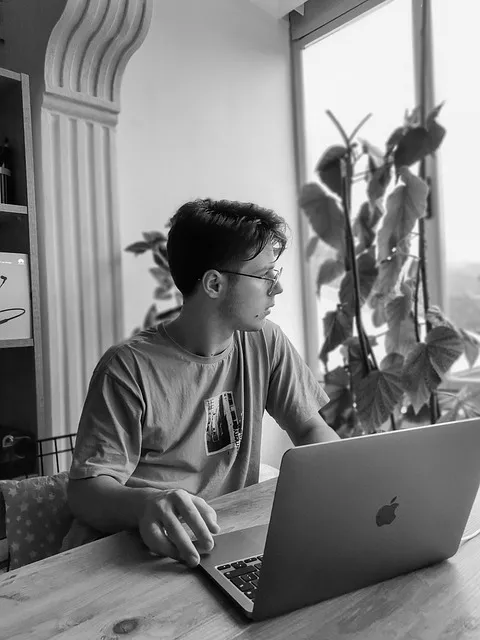
This isn’t a universal claim about you specifically, so don’t dismiss it on that basis before you’ve actually checked. It’s not true of every remote worker, and it may not even be true of you. There are genuinely high-performing people who work remotely with ferocious discipline and produce extraordinary results, people who’ve built internal motivational structures strong enough to function without environmental support. They exist, and you might be one of them, but check the evidence in your own life rather than assuming it. They’re also the exception, the edge of the distribution that remote work advocates use to argue for a universal policy that works beautifully for a disciplined minority and quietly damages men like you who make up everyone else.
Most remote workers, not bad people, not lazy people, but ordinary high-performing professionals operating without the environmental scaffolding they’ve always depended on, drift. Not dramatically. Not in ways that show up immediately in quarterly performance metrics. But over twelve, eighteen, twenty-four months of comfortable home-office routine, a slow erosion of ambition happens to them. The proactive email doesn’t get sent. The risky idea doesn’t get raised. The uncomfortable conversation doesn’t get initiated, because there’s no physical proximity forcing the issue. Your reach gets smaller. Your horizon shrinks. The size of the game you’re playing contracts, and you adjust your self-conception to match, and call it maturity.
Here’s something you need to internalize before anything else in this episode will land for you. Ambition is not a personality trait you’re born with or without. It’s not a fixed quantity stored in your chromosome that either exists or doesn’t. Ambition is a response to your environment. It’s generated, shaped, amplified, suppressed, and ultimately killed by the conditions that surround it. Every elite athletic program, every military training system, every high-performing business culture understands this at an operational level, even when they can’t articulate it theoretically: the environment is not background noise. It’s a primary performance variable. And the environment of remote work, for all its genuine advantages in specific contexts and for specific tasks, quietly suppresses several of the most powerful mechanisms that generate and sustain your ambition over time.
Dr. Teresa Amabile at Harvard Business School has spent decades studying what she calls the progress principle. Her longitudinal research spans hundreds of professionals and thousands of diary entries. Her finding: the single biggest driver of your daily motivation, positive work emotion, and creative performance is making visible progress on meaningful work. Not salary. Not recognition. Not even autonomy, which her research found to be less powerful than most people assume. The daily, tangible, felt sense that you moved something forward. That you made a dent. That the gap between where things were this morning and where they are tonight is traceable to your specific effort and your specific choices.
Here’s the problem with remote work and the progress principle. Remote work, by its structural nature, makes your progress invisible. You close your laptop. The Slack notification disappears. The meeting ends and the call window closes. The document auto-saves in a folder you won’t open again until tomorrow. And you look around at the same walls, the same coffee mug you’ve been refilling since eight in the morning, the same pile of laundry on the chair you’ve been ignoring for four days. Nothing in your physical environment changed as a result of your effort. You didn’t visibly move through space toward anything. Nobody watched you work through the hard part. Nobody witnessed your concentration or your problem-solving or your willingness to push past the point where lesser effort would have stopped. Nobody acknowledged your contribution in real time in a way your body could register.
Think about your own last real win at work and ask yourself honestly how it landed in your body. The progress, real as it may be in a document stored on a company server somewhere, does not land in your body the way it used to when the environment around you registered it socially and physically. And over months and years, this invisibility does something specific and damaging to you. Not lazy in the dismissive sense. Disconnected. Progressively, structurally disconnected from the feedback loops that used to tell you what your work meant. Disconnected from whether it mattered, whether you were someone worth watching, whether you were still in the game at the level you used to be in it.
The Neuroscience: What Your Brain Needs
To understand what remote work does to your ambition at a mechanistic level, you need to understand how your own brain generates and sustains the motivational state we call drive, and what specifically your home environment is doing to interrupt it.
Dr. Robert Sapolsky, the Stanford neuroscientist, primatologist, and author of Behave, has shown you something important about your own drive. Behave is a comprehensive account of the biology of human behavior, and it stands among the most important science books of the past twenty years. Dopamine, the molecule most commonly and most incorrectly described as the pleasure molecule, is not primarily released when you receive a reward. It’s released in anticipation of a reward. The anticipation, not the receipt, is where your motivational fire lives. And critically, the magnitude of that anticipatory dopamine release is modulated heavily by context. It’s modulated by environmental cues that signal the reward is possible. It’s modulated by the uncertainty of whether it will actually arrive. It’s modulated by the presence of other people who are also competing for or sharing in the same reward landscape.
The implications for your work environment are profound, and they’re largely unexamined in the remote work literature you’ve probably already absorbed uncritically. The office was a rich environment of cues that predicted meaningful, variable, socially embedded rewards for you. The presence of your manager in the same physical space. The visible effort of a respected peer who you respect and who’s visibly outworking you. The competitive energy of a presentation where your ideas are evaluated in real time against other people’s ideas. The hallway conversation that comes out of nowhere and turns into the recognition you’d been working toward without knowing it was coming. These are all dopaminergic events. Their unpredictability, the fact that you couldn’t know exactly when or whether the recognition was coming, which interaction would produce the breakthrough, which moment would be the one that mattered, was precisely what made them powerful motivators for you. Variable reward schedules drive more dopamine release than fixed and predictable ones. The office, for all its genuine dysfunction and inefficiency, was accidentally excellent at the variable social reward delivery that keeps your brain’s motivational systems firing at high intensity.
Remote work replaces this rich, variable, socially embedded reward environment with something structurally different for you. Your professional rewards become more predictable and more controllable, and therefore less dopaminergic: the scheduled one-on-one at two on Thursdays, the async positive comment on the Slack thread sometime later today, the quarterly performance review scheduled for the fifteenth. And the gaps between those professional rewards get filled, not with the productive, appetitive uncertainty of a physical social environment, but with near-infinite access to cheap, immediate, low-effort gratification. The notification ping. The social media scroll. The video spiral triggered by one mildly interesting clip in the sidebar. The online shopping session. The snack run to the kitchen that stretches to twenty minutes, because nobody is watching the clock and the kitchen is right there and the snack is genuinely better than whatever was happening on the screen.
Notice how many of these you recognize in your own day before you keep reading, and don’t let yourself off the hook by pretending you don’t already know the list. None of these individual behaviors is catastrophic in isolation for you, and you’ve probably told yourself exactly that about each one of them. All of them together, practiced consistently across the hours that used to be the most ambitious and productive hours of your working day, teach your dopamine system to seek low-effort, high-immediacy reward. They simultaneously make the slower, harder, richer rewards of genuine professional achievement feel less salient, less urgent, less worth the cost of sustained effort to you. Your neurological baseline shifts. The big things start to feel as flat as the small things. The work that used to feel like a calling starts to feel like a subscription you maintain out of financial obligation and inertia.
You need to understand one more piece of this mechanism before we move on. Dr. Anna Lembke at Stanford, director of the addiction medicine program and author of Dopamine Nation, required reading if you want to understand the psychology of your own modern overconsumption, argues that you’re living in an era of pervasive dopamine dysregulation. Not primarily from drugs or alcohol, but from the saturation of daily life with low-effort, high-stimulation experiences designed with extraordinary precision to trigger and retrigger the dopamine system. The paradox, which Lembke documents with clinical detail and rigorous research, is that flooding the system with easy pleasure does not produce more happiness or more motivation in you. It produces tolerance and blunting. Your baseline rises. Things that should feel meaningful feel flat. Things that should generate genuine excitement generate only passing interest. Your capacity for sustained effort requires your ability to tolerate the delay and discomfort between the beginning of hard work and the arrival of its reward. That capacity gets eroded by your constant access to things that require no delay and no discomfort at all.
Your remote work home environment, by design and by the unintended consequences of its design, delivers this kind of neurological erosion with remarkable efficiency across a working lifetime. It’s not a place engineered to help ambitious people stay ambitious. It’s a place engineered for comfort, for convenience, for the elimination of friction. And comfort sustained as your default, comfort not earned through effort and not punctuated by regular difficulty, is one of the most effective ambition suppressants ever created.
Look around the room you’re sitting in right now, if you’re at home. Everything in it was chosen by you, for you, to reduce friction for you. That is not an accusation. It is simply the truest thing anyone can tell you about why your hunger has gone quiet in that specific room. You built a space that optimizes for your comfort, and comfort, optimized for long enough, will always eventually out-compete your ambition, because ambition has never once in human history been comfortable to sustain.
Daniel’s Drift

By 2022, he’d been fully remote for two years, and you should pay close attention to what stayed fine and what quietly didn’t. His numbers were fine, not great, but acceptable. He’d hit ninety-four percent of quota the prior year and ninety-seven percent the year before that. Within the acceptable range. Nobody was putting him on a performance improvement plan. Nobody was having difficult conversations with him. By every metric the company tracked, Daniel was succeeding in his role. The problem wasn’t metrics. The problem lived in a dimension the metrics didn’t measure.
Something had shifted fundamentally in how Daniel thought about his professional future, and it’s worth asking yourself whether something similar has shifted in you. He used to think in terms of trajectory. Where am I going in three years? What’s the strategic play to get to VP? Where am I positioning myself relative to the next promotion cycle? What relationships do I need to build, what visibility do I need to create, what skills do I need to add to make myself the obvious choice for the step above this one? He thought constantly, naturally, almost involuntarily about the larger game, and his position and movement within it.
Now he thought in terms of days. Ask yourself honestly whether this is your week too. Get through today. Clear the inbox. Make the calls. Hit the weekly activity numbers. Close the laptop. That was the entirety of his professional cognitive engagement. His horizon had collapsed from years to hours. His game had become a series of isolated daily tasks with no coherent arc connecting them, no sense of trajectory, no felt relationship between today’s effort and some meaningful future outcome.
Ask a man like Daniel to describe what happened to his ambition over those two years, and he’ll often land on some version of the same line. You’ll hear variations of it from dozens of men in different industries at different career stages: I stopped thinking about the game and started thinking about the task.
That distinction matters enormously, and it’s underappreciated in the remote work conversation. Ambition requires a particular kind of cognition in you. It’s a strategic, future-oriented imaginative capacity that places you as a player in a larger competitive narrative. You’re tracking your position, making moves, calibrating risk, planning across a timeline that extends significantly beyond the current week. It requires you to hold a picture of who you’re becoming and feel the productive tension between that picture and who you are now, and let that tension pull you forward into the discomfort of reach and risk.
Tasks are discrete and finite for you. You receive a task, you execute the task, you close the task, you move to the next task, and you never once have to hold the larger shape of your own career in your head while you do it. The brain required to execute tasks competently is genuinely different from the brain required to think ambitiously. And remote work, optimized at every structural level for asynchronous individual task completion, trains you systematically into task-brain over months and years, while slowly starving the ambition-brain that lives in a longer, riskier, more uncomfortable relationship with time and outcomes.
Watch closely what happened to Daniel next, because you may be walking the same road right now without seeing it. He eventually left the logistics company. Not because he was fired. Not because of any dramatic conflict or missed opportunity. He simply coasted out. He took a slightly lower-paying role at a smaller firm with less pressure and a more relaxed culture. He told himself, and his wife, and his friends over dinner, that it was a strategic pivot toward a better work-life balance in a phase of life where balance mattered more. It was not a strategic pivot. It was capitulation, and you should call it that in yourself if you ever catch yourself making the same move. He’d trained himself, through two years of comfortable remote work without the environmental pressures that used to generate his ambition, to want less professionally. And then he’d arranged his professional life to match the size of that reduced wanting. The tragedy for you to notice isn’t that he made the choice. He made the only choice that felt right given the motivational state he’d trained himself into. The tragedy is that he didn’t fully understand what had happened to him until well after the fact. By then the new job had become the new normal for him, and the new normal felt fine, and fine had quietly and completely replaced excellent as the standard he was measuring himself against. Ask yourself right now what your own version of fine has quietly replaced.
The Social Witnessing Effect
Here’s something the productivity literature and the remote work discourse have consistently failed to tell you with sufficient directness: your ambition requires witnesses, and you don’t currently have enough of them.
This isn’t about your vanity. It’s not about you needing external validation as a substitute for your intrinsic motivation. It’s not about ego or status-seeking or the shallow need for applause. It’s about something more fundamental and more biologically grounded in you: the human drive for social coherence, and the biological reality that you are not an autonomous motivational island who generates his best performance in isolation. You’re an intensely, fundamentally social animal, and your ambition knows it even when your intellect argues otherwise. Your behavior, your effort level, and your sense of what’s possible are regulated in significant part by your experience of being seen by people whose judgment matters to you, and by the real-time social feedback you get from that being-seen.
Here’s the research you need behind this, so you’re not just taking my word for it. Roy Baumeister at the University of Queensland is one of the most rigorous and prolific researchers in social psychology. Across multiple decades and hundreds of studies, he’s produced extensive evidence that social observation, being watched and evaluated by people whose opinion you value, activates higher-order executive function in you. It raises the quality of your self-regulation. It elevates the level of effort you apply to tasks. When you know you’re being watched by people who matter to you, you engage more cognitive resources, exercise more care, apply more sustained effort, and make better and more considered decisions. This is not performance anxiety disrupting your normal function. This is your brain doing exactly what evolution designed it to do: allocating its highest-quality cognitive resources to high-stakes social contexts, where performance determines social standing and social standing determines outcomes.
In your old office, this witnessing effect was constant, pervasive, and largely involuntary for you, whether you wanted it or not. Your body language got read by colleagues throughout the day. Your energy level in your own morning meeting signaled something to everyone who observed you. Your presence, early and engaged, or late and distracted, sent continuous social signals that were received and interpreted and acted upon by the people around you. You calibrated your behavior, your effort, your presentation of self, consciously and otherwise, to the social environment. This calibration was sometimes exhausting and sometimes constraining in ways that were genuinely unpleasant. But it was also, consistently and structurally, a performance-upward pressure that you, working alone in your apartment, simply cannot replicate through willpower and discipline alone.
Remote work removes the witnessing effect from your life almost entirely. Your camera is off half the time in meetings. Whether you’re in deep focused productive work or watching something between emails is completely invisible to everyone except you. Your actual working behavior, how hard you push when pushing isn’t required, when you take the harder path versus the easier shortcut, when you choose reach over competence, is known only to you. And if you haven’t yet developed highly strong internal accountability structures, this invisibility is quietly devastating to your ambition over any extended time horizon. Building that kind of structure requires years of deliberate practice, internal standards that function without external enforcement. That simply isn’t where most men are at most career stages.
The data on remote work productivity is famously contradictory, and that contradiction resolves clearly for you once you apply this framework to your own situation. Short-term, in the first weeks and months of remote work, many people genuinely are more productive on measurable tasks: fewer interruptions, no commute drain, more protected time blocks for concentrated work. This is real. But in organizations that have tracked performance carefully over two, three, and four years of remote work, a consistent pattern emerges: measurable task completion stays approximately flat or continues at the improved level, but proactive behavior declines. The initiative-taking, the going-beyond-what-was-explicitly-requested, the willingness to raise the uncomfortable issue nobody else is raising, the voluntary stretch into harder and more visible work, all of it erodes. The tasks get done. The ambition-markers erode. Ambition-markers are the visible, social, proactive evidence of someone who’s not just executing their job but building something beyond it. And those markers are precisely what determine who gets promoted, who gets the best assignments, who gets selected for the experiences that accelerate careers.
The Invisible Ceiling

Two years into full remote work, Priya found herself struggling to describe what had changed in Kevin’s work, the exact same struggle you might have describing what’s changed in yourself. She’d land, if you asked her, on something like: technically competent but no longer inspired. That was the most precise language she could find. He delivered what was assigned on time and to a high technical standard. He didn’t reach beyond assignment. He completed the problems explicitly given to him and stopped inventing problems to solve. He executed without initiating. He performed without creating. He was, by every measurable standard, a good engineer. He’d stopped being a great one, not because his skills had deteriorated, but because his reach had contracted.
If you manage men like Kevin, or if you’re honest enough to see yourself in him, watch what Priya tried next. She tried everything the management playbooks prescribe. She gave him direct, specific feedback in one-on-ones. He received it thoughtfully, acknowledged it completely, and seemed genuinely engaged in the conversation. And then changed nothing in his actual behavior. She offered him a harder project with more organizational visibility, the exact kind of stretch assignment you’d expect to reignite someone. He completed it adequately and returned to his previous level anyway. She tried more frequent check-ins, async collaboration channels, team retrospectives that explicitly named initiative as a valued and rewarded behavior. None of it moved the needle. Not because Kevin was being resistant or passive-aggressive, but because the feedback she was giving him was like telling someone to feel hungry when they’d been grazing all day on convenient snacks. The conditions for the hunger she was describing were simply not present in his environment, and she couldn’t inject them through management techniques alone.
Eventually she asked him directly, without management framing or performance review language, the way you’d want someone to ask you if they actually cared about the answer. What happened to the engineer who used to come in Monday mornings with the whiteboard full of ideas?
Kevin thought about it for a long, genuine moment, not the kind of thinking where someone is formulating a safe answer, but the kind where someone is actually trying to figure something out — the kind of moment you should give yourself before you answer the same question. Then he said something like this:
I think I forgot what I was building toward. At the office I could see the whole game. I knew where I stood relative to the other engineers on the team and in the company. I knew who I wanted to impress and what impressing them would mean. At home it’s just me and my laptop. I don’t feel like I’m in a game anymore. I feel like I’m doing chores.
That’s about as clear an articulation of the remote work ambition problem as you’re likely to hear from someone living it in real time. The office wasn’t just a location where work happened to take place. It was a context that made the work meaningful. It was a stage with other players who were watching and being watched. It came with real stakes registered in real time in real relationships, and visible competitive and collaborative consequences that gave individual effort a larger meaning it couldn’t generate on its own. Remote work gave Kevin the chores without the stage. And without the stage, the chores, however technically clean their execution, were all he had the drive to show up for.
Say that sentence back to yourself right now and see if it lands somewhere real in you: I don’t feel like I’m in a game anymore, I feel like I’m doing chores. If it does, you don’t need more evidence that something has shifted in you. You need to know what to do about it, and that’s exactly where the rest of this episode is going.
What Remote Work Advocates Get Wrong
The remote work debate has been captured by a form of advocacy that focuses almost entirely on individual autonomy, work-life balance, and the dismantling of what it frames as outdated management control structures. It almost entirely ignores what those gains cost you in the longer arc of your professional development, career advancement, and personal ambition maintenance.
You’ve almost certainly absorbed this argument yourself, whether or not you’ve examined it. The core argument of the remote work advocacy position runs like this: workers are adults who should be trusted to manage their own time and evaluate their own output. Output is what matters, not physical presence. The office is an artifact of industrial-age management philosophy built around control and supervision rather than genuine value creation. Flexible work is the inevitable and correct future, and anyone who questions it is either defending their own desire for visibility-based authority or has failed to update their assumptions about how knowledge work actually functions. This argument is appealing in its confidence. Parts of it are true. And it contains a fatal structural flaw its most prominent advocates consistently decline to examine.
Here’s the flaw, and you need to see it clearly for yourself: it treats all workers, including you, as if you have a fully formed, stable, self-sustaining intrinsic motivational system that doesn’t require environmental reinforcement or social scaffolding to remain functional over time. Some people have this. They’re the minority. Most human beings, including high-performing, intelligent, genuinely committed professionals, have motivational systems shaped and sustained in significant part by environmental and social conditions. Remove those conditions and your motivation does not stay the same. It degrades. Not immediately, not catastrophically, not in ways that show up in the next quarterly review. But consistently, structurally, over time, in exactly the ways that are hardest for you to see, because they’re easiest to rationalize as personal growth and strategic reprioritization.
Dr. Cal Newport at Georgetown University has argued something specific and consistent, and his work on deep work, digital minimalism, and career capital represents some of the most practically useful thinking on professional development in the past decade. The conditions required for you to do genuinely ambitious, career-advancing work are more demanding than most people in the remote work conversation acknowledge, or are willing to acknowledge. You need clarity of purpose. You need deliberate practice structures that push you beyond your current competence into the uncomfortable edge of your capability. You need feedback loops that are honest and specific and arrive with enough immediacy to change your behavior. You need social environments that raise the stakes of your performance by making it visible and consequential in real time. Remote work, as most people actually practice it rather than as its advocates theoretically describe it, delivers few of these conditions reliably or by default. You can construct them yourself. Most people don’t. And the remote work advocates who tell you the ones who fail to construct them are simply not disciplined enough have missed the point: discipline itself is an environmental product, not a factory setting.
To be fair to the position you’ve probably heard a hundred times by now, the remote work advocates correctly diagnosed several real and significant problems. Commuting in most American cities is a genuine waste of human time and cognitive energy, at a scale that represents a serious public health problem. Open-plan offices, as implemented in most corporate environments, are acoustically and cognitively brutal and actively hostile to the kind of concentrated work that produces excellent outcomes. Performative presence culture, the expectation that visible sitting-at-desk activity constitutes work regardless of what’s actually happening cognitively, is theater and should be called theater. Rigid nine-to-five structures ignore the reality of how your cognitive performance varies across the day and across different types of work. All of this is true and deserves to be said plainly.
But the solution to those real problems, for you and for everyone else who’s absorbed this debate, is not to abandon physical co-location as a category of professional value. The solution is to design better offices, better work cultures, better accountability structures, better meeting practices, and better ways of measuring contribution. The remote work movement looked at a badly designed building and concluded that buildings were the problem, and convinced a generation of knowledge workers, you very possibly among them, to conduct their professional lives in their bedrooms. Some things are closer than you think. Most careers cannot survive the distance you’ve put between yourself and the room where your ambition used to live.
The Identity Architecture of Men at Work

When your work moves home, the physical and social markers of your professional identity disappear. You’re not the guy with the corner office anymore, or the reputation that precedes him into a conference room, or the person everyone turns to when the stakes of a decision are high. You’re a square on a video grid, equal in pixel size to everyone else, easy to mute, easy to forget, technically present but physically nowhere in any room where your presence could register as something real. The markers of what you’ve built and who you are professionally, the ones that used to be registered daily in the faces, behaviors, and deferences of the people working around you, are gone. Replaced by a username and an occasionally frozen video feed.
Over months and years, this loss of professionally anchored social identity contributes to what I’d describe as identity flatness in you. It’s a quiet reduction in the dimensionality and urgency of your self-conception, and it makes ambition feel not just difficult to maintain but somehow beside the point. Ambition is future-oriented. It requires a stable enough sense of your present self to project meaningfully toward a larger future self and feel the tension between the two. When the environmental and social anchors of your present self get removed, the question of who you’re becoming gets harder for you to ask and harder to answer. That happens the moment you no longer have daily, embodied, social confirmation of who you are professionally. When it gets hard enough, you stop asking it. When you stop asking it, you stop reaching. When you stop reaching, you have by definition ceased to be ambitious, regardless of how well your measurable task completion continues to perform.
The Slow Fade
Take a composite worth sitting with even if you’ve never set foot in a courtroom, because the mechanism here is the same one at work in you regardless of your profession — call him James, a litigation attorney at a mid-sized firm in Philadelphia. Pre-pandemic, he billed twenty-two hundred hours a year and would have told you, without a trace of irony or complaint, that he loved every demanding hour of it. Not the billing itself, the combat. The intellectual violence of preparation. The strategic complexity of deposition. The performance and persuasion of the courtroom. He was built for adversarial high-stakes environments the way certain men are built to run long distances in difficult terrain, maybe the way you’re built for something specific in your own line of work. Not something he endured, but something he metabolized for fuel. He thrived on conflict, on the discipline of preparation, on the visible and immediate and socially registered stakes of professional work. The quality of your thinking determined whether your client won or lost, and every person in the room could see exactly how good your thinking was.
Remote work didn’t destroy James’s law career in any conventional sense, and it may not have visibly destroyed yours either. By most external metrics he continued to perform. He billed his hours. He won his cases at a rate consistent with his pre-pandemic record. His clients were satisfied. His partners had no grounds for complaint. But the work had changed in quality at a level the metrics didn’t capture. He prepared the same amount, arguably more, since with no commute and no office distractions he had more total hours available, the same trade you’ve probably made yourself without stopping to weigh it. He argued as well or better technically, because he could control his presentation environment completely from his home office. But the adversarial energy that used to animate the work, the thing that made the preparation feel worth the cost, that made the argument feel like something real was at stake, had diminished almost to the point of imperceptibility. The physical presence of opposing counsel across a conference table. The courtroom weight. The way a jury’s collective attention shifted and concentrated when he said exactly the right thing at exactly the right moment. These were not decorative elements of the professional experience for him. They were the stage, the social and environmental context that gave the intellectual work a meaning and a charge it couldn’t generate in a video call from a home office.
By 2023, James had quietly and without announcement begun turning down complex, lengthy, high-stakes cases in favor of shorter, more transactional, less demanding matters — notice if you’ve made a version of this same trade in your own work without naming it. He had explanations for each individual case: scheduling conflicts, other commitments, shifting practice priorities. He told his partners it was a strategic pivot toward a different kind of practice with different economics and different demands on his time. All of it was plausible. None of it was the real reason. The real reason was different. Without the physical, social, environmental stage that used to make the hard cases feel worth the enormous cost of effort, his calculation had shifted, in ways he hadn’t consciously chosen and couldn’t fully see while they were happening. The hard case now cost exactly as much in preparation as it always had. It delivered a fraction of the psychic reward it used to deliver. James was making the rational choice for his current motivational state. That state had been gradually and invisibly reshaped by four years of working in conditions that systematically removed the most powerful sources of professional fuel he’d ever had.
His firm eventually moved to a hybrid model in late 2023. James found the first month back disorienting in ways he hadn’t anticipated, and you should expect a similar disorientation in yourself if you ever make the same move. You can imagine him putting it something like this: “I had forgotten how much I ran on that energy. The room. The physical presence of other lawyers who are also very good at what they do and know it. The way a conference room full of people with competing interests changes how you think about every word you say. The moment I walked back in and felt the tension of a real space with real people in it, I remembered what I was built for.”
It took about three weeks of being back before I felt like myself again. And then I took on a RICO case I would have turned down six months earlier without a second thought. The appetite came back when the environment came back.
The Comfort Trap
- Identify one professional reach you stopped making after going remote. Not one you were told to stop making. One you stopped on your own, quietly, without announcement, because the environment no longer made it feel worth the effort. Name it specifically, write it down, and acknowledge that you stopped it not because it was wrong but because comfort made not doing it easier than doing it.
- Reconstruct a genuine accountability structure. Not a productivity application, not a personal rule you make to yourself, but a person. A colleague, mentor, or professional peer whose opinion of you actually matters, who’ll know specifically whether you did the hard thing or didn’t, and whose knowledge of your behavior will be affected by your choices. External accountability is not weakness. It’s the recognition that internal accountability is built on top of external accountability, not instead of it.
- Schedule at least one in-person professional interaction per week that puts your actual work, your ideas, your judgment, your initiative, in front of people whose assessment matters to your career. Not a video call. In person, in a room, where you can be read whole, body language, energy, presence, and where the stakes of being read are real in a way a video grid simply cannot replicate.
- Conduct an honest audit of your dopamine environment during working hours. List every source of easy, immediate, low-effort gratification that’s colonized the hours that used to be your most ambitious and productive. Remove those sources from those hours specifically for thirty days. Evaluate what changes in your motivational experience and your quality of initiative during that period.
- Reconstruct the game, not the task list, not the project plan, not the quarterly targets. The game. What are you actually building over a career arc that matters enough to sacrifice comfort for? Who are the players? What are the real stakes? Write this in terms specific and honest enough to feel the genuine gap between where you are now and where you’re capable of being. Let that gap generate tension. Tension is ambition’s fuel. Comfort is its extinguisher.
Here’s what makes comfort so specifically dangerous to your ambition: it doesn’t feel dangerous. Comfort feels like reward. It presents itself as something you’ve earned, something you deserve, the natural result of having worked hard enough for long enough to have eliminated the unnecessary friction from your professional life. And it’s right about some of that. Not all friction is productive friction. Not all difficulty generates growth. Some of what the office demanded, the commute, the open-plan noise, the performative presence culture, the pointless meetings, was genuinely unnecessary cost that produced no corresponding professional value for you.
But comfort that becomes your default state, comfort not earned through effort and not regularly interrupted by genuine difficulty, is corrosive to your ambition in a way that operates below conscious awareness until significant damage has already been done. It works by slowly and invisibly retraining your brain’s baseline of acceptable effort and acceptable outcome. Gradually, the level of stretch and discomfort that used to feel normal to you starts to feel excessive. The reach that used to feel natural starts to feel like overreach you no longer need to make. The risk you used to take as a matter of professional course starts to feel like exposure you can reasonably avoid. And you rationalize each individual retreat as a reasonable, mature, experienced professional judgment. You don’t recognize the cumulative pattern for what it actually is: a systematic downward adjustment of your ambition, driven by the consistent absence of the environmental conditions that used to make ambition feel necessary and possible and worth the cost.
Dr. Angela Duckworth at the University of Pennsylvania has spent decades studying grit, perseverance, and long-term achievement, and her research has produced some of the most practically important findings in performance psychology of the past twenty years. She’s consistently found that the people who sustain high performance over time are not people who’ve found ways to avoid difficulty. They’re people who’ve developed and protected the habit of seeking difficulty, specifically the habit of consistently working at the outer edge of their current capability rather than in the comfortable center of their already-established competence. She and her colleagues draw on Anders Ericsson’s framework of deliberate practice: not more practice of the things you’re already good at, but targeted, uncomfortable, effortful engagement with the specific capabilities currently just beyond your reach.
Remote work, as most people practice it, is not a deliberate practice environment for you. It’s a competence-execution environment. It’s optimized for doing what you already know how to do, efficiently and comfortably and with minimal unnecessary friction, and there’s genuine value in that for certain categories of work. But it’s structurally hostile to the conditions of deliberate practice, and therefore structurally hostile to the development of your ambition over time. Ambition requires you to regularly and deliberately venture into your own incompetence, to attempt things you might fail at, in front of people whose judgment matters, without a guaranteed outcome. That kind of venture requires environmental conditions, stakes, witnesses, competitive proximity, social accountability, that most remote work settings simply do not provide by default.
Here’s your practical checklist for reversing this:
The Long-Term Strategy Nobody Is Playing
You should notice that the remote work conversation, with very few exceptions, focuses on the short-term and the comfortable. Commute time saved. Flexibility gained. Quarterly productivity metrics. How you feel right now about your current work setup. Almost nobody in the discourse is asking the question that matters most across your full career. Where will people who’ve been fully remote for four, five, seven years be professionally, compared to where they’d have been with more deliberate in-person professional engagement? That data set doesn’t yet exist in its complete form. The early evidence is not encouraging for the full-remote position.
Look at the actual data on this rather than the feeling, because the feeling will lie to you. Nicholas Bloom at Stanford is the most frequently cited academic researcher on remote work, and he’s himself a measured advocate for well-designed hybrid arrangements rather than either extreme. His ongoing research has found that fully remote workers receive fewer promotions and less favorable performance evaluations than in-office or hybrid counterparts, even when controlling for measured productivity. His primary interpretation is about visibility: present people get noticed by decision-makers and advanced; invisible people don’t. That’s true as far as it goes. But it understates the ambition dimension for you. It’s not just that remote workers are less visible to the people who make advancement decisions. It’s that, over time, the conditions of remote work reduce how visibly ambitious they make themselves. They position less proactively. They pursue opportunities that require risk and initiative rather than assignment less aggressively. They project less of the forward-moving hunger decision-makers are actually looking for when they decide who deserves the next level.
You want the long game, played at its highest possible level. That requires you to be a professional who hasn’t traded your hunger for comfort, who hasn’t quietly settled the way Daniel did. Who hasn’t trained yourself to want less by consistently living in conditions that reward wanting less. You need to be the kind of man who can sit across a table from a senior leader or a potential partner or a critical client and project not just demonstrated competence but unmistakable drive. That’s the animal, pre-verbal, instantly recognizable signal that you’re going somewhere, know it, are completely committed to getting there, and will not stop until you do.
That signal does not come from task completion. It doesn’t come from consistent performance metrics. It comes from ambition, from the specific quality of professional hunger that makes someone compelling to invest in and exciting to work with. And ambition, systematically starved of its environmental fuel for long enough, stops showing up in you. Not with a dramatic announcement or a visible crisis. Just quietly, gradually, one comfortable morning at a time, until the man on the other side of the camera is a competent, reliable, pleasant professional who used to be something more than that and has gradually stopped noticing the difference.
You need to decide, honestly, which of those two men you currently are, and you need to decide it now, before you close this episode, not after you’ve had time to talk yourself out of it. Are you the man whose hunger the room can still feel the moment you walk into it? Or are you the pleasant, competent, reliable version, the one everyone likes and nobody quite remembers being electrified by? You know the answer already. You knew it before I asked. The only remaining question is whether you’re willing to do something about it, starting this week, or whether you’re going to let another year of comfortable mornings answer the question for you by default.
The most dangerous thing remote work can do to a man is not make him lazy. It is make him comfortable enough with less that he stops noticing the distance between who he is and who he was still becoming, before the convenience arrived and told him he had already arrived.
The Comparison Nobody Makes
Here’s a comparison that almost never appears in the remote work literature, and I want you to hold it against your own experience as you hear it: what happened to athletes when competitive sport moved to remote or virtual formats during the pandemic? What happened to musicians when performances moved online? What happened to teachers when classrooms moved to video calls? The answer in every case is the same: performance quality declined, motivation degraded, and the sense of professional identity that used to be grounded in physical, social, witnessed craft became attenuated and harder to sustain.
Athletes reported training harder in terms of measurable volume and feeling less prepared, which should sound familiar to you by now. Musicians reported practicing more and feeling less connected to their instrument. Teachers reported delivering lessons with technically comparable content and feeling profoundly disconnected from the act of teaching. You’ve probably had some version of this exact experience yourself in your own work, even if you never named it this precisely. In every case, the professional stripped of the social and environmental context in which their craft lived reported a similar experience. The thing itself, the practice, the craft, the professional identity, felt less real to them. It felt less meaningful, less worth the full cost of complete investment.
This is not a coincidence for you to file away as trivia, and you shouldn’t treat it as one. This is not several separate phenomena that happened to rhyme by accident. This is the same underlying mechanism expressing itself across different professional domains: human beings do not do their best work in isolation. You do your best work in the context of a social environment that makes your performance visible, consequential, and embedded in something larger than your individual effort. Remove that environment and you don’t get the same performance conducted somewhere else. You get diminished performance and diminished motivation conducted somewhere more comfortable.
The remote work advocates who dismiss this parallel will tell you knowledge work is different from performance art. They’ll tell you the cognitive tasks of a product manager or software engineer or financial analyst aren’t fundamentally social in the way athletic competition or musical performance are. They’re wrong. Knowledge work is deeply social at its most ambitious level. Not in the sense that it always requires collaboration. In the sense that the meaning and motivation of the most ambitious knowledge work are grounded in social context, social accountability, social recognition, and social stakes. Strip that social context away and you don’t have the same work in a different location. You have diminished work in a more convenient one.
What Marcus Did Next
Here’s the good news for you, and it’s the whole reason I opened with Marcus instead of ending with a warning. He eventually got the promotion. Not because he returned to the office full-time; his company remained hybrid. He made a deliberate choice instead: to treat his professional environment the way a serious athlete treats training conditions. Not as something that happens to him passively. As something he actively designs for specific performance outcomes he’s decided to pursue.
Here’s what that actually looked like for him, and it’s a template you can copy directly. He started going into the office three days a week, consistently, even on days when it wasn’t required and nobody would notice the difference. He was present when the people who mattered to you and your career would be present too. He showed up in conversations he’d previously have joined via Slack comment after the fact. He scheduled in-person coffee with his manager, and with a senior leader he’d been meaning to build a relationship with for eighteen months. He’d kept putting it off, because in remote work there was never a good time. Decoded, that means there was never an environmental cue that made initiating feel natural to him. He was too comfortable to initiate without one.
Consider whether you have an equivalent group you’ve let go purely digital, and what it would take for you to rebuild your own version of it. He joined a weekly in-person lunch group of colleagues he’d been Slack-only with for nearly two years. He showed up to the optional cross-team working sessions, the informal after-work conversations, the whiteboard sessions that produced nothing immediately billable but rebuilt relationships and reshaped how people experienced and thought about him. None of this is complicated for you to replicate. It’s just uncomfortable enough that most men skip it.
He also made one internal commitment that mattered more to him than all the structural changes combined, and this is the one you should make too, this week, whether or not you change anything else: he stopped treating his career like a task list to manage and started treating it like a game to play. He made it explicit, stated out loud, to his manager directly, not just in his private professional journal, what he was building toward and over what timeline and why it mattered. He let the ambition be visible. He let himself be the kind of professional who wants things and says so, rather than the kind who manages things and stays quiet about what he actually wants, the way you’ve probably been staying quiet. He invited other people into his game, and you can invite them into yours.
The promotion came six months later. More importantly for you to hear, the hunger came back first. Before the title change. Before the salary adjustment. Before any external confirmation that the attempt was justified. The hunger came back as a lived and felt reality, that pulling-forward feeling he’d spent eighteen months quietly mourning without fully knowing that was what he was doing.
That’s what remote work had taken from Marcus, and quite possibly what it’s taken from you too. Not his technical competence. Not his intelligence. Not his work ethic in the narrow sense of completing what was assigned. His hunger. His sense of being a player in a game worth playing at the highest level he was capable of. What he did to recover it was refuse the comfort that had been offered in place of the game, and go rebuild, deliberately, physically, socially, the conditions that had always been the actual fuel for everything he’d ever accomplished professionally.
You do not get ambition by default in a comfortable environment. Comfort does not produce ambition. Friction produces it. Stakes produce it. Witnesses produce it. The game produces it. If you’ve lost your professional hunger and you’ve been working remotely for a meaningful stretch of time, those two facts are almost certainly not unrelated. The path back for you is not a motivational framework or a productivity system or a mindset adjustment. It’s the physical, deliberate, somewhat uncomfortable work of rebuilding the environmental conditions that made you hungry in the first place. That reconstruction is not a comfortable project. That’s precisely and intentionally the point.
You already have everything you need to start this week, and I want you to notice that nothing about Marcus’s reconstruction required a new job, a new manager, or permission from anyone above him. You have the same access he had. You can walk into your own office tomorrow, on a day nobody’s expecting you, and sit somewhere visible. You can schedule the coffee with the person you’ve been meaning to build a relationship with for eighteen months. You can say out loud, to someone whose opinion of you matters, what you’re actually building toward. None of this requires your company to change its policy. It requires you to stop waiting for the environment to hand you your hunger back and go rebuild the conditions that generate it yourself.
Building Back What Remote Work Took
- The honest inventory. Not the performance review inventory of deliverables and completed projects. The ambition inventory. What were you reaching for four years ago that you’re no longer reaching for? What would you have said yes to then that you’d find a reason to say no to now? What game were you playing that you’ve quietly stopped playing? What was the size of your professional ambition when it was at its last genuinely full expression? Write the answers down before you rationalize them into something more comfortable.
- The environmental redesign. Not a permanent mandate for five-days-a-week in-office attendance. The binary is still false. This is a conscious and specific decision about which of the environmental conditions that used to fuel your ambition you need to rebuild, and how you’re going to do it. Social witnessing: who are the people whose judgment of your work matters to your development, and how often are you in a room with them where they can actually see you work? Competitive proximity: are you regularly in contact with peers performing at or above your level, in ways that activate the competitive response that pulls your performance upward? Identity anchoring: do you have regular, physical, embodied experiences of yourself as a professional player in a real game with real stakes, or only the attenuated digital version?
- The commitment to discomfort as practice. Not suffering for its own sake, there’s no virtue in unnecessary hardship. The specific, targeted, deliberate choice to do the professional things that are difficult and uncomfortable and that the remote work environment has made it easy for you to avoid. Raise the idea in the meeting that might not land well. Take on the project beyond your current competence. Initiate the relationship with the senior person who intimidates you. Put yourself in the room where the stakes are real and your performance will be evaluated by people who matter. Do this not once or occasionally but as a regular practice. Serious athletes maintain training load even when they don’t feel like it, because they understand their performance capacity is not a fixed asset. It’s a perishable one that degrades without consistent cultivation.
- The recommitment to playing the game rather than executing the job. The game requires a clear picture of what you’re building toward, specific enough to feel real, large enough to require genuine reach, honest enough to acknowledge the distance between where you are and where you’re capable of being. It requires players, other people who are in the game with you or against you, whose performance calibrates yours, whose success challenges yours, whose presence reminds you that you’re in something worth winning. And it requires stakes, real, social, professional consequences for performance that your body can register and your ambition can respond to.
The practical question for you, if you recognize yourself somewhere in this episode, is not whether you should feel guilty about what remote work has done to your ambition. Guilt is not useful to you. The practical question is what to do now, with clear eyes, about the motivational state you’re actually in versus the one you want to be in.
You don’t need to overhaul your entire life this week. You need four concrete moves, in order, and you need to actually execute them rather than nodding along and closing this episode with the same intentions you’ve had for months. Here they are.
None of this is complicated in concept. All of it requires consistent effort in practice from you. That consistent effort, applied against the natural gravitational pull toward comfort that remote work has spent years training you to follow, is itself an act of ambition. It’s the decision to be the kind of man who builds rather than manages, who reaches rather than executes, who plays rather than maintains. That decision, made clearly and renewed regularly, is where the hunger remote work took from you gets rebuilt, not by external imposition, but by deliberate choice against the current of what convenience has made easy.
The Questions You’re Probably Asking
- Are you still reaching for things nobody asked you to reach for?
- Are you still taking visible professional risks that could result in public failure?
- Are your professional ambitions the same size and urgency they were four years ago, not in the abstract, but in terms of what you actually do each week to pursue them?
- Is your answer to “what am I building toward professionally” as specific, energized, and large as it was when you started this job?
Let me deal directly with what’s probably on your mind right now, because you’ve almost certainly formed at least one objection while you’ve been listening, and you deserve a straight answer rather than a dismissal of it.
You might be measurably more productive working from home, and wondering if that means it’s working for you. Possibly, in a specific and limited sense. But productive and ambitious are not synonyms, and treating them as if they are is exactly the kind of comfortable rationalization that lets ambition drift go unexamined in you. You can execute assigned tasks with high efficiency while simultaneously becoming less proactive, less initiative-taking, and less hungry for the larger game that determines where your career actually goes. Task completion is not ambition. The question isn’t whether you’re completing what’s been asked of you. It’s whether you’re still reaching for what hasn’t been asked: the ideas nobody requested, the risks without guaranteed payoffs, the visibility that requires courage rather than calendar invitations. Measure your ambition-markers alongside your output metrics, and be honest with yourself about what you find.
You might be wondering whether the real problem is bad management and poor remote work culture rather than remote work itself. Bad management and poor culture make the problem worse. They don’t explain it or create it. The root mechanism is structural: remote work removes several key environmental and social conditions that generate and sustain your ambition, social witnessing, competitive proximity, identity anchoring in physical professional space, variable social reward structures, involuntary accountability through shared presence. Better management can partially compensate for some of these losses. It cannot reconstruct the full environment. Directing this critique entirely at management is a useful dodge that leaves the structural problem untouched and you unchanged.
Maybe you’re an introvert and you genuinely perform better without the social intensity of an office environment. Introversion describes how you recover energy, not whether you need social feedback loops for your professional development and ambition maintenance. Introverts benefit from social witnessing, from competitive proximity, from having their work seen by people whose judgment matters to their development, they simply need these experiences in smaller doses and with longer recovery intervals than extroverts require. The answer for you as an introvert is not the elimination of social professional environments as a category. It’s the design of better, lower-volume, higher-quality social professional environments tailored to how you actually function best.
Maybe you’ve been remote for three or four years and your ambition feels fine to you, and you’re wondering if you should be concerned. Run an honest audit rather than a reassuring one:
If all four answers are genuinely and unequivocally yes, you may have unusually strong internal motivational structures. If you hesitate on any of them, look more carefully and more honestly at what’s changed in you and when it started changing.
You might be wondering if going into the office more will automatically bring your ambition back. Not automatically, and not passively. The environment creates conditions for ambition; you have to consciously and deliberately engage with those conditions rather than simply occupying the physical space. Going back to the office and sitting at your desk with headphones on doing the same work you’d do at home, avoiding the uncomfortable conversations and the visible risk-taking, will not restore your hunger. You need to go back with explicit intention, knowing which social dynamics you’re trying to access, which feedback loops you’re trying to rebuild, which relationships you need to develop, which game you’re returning to play. The environment is a tool with specific capabilities. Use it like one.
One last thing before the resources. If you only take one thing from this entire episode, take this: the game is still there, waiting for you, exactly where you left it. It didn’t go anywhere. You did. Go back and find it.
If this episode landed for you, here’s where to go next:
- Discipline Over Motivation — why chasing motivational states is the wrong strategy and what actually sustains high performance across years rather than days.
- Building a Man’s Identity — the architecture of how you construct a durable professional and personal self, and what happens when the social scaffolding of that identity gets removed.
- Deep Work Principles for Men — Newport’s framework adapted for the specific challenges of your professional development in a distraction-saturated remote environment.
They all extend this same thread, from different angles, into the rest of your professional life.
This is Resilient Wisdom. I’m Vladislav Davidzon. Go rebuild the game. It’s waiting for you to show up for it again, the way you used to show up before comfort quietly convinced you that showing up less was the same thing as growing up.
Editorial StandardsCorrectionsMedical DisclaimerAbout Our ContentAffiliate DisclosureSite Map