
The Cereal Aisle
Picture a man — call him James, and picture your own homecoming somewhere inside him. The flight from Bagram lands at 0340 on a Tuesday in March. He steps off the plane in his ACUs, duffel over one shoulder, and walks through a terminal that smells like fast food and floor cleaner. Six hours later, he’s standing in a Walmart in Fayetteville, North Carolina. A woman with a cart bumps into him and says “excuse me” without looking up. He stands in the cereal aisle for eleven minutes, paralyzed. He counts the options later, at home, because he needs to make sense of why he froze: forty-seven varieties of cereal. He had been in Afghanistan for fourteen months. He had been responsible for eleven men and had made decisions with direct life-and-death consequences before breakfast, every single day. And now he’s standing in a Walmart cereal aisle, unable to choose between Cheerios and Honey Nut Cheerios, chest tight, ears ringing, feeling more afraid than he ever felt downrange.
That is not a story about weakness, and if any part of it lands for you, you need to hear that clearly right now. It is a story about identity dislocation so profound that ordinary civilian life becomes genuinely incomprehensible. James was not broken. He was between worlds, and no one had given him a map for the crossing. You may be standing in your own version of that aisle right now.
This is your return: from warrior to civilian, and the identity collapse that happens in between if nobody names it for you. We’re going to explore what actually happens when someone trained and forged for war attempts to re-enter a society that does not understand what they are, what they’ve done, or what they need. We’ll work through the Identity Translation Protocol — a framework for the hardest identity transition most people will ever face. And we’ll draw on some of the most important thinkers who have grappled seriously with this question: Jonathan Shay, Sebastian Junger, Edward Tick, Bryan Wood, and Karl Marlantes.
Let me say this plainly upfront, because it matters to you directly: the dominant cultural narrative about veterans does you a disservice. “Thank you for your service” is not a welcome home. PTSD as the universal veteran experience is not accurate, and it erases the full complexity of what your return actually means. The assumption that you need to heal from what you’ve done is often wrong in ways that compound the damage. The assumption that you’ll naturally transition to corporate life with some resume help is a fantasy that leaves real people stranded. We’re going to do better than that today, for you specifically.
We’re going to talk about something almost no transition program touches: not what was done to you by war, but what war built in you. Not the wounds, which are real, but the forge, which is equally real and often more relevant to your daily challenge of re-entry. The person who came back is not the person who left. That’s obvious. What’s less obvious is what determines whether your return is a collapse or a continuation. It’s whether you understand the difference, honor it, and build a civilian life that makes room for who you’ve become, instead of demanding you become who you used to be.
The Identity That War Builds
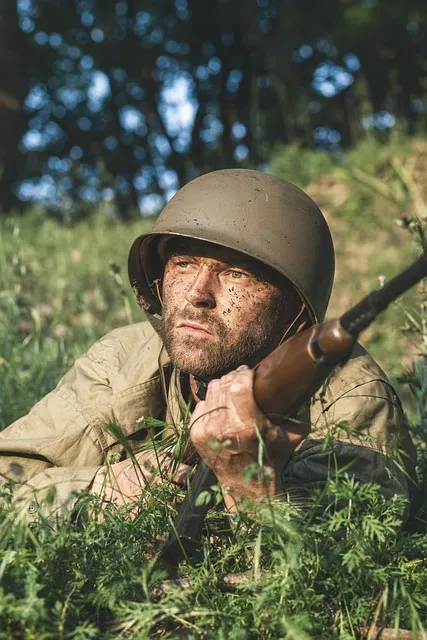
Shay draws heavily on Homer. In the Iliad, Achilles is not merely a warrior — his identity is constituted entirely by the warrior role, the warrior community, and the warrior code. His famous rage is not psychological dysfunction. It is the proper response to betrayal: the betrayal of the sacred compact between a man and his comrades, a man and his commander, a man and the meaning-structure that justifies the extreme demands of combat service.
What Shay observed in Vietnam veterans was structurally identical to what Homer described three thousand years ago, and it is very likely structurally identical to what you, specifically, are carrying too. These men had not simply experienced traumatic events. They had been betrayed. By commanders who violated the warrior code. By a society that did not honor what they had done. By a transition that asked them to step from a world of profound meaning and total commitment into a world of trivial concerns and casual relationships, with no acknowledgment of what had been lost in the crossing. You may be carrying a version of that same betrayal right now, whether or not you’ve ever put a name to it.
The identity war builds in you has several specific features. First: radical dependence on your unit. In combat, your life depends on the people beside you, and theirs on you, in the most literal sense possible. This creates bonds of a depth and intensity almost no civilian relationship can approach. You have read the other person at their worst and their best. You have held them up and been held up by them. Your trust wasn’t earned slowly through social accumulation. It was forged immediately, in conditions that reveal character without the possibility of concealment.
Second: extreme competence under extreme pressure. You were trained to perform at the highest level in the worst conditions, and that training is still in you. The satisfaction of that competence — doing hard things well when it matters most — is among the most powerful experiences a human being can have. There is nothing in civilian professional life that fully replicates the specific feedback of knowing your judgment and execution under real stakes produced the result you needed.
Third: absolute clarity of purpose. In combat, your mission was clear. Your stakes were clear. Your hierarchy was clear. There’s no ambiguity about whether what you’re doing matters. The morning brief tells you what needs to happen. Your job is to make it happen. That simplicity — demanding, yes, but simple — is something the civilian workplace, with its politics and ambiguity and competing priorities and performance-review theater, cannot reproduce for you.
Sebastian Junger spent significant time embedded with combat units in Afghanistan, and his book Tribe is the most compelling popular account of the exact problem you’re living through right now. His argument: combat units approximate the conditions of the small tribal groups human beings evolved in. You evolved in groups of roughly a hundred and fifty people, in conditions of mutual dependence, shared danger, and clear collective purpose. The modern Western civilian world offers you almost none of these conditions. Junger’s argument is not that you’re necessarily struggling with what you experienced in war. Many of you are struggling with the loss of what war gave you: the tribe, the purpose, the belonging, the sense of being fully alive and fully necessary.
This reframing matters enormously to you, because it has radical implications for how you understand your own return. If the problem is primarily one of deprivation — the loss of something valuable — the solution is not treatment of pathology. It’s reconstruction of the conditions. If the problem is primarily one of identity discontinuity — who am I when I am no longer a soldier? — the solution is not medication or talk about past events. It’s active identity work about your present and your future.
The civilian world does not have a category for what war makes of you. It has PTSD diagnoses and transition programs and hiring preferences and free coffee on Veterans Day. What it does not have is a genuine framework for integrating you. You’ve been through something that changes you in ways that are not pathological, not traumatic in the clinical sense, but genuinely different from anything the civilian world produces on its own. You are not a civilian who has been away for a few years. You are a different kind of person occupying civilian space, with a different relationship to risk, to authority, to human connection, and to what constitutes a problem worth solving. That difference is not a defect in you. It is the product of formation — formation that extreme and that comprehensive does not simply reverse when the uniform comes off.
James and the Cereal Aisle
Stay with James for a moment longer, because the specifics of his story are going to map onto your own more closely than you expect.
James was twenty-nine when he came home from his third deployment. He’d been an Army Ranger. Three combat tours, two Silver Stars, a CIB. By any external measure, extraordinarily accomplished. Also, within three months of returning, unemployed, drinking too much, and sleeping on his brother’s couch after his marriage collapsed.
His first weeks home were consistent with what Junger describes and what Shay documents clinically: a pervasive sense of unreality, of the civilian world being somehow less real than the world he’d come from. The stakes felt different. Not lowered. Absent. Everything here felt like it mattered a little, he’d say. Nothing felt like it mattered enough. He sat at dinner parties listening to people argue about traffic, restaurant choices, television shows, and felt a contempt he wasn’t proud of but couldn’t suppress. He couldn’t explain what he’d seen and done in ways that translated. The distance between his experience and everyone else’s felt unbridgeable. You may know that exact distance, even if your own version of it looks nothing like his on the surface.
James’s first civilian job was in logistics management, a natural fit given his background — the kind of job you may already be sitting in yourself, competent and slowly suffocating. He was competent, maybe over-qualified. He lasted four months. The problem wasn’t the work. The problem was the environment. The slow pace of civilian decision-making was maddening. The politics — the jockeying for credit, the passive-aggressive emails, the meetings about meetings — felt obscene against his reference frame. He quit abruptly, without a plan. His supervisor, a man who had never made a decision with life-and-death consequences in his life, told James on his way out that he had “difficulty collaborating.” James did not respond. He understood the supervisor wasn’t wrong. He also understood the supervisor had no frame for what collaboration had meant in every environment James had previously inhabited.
This pattern — exceptional military performer, failed civilian transition, mounting domestic and social problems — is not unusual, and it may already be your pattern exactly, down to the details. The Veterans Administration reports that roughly 44% of post-9/11 veterans have difficulty with the civilian work transition. Suicide rates among veterans run 1.5 times the civilian rate. The gap is widest not in combat veterans with PTSD diagnoses, but in recently transitioned veterans aged eighteen to thirty-four who are struggling with the structural problem of who they are now. The problem is identity discontinuity. The solution is not a support group. It is a new identity architecture built on what war actually forged in you.
James spent two years between the Army and finding his footing, which may be longer or shorter than your own timeline turns out to be. Three jobs, two apartments, one relationship that ended badly. He drank more than he should have and eventually stopped. He never went looking for trauma processing, not because that work is wrong for the men who need it, but because what he had was not primarily a trauma problem. What he had was an identity problem: the person he was in the Army was real and capable and comprehensible, and the person he was being asked to become as a civilian was none of those things. Until he found work that translated his warrior identity into a civilian context where it was valued rather than managed, he was going to keep failing. That was the diagnosis. It was also the map, and it may be your map too.
The Odysseus Problem
You need this next part more than almost anything else in this hour, because it names the specific trap you may be standing in right now without a word for it.
Shay’s second book takes its frame from the Odyssey rather than the Iliad, and the shift matters to you. Achilles is a warrior who never comes home — he dies at Troy. Odysseus is the veteran who has to make the return, and Homer’s account of that journey is, Shay argues, the oldest and most psychologically accurate account of what your own return actually involves.
Odysseus’s journey home takes ten years, which should tell you something about your own timeline. He’s delayed not primarily by external obstacles but by his own character — his cunning, his self-reliance, his inability to trust, his tendency to deceive even the people trying to help him. These are warrior virtues that become liabilities in peacetime. The same qualities that kept him alive in Troy make him a difficult husband, father, and member of his own community. He is capable of extraordinary tenderness and extraordinary violence, often toward the same people. He cannot simply step back into domestic life, because the man who left for the war is not the man who came back — and neither are you.
Karl Marlantes grapples with this directly in What It Is Like to Go to War. Marlantes was a Marine officer in Vietnam, a Rhodes Scholar, eventually a novelist. His memoir on the experience of combat and its aftermath is one of the most honest documents about warrior identity ever written. His central argument: American society sends its young people to war without adequate psychological and spiritual preparation for what combat means, and receives them back without adequate ritual or acknowledgment of what combat does to them.
In many traditional warrior societies, those who had killed underwent ritual purification before re-entering the community, a step you were never offered. These weren’t superstitions. They were functional psychological processes. Formal acknowledgments that something had changed. That the returning warrior needed to be recognized, processed, and welcomed back in a way that honored both what had been done and what needed to be let go. The warrior returning from a raid in a traditional society did not simply travel home and try to care about the ordinary business of daily life. There was ceremony. There was acknowledgment. There was a formal transition from one state of being to another, witnessed by the community and conducted by its elders. Modern America offers you nothing equivalent. You fly commercial, walk through Walmart, try to care about traffic, and wonder why you can’t sleep.
Marlantes writes it plainly. “We have failed our warriors, and we have failed ourselves. We have not taken seriously what we are asking these young people to do on our behalf.”
“We have failed our warriors, and we have failed ourselves. We have not taken seriously what we are asking these young people to do on our behalf.” — Karl Marlantes, What It Is Like to Go to War
That failure begins before deployment, in the absence of honest preparation for the spiritual and psychological dimensions of killing. It’s completed on your return, in the absence of any communal acknowledgment of what you actually did and what you now need to reintegrate.
The Odyssey ends with Odysseus killing the suitors — a mass act of violence in his own home — and then, eventually, finding a version of peace, which is likely closer to what you can expect than any clean resolution you’ve been promised. Homer is honest about the difficulty of that ending. It isn’t a clean resolution. It’s a negotiated existence, full of tension and memory and the permanent mark of what he went through. Shay reads this not as tragic but as realistic: the returned warrior does not become the person who left. He becomes something new, something that carries both the civilian and the warrior, and the life he builds has to have room for both. The mistake is trying to leave the warrior at the terminal and walk out as if none of it happened. The warrior is not something you can store in a duffel bag. It goes home with you. The question is what kind of home you build to make room for it.
Maria and the Invisible War
If your service didn’t look like combat arms, stay with this one, because your version of the same collapse may be running underneath a very different résumé than James’s.
Take another veteran — call her Maria, and if your own service doesn’t look like combat arms, watch for yourself in her story rather than in James’s, because the mechanism underneath is the same one running in you. Thirty-four, an Army combat medic who served two tours in Iraq. She had never killed anyone, but she’d watched people die in ways that changed the texture of the world for her permanently. She’d performed battlefield triage. She’d made decisions, under fire, about who could be saved and who could not. She’d held the hands of men who were dying and watched their faces go from terrified to somewhere beyond terrified and then to still. She came home. She went to nursing school on the GI Bill. She tried to do the work she’d always been meant to do. The work was not what she expected.
Maria’s transition looks different from James’s on the surface but is structurally identical underneath, which matters to you regardless of which surface your own story wears. She was competent. She was careful. She burned out within three years — not from overwork, but from the disjunction between the environment where she’d learned what medicine could do and the environment where she was now practicing it. Hospital nursing was bureaucratic, risk-averse, and interpersonally political in ways that felt alien to her clinical experience. In Iraq, if a patient died, it was because the wound was unsurvivable. Here, patients sometimes died because someone forgot to update a form.
The contempt was back. The same contempt James felt at those dinner parties. The gap between the high-stakes clarity she’d trained for and the low-stakes bureaucracy she’d landed in. She felt like she was performing a lesser version of her own capabilities indefinitely, in a system that neither understood nor valued what she brought. She had performed at the absolute peak of medical capability under conditions hospital nursing would never approach, and she was now working inside a system whose primary concern seemed to be documentation compliance and interdepartmental politics. Every day she showed up, managed her contempt, got through it, went home, and wondered why she felt so hollow. If you’ve ever felt that exact hollowness after a day of doing work that mattered less than it should have, you already understand her.
Edward Tick has worked extensively with veterans and wrote War and the Soul. He argues that combat creates a fundamental transformation of your relationship with life and death — a transformation most civilian environments simply cannot accommodate. Tick advocates for a warrior model of integration. Not healing from war as a wound, but honoring war as a transformative experience that produced a different kind of person — one who may need different conditions and different roles than standard civilian life provides. If you’ve returned from war, you’ve been permanently altered at a level deeper than behavior or memory. You’ve been altered in your relationship with what is real. In combat, the realness of life and death is absolute. The stakes are literal. The consequences of error are irreversible. To return from that to a world where the stakes are symbolic, the consequences of error are manageable, and the realness of things is perpetually negotiable is a disorientation that no amount of standard treatment fully resolves. It requires a different kind of integration — a conscious reconstruction of meaning in a context that doesn’t naturally produce it for you.
For Maria, the turning point — the one available to you too — came when she stopped trying to fit her warrior experience into civilian nursing and started finding environments where that experience was an asset instead of an inconvenience — the same turn available to you, in whatever field you’re standing in. She moved to trauma surgery support, then to teaching in an emergency medicine program for military and first-responder contexts. The environment matched her calibration. The stakes were high enough that her precision and clarity under pressure were the primary professional virtues rather than bureaucratic liabilities. The people she worked with shared her reference frame. The change wasn’t therapeutic. It was environmental. She found her tribe.
The Tribal Psychology of Combat Units
Here is the part of your own experience that almost nobody around you will ever understand unless you explain it to them plainly.

Junger’s answer is rooted in evolutionary psychology and anthropology, and it explains something about your own life that no career counselor ever will. He cites data showing that during the London Blitz, rates of psychological breakdown in civilians actually fell. During the Siege of Sarajevo, rates of depression and suicide declined. In communities under sustained external threat, social cohesion increases, individual self-concern decreases, and people report higher levels of meaning and satisfaction, even as their circumstances are objectively worse. This looks paradoxical only if you assume comfort and safety are the primary drivers of human well-being. Junger argues connection, purpose, and belonging are primary, and that threat and adversity — by forcing cooperation and mutual dependence — create the conditions for those things in ways comfortable prosperity frequently does not.
The combat unit is the most extreme version of this dynamic for you. The bonds formed under fire are not romantic attachments or friendship as most civilians understand it. They’re closer to what Aristotle called the highest form of friendship — love based on virtue and mutual admiration, not utility or pleasure. You know what the man beside you is capable of at his worst and his best. You’ve seen him afraid and seen him courageous. You’ve been responsible for his life and he’s been responsible for yours. That knowledge creates a form of intimacy most people never experience and no civilian relationship easily replicates.
Bryan Wood, a Special Forces veteran whose memoir Tip of the Spear documents his service in Afghanistan, writes about coming home and realizing that none of his civilian relationships had the density of the ones he’d left behind — a realization you may already be living inside, whether or not you’ve said it out loud. Not his marriage. Not his friendships. He was surrounded by people who cared about him, and felt utterly alone. Alone was what he was in the only sense that mattered to him: without the men who had been through it with him, who knew what he was without his having to explain it. He describes sitting at a dinner table with his extended family, watching them talk about things entirely real to them — their jobs, their children’s schools, their vacation plans. He felt as if he were watching them from behind glass. Present. Not there. Not in the way that mattered.
This is the loss Junger argues sits at the center of your own re-entry struggle. Not primarily the trauma of what happened, though that’s real and has to be acknowledged. The loss of the tribe. The loss of the conditions that made you most alive. The loss of belonging to something fully real. And the specific cruelty of this loss is that it’s invisible to the civilian world around you. Your family sees a veteran who has come home. They expect relief, recovery, gratitude, normalcy. What they encounter instead is a person grieving a world they cannot see, whose loss they cannot validate because they never knew it existed. You are mourning in public without anyone knowing there is a funeral.
Junger’s prescription is straightforward but structurally difficult for you: find ways to re-create, in civilian life, the conditions war provided. Not the violence. The structure of belonging. Find communities where your contribution is necessary, where the bonds are genuine and earned, where there is a shared purpose that transcends individual advancement. These communities exist. They are harder to find and harder to build than at most points in human history, because modern Western life has systematically dismantled the institutional structures that generated them. Military units, religious communities, tight-knit neighborhoods, craft guilds, athletic teams — all of these, at their best, provide the tribal conditions Junger documents as essential to your psychological health. If you’re returning to a culture that has largely dismantled these structures, you’re not returning to civilization. You’re returning to a social desert after spending years in one of the most nutrient-dense social environments available to a human being.
What “Thank You for Your Service” Does
You have heard this phrase more times than you can count, and you already know, somewhere in you, that it has never once actually reached you.
I want to address this directly, because the phrase is so ubiquitous and so well-intentioned and so inadequate that its very ubiquity makes it worth examining for you. “Thank you for your service,” delivered by a stranger in an airport or at a checkout line, is not nothing. It’s a genuine expression of appreciation from a person who doesn’t know how else to express it. But it’s also, structurally, a way of closing a door rather than opening one. It’s a formula that lets the speaker discharge what feels like an obligation without engaging with the actual human being in front of them — you.
What would genuine acknowledgment look like for you? Shay has thought about this more carefully than almost anyone. It would mean taking seriously, at the societal level, that we asked young people to do something extreme. To kill. To watch people die. To operate in conditions of sustained threat and moral complexity. And that this extreme thing changes them in ways that require genuine reception on the far end. It would mean creating structures, not just programs but cultural structures. Structures that recognize you not as a broken person in need of treatment. As a changed person who returned from an experience most of society will never have — one that gave you capacities society has not yet figured out how to value.
Marlantes describes what he needed after Vietnam and did not receive, and it is very likely close to what you needed too: not pity, not a parade, not a formula. He needed someone to sit with him and witness what he had done. Not to absolve it. Not to condemn it. Just to acknowledge it as real, as having happened, as having changed something in both the world and in him. He needed the cultural equivalent of the ritual purification traditional warrior societies provided, and so, very likely, do you. An acknowledgment that what was done in war was done in war. That the person who did it is not the same person who will now live in peace. And that the crossing between those two states requires support and witness. He did not get it. He spent decades working through it alone. His conclusion, stated in his own book, is that the absence of that acknowledgment is not just a failure of gratitude. It is a failure of understanding. And the cost of that failure is not paid by the veteran alone. It is paid by the families and communities and organizations that must absorb the disintegration of people who were formed for a world that no longer exists and were given no help in building a world that does.
The Identity Translation Protocol
Everything up to now has been diagnosis. Here is what you actually do with it, starting today, in your own life.
Here is the framework built on a core premise: the goal of your transition is not to erase the warrior identity and replace it with a civilian one. The goal is to translate — to take what war forged in you and find or build the civilian contexts where those qualities are genuinely valuable and authentically expressed. This is not a metaphor. It is a strategic process with specific phases, and every one of them is yours to run.
Phase One: Inventory the Forge
Before you translate the identity, you have to understand what it contains. Most of you have never been asked to articulate — not for a resume, but for yourself — what military service actually did to your character. This is a structured self-assessment across three domains.
- Competencies forged. What can you do under pressure that most people cannot? This is not a resume list. This is honest capability assessment. Decision-making under ambiguity. Performance under physical and psychological stress. Leadership in conditions where the stakes of failure are severe. Logistics and coordination in complex, dynamic environments. Managing people who are afraid. Reading environments for threat. Executing without complete information. Maintaining standards when standards are the only thing between order and chaos. These are rare and valuable capacities in you. Name them specifically, for yourself, in your own words. Not in military jargon — in language that describes what you can actually do and when it matters to you.
- Values hardened. What do you know to be non-negotiable after what you’ve been through? Loyalty. Accountability. Competence. Honesty under pressure. The refusal to let someone else carry what you’re capable of carrying. The rejection of excuses when the mission requires execution. These are not platitudes for you — they are tested convictions. You know what happens when these things are absent, because you have seen it. Most civilian environments operate on softer versions of these values. You will feel the gap acutely. Name what you will not compromise, and understand you are looking for environments where you don’t have to.
- Losses sustained. What did you leave behind — relationships, civilian context, ordinary developmental milestones — during your service years? What civilian fluency did you not develop, because you were doing something else? Name these honestly, without shame. They are gaps to be filled, not deficits to be hidden. Everyone who has dedicated years to something, you included, has gaps in what they did not do during those years. The question is whether you acknowledge and address them, or carry them as hidden liabilities that cost you in ways you cannot diagnose.
Phase Two: Map the Civilian Terrain
- Emergency medicine and trauma care.
- Law enforcement, including federal law enforcement.
- Firefighting and hazmat operations.
- Expeditionary and crisis-response roles in international organizations.
- First-responder training and development.
- Senior-level security consulting.
- Entrepreneurship, where mission clarity, execution focus, and comfort with risk are a premium rather than a liability.
- Elite athletics coaching.
- Teaching and leadership development, particularly in challenging educational environments.

These environments include the following, and every one of them is worth your honest consideration.
None of these are perfect analogues for combat service. All of them are much closer to the environment you came from than a marketing department at a mid-size company in the suburbs. The cultures reward what the military built in you. The people in them share enough reference frame that the vocabulary of standards and execution and mission is not foreign to them. The work demands enough that your calibration is appropriate rather than excessive.
Phase Two also means understanding the civilian professional world well enough to move through it strategically — learning what you did not learn during your service years. The unwritten norms of civilian professional environments: how credit is allocated, how performance is evaluated, how authority is established and challenged, how conflict is managed without recourse to rank. These are learnable. They are also genuinely different from what military culture taught you, and pretending otherwise produces exactly the pattern James showed in his first civilian job. Know you are entering a different culture. Approach it as a new environment to be assessed, not an inferior environment to be endured.
Phase Three: Build the New Tribe
You have your inventory and your terrain. Now comes the piece that determines, more than either of those, whether the rest of your life actually works.
This is the phase most transition programs skip entirely, because it’s the hardest to systematize and the easiest to mistake for a social activity rather than a psychological necessity for you. The research is unambiguous: veteran re-entry success correlates more strongly with the quality of your social network than with any other single factor. Not your education level. Not your resume. Your social network — specifically whether it contains other people who understand what you went through and share your values.
Building the new tribe means two things for you. First: maintaining and nurturing your bonds with fellow veterans. Not only for nostalgia or mutual support, but because those relationships continue to be your most reliable source of the belonging and understanding civilian relationships cannot fully provide. If you cut ties with your military network to “move on” from military life, you are cutting yourself off from the most reliable source of the social nutrient you most need. Your bonds forged in service are not a past for you to leave behind. They are a resource for you to sustain and build on.
Second, and this is the harder half for most of you: deliberately building new civilian relationships with people whose character is close enough to the warrior character — in commitment, honesty, and genuine investment in something beyond themselves — that the gap is navigable for you. These people exist in your civilian life, whether or not you’ve found them yet. They are harder to find, because civilian life does not have the same character-sorting mechanisms military service provided. You have to build that selection process yourself. Look for people who do hard things voluntarily, who hold themselves to genuine standards, who say what they mean and do what they say, who are interested in something more than their own comfort. They are out there, waiting on you. Find them. The social environment you build in civilian life will determine, more than any other variable, how well the rest of your transition goes.
Phase Four: Perform the Translation
You have the tribe forming. Now you need the language that lets the rest of the civilian world actually receive what you bring them.
This phase is active articulation work for you — learning to describe what you are and what you bring, in language civilian employers and peers can actually receive. This is not dumbing it down. It’s translation. Take the same competency. I made life-and-death decisions for eleven people under sustained hostile fire in resource-constrained environments with incomplete information. It translates as: I have extensive experience leading small teams through high-stakes, ambiguous situations requiring rapid, high-quality decision-making with significant downside risk. Both are accurate. The second is receivable in a civilian context. The first is accurate but requires the listener to do translation work they may not be equipped to do. Do the translation work yourself. Not because your experience is less important, but because translation is the job of the person who speaks both languages, and that person is you.
The translation also includes a harder internal process: releasing the expectation that civilian environments will operate at the standards you’ve internalized. This is not lowering your standards. It’s adjusting your reference frame. The civilian project manager who sends a passive-aggressive email is not a coward. He is operating in an environment with completely different stakes and completely different norms. Your contempt is understandable. It’s also unproductive. Your work is to be fully yourself — high standards, mission focus, genuine accountability — while extending enough tolerance for civilian limitations that you can function in the environment without burning every bridge you cross. You are not there to reform civilian culture. You are there to find the work worth doing and do it as well as you are capable of. The people around you who don’t share your standards are not your problem. They are the context you’re operating in.
Phase Five: Honor the Continuity
Last phase, and it may be the one you need most, because it is the one your own instincts are most likely to get wrong.
The final phase is about the relationship between who you were in service and who you’re becoming in civilian life. The most damaging narrative many of you receive is that the goal is to “move on” from military service. To put it behind you. To integrate back into civilian life as if your service years were a temporary departure from your real identity. This is wrong. It is psychologically destructive to you. And it is a waste.
Your warrior identity does not need to be overcome. It needs to be honored, integrated, and built upon. This means creating explicit space in your civilian life for what service provided: physical challenge, meaningful community, clear purpose, genuine stakes. It means finding or building rituals that acknowledge what you did and who you became. It means being willing to talk about it — not to process trauma, but to integrate experience, to make sense of who you are now in relation to who you were then. The goal is not to leave the warrior behind. The goal is to carry the warrior forward into a life with both depth and dimension. The person you became in service is the most valuable thing you brought home. Building a civilian life that makes full use of him is the work of your return.
Derek and the Business Built on the Mission
Here is what the whole Protocol looks like when a man actually runs it end to end, in case you want to see where your own version of this could lead.
What Derek had done with those two years was thorough but had one critical gap you may share with him right now: he’d thoroughly mapped what he was leaving but hadn’t yet answered who he was going to be. You may find you’ve done the first half of that work and skipped the second. Clean resume, GI Bill lined up, networking contacts in the defense contractor space. He didn’t yet know whether he wanted to be a defense contractor, and the uncertainty was eating at him more than he let on at first. The defense contractor path was the obvious one: familiar culture, military-adjacent work, people who understood his vocabulary. But Derek had spent sixteen years doing something he believed in. The idea of spending the next thirty years doing something whose primary purpose was revenue generation, for a company he felt neutral about, was not something he could yet name as the problem. But it was already functioning as one.
He worked through the Identity Translation Protocol over twelve weeks, roughly the same span you should expect to give it yourself. The Phase One inventory was the most revelatory part for him. When he got to values hardened, he kept coming back to one thing: he could not work for a mission he didn’t believe in. In the Army, the mission — even when it was ambiguous or operationally flawed — was grounded in something he could believe in. Spending his days optimizing supply chains or managing contractors for defense programs he found ethically questionable was not going to work for him, regardless of the compensation.
Derek eventually started a company that provides leadership development training to municipal first-responder organizations — police, fire, EMT — proof that your own mission does not have to look anything like a defense contract to count, and proof that you get to define it yourself. The work connects directly to his core competencies. The clients share his value system. The stakes are high enough that his calibration is appropriate rather than excessive. The culture is close enough to military culture that his instincts are right rather than foreign. He found the tribe by building it. Three years in, he has twenty-two employees, twelve of them veterans. I don’t feel like I’m translating anymore, he says now. I feel like I’m continuing.
“I don’t feel like I’m translating anymore. I feel like I’m continuing.”
That is the goal of the Protocol for you too. Not adaptation. Continuation.
The Research on What Actually Works
You deserve to know what the data actually says, not just what feels true from inside your own transition.
Veteran transition research has identified specific variables that predict your successful civilian re-entry, and they are not the variables most transition programs prioritize. Resume writing, interview coaching, credential translation — these are useful but secondary. The primary predictors of successful re-entry, across multiple longitudinal studies, are social integration, purpose alignment, and what researchers call “identity congruence” — how well your sense of who you are matches the demands and values of your civilian environment.
David Segal and Mady Wechsler Segal, sociologists who have studied military families and transitions for decades at the University of Maryland, document three characteristics you will find in every veteran who successfully makes this transition — and you can check your own life against each one. They maintain meaningful connections to the veteran community rather than attempting to fully “civilianize.” They find civilian roles where military experience is genuinely valued rather than merely tolerated. And they have a clear narrative about who they are that integrates both their military and civilian identities rather than treating them as incompatible. That narrative matters directly to you. The Segals’ research shows something specific. Veterans who can articulate a coherent story — I was this, and it built this, and now I am doing this with it — show significantly better outcomes across health, relationships, and career. That’s true compared to veterans whose story is one of rupture rather than integration.
The research on peer mentorship in veteran transition is particularly strong for you. Programs that pair transitioning veterans with veterans who have successfully made the transition show substantially better outcomes than programs that provide information and services without a relational component. Not as patient and provider. As peer to peer, person to person. This is Junger’s tribe principle in applied form: the condition that most reliably supports your successful re-entry is belonging, and belonging requires people — specifically people who share enough reference frame to provide genuine understanding rather than well-meaning sympathy.
The Combat Veteran and Physical Challenge
There is one more piece of you that the transition quietly takes, and you need to protect it deliberately or you will lose it without noticing.
One dimension of your identity that civilian transition often strips away, and that demands specific attention, is the physical. Military service, and combat service especially, is physically demanding in ways civilian professional life almost never is. The body you trained and used at high intensity — that learned to perform under extreme physical stress, that was shaped by the specific demands of the mission — does not simply adjust to a sedentary desk job. It adapts, which is to say it deteriorates, which is to say a significant component of the man who returned begins to disappear.
Research on veteran physical health post-transition documents a consistent pattern: veterans who maintain high levels of physical activity after separation show significantly better outcomes across depression, anxiety, substance use, and overall functioning than veterans who do not. This is not simply a correlation between health-conscious people and good outcomes. The mechanism is specifically the maintenance of a physical identity that was central to your warrior self. If you stop training, you are not just getting less fit. You are losing a daily affirmation of who you are, a reliable source of the challenge-and-competence cycle that produced meaning during your service, and a community of people engaged in a similar physical pursuit. All of these losses compound on each other.
The prescription for you is direct: maintain a physically demanding training practice after separation, one with genuine standards, genuine challenge, and ideally a community component. This is not optional. It is one of the most evidence-supported interventions available for your re-entry, it costs nothing but time and effort, and it addresses the biological, psychological, and social dimensions of the loss your transition produces, all at once. The gym, the running group, the martial arts gym, the competitive sports team — these are not hobbies for you. They are infrastructure.
What Society Owes and What It Doesn’t
You deserve to hear this said plainly, and then you deserve to hear the harder truth that follows it.
This conversation would be incomplete without addressing the social dimension directly, for you. You are owed something by the society that sent you to war. Shay argues this compellingly, and he is right. The failure to provide genuine reintegration support — ritual, acknowledgment, community, and practical assistance — is a moral failure of American society toward the people it has asked to do the most extreme things on its behalf.
“Thank you for your service,” delivered by a stranger in an airport, is not acknowledgment. It’s a social formula that lets the civilian feel they’ve discharged their obligation without having to do anything real. Real acknowledgment would look like this. Taking seriously your experience as experience with moral and psychological weight. Creating genuine transition infrastructure that addresses your identity, not just your employment. Building communities where veterans are not simply asked to re-enter civilian life but are honored as having brought something back that civilian society needs. And being honest, collectively, about what we ask you to do and what we owe you in return.
But this acknowledgment, wherever it eventually comes from, cannot be waited for by you. The veterans who rebuild their lives do not wait for society to catch up to its obligations. They take responsibility for their own transition with the same mission focus they brought to everything else. The Identity Translation Protocol does not depend on societal acknowledgment. It is something you do for yourself, with the resources you have, because you are the person who survived what you survived and you are not done yet.
The same society that sent you also gave you something real. Not just the equipment and the training — the formation. The character. The standards. The knowledge of what you are capable of under conditions most people never encounter. That is yours, permanently. Nobody can take it back from you. Your transition is not about recovering what was lost. It is about applying what was already built in you, right now, today. The question is where, and how, and with whom. Those are answerable questions. They require work, honesty, and time. They do not require you to wait for the culture to become something it currently is not.
James, who stood frozen in the cereal aisle, who lost his first civilian job, who felt lost for two years, is now a program director for a veteran transition organization in North Carolina. He works with recently returned veterans on exactly the identity translation work nobody did with him.
“The guys who struggle aren’t weak. They’re just unmoored. They’ve got everything they need. They just don’t know what to do with it in this world.”
He knows, now. He helps them find out.
The Long Arc of Identity
Before we close, you need to understand the actual timeline you are working with, because it is longer than you have probably been told.

But getting them wrong is not a verdict on you. James took two years to find his footing. Maria took several more. Derek spent two years preparing and still had a gap at the center of his plan. Your own identity work is iterative, for you specifically. You build something, you test it against your own reality, you adjust. The Protocol is not a one-time intervention for you. It is a framework for the ongoing construction of a life that honors what you became without imprisoning you inside who you were. The warrior in you is a beginning for you, not an end for you. Carry it forward yourself. Find the contexts where it actually serves your own life. Build the communities that recognize it in you, specifically. Tell the story that integrates it for you. Your return is not a subtraction. It is a continuation. Make sure your continuation goes somewhere worth your going, somewhere that is actually yours.
What the Research Doesn’t Say About You
You might be wondering, if you have genuine PTSD, whether any of this framework overlooks what you actually need. It doesn’t, and the distinction matters. PTSD is real. Its neurobiological basis is well established, and it is a distinct condition from the identity discontinuity most veterans carry. Nothing here argues against taking a genuine clinical condition seriously as a genuine clinical condition. What this framework argues against is the conflation of the universal veteran experience with pathology. Most combat veterans do not have clinical PTSD. Most are struggling with something better described as identity discontinuity and structural deprivation — the loss of purpose, tribe, and clarity — than as disorder. Treating identity discontinuity as if it were PTSD is both inaccurate and counterproductive for you: it medicalizes a normative response to an abnormal situation, and that can actually delay the identity work that is your genuine path forward. The two are not the same problem, and they do not have the same solution. Know which one is actually yours.
You might be wondering how this applies if you’re a woman, since the warrior narrative so often gets told as if it only happened to men. The identity described here isn’t gendered. It’s functional. It describes what sustained, high-stakes military service does to the character of the person who undergoes it, regardless of gender. Female combat veterans face additional layers most male veterans don’t. A military culture that has historically been ambivalent about their full inclusion. A civilian culture that often does not recognize or honor their service the way it does men’s. And the frequent experience of being doubly invisible — not recognized as a veteran by civilians, not fully accepted as a warrior by some military peers. Maria’s story in this episode is drawn specifically from a female veteran’s experience to acknowledge exactly this. The Identity Translation Protocol applies to you without modification. The external conditions may be harder for you. The internal work is the same.
You might be wondering, if you were National Guard or Reserve rather than career military, whether the identity challenge is as severe for you. The severity of your identity challenge correlates directly with the depth of your immersion in military culture and the length and intensity of your combat exposure, not with whether your service was active duty or reserve. A National Guard soldier who deployed to a combat zone multiple times faces many of the same reintegration challenges as an active-duty peer. There’s an added complexity, too: returning to the same civilian job, community, and relationships that existed before deployment. That can make the transition harder, because the gap between your two worlds is more compressed and visible. Your identity dislocation is not a function of how your service was technically structured. It’s a function of what your service required and what it built in you.
You might be wondering, if you simply want a quiet life, whether that means you’ve failed at identity translation. You haven’t. The goal of Phase Two is not to find the most extreme civilian environment available to you. It’s to find an environment where your calibration — your sense of what constitutes meaningful stakes — allows you to be genuinely engaged rather than perpetually contemptuous. For some of you that calibration requires a high-stakes professional environment. For others, a different kind of meaning — raising a family, building something in a community, teaching, creating — will be sufficient and genuine. This protocol does not prescribe an outcome for you. It gives you a process for honest assessment of what you need to feel fully alive in civilian life. What that looks like for you is yours to determine. What it cannot look like is performing in an environment where nothing feels real and nothing matters and the gap between your reference frame and the world you’re in feels permanent and unbridgeable. That is the condition to diagnose and correct in yourself. How you correct it is your territory.
You might be wondering, if you’ve been out for ten or fifteen years and feel like you’ve already missed the window for this work, whether it’s too late. It isn’t. Identity work does not have an expiration date. Say you’ve been out a decade and are still carrying the sense of being between worlds. Still feeling the contempt for civilian stakes. Still missing the tribe. Still aware you’re performing a version of yourself that is less than the whole. You are doing exactly the same work everyone else in this episode did. Just years later. The advantage of doing it later is that you have more of your own civilian experience to map and more information about what specifically isn’t working for you. The disadvantage is that you may have built your own civilian life — marriage, mortgage, career — that complicates the changes this work suggests for you. Neither should determine whether you do it. The only question is whether you’re willing to live the remaining decades as less than what you are, or whether you’re going to take this seriously now. There is no wrong time to start. There is only the choice to start or not.
You might be wondering how this applies if what you’re carrying isn’t just the transition itself but genuine guilt or shame about something you did or failed to do in combat — what researchers call moral injury. Moral injury is a distinct phenomenon from PTSD in you, though the two often co-occur in the same man. It’s the damage done when you participate in or witness actions that violate your own moral code, or when you fail to prevent such actions. Jonathan Shay argues it is one of the most underaddressed dimensions of the veteran experience. It cannot be addressed the same way you’d address a fear response to a threatening stimulus, because it isn’t one. It is a grief response to a violation of your own values. The path that has the most evidence behind it for moral injury is narrative in nature. You need to be able to tell the full story of what happened, including the parts that violate your own moral self-concept. That has to happen in a context of genuine witness, without premature absolution or condemnation. Marlantes’s account of his own process is the most honest one available of what this work actually looks like for a man living through it. It took decades. It required extensive writing. It was never fully resolved in a clinical sense, but it was integrated in a human one. It is not a program with a start and end date. It is a lifetime’s work of making meaning from the most morally complex experiences a human being can have. This work does not pretend to resolve that for you or hand you an answer. Its resolution, such as it is, is personal to you, partial for you, ongoing for you, and belongs to you alone.
The Specific Failure Modes to Watch For
Your veteran transition fails in recognizable patterns. Understanding them in advance is not pessimism for you. It’s reconnaissance. Four modes to watch for in yourself, in order.
- Full civilianization. Trying to leave the warrior identity entirely behind, as if it were a costume you could simply take off.
- Permanent veteran identity. Defining yourself exclusively by your service, treating everything since as a decline narrative rather than a continuation.
- Isolation. Withdrawing from family, from your former military community, and from any new community, because building bridges feels too costly.
- The low-stakes trap. Settling into civilian work that asks nothing of your highest capacities, and slowly forgetting those capacities exist.
Here is what each one actually looks like in a life, and why it fails you specifically.
The first is what Junger would call the full civilianization attempt, and you may already recognize it in yourself — you decide, consciously or unconsciously, that the most efficient path forward is to leave the military identity entirely behind. Cut the old friendships. Stop talking about service. Dress like a civilian, act like a civilian, pretend to be a civilian. This approach has the appeal of simplicity for you: one identity, one context, no translation required. It fails because your warrior identity is not a costume. It is not adopted behavior. It is a fundamental reorientation of your values, reflexes, and relational style that occurred through years of formation under genuine pressure. You cannot take it off. If you try, you have not moved on. You have created a split. Performing the civilian role in the foreground while your warrior identity runs as a background process. Increasingly disconnected from the life you’re living. Increasingly a source of interior friction with no outlet and no acknowledgment.
The second common failure mode, and the opposite trap, is the permanent veteran identity, where you define yourself exclusively by your service, where the years in uniform are the only real years and everything since is a decline narrative. This is equally limiting for you, and equally false. Your warrior identity is a foundation for you, not a ceiling on you. If you can only return to it and never build on it, you, specifically, have stopped becoming. You have made the past the destination rather than the origin. The work of your return is construction, not preservation. You are not maintaining a monument. You are building something new on a very strong foundation.
The third failure mode is isolation. You withdraw — from family, from your former military community, from any new community — because the work of bridging feels too costly or too uncertain. Isolation is the path of least immediate discomfort and greatest long-term damage for you. Every piece of research on veteran outcomes agrees: social connection is the primary protective factor. Not employment. Not financial stability, though that matters too. The quality and quantity of genuine human connection. If you are isolated, you are vulnerable regardless of what other support structures you have. If you are genuinely connected, you are resilient regardless of what other challenges you face. This is not complicated for you to understand. It is hard for you to do. Building genuine connection in civilian life when your reference frame is so different from the people around you is genuinely hard for you. It is also the most important work of your transition.
The fourth failure mode is the low-stakes trap — you find civilian work you can do easily and never seek work that demands what you’re actually capable of. This produces its own kind of comfort-cage: you calibrate to a life that requires nothing of your highest capacities, and you slowly forget those capacities exist. If you are coasting in an under-demanding job, you are not recovering. You are atrophying. The formation that occurred during your service was shaped by extreme demand. Maintaining the capacities it produced requires sustained demand from you, even if the demand is of a different kind. Find work that is hard enough. The easiest thing available to you is not the right target.
Practical Resources and Entry Points
The veteran transition landscape is uneven for you. There are genuine resources, and there are programs that exist primarily to make funders feel good. Sorting them requires the same clear-eyed assessment you’d bring to any mission planning. Four places worth your attention.
- The Institute for Veterans and Military Families at Syracuse University, for entrepreneurship research and programs.
- Team Red White and Blue and Mission Continues, for the operational, activity-based communities that address the tribe problem directly.
- American Corporate Partners, for structured mentorship with corporate professionals.
- Junger’s Tribe, Shay’s Odysseus in America, and Marlantes’s What It Is Like to Go to War, for the framework itself.
Here is what makes each one worth your time.
The Institute for Veterans and Military Families at Syracuse University has produced some of the most rigorous research on veteran entrepreneurship and transition, and their programs for veteran entrepreneurs are among the most credible resources you will find. Entrepreneurship is a particularly strong fit for veterans because it requires exactly the mission-focus, execution-orientation, comfort with uncertainty, and leadership-under-pressure your service developed in you. The rate of veteran entrepreneurship significantly exceeds the civilian population rate, and that is not a coincidence.
Team Red White and Blue and Mission Continues are two organizations that approach the tribe problem directly, creating physical and service-oriented communities where you can engage alongside both fellow veterans and civilians in challenging, meaningful work. These are not sit-in-a-circle groups. They are operational communities that happen to produce real benefits, because they restore the conditions Junger identifies as essential to your well-being. The distinction matters to you: if you would never walk into a support group, you might well walk into a community built around genuine activity and shared challenge.
American Corporate Partners pairs veteran mentees with corporate mentors from major companies for a year of professional development — but more importantly for you, for the relationship and the civilian professional context-building most veterans lack. The outcomes data is strong. The relationship is the active ingredient, not the paperwork.
Finally, if any of this landed for you: read Junger’s Tribe. Read Shay’s Odysseus in America. Read Marlantes’s What It Is Like to Go to War. Not as self-help. As acknowledgment — the acknowledgment a society that sent you to do this should have given you and largely did not. These books cannot substitute for the community, the tribe, the recognition Shay and Marlantes and Junger all argue you needed. But they can give you the framework for understanding what you experienced and what you actually need, which is the first step toward building it yourself. The building is on you. The tools are available to you now.
Closing: The Return Is a Continuation
You are not a civilian who spent some years away. You are a different kind of man now, occupying civilian space, carrying a formation most of the people around you cannot see and would not recognize if they did. That is not a defect in you. It is the truth of what happened to you, and it is not going away.
The identity that war built in you does not need to be erased, apologized for, or waited out. It needs to be inventoried, translated, and carried forward into a life that has room for both halves of who you are. James found that room in the work he now does with other veterans. Maria found it in a classroom built for people who share her calibration. Derek found it, or built it, in a company that lets him keep believing in the mission. Your room will look like none of theirs. It will still be your own, and your own alone, to build. Your name on it. Your door to enter.
Start with your own inventory, yours specifically, not anyone else’s. Name what war forged in you honestly, without shame and without inflation. Map your own civilian terrain, where that forging has real value to you. Build your own tribe deliberately, because it will not build itself for you, ever. Do your own translation work yourself, because nobody else can do it for you, ever. And honor the continuity — the warrior does not need to be left at the terminal. He needs a home in you. Build him one, starting today.
Your return is not a subtraction from who you were. It is a continuation of who you, specifically, are becoming. Make sure your continuation goes somewhere worth your going, somewhere that is actually yours.
Editorial StandardsCorrectionsMedical DisclaimerAbout Our ContentAffiliate DisclosureSite Map