
The app cost $4.99. Breathing circle that expanded and contracted, a soft chime on every count, a streak tracker so the habit felt like it was building toward something. Marcus downloaded it on a Tuesday night after his third panic attack in two weeks — the kind where the heart does something that doesn’t feel like a heart, and you end up Googling “heart attack vs panic attack” at 11 PM, which, as coping strategies go, ranks somewhere just above pouring gasoline on a campfire. He used the app for six weeks. Breathed the boxes faithfully: four counts in, four counts hold, four counts out, four counts hold. Streak hit 38 days. Then, on a Wednesday morning in a conference room on the fourteenth floor, with eight people waiting for him to start a presentation he’d given a hundred times, his hands started shaking, his chest locked up, and the only coherent thought available was: I can’t breathe. I need the app. The app is in my pocket. I cannot reach for my phone right now. He got through the presentation — the way a person gets through things when the nervous system has decided the room is a warzone. White-knuckling it. Dissociating slightly. Losing the thread twice. Spending the drive home convinced he was losing his mind.
He wasn’t losing his mind. He was using a bucket to fix a broken pipe. Nobody had told him about the pipe.
The Bucket and the Pipe: What Box Breathing Actually Does
 Box breathing works. That’s not up for debate here. Physiologically, it does exactly what it claims: engages the parasympathetic nervous system, activates the vagus nerve, reduces heart rate variability in the short term, and shifts the autonomic state from sympathetic dominance (fight-or-flight) toward parasympathetic dominance (rest-and-digest). The mechanism is real. The research is legitimate. Stephen Porges’ Polyvagal Theory — first published in Psychophysiology in 1995 — established the vagal pathway clearly, and every breathing intervention using extended exhales or deliberate pacing is correctly using that pathway.
So the breathing circle in the app isn’t a scam. It genuinely lowers activation — for roughly the duration of the practice, sometimes a few minutes past it. This is the bucket. The bucket works. Water levels drop. Relief lasts eleven minutes, then the tightness comes back, the jaw re-clenches, and the flood is back where it started.
The pipe — the thing the bucket never touches — is the nervous system architecture generating the activation in the first place. The body isn’t malfunctioning randomly when a man panics in a conference room. It’s doing exactly what it was trained to do, probably starting years or decades back, in an environment that genuinely required that level of threat response at the time. The amygdala doesn’t know the conference room isn’t a childhood kitchen. It filed a pattern. It runs the pattern. And four counts in, four counts hold doesn’t reach the amygdala at the level where the pattern is stored. It overrides the output temporarily. The moment the override lifts, the pattern reasserts itself.
Which is why Marcus got to day 38 and still fell apart in the conference room. The app was managing a symptom, daily, with real skill. The pipe kept gushing the entire time.
The Activation Ceiling: Why Chronic Anxiety Keeps Its Floor
Call it the Activation Ceiling, and once the concept is on the table, the breathing exercise failure makes complete sense. Every nervous system operates within a window — a range between low arousal (calm, rested, present) and high arousal (activated, alert, mobilized). The window isn’t fixed. It expands or contracts based on accumulated experience, biology, and what a person does when activation rises.
The problem with chronic anxiety isn’t that the ceiling sits too low. The problem is the floor sits too high. Baseline arousal — the level a person returns to after the breathing exercise, after the meditation, after the walk — is already elevated. So when something activates further, even something small, the total quickly exceeds the manageable range. Not starting from calm. Starting from tense, stacking a stressor on top, and arriving at overwhelmed before the day has properly begun.
Breathing exercises don’t lower the floor. They temporarily suppress the reading on the gauge while the boiler keeps running underneath. The floor stays elevated. And because the floor stays elevated, the next spike — the traffic, the email, the Tuesday conference room — hits the ceiling faster than it should, and the breathing app turns into an emergency tool needed constantly instead of occasionally.
Lowering the floor is different work entirely. It’s the kind of work that actually rewrites the prediction the nervous system is running — the embedded expectation that the world is threatening, that discomfort is dangerous, that activation requires immediate management. That prediction got written in experience. It can only get rewritten in experience. Not four counts at a time. In accumulated deposits of survived the discomfort without being rescued.
Box Breathing Wont: What The Evidence Reveals

A 2017 meta-analysis in Frontiers in Human Neuroscience by Zaccaro and colleagues reviewed the peer-reviewed literature on slow breathing practices across twelve studies. The consistent finding: slow paced breathing (around six breaths per minute) reliably increases heart rate variability and shifts autonomic balance toward parasympathetic. Measurable during and shortly after practice. What the researchers did not find was evidence that regular breathing practice permanently altered baseline autonomic tone in anxious populations. Acute effects: solid. Long-term structural change: thin.
Compare that to the research on physical training and nervous system adaptation. A 2010 study in Psychoneuroendocrinology by Puterman and colleagues found that regular vigorous exercise attenuated cortisol reactivity to psychosocial stressors — not just during exercise, but at rest, at baseline, at three-month follow-up. The training was rewiring the stress response at the system level, not overriding it moment to moment. The difference is fundamental: exercise changes the prediction the body makes about stress. Breathing changes the state the body is currently in.
Bessel van der Kolk’s work at Boston University, documented in The Body Keeps the Score (2014) and numerous prior publications, established something the breathing-first approach misses entirely: trauma and chronic anxiety are stored in the body as somatic patterns, not as cognitive narratives. The tightness in the chest during the presentation isn’t a thought waiting to be reframed. It’s a physical pattern requiring a physical intervention to dislodge — one operating at the pattern, not at the activation the pattern is producing.
Van der Kolk’s clinical research consistently found that body-based interventions — yoga, trauma-sensitive movement, EMDR — produced more durable outcomes in anxious populations than cognitive or breathwork approaches alone. The breath is a gateway to the body. Walking through a gateway is not the same thing as renovating the building on the other side.
And then the habituation research. Joseph LeDoux at New York University, one of the foremost researchers on fear memory and the amygdala, has published extensively on how fear responses get extinguished. The mechanism is not suppression — not breathing through the activation until it stops. The mechanism is exposure: staying in the presence of the feared stimulus until the amygdala updates its prediction. In LeDoux’s 2015 work in Neuron, he was explicit: avoidance — including the behavioral avoidance that involves managing activation before it peaks — prevents extinction. The amygdala needs to run the fear response to completion to learn the catastrophe doesn’t materialize. Breathe the way out of the activation before it peaks, and the very process that would have taught the nervous system the activation is safe gets interrupted. The relief is real. The learning doesn’t happen.
The Shame Spiral Breathing Exercises Create
There’s a secondary cost to the breathwork-first approach that almost nobody names, and in clinical terms it may be more damaging than the original anxiety. Call it the Tool Shame Loop. Marcus ran it for six weeks before he understood what was happening to him.
The loop works like this: learn a technique. The technique works in low-stakes conditions — alone, at home, before bed. Confidence builds. It becomes the solution, the whole answer. Then a high-stakes moment arrives, the one the activation was always pointing at, and the technique fails. Not because the technique is broken. Because high-stakes activation produces cortisol levels and sympathetic drive that override conscious breathing patterns. The prefrontal cortex — the part that executes the technique — goes partially offline when activation is high enough. Literally cannot breathe correctly at the exact moment it matters most, and the harder the trying, the more the focus narrows onto the failure, and the activation climbs.
Then comes the secondary spiral. Everything was done right. Practiced. Built the streak. Followed the instructions exactly. Failed anyway. What does that make a person? The logic the anxious mind produces in that gap is devastating: If even this doesn’t work, something is more broken than I thought. Other people can handle this. I can’t even breathe correctly.
That narrative — too broken for the basic fixes to work — isn’t just painful. It elevates the baseline. It confirms the threat prediction the nervous system was already running. The breathing exercise that was supposed to lower the floor raises it instead, because now there’s a new data point supporting the belief that the nervous system is defective and beyond repair.
The tool failure was never about the person using it. It was about the scale mismatch between the tool and the task. Nobody expects a hammer to fix a circuit board. Stop expecting a breathing pattern to fix a nervous system calibrated to threat by years of accumulated experience. The scale is wrong. That’s information about the approach, not a verdict on the person.
Where Breathing Exercises Actually Belong
This is not an argument for throwing out the app. It’s an argument for putting it in its correct place — a specific, narrow, situational role — rather than using it as the primary architecture of a mental health strategy.
Acute activation with a clear external trigger. Walking into a high-stakes meeting in four minutes. Heart rate elevated, thoughts scattering, and the prefrontal cortex needs to be back online in the next 240 seconds. Ninety seconds of extended-exhale breathing — inhale four, exhale eight — reduces heart rate, shifts autonomic balance enough to restore partial prefrontal access, and gets a person through the door in a better state than they’d otherwise be in. Legitimate, targeted deployment of the tool. The activation has a known cause. The duration is short. The breathing is a bridge from a worse state to a functional one, not a substitute for structural work. Use it here. It belongs here.
Environmental transitions. Moving from work mode to home mode. From conflict to rest. From high stimulation to sleep. Three to five minutes of deliberate breathing in the car before walking through the front door functions as a physiological transition signal — it tells the nervous system the operating environment has changed and a different mode is appropriate. Works because chronic activation isn’t being suppressed here. A ritual boundary between contexts is being created. The tool is functioning as a transition bridge, not as a coping mechanism for structural dysregulation.
As a complement to a real foundation. When the floor is genuinely low — baseline arousal calm, the body carrying physical capacity from regular training, the relational environment providing safety — a few minutes of breathwork handles occasional spikes with elegance. This is what peak performers actually do. They don’t use breathwork because they’re anxious. They use it as fine-tuning on top of a nervous system that’s already well-regulated at the structural level. The sequence matters: foundation first, technique second. Run the sequence in reverse — technique first, foundation never — and the result is day 38 of a streak, standing in a conference room, shaking.
The Three Foundations That Actually Lower the Floor
If breathing exercises are the bucket, these are the pipe repair. They don’t feel as immediately satisfying. They take months, not minutes. No streak trackers. But they actually change the architecture.
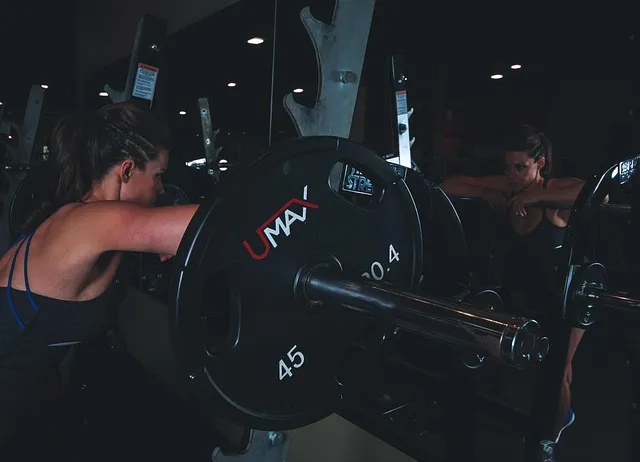
Physical load. Structured physical training is the most underutilized intervention for chronic anxiety in existence, and the mechanism isn’t the one most people assume. Not about endorphins. About controlled exposure to physiological stress. Lift heavy, run sprint intervals, take cold showers, and the body produces the same physiological signature as anxiety — elevated heart rate, elevated cortisol, sympathetic activation, the same tightness in the chest. And then it stops. Recovery happens. The body does what it’s designed to do: it rises, and it returns. Every session that takes a person into high activation and lets them come back is a deposit in the Activation Ceiling account. Over months, the nervous system updates its prediction: this level of activation is survivable. Known because it has been survived. Repeatedly.
A 2018 meta-analysis in JAMA Psychiatry by Stubbs and colleagues, covering 33 randomized controlled trials and over 1,800 participants, found that exercise produced large effect sizes for anxiety reduction — larger than several pharmaceutical interventions — with effects persisting at follow-up assessments. The mechanism wasn’t mood improvement. It was autonomic nervous system recalibration at the structural level. The floor drops because the body has learned, through repeated physical evidence, that high arousal isn’t dangerous.
Relational safety. The nervous system is a social organ. Porges’ Polyvagal Theory is unambiguous about this: the ventral vagal state — the highest level of the parasympathetic system, associated with genuine rest, social engagement, and felt safety — cannot be accessed alone. It requires co-regulation: another nervous system, expressing safety, in proximity. Not a therapy-speak concept. Hard neuroscience. The myelinated vagal pathways regulating the highest, most sophisticated social engagement behaviors are activated by cues from other humans — facial expression, vocal prosody, eye contact, presence.
When the primary relationships in a person’s life are sources of threat rather than co-regulation, no amount of breathing counteracts the effect. The threat signal from a chronic relational environment runs continuously at the autonomic level, and a five-minute breathing practice cannot override a twenty-four-hour relational signal. Which means investing in relationships where vulnerability meets safety — where being seen activated doesn’t chase the other person off — is structural work on the floor, not decoration on top of it.
Nervous system literacy. The ability to observe activation without immediately managing it. This is the hardest of the three, and the most structural. Most people in chronic anxiety have a binary relationship with activation: either suppressed (the technique working) or overwhelming (the technique failing). The middle ground never developed — the capacity to feel activation without the feeling becoming an emergency. That middle ground gets built through repeated exposure: feeling the cortisol rise, naming it without interpreting it, staying present long enough to discover the wave peaks and falls on its own.
The overthinking pattern and the anxiety pattern share the same root: a nervous system that has learned its own outputs are dangerous, and the response to that learning is emergency management. Literacy means learning the outputs are not dangerous. Spending time in the activation without reaching for the bucket — not because it doesn’t feel terrible, but because tolerating the terrible is how the prediction updates.
The Staying Protocol: What to Do When the Wave Comes
-
Recognize the activation early. Before the chest locks, before the thoughts scatter, there are precursors — a tightening in the belly, a shift in breathing tempo, a subtle tension in the jaw or shoulders. Start noticing these. Not as warning signs to be suppressed, but as the opening notes of a pattern being observed. The earlier the catch, the more capacity there is to stay present with it rather than react. Keep a simple log for one week: where does activation start in the body, and what’s the earliest signal? Not journaling for its own sake. Nervous system cartography — learning the terrain before trying to work through it.
-
Name the sensation, not the interpretation. “My chest is tight” is an observation. “Something is wrong with me” is an interpretation. “My heart is beating fast” is an observation. “I’m going to embarrass myself” is an interpretation. The interpretation is where the secondary spiral begins — the layer of catastrophizing sitting on top of the physical sensation, amplifying it far past its actual signal. Train the habit of staying at the observation level: there is tightness in the chest. There is elevated heart rate. There is tension in the shoulders. Name the sensations without telling a story about what they mean. Harder than it sounds. The narrative layer is fast and automatic. Two minutes a day of observation-only, just noticing physical sensations without interpreting them, builds the habit over weeks.
-
Stay for ninety seconds before reaching for any tool. Joseph LeDoux’s extinction research is specific: the amygdala needs the fear response to run to its peak to update the prediction. The peak of an acute anxiety response typically occurs within sixty to ninety seconds of onset. Stay present — not distracted, not breathing-exercising, not reaching for the phone — for ninety seconds, and the activation will almost always peak and begin to fall on its own. The body has a built-in regulation mechanism. It’s been working since birth. It works even better without interference. Time it if needed. Ninety seconds on a watch is a long time when activated. It is also survivable. The first time that discovery lands — I stayed, the wave peaked, and I’m still here — is the first actual deposit in the Activation Ceiling account. The first piece of structural data that rewrites the prediction.
-
After the peak, choose the tool if needed. Once the activation has moved through its natural peak and begun to descend, a breathing technique is no longer competing with the amygdala’s active response. Nothing is being suppressed at that point. The recovery phase is being supported. Extended-exhale breathing (inhale four, exhale eight) now functions as acceleration of a process already underway rather than avoidance of a process that needs to complete. Correct sequencing: stay first, breathe second. Not breathe to avoid staying. The same tool, in the right order, produces a fundamentally different outcome.
-
Log the experience, not the emotion. After the event — not during, not hours later — write two lines: what happened in the body, and what happened next. “Chest tightened in the meeting. Peaked around minute two. Then dropped. I presented.” That’s the entry. Not a processing essay. Not an analysis of why this keeps happening. A data log. Thirty days of entries produces a record the nervous system does not currently believe: activation rises, activation falls, and the person survives every instance. That record, in a person’s own handwriting, becomes evidence against the prediction that activation is catastrophic. The most powerful anxiety intervention available, and it costs nothing and requires no app.
The Dependency Trap: How Tools Become Cages
Here’s a question worth sitting with: what happens to the anxiety when the tool isn’t available?
If the answer is “it gets worse,” anxiety isn’t the thing being managed anymore. Tool-absence anxiety is being managed on top of the original anxiety. The bucket has become load-bearing. And a bucket cannot be load-bearing — it was designed for emergencies, not foundations.
This is the dependency trap, and it’s more common than anyone in the wellness industry wants to acknowledge. The person who has meditated every morning for three years and can’t get through a stressful day without the morning sit hasn’t become less anxious. They’ve become anxious in a new way — conditionally functional. Good when conditions are met. Fragile when they aren’t. The opposite of resilience, which is the capacity to function across conditions, not just optimal ones.
The comfort culture problem runs deep here. An entire industry has been built around making anxiety more comfortable rather than making the person more capable. Meditation apps, breathing apps, anxiety trackers, wearables that flag a dropping heart rate variability — all of them, at their worst deployment, are systems for making the anxious person more dependent on tools and less capable of functioning without them. They replace discomfort tolerance with management sophistication. And management sophistication is not resilience. It’s a more expensive cage.
Real resilience — the kind the unbreakable develop — is built through repeated exposure to discomfort without rescue. Not prolonged unnecessary suffering. Not the refusal of all help. The deliberate practice of staying present with activation long enough to accumulate evidence that rescue was never the requirement. A man who has stayed with his activation a hundred times without reaching for the tool has a different nervous system than a man who has managed his activation a hundred times with the tool. Both spent similar time on their anxiety. One is freer. One is more trapped. The variable isn’t effort. It’s what happened when the wave arrived.
The Contrarian Take: Maybe Your Anxiety Is Working Correctly
The entire framing of “anxiety management” assumes anxiety is a malfunction requiring correction. What if it isn’t?
Consider the evolutionary case. Anxiety is the nervous system running a threat-detection protocol. It evolved because the ancestors who ran that protocol survived situations that killed the ones who didn’t. The protocol is fast, pattern-matching, and biased toward false positives — better to feel threatened when safe than to feel safe when threatened. Not a bug in the design. The feature that kept the line alive long enough to produce the person sitting in the conference room now.
Now consider what the nervous system is actually detecting when anxiety fires in that conference room. Not a predator. The memory of an environment where threat was real. An authority figure who judged harshly. A family system where performance determined safety. A childhood where being seen activated and overwhelmed registered as weakness, not as evidence of being human. The amygdala isn’t confused. It has a pattern. The pattern fires. The fact that the conference room isn’t the childhood kitchen is information the prefrontal cortex has and the amygdala doesn’t — yet.
From this vantage point, the anxiety isn’t the problem. The anxiety is the signal. It’s pointing at where the pattern lives, what situations activate it, what the nervous system is still predicting. Managing it with breathing exercises doesn’t just fail to fix the pipe. It silences the alarm that was pointing at the pipe’s location. The anxiety, left unsuppressed, becomes a map. It shows exactly where the structural work needs to happen — which relationships, which authority dynamics, which situations still carry the old threat signal. That map is valuable. Suppressing it with four counts is expensive.
None of this means suffering is productive. It doesn’t mean tools should never be used. It means the first response to anxiety — before reaching for the app — might be curiosity rather than management. What is this activating? Where does the pattern live? What is the nervous system predicting right now, and where did it learn to predict that? Those questions point toward the pipe. Box breathing does not.
How This Connects to the Broader Nervous System Work
The anxiety-breathwork problem is a specific instance of a broader pattern: reaching for symptom management as a substitute for structural work. It shows up everywhere in the resilience toolkit, and seeing the pattern makes the toolkit more useful.
The nervous system regulation work is the foundation all of this builds on. Regulation isn’t achieved by breathing — it’s achieved by building the three-pillar structure: physical load, relational safety, and activation literacy. Breathwork sits on top of that structure as a finishing tool, not as the structure itself.
The overthinking-to-shutdown pipeline and the anxiety loop are related: both involve a nervous system that has learned to treat its own activation as an emergency. The shutdown is what happens when management fails and the system overloads. The anxiety is the overload that precedes the shutdown. Same structural intervention in both cases: building tolerance for activation, not better tools for suppressing it.
The cold exposure protocol connects here directly. The 2 AM rumination problem — lying awake while the brain runs its catastrophizing loops — is another symptom of the elevated floor. Cold showers work not because cold water is magical but because two minutes of cold exposure every morning is two minutes of deliberate, voluntary discomfort the nervous system learns to survive. The floor drops, incrementally, deposit by deposit.
And the chronic stress architecture — the ten-step structural approach — is the most complete articulation of how these pieces fit together. If the breathing-first approach has been failing, that framework is where the rebuild starts.
Sources & Further Reading
Reader Questions About Box Breathing Wont: Box Breathing and Chronic Anxiety
Does box breathing actually reduce anxiety, or is the effect placebo? The effect is not placebo — it’s a real autonomic shift. Extended-exhale breathing engages the vagus nerve and shifts autonomic balance toward parasympathetic dominance, measurably reducing heart rate and cortisol in the short term. The 2017 Zaccaro meta-analysis in Frontiers in Human Neuroscience confirmed these acute effects across twelve studies. The problem isn’t that the effect is fake. The problem is that the effect is temporary and situational — it works on the current state, not the baseline. Using it to manage chronic anxiety is like taking ibuprofen daily for a broken bone: the pain relief is real, the bone doesn’t heal, and long-term ibuprofen use has its own costs.
Why does box breathing work sometimes but fail completely other times? Activation level determines outcome. At moderate arousal, the prefrontal cortex — the part executing deliberate breathing patterns — is still online and can implement the technique. At high arousal (a genuine panic attack, severe threat response, high-stakes performance anxiety), cortisol and sympathetic drive suppress prefrontal function. The technique cannot be implemented well at the exact moment it’s needed most. Not a failure of willpower. The design of the stress response. The fix isn’t practicing breathing harder. It’s training the baseline so high-arousal situations don’t spike as high, using the physical load and exposure work described in the Staying Protocol.
How long does it take to actually lower the anxiety baseline using physical training? The Stubbs 2018 meta-analysis in JAMA Psychiatry found significant anxiety reduction effects after 12 weeks of regular vigorous exercise (three to five sessions per week). Clinically meaningful changes in autonomic baseline — heart rate variability, cortisol reactivity — typically emerge at the eight-to-twelve-week mark. The practical timeline starting from a high baseline: subtle improvements in weeks three through six, noticeable shifts in weeks eight through twelve, genuine recalibration by month four to five. The shift feels qualitative: stressors that used to spike past the ceiling start landing below it. Not because the stressors changed. Because the floor dropped.
Is it harmful to use breathing exercises every day for anxiety? Daily breathing practice is not harmful in the physiological sense. The concern is behavioral: daily breathwork as the primary anxiety intervention can reinforce an avoidance pattern — the habit of suppressing activation before it peaks, which prevents the LeDoux extinction mechanism from running. Use breathing exercises every day but never expose yourself to activation without immediately managing it, and the result is avoidance with excellent technique. The practice is most useful as a complement to exposure work, not a replacement for it. Use it before bed, as a transition ritual, or after a spike has already peaked — not as the first response to any discomfort.
What’s the difference between chronic anxiety and ordinary stress, and does it change how breathing exercises should be used? Ordinary stress has a clear trigger and resolves when the trigger resolves — project deadline, difficult conversation, life stressor. Breathing exercises work well here because the underlying architecture is sound; a temporary spike is being managed on a normal foundation. Chronic anxiety is different: the activation is elevated even without clear triggers, the baseline is high, and the prediction the nervous system is running is generalized threat rather than specific threat. In chronic anxiety, the trigger-management model that breathing exercises are built on breaks down, because there’s no discrete trigger to manage. The intervention needs to target the baseline, which means the three-pillar structural work — not the spike-management tool.
Can you use breathwork alongside exposure therapy, or do they conflict? They can coexist if sequenced correctly. Exposure therapy (the gold standard for anxiety disorders, supported by decades of randomized controlled trial evidence) requires staying present with the feared stimulus until activation peaks and habituates — the LeDoux extinction mechanism. Breathing exercises used during exposure to suppress activation prevent this process. Used after — in the recovery phase, once habituation has occurred — accelerate recovery without interfering with learning. The same sequencing applies outside formal treatment: stay first, breathe after the peak. The exposure comes first. The tool supports recovery. Using the tool to avoid the exposure is the error, in or out of formal treatment.
What should you do during a panic attack if box breathing doesn’t work? First: a panic attack is physiologically harmless. The symptoms are frightening and feel dangerous — the chest tightness, the racing heart, the sense of unreality — but they are the nervous system running a false alarm at full intensity, and they always resolve on their own within ten to twenty minutes without any intervention. The single most effective thing to do during a panic attack is not try to stop it. Name what’s happening (“this is a panic attack, not a heart attack”), stay in the room or the situation rather than leaving (leaving teaches the nervous system that escape was necessary, reinforcing the pattern), and wait. Count ceiling tiles. Feel the feet on the floor. Narrate the physical sensations neutrally without interpreting them. The attack peaks. The attack falls. After the tenth time one gets ridden out without fleeing, the prediction the nervous system has been running — this is unsurvivable — turns out to be wrong. That discovery, accumulated through experience, is the structural change breathwork can never provide.
Is there any type of breathing practice that does lower the anxiety baseline long-term? There is some preliminary evidence for sustained, months-long breathwork practice — particularly pranayama and coherence breathing — producing small but measurable improvements in resting heart rate variability (a proxy for baseline autonomic tone). A 2019 study in Applied Psychophysiology and Biofeedback by Lehrer and Gevirtz found that coherence breathing at five to six breaths per minute, practiced for eight weeks, produced measurable autonomic changes that persisted beyond the practice sessions. The effect sizes were modest compared to exercise interventions. The practical takeaway: sustained breathwork can contribute to baseline improvement as one component of a multi-modal approach — physical training, relational safety, exposure work — but the effect is too small to substitute for any of the three structural pillars. A useful addition to a real foundation. Not a foundation.