
In the summer of 2010, LeBron James made the most hated decision in sports history. He left Cleveland for Miami on live television, in a one-hour ESPN special that managed to be simultaneously the most self-aggrandizing and most strategically calculated move a 25-year-old athlete had ever made. Cleveland fans burned his jersey. The owner wrote an open letter calling him a coward. Columnists declared his legacy finished before it started. And LeBron James’s discipline routine — the one that would eventually carry him to a fourth championship with a third different franchise at age 35 — was already running quietly in the background, unchanged, unshaken, entirely invisible to the people arguing about his character on television.
That’s the part worth studying. Not the championships, not the scoring records, not the business empire now valued north of a billion dollars. The part worth studying is that LeBron James has maintained elite on-court production for twenty-two consecutive NBA seasons, at a level no player in league history has sustained this long, through a body that should statistically be deteriorating. He’s 40. He played in the 2024 NBA Finals. His per-36-minute statistics from the 2023-24 season are nearly identical to his numbers from 2007-08. That is not natural. That is engineered.
What he’s built over two decades is a system — not a morning routine in the popular sense of cold showers and gratitude journals, but a comprehensive operational framework for preserving an elite physical machine. Call it the King Protocol: five interlocking pillars that work as a unified system, where removing any one of them degrades the others. Understanding it won’t make anyone an NBA champion. Understanding it might make anyone significantly better at whatever they’re actually trying to do, for significantly longer than expected.
The King Protocol: Five Pillars That Work as One System

The five pillars, in the order they cascade:
- Sleep Architecture — 8-10 hours, dark and cold, consistent timing, the non-negotiable foundation
- Recovery Stack — active recovery modalities deployed daily, not reactively
- Movement Quality — functional strength and injury prevention over raw power
- Nutritional Precision — whole-food fueling calibrated to output, not ideology
- Mental Governance — the discipline infrastructure that keeps the other four intact under pressure
LeBron reportedly spends over $1.5 million per year maintaining this system — personal chefs, trainers, recovery technology, sleep optimization. Most people will spend zero dollars and still extract eighty percent of the benefit, because the expensive parts are the delivery mechanisms, not the principles. The principles are free.
Pillar One: Sleep Architecture — Why LeBron Calls It His Most Important Weapon
In 2018, LeBron told CBS Sports that he sleeps eight to ten hours every night and takes multiple naps during game days. He keeps his bedroom dark and cool, avoids screens before bed, and maintains consistent sleep timing even during road trips and back-to-back game schedules. When reporters asked what the single most important part of his recovery routine was, he didn’t say cryotherapy or nutrition. He said sleep.
This tracks with the science so precisely it’s almost embarrassing. Matthew Walker’s research at UC Berkeley, summarized in his 2017 book Why We Sleep, documented what happens to elite athletic performance under sleep restriction: reaction time degrades at sleep debt levels that don’t feel cognitively impaired, injury rates nearly double in athletes averaging under eight hours compared to those averaging nine or more, and a landmark Stanford study showed basketball players who extended sleep to ten hours improved sprint times, shooting accuracy, and reaction speed — without changing a single other variable. The sleep was the intervention. Nothing else changed.
For LeBron, who plays forty-plus minutes per night in the highest-intensity professional sport on the planet, the math is straightforward. Every hour of sleep below eight increases inflammatory markers, decreases testosterone production, and slows the cellular repair processes that keep connective tissue intact. At 40, an aging body has less margin for incomplete recovery. LeBron’s response was to turn sleep from a passive activity into an active performance tool — the same shift that separates high-performers from everyone else who thinks they’re fine on six hours and wonders why they can’t sustain intensity.
The practical architecture of his sleep protocol: temperature in the low 60s Fahrenheit (the body drops core temperature to initiate sleep, and a cool room accelerates this), blackout curtains or a sleep mask, no alcohol (which disrupts REM architecture even in small amounts), and a wind-down period of thirty to sixty minutes without screens. These are boring details. They are also the exact variables that determine whether you get restorative sleep or just unconscious time. Most people treat sleep as recovery’s poor cousin. LeBron treats it as the non-negotiable foundation everything else is built on. That inversion — deciding that sleep comes first and other things adjust around it rather than the reverse — is itself a form of discipline most people never get around to practicing.
Pillar Two: The Recovery Stack — Active Recovery as a Daily Practice, Not Emergency Medicine
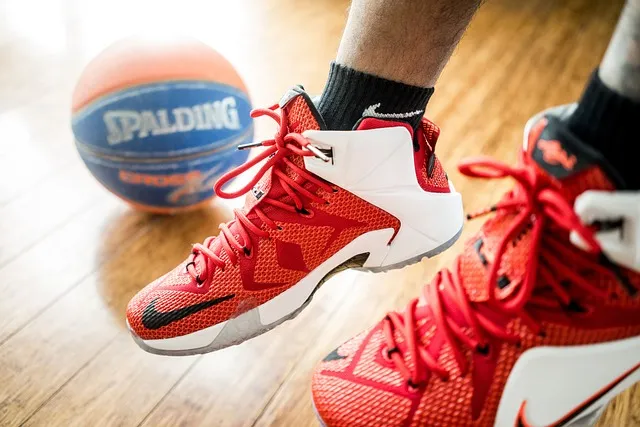
But the specific tools are less important than the underlying principle: LeBron treats recovery as daily maintenance rather than crisis response. Most amateur athletes (and most people who train) use recovery tools reactively — they stretch when something feels tight, they sleep extra when they feel run down, they take days off when they’re injured. LeBron runs his recovery stack every single day whether he feels like he needs it or not, in the same way that a Formula 1 car goes through a full service check after every race, not after it breaks down. The car runs fine. You service it anyway, because the damage that causes catastrophic failure accumulates invisibly in the intervals between maintenance. Sleep is one layer of that daily maintenance. The recovery stack is the second.
For those without a cryotherapy chamber in the house: a cold shower achieves a meaningful fraction of what cold immersion achieves, at the cost of significant discomfort and zero dollars. The vasoconstriction and endorphin response are present. The psychological discipline of standing in cold water for two minutes every morning also builds exactly the kind of tolerance for discomfort under pressure that turns recovery from a habit into a reflex.
Pillar Three: Movement Quality — The Training Philosophy That Prioritized 22 Years Over One Season
In 2003, LeBron James was a 6’8″, 240-pound eighteen-year-old with the combination of size and athleticism that had coaches inventing new vocabulary. He could have spent his early career building raw strength the way most players did — heavy compound lifts, maximum hypertrophy, the kind of training that makes you look extraordinary and creates the joint problems that end careers at 32. He didn’t.
His training philosophy, developed with longtime strength and conditioning coaches, centers on what sports performance specialists call pillar strength: integrated training of the hips, core, and shoulder complex as a connected functional unit rather than isolated muscle groups. The practical translation is a program heavy on resistance bands, stability exercises, single-leg work, anti-rotation core training, and basketball-specific movement patterns — and lighter on the maximal loading that produces impressive one-rep maxes and eventual structural damage. The goal was never to build the most powerful body. It was to build the most resilient one.
This is a counterintuitive approach in a culture that conflates strength with the ability to lift heavy things. The research on athlete longevity consistently shows that the training variables most correlated with career length are mobility maintenance, tendon health (which is supported by lower-load, higher-rep eccentric training rather than maximal loading), and the specific strengthening of the smaller stabilizer muscles that protect large joints under repeated high-impact stress. LeBron’s workouts are technically demanding in ways that don’t photograph well. They look less impressive than a max squat. They’re why he’s playing at 40.
The morning of a game day, LeBron typically works through a mobility and activation sequence before anything else: dynamic stretching, foam rolling of major muscle groups, activation drills for glutes and hip stabilizers. This isn’t warming up for training — this is resetting the body’s positional awareness and activating the musculature in the sequence it’ll need to fire during competition. Elite coaches call it priming. It takes 30-45 minutes and it directly reduces injury risk during the activity that follows. Skipping this part to get to the “real” workout is the same mistake most people make — optimizing for the visible over the sustainable.
On non-game days, LeBron’s sessions emphasize active recovery movement — lower-intensity skill work, swimming (zero impact, full range of motion, cardiovascular maintenance without tissue stress), and the kind of low-intensity aerobic work that supports mitochondrial density without generating the oxidative stress that heavy training produces. The training philosophy is fundamentally about managing the stress-recovery equation: more stress (more training, more intensity) is possible only when the recovery side of the equation is being managed just as aggressively.
Pillar Four: Nutritional Precision — How He Eats at 40 Like He Ate at 25
In 2014, LeBron eliminated sugar from his diet for 67 days, a decision he later described as the hardest discipline he’d ever practiced. He lost 25 pounds and reported improved recovery, sharper mental clarity, and energy levels that felt more stable throughout the day. He didn’t maintain that level of restriction — he’s been photographed eating French toast and chicken wings, which he drinks on a short leash rather than avoiding entirely — but the experiment revealed something he’s carried forward: the relationship between dietary precision and recovery quality is more direct than most people recognize until they test it.
His day-to-day nutrition, prepared by a personal chef and calibrated to his training schedule, centers on lean proteins (chicken breast, salmon, tuna), complex carbohydrates timed around workouts (brown rice, oatmeal, sweet potatoes), healthy fats (avocado, olive oil, walnuts), and a high volume of vegetables and fruits. He stays well-hydrated — something trivially easy to recommend and surprisingly rare in athletes who drink sports drinks instead of water — and largely avoids processed food, refined sugar, and alcohol during the season.
The rationale for each of these choices has solid research behind it. Protein timing around training (20-40g of high-quality protein within two hours post-exercise) has been shown to meaningfully accelerate muscle protein synthesis compared to the same total daily intake consumed at random intervals. Complex carbohydrates over simple sugars maintain steadier blood glucose throughout a long game, avoiding the performance cliff that comes after a glycemic spike. Anti-inflammatory foods (fatty fish, leafy greens, olive oil) directly support the recovery system by keeping baseline inflammatory markers lower, which makes the body’s repair response more efficient when it needs to deploy. The science of nutrition for performance has become more specific and more actionable over the past decade, and LeBron’s approach reflects that specificity.
One often-overlooked element: hydration. Research published in the Journal of Athletic Training documented that a 2% loss of body weight through sweat — which most people achieve on a moderately intense workout day without realizing it — produces measurable declines in both cognitive performance and physical output. LeBron reportedly consumes 100+ ounces of water daily, adjusting for game intensity and climate. For a 250-pound athlete playing 40 minutes of high-intensity basketball in an arena, adequate hydration is not a wellness trend. It’s a performance requirement. Most people are in chronic mild dehydration and have no idea.
Pillar Five: Mental Governance — The Invisible Infrastructure Behind the Other Four
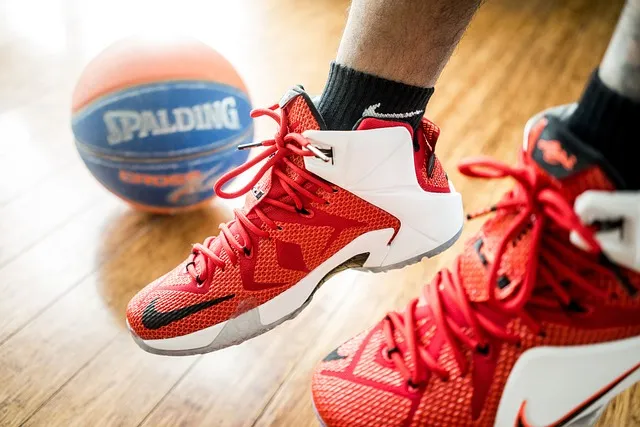
LeBron’s mental infrastructure for these moments is less about motivation and more about identity. He has described himself in multiple interviews as someone who thinks of his body as his business — the asset that generates everything else he’s built. This framing matters because identity-based decisions are categorically more durable than willpower-based decisions. A recovery protocol that’s something you “try to do when you remember” erodes under the first meaningful stress. Make it part of who you are — the person who runs his system even on the bad nights — and the resistance calculus changes completely. The problem isn’t motivation. It’s whether the practice is part of your identity or part of your to-do list.
LeBron has also spoken publicly about visualization as a core pre-game practice: spending fifteen to thirty minutes mentally rehearsing specific scenarios — defensive situations, play calls, late-game execution under pressure. The neuroscience here is solid. Visualization activates the same motor cortex pathways as physical practice — research published in Frontiers in Human Neuroscience confirmed that mental rehearsal of movement patterns produces measurable increases in movement accuracy during subsequent physical execution. It’s not mystical. It’s additional practice reps conducted without the tissue stress of physical practice, which for a 40-year-old athlete managing recovery carefully is a non-trivial advantage.
The other dimension of mental governance is how he processes adversity in real time. Over twenty-two seasons, LeBron has been through spectacular public failures: the 2011 Finals collapse against Dallas (where he was widely called out for disappearing in critical moments), the year after the Decision in Miami when the team was legitimately bad, the Cleveland years before his first championship when playoff exits were described as moral failures by national media. His response to each of these wasn’t to develop thicker skin in the way people usually mean — becoming less sensitive. It was to develop a more granular understanding of what he could control and what he couldn’t, and to redirect his energy accordingly. That distinction between what you control and what you don’t is one of the most important skills in performance psychology, and it’s largely invisible until something goes wrong.
What the King Protocol Actually Produces
The results of twenty-two years of disciplined system maintenance are specific enough to be worth stating precisely. LeBron became the NBA’s all-time leading scorer in February 2023, passing Kareem Abdul-Jabbar’s record of 38,387 points — a record Kareem set in 1,560 games over twenty seasons. LeBron passed it in his 1,410th game. He was 38.
At age 35, playing for the Los Angeles Lakers in the NBA bubble, he averaged 25.3 points, 7.8 rebounds, and 10.2 assists per game — numbers that would be career-peak production for most players. He won his fourth championship that year and his fourth Finals MVP. The following season he played 56 games before injury; the season after, 67 games. Most players who stay healthy through 35 manage a graceful decline. LeBron maintained production levels that put him in MVP conversations at 37.
The financial dimension is worth noting not as a flex but as evidence of compounding. By maintaining his body past the point where most athletes’ market value collapses, LeBron extended his NBA career earnings beyond $480 million and his endorsement value well beyond that. The $1.5 million annual investment in his body has returned, at minimum, 100x. This isn’t a unique insight — athletes have always known their body is their asset. What LeBron did was build a system for maintaining it that other elite athletes have explicitly modeled. Kevin Durant has spoken about adopting LeBron’s recovery philosophy. The Golden State Warriors built a recovery infrastructure for their roster partly in response to what LeBron’s approach demonstrated was possible.
The longevity data point that gets less attention than the scoring record: LeBron has missed fewer games due to injury over his career than players a decade younger. Through 22 seasons, he’s missed an average of fewer than 9 games per year — a rate that puts him in the top tier of durability among players who’ve played as many seasons, at his workload. This isn’t luck. It’s the product of a system that treats injury prevention as a primary goal rather than an afterthought.
How to Apply the King Protocol Without LeBron’s Resources
The honest version: most readers are not LeBron James, don’t have a personal chef or a cryotherapy chamber, and would either quit in three days trying to replicate his exact schedule or end up in some kind of performance-anxiety spiral about whether the pillar strength activation sequence was technically correct. This is not that article.
What the King Protocol translates to, for a person with a normal life, a budget, and obligations that don’t include playing forty minutes of professional basketball four nights a week, is a set of structural principles. Here’s a realistic version of each pillar:
- Sleep Architecture: Commit to a consistent sleep time and a consistent wake time, seven days a week. Not a range — a target. Keep the bedroom dark and below 68°F. No screens for thirty minutes before bed. This costs nothing and produces most of the sleep quality improvement that the expensive optimization adds marginal gains on top of. The science of deep sleep is unambiguous on this: architecture matters more than duration, and architecture is free.
- Recovery Stack: Pick one daily recovery practice and treat it as non-negotiable. Cold shower (2 minutes at the end of every shower). Or ten minutes of mobility work in the morning. Or twenty minutes of walking as active recovery after hard sessions. The specific tool matters less than the discipline of running it daily rather than reactively. Stress management tools serve the recovery system in ways most people don’t account for.
- Movement Quality: Add ten minutes of mobility and activation work before every training session. Foam roll the major muscle groups. Do two or three glute activation exercises. This alone will reduce injury frequency significantly over a year, and injury is the primary reason most people abandon training habits — the disruption breaks the chain and the chain never reforms. Deliberate practice requires consistency, and consistency requires staying healthy.
- Nutritional Precision: One change that produces outsized returns: remove the food that’s disrupting sleep and recovery the most. For most people this is alcohol (which destroys REM sleep architecture), sugar (which spikes insulin at night and interferes with growth hormone release during deep sleep), or ultra-processed food (which drives systemic inflammation that slows recovery). No personal chef required. Just stopping the one thing actively working against the system.
- Mental Governance: Build a pre-performance ritual for whatever matters most in daily life. Five minutes of focused preparation before the most important meeting, training session, or difficult conversation. The ritual doesn’t have to be visualization (though the neuroscience supports it). It can be a specific warm-up, a review of objectives, a breathing protocol. The function is to move from reactive to deliberate before performance is required. Box breathing as a pre-performance tool costs nothing and takes four minutes.
The adaptation principle is this: the King Protocol works because the five pillars reinforce each other. Better sleep produces faster recovery. Faster recovery produces higher training quality. Higher training quality clarifies nutritional needs and strengthens the discipline to meet them. When all four are working, the mental governance piece gets easier, because feeling physically capable makes a person mentally sharper. Start with one pillar. Let the system build itself.
The Thing Most LeBron Articles Miss Completely
Every article about LeBron’s routine ends the same way: inspiring summary of his dedication, implicit suggestion that you should do something similar, vague promise that effort produces results. Here’s what those articles don’t say, and it matters.
LeBron’s discipline is not the result of extraordinary motivation. It’s the result of extraordinary systems built on top of ordinary motivation. He has admitted to wanting to skip training. He has admitted to craving junk food. He has admitted to nights when everything felt optional. Every elite performer admits this, because motivation is a weather pattern, not a climate — it changes daily and it is completely unreliable as a foundation for anything meant to last two decades.
What he has that most people don’t is a system designed to run in the absence of motivation. The personal chef ensures good food is available when willpower is low. The recovery team is scheduled, so the decision isn’t whether to do cryotherapy but whether to cancel an appointment that’s already on the calendar. The workout is programmed and supervised, so the decision isn’t what to do but whether to show up. The logistics remove the friction, and removing friction is how a system gets built that outlasts motivation. The debate between habits and discipline misses this: the answer is systems that make the habit the path of least resistance.
Here’s the thing worth being direct about. Reading closely into LeBron’s routine, what stands out isn’t the specific practices — it’s how boring they are. Sleep eight to ten hours. Eat whole food. Do mobility work before training. Run your recovery stack. Repeat for twenty-two years. There is nothing in the King Protocol that requires genius, unusual genetics, or special access to secret performance science. The entire system is built from things that were known in 2000 and have been confirmed by subsequent research. The gap between knowing these things and actually doing them, consistently, over decades, with the infrastructure designed to make skipping them inconvenient rather than easy — that gap is where his longevity lives.
If that sounds frustrating, it should. Because it means the constraint isn’t information and it isn’t resources. It’s the willingness to build a boring, reliable system and then actually live in it. Monk Mode is one version of building that environment intentionally. Eliminating the inputs that compete with the system is another. The point is that the King Protocol isn’t something you do when you feel like it. It’s something you build so it runs whether you feel like it or not.
The Longevity Calculus: What LeBron Optimizes For That Most People Ignore
Here’s a question worth sitting with: managing the body for this year, or for the next twenty?
Most training and nutrition advice is implicitly optimized for short time horizons. Lose weight for summer. Get strong for the season. Look good for the event. These goals are fine. They are also completely different from what LeBron is optimizing for, which is a body that can perform at an elite level for twenty-plus years without structural breakdown. The practices that support short-term performance goals and the practices that support long-term durability are not the same, and occasionally they’re in direct conflict. Heavy compound lifting, for example, produces rapid strength gains — and accumulates joint stress at a rate that starts causing structural problems for many athletes in their mid-thirties. LeBron made a choice in his early twenties to trade some short-term performance ceiling for dramatically higher floor maintenance over decades. It’s a trade most athletes don’t consciously make, because the payoff is invisible for fifteen years and then extremely obvious.
The longevity calculus applies to cognitive performance too, not just athletic. Sleep deprivation’s effect on cognitive output compounds in the same way that physical stress does: manageable short-term, catastrophic over years. The executive who runs on five hours a night makes measurably worse decisions — studies at Harvard Medical School documented an average 30% reduction in decision-making quality under chronic sleep restriction — and the degradation is invisible from the inside, because one of the cognitive functions sleep deprivation impairs is the ability to assess your own cognitive impairment. It feels fine. The performance data says otherwise.
LeBron’s approach to longevity is, at its core, a compounding philosophy applied to the body. The same logic Morgan Housel applies to wealth in The Psychology of Money — that the greatest returns come not from maximum performance in any given year but from uninterrupted compounding over decades — applies directly to physical maintenance. A body that performs at 85% of maximum capacity for twenty consecutive years, uninterrupted by injury and decline, produces more total output than a body that performs at 100% for seven years and then crashes. The math is the same. The discipline required to operate at sustainable intensity rather than maximal intensity is one of the rarest and most underrated skills in performance. The setback that derails a compounding system costs far more than the missed opportunity of a single performance peak.
How the King Protocol Connects to the Broader Resilience System
The King Protocol is a specific application of a broader principle: that sustained performance is a system problem, not a willpower problem. The complete guide to self-discipline covers the same underlying architecture — the design of environments and systems that make discipline the default rather than the exception. LeBron’s approach is one case study. The principle generalizes.
Deliberate practice theory, developed by Anders Ericsson at Florida State, is the scientific backbone of what LeBron does in skill development — the focused, specific, feedback-driven practice that builds expertise rather than just experience. Most athletes practice. Elite athletes practice deliberately. The difference isn’t effort — it’s design. The King Protocol applies this same design logic to recovery and maintenance, not just skill development. Deliberate recovery or poor recovery — those are the options.
The mental governance pillar connects directly to internal locus of control — the psychological orientation of treating outcomes as primarily within your influence rather than primarily determined by external forces. For LeBron, this manifests as a consistent refusal to attribute performance to talent or circumstances, and a consistent emphasis on process variables he controls directly. It’s the same orientation that working the problem describes: the discipline of staying in the response rather than the narrative. And for the framework on how to build the mental side of this system into daily life, the Forge Protocol is a structured starting point.
LeBron Jamess Discipline: Your Questions Answered About LeBron James’s Discipline Routine
What exactly is the King Protocol and how is it different from other athlete routines? The King Protocol is the framework for describing LeBron James’s five-pillar performance system: Sleep Architecture, Recovery Stack, Movement Quality, Nutritional Precision, and Mental Governance. What distinguishes it from standard athlete routine breakdowns is the emphasis on how the five pillars work as a single feedback loop rather than independent practices. Remove sleep and recovery quality drops. Drop recovery and training quality drops. Each pillar feeds the next, and the mental governance layer is what keeps all four intact under the travel, fatigue, and competitive pressure of a 22-season professional career.
How much does LeBron James actually spend on his body per year? Multiple outlets including Business Insider and ESPN have reported the figure at approximately $1.5 million annually. This covers personal trainers, a personal chef who travels with him, cryotherapy sessions, hyperbaric oxygen chamber access, NormaTec compression equipment, sleep optimization technology, physical therapists, massage therapists, and acupuncture. The number sounds extraordinary until you calculate the return: LeBron extended his peak earning years by roughly eight to ten seasons beyond what normal athlete decline would predict, generating hundreds of millions in additional career earnings and endorsement value. As investments go, the multiple is hard to argue with.
What does LeBron James eat on a typical game day? His nutrition, prepared by personal chef Frank Leal, emphasizes whole-food fueling timed around training and competition. A typical game day begins with a high-protein breakfast (eggs, oatmeal, fruit), a pre-game meal several hours before tip-off (grilled chicken or salmon with rice or sweet potatoes and vegetables), and a recovery meal post-game focused on protein and complex carbohydrates to initiate muscle protein synthesis overnight. He stays above 100 ounces of water daily and avoids alcohol during the season. The specific foods are less important than the timing — he’s fueling for recovery as much as for performance, because the quality of tonight’s sleep depends partly on what he ate today.
How does LeBron maintain discipline over a 22-season career when motivation inevitably fluctuates? He’s answered this in several interviews with a version of the same answer: his body is his business, and you don’t run a business on motivation. The practical answer is system design. When the recovery appointments are already scheduled, when the chef has already prepared the food, when the workout is programmed and supervised, the decision is no longer about whether to do these things — it’s only about whether to cancel them. Canceling something already in motion requires more psychological energy than skipping something you were planning to get around to. Most of LeBron’s discipline infrastructure is designed to make the right choice the path of least resistance. Habit design over willpower is the underlying principle.
Can a normal person apply the King Protocol without expensive equipment? Most of it, yes. Sleep architecture requires only consistent timing and a dark, cool room — no technology. The recovery stack translates to cold showers and structured mobility work. Movement quality improvement means adding a ten-minute activation sequence before training sessions. Nutritional precision translates to removing the one food category most disrupting recovery (usually alcohol, sugar, or ultra-processed food) before adding anything. Mental governance translates to a three-to-five minute pre-performance ritual. None of these require money. All of them require the same thing LeBron’s version requires: doing them on the days when they feel unnecessary.
Why does LeBron prioritize sleep over other recovery modalities? Because sleep is the only recovery modality that cannot be substituted, approximated, or compressed. Cryotherapy has real benefits but they’re measurable in percentages. Skipping a day of compression therapy costs you something minor. Chronic sleep restriction at levels that don’t feel impaired produces performance degradation that compounds over months and years. The Stanford study on basketball players — where extended sleep to ten hours improved sprint times and shooting accuracy with no other variable changed — is the cleanest demonstration of the mechanism. Every other recovery tool is additive on top of adequate sleep. Nothing works well on top of inadequate sleep. Sleep’s effect on decision-making quality alone makes it the highest-use recovery investment available.
What is LeBron’s pre-game mental routine? He’s described a consistent pre-game ritual that includes music (he’s famous for his headphone-on, focused walk to the arena), visualization of specific game scenarios, and a physical warm-up sequence that he’s refined over years. The visualization component has neuroscientific backing: mental rehearsal activates the same motor cortex pathways as physical rehearsal, providing effective practice reps without the tissue stress. At 40, with a carefully managed training load, adding effective practice reps through visualization that cost nothing in physical recovery is a meaningful performance tool. The music and the routine serve a second function: they create a psychological transition state from the chaos of travel and logistics into game-mode focus. Any pre-performance ritual accomplishes this, regardless of the specific content.
How does the King Protocol apply to non-athletes? The same five pillars apply to any sustained high-performance endeavor — running a business, raising children, managing a demanding career over decades. Sleep Architecture matters for cognitive performance in exactly the way it matters for athletic performance: degraded sleep produces degraded output, and the degradation is often invisible from the inside. Recovery Stack for a non-athlete means the daily practices that bring your nervous system out of sympathetic activation: walking, mobility work, meditation, whatever reliably downshifts your baseline stress response. Movement Quality means training for durability rather than just aesthetics. Nutritional Precision means removing the inputs actively working against your recovery and cognitive function. Mental Governance means building the pre-performance rituals and identity-level commitments that make the other four run automatically. The King Protocol is a longevity framework. Longevity is relevant to everyone.
Related: Alex Hormozi's Discipline Routine: What He Does Daily
Related: Jamie Dimon's Discipline Routine: What He Does Daily