
The call came in at 3:47 AM. Structure fire, three-story residential, possible occupants trapped. Keith pulled on his gear in under ninety seconds — he’d done it ten thousand times — and by the time Ladder 12 was rolling, he was locked in: floor plan, wind direction, the likely collapse zones. Inside a burning building, Keith was the most competent person in any room. He read fire the way other men read faces, felt the heat gradients through his coat, knew exactly what the structure was about to do three seconds before it did it. Twenty-two years of this. Hundreds of saves. September 11th, where the pile smelled like nothing he could describe and he worked it for nine straight days without going home.

She found him in the garage on a Thursday morning in 2020. Not dead. Close. A bottle of Ambien half-empty on the workbench. The note said three words: I couldn’t feel.
Not “the pain was too much.” Not “I can’t go on.” He couldn’t feel. After two decades of systematic emotional suppression — the kind every man in his firehouse practiced with religious devotion — Keith had successfully decommissioned his own internal wiring. The numbness he’d built to survive the job had metastasized into every other corner of his life. And then the numbness itself became unbearable. The hollowness where grief, love, fear, and connection should have lived became a void so complete that he couldn’t locate a reason to keep filling it.
Keith survived. What came after was harder than any fire he’d worked. Because learning to feel again, after decades spent constructing an internal fortress against emotion, is the kind of demolition that terrifies men far more than physical danger. Keith had walked into burning buildings without hesitation. Sitting in a room and saying out loud “I’m angry at my dead father” nearly broke him.
Keith is built from documented reality — first responder PTSD research, clinical case studies from the National Institute of Mental Health, the detailed accounts of hundreds of men who’ve walked variations of his path. Every detail is drawn from that record. The recliner. The note. The man who could read fire but couldn’t read himself. This is what masculine emotional suppression looks like at the end of the road. What follows is what it looks like along the way — and what to do about it before Thursday morning arrives.
The Thesis: Suppression Is Not Stoicism
Men die by suicide at 3.85 times the rate of women in the United States. In 2022, men accounted for nearly 80% of all suicide deaths. The demographic hit hardest: men between 45 and 64 — the group most likely to have spent decades treating emotional suppression as a core identity trait. These men don’t die because they feel less than women. They die because they’ve been trained, since boyhood, to suppress more — and suppression doesn’t eliminate emotion. It drives emotion underground, where it metastasizes into addiction, rage, cardiovascular disease, and the specific brand of existential emptiness that Keith described in three words.
The cultural instruction manual is simple. Boys receive it in fragments, starting around age four or five: don’t cry, toughen up, be a man, nobody wants to hear your problems, handle it. By adolescence, the instruction has been internalized so completely that most men can no longer distinguish between “choosing not to express this” and “not having this.” The suppression becomes invisible to the person doing it. That invisibility is the mechanism. A wall you can’t see is a wall you can’t dismantle.
Call this Emotional Load-Bearing — the difference between carrying emotional weight in a way that builds a man versus carrying it in a way that collapses him from the inside. Stoicism, properly understood, is Emotional Load-Bearing: feeling the weight, carrying it deliberately, acting from a place of full awareness. Suppression is something else entirely. Suppression is pretending the weight isn’t there while it quietly deforms every structural beam in a life. One of those strategies produces men like Marcus Aurelius. The other produces men like Keith in his garage at 3 AM.
The Science: What Suppression Actually Does to Your Brain and Body
In 1998, James Gross at Stanford University published research in the Journal of Personality and Social Psychology that changed how scientists understood emotional suppression. His finding was counterintuitive and important: when people suppress emotional expression — when they consciously push down what they’re feeling — their sympathetic nervous system activation actually increases. Heart rate goes up. Blood pressure rises. Cortisol floods the system. The emotion doesn’t disappear. The body absorbs it and pays the bill that the mind refused to process. Gross’s research demonstrated that suppression doesn’t reduce emotional intensity. It amplifies the physiological cost while eliminating the psychological resolution.
Sit with what that means in practical terms. The intensity stays exactly the same. The body pays more. And the cognitive processing that would help move through the experience gets lost entirely. All the damage, none of the discharge. It’s the psychological equivalent of putting a tourniquet on a wound and then going about business — the bleeding continues internally, the pressure builds, and what would have been a manageable injury becomes a systemic crisis.
Allan Schore at UCLA has spent three decades studying right-brain affect regulation — the neurological infrastructure governing how emotional experience gets processed and integrated. His work demonstrates that emotional processing is not a luxury function. It is a fundamental regulatory mechanism the brain requires to maintain homeostasis. When that mechanism is chronically suppressed, the brain compensates through maladaptive pathways: hypervigilance, dissociation, somatization (converting emotional distress into physical symptoms), and what Schore calls “affect dysregulation” — the inability to modulate emotional intensity in either direction.
This is the neurological profile of the man who seems perfectly composed and then detonates over a minor provocation. The suppression doesn’t create emotional control. It creates emotional pressure building behind a sealed valve — until the valve fails, and decades of unfelt grief, fear, and shame come out in the worst possible form, at the worst possible time. The man who explodes at his kids over a mess in the kitchen. The man who walks out of a marriage without ever explaining why. The man who sits in his garage with a bottle of Ambien and writes three words.
James Pennebaker at the University of Texas at Austin demonstrated the inverse process. His research showed that expressive writing — simply putting emotional experience into words on paper for twenty minutes, four days in a row — measurably reduces cortisol levels, improves immune function, and decreases physician visits over the following months. The mechanism is precise: translating internal emotional experience into language engages the left prefrontal cortex, which serves as a regulatory bridge between raw emotional activation and conscious understanding. The men who write about their experiences — even privately, even badly — recover faster than the men who stay silent. Not because writing is magic. Because silence is expensive.
Matthew Lieberman at UCLA demonstrated something even more specific. His research on “affect labeling” — the act of naming an emotion — showed that simply identifying a feeling by its precise name reduces amygdala activation. The brain’s threat-response system literally calms down when a person names what’s happening. But the naming has to be specific. “Fine” doesn’t work. “Stressed” barely registers. The words that do the neurological work are specific: ashamed, terrified, humiliated, grieving, abandoned, betrayed, inadequate, lonely. Those words cost something to say. That’s the signal of having gone deep enough to reach the actual emotion rather than its socially acceptable surrogate.
There’s a clinical term for what happens when suppression becomes total: alexithymia. It means, literally, “no words for emotions.” It affects approximately 10% of the general population, with significantly higher prevalence in men — some studies estimate 17% of men meet clinical criteria. Alexithymia isn’t a personality choice. It’s a measurable deficit in the neural pathways connecting emotional experience to conscious awareness. Men with alexithymia genuinely cannot identify what they’re feeling. The signal still exists — the body still carries it — but the mind has lost the ability to read it. This is what produces the brain that won’t shut up at 2 AM: when emotions can’t be processed through their normal channels, they reroute through the default mode network as rumination, anxiety, and obsessive thought loops. The overthinking isn’t the problem. It’s what happens when the emotional processing system goes dark.
And then there’s the physical cost, which the data makes impossible to dismiss. A 2013 study in the Journal of Psychosomatic Research found that emotional suppression predicted higher systolic blood pressure, increased arterial stiffness, and elevated C-reactive protein — a primary marker of systemic inflammation. A twelve-year longitudinal study published in Psychosomatic Medicine found that habitual emotional suppression was associated with a 35% increased risk of all-cause mortality. Not from a specific disease. From everything. The habit of not feeling is shortening lives across every possible cause of death. The man who prides himself on being “all business, no feelings” is quietly inflaming his arteries, degrading his immune response, and running the most expensive background process his body has ever been asked to sustain.
Suppression, Repression, and Regulation: The Differences That Actually Matter
Most men use these words interchangeably. That confusion is dangerous because these are three fundamentally different processes, and only one of them builds anything worth having.
Suppression is conscious. Anger rises in the chest and gets clamped down. The emotion is registered, and its expression actively prevented. Gross’s research documents exactly what this costs metabolically and psychologically over time. It’s the strategy Keith used for nineteen years, and it’s why he ended up where he did.
Repression is unconscious. The emotion is blocked before it ever reaches awareness. Genuine ignorance of being angry, grieving, or afraid. This is the territory of alexithymia, and it’s more dangerous than suppression because a thing that can’t be perceived can’t be addressed. Repression is what makes men say “I don’t know why I drink” or “I don’t know why my marriage is falling apart.” That’s not evasion — they authentically don’t know, because the causal emotion is buried below the threshold of consciousness. The body still carries it. The mind just can’t read the signal anymore.
Regulation is the target. Emotional regulation means feeling the emotion fully, identifying it accurately, and choosing how and when to express it based on context and purpose. A regulated man feels grief and lets himself cry — but not during a board meeting unless the meeting warrants it. He feels rage and channels it into a workout, a difficult conversation, a boundary clearly set. He doesn’t suppress the emotion. He processes it through a system of recognition, naming, and deliberate response. This is the discipline framework applied to internal life — and it requires more of a man than suppression ever did. Feeling an emotion fully and still making a sound decision is harder than pretending the emotion doesn’t exist. That’s why Emotional Load-Bearing is a genuine act of discipline, not softness.
The distinction matters because the cultural menu only offers men two options: suppress everything (the “real man” template) or express everything (the overcorrected therapy-culture model). Both are failures. The man who suppresses everything ends up like Keith. The man who expresses everything without structure or containment becomes emotionally incontinent — relationally exhausting, functionally unreliable, using “vulnerability” as a word for what is actually emotional dumping on anyone who will hold still. Neither version is strong. Neither version is free.
The Method: Five Steps for Building Emotional Load-Bearing Capacity
This is not a substitute for real crisis care. It’s a protocol — repeatable, structured, evidence-based — built from the convergence of Gross’s suppression research, Pennebaker’s expressive writing findings, Schore’s affect regulation framework, and Lieberman’s affect labeling work. It treats emotional processing as a skill built through disciplined practice, not a personality trait a man either has or doesn’t. It can start today. No audience required.
-
Body Scan: Locate the Signal. Emotions don’t begin in the mind. They begin in the body. Before anything can be processed, it has to be found. Sit still for sixty seconds and scan from the top down. Jaw clenching. Chest tightness. Stomach churning. Fists closing. Shoulders rising toward the ears. Heat in the face. Cold in the hands. Each of these physical signatures corresponds to a specific emotional state. Jaw clenching is usually suppressed anger. Chest tightness is grief or anxiety. Stomach churning is fear or shame. For men who’ve spent decades suppressing, the body is often the only reliable signal remaining — the mind has learned to override the feeling, but the body keeps the record. This is the direct evidence base for somatic imprints: emotional experiences stored as physical patterns that persist long after the original event. The tightness carried in the chest at 47 might be unprocessed grief from age twelve. The body doesn’t forget. It waits.
-
Name It — Precisely, Not Generally. Lieberman’s affect labeling research is unambiguous: the naming has to be specific. “Fine” doesn’t activate the regulatory circuit. “Stressed” barely moves the needle. The words that do the neurological work are precise and often uncomfortable: ashamed, terrified, humiliated, grieving, abandoned, betrayed, inadequate, lonely, envious, overwhelmed, disgusted. If naming the emotion doesn’t produce a physical response — a catch in the throat, heat in the face, a wave of something — the naming hasn’t gone deep enough. Surface weather, not the actual system. Most men have an emotional vocabulary of approximately five words: fine, good, tired, stressed, pissed. That is not a vocabulary. That is a prison. There’s no regulating a nervous system that can’t be read, and no reading what can’t be named.
-
Locate the Origin — When Did You Learn This Pattern? Every suppression pattern has a first chapter. A specific moment, or a series of moments, where the lesson landed that this particular emotion was not safe to express. A father who backhanded a six-year-old for crying. A coach who benched a kid for showing fear. A mother, overwhelmed by her own emotional chaos, teaching implicitly that male emotions were a burden she couldn’t carry. Full childhood psychoanalysis isn’t required. Just the instruction. What was the rule that got installed? “Men don’t cry.” “Don’t be weak.” “Just be strong for us.” Every one of those instructions runs as code in the operating system right now, executed without ever being questioned — without ever being examined for whether it still serves, or whether it’s been quietly dismantling everything worth building. This is the direct lineage of why relationships fail along the same fault lines: the pattern isn’t random. It’s inherited.
-
Express It Through a Deliberate Channel. Once located and named, the emotion needs to exit the body. Not explosively. Not in the middle of an argument. Not through a bottle, a fist, or a hundred-hour work week. Through a deliberate channel — one of three. Write it: Pennebaker’s research is unequivocal. Twenty minutes of expressive writing, four days in a row, produces measurable improvements in immune function, emotional regulation, and psychological well-being. No sharing required. No editing. Write what surfaces in whatever language comes out and let the act of translation do its neurological work. Move it: Intense physical exercise discharges the sympathetic activation that suppressed emotions create. This isn’t “working out your anger” as a metaphor. It’s using the body’s own regulatory systems to complete the stress cycle that emotional suppression interrupts. Controlled breathing combined with movement is particularly effective. Run until the chest pressure breaks. Lift until the jaw softens. Sprint until the stomach releases. Speak it — to one person: Not a room. Not social media. One person who has earned trust through demonstrated discretion and genuine concern. Say the specific thing. “I’m terrified I’m failing as a father.” “I’m grieving a version of my life that didn’t happen.” “I’m ashamed of who I’ve been.” The words will feel like they’re tearing something. That’s the scar tissue breaking. This single act is one of the primary determinants of whether a marriage survives or slowly drowns.
-
Integrate — What Does This Emotion Require of You? This is the step most protocols omit, and it’s what separates emotional processing from emotional tourism. Feeling things deeply without changing anything is indulgence. Integration means asking: now that this has been felt, what does it require? Grief might require visiting a father’s grave and saying what never got said while he was alive. Shame might require making amends to someone hurt during the years when emotional numbness made cruelty easy. Fear might require the conversation that’s been avoided for three years — with a wife, a boss, a doctor, a son. The emotion is not the destination. It’s the compass. It’s pointing toward an action the suppression has been preventing. A man who feels his grief and calls his estranged son has done something. A man who feels his grief and watches four hours of YouTube has only rehearsed his pain. The difference between processing and indulgence is always action.
The protocol takes twenty minutes the first time. With repetition, it compresses. After a year of practice, the recognition and naming happen in real time, automatically — while in the meeting, while driving home, while in the conversation where it matters. That’s what Emotional Load-Bearing looks like when it’s been trained in rather than remembered from an article. It’s a discipline that becomes structure, the same way every worthwhile skill builds: slowly, unevenly, with setbacks, and with results invisible on any given day and unmistakable over a year.
The Proof: The Veteran Whose Anger Problem Was Actually Grief

Everyone around him treated Marcus’s anger as the problem. The anger was not the problem. The anger was the only emotion Marcus had permission to feel. In his unit, anger was acceptable. Grief was not. Fear was not. Sadness was not. When his best friend Torres was killed by an IED outside Kandahar — when Marcus held the pieces of a man he loved while a medic confirmed what he already knew — the only emotional channel available was rage. And rage became the output for every other suppressed feeling that had nowhere else to go.
A veteran peer counselor — a former Special Forces operator who’d done his own emotional reckoning — sat with Marcus and asked one question: “Who are you actually angry at?” Marcus ran through the list. The VA. His ex. His father. The bureaucracy. The guy at the stoplight. The counselor waited. Then he asked again: “Are you angry at Torres?” Marcus looked at the floor for a long time. Then he said, “He promised me we’d both go home.”
That sentence was the beginning. Marcus’s “anger problem” was grief. Grief for Torres. Grief for the version of himself that went overseas and didn’t come back. Grief for the relationships destroyed because the only tool in the emotional toolbox was a hammer. Once the grief was identified, named, and expressed — through writing, through conversations with veterans who understood the terrain — the anger didn’t disappear. It became proportional. Contextual. Something Marcus could feel without becoming it.
This is what the Emotional Load-Bearing framework changes. Marcus wasn’t broken. His emotional circuitry was functional — it was just receiving a signal labeled incorrectly. Anger is easier to carry than grief in certain environments. It’s protective, it’s energizing, it keeps other people at a distance. But it’s an alias, and the body knows the difference. Once the actual emotion got named, the alias became unnecessary. The anger didn’t vanish. It just stopped being the only thing he knew how to do with pain.
The Trap: Why “Feel Your Feelings” Without Structure Is Also Wrong
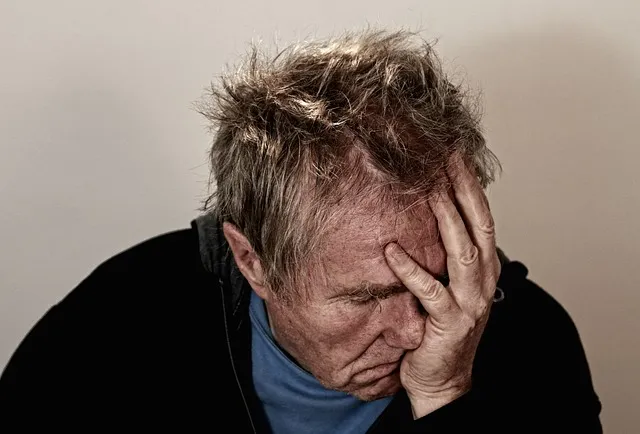
Well-intentioned. Demonstrably wrong. Uncontained emotional expression is not the opposite of suppression. It’s the other side of the same dysfunction.
Emotional flooding — the uncontrolled release of years of suppressed emotion without structure, containment, or directed purpose — is a documented clinical phenomenon. It overwhelms the prefrontal cortex, triggers sympathetic nervous system cascade, and can produce the same physiological stress response as the original experience. Men who open the floodgates without a framework for managing what comes out often re-traumatize themselves and everyone around them.
This is the man who finally “gets in touch with his feelings” and then spends six months making every conversation about his childhood. Who uses vulnerability as use — “I’m being vulnerable with you” becomes code for “you are now obligated to absorb my pain without limit or complaint.” Who turns his wife into his therapist and his friends into his support group and then genuinely wonders why everyone starts pulling away. The man who swings from emotional absence to emotional deluge without ever landing in the regulated middle is not more evolved than the man who suppresses everything. He’s just a different kind of problem. He’s the guy who makes his wife feel like a nurse instead of a partner, and he’s doing it in the name of emotional health.
There’s also the trap of understanding the concept while changing nothing. Nodding along, referencing Gross’s research at dinner, landing well, sounding like a person who has things figured out. Then going home and spending forty-five minutes replaying the argument that should have been won, lying awake at midnight rehearsing the conversation that should have happened with the boss six months ago, waking up tomorrow and running the exact same pattern that’s been running since nineteen. Knowing the protocol is not the protocol. The gap between understanding emotional regulation intellectually and actually doing it under pressure is where the intellectual self-help trap lives — always learning, never practicing, surrounded by frameworks explainable with fluency and never once applied when something real was at stake.
The third trap is reserved for men who apply the framework only during catastrophes — the layoff, the diagnosis, the divorce — while paying full suppression tax on daily life. The traffic. The colleague who steals credit. The rude email at 5 PM. React, stew, “move on,” never noticing that near-total suppression is running on fifty small events every day. This matters because small events are where the reflex gets built. They’re the reps. Fail to keep Emotional Load-Bearing intact when someone cuts in traffic, and it won’t hold when something genuinely costly happens. The scale differs. The muscle is the same. A cold shower protocol is useful here for exactly this reason — two minutes of daily discomfort that isn’t anyone’s fault trains the regulation response on stakes low enough to actually learn from.
The Contrarian View: Real Stoicism Was Never About Not Feeling
The masculine mythology of emotional suppression claims Stoicism as its intellectual ancestor. Marcus Aurelius. Seneca. Epictetus. Real men who felt nothing. Strong men who controlled their emotions by not having them.
A complete misreading of what they actually wrote.
Marcus Aurelius in Meditations: “Confine yourself to the present.” Not “pretend the present doesn’t affect you.” Epictetus on grief: he doesn’t say don’t grieve. He says grieve, then return to your role. Seneca wrote extensively about friendship, loss, and the specific texture of longing for the dead — not as abstractions, but as felt experiences examined carefully and then acted upon by choice. The Stoics were obsessed with emotional experience. Their entire framework was built on understanding exactly what was being felt and why — and then choosing the response deliberately. That is Emotional Load-Bearing. That is regulation. That is the framework Gross and Schore and Pennebaker spent careers documenting in clinical language that Seneca covered in 65 AD.
The masculine mythology of “not feeling” doesn’t have ancient Stoic roots. It has World War II roots. It has the specific cultural instruction set that men who came back from combat and couldn’t talk about it passed to their sons, who passed it to their sons, who are now dying at 3.85 times the female suicide rate and wondering why the armor feels so heavy. The armor was never Stoicism. The armor was trauma management that became generational instruction. Call it what it is.
The genuinely strong position — the one that takes more from a man, not less — is feeling the full weight of experience and still functioning. Still leading. Still deciding. Still showing up for the people who need him. Not because the weight got numbed, but because he trained himself to carry it without being crushed by it. That’s Emotional Load-Bearing. That’s what Stoicism in relationships should actually look like. And it’s harder, every day, than simply going numb would be.
How This Connects to Everything Else You’re Building
Emotional Load-Bearing isn’t a standalone concept. It’s the foundation that every other capacity in a man’s life is built on.
Emotional discipline — the ability to feel without being controlled by feeling — is impossible to build on a suppression foundation, because suppression produces volatility, not stability. The man who’s been suppressing for twenty years isn’t disciplined. He’s pressurized. An unsupervised accumulation of unexpressed experience waiting for a moment of sufficient stress to breach containment. Real discipline requires access to the emotion, not the elimination of it. Only what can be felt can be regulated. Only what can be named can be directed.
Nervous system regulation is the physiological precondition for all of this. Emotions cannot be processed from a dysregulated state. When the sympathetic nervous system is in full activation — the chronic condition that suppression produces — the prefrontal cortex goes partially offline. The naming and integration work the protocol requires simply isn’t accessible while the body is configured for survival. This is why men who try to “do the emotional work” while still overworked, under-slept, and over-stimulated consistently fail. The sequence is: regulate the body first, then approach the emotion, then process it, then integrate the learning. Skipping the first step is why most men abandon emotional work after one or two attempts and conclude it doesn’t apply to them.
The male loneliness epidemic — documented, worsening, underreported — is not primarily a social problem. It’s an emotional access problem. Men are isolated not only because they lack social structures but because they’ve lost the internal access to the states that make genuine connection possible. Nobody can be known by people they can’t reach. Nobody can reach others through entrances they’ve sealed shut. Emotional Load-Bearing reopens the doors that suppression welded shut.
And for a structured container to build this capacity over time — daily accountability, progressive challenge, measurable results — a 30-day discipline protocol or a 21-Day Reset provides the repetitions. Because understanding this conceptually was never the hard part. The hard part is doing it under pressure, when the suppression reflex fires first and the protocol feels like one more thing there’s no time for. That’s where the training either holds or it doesn’t. And the only way to make it hold is reps.
Common Questions About Masculine Myth Feeling About Emotional Suppression in Men
What is the difference between emotional suppression and emotional control?
Suppression blocks an emotion from conscious awareness or deliberately prevents its expression. Emotional control — more accurately called emotional regulation — means feeling the emotion fully, identifying it precisely, and choosing deliberately how and when to express it based on context. Suppression eliminates the emotion from processing. Regulation keeps it conscious while directing its output. Gross’s Stanford research on expressive suppression found that the two produce measurably different physiological and psychological outcomes: regulation reduces cardiovascular and cortisol markers over time, while suppression increases them. The man with genuine emotional control feels everything and acts deliberately from that place. The man who suppresses feels nothing consciously and reacts unpredictably when the pressure finally exceeds the containment system.
Can not feeling emotions actually cause physical illness?
The research says yes, clearly and consistently. Chronic emotional suppression produces sustained sympathetic nervous system activation, which elevates cortisol, raises blood pressure, promotes systemic inflammation, and degrades immune function. A 2013 study in the Journal of Psychosomatic Research linked habitual suppression to higher systolic blood pressure and elevated C-reactive protein. A twelve-year longitudinal study in Psychosomatic Medicine found a 35% increased risk of all-cause mortality in chronic suppressors — not from a specific disease but across every cause of death tracked. Pennebaker’s research at UT Austin showed the inverse: expressive writing improved immune function measurably within weeks. The body absorbs what the mind refuses to process, and it charges interest.
How do I start processing emotions after decades of suppression?
Start below the neck. After years of suppression, the cognitive connection to emotional experience is often severely attenuated — genuine uncertainty about what’s being felt is common. Begin with daily sixty-second body scans: sit still, notice physical sensation. Jaw tension, chest tightness, stomach heaviness. These are the body’s emotional signals. Once physical sensation can be reliably detected, practice naming specifically what each sensation might correspond to — not “bad” or “off,” but ashamed, grieving, terrified, lonely. Then regulate the nervous system first through controlled breathing before attempting any deeper emotional exploration. Attempting emotional work from a dysregulated state is why most men try once, get overwhelmed, and conclude this approach doesn’t work for them. Regulate first. Then approach the emotion. Then process and integrate.
Does emotional regulation make a man weaker or less effective?
Every dataset that has tracked this shows the opposite. Emotional regulation correlates with higher leadership effectiveness, stronger relationship quality, better physical health outcomes, and greater professional performance over time. Men who score highest on emotional intelligence assessments consistently outperform those who score highest on emotional suppression across every measured domain. The confusion comes from conflating suppression with control — suppression feels like strength because it’s effortful and because it produces a calm surface. But the effort is consuming resources that could go to actual performance, and the calm surface is concealing a pressure system that will eventually fail. Genuine strength is feeling grief and still functioning, feeling fear and still deciding, feeling vulnerability and still leading. That demands more from a man, not less.
What is alexithymia and how do I know if I have it?
Alexithymia is a measurable deficit in the neural pathways connecting emotional experience to conscious awareness and language. People with alexithymia genuinely cannot identify what they’re feeling — the internal signal exists but doesn’t reach consciousness reliably. Prevalence is estimated at 10% of the general population, with significantly higher rates in men. Indicators: consistently not knowing what’s being felt when asked; describing oneself primarily through thoughts and behaviors rather than emotional states; physical symptoms — chronic pain, digestive issues, headaches — with no clear medical explanation; relationships that consistently plateau at a certain level of depth for no apparent reason; describing oneself as “not really an emotional person” as a fixed trait rather than a learned pattern. Several of these overlapping is worth a more precise assessment. This is not a permanent condition — the neural pathways can be rebuilt through deliberate practice.
When does emotional suppression become a clinical emergency?
Certain signs warrant taking the situation seriously rather than continuing to self-manage: an inability to identify what’s being felt even with sustained effort; frequent unexplained physical symptoms with no clear medical cause; relationships that consistently fail without any understanding of why; using alcohol, drugs, work, or other numbing behaviors to manage an internal state that can’t be named; thoughts of self-harm or suicide; trauma that has never been processed with any other person. If thoughts of self-harm or suicide are present, that is not a moment for self-directed protocols — the American Foundation for Suicide Prevention maintains crisis resources, and reaching out in that moment is not weakness. It’s exactly what a man does when he identifies a critical system failure and gets the right support to address it.
How long does it take to build emotional regulation capacity?
Phillippa Lally’s 2009 research at University College London found that new automatic behaviors take an average of 66 days to form. Running the body scan and naming practice daily for 66 consecutive days gives the neural pathways enough repetition to make the basic recognition reflexive rather than deliberate. Most men notice the first qualitative shift around week three — catching the emotion in real time rather than recognizing it in retrospect, hours or days later. The deeper work — full access to the emotional spectrum, reliable integration, visible changes in relationships — unfolds over one to two years of consistent practice. This is not a timeline that makes the protocol less valuable. It’s a timeline that makes it worth starting today rather than waiting for a more convenient moment that won’t arrive.
Is there a version of this that doesn’t involve therapy?
Yes. The five-step protocol in this article — body scan, precise naming, origin location, deliberate expression, integration — can be practiced entirely independently. Pennebaker’s expressive writing research was conducted without any therapeutic component: twenty minutes of writing, four days in a row, produced measurable physiological and psychological improvements in control groups that received no other intervention. Physical exercise as a discharge mechanism requires no clinical setting. One trusted person who will listen without judgment is not a therapist — it’s a fundamental human resource that most men have access to and don’t use. The protocol is a starting point, fully self-applicable for men who’ve been running moderate suppression for years without acute crisis. Start with the writing. The body scan and naming will follow.