
It’s 4:28 AM in Coronado, California, and the Pacific Ocean is 58 degrees. The alarm hasn’t gone off yet — it won’t, because the man in question hasn’t been using an alarm since week two of BUD/S. He’s already standing at the edge of his bed, feet on the cold floor, brain in something between sleep and full-alert. In ninety seconds he’ll be outside. In four minutes he’ll have already done something that most people won’t do all day. The navy seal discipline routine doesn’t begin at 4:30. It begins in the decision made the night before: clothes laid out, water bottle filled, nothing left to negotiate with the sleepy version of yourself who will, without fail, try to talk you out of it.
This article isn’t about glorifying the military. Not a recruitment pitch, not a macho fantasy. It’s an examination of what happens when a system is stress-tested beyond anything most humans will ever experience, and what the people who survive that system do with their time when nobody is watching. The Navy SEALs produce more documented examples of extreme discipline under extreme conditions than almost any other institution on earth, and that data is worth studying the way you’d study any high-performance system — not to copy it wholesale, but to understand its architecture.
The framework laid out here is called the Descent-to-Default Protocol. The premise is simple: elite performers don’t rely on motivation or willpower to get through hard days. They build a descent — a structured sequence of actions that pulls them from sleep to full operational capacity, compressing decision fatigue to near zero. By the time they’re making their first real choice of the day, they’ve already completed a dozen automatic ones. That momentum is the point. And it’s the thing most people who try to copy SEAL routines entirely miss.
The Person Behind the Protocol: What BUD/S Actually Creates
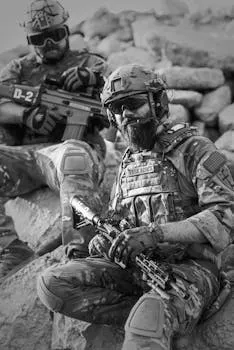
Goggins is worth citing not because his experience is typical — it isn’t — but because he’s the most documented example of what the SEAL selection and training process actually tests. It doesn’t primarily test strength or speed or even toughness in the way most people think of the word. BUD/S, and particularly its infamous Hell Week, tests one thing with excruciating precision: what do you do when your system wants to quit and your mind hasn’t decided yet? The five-and-a-half days of Hell Week include roughly four hours of total sleep, constant immersion in cold water, hundreds of miles of running and swimming in soft sand and open ocean, and an institutional culture designed to provide you with frequent, socially sanctioned off-ramps. You can quit at any time. Nobody will stop you. The bell is always there. That’s the test: not whether you can endure the suffering, but whether you’ll reach for the off-ramp when the suffering becomes available to rationalize.
The people who don’t reach for it share a structural feature in their psychology that researchers have been trying to quantify for decades. It shows up differently in different individuals — different stories, different training backgrounds, different coping styles — but it always contains the same core mechanism: they have built a system of daily actions that produces a default response to discomfort, and that default response is to proceed. They don’t make the decision in the moment of discomfort. They made it earlier, encoded it in their routine, and now when the moment comes, there’s nothing to decide. The Descent-to-Default Protocol is what that mechanism looks like in daily life, outside of military training, applied to a regular human schedule.
The Descent-to-Default Protocol: How SEAL Discipline Actually Works
The standard coverage of SEAL daily routines focuses on the wake time (early) and the physical training (brutal) and leaves out the thing that actually makes the system work, which is the architecture connecting those elements. A 4:30 AM wake-up without the architecture is just sleep deprivation. With it, it’s a different kind of day entirely.
The Descent-to-Default Protocol has four stages, each building on the last. Understanding the stage logic is more useful than copying specific times or exercises, because the logic transfers to any schedule and the specific elements don’t.
Stage 1: The Pre-Decision Window (the night before, 8–9 PM). Every SEAL interviewed for Admiral William McRaven’s leadership research, published in his 2014 book Make Your Bed, described some version of the same preparation ritual: before sleep, you eliminate all morning choices. Clothes laid out. Gear staged. Training location decided. Nothing left to figure out at 4:30 AM, because the person who’ll be awake at 4:30 AM is running on cortisol and sleep inertia, and that person makes worse decisions than the alert version of you who set things up the night before. Jocko Willink, who commanded SEAL Team Three’s Task Unit Bruiser during the Battle of Ramadi in 2006, describes this as “decision bankruptcy prevention.” Every decision you leave for morning is a debt you’ll pay with compound interest in sluggishness, negotiation with yourself, and eventual capitulation. The Pre-Decision Window is where you pay the debt in advance, and it costs almost nothing.
Stage 2: The Descent Sequence (first 45–60 minutes of waking). This is the core of the protocol and the most misunderstood part. The SEAL wake-up ritual isn’t about proving toughness. It’s about compressing the transition from sleep state to operational state as quickly as possible, using a sequence of automatic actions that require zero deliberation. The sequence typically looks like this: bed made (two minutes, done before full cognitive function is online), cold water exposure (face or shower, two to four minutes), light physical activation (ten to twenty minutes of movement — not the main training session, just activation). By the end of the sequence, roughly thirty to forty minutes after waking, the cortisol curve has peaked, adenosine levels have dropped enough to permit focus, and the body temperature has started rising. The person is now physiologically capable of the day’s hardest work. Critically, they arrived here through a sequence of automatic actions, not through willpower. They didn’t decide to get up and push through resistance. The sequence pulled them through it.
Stage 3: The Primary Training Block (45–90 minutes). This is what the typical recommendation thinks is the whole SEAL routine: the 5 AM run, the pull-up bar, the swim. The physical training is real and it’s intense, but it occupies a specific structural position in the day — it comes after the Descent Sequence has established momentum, and it comes before any cognitive work. The reasoning is physiological. A 2018 study from the University of British Columbia published in the British Journal of Sports Medicine found that high-intensity interval training produced acute improvements in executive function and working memory that lasted four to six hours post-exercise. A 2019 review in Neuroscience & Biobehavioral Reviews confirmed that morning exercise, specifically, produced the strongest cognitive benefits when performed before significant mental work. The SEAL training block isn’t just about physical fitness. It’s a cognitive primer. It literally changes the chemistry of the brain for the work that follows.
Stage 4: The After-Action Debrief (last ten minutes of the day). This stage has no glamour and no social media content, which is probably why it’s the least discussed element of SEAL operational culture and the most important one for long-term performance. Every SEAL unit runs an after-action review (AAR) after every significant operation. The AAR structure is: what happened, what worked, what didn’t, what changes when we do this again. Goggins adapted this to personal daily practice: every night, he reviews the day’s execution against its stated intention. Not to judge himself. To collect data. The AAR converts each day from a forgettable event into a data point in an ongoing experiment. Over weeks and months, this practice produces a detailed, accurate picture of your actual performance patterns — where your energy peaks, where it collapses, which parts of your routine are load-bearing and which ones are theater. Without the AAR, you’re just repeating. With it, you’re iterating. Deliberate practice at the day-planning level.
The Science Behind the Routine: Why Each Element Works

Cold exposure and the cortisol curve. The core reason early morning cold exposure is so consistent across high-performance military routines is not mental toughness theater. It’s cortisol management. Cortisol peaks naturally in the first thirty to forty-five minutes after waking — a phenomenon called the Cortisol Awakening Response (CAR) — and this peak is responsible for the initial mobilization of energy and alertness. A 2016 study by Siobhan Banks and colleagues at the University of South Australia found that deliberate cold exposure in the first twenty minutes of waking amplifies the CAR by roughly 300%, producing a sharper, faster cortisol peak and a correspondingly faster drop. The practical effect: you’re fully alert earlier, the grogginess window is compressed, and by the time you’re in the training block, you’re operating at closer to peak capacity. The physiological mechanisms here are well-documented, and the military figured this out empirically decades before anyone published a study about it. Controlled breathing layered into this window amplifies the effect further.
The bed-making ritual and the completion loop. McRaven’s argument for bed-making, outlined in his 2014 University of Texas commencement address that eventually became a book, is psychological: completing a task first thing in the morning establishes a completion template that the brain uses as a reference point for the rest of the day. This is less metaphor than mechanism. Bluma Zeigarnik, a Soviet psychologist, discovered in 1927 that incomplete tasks create persistent cognitive tension — the brain keeps returning to them, allocating working memory to tracking their unfinished state. Completing a task resolves the tension and frees working memory. The bed-making ritual works because it produces one clean completion, no loose ends, first thing in the morning, before the day has had a chance to create any. It’s a reset of the completion counter. Trivial in absolute terms, disproportionate in its effects on the day’s cognitive architecture.
The physical training block and executive function. John Ratey at Harvard Medical School spent decades studying what he called “the exercise prescription” for brain performance, culminating in his 2008 book Spark: The Revolutionary New Science of Exercise and the Brain. His core finding: aerobic exercise produces BDNF (brain-derived neurotrophic factor), a protein that Ratey calls “Miracle-Gro for the brain.” BDNF promotes the growth of new neurons in the hippocampus (the memory and learning center) and the prefrontal cortex (the executive function center), and these effects are most pronounced when exercise is performed in the morning. The SEAL training block — typically a combination of long-distance running, swimming, calisthenics, and strength work — produces a four-to-six-hour window of elevated BDNF and enhanced executive function. This is the window in which SEALs do their most cognitively demanding work: mission planning, intelligence analysis, leadership decisions, technical training. It’s not a coincidence. They’re working the problem during the window that the morning’s physical work has opened.
Sleep architecture and the 7-to-8-hour floor. One element of SEAL culture that often gets lost in the celebration of 4 AM wake times is the corresponding early sleep. Willink is famously in bed by 8:30 to 9 PM. Goggins, during his training periods, reports averaging seven to eight hours of sleep despite working and training schedules that look impossible on paper. Matthew Walker at UC Berkeley, in research published in his 2017 book Why We Sleep and in dozens of peer-reviewed papers in Nature and Science, established beyond reasonable dispute that sleep is not a performance variable you can optimize around. It’s the foundation everything else runs on. REM sleep consolidates procedural memory — including the physical skills trained each morning. Deep slow-wave sleep releases growth hormone, which repairs the tissue damaged in training. Chronically sleeping fewer than seven hours produces measurable deficits in decision-making, reaction time, emotional regulation, and immune function that no amount of willpower or supplementation compensates for. The early wake time only works because of the early bedtime. Without the bedtime, it’s just sleep deprivation with a fitness habit grafted onto it.
Nutrition architecture: fuel, not ritual. The SEAL approach to nutrition has been described in various ways by various veterans, but the consistent principle is instrumentalism. Food is fuel for specific outputs, not a source of identity or pleasure or reward. Mike Fischbach, a former SEAL who became a registered dietitian, has described the operational framework: high-protein breakfast within thirty minutes of training to arrest the catabolic state created by morning exercise; complex carbohydrates timed around training to support glycogen replenishment; minimal processed food not because of ideology but because processed food produces inflammatory load that degrades cognitive and physical performance over time. The nutritional discipline is not about restriction. It’s about precision. You’re managing a biological machine that needs specific inputs at specific times to produce specific outputs. The emotional relationship most people have with food is mostly irrelevant to that calculus.
The Results: What the Descent-to-Default Protocol Actually Produces
Talking about SEAL performance outputs risks sliding into hagiography, so the numbers should do the talking where they exist, and specificity should stand in where they don’t.
BUD/S has roughly a 75-80% attrition rate. The people who pass aren’t reliably the strongest or fastest at the start of training — studies of BUD/S candidates by the Naval Health Research Center have consistently failed to find a physical fitness measure that predicts completion. The metrics that predict completion are psychological: specifically, measures of what researchers call “goal orientation” and “internal locus of control” — the tendency to believe your actions determine your outcomes, and the habit of organizing your effort around long-term goals rather than moment-to-moment comfort. These are precisely the characteristics developed and selected for by the Descent-to-Default Protocol. The daily practice of doing the hard thing automatically, before negotiating with yourself about whether you feel like it, builds the neural architecture of goal orientation at the behavioral level. You don’t argue yourself into finishing the morning run. You finish it because the protocol says you finish it, and the protocol was decided when you were still capable of deciding clearly.
Goggins finished BUD/S, then completed Army Ranger School, then Air Force SERE school, making him one of a tiny number of people in American military history to complete all three. He went on to set a world record for pull-ups (4,030 in seventeen hours) and run over sixty ultramarathons, many on stress-fractured bones. None of that is a prescription. It’s a demonstration that the behavioral system he documents — the Descent-to-Default logic applied daily without exception — produced cumulative results that would have been entirely unpredictable from his starting point. A 300-pound pest exterminator with a traumatic childhood, learning disabilities, and a hole in his heart. The system doesn’t care about your starting point. It cares about daily execution.
Willink’s career outputs are different but structurally similar: commanding the most decorated special operations unit of the Iraq War (Task Unit Bruiser earned thirty-three individual decorations for valor at Ramadi), then building two successful companies, writing four books, hosting a podcast that has consistently charted in the top fifty globally. The output isn’t the point. The point is that these outputs share a common root: a disciplined daily system executed without emotional negotiation, year after year, in conditions that range from comfortable to operationally catastrophic. Prioritize and execute — Willink’s core leadership principle — is not a decision-making heuristic. It’s a description of what the Descent-to-Default Protocol produces at the cognitive level: the automatic ability to identify the most important thing and move toward it without the friction of competing impulses and mood-dependent motivation.
The research on SEALs specifically is limited by classification and small sample sizes. But there’s a convergent body of evidence from adjacent high-performance populations. A 2020 study of elite military operators across multiple nations, published in the Journal of Applied Physiology, found that individuals who maintained consistent morning training schedules showed 34% lower cortisol dysregulation under acute stress than those with variable training patterns — even when total training volume was identical. The consistency of the schedule was the active ingredient, not the intensity of the training. Another 2019 study in the Journal of Strength and Conditioning Research found that morning exercisers showed significantly better sleep architecture than evening exercisers, which partially explains the compounding effect: the morning training produces better sleep, which produces better morning training, which produces better sleep. The cycle is self-reinforcing once established.
The Adaptation: How to Build Your Version of the Descent-to-Default Protocol
Building your Pre-Decision Window. Pick a time the night before — 8:30 PM, 9 PM, whatever works — and spend ten minutes staging tomorrow. Clothes out. Water bottle filled. Training planned and specific (not “I’ll work out” but “run three miles starting at 6:10 AM from the front door”). Journal entry for tomorrow’s intentions, if you keep one. Phone on charger, away from the bed. Set the alarm. Every one of these micro-decisions made tonight is a decision not being made tomorrow at 6:07 AM, groggy, with the body making its case for staying horizontal. The Pre-Decision Window costs ten minutes. It buys forty minutes of decision-free morning execution. For the deeper psychology of why habits beat willpower, this is where the use lives: willpower removed from the equation entirely, replaced with environmental design.
Building your Descent Sequence. The sequence should take twenty to forty minutes and contain exactly zero decisions. Alarm goes off. Feet on floor. Bed made. Cold water on face (or cold shower if that’s the level — but don’t let perfect be the enemy of cold water on the face, which costs nothing and takes twenty seconds). Ten minutes of movement — anything: jumping jacks, a walk around the block, a short yoga flow. Not training yet. Activating. The goal is to arrive at the training block with the nervous system online and temperature rising, having made zero meaningful choices. Starting from scratch, begin with just the first element: feet on floor, bed made, face cold. That’s the Descent Sequence for week one. Add elements as it stabilizes. The goal in week one is one clean repetition per day. The no-zero-days principle applies here: a partial Descent Sequence executed is worth infinitely more than a perfect one planned but skipped.
Building your Primary Training Block. This doesn’t have to be military-grade. It has to be consistent and it has to happen before the most demanding cognitive work. Forty-five minutes of exercise, three to five mornings per week, produces the BDNF window Ratey documented. The specific exercise matters less than the consistency and the intensity — heart rate needs to hit a moderately hard zone for at least twenty minutes to produce the meaningful neurological effects. Running, swimming, lifting, a home workout: the format is irrelevant. What matters is that it’s scheduled, non-negotiable, and done before the laptop opens. The research on this is unambiguous. The brain is measurably different for four to six hours after a proper training session. That window is the most valuable real estate in the day. Use it for the hardest work, not email. For a specific framework for building the training habit from scratch, the thirty-day approach works better than trying to commit to a lifetime from day one.
Building your After-Action Debrief. Ten minutes, last thing at night, before the Pre-Decision Window for tomorrow. Three questions: What was planned? What actually happened? What changes tomorrow? Not a journal of feelings. A log of performance. Where did the Descent Sequence succeed? Where did it fail and why? Was the failure circumstantial (kid got sick, genuine emergency) or self-generated (stayed up too late, negotiated at 5:50 AM)? The distinction matters enormously, because the fix for circumstantial failure is logistical and the fix for self-generated failure is architectural. The system needs to be examined, the weak point found, and redesigned — not pushed against harder. Kaizen at the daily level. Over thirty days of consistent AARs, every structural weakness in the protocol gets identified and built around. Over ninety days, the personal version of the Descent-to-Default Protocol will be as load-tested as life allows.
What a realistic first week looks like. Monday: Pre-Decision Window works, Descent Sequence partially works (made bed, skipped cold water), Training Block happens but fifteen minutes late. Tuesday: alarm fails, entire morning protocol skipped, feels terrible. Wednesday: back on protocol, full sequence. Thursday: Pre-Decision Window skipped (fell asleep on couch), protocol degraded in the morning. Friday: full protocol, best training session of the week. Saturday: rest day but a ten-minute walk and a full AAR still happen. Sunday: prep for next week. That’s a realistic week. Five days of varying success, one miss, one adjusted rest day. Sunday’s AAR reveals: the Tuesday miss traces back to skipping the Pre-Decision Window Monday night. The degraded Thursday was the couch problem. Next week, the Pre-Decision Window moves earlier so falling asleep on the couch doesn’t kill it. That’s moving from reactive to responsive: instead of just experiencing the protocol’s failures, diagnosing and redesigning them. That’s the loop the SEAL system runs. A civilian version will too, eventually.
The Traps: Three Ways People Break the Descent-to-Default Protocol
Most people who attempt to build a SEAL-inspired morning routine fail within the first three weeks. Not because the protocol is too hard, but because they fall into one of three predictable traps. Here they are, labeled, for sidestepping.
Trap 1: The Identity Upgrade Problem. Read Goggins’s book, watch Willink’s podcast, read an article like this one, and the feeling shows up. The motivation. The conviction. The sense of being a person who does things differently now. The post goes up. The 4:30 AM alarm app gets downloaded. Someone gets told. And then the morning comes and the person who woke up is not the motivated version who watched the podcast last night — it’s the sleepy version, the one who had no part in that decision and doesn’t share its enthusiasm. The problem isn’t weak will. The problem is that motivation produces decisions that willpower is supposed to execute, and willpower is the most unreliable employee anyone’s ever had. The Descent-to-Default Protocol is specifically designed to remove willpower from the equation by making the sequence automatic, but it only becomes automatic through consistent repetition over weeks. The gap between “deciding to do it” and “the sequence running automatically” is where most people quit. The gap is real and it takes roughly sixty-six days to close, per Phillippa Lally’s 2009 habit research at University College London. The job for those sixty-six days is boring execution, not inspiration. For the science on habit formation timelines, that’s the most accurate number available.
Trap 2: The Maximal Protocol. A morning routine gets designed that includes: 4:30 AM wake, ice bath, thirty-minute meditation, ninety-minute workout, journaling, reading, cold brew coffee made from scratch, and ten minutes of gratitude practice. It runs for four days. On day five, the ice bath gets skipped and the whole thing feels compromised. On day six, oversleeping by twenty minutes kills the meditation and shortens the workout, and the day starts feeling like a failure. The protocol has collapsed not from lack of discipline but because it was built with no slack. Real SEAL protocols have a minimum viable version — the non-negotiables that execute even on bad days — and an optimal version for the days when everything lines up. Define the minimum viable protocol first: the three things that happen no matter what, even on sick days, even on travel days, even after the worst night of sleep in six months. Build up from there. The minimum viable protocol is what turns the Descent-to-Default from a good-day system into an all-weather one.
Trap 3: The Optimization Obsession. Three weeks into the protocol, the question becomes whether 4:45 AM might be better than 4:30 for a specific cortisol curve. Six articles get read about whether cold showers or ice baths produce better catecholamine responses. The pre-training nutrition window gets experimented with. A behavioral system has been turned into a research project, and while the details were being optimized, four mornings got missed because of a rabbit hole at midnight. The Navy SEALs optimize their protocols, but they do it systematically, through the AAR process, once weekly, not through constant tinkering. The protocol needs time to stabilize before it can be meaningfully improved. Three weeks of consistent execution tells almost nothing about the protocol’s upper bounds. Three months of consistent execution tells everything worth knowing about where the real friction is. Don’t optimize before executing. Optimization is what happens with a system that’s been run long enough to understand. Anyone who feels the pull toward this trap should understand the dopamine dynamics of research and planning versus execution — the brain gets a similar reward from thinking about doing something as from doing it, and that substitution is the engine of productive procrastination.
The Contrarian Take: What the SEAL Discipline Myth Gets Wrong
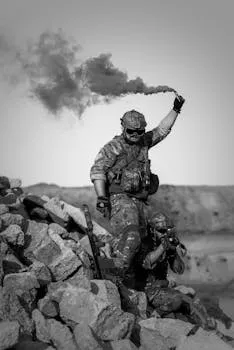
One of the most candid SEAL veterans interviewed extensively on the psychological aftermath of elite military service is Brandon Webb, former SEAL sniper and co-founder of SOFREP. Webb has written candidly about the post-deployment reality for many operators: hypervigilance that won’t switch off, sleep architecture permanently altered by years of broken rest, a tolerance for intensity that makes normal civilian life feel meaningless and flat. The discipline that enables you to function in combat doesn’t automatically translate to the ability to sit quietly with your children, maintain a marriage, or tolerate the dullness of most professional work. It’s a tool, not a personality upgrade, and like most powerful tools, it causes specific kinds of damage when applied to the wrong task.
The version of the Descent-to-Default Protocol worth building is one calibrated to what an actual life demands. For most people, that means a morning routine that creates cognitive clarity and physical baseline for a day of professional work, parenting, and relationship maintenance — not a routine optimized for conducting a direct-action raid on a target in Mosul at 3 AM. The structural principles are the same. The intensity and the specific elements should match actual operational requirements. Willink would probably agree with this. Goggins would say push harder. Both positions have merit. Neither one is the complete picture.
The deepest truth about SEAL discipline, which gets lost in the mythology, is that it’s boring. Not the training — the training is genuinely brutal. The discipline architecture is boring: same wake time every day, same sequence every morning, same physical training structure every week, variations in intensity but not in structure, same after-action review process after every significant event, for years. The results look dramatic from the outside. The practice looks like a very boring spreadsheet from the inside. That’s the honest version of what unshakeable discipline actually looks like when it’s working.
How This Connects: The Discipline Ecosystem
The Descent-to-Default Protocol doesn’t exist in isolation. It’s one layer in a larger architecture of resilience tools that compound on each other. The morning protocol creates the physiological and cognitive foundation. What happens with that foundation is a function of the other systems already built: how you approach problems when they appear, how you triage competing demands, how you manage the emotional load of high-stress work without letting it corrupt your decision-making.
The deliberate practice framework connects directly to Stage 3 of the protocol: the training block is only as valuable as the intentionality brought to it. Mindless repetition produces mediocre results. Structured, feedback-driven practice produces elite results, even at civilian volumes and intensities. The breathing protocols that military operators use to manage acute stress under fire have a direct civilian application in the Descent Sequence — two minutes of controlled breathing in the transition from cold water exposure to training activation changes physiological state more reliably than most pre-workout supplements. And the daily journaling practice that anchors the After-Action Debrief is the long-term data-collection layer that makes the entire system self-improving rather than static.
Building this from zero, the 30-day discipline challenge gives a structured container for the first month of the protocol. For diagnosing why an existing morning routine is stalling, the 21-day reset is a useful recalibration tool. The four-step unbreakable framework addresses the psychological layer beneath the behavioral one — the identity and belief architecture that determines whether the protocol becomes automatic or remains a constant act of will. All of these connect because they’re parts of the same system: the daily practice of becoming a person who does what they say they’re going to do, in the specific order that compounds.
Navy SEALs Discipline Q&A About the Navy SEAL Discipline Routine
What time do Navy SEALs actually wake up? There’s no single answer, because SEAL schedules vary by assignment, deployment status, and unit. Jocko Willink famously wakes at 4:30 AM and has for decades. David Goggins has documented waking between 3:00 and 4:00 AM during peak training periods. What’s consistent across documented SEAL accounts is that wake time is fixed, non-negotiable, and set the night before — the specific time matters less than the consistency and the Pre-Decision architecture that makes it automatic rather than effortful.
Do you need to wake up at 4:30 AM to apply the SEAL discipline routine? No. The Descent-to-Default Protocol’s architecture works at any wake time, provided the sequence is consistent and the training block precedes the most cognitively demanding work. A 6:00 AM wake with full protocol execution beats a 4:30 AM wake with chronic sleep debt every time. Matthew Walker’s research at UC Berkeley established that sleep restriction below seven hours produces cognitive deficits that compound daily and are not fully recovered with a single catch-up night. Choose a wake time that allows a minimum of seven hours from bedtime, then build the protocol forward from there.
What is the most important element of the SEAL morning routine? The Pre-Decision Window — staging the morning the night before — because it’s the element that makes everything else possible without willpower expenditure. If the clothes aren’t laid out, the training location isn’t decided, and the alarm isn’t set, the morning becomes a series of decisions made by a sleep-inertia-impaired version of the self, and that person reliably chooses comfort over protocol. The cold shower and the 5 AM run get all the attention. The ten minutes of evening staging produces them. Without the staging, willpower is being asked to do the work environment should be doing.
How long does it take to build the Descent-to-Default Protocol into an automatic habit? Phillippa Lally’s 2009 habit research at University College London found an average of 66 days for new behaviors to become automatic, with a range of 18 to 254 days depending on complexity. A multi-step morning protocol sits at the complex end of that range. Most people report that individual elements (bed-making, cold water) feel automatic within three to four weeks, while the full sequence takes eight to twelve weeks of consistent execution. The After-Action Debrief significantly accelerates this by converting each failed morning from a discouraging event into a diagnostic data point that improves the system.
Is the SEAL approach to discipline healthy for non-military people? The behavioral architecture is healthy and research-supported for civilians. The specific intensities and volumes of SEAL physical training are calibrated for operators whose job requires extreme physical performance under sustained stress — applying those volumes without the corresponding recovery infrastructure (professional training support, military medical care, mandatory rest cycles) produces overtraining and injury rather than fitness gains. The principles transfer; the specific numbers often don’t. A 45-to-60-minute morning training session at moderate-to-high intensity produces the cognitive and physiological benefits documented in the research. That’s civilian-viable. Six hours of daily training at BUD/S intensities is not.
What does the SEAL After-Action Review look like as a personal practice? In SEAL operational culture, the AAR is structured: what was the plan, what actually happened, what worked, what failed, what changes next time. As a personal practice, the simplest version is three written questions answered in ten minutes at end of day: (1) What was the plan? (2) What actually happened? (3) What one thing changes tomorrow? The goal is not self-criticism. It’s data collection. Over thirty days of consistent AARs, the two or three structural failures that account for the majority of protocol breakdowns get identified — and those structural failures are almost always fixable through environmental redesign rather than willpower increase.
How does the SEAL discipline routine connect to mental health? The research here is strong and directional: consistent morning exercise, adequate sleep, and structured routines are among the most evidence-supported non-pharmacological interventions for depression, anxiety, and cognitive resilience under stress. A 2020 meta-analysis in JAMA Psychiatry found that individuals who exercised consistently showed depression rates roughly 26% lower than sedentary individuals, with the strongest effects in the morning exercise group. The mechanism isn’t willpower or mental toughness — it’s the neurochemical effects of exercise on dopamine, serotonin, norepinephrine, and BDNF systems. The SEAL routine produces these effects as a byproduct of its performance optimization. The mental health benefits are real and they’re free, included in the same protocol.
What’s the minimum version of this routine for someone starting from zero? Three elements, executed daily: (1) Set a fixed wake time and hold it within fifteen minutes seven days a week — consistency in wake time is the anchor that stabilizes sleep architecture faster than almost any other intervention. (2) Do something physical within the first hour — a ten-minute walk counts; the bar is movement before cognitive work, not specific exercise. (3) Make the bed before leaving the bedroom. Run these three elements for thirty consecutive days before adding anything. The research on habit stacking indicates that adding new behaviors to an established sequence is significantly easier than adding them to an unstructured day. Build the anchor first. Stack on top of it.