

Then Musashi retired from dueling entirely and spent the rest of his life painting, sculpting, writing poetry, and working on a manuscript he finished a week before he died at age sixty-one. That manuscript, The Book of Five Rings, is still in print four hundred years later. It’s taught at West Point, cited in corporate boardrooms, and sits on the nightstands of people who have never held a sword and never will.
What Musashi understood — and what the entire samurai discipline tradition was built around — was a concept that modern productivity culture has almost entirely abandoned: the idea that how you spend your hours determines who you become, not the other way around. The common assumption is that great character produces great habits. The samurai tradition inverted this. It held that great habits, practiced with full attention every day for years, produce character. Identity follows action. The person arrives after the practice does.
This is the Mushin Protocol — the samurai’s five-layer daily discipline architecture — and it is more applicable to the problems of contemporary life than most of what fills the current bestseller lists. Not because the samurai were perfect (they weren’t — they were humans with status anxieties and political agendas and all the usual flaws), but because they built the most systematically examined approach to daily living that any warrior culture has ever produced. They thought about this problem harder than most people do today, for longer, and they left notes.
This is the samurai discipline routine, reconstructed from primary sources, applied to modern life.
Who the Samurai Actually Were (Not Who You Think)
Before getting into the structure, a misconception needs demolishing, because most of what popular culture thinks it knows about samurai is wrong, and the wrong version produces the wrong lesson.
The myth: the samurai were primarily warriors who trained constantly for combat and lived in a perpetual state of martial intensity. The reality: most samurai, for most of the Edo period (1603–1868), lived in a time of relative peace and never once used a sword in actual combat. They were bureaucrats, administrators, scholars, and poets who happened to carry swords as a symbol of their class status. The average samurai spent considerably more time doing paperwork than fighting. The dojo was their gym. The sword was their laptop.
This matters because it means samurai discipline wasn’t designed for wartime intensity. It was designed for exactly the problem modern people face: how do you maintain sharpness, purpose, and excellence when there is no immediate external threat forcing it? How do you stay disciplined when nothing is chasing you?
The samurai answer was mushin — translated roughly as “no-mind” but better understood as “action without mental interference.” The state where training has become so complete that deliberate thought is no longer required. The body knows what to do. The mind stops arguing. The deliberate practice has been built deep enough that performance flows without negotiation.
Getting to mushin required a specific daily architecture. That architecture is what follows.
There’s also the matter of Bushido — the ethical code that structured samurai life. Bushido translates literally as “the way of the warrior,” and it codified seven virtues: rectitude (gi), courage (yuki), benevolence (jin), respect (rei), honesty (makoto), honor (meiyo), and loyalty (chūgi). These weren’t decorative values hung on a wall. They were operational specifications for daily behavior. Every decision was supposed to pass through the Bushido filter. If the action could be performed with honor and clarity, it happened. If it couldn’t, it didn’t. The code replaced the need for case-by-case deliberation with something more useful: a committed operating system.
This is a point worth pausing on. The samurai didn’t wake up each morning and decide afresh whether to act with honor. The decision was already made. What they practiced daily was the execution of an already-settled value system. The Mushin Protocol only works after the prior work of deciding who you are has been done before the daily routine begins — which is exactly what most modern productivity frameworks skip entirely.
The Mushin Protocol: Layer One — The Dawn Preparation
The samurai day began before sunrise. Not because early rising is inherently virtuous (it isn’t — a night-shift surgeon who sleeps until noon and operates at peak performance is doing something more valuable than a mediocre person who wakes at 4 AM and checks Instagram in the dark), but because the pre-dawn hours had a specific quality the samurai identified and exploited: uncontested attention.
The first ritual was misogi — ritual purification, usually cold water. In practice, this ranged from full cold-water immersion to pouring cold water over the head and hands while reciting a short prayer. The function was not spiritual hygiene in any mystical sense. It was a reliable physiological reset that activates the sympathetic nervous system, produces a cortisol spike that creates alertness, and — this is the part modern cold exposure research has validated — produces a norepinephrine release of up to 300% above baseline. The research from the Thrombosis Research Institute confirmed what the samurai had observed empirically: cold water immersion done consistently changes your baseline stress tolerance, not just your response in the moment.
The second ritual was zazen — seated meditation, typically thirty to sixty minutes. The purpose was not relaxation. The samurai had a specific use case: shikantaza, which means “just sitting,” with full attention on the present moment, no visualization, no mantra, no goal. Just the practice of noticing where the mind goes and returning it to now, thousands of times over the course of a session. This is, when you strip the cultural packaging, an attention training program. What the samurai were building was the ability to place full focus on what was in front of them without the mind wandering to yesterday’s grievances or tomorrow’s anxieties. This is the same capacity that box breathing builds through the breath, and it was considered non-negotiable. A samurai who couldn’t control his attention couldn’t control his sword.
The third element of the dawn preparation was what might be called the mortality meditation — a daily practice of contemplating death. The Hagakure, written by Yamamoto Tsunetomo around 1716, opens with a line that has startled readers for three centuries: “The Way of the Samurai is found in death.” This is often read as glorification of dying in battle, which is a misreading. The actual practice was to spend a few minutes each morning accepting the possibility that today might be the last day. Not as a morbid exercise, but as a clarifying one. When you accept that today might end, everything that is genuinely important rises to the surface and everything trivial drops away. The first hour of the morning stops going to things a dying person would find absurd. You stop wasting execution cycles on low-priority items when the high-priority ones are right there. The Japanese call this practice memento mori in the Western version, but the samurai version was more active — not a reminder, but a full imaginative acceptance, repeated fresh every morning until it became reflex.
Anyone who runs this practice for a month, as a test, tends to report the same arc: wildly effective and somewhat disturbing. The first few mornings, the brain resists. By day ten, the morning decisions get sharper — low-value commitments get cut with a clarity that wasn’t there before. By day twenty, the urgency becomes sustainable rather than panicked. What the samurai figured out is that the right relationship to mortality is not fear, not denial, and not bravado. It’s acceptance so complete it becomes structural.
The Mushin Protocol: Layer Two — The Craft Block
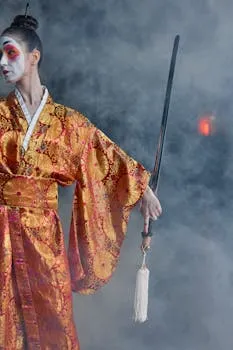
Musashi laid this out explicitly in The Book of Five Rings. The fifth and final book, the Ku-no-maki (the Book of Void), argues that the master swordsman must reach a state of no-technique — where the studied forms have been so thoroughly internalized that they no longer feel like forms. They feel like natural movement. This is what sports science now calls deliberate practice reaching automaticity: the skill moves from the prefrontal cortex (conscious execution) to the basal ganglia (automatic execution), freeing up cognitive bandwidth for strategic thinking. The samurai called this mushin. The neuroscientists call it procedural memory consolidation. The mechanism is identical.
What made the samurai training block different from most modern training is the concept of kata — formalized movement patterns practiced in sequence, repeated hundreds of times per session, for years. Modern training culture tends to favor variety (muscle confusion, rotating programs, mixing up stimuli to prevent adaptation). The samurai tradition went the opposite direction. A practitioner might spend three years on a single kata before being permitted to learn the next one. The argument was that depth beats breadth, that mastery of a few patterns completely transforms your capacity more than cursory exposure to many patterns. This runs counter to the current fitness-industry narrative but aligns precisely with what K. Anders Ericsson’s research at Florida State University found about the structure of expertise: the experts practiced fewer skills, more deeply, with better feedback mechanisms, for more hours.
The craft block also included a hard constraint that modern knowledge workers have largely abandoned: the work ended at a fixed time. The samurai training block was not open-ended. There was a scheduled end, after which the practitioner moved to the next layer of the day. This fixed endpoint served a specific function: it created urgency during the block (coasting isn’t possible if the window closes), and it prevented the exhaustion-without-output that comes from extended periods of low-intensity unfocused effort. Four focused hours beats twelve scattered ones. This principle shows up in research on creative productivity (most serious composers, writers, and scientists report that genuinely productive focused work caps out at four to five hours per day), and the samurai codified it into their daily architecture centuries before the research confirmed it.
The Mushin Protocol: Layer Three — Governance and Duty
By midday, the samurai attended to administrative and social obligations: advising their lord, managing estates, resolving disputes, teaching younger warriors, corresponding with peers. This was the unglamorous middle of the day — the meetings, the paperwork, the interpersonal negotiations that high performers in every era have had to work through without sacrificing their edge.
The samurai approach to this layer was governed by rei — the Bushido virtue of respect — operationalized as a set of protocols for interaction that removed the need for real-time social calculation. Formal greetings, established hierarchies, defined protocols for disagreement — these weren’t arbitrary formalities. They were friction-reduction mechanisms. Pre-agreed scripts for difficult conversations mean less cognitive energy spent managing the interaction and more spent on the substance of it. Every organization in the world still does this, whether they know it or not. Parliamentary procedure, Roberts Rules of Order, surgical timeout protocols — they’re all versions of rei applied to contemporary institutional life.
More interesting still is how the samurai handled the emotional content of the duty layer. Gi — rectitude, the first Bushido virtue — required that decisions be made on principle rather than preference. A samurai who owed a debt to a lord might be required to carry out an order he personally found distasteful. The framework for navigating this was not “how do I feel about this?” but “does this action align with the code?” The emotion was noted, acknowledged, and then set aside as operationally irrelevant. This is not emotional suppression in the damaging, pressure-building sense. It’s closer to what emotional discipline actually looks like when practiced at scale: everything gets felt, nothing rules, and the code provides the decision tree so values aren’t being rebuilt from scratch under pressure every day.
The duty layer also required what Tsunetomo called bunbu ryōdō — “the dual path of literary and martial arts.” A samurai was expected to be equally capable in both. The warrior who could not also read, write, and engage with ideas was considered incomplete. This wasn’t cultural window-dressing. It was a practical recognition that the capacity to act and the capacity to think are not competing resources. They feed each other. The warrior who reads history can recognize patterns in situations the pure martial specialist would misread. The bureaucrat who trains the body can execute under pressure that paralyzes the sedentary administrator.
Modern professional life has almost entirely abandoned this dual-path model. Specialization happens early and deeply. The software engineer doesn’t read military history. The executive doesn’t train the body with the same seriousness as the professional. The monk mode protocol is the closest contemporary equivalent to bunbu ryōdō — the deliberate decision to develop across domains instead of collapsing into the narrow groove of a professional function — and it remains one of the more radical things a modern person can do.
The Mushin Protocol: Layer Four — The Evening Arts
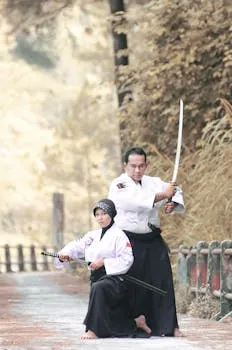
There’s a neuroscience explanation for why this works, and it wasn’t available to the samurai, but they had empirically observed the effect. Sustained attention on fine-motor tasks activates the default mode network in a specific way that what researchers at Harvard call “attentional restoration” — a genuine cognitive recovery that is qualitatively different from passive rest. Looking at screens doesn’t produce it. Passive entertainment doesn’t produce it. Activities that require focused presence with a tangible medium (drawing, music, woodworking, cooking at craft) do. The samurai evening arts were, in modern terms, a cognitive recovery protocol disguised as culture.
“Do calligraphy to become a better professional” sounds like the kind of advice that gets mocked in productivity culture, where the preferred approach is to optimize every hour for measurable output. But the samurai tradition is pointing at something that the pure-optimization model misses: the brain that produces great work is not the brain running at maximum throughput every hour. It’s the brain that alternates between peak effort and genuine recovery, between hard-focus and soft-focus, between the martial and the artistic. Mihaly Csikszentmihalyi’s flow research found that the people who report the highest rates of flow experience are not those who work the most hours. They’re those who spend the most time in deliberate, skilled engagement with activities that match their capacity — which includes activities the culture would classify as leisure but the practitioner treats as craft. This is deliberate practice logic applied to recovery itself.
The evening also included communal eating, typically taken as a household rather than alone. The samurai tradition was deeply social in a way that modern productivity culture has stripped out. Meals with family, with students, with fellow warriors — these were not optional. They were considered part of the formation of character. A person who ate alone habitually, by choice, was viewed with some suspicion: self-isolation signals that something important is being avoided. The communal meal was when the day’s experiences were processed, when younger warriors observed how seniors handled conversation and conflict, when the social fabric that made collective action possible was maintained one meal at a time.
The Mushin Protocol: Layer Five — The Evening Review
The samurai day ended with a structured review practice. Not a gratitude journal in the contemporary wellness sense, but a rigorous self-assessment framework drawn from Confucian philosophy that Yoshida Shōin, the nineteenth-century samurai teacher, called hansei — reflective self-examination. Three questions, asked with honesty, every night:
- Where did I fail to act with gi (rectitude) today?
- Where did I act from preference rather than principle?
- What did I leave undone that needed to be done?
The purpose was not self-punishment. The samurai tradition was remarkably clear on this point: self-flagellation over past errors is itself a failure of discipline, because it occupies mental bandwidth that should be allocated to tomorrow’s performance. Hansei was the practice of locating the gap between standard and execution, acknowledging it without drama, and adjusting the next day’s approach accordingly. This is kaizen applied to personal performance — the Japanese philosophy of continuous small improvement, which begins with the ability to accurately perceive the gap between where you are and where you should be.
After hansei, the samurai slept. Not as an afterthought, not as the passive event that modern culture treats sleep as, but as a deliberate final act of discipline. The sleeping environment was considered part of the practice: dark, quiet, temperature-controlled (Japanese traditional architecture used this by design), and aligned with a fixed schedule that the body had learned to expect. The concept of ma — negative space, the pause between actions that gives them meaning — extended to sleep. The void between one day’s discipline and the next was not wasted time. It was the space in which the day’s training was consolidated.
Modern sleep science has spent decades confirming what the samurai seemed to understand by observation. The research from Matthew Walker’s lab at UC Berkeley and others shows that motor skill learning depends on sleep for consolidation — the brain replays and strengthens motor patterns during deep sleep and REM cycles, which is why the kata practiced this morning gets sharper by tomorrow without additional practice, provided the sleep is adequate. The samurai who cut their sleep to fit more training hours were not more disciplined. They were sabotaging the very adaptation they were training for.
What the Mushin Protocol Actually Produces
Concrete results matter here, because the point of understanding the samurai routine is not historical appreciation. It’s to extract something useful for a life being lived in the twenty-first century.
The Mushin Protocol, practiced consistently, produces four specific outputs that are measurable and that modern research confirms.
Output One: Cognitive automaticity in your core skill. The kata principle — deep practice of a limited set of patterns — accelerates the transition of key skills from effortful to automatic. A lawyer who drills the same argument structures every morning for three years can construct a complex legal argument under pressure without conscious effort. A leader who practices the same conflict resolution framework in low-stakes situations can apply it under genuine crisis without the performance degrading. This is mushin applied to professional life, and it has a specific measurable signature: performance quality under high-stakes pressure matches performance quality in practice, rather than dropping 30–40% as it does in people who haven’t built the automaticity. The gap between the best day and the worst day shrinks. The floor rises.
Output Two: Reduced decision fatigue on values questions. The Bushido code’s function was to pre-answer all values questions so they didn’t have to be re-examined under pressure. A modern equivalent is the personal operating system that some high performers describe — a documented set of non-negotiable commitments that removes the daily deliberation cost. Roy Baumeister’s research at Florida State found that decision-making quality degrades with each additional decision made, regardless of the importance of the decisions. The samurai architecture front-loaded the major decisions (who am I, what do I stand for, what won’t I do) into a code that was settled before each day began, preserving cognitive resources for tactical decisions where fresh thinking genuinely mattered. Building a personal version of Bushido — not someone else’s, an original one — is the most structurally important thing to do for taking genuine control of a life.
Output Three: Emotional equilibrium under sustained adversity. The hansei evening review, practiced consistently, produces a relationship to one’s own failures that is neither suppressive nor catastrophizing. The gap gets seen clearly. Correction happens without drama. This is the mechanism behind what sports psychologists call “elite composure” — the ability of high performers to experience a bad game, a bad quarter, a bad decision, and return to baseline quickly without the negative event creating a cascade of self-doubt. Tsunetomo described this as “the samurai who makes no mistakes” — not because he never errs, but because he processes each error completely and moves forward without carrying it. This connects directly to what the post-traumatic growth research shows: the people who recover fastest and grow most from adversity are not those who feel the least, but those who process most efficiently.
Output Four: Sustained performance without burnout. The five-layer architecture distributes cognitive demands across the day in a way that prevents the depletion pattern of modern knowledge work, where people do one kind of thing intensively for eight to twelve hours and wonder why they’re exhausted and unproductive. The samurai routine looks inefficient by modern standards — only four or five hours of direct training, surrounded by meditation, craft, administrative duties, and arts — but total effective output over years is higher than the intensive model because the practitioner is still going, still sharp, still improving at sixty, which most people who pushed hard in their twenties and thirties are not. The Japanese concept of ikigai — a reason for being that sustains you — requires having built a daily practice that can be maintained for a lifetime, not optimized for a sprint.
Adapting the Mushin Protocol to Modern Life
Layer One — The Dawn Preparation: Cold water exposure (a shower works fine — two minutes, fully cold, immediately after waking), fifteen to twenty minutes of seated attention practice (the app Waking Up with Sam Harris or just a timer and basic breath awareness), and a five-minute mortality meditation (one written sentence about what would need to have been done today for this to have been a day worth living). Total time investment: thirty-five to forty-five minutes. This replaces the hour most people spend in a semi-conscious state consuming input that creates no value.
Layer Two — The Craft Block: The single most important skill development, practiced with complete focus, for two to four hours. No meetings, no email, no interruptions. The no-zero-days commitment applies here specifically: this block happens every day, even if the day compresses it to forty-five minutes, because the continuity of the practice matters more than any individual session’s duration. The kata principle applies: drill the core skill deeply rather than skipping across twelve different things. The person who works on the same craft area for three years in morning blocks outpaces the person who rotates focus every few weeks, every time, without exception.
Layer Three — The Governance and Duty Block: Meetings, email, administrative work, collaborative tasks — all of it compressed into a defined window rather than spread across the whole day. The rei principle applies: establish scripts for recurring interactions (handling disagreements, giving feedback, declining requests) so these interactions cost less cognitive energy. The bunbu ryōdō principle applies: deliberately develop at least one domain outside the primary professional function. Read outside the field. Train a physical skill. Build something by hand. The cross-domain competence compounds in ways that specialization cannot.
Layer Four — The Evening Arts: One craft activity that requires focused presence with a tangible medium. The medium is almost irrelevant — cooking, drawing, playing an instrument, woodworking, gardening at actual attention — what matters is full presence with a physical thing that responds to skill. Screen-based entertainment does not count. The distinction is active engagement versus passive reception. Thirty to sixty minutes of genuine craft engagement produces the attentional restoration the samurai built into their evenings, and it protects against the brain-rot pattern of turning off work and turning on passive consumption until sleep, which produces neither recovery nor growth.
Layer Five — The Evening Review: Three questions, ten minutes, written or spoken aloud. Where did action come from principle today? Where did it come from avoidance, laziness, or fear? What needs to happen tomorrow that’s been put off? Then sleep at a fixed time, without screens in the room, in as dark and quiet an environment as can be engineered. The sleep architecture is not optional. Everything the Mushin Protocol builds during the day consolidates during sleep. Shortchanging the sleep is shortchanging the training.
The full implementation takes two to three weeks before it starts to feel natural and about sixty to ninety days before it becomes automatic. Run it for six months and the person who started looks unrecognizable by the end — not because of a dramatic overnight transformation, but because of 180 consecutive days of incremental deposits into a compound account that hadn’t been used before. This is how discipline challenges actually work when they’re built on structural architecture rather than willpower.
One practical note on the transition: don’t try to implement all five layers simultaneously. Start with Layer Two — the craft block — because it produces the most immediate and measurable results and gives the clearest evidence that the system works. Add Layer One after two weeks. Add Layer Five after another two weeks. Layers Three and Four will integrate naturally once the first three are running. The samurai didn’t learn all five layers at once either. They spent years on each, in sequence, before the architecture was complete.
What Modern Discipline Culture Gets Wrong (That the Samurai Got Right)
The current discipline-and-productivity discourse has produced something the samurai tradition would have recognized as a pathology: performance theater. The person who posts their 4 AM workout, documents their morning routine for an audience, accumulates productivity systems the way other people accumulate sneakers — using the appearance of discipline as a substitute for the actual product of it.
The samurai tradition had a specific term for the person whose outer presentation of discipline exceeded their inner development: tsurai, roughly “one who merely endures.” The tsurai warrior follows the forms without developing the substance. He does the kata without going deep. He performs rei without feeling gi. He meditates for forty-five minutes and narrates it on social media and has built nothing. The indicator was always the same: under genuine pressure, the tsurai warrior’s form would collapse because there was nothing underneath it except habit and reputation management.
The Mushin Protocol is not a performance. It has no audience. The evening review is not content. The dawn preparation is not a brand. The entire architecture is designed to accumulate something that cannot be photographed: the kind of automatic excellence that shows up in difficult moments, under conditions nobody planned for, when the cameras aren’t running. That’s what mushin actually means. Not the absence of mind, but the presence of something that was trained so deeply it no longer needs conscious supervision.
There’s a companion mistake that modern discipline culture makes: the belief that intensity is discipline. The person who goes brutally hard for four weeks and then crashes is not running the samurai protocol. The samurai system was designed for seventy-year careers, not for a viral transformation timeline. The training intensity was calibrated to produce sustainable adaptation, not maximum short-term suffering. The brain rot that comes from treating life as a series of sprints rather than a sustained campaign is a modern invention. The samurai understood instinctively what exercise physiologists now confirm: adaptation requires stress followed by recovery, not stress followed by more stress until the system fails. The Mushin Protocol alternates hard-focus and soft-focus, exertion and restoration, martial and artistic, every day, as a designed feature rather than a concession to weakness.
Musashi spent thirty years wandering Japan in a nearly permanent state of shugyō — austere training under difficult conditions. He also wrote poetry, carved sculptures, and painted landscapes. The paintings are still in museums. The sculptures are still admired. The poetry is still read. He was not less of a swordsman for any of it. He was more of one — because the breadth of his attention trained dimensions of perception and presence that sword practice alone could not have reached. This is the part of the samurai model that the modern performance cult has entirely abandoned, and the absence shows in the products people are producing: technically excellent, emotionally flat, sustainable for exactly the shelf life of the motivation that started them.
How the Mushin Protocol Connects to the Full Resilience System
The Mushin Protocol is, at its core, a system for building what we call at Resilient Wisdom the internal architecture — the hardware of character that makes everything else possible. The twelve mindset tools in the system are the software. The Mushin Protocol is what installs the operating system they run on.
Layer One of the protocol — the dawn preparation — directly supports breath-based nervous system regulation and the problem-focus over blame-focus discipline that distinguishes people who build from people who stew. Layer Two — the craft block — is the daily expression of deliberate practice applied to a primary domain, and it’s where internal locus of control gets built rather than described. Layer Five — the evening review — is kaizen made daily and personal.
The samurai model also illuminates a gap in most resilience frameworks: they focus on how to respond to adversity without addressing how to structure the ordinary days between crises. The Mushin Protocol is the bridge. It’s the answer to the question “what happens on a Tuesday when nothing is on fire and everything is possible?” which is, in practice, the question that determines readiness when the crisis does arrive. The samurai who practices every day is ready. The samurai who only trains when threatened is not.
For anyone starting with the Mushin Protocol, the 30-Day Forge Protocol gives the scaffolded version — a day-by-day implementation structure that adds one element at a time rather than asking for the whole architecture at once. For the craft-block specifically, the resources on deliberate practice go deeper on how to structure the two-to-four hours so they actually produce adaptation rather than just logging time. And for the deeper philosophical foundation — the Bushido code applied to contemporary life — the work on the warrior’s code and masculine purpose addresses the prior question that the Mushin Protocol assumes has been answered: who are you, and what do you stand for?
Settle that question first. Then build the protocol around it. The samurai had the sequence right.
Reader Questions About Samurais Discipline Routine About the Samurai Discipline Routine
What was the samurai daily routine? The samurai day structured around five layers: pre-dawn purification and meditation, a focused morning training block covering both martial and literary arts, midday administrative and governance duties, an evening period devoted to fine arts and communal eating, and a nightly structured self-review before sleep. The architecture was designed for sustained excellence across a lifetime, not peak performance in a single campaign. The Mushin Protocol is a modern translation of this five-layer structure that removes the feudal context while preserving the functional logic.
What is mushin in samurai training? Mushin — literally “no-mind” — describes the state of performance where trained skills execute without conscious deliberation. A swordsman in mushin responds to an attack before the thinking brain has registered it. A modern equivalent is the expert surgeon or musician whose hands know what to do while the conscious mind handles higher-order problems. Reaching mushin in any domain requires years of deliberate practice that has moved the skill from prefrontal (effortful, conscious) to basal-ganglia (automatic, unconscious) execution. The samurai daily routine was engineered specifically to accelerate this transition.
What is Bushido and how does it apply today? Bushido — “the way of the warrior” — is the ethical code structuring samurai life around seven virtues: rectitude, courage, benevolence, respect, honesty, honor, and loyalty. Its modern application is as a personal operating system: a committed set of values decided in advance that removes the need to re-evaluate ethical commitments under pressure. The cost of not having this system is what decision fatigue researchers have documented: each values decision made under pressure degrades the quality of subsequent decisions. Pre-committing to a personal code is not rigidity. It’s cognitive efficiency applied to character.
How long does it take to see results from a samurai-inspired discipline routine? Measurable change in cognitive automaticity and emotional regulation typically appears at four to six weeks of consistent daily practice. Structural changes — the sense that the protocol is running on its own rather than requiring willpower to initiate — appear at sixty to ninety days, consistent with Phillippa Lally’s 66-day habit formation research. The compounding effects — notably the elevation of the performance floor and the narrowing of the gap between best and worst days — become visible at six months and dramatic at twelve months. The samurai measured their development in years and decades, not weeks.
What is the difference between samurai discipline and modern productivity culture? Modern productivity culture optimizes for maximum output per hour, treats rest as lost time, and measures success by visible production metrics. The samurai tradition optimized for peak performance at age sixty as much as at age twenty, treated rest and the arts as integral to training rather than optional, and measured success by the depth of character and skill produced over decades. The modern model produces impressive short-term metrics and frequent burnout. The samurai model produces slower apparent gains that compound into sustained excellence. The Mushin Protocol incorporates both — intensity during the craft block and genuine restoration in the evening arts — because the research and the tradition both confirm that the alternation is the point.
Did samurai really meditate every day? The connection between samurai practice and Zen Buddhism is well-documented and predates the Edo period. Zazen was adopted by samurai schools because it addressed a specific tactical problem: the inability to perform under life-and-death pressure due to mental interference. The sitting practice was a training method, not a spiritual exercise in the popular sense. Takuan Sōhō, the seventeenth-century Zen monk whose letters to famous swordsmen survive, explicitly described the meditation practice as a method for developing the non-attached mind that combat requires. The modern evidence for meditation’s effects on attentional control, stress reactivity, and performance under pressure spans dozens of peer-reviewed studies and aligns exactly with what Takuan described three hundred years earlier.
Can women benefit from the samurai discipline routine? Yes, unambiguously. The Mushin Protocol’s five-layer structure produces its results through mechanisms — attentional training, deliberate practice, values pre-commitment, cognitive recovery, performance review — that are not gender-specific. Historically, onna-bugeisha (female warriors) trained in the same tradition, with naginata (a pole weapon) as the primary martial art. Tomoe Gozen, who fought in the Genpei War in the twelfth century, is documented as one of the finest warriors of her era. The discipline architecture is a human tool, not a gendered one.
How does the samurai morning routine compare to modern morning routines? Most modern morning routines (Miracle Morning, Athletic Morning, the Tim Ferriss five-step stack) are input-focused: they try to fill the morning with as many beneficial activities as possible and measure success by the number of boxes checked. The samurai morning was output-focused: it was designed to produce a specific state (attentional clarity, physical readiness, values alignment) and every element was chosen for its contribution to that state rather than its individual prestige. The modern version’s weakness is that adding more activities to a morning routine eventually produces a morning full of rushed half-practices that produce none of the deep effect they’re credited with. The samurai version’s strength is that it was simpler, deeper, and produced a clear functional output verifiable by examining actual performance. The Mushin Protocol inherits this focus-over-volume principle.
Related: Julius Caesar's Discipline Routine: What He Did Daily