
There is a region in the brain that physically grows when you do hard things. Not metaphorically. Not in some self-help “rewire your mindset” kind of way. Physically. Measurably. Visibly on a brain scan. It is called the anterior mid-cingulate cortex — the aMCC — and it may be the most consequential piece of neural real estate most people have never thought about.
Drag yourself to the gym on a morning when every fiber of the body says stay down, and the aMCC fires. Override the urge to eat the food you know will wreck you, and the aMCC fires. Sit down to do focused work instead of picking up the phone — fires again. Have the hard conversation that’s been avoided for three weeks — same region, same signal. Each time genuine internal resistance gets pushed through, that region activates. Repeated activation changes the structure of the tissue. It grows thicker, denser, better-connected.
This is not motivational rhetoric. This is structural neuroscience backed by brain imaging data from some of the most respected research institutions on the planet. And once the mechanism actually lands, discipline stops looking the same. For more on how the body and brain interlock, see the body-mind discipline loop.
The Body: The Organ That Decides Who You Are

The aMCC is not glamorous. It does not handle language or vision or motor control. What it handles is harder to describe and far more important: the moment of decision when the easy path and the right path diverge. It sits at the crossroads of emotional systems, pain-processing networks, motor planning areas, and higher-order cognitive centers. When competing signals collide — “stop” versus “continue” — the aMCC casts the deciding vote.
Think of it as the brain’s executive override system. The alarm goes off at 5 AM. The comfort system says stay in bed. The prefrontal cortex generates the knowledge that a commitment was made to train. The aMCC adjudicates. In someone with a strong, dense aMCC, the override fires cleanly and the body moves. In someone with an atrophied aMCC, the override misfires and the body stays down. The difference between those two outcomes is not character. Not motivation. Not willpower “as a concept.” It is the physical thickness of a strip of neural tissue roughly an inch long.
What makes the aMCC extraordinary — and what makes this research genuinely worth sitting with — is that unlike virtually every other brain structure, it responds to use. Not fixed at birth. Not hardwired by genetics or frozen by personality. Plastic, and it responds to behavioral training the same way a muscle responds to progressive overload. Use it and it grows. Neglect it and it shrinks. The implications of that single fact reach into every corner of how a life gets lived.
This is the biology underneath every story ever told about someone “finding their discipline.” They did not find a new character trait. They built a denser brain structure. And that’s replicable — at any age, with no special equipment, no supplements, no genetics required. All it takes is the willingness to consistently do things nobody wants to do.
The Science: Discipline Literally Rewires: What The Evidence Reveals

What activates the aMCC. Functional MRI research has consistently identified the aMCC as one of the most reliably activated brain regions across an enormous range of psychological tasks. Dr. Lisa Feldman Barrett at Northeastern University — one of the most cited researchers in affective neuroscience — has drawn on meta-analyses of thousands of brain imaging studies to show that the aMCC lights up during pain, negative emotion, cognitive conflict, and effortful self-control. The commonality isn’t the specific type of difficulty. It’s the requirement for deliberate engagement with something aversive. Any time the brain has to override a default tendency and choose the harder path, the aMCC is the hub through which that override flows.
Size and willpower capacity. Structural MRI studies comparing individuals with high and low self-control have found consistent differences in aMCC gray matter volume. People who score higher on standardized measures of self-regulation — delay of gratification, impulse control, consistency in goal-directed behavior — have measurably larger and denser aMCCs. This correlation holds after controlling for age, sex, education, and overall brain volume. Structure predicts function. A thicker aMCC corresponds to a stronger capacity to override impulse and sustain effortful action. Related research: the neuroscience of discipline.
Growth from challenging practice. Longitudinal studies — where the same individuals are scanned before and after an intervention — have demonstrated that aMCC gray matter volume increases following sustained challenging practice. Research on regular exercisers shows larger aMCCs than matched sedentary controls, even after accounting for cardiovascular fitness. Studies on long-term meditators — particularly those practicing focused attention meditation — show not only larger aMCCs but enhanced connectivity between the aMCC and other regions involved in attention regulation. One study found measurable gray matter increases in the aMCC within six months of beginning a consistent exercise program in previously sedentary adults. The structural change is real, it is detectable, and it follows the same progressive timeline as physical training.
The super-ager phenomenon. Perhaps the most compelling evidence comes from Northwestern University’s SuperAging Research Program, led by the late Dr. Emily Rogalski. Super-agers are individuals in their 70s, 80s, and beyond who maintain cognitive performance comparable to people decades younger. They score as well as 25-year-olds on demanding memory tests. Their minds stay sharp while their peers’ deteriorate. When researchers scanned these exceptional individuals, the finding that stood out most consistently was the condition of the anterior mid-cingulate cortex.
In typical aging, the brain undergoes progressive cortical thinning — a gradual reduction in the thickness of the brain’s outer layer that accelerates after age 60 and correlates strongly with cognitive decline. In super-agers, this thinning was dramatically reduced across the board. But the region showing the greatest preservation relative to peers was the aMCC. Some super-agers in their 80s had aMCC measurements matching people in their 30s. Not approximately — matching. The tissue had not thinned. It had stayed as dense as a middle-aged brain in a body decades older.
When researchers examined the lifestyles of super-agers, a clear pattern emerged. Not people who had had easy, comfortable lives. People who had consistently pushed themselves — physically, mentally, and socially. They maintained demanding habits and refused to let challenges accumulate in the “later” pile. They showed up for difficulty rather than engineering it out of their lives. And one study in the Journal of Neuroscience found that super-agers showed greater aMCC connectivity with memory and attention networks, suggesting the preserved tissue was not just thick but functionally superior — better integrated into the brain systems it was supposed to support.
Andrew Huberman’s synthesis. Stanford neuroscientist Andrew Huberman brought the aMCC into mainstream awareness by synthesizing these research streams into a direct, practical claim: the anterior mid-cingulate cortex is the brain’s willpower center, and it responds to training exactly like a muscle responds to progressive overload. Huberman was precise about the mechanism. The aMCC doesn’t grow from doing hard things that are enjoyed. A marathon runner who loves long distances is not training their aMCC by running their favorite route. A programmer who finds coding stimulating is not building willpower by writing more code. The growth signal comes specifically from overriding genuine internal resistance — from choosing to do the thing that is specifically, personally unwanted. The resistance is the stimulus. The discomfort is the training load. Without it, no adaptation.
Barrett’s predictive brain framework. Barrett’s research adds a critical layer to this picture. Her work has established that the brain is fundamentally a prediction machine — not a passive receiver of sensory input but a proactive modeler of the world that generates predictions about what will happen next and what metabolic resources will be needed. This process, which she calls allostasis, is about managing the body’s energy budget before demands arrive rather than reacting after they have.
The aMCC plays a central role in this prediction-and-authorization system, particularly when the predicted cost of an action is high. When the brain anticipates a hard workout, a difficult conversation, or a demanding cognitive task, the aMCC helps determine whether to authorize the metabolic expenditure. In people with a strong aMCC, the authorization process is biased toward action: we have handled hard things before, approve and allocate. In people with a weak aMCC, the calculation tips toward conservation: cost too high, conserve, avoid. Training the aMCC shifts the default threshold — not by eliminating the cost calculation, but by reliably tipping the scale toward action. For more on this, see dopamine and discipline.
This framework also explains why physical health matters for willpower. A genuinely depleted body — poor sleep, chronic stress, inadequate nutrition — lowers the brain’s prediction of available metabolic resources, and the threshold for authorizing difficult action rises proportionally. Building discipline is not just about grit. It is about maintaining the physiological substrate that lets the aMCC function at its best.
The Protocol: How to Train Your aMCC

Phase 1: Resistance Awareness (Weeks 1–2). Before training the aMCC, its activation signal has to be recognized. Spend two weeks doing nothing but noticing the moments of internal resistance to something known to be worth doing. The alarm fires and staying down wins. Exercise is needed but no pull toward it exists. A call needs making but keeps getting postponed. Work needs doing but the screen has a gravitational pull.
Don’t change behavior yet. Just observe. What does the resistance feel like in the body? Dull or sharp? Chest, stomach, a heaviness behind the eyes? How long does it typically last before action or capitulation wins? The awareness phase teaches recognition of the aMCC activation signal — the specific felt sense of “don’t want to, but should.” That signal is the training stimulus. Nothing can be trained that can’t first be identified.
Phase 2: Micro-Challenges (Weeks 3–4). Begin introducing small, deliberate challenges that generate genuine resistance. The emphasis is on small. This is the neurological equivalent of picking up a light weight for the very first time. The goal is not heroic effort — it is consistent activation. Examples: a cold shower for 30 seconds at the end of the normal shower. Waking 15 minutes earlier than usual. Twenty push-ups at the moment they’re least wanted. Phone in another room for one hour. One meal with no screens whatsoever. One call that’s been avoided.
The specific activity matters less than the resistance it generates personally. What creates genuine internal opposition varies by individual. Choose things genuinely uncomfortable but clearly completable. The point isn’t self-destruction. It’s creating a reliable aMCC activation event once or twice a day and following through on it. The follow-through is what sends the structural adaptation signal.
Phase 3: Progressive Overload (Weeks 5–8). Gradually increase the difficulty and duration of the challenges, following the same logic as strength training periodization. The cold shower extends from 30 seconds to two minutes. Wake-up shifts 30 minutes earlier instead of 15. The phone stays in another room for the entire evening instead of one hour. Harder conversations, bigger commitments, more demanding projects.
The critical principle here: once a challenge becomes comfortable, it stops producing the aMCC training signal. The aMCC activates in response to genuine internal opposition. When opposition fades because adaptation has occurred, the training stimulus is gone. The edge of the discomfort zone has to keep moving. This is not about creating suffering. It is about maintaining the subjective experience of genuine resistance — the feeling of doing something unwanted anyway.
Phase 4: Integration (Weeks 9–12). By week nine, things that felt nearly impossible in week one should feel manageable. The resistance signal to those challenges gets quieter. Don’t mistake this for the challenges getting objectively easier. What changed is the aMCC — stronger now, more efficient at authorizing that class of action. The metabolic threshold has shifted.
The goal in Phase 4 is integrating two or three daily activities that reliably generate resistance and making them non-negotiable — the aMCC maintenance baseline. These are the minimum floor. On top of that floor, regularly introduce new challenges that push beyond current comfort, so the growth signal continues even as the baseline gets stronger. Think of it as a committed block of basic training plus an exploratory frontier of new difficulty.
Phase 5: Permanent Practice (Ongoing). The aMCC, like any trained physical structure, requires ongoing stimulation to maintain and grow. This does not mean living in a state of perpetual discomfort. It means a consistent practice of doing hard things — a non-negotiable engagement with difficulty built into the architecture of daily life.
Some anchor this practice in a demanding fitness regimen. Others use cold exposure, intermittent fasting, regular public speaking, or high-stakes social commitments. The vehicle matters less than the consistency and the genuine internal resistance it generates. And here is the long-term reality worth accepting: as discipline develops, the things that once posed a challenge stop being challenging. Running five miles used to generate massive resistance — now it’s routine. Cold showers used to feel torturous — now they’re just cold. This is evidence of growth. But it also means those activities are no longer training the aMCC. They are maintenance. New frontiers of discomfort have to be continuously identified. The moment something becomes comfortable, the next uncomfortable thing has to be found.
A note on exercise as the anchor. Of all the activities available for aMCC training, physical exercise is uniquely powerful and should be a non-negotiable component of any protocol. Exercise generates immediate, unmistakable resistance signals — muscles burning, lungs heaving, the brain screaming to stop, that is a loud, clear aMCC activation event. Exercise also stimulates BDNF (brain-derived neurotrophic factor), which directly supports the neuron survival and growth that underlies structural brain adaptation. And exercise provides an objective progressive overload framework — weights, distances, times, reps, visible proof of getting stronger. That feedback loop between effort and measurable progress is motivationally powerful. For previously sedentary people, starting any exercise program generates enormous aMCC activation simply because the resistance across every dimension — physical, temporal, psychological — is so high. The difficulty of beginning is itself the training.
The Proof: What Happens to People Who Build It

Consider the super-ager data again. Not outliers who won the genetic lottery. Researchers have tracked the factors that predict super-ager status, and the results point overwhelmingly to behavior rather than genetics. Super-agers are characterized by consistent engagement with difficulty throughout their lives. Demanding physical practices. Complex social relationships that require real emotional investment. Cognitively challenging activities pursued not for enjoyment but as a matter of discipline. People who have consistently done hard things for a long time.
The consequence is not just cognitive longevity. It is a fundamentally different quality of daily life. When the aMCC is strong, the friction of effortful action is lower. Resistance is still felt — the aMCC does not eliminate the cost calculation, it just tips the threshold toward action — but the effort required to override impulse and execute on intentions is genuinely smaller. Things that derail people with weak aMCCs barely register. The morning alarm is not a battle. The temptation to skip the workout does not hold the same power. The pull of distraction is easier to dismiss.
Longitudinal research on exercise programs has demonstrated that within as few as three to six months of consistent training, participants report measurable improvements in self-regulation across domains unrelated to exercise itself. People who began running programs reported finding it easier to maintain dietary discipline, stick to work schedules, and follow through on social commitments. The aMCC does not care what it was trained on. The structural improvement generalizes. A stronger aMCC built through physical training makes it easier to override impulse in emotional, professional, and social contexts — because the brain region governing the override is the same one strengthened in the gym.
This cross-domain transfer is arguably the most practically important finding in the entire aMCC literature. It means building discipline in one area genuinely produces more discipline in other areas — not through vague motivational inspiration but through concrete structural neuroscience. The man who builds an iron morning routine is not just better at mornings. He is building the neural substrate that makes every subsequent act of self-control slightly easier. As documented by the American Psychological Association, willpower operates like a trainable capacity rather than a fixed trait — and the aMCC is the biological mechanism behind that capacity.
The Mistakes: How People Get This Wrong
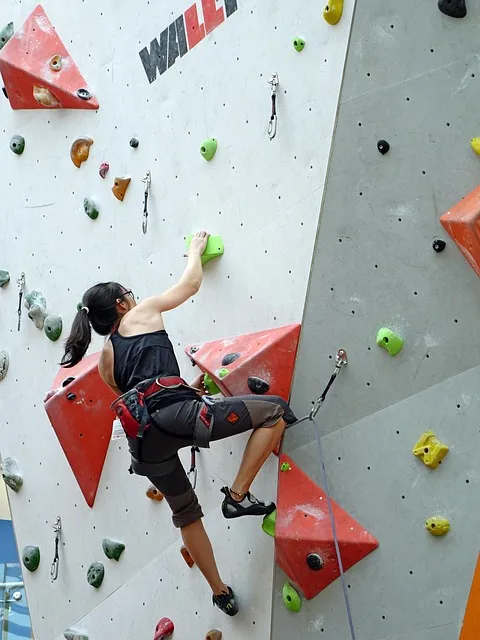
Mistake 1: Confusing enjoyable difficulty with resistance-based training. This is the most widespread error. “Do hard things” gets heard as “do things that are objectively challenging” — running ultramarathons, learning a new language, building a business. But the aMCC does not respond to objective difficulty. It responds to subjective resistance — the specific feeling of doing something personally unwanted.
A passionate entrepreneur does not train their aMCC by working 14-hour days on a startup they love every minute of. A natural athlete does not generate meaningful aMCC activation by doing a workout they actually enjoy. The training stimulus is the internal conflict between impulse and intention — the moment of wanting to stop and choosing to continue anyway. Without that conflict, there is no aMCC training, regardless of how objectively difficult the activity looks from outside. What gets resisted specifically is what needs training.
Mistake 2: Treating all discomfort as productive. The “embrace suffering” crowd sometimes uses aMCC research to justify genuinely harmful behavior — overtraining, staying in toxic situations, grinding through circumstances that are eroding health rather than building it. This is a dangerous misreading. Productive discomfort has three characteristics: it is voluntary (chosen rather than forced by circumstances), it is time-limited and recoverable (genuine rest between hard efforts), and it is connected to purpose (serving a goal or value that matters).
Chronic, unrelenting stress does not build the aMCC. Research is unambiguous on this point: sustained elevated cortisol and inflammatory markers — the biological signatures of chronic stress — damage brain tissue, including in the aMCC. The difference between strategic difficulty and grinding oneself into the ground is recovery. Hard effort followed by adequate rest and recovery is aMCC training. Hard effort followed by more hard effort followed by more hard effort, with no recovery, is overtraining — and it damages the structure the effort was supposed to build.
Mistake 3: Expecting rapid transformation. The aMCC responds to training on a similar timeline to muscle tissue. Subjective improvements — things feeling “less impossible” — can appear within two to four weeks of consistent practice. But measurable structural changes in gray matter volume take three to six months of sustained effort. Starting a challenging practice and abandoning it after three weeks because “nothing feels different yet” is the same mistake as quitting the gym after three weeks over the absence of abs. The adaptation timeline is fixed by biology, not by patience.
Mistake 4: Neglecting the use-it-or-lose-it principle. Most people understand the need to build the aMCC. Fewer understand that the atrophy process is just as real and just as relentless as the growth process. Every consistent easy choice sends a signal to the brain: this capacity is not needed. And the brain, ruthlessly efficient about metabolic resource allocation, responds by reducing investment in underused neural tissue. A person who builds strong discipline through a demanding lifestyle and then spends a year defaulting to comfort will genuinely lose a meaningful portion of that capacity. The aMCC is not a savings account that holds value indefinitely. It is a structure that must be continuously used to remain strong. Not a reason for anxiety — a reason for permanence. Build the practice, then keep it forever.
Mistake 5: Isolating training to one domain. Some build aMCC strength through a demanding physical practice but then live with radical comfort in every other domain — avoiding difficult conversations, defaulting to the easiest food, engaging only superficially in social relationships. Physical training is uniquely powerful for aMCC development, but the research on super-agers shows the strongest preservation of aMCC tissue comes from multi-domain challenge: physical, cognitive, and social. Deliberate engagement with difficulty across all three domains produces the strongest structural adaptation.
The FAQ

Is the aMCC the only brain region involved in willpower? No. Self-regulation involves a network: the dorsolateral prefrontal cortex handles planning and decision-making, the ventromedial prefrontal cortex manages value-based choices, the insula provides body awareness and interoception, and the basal ganglia govern habit formation. The aMCC is the hub that integrates these systems, particularly when they are in conflict. When the aMCC is strong and well-connected, the entire willpower network functions more efficiently. But the aMCC is not the whole story — it is the central coordinator of the story.
How quickly can results be expected from aMCC training? Most people report that hard things feel “less impossible” within two to four weeks of consistent challenging practice. The subjective shift is real, and it reflects early functional changes in neural efficiency even before measurable structural changes are visible on a scan. Structural changes typically require three to six months. The trajectory is not linear: early gains tend to be fastest because the aMCC is most responsive to novel stimuli. Long-term maintenance and continued growth require ongoing progressive overload, as the region adapts to consistent stimuli just as muscle adapts to a fixed training load.
Does this mean every part of life should be made as difficult as possible? No. The aMCC research supports deliberate, strategic challenge — not constant suffering. Chronic, unrelenting stress damages the brain through elevated cortisol and inflammatory cascades. The ideal is periodic, intense challenge alternating with genuine recovery. Think of it like interval training: hard effort, genuine rest, repeat. Recovery is needed for neuroplastic changes to consolidate. A life structured entirely around discomfort with no recovery is not discipline training — it is self-destruction wearing the costume of toughness.
If the aMCC shrinks with age in most people, is willpower decline inevitable? No. The super-ager research answers this question definitively. aMCC shrinkage with age is a use-dependent phenomenon, not a biological inevitability. People who maintain challenging lifestyles — physically, cognitively, and socially demanding — show dramatically less aMCC decline with age than people who gradually adopt easier, more comfortable lives. Some super-agers in their eighties have aMCCs that match people in their thirties. Age-related aMCC atrophy is the default trajectory for people who stop challenging themselves. For people who keep pushing, it is not the trajectory at all. As research published by the American Psychological Association shows, the habits built and sustained are the primary determinant of long-term cognitive resilience.
Does meditation count as aMCC training even though it is not physically demanding? Yes — and the mechanism makes it one of the most efficient aMCC training tools available. Sitting in focused attention meditation, the mind generates a relentless stream of distractions, urges, and discomforts. Every moment of returning attention to the anchor — the breath, a mantra, whatever object is being used — is a micro-conflict between the impulse to follow a distraction and the intention to maintain focus. The aMCC resolves each of these conflicts. In a 20-minute session, that is hundreds or thousands of aMCC activation events. Studies on long-term meditators show not only larger aMCCs but enhanced connectivity between the aMCC and attention-regulation networks. It is willpower training at its most concentrated.
What is the single most important thing to do to build the aMCC starting today? Identify the one thing most consistently avoided — the activity, conversation, or commitment that generates the strongest internal resistance — and do it today. Not tomorrow. Not after finishing this article. Today. The aMCC responds to action, not intention. The signal that drives structural adaptation is the lived experience of overriding resistance and following through. Every rep counts. Start the count now.
The Real-World Protocol: How to Build Your aMCC Deliberately
Theory without application is academic exercise. The aMCC research becomes practically valuable only when translated into a structured protocol that generates reliable training stimulus. The following framework is built directly from the research reviewed above — the super-ager studies, the exercise interventions, the meditation literature, and the social complexity data — organized into a tiered system that can be implemented regardless of starting point.
The foundation tier is daily physical challenge. This is the single most evidence-supported aMCC training tool, and it has the largest effect size across the available research. The requirement is not intensity; it is the presence of subjective resistance combined with deliberate follow-through. A daily walk that feels pleasantly easy is cardiovascular exercise but is not meaningful aMCC training. The same walk, extended by fifteen minutes past the point of wanting to stop, with the deliberate decision to continue made consciously and repeatedly, is aMCC training. The target is to identify, every day, a physical activity that generates genuine internal resistance and complete it anyway. Progressive overload applies: as activities that once felt resistant become comfortable, the demand needs to increase to maintain the training stimulus. Not different from muscle training. The brain region responds to progressive challenge the same way muscle tissue does.
The intermediate tier is cognitive challenge that generates the same pattern — starting something that requires sustained effort against resistance and continuing past the first point where stopping feels reasonable. The super-ager research identifies this as the “not fun but engaging” category of activity: learning a new language or instrument after the initial novelty has worn off; reading difficult non-fiction in a domain with no existing conceptual framework; practicing a skill systematically with feedback rather than just doing it and hoping to improve. The activity must remain genuinely demanding — the moment it becomes comfortable and automatic, the aMCC training effect diminishes substantially. Experts in a domain are not training their aMCCs when they perform at their level. They train it when they push beyond their current level into the uncomfortable territory where failure is common and progress is slow.
The advanced tier is what the research calls difficult social engagement. This is the most underutilized and most powerful tier for most people, because social discomfort is genuinely aversive in ways physical and cognitive discomfort are not. Initiating the difficult conversation that’s been avoided — with a partner, a colleague, a family member — generates strong aMCC activation. Giving honest feedback to someone who has not asked for it and may not welcome it is aMCC training. Taking a public position expected to draw challenge activates the same neural circuitry as cold water exposure. The social domain may feel categorically different from physical challenge, but at the aMCC level it is the same computation: override the impulse to avoid, choose the harder path, follow through despite the internal resistance. Research on social comparison and self-regulation found that individuals who consistently engaged in difficult social interactions showed stronger aMCC connectivity than matched controls who avoided such interactions — independent of physical fitness and cognitive challenge levels.
The protocol minimum for measurable effect is three targeted aMCC training sessions per week across at least two tiers. Less than that and the training stimulus is insufficient to drive structural adaptation. The protocol optimum — based on the super-ager data, which represents the highest observed aMCC preservation rates — is daily physical challenge combined with weekly cognitive and social challenge events, with recovery days that include genuine rest (not passive scrolling, which produces its own neural cost, but actual downtime: nature, quiet, low-stimulation activities that allow the consolidation process to operate). The consolidation research matters here: neuroplastic changes require recovery phases to stabilize. Training without recovery is like exercising without sleeping. The work produces the signal. The rest consolidates the adaptation.
Tracking matters because the aMCC training effect is invisible in the short term. Unlike muscle training, where adaptation can be seen and felt within weeks, aMCC growth does not feel like anything in particular from the inside — except, gradually, that hard things feel slightly less hard. Keeping a simple log of aMCC training events — the specific instance of resistance encountered and the specific choice to continue — builds the evidence base for evaluating whether the protocol is producing the cross-domain transfer effects that indicate genuine structural adaptation. Eight to twelve weeks of consistent practice with no noticeable increase in capacity for difficult follow-through outside the direct training domain means the protocol is either too comfortable (insufficient resistance) or too unrecovered (insufficient consolidation).
Advanced Applications: The aMCC in Elite Performance
The aMCC research has attracted serious attention in high-performance circles — military, professional athletics, executive coaching — because it offers a biological explanation for something previously attributed to vague qualities like “mental toughness,” “grit,” or “character.” These are real phenomena. The aMCC is the mechanism. Understanding the mechanism allows for more systematic development of the capacity, which is why organizations that spend serious resources on human performance have integrated aMCC principles into their training frameworks.
The United States military has incorporated voluntary discomfort training into SERE (Survival, Evasion, Resistance, and Escape) programs for decades, with the explicit goal of inoculating personnel against psychological breakdown under captured or extreme conditions. The research underpinning these programs — largely unpublished but partially accessible through the American Institute of Stress and related organizations — shows that personnel who have undergone systematic high-stress training with successful completion show dramatically reduced cortisol responses to subsequent stressors compared to untrained controls. The mechanism matches the aMCC model: repeated voluntary exposure to intense stressors, with successful navigation of each one, recalibrates the HPA axis response and builds the neural circuitry that makes the next exposure more manageable. What the military developed empirically, the aMCC research explains neurologically.
In professional athletics, the research on “clutch performance” — the ability to perform at or above one’s normal level in high-stakes, high-pressure moments — has consistently identified the same cluster of characteristics in athletes who perform well under pressure. Sian Beilock’s research at the University of Chicago on performance under pressure found that elite performers under pressure did not think more carefully about their technique than less elite performers — they thought less. Their automatized routines ran more cleanly under pressure because their prefrontal cortex was available to override the anxiety response rather than being consumed by anxious technique analysis. The aMCC infrastructure supporting that override is built through years of deliberate, difficult training in conditions designed to generate resistance. The championship-winning athlete is not born with a stronger aMCC. It is built through the same protocol described above, applied with greater consistency and intensity over a longer period.
In executive performance, the research on high-stakes decision-making under uncertainty has found that executives who maintain consistent physical training schedules show measurably different decision quality under stress than those who do not — not because exercise improves intelligence, but because it maintains the aMCC and prefrontal cortex function that allows the executive to override impulsive, emotionally-driven decisions under pressure and stick to systematic reasoning. A 2018 study of 330 senior executives published in Frontiers in Psychology found that those who reported daily physical challenge showed 23% lower cortisol reactivity to high-stakes negotiation scenarios and made decisions rated as more systematic and less impulsive by independent evaluators. The physical training was not directly related to the negotiation task. The aMCC transfer made it directly relevant anyway.
The military, athletics, and executive research all point toward the same design principle: build the aMCC systematically through voluntary challenge, and the capacity transfers to whatever domain needs it most. Not a self-help metaphor. An observed, replicated, mechanistically explained neural phenomenon. The implication for anyone who operates in any domain requiring sustained performance under pressure — which is most forms of meaningful adult life — is straightforward: aMCC development is not a side project for whatever time is left after the real responsibilities are handled. It is the capacity that determines how well those real responsibilities get handled under the conditions that actually matter.