
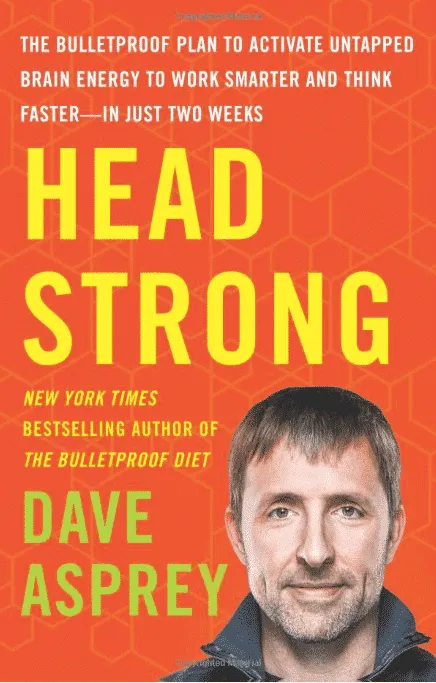
From the creator of Bulletproof Coffee and author of the best-selling The Bulletproof Diet comes a revolutionary plan to upgrade your brainpower - in two weeks or less.
For the last decade, Silicon Valley entrepreneur Dave Asprey has worked with world-renowned doctors and scientists to uncover the latest, most innovative methods for making humans perform better - a process known as "biohacking". In his first book, The Bulletproof Diet, he shared his biohacking tips for taking control of your own biology. Now, in Head Strong, Asprey shows listeners how to biohack their way to sharper, smarter, faster, more resilient brains.
Imagine feeling like your mind is operating at its clearest and sharpest and being able - possibly for the first time in your life - to do more in less time. What if it suddenly became easier to do the very hardest things you do? Or if you could feel 100 percent confident about your intellect and never again fear being the person in the room who just isn't smart enough or can't remember something important?
In Head Strong, Asprey shows us that all of this is possible - and more. Using his simple lifestyle modifications (or "hacks") to take advantage of how the structure of your brain works, you will learn how to take your mental performance to the next level. Combining the latest findings in neuroscience and neurobiology with a hacker-inspired "get it done now" perspective, Asprey offers a program structured around key areas of brain performance that will help you:
- Power the brain with exactly what it needs to perform at its best all day long
- Eliminate the sources of "kryptonite", both nutritional and environmental, that make the brain slower
- Supercharge the cellular powerhouses of your brain, the mitochondria, to eliminate cravings and turn up mental focus
- Reverse inflammation to perform better right now, then stay sharp and energized well into your golden years
- Promote neuron growth to enhance processing speed and reinforce new learning - hotwiring your brain for success
Asprey's easy to follow two-week program offers a detailed plan to supercharge brain performance, including which foods to eat and which ones to avoid, how to incorporate the right kinds of physical activity into your day, a detox protocol for your home and body, meditation and breathing for performance, recommended brain-boosting supplements, and how to adjust the lighting in your home and workspace to give your brain the quality light it thrives on.
A better brain - and a happier, easier, more productive life - is within reach. You just need to get Head Strong.
Dave Asprey nearly destroyed his brain before he figured out how to optimize it. By his late twenties, he was experiencing cognitive dysfunction so severe — brain fog, memory failures, inability to sustain focus, emotional dysregulation — that he was functioning at a fraction of his potential despite, by every external metric, being a reasonably intelligent and motivated person. He had tried the conventional approaches. He had exercised more, slept more, reduced stress. Nothing moved the needle in a meaningful way.
What he discovered, through years of research and self-experimentation, was that the root cause of his cognitive problems was not the ones his doctors were looking for. It was not a neurotransmitter imbalance, not a structural brain problem, not a psychological disorder. It was something more fundamental and more addressable: his mitochondria — the tiny organelles inside his cells responsible for producing the energy that every cellular process in his body, including every neural firing in his brain, depends on — were not working properly. And when he fixed them, the cognitive transformation was, by his account, profound enough to reorder his entire model of what the human brain is capable of.
Head Strong: The Bulletproof Plan to Activate Untapped Brain Energy to Work Smarter and Think Faster is the documentation of what he learned — both from his own biology and from the scientific literature he spent years studying — about how the brain actually works, what constrains its performance, and what can be done, practically and systematically, to move that performance toward its ceiling. It is a book that sits at the intersection of neuroscience, functional medicine, and the biohacking movement that Asprey helped create, and it is one of the more intellectually ambitious documents in that genre.
I am Vladislav Davidzon. This is Resilient Wisdom. Let’s get into it.
Part One: The Mitochondrial Brain
The organizing premise of Head Strong is one that most cognitive performance discussions miss entirely: the brain is not primarily a computational device whose performance is constrained by software — by the patterns of thought, belief, and behavior that psychology typically addresses. It is a biological organ whose performance is constrained by energy — specifically, by the quantity and quality of ATP (adenosine triphosphate) that its cells can produce and sustain.
ATP is the universal energy currency of biological systems. Every cellular process that requires energy — muscle contraction, immune response, protein synthesis, neural signaling — runs on ATP. The mitochondria inside your cells are the factories that produce it, and they do so through a process called oxidative phosphorylation that requires specific inputs: oxygen, glucose or fat, and a collection of cofactors including specific vitamins and minerals. When this process runs well, cells have abundant energy and function at their potential. When it runs poorly — when mitochondria are dysfunctional, damaged, or insufficient in number — cellular energy is scarce, and the systems that depend on it are constrained accordingly.
The brain is the organ most vulnerable to this constraint. While the brain constitutes roughly 2% of body weight, it consumes approximately 20% of total metabolic energy — and this consumption is not optional or variable. The brain cannot run in low-power mode the way peripheral tissues can. It needs its full energy supply continuously, because the neural signaling that is its core function — the action potentials, the synaptic transmissions, the oscillatory dynamics of neural networks — are all energetically expensive processes that cannot be downregulated without degrading cognition.
This means that any condition that compromises mitochondrial function has direct cognitive consequences. Asprey’s central argument is that the chronic exposure to specific environmental factors — processed food, environmental toxins, chronic inflammation, excessive oxidative stress, disrupted circadian biology — is causing measurably suboptimal mitochondrial function in the vast majority of modern people, with the result that most of us are performing at a significant fraction of our cognitive potential without knowing it, because we have no reliable comparison baseline for what optimal mitochondrial function feels like.
The research support for the mitochondria-cognition connection is substantial. Dr. Mark Hyman at the Cleveland Clinic has written extensively on the relationship between mitochondrial dysfunction and cognitive decline. Research on conditions ranging from chronic fatigue syndrome to neurodegenerative disease consistently implicates mitochondrial dysfunction as a central mechanism. The field of functional medicine — which takes a systems approach to health rather than the organ-specific approach of conventional medicine — has generated a growing body of evidence that improving mitochondrial function through targeted nutritional, lifestyle, and environmental interventions produces measurable improvements in cognitive performance in non-clinical populations, not just in disease management.
Asprey’s specific contribution is the synthesis of this research into a practical framework for what he calls “mitochondrial hacking” — the use of specific, evidence-informed interventions to optimize the conditions under which your mitochondria operate, with the goal of moving your cognitive performance from its current depleted state to something closer to its biological ceiling.
Part Two: What Is Actually Degrading Your Brain
Before addressing how to optimize brain performance, Asprey spends considerable time — and this is arguably the most practically important part of the book — documenting the specific factors that are degrading it. His argument is that for most people, the priority is not optimization on top of a functional baseline. It is the removal of the specific inputs that are actively suppressing cognitive performance, many of which people encounter daily without recognizing their effect.
The first and most controversial category is mycotoxins — toxic compounds produced by mold that contaminate a significant portion of the global food supply, particularly in stored grains, coffee, and certain processed foods. Asprey argues, drawing on research from the Environmental Protection Agency and multiple toxicology studies, that mycotoxin exposure at levels well below the threshold for acute symptoms is associated with chronic neurological effects including brain fog, impaired memory, mood dysregulation, and fatigue. The human mycotoxin research is less developed than he sometimes presents it — some of his specific claims in this area go beyond what the peer-reviewed literature currently supports — but the broader point that chronic low-level mycotoxin exposure is a real and underappreciated concern has legitimate research backing.
The second category is chronic inflammation, which Asprey treats as perhaps the most important single driver of suboptimal brain function in the modern population. The evidence for the inflammation-cognition connection is robust and growing: inflammatory cytokines cross the blood-brain barrier and directly impair neural function; chronic low-grade inflammation — the systemic inflammatory state that is now recognized as a feature of most chronic diseases including metabolic syndrome, cardiovascular disease, and depression — is associated with measurable cognitive impairments in attention, working memory, and processing speed; and interventions that reduce systemic inflammation consistently improve cognitive performance measures.
The dietary drivers of chronic inflammation that Asprey identifies are broadly consistent with the research literature: industrial seed oils high in omega-6 fatty acids (corn oil, soybean oil, canola oil), refined sugar and high-fructose corn syrup, refined grains, and certain lectins in legumes and grains have all been associated with inflammatory signaling in the research. His position on some of these is more categorical than the research warrants — the seed oil picture, for instance, is more complex than a simple pro-inflammatory designation — but the general direction of the evidence supports reducing these inputs in favor of anti-inflammatory alternatives.
The third category is light — specifically, the excess of artificial blue light from screens and LED lighting that has become a defining feature of modern environments. The research on light’s effects on the circadian system is unambiguous: the suprachiasmatic nucleus, the brain’s master clock, regulates virtually every biological process in the body through its light-sensitive timing mechanism, and chronic disruption of that timing mechanism through evening blue light exposure produces well-documented effects on sleep quality, cortisol rhythm, and mitochondrial function that have direct cognitive consequences. Asprey’s practical recommendations on light management — avoiding screens for at least an hour before sleep, using blue-light blocking glasses in the evening, getting bright outdoor light in the morning — are well-supported by the circadian biology research.
The fourth category is electromagnetic fields (EMF) from wireless devices. Asprey is one of many voices in the biohacking community who are concerned about the chronic health effects of EMF exposure from cell phones, Wi-Fi, and other wireless devices. This is the area in the book where the evidence base is weakest and most contested. The current scientific consensus is that non-ionizing radiation at the power levels produced by consumer devices does not directly damage DNA, and the epidemiological evidence for health effects is mixed. Asprey’s caution in this area is not completely without basis — some research suggests non-thermal effects of electromagnetic exposure that warrant further study — but his recommendations should be understood as precautionary rather than as settled science.
Part Three: Feeding the Brain — Nutrition and Fats
Asprey’s nutritional framework in Head Strong is an extension and refinement of the ketogenic approach he popularized through the Bulletproof Diet, with specific emphasis on the neurological benefits of running the brain on fat rather than glucose. The science here is genuinely compelling, even for readers who are skeptical of dietary optimization claims.
The brain can use two primary fuels: glucose (from carbohydrates) and ketones (from fat metabolism). In the standard Western diet, glucose dominates. The problem with glucose as a primary brain fuel is not that it is inherently bad — it is that glucose metabolism generates more reactive oxygen species (free radicals) and more oxidative stress per unit of ATP produced than fat metabolism, and that the brain runs on a steady glucose supply only as long as blood sugar is stable, which in people who eat high-carbohydrate, high-sugar diets is often not the case. The cognitive “afternoon slump” is partly a glucose management problem.
Ketones, by contrast, are a more efficient brain fuel: they generate more ATP per unit of oxygen consumed, produce less oxidative byproduct, and cross the blood-brain barrier reliably regardless of insulin status. In the ketogenic state — achieved either through carbohydrate restriction, fasting, or the consumption of medium-chain triglycerides (MCTs) that are directly converted to ketones by the liver — the brain operates on a fuel source that is in some respects superior to glucose for sustained cognitive performance. Research on ketogenic diets has shown cognitive benefits in neurodegenerative conditions like Alzheimer’s and traumatic brain injury, and the preliminary human data on ketosis and cognitive performance in healthy adults is promising though not yet definitive.
Asprey’s specific recommendation — the “Bulletproof” fat-heavy dietary pattern that prioritizes high-quality animal fats, coconut oil and MCT oil, avocado, and a relatively small amount of non-starchy vegetables while minimizing carbohydrates and eliminating the specific “suspect foods” he has identified — is more prescriptive than the underlying research requires. The brain benefits of ketosis can be achieved through various dietary approaches, and some people respond better to moderate carbohydrate intake with intermittent fasting than to a strict continuous ketogenic pattern. The useful takeaway from this section is not the specific food list but the underlying principle: the macronutrient composition of your diet directly affects your brain’s fuel quality, and most people would benefit from reducing their dependence on glucose as a primary cognitive fuel and increasing their capacity to run on fat and ketones.
The specific nutrients that Asprey highlights for brain optimization are well-chosen and research-supported. Omega-3 fatty acids, particularly DHA (docosahexaenoic acid), are structural components of neural membrane phospholipids, and DHA deficiency is associated with impaired neurotransmission, increased neuroinflammation, and accelerated cognitive decline. The research on DHA supplementation and cognitive performance is mixed but generally positive, particularly in populations with low baseline omega-3 intake — which in Western countries is the majority of the population. Magnesium, B vitamins (particularly B12 and folate), and vitamin D all have well-documented roles in mitochondrial function and neurological health that make them legitimate cognitive optimization targets.
Part Four: Sleep, Light, and the Circadian Brain
The sleep section of Head Strong is one of the strongest in the book, and one that is consistent with the broader scientific literature in a way that some of Asprey’s more speculative claims are not. The research on sleep and cognitive performance is unambiguous at this point: chronic sleep insufficiency, even at the moderate level (six hours rather than eight that characterizes a large fraction of the working adult population), produces measurable impairments in attention, working memory, emotional regulation, decision quality, and creativity that compound progressively over time.
What Asprey adds to the standard sleep hygiene literature is the mitochondrial framing. Sleep is not primarily, in his view, a brain rest state. It is a brain maintenance state: the period during which the glymphatic system — a waste clearance mechanism in the brain that operates primarily during sleep — clears the metabolic byproducts that accumulate during waking neural activity, including beta-amyloid and tau protein aggregates that, if not adequately cleared, are associated with neurodegenerative risk. It is the period during which mitochondrial biogenesis — the creation of new mitochondria — is upregulated. It is the period during which synaptic consolidation processes integrate the day’s learning into long-term memory.
The practical implication of this framing is that sleep optimization is not about logging more hours — it is about improving the quality and timing of the sleep you get so that these maintenance processes can complete properly. The specific interventions Asprey recommends are well-supported: sleeping in a cool room (body temperature needs to drop for sleep initiation and deep sleep maintenance); complete darkness (even small amounts of light exposure during sleep disrupt melatonin production and sleep architecture); managing the timing of eating (eating close to sleep impairs growth hormone release and sleep quality); and addressing the specific sleep-disrupting factors that most people in the modern environment are chronically exposed to.
The circadian optimization chapter extends this into the waking hours: the argument that aligning your major biological inputs — light, food, exercise, social interaction — with the circadian rhythms that govern every biological process produces measurably better health and cognitive outcomes than the circadian disruption that characterizes most modern schedules. The research on chronotypes (the natural morning or evening orientation of individual circadian clocks) and on the health consequences of working against one’s chronotype is well-documented and practically important: a significant fraction of the population is chronically performing at a deficit simply because their work and social schedules systematically conflict with the biological timing that would optimize their performance.
Part Five: Exercise, Cold, and Environmental Hormesis
One of the most interesting sections of Head Strong concerns what Asprey calls “hormesis” — the biological principle that certain stressors, applied at the right dose, stimulate adaptive responses that make the system more robust than it was before. The concept comes from toxicology, where it was observed that small doses of many toxins that are harmful in large doses produce beneficial adaptive responses in biological systems. Applied to performance optimization, the principle extends to a range of stressors — exercise, cold exposure, heat stress, intermittent fasting, even some plant toxins like polyphenols — that are uncomfortable in the short term and beneficial in the longer term precisely because of the adaptive response they stimulate.
Exercise is the most extensively studied hormetic stressor, and Asprey’s treatment of it is interesting because of what he includes and what he challenges. The benefits of exercise for brain function are well-established: regular aerobic exercise increases BDNF (brain-derived neurotrophic factor), which promotes neurogenesis and synaptic plasticity; improves cerebrovascular function and oxygen delivery to brain tissue; reduces neuroinflammation; and improves sleep quality through its effects on circadian temperature rhythms. None of this is controversial.
What Asprey challenges is the “more is better” assumption that permeates fitness culture — the idea that maximizing training volume and intensity is the path to maximum benefit. His argument, consistent with the overtraining research in sports science, is that excessive exercise produces excessive oxidative stress that overwhelms the mitochondria’s repair capacity and generates the same kind of cellular damage that it is supposed to prevent. The optimal exercise dose for cognitive and health benefits is, he argues, lower than most fitness enthusiasts assume, and high-intensity interval training (HIIT) protocols that produce large adaptive stimulus in short time windows are more efficient cognitive performance interventions than long-duration moderate-intensity sessions.
Cold exposure — particularly the cold thermogenesis protocols popularized by Wim Hof and studied more formally by researchers including Dr. Rhonda Patrick — receives substantial attention in Head Strong as a potent mitochondrial stressor. The research on cold exposure is genuinely interesting: cold thermogenesis activates brown adipose tissue (a metabolically active fat tissue that burns energy to generate heat), increases mitochondrial density in multiple tissue types, activates the norepinephrine and dopamine systems in ways that produce mood elevation and alertness, and may reduce systemic inflammation through mechanisms that are not yet fully understood. Asprey’s specific recommendations — cold showers, ice baths, cryotherapy sessions — are practical applications of a research base that is still developing but promising enough to warrant inclusion.
The polyphenol discussion is one of the more scientifically nuanced parts of the book. Polyphenols — the bioactive compounds in plants that give them their colors and flavors — are being studied intensively as hormetic agents: compounds that, in the small doses encountered through food consumption, activate cellular defense and repair pathways (particularly through the Nrf2 pathway and SIRT1 activation) that produce protective and potentially performance-enhancing effects. Asprey’s enthusiasm for specific polyphenol-rich foods and supplements (coffee, dark chocolate, berries, turmeric, resveratrol) is consistent with the direction of the research, though the translation from cellular mechanisms to meaningful cognitive performance improvements in healthy humans is not yet fully established.
Part Six: The Brain-Gut Axis and the Microbiome
Asprey’s treatment of the gut-brain connection reflects a field that has advanced enormously since the publication of Head Strong, and his instincts were ahead of the mainstream understanding at the time. The gut microbiome — the community of approximately 100 trillion microorganisms inhabiting the human intestinal tract — is now recognized as a significant modulator of neural function, mood, and cognitive performance through multiple mechanisms: direct production of neurotransmitters (the gut produces approximately 90% of the body’s serotonin), modulation of systemic inflammation levels, influence on vagal nerve signaling that connects gut and brain, and effects on the permeability of the intestinal barrier that determines what gets into systemic circulation.
The practical implications of gut-brain connection research for cognitive optimization are still being worked out, but several principles have sufficient support to guide action. Diversity of gut flora — associated with a diet high in varied fiber sources, fermented foods, and low in the processed food inputs that degrade microbiome diversity — is consistently associated with better health and mood outcomes. The integrity of the intestinal barrier — the protection against “leaky gut,” the increased permeability that allows bacterial products to enter systemic circulation and trigger inflammatory responses — is significantly affected by the dietary choices, medication use (particularly antibiotics and NSAIDs), and stress exposures that characterize modern life. And the vagal nerve connection means that practices that improve gut function — including probiotic supplementation, dietary fiber, and stress reduction — may have direct cognitive benefits through pathways that are independent of nutrient delivery.
Asprey’s specific recommendations on gut optimization — eliminating processed foods and industrial seed oils, consuming quality fermented foods, using specific probiotic strains that have research support for mood and cognitive effects, managing antibiotic use — are consistent with the research direction, though the dose-response relationships and the specific magnitude of cognitive effects remain active research areas.
The Biohacking Philosophy and Its Limitations
Reading Head Strong requires a calibrated skepticism that Asprey himself acknowledges is appropriate. He is a self-experimenter and synthesizer rather than a trained scientist, and some of the claims in the book venture ahead of the research evidence in ways that a more conservative author would not. His mycotoxin claims are more categorical than the peer-reviewed literature supports. Some of his supplement recommendations have a stronger commercial connection (through the Bulletproof supplement line) than the research base warrants. And the mechanistic confidence with which he describes how specific interventions work at the cellular level sometimes outpaces the actual state of the science.
The legitimate criticisms notwithstanding, Head Strong has a core framework that is scientifically grounded and practically valuable: that the brain is a biological organ whose performance is constrained by energy production; that most people in the modern environment are operating with chronically suboptimal mitochondrial function due to specific, addressable environmental inputs; and that targeting those inputs through evidence-informed nutritional, lifestyle, and environmental interventions can produce meaningful cognitive improvements.
The biohacking philosophy that Asprey embodies — the willingness to treat yourself as an experimental system, to gather data on your own biological responses, to test interventions systematically and update your practices based on results — is genuinely valuable as an orientation to personal optimization, even for those who are skeptical of some of his specific recommendations. The alternative orientation — accepting whatever cognitive performance you happen to have as a fixed feature of your biology, making no deliberate interventions, treating your brain as a black box — leaves enormous amounts of performance on the table that the research suggests is recoverable.
The framework Head Strong offers is not a complete cognitive optimization protocol. It is one lens — the mitochondrial, biological lens — on a problem that also has important psychological, behavioral, and relational dimensions. But it is a lens that is largely missing from the productivity and performance discourse that dominates the books most ambitious people read, and its absence leaves a significant gap in how most people understand what is actually limiting their cognitive performance.
The Practical Protocol
If you strip away the more speculative elements of Head Strong and focus on the interventions with the strongest research support, the practical protocol that emerges is not exotic or expensive. It is a set of foundational practices that address the most common and most impactful sources of suboptimal brain function in the modern environment.
Fix your fuel first. The dietary shift from glucose-dependence toward metabolic flexibility — the capacity to run on both glucose and ketones — is achievable for most people through a combination of reducing processed carbohydrates and sugar, increasing quality fat intake, and practicing intermittent fasting long enough to deplete liver glycogen and induce ketone production. This does not require full-time ketosis. It requires the restoration of a metabolic flexibility that human beings have always had and that the modern food environment has eroded.
Manage your inflammatory inputs. The elimination of industrial seed oils, the reduction of processed food, and the increase of anti-inflammatory inputs — omega-3 rich foods, polyphenol-rich vegetables, quality sleep, stress management — addresses the chronic low-grade inflammation that is the most reliably documented suppressor of cognitive function across the research literature.
Protect your sleep architecture. The circadian biology recommendations — morning bright light, evening blue light avoidance, sleeping in darkness and cool temperatures, avoiding eating close to sleep — are among the best-supported cognitive optimization interventions available, at a cost of essentially nothing beyond behavioral discipline.
Use exercise for brain stimulation, not punishment. Short, high-intensity intervals that stimulate BDNF and mitochondrial biogenesis without generating excessive oxidative burden are more efficient cognitive optimization tools than the long, grinding workouts that fitness culture glorifies. The specific prescription of resistance training combined with brief, intense aerobic intervals, consistently executed, is what the research supports for brain health optimization.
The limitations of Asprey’s framework should not obscure its genuine contributions. He is one of a relatively small number of voices making the case — with substantial research backup — that cognitive performance is a biological variable that is substantially within voluntary control, that the standard excuses for cognitive underperformance (stress, age, genetics) are less determining than the standard narrative suggests, and that the systematic removal of the specific inputs degrading your brain’s energy supply can produce cognitive improvements that are, for many people, genuinely transformative. That case deserves to be taken seriously, even by those who want to engage with the specific evidence more carefully than Asprey sometimes does.
Neurotransmitters, Stress, and the Brain Under Pressure
Head Strong devotes meaningful attention to the neurochemistry of performance under pressure — the way that the brain’s major neurotransmitter systems interact with stress hormones to either enhance or degrade cognitive output depending on the nature and duration of the stress exposure. This section is particularly relevant for the people this book is written for: ambitious, high-output individuals who live in chronically demanding environments and who need their cognitive systems to function at elite levels not on easy days but on hard ones.
The dopamine system is central to motivation, goal-directed behavior, and the capacity for sustained effort toward delayed rewards. Asprey argues, drawing on functional medicine research, that a significant portion of the population is operating with suboptimal dopamine signaling — not necessarily as a result of genetic predisposition, but as a consequence of the same mitochondrial and inflammatory factors that degrade general cognitive function. Specific dopamine precursor support — adequate tyrosine (from dietary protein), proper B vitamin and magnesium status, and the elimination of inputs that chronically flood dopamine receptors and produce down-regulation (refined sugar, porn, social media notification loops) — can meaningfully restore the motivational tone and drive that depleted dopamine signaling erodes.
The acetylcholine system, which governs focus, learning, and the encoding of new memories, is similarly sensitive to nutritional status: choline, the precursor to acetylcholine, is obtained primarily from animal foods (eggs, liver, fish), and a significant portion of the population consuming low-animal-food diets has suboptimal choline status that may contribute to the attention and memory difficulties they attribute to other causes. Asprey’s enthusiasm for eggs — “nature’s most perfect brain food,” in his framing — is one of the more research-defensible claims in the book, given that egg yolks are among the richest dietary sources of choline and also contain DHA, lutein, and zeaxanthin, all of which have documented neuroprotective and cognitive-support effects.
The cortisol-performance relationship receives careful treatment. Asprey correctly identifies chronic cortisol elevation as one of the most damaging inputs for mitochondrial function — cortisol chronically suppresses mitochondrial biogenesis, increases oxidative stress, and damages the hippocampal tissue most involved in memory formation. The lifestyle factors most associated with chronic cortisol elevation in his framework — chronic sleep insufficiency, chronic caloric restriction (which activates the stress response), excessive endurance exercise without adequate recovery, psychological environments of sustained threat or uncertainty — are all targets for intervention. His specific stress-management recommendations emphasize physiological approaches (improving sleep, reducing inflammatory load, strategic supplementation with adaptogens like ashwagandha and rhodiola that have documented cortisol-modulating effects) over the exclusively psychological approaches that most stress management advice focuses on.
The GABA system — the brain’s primary inhibitory neurotransmitter, responsible for the capacity to downregulate from activated states and achieve genuine rest — is another area Asprey addresses specifically. Chronic stress and chronic inflammation both impair GABA signaling, contributing to the inability to disengage from work and genuinely recover that characterizes many high-performing people who are running on a depleted system. His specific recommendations — addressing the gut bacteria that produce GABA precursors, ensuring adequate magnesium (which is a co-factor in GABA receptor function and which is chronically deficient in the modern diet), and implementing genuine downregulation practices including meditation, breathwork, and sauna use — are consistent with the mechanisms the research identifies.
Supplements: The Targeted Approach
Asprey’s supplement recommendations are one of the most contested aspects of Head Strong, and warrant a careful reading that distinguishes the well-supported from the speculative. He is not, to his credit, a maximalist who recommends taking as many compounds as possible. His framework is hierarchical: fix the fundamentals first (food, sleep, movement, light), then use targeted supplementation to address specific deficiencies or to support specific systems that the fundamentals alone cannot fully optimize.
The supplements with the strongest research support in his stack include: creatine monohydrate, which has been shown in multiple randomized controlled trials to improve working memory, processing speed, and reasoning in tasks that impose high cognitive demand — effects that are most pronounced in vegetarians and vegans who have lower dietary creatine intake; vitamin D3, which functions as a steroid hormone in the brain and whose deficiency (affecting an estimated 40-70% of the population in northern latitudes) is associated with mood dysregulation, cognitive impairment, and increased dementia risk; magnesium glycinate or threonate, the form of magnesium that crosses the blood-brain barrier most effectively and which has been shown to improve synaptic density and cognitive flexibility in animal models; and omega-3 fatty acids in the form of DHA-heavy fish oil, with the research on DHA and cognitive function already discussed.
His enthusiasm for racetams (piracetam, aniracetam) and other nootropics in the more experimental categories should be approached with more caution — not because these compounds are without effect, but because the human research is substantially less developed than the animal research, individual responses vary widely, and the long-term safety data for chronic use in healthy adults is limited. Asprey’s general orientation — that these compounds are tools to be tested carefully in one’s own biology rather than universally prescribed interventions — is the right framework for engaging with this category.
The CoQ10 and PQQ combination he recommends for mitochondrial support deserves specific mention because the rationale is mechanistically coherent and the research, while not definitive, is promising. CoQ10 is an essential component of the electron transport chain in mitochondria — the machinery that produces ATP — and its tissue levels decline with age and are depleted by statin medication, making supplementation particularly relevant for older adults and statin users. PQQ (pyrroloquinoline quinone) has been shown in preliminary human research to stimulate mitochondrial biogenesis — the growth of new mitochondria — an effect that, if robustly confirmed in larger studies, would represent a meaningful tool for cognitive performance enhancement.
Why Most People Are Getting This Wrong
The cultural narrative about cognitive performance is almost entirely behavioral and psychological: if you are not thinking clearly, performing consistently, or maintaining the energy and focus that your work demands, the answer is a better mindset, better habits, better time management, better stress management. These things matter. But they are operating on top of a biological substrate, and if that substrate is compromised — if the mitochondria powering your neurons are operating at 60% efficiency because of the specific environmental inputs that Head Strong identifies — then the behavioral and psychological interventions are limited in how much they can accomplish.
This is the insight that Asprey’s book, at its best, delivers with genuine force: you cannot think your way to better brain function if the biology is working against you. The meditation practice that would produce measurable benefits in a well-nourished, well-rested, inflammation-free nervous system produces marginal benefits in the chronically inflamed, glucose-dysregulated, sleep-deprived system that describes a large fraction of the ambitious, high-output people who are most desperate for cognitive improvement. The leverage point is not the practice — it is the biological substrate on which the practice operates.
This does not mean that biological optimization is sufficient on its own. A well-functioning brain in the service of poor thinking, bad values, or insufficient skill is not a performance asset. The biological foundation that Head Strong describes is necessary but not sufficient for the kind of performance that truly ambitious people are trying to build. What it is, is foundational — the non-negotiable substrate without which everything else is compromised.
The most honest and most useful frame for Head Strong is this: it is a diagnostic tool and a starting point, not a complete system. It asks you to look at your cognitive performance from a biological angle that most people have never considered, to identify the specific inputs that may be depressing your brain’s energy production, and to run the systematic experiments that would tell you whether addressing those inputs produces the improvements the framework predicts. For a significant fraction of people who read it — particularly those who have tried the standard psychological and behavioral approaches and found them insufficient — the answer is yes, and the improvement is substantial enough to reorder their model of what was limiting their performance all along.

