
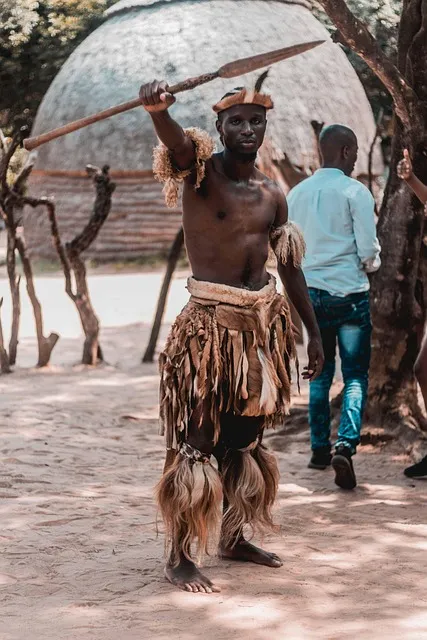
Shaka Zulu’s discipline routine — “routine” almost undersells it — is the single best-documented ancient system for manufacturing elite human performance at scale. Not potential. Performance. The results aren’t debatable. Starting from a clan of roughly 1,500 people in 1816, Shaka built a nation of 250,000 and an army formidable enough to annihilate a British imperial regiment at Isandlwana in 1879, fifty-one years after his death. His warriors fought with a short stabbing spear against opponents carrying rifles and artillery. They won anyway. The infrastructure for that win was laid in the daily training regimens Shaka instituted at the beginning of his reign.
A word of caution before going further, because the popular version of this story tends to flatten Shaka into one of two caricatures: the noble savage genius, or the bloodthirsty tyrant. Both are lazy. The evidence points somewhere more interesting and more useful. Shaka was a systematically innovative thinker operating in one of the most demanding performance environments that has ever existed — building military supremacy from nothing, against opponents who wanted him dead, with tools he mostly had to invent. His daily practice of deliberate training was the architecture of that supremacy. And the architecture is transferable in ways most people never consider.
This article breaks down exactly what Shaka did daily, why each element worked physiologically and psychologically, and how the underlying framework — call it the Zulu Forge Protocol — maps onto the demands of building anything that lasts, whether that’s a business, a body, or a leadership capability. The shaka zulu discipline routine is not a curiosity from history. It’s a working blueprint.
The Man the Routine Built: Shaka’s Context Before the System
Understanding why Shaka’s discipline system works requires understanding who built it and why.
Shaka was born around 1787, the illegitimate son of Senzangakhona, chief of the small Zulu clan, and Nandi, a woman from the neighboring Langeni tribe. In the social structure of southeastern Africa at that time, illegitimacy wasn’t merely shameful — it was a functional death sentence. Shaka and Nandi were expelled from the Zulu kraal when he was approximately six years old. They spent years moving between clans as dependents, which in practical terms meant eating last, sleeping outside, doing the work nobody else wanted, and absorbing whatever contempt the host group felt like distributing that day. Other children mocked Shaka’s origins. Elders dismissed him. His father, when Shaka eventually rejoined the Zulu, treated him as an embarrassment.
Something happened to Shaka during this period that’s more interesting than simple “rejection breeds ambition.” The specific kind of adversity — social exclusion paired with physical survival demands — appears to have produced a particular cognitive orientation: an obsessive focus on controllable variables. A host clan’s acceptance isn’t controllable. Other children’s mockery isn’t controllable. Whether you’re faster, stronger, and more skilled than any of them — that’s controllable. Weapon handling precision — controllable. Showing up before everyone else and leaving after everyone else — controllable. Shaka appears to have made that calculation early and built a daily practice around it.
By the time Dingiswayo, chief of the Mthethwa confederation, took Shaka under his protection around 1809, Shaka was already noted as an exceptional warrior. When Senzangakhona died in 1816 and Shaka seized power over the Zulu with Dingiswayo’s backing, he immediately did two things that tell you everything about his worldview: he reformed the military system top to bottom, and he began personally supervising daily training. Not delegating. Supervising. Present at dawn. That detail matters more than it looks like it should.
The Zulu Forge Protocol didn’t emerge from theory. It emerged from a man who had spent his formative years learning, at a visceral level, that daily discipline was the only reliable path from powerless to powerful. That understanding wasn’t philosophical. It was operational. And it produced an army that didn’t look like any army the world had seen.
The Zulu Forge Protocol: How Shaka Structured Each Day
Phase 1: Dawn Physical Forge (pre-sunrise to approximately 8 AM)
Shaka rose before light. His warriors, organized into age-regiment barracks called amakhanda, did the same. The morning began with running — not as warm-up, but as the primary training event. Distances varied by mission proximity and campaign season, but twelve miles was a standard morning run, and fifty miles in a single day was documented on campaign. The barefoot requirement wasn’t tradition. Shaka had eliminated sandals deliberately, calculating — correctly — that hardened bare feet were faster over varied terrain than leather-soled footwear, and that the process of hardening feet through daily pain built a tolerance to discomfort that carried into every other domain.
After running came weapons training with the iklwa and ishlangu shield. Shaka had replaced the traditional longspear (assegai) with a short stabbing weapon — roughly 18 inches of blade on a 30-inch shaft — that forced warriors into killing range rather than keeping them at a safe throwing distance. Training with this weapon required hours of repetition to make the close-range charge reflexive rather than deliberate. Warriors who hesitated at the critical moment died. The training eliminated hesitation by making the charge automatic.
Shaka himself participated in this phase. The king training alongside his warriors is documented by multiple sources and was understood by everyone involved as a deliberate signal: I am not asking you to do anything I won’t do. The psychological effect of that signal on unit cohesion and training intensity is not subtle.
Phase 2: Formation Rehearsal (mid-morning)
The isimphi zamaNkomo — the “horns of the buffalo” — was Shaka’s signature battle formation, rehearsed until every warrior in every regiment could execute it on varied terrain, in fog, at night, against opponents using unpredictable defensive formations. The geometry was elegant: a central “chest” engaged the enemy frontally while two “horns” encircled from the flanks, and a “loins” reserve faced away from battle deliberately — an innovation to prevent experienced warriors from charging prematurely, overwhelmed by battle excitement.
Worth pausing on that last detail. Shaka understood that experienced fighters’ greatest enemy in battle was their own eagerness. He engineered a training and formation system that managed that psychological variable explicitly. The loins sat with their backs to the fight until the horns had completed the encirclement. That required extraordinary discipline, and the daily rehearsal was where that discipline got installed.
Phase 3: Council and Governance (midday)
Shaka held court at the royal kraal each midday. Indunas (commanders) reported. Disputes were adjudicated. Policy decisions were made. Emissaries from neighboring peoples were received. This wasn’t a break from discipline — it was a different expression of it. Shaka was building a kingdom, not just an army, and the midday governance sessions were the system through which military power converted into political reality. He maintained his spy network through this session, receiving intelligence reports that shaped evening planning.
Phase 4: Afternoon Endurance and Skill Work (afternoon)
The afternoon returned to physical training, with emphasis on endurance over strength and tactical skill over raw conditioning. Long-distance formation runs rehearsed the army’s ability to arrive at battlefields ready to fight immediately — a capability that repeatedly shocked opponents who assumed a force that had marched fifty miles would need rest before engaging. Shaka’s warriors didn’t rest. They attacked. The opponents’ tactical planning assumed a recovery period that never came.
Shield work, close-combat drill, and terrain navigation completed the afternoon. Warriors who showed consistent weakness in any element were demoted or, in extreme cases, executed. Brutal, and it was — but it served a specific function in the Zulu Forge Protocol: it ensured that every man in the formation was genuinely capable of the task assigned to him. A warrior who couldn’t hold his lane in the horns formation was a lethal liability to everyone around him. The standard was real because the consequence was real.
Phase 5: Cultural Reinforcement and Intelligence (evening and night)
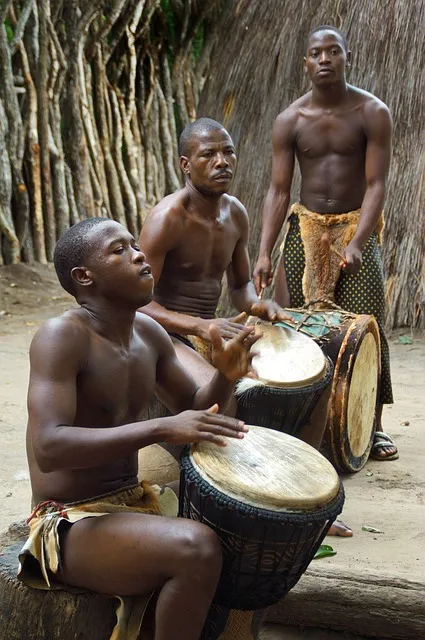
Evenings at the amakhanda were structured around communal meals, the indlamu war dance, and the singing of regimental war songs. This is the phase most modern commentators either skip or romanticize, and both reactions miss the point. The evening ceremonies weren’t entertainment. They were training in unit cohesion, synchronized movement, and the psychological calibration for violence. The indlamu — a high-impact stamping dance with full war regalia — burned approximately the same caloric intensity as a moderate run while rehearsing timing, coordination, and the emotional state of controlled aggression close-range fighting requires.
Shaka reviewed intelligence reports at night. His spy network covered the entire region, and the information he gathered shaped campaign planning with a level of detail European observers found remarkable. He knew enemy troop dispositions, supply lines, and political vulnerabilities before his army moved. The planning phase happened after the cultural ceremonies — the cultural reinforcement came first, the strategic thinking second, because a king with exhausted, fragmented warriors has no strategy worth executing.
The Science Behind the Zulu Forge Protocol: Why Each Element Worked
Shaka had no access to exercise physiology, sports psychology, or organizational behavior research. He built his system empirically, observing what produced results and eliminating what didn’t. What’s striking, studying the protocol through a modern scientific lens, is how precisely his intuitions align with what research has since confirmed.
The barefoot conditioning principle and the pain-threshold adaptation
The decision to eliminate sandals and march warriors barefoot over thorny ground wasn’t cruelty for its own sake. It was a deliberate application of what exercise scientists now call graduated stress exposure. The skin on the soles of the feet adapts to repeated mechanical stress by thickening the stratum corneum — the outer epidermal layer — through a process that takes weeks of consistent daily exposure. Shaka’s warriors developed foot calluses that let them run on terrain that would have crippled sandaled opponents.
But the deeper adaptation was psychological. Research by Amy Arnsten at Yale School of Medicine has mapped how the prefrontal cortex — the seat of executive function and deliberate skill acquisition — is systematically inhibited by uncontrolled stress while remaining functional under controlled stress. Voluntary pain exposure, the kind that produces no lasting damage but significant discomfort, trains the nervous system to maintain prefrontal function under duress. Warriors who have run barefoot through thorns for three years respond to the chaos of battle with significantly more executive function than warriors who have never experienced controlled pain. The barefoot training was building precisely this capacity without Shaka having the vocabulary to name what he was doing.
The formation rehearsal and automaticity research
Anders Ericsson at Florida State University spent decades studying what separates expert performers from amateurs across domains — chess, surgery, music, athletics. His central finding, published in Psychological Review in 1993, was that expert performance requires developing domain-specific mental representations that allow complex sequences to execute automatically under pressure. The key word is automatically. When a formation movement must be consciously recalled in battle, it arrives too late. Ericsson’s research indicates automaticity requires approximately 10,000 hours of deliberate practice — not repetition, but effortful repetition with feedback and correction.
Shaka’s formation rehearsals were designed to produce exactly this automaticity. The daily practice of buffalo horns execution on varied terrain, against variable simulated opposition, with Shaka himself providing correction, built the mental representations that let warriors execute flawlessly under the cognitive load of actual combat. The research on this is unambiguous: the number of hours separating competence from expertise is roughly consistent across domains, and it has to be earned through daily practice. Shaka’s warriors were earning it every afternoon for years.
The evening ceremony and unit cohesion
Jonathan Haidt at New York University has studied what he calls “hive psychology” — the conditions under which individuals subordinate their individual identities to group identity, producing the kind of coordinated collective action that individual incentives cannot achieve. His research identifies two primary triggers: shared synchronous movement (moving in coordination with others) and shared narrative (stories and songs that define group identity and purpose). The indlamu war dance was precisely a shared synchronous movement ritual. The regimental war songs were precisely a shared narrative ritual. Shaka’s evening ceremonies were engineering hive psychology with empirical precision, producing the unit cohesion that made individual warrior skill collectively devastating.
Compare this to what modern elite military units do: synchronized physical training, unit cadence during runs, shared mission narrative. The mechanism is identical. The Zulu were doing it in 1820.
The amabutho system and identity engineering
Shaka organized his warriors into age-based regiments that cut across clan and family lines. Warriors lived, trained, and ate with their regiment rather than their kinsmen for years, sometimes decades. A radical social restructuring. Traditional African warfare had been conducted by clan-based groups with divided loyalties. Shaka eliminated divided loyalties by building a new primary identity: regiment member, then Zulu, then family member. The sequencing was deliberate.
Research on group identity by Henri Tajfel and John Turner (Social Identity Theory, 1979) confirms that when people’s primary identity is tied to a group, their performance for that group exceeds what individual incentives produce, and their tolerance for discomfort in service of the group increases substantially. Shaka was running a social identity experiment at scale, with warriors who lived the experiment every hour of every day. The result was an army that fought with a ferocity European observers consistently attributed to fanaticism, when what they were actually witnessing was men who had replaced “I” with “we” so thoroughly that personal survival was genuinely subordinate to unit success.
The dawn-to-night structure and cortisol rhythms
Shaka’s daily rhythm — high-intensity physical work at dawn, complex cognitive work at midday, skill refinement in the afternoon, culture and planning in the evening — aligns with remarkable precision to what chronobiology research has established about human cortisol and testosterone rhythms. Cortisol peaks in the first two hours after waking, producing optimal conditions for high-intensity physical output. Testosterone peaks in early morning as well, then settles into a secondary peak in early afternoon. Cognitive complexity is best handled in the mid-morning to early afternoon window when alertness is high but acute cortisol has begun declining. Social and cultural activities work well in the evening when the nervous system has begun its natural downregulation toward rest.
Shaka built a daily schedule that matched human physiology with near-perfect alignment. Not because he had access to endocrinology research, but because he was running the most ruthless feedback loop imaginable: warriors trained this way either performed or didn’t survive. The ones who survived trained this way every day. Over a generation, the protocol self-optimized.
What the Protocol Built: Documented Results and Historical Record

The Mfecane — the “crushing” or “scattering” — was the name given to the regional upheaval caused by Zulu military expansion in the 1810s and 1820s. Entire peoples were displaced, absorbed, or destroyed. The Ndwandwe, who had been the dominant military power in the region and outnumbered the Zulu substantially when Shaka came to power, were defeated decisively at the Battle of Mhlatuze River in 1826. The Hlubi, Ngwane, and Qwabe were crushed in engagements that rarely lasted more than a day. The Zulu army’s operational tempo — its ability to move fifty miles, engage, win, and move again without a rest cycle opponents could exploit — was the decisive variable in every major engagement.
The Battle of Isandlwana on January 22, 1879 — fifty-one years after Shaka’s death — provides perhaps the cleanest measure of how durable his system was. The Zulu force of approximately 20,000 warriors attacked a British column equipped with Martini-Henry breach-loading rifles, artillery, and rocket batteries. The British were under Lord Chelmsford, a veteran commander of colonial warfare. The Zulu used the buffalo horns formation Shaka had designed and rehearsed daily half a century earlier. They killed 1,329 British and allied soldiers. It remains the most significant defeat of the British Army in southern Africa and one of the most significant by any pre-industrial force against a modern industrial army in the nineteenth century.
The framework that produced Isandlwana was built one morning at a time, in the thornbush at dawn, over years of the Zulu Forge Protocol.
One more data point worth noting: Shaka himself, trained and living by the same protocol he imposed on his warriors, was described by every contemporary account — European and African alike — as physically exceptional in his late thirties. Strong, fast, capable of running distances that impressed warriors half his age. The protocol produced what it was designed to produce in its designer as much as in its subjects.
Adapting the Zulu Forge Protocol: What a Normal Person Can Steal
You do not have 40,000 warriors to train, a kingdom to build, or thornbush to run through at dawn. The specific elements of Shaka’s daily routine aren’t the point. The architecture is the point, and the architecture is fully transferable.
The Zulu Forge Protocol rests on four structural principles as applicable to building a consulting practice or raising competent children as they were to building the Zulu army. They are:
Principle 1: Front-load the physical. Shaka put the hardest physical work first, before anything else competed for energy or attention. The cognitive load of governance, planning, and strategy came after the body had been through the forge, not before. Modern no-zero-days practitioners stumble on this constantly — they plan to exercise after the day’s most demanding cognitive work is done, which means the exercise either doesn’t happen or happens at reduced quality. Shaka’s sequencing was deliberate: the body first, because the body is the foundation everything else runs on, and foundations don’t get built in leftover time.
The practical application is straightforward. Whatever your most important physical practice is — strength training, running, cold exposure, any deliberate physical work — it goes in the first two hours after waking or it doesn’t reliably happen. Not because this is a rule but because cortisol and testosterone physiology are real and the morning window is genuinely different from every other window in the day.
Principle 2: Rehearse the most complex skill until it’s automatic. The formation rehearsals weren’t about teaching warriors what to do. After the first month, they knew what to do. The rehearsals were about making it automatic under conditions of extreme stress, so no cognitive bandwidth had to be spent on execution that could instead go to adaptation. This principle applies to any high-stakes performance domain.
If you give presentations, the goal of practice isn’t knowing your material. It’s making the delivery automatic enough that you can read the room while you talk. If you have difficult conversations at work, the goal of rehearsal isn’t knowing what you want to say. It’s making the tone and framing automatic enough that you can process the other person’s responses in real time. Deliberate practice aimed at automaticity is a fundamentally different activity from practice aimed at familiarity. Shaka understood this. Most modern training programs don’t.
Principle 3: Build shared identity through shared difficulty. The amabutho system and the evening ceremonies weren’t motivational. They were identity engineering. Warriors who shared the same daily difficulty — the same dawn runs, the same barefoot thorns, the same formation rehearsals — developed a common identity that made individual effort feel like collective contribution. The evening ceremonies reinforced that identity through shared movement and shared narrative.
The transferable principle here is that any group you’re trying to build — a team, a family, a partnership — coheres through shared difficulty more reliably than through shared comfort. Shared comfort is pleasant. Shared difficulty is bonding. If you want people to build genuine cohesion, find the thorny ground you’ll run through together. The difficulty is the point, not the obstacle.
Principle 4: Close the distance. Shaka’s most important tactical decision was replacing long-range throwing spears with close-range stabbing spears. Not simply a weapons innovation. A philosophical statement about where decisive action happens: not at comfortable distance, but at uncomfortably close range. The warriors who threw spears from a distance were always at the mercy of the opponent’s response. The warriors who closed the distance controlled the outcome.
The application to modern performance contexts is direct. In business negotiations, the person willing to state the uncomfortable number first controls the frame. In relationships, the person willing to name the actual problem rather than circle around it builds more trust than the person who maintains diplomatic distance. In any domain where your instinct is to stay at a safe throwing range, closing the distance is almost always the higher-use move. It requires more courage. It produces more decisive outcomes. Shaka ran his entire kingdom on this principle.
Here’s the Zulu Forge Protocol stripped down to its modern skeleton — not a copy of Shaka’s routine, but its structural DNA applied to a contemporary life:
-
Identify your primary forge (the non-negotiable physical anchor). This is the thing that happens every morning before anything else. It should be hard enough to constitute genuine stress — not a gentle walk, but something requiring real effort. Strength training, long-distance running, cold exposure, high-intensity intervals. The specific choice matters less than the consistency and the placement. First thing. Every day. This is your barefoot thornbush. After 60 days of it, you will notice a different baseline — a floor of physical confidence that changes how you approach every other challenge in the day.
-
Identify your formation skill (the high-stakes ability you’re building to automaticity). This is the skill that matters most in your current performance context and requires deliberate practice, not just familiar repetition. For a salesperson, it might be objection handling. For a manager, it might be direct feedback delivery. For a writer, it might be the opening paragraph. Whatever it is, it needs deliberate rehearsal with feedback, not passive repetition. Schedule 30-60 minutes daily for this work. The goal is not improvement. The goal is automaticity — the point where the skill runs without consuming executive function, leaving you free to read the situation in real time rather than executing the script.
-
Identify your shared difficulty (the forge you share with the people who matter most). The Zulu Forge Protocol was not a solo endeavor. The regiments trained together, suffered together, and built identity together. Find the equivalent in your life: a training partner, a team challenge, a shared physical practice with your family. The shared difficulty doesn’t have to be grand. A morning run with a friend, a weekly hard conversation with a partner about what’s actually going on, a team exercise nobody particularly enjoys but everyone does — these build the cohesion that shared comfort never produces. Psychological safety is built through shared vulnerability, not through avoiding discomfort.
-
Run a weekly intelligence review (Shaka’s evening planning session). Once a week, review what’s working in your system and what isn’t. Not with self-criticism — with the operational detachment of an induna making a battlefield report. What are the threats? What are the opportunities? Where is the plan failing to match reality? What adjusts? Shaka’s intelligence sessions weren’t about finding fault with his own decisions. They were about updating his picture of the battlefield. Your weekly review should do the same: update the picture, adjust the approach, move.
-
Build the cultural anchor (the evening ritual that closes each day with identity reinforcement). The indlamu and the war songs weren’t decoration. They were the mechanism through which the day’s forge consolidated into identity and the next day’s forge got psychologically prepared. Your equivalent might be a brief journaling practice, a kaizen review of the day’s incremental progress, or simply a deliberate acknowledgment of what was built today. The Zulu didn’t go to bed without consolidating the day into the larger narrative. Neither should you.
The Forge Protocol built in this order — physical anchor, skill automaticity, shared difficulty, intelligence review, cultural closure — replicates the structural logic of what Shaka ran, without requiring you to be building an empire or training warriors. It requires consistency, which is harder than inspiration and more powerful than talent.
What Shaka Got Wrong: The Protocol Without a Ceiling
This is where most articles about Shaka Zulu stop — at the glorious results and the transferable wisdom. Makes a good Instagram graphic. It’s also incomplete, and the incomplete version is actually less useful for anyone trying to build something real.
Shaka’s system had a critical structural flaw: no ceiling on demand. The Zulu Forge Protocol, as Shaka ran it, was calibrated for maximum output at the cost of sustainability. Warriors who couldn’t meet the standard were executed or expelled. No periodization, no recovery protocol, no mechanism for managing accumulated stress over years. The system optimized for peak performance in the short term and burned through human capacity in the long term.
After Shaka’s mother Nandi died in 1827, this structural flaw expressed itself catastrophically. Shaka imposed a mourning period of approximately three months during which normal food production was forbidden, cattle could not be milked, and any person who failed to demonstrate sufficient grief was executed. Estimates of the death toll from this period range from 7,000 to several thousand more. The system that had built the kingdom nearly destroyed it when its designer removed the one check on demand that had existed: the functional requirement of the army’s continued combat effectiveness. When Shaka stopped measuring the protocol against results, the protocol became an end in itself.
Not a minor footnote. It’s the most important lesson in the entire case study. Any discipline system without a feedback loop that measures outcomes rather than inputs will eventually consume itself. The question isn’t “are we training hard enough?” The question is “is the training producing the outcome we need, and if not, what changes?” Shaka’s warriors in the mourning period were dying not from enemy action but from a system that had lost its connection to the purpose it was built to serve.
The modern equivalent isn’t hard to find. The entrepreneur who works 90-hour weeks long past the point where those hours produce results. The athlete who keeps increasing training volume when the adaptation curve has flatlined and injury risk is climbing. The parent who applies rigid discipline to children whose developmental needs have outgrown the system. Intensity without calibration is not discipline. It’s consumption. The Zulu Forge Protocol works when it’s in service of a goal that can be measured. When it becomes the goal itself, it destroys what it was built to protect.
The practical adjustment is simple in theory and requires real discipline in practice: build a ceiling review into the protocol. Once a month, ask not “did I do the work?” but “is the work producing what I need it to produce?” If the answer is no, the protocol adjusts — not because you’re avoiding difficulty, but because you’re maintaining the connection between input and output that Shaka lost in 1827. The Zulu army’s greatest victories came when every element of the daily system pointed at a clear operational goal. Your protocol should work the same way.
Where Shaka Sits in the Discipline Canon
There’s a tendency, in writing about historical figures through a modern self-improvement lens, to flatten them into mascots for whatever concept you’re trying to sell. Shaka Zulu becomes a poster for discipline. Marcus Aurelius becomes a poster for stoicism. Sun Tzu becomes a poster for business strategy. The figure is real but the lesson is oversimplified, and oversimplification tends to produce imitation of surface behaviors rather than understanding of underlying mechanisms.
So — precision. Where does Shaka’s system actually sit among the discipline frameworks that work?
The Zulu Forge Protocol‘s closest modern equivalent is not Jocko Willink’s Extreme Ownership framework, though there are overlaps in the emphasis on daily physical practice and leadership presence. Not David Goggins’ pain-threshold methodology either, though the barefoot conditioning logic is structurally similar to what Goggins describes in the context of callusing the mind. The closest structural analog is actually the systematic resilience-building protocol that emerges from post-traumatic growth research: the idea that deliberate exposure to graduated difficulty, in a structured daily context with clear feedback loops, builds capacity that purely mental preparation cannot.
Where Shaka’s system diverges from most modern discipline frameworks is in its collective architecture. Almost every contemporary discipline system is built for the individual. Wake up at 4 AM. Run your miles. Do your cold shower. Build your habits. These are all individual protocols. Shaka’s system was relentlessly collective — warriors trained together, lived together, built identity together. The individual was the unit of training but the collective was the unit of performance. This distinction matters for anyone trying to build something that requires more than one person: a team, a family, a company, a community.
The monk mode model of isolated individual discipline is powerful for certain phases of building. But at some point, anything worth building requires collective capacity — and collective capacity is built through exactly the mechanisms Shaka engineered: shared difficulty, shared narrative, shared identity. If your current discipline practice is entirely solo, the Zulu Forge Protocol suggests you’re leaving the most powerful element of the system unused.
The Non-Negotiables: What Shaka Never Skipped
Every serious discipline protocol has non-negotiable elements — the things that happen regardless of weather, mood, political crisis, or harvest season. In Shaka’s system, these were documented consistently across multiple independent sources spanning the entire length of his reign.
Dawn physical training was non-negotiable. There’s no documented period during Shaka’s twelve-year reign when morning training was suspended, except during active campaigns — and on campaign, the daily march replaced the training run without breaking the underlying rhythm. The physical anchor was inviolable because Shaka understood, at some pre-theoretical level, that the moment you make the physical work conditional, it becomes optional, and optional work gets optimized away by every competing demand in a busy life.
The midday council was non-negotiable. Shaka’s governance sessions were the system through which military capacity converted into political reality. Missing them meant information degraded, decisions delayed, and the network of indunas operating without the feedback they needed to serve the kingdom effectively. Shaka was running a real-time intelligence organization with a daily update cadence. The organizations that outlast their founders are the ones with regular, non-negotiable information exchange built into the daily structure — not meetings for meetings’ sake, but actual calibration sessions.
The evening cultural reinforcement was non-negotiable. Campaigns might run months. Political crises might consume weeks. The evening ceremonies continued. Not sentiment. The evening ceremonies were the mechanism through which thousands of young men who had left their families and clans maintained the identity that made the next morning’s training make sense. Without the cultural anchor, the physical training was just pain with no purpose. With it, the pain was construction.
The practical question for anyone adapting the Zulu Forge Protocol is: what are your three non-negotiables? Not ten, not two. Three. The physical anchor. The skill rehearsal. The closing ritual. These happen regardless. Everything else in the day can flex around circumstances. These do not. The no-zero-days principle is a useful frame here: even on the worst day, the three non-negotiables happen in some form, even if scaled down. The run becomes a walk. The skill practice becomes 15 minutes instead of 45. The closing ritual becomes one sentence in a journal. The consistency of the structure matters more than the intensity of any single session.
Common Questions About Shaka Zulus Discipline About Shaka Zulu’s Discipline Routine
What was Shaka Zulu’s actual daily training schedule? Shaka’s day followed a five-phase structure: dawn physical training including long-distance running (often 12+ miles) and iklwa/shield weapons work; mid-morning formation rehearsal of the buffalo horns battle formation; midday governance council with commanders and emissaries; afternoon endurance and skill training; and evening war dances (indlamu), communal meals, regimental war songs, and intelligence review. The sequencing wasn’t arbitrary — it matched human cortisol and testosterone rhythms with remarkable precision, front-loading physical work when the body is hormonally primed for it and placing cognitive governance work in the mid-morning clarity window.
How far did Zulu warriors run each day under Shaka’s training regimen? Standard morning training runs were approximately 12 miles. On campaign, Zulu regiments routinely covered 50 miles in a single day and were expected to engage in combat immediately upon arrival — a capability that consistently surprised opponents who planned for a recovery period that never materialized. This endurance was built through years of daily barefoot running on varied terrain, not through any single exceptional training period. The barefoot requirement was deliberate: hardened feet were faster on southern African terrain than sandaled feet, and the conditioning process built pain tolerance that transferred to every other domain of warrior performance.
Why did Shaka eliminate sandals, and what does that mean for modern training? Shaka calculated that leather sandals slowed movement on rough terrain and created a dependency on equipment that could be lost, worn out, or damaged. Barefoot training toughened foot skin through graduated stress exposure — a process that takes weeks but produces terrain capability sandals cannot replicate. The modern parallel is any form of voluntary hardship training that builds capacity through discomfort rather than around it. Research by Amy Arnsten at Yale confirms that controlled pain exposure maintains prefrontal executive function under stress, meaning warriors trained through discomfort retained decision-making capacity in battle that comfortable-training opponents lost to panic. Your equivalent might be cold exposure, high-intensity physical training, or any deliberate practice involving sustained discomfort you choose rather than avoid.
What was the amabutho regimental system and why did it produce such effective warriors? The amabutho were age-based military regiments that cut across clan and family lines. Shaka’s warriors lived, trained, ate, and built identity with their regiment rather than their kinsmen for years. This social restructuring replaced divided clan loyalties with a unified Zulu military identity. Social Identity Theory, developed by Henri Tajfel and John Turner in 1979, explains the mechanism: when individuals’ primary identity is tied to a group, they exert significantly more effort for that group than individual incentives produce, and they tolerate dramatically higher levels of discomfort in service of group goals. Shaka was running a social identity experiment at the scale of an entire army. The results — warriors who fought with what European observers called “fanaticism” but was actually extreme group identification — were the predictable output of a deliberately engineered identity system.
How did Shaka’s discipline routine produce results that lasted 50 years after his death? The Battle of Isandlwana in 1879, where Zulu warriors used Shaka’s buffalo horns formation to defeat a British force equipped with modern firearms, demonstrates the durability of systems built on deep structural principles rather than surface tactics. Shaka’s protocol didn’t just train warriors — it built training culture, institutional knowledge, and formation automaticity that transmitted across generations. The structural principles of the Zulu Forge Protocol (graduated physical stress, formation automaticity through deliberate rehearsal, shared identity through shared difficulty, intelligence-driven planning) were embedded in the kingdom’s military institutions so thoroughly that they survived Shaka’s assassination, three succession crises, and half a century of political turbulence. Systems built on structural principles outlast systems built on personality.
What is the single most transferable element of Shaka Zulu’s daily discipline? The front-loading of the hardest physical work at dawn, before any other demand on time or energy. Every other element of the Zulu Forge Protocol — formation rehearsal, governance, endurance work, cultural ceremonies — had dependencies on the morning physical foundation. Without the daily physical forge, the afternoon skill work lacked the physiological baseline to be effective, the evening ceremonies lacked the psychological intensity to be cohesive, and the planning sessions lacked the executive clarity physical exertion produces. Modern performance research consistently confirms what Shaka practiced empirically: the people who anchor their mornings with physical work report higher executive function, better emotional regulation, and greater resilience under pressure than those who leave physical training to leftover afternoon slots. Not about willpower. About sequencing — putting the foundation work first.
Can the Zulu Forge Protocol be applied individually, or does it require a group? The physical, skill-building, and planning elements are fully applicable individually. The shared-difficulty and cultural-identity elements require at least one other person to work at full capacity. A training partner who shares the morning physical anchor, a team that shares a common difficult practice, a family with shared rituals that build identity — these are the collective elements of the protocol that individual discipline systems routinely omit. Shaka never designed a solo system, because his operational context required collective performance. Most people building things today face the same reality: the outcomes they’re trying to produce require more than one person operating at peak capacity. Building collective capacity through shared difficulty is the most underutilized principle in the entire Zulu Forge Protocol.
How did Shaka Zulu’s difficult childhood shape his discipline system? The years of social exclusion Shaka experienced as an illegitimate child among the Langeni appear to have produced a specific cognitive orientation: a focus on controllable variables (physical skill, consistency, effort) at the expense of uncontrollable ones (social acceptance, others’ assessments, circumstances of birth). Research on locus of control by Julian Rotter confirms that people who develop an internal locus of control — the belief that their actions shape outcomes — consistently outperform those with an external locus across career, health, and relationship metrics. Shaka’s childhood didn’t give him an internal locus. The specific nature of his adversity — exclusion he couldn’t change, paired with physical survival he could influence through effort — appears to have built one. The discipline system he later created was a formalization of the strategy he’d discovered worked during the years when nothing else did.
Building Your Own Forge: Where to Start
Shaka spent his entire childhood being told, implicitly and explicitly, that he was not enough. Not legitimate enough. Not connected enough. Not worthy of the position he wanted. His response was to build something so undeniable that the argument became irrelevant. The Zulu Forge Protocol was not a self-improvement system in the modern sense — it was not about becoming a better version of himself. It was about building a capability so real and so demonstrated that it changed the material reality of the world around him.
That distinction matters. The modern self-improvement industry is very good at producing people who feel better about themselves. It’s considerably less good at producing people who build things that last. Shaka’s system produced the latter with ruthless efficiency, and the structural principles behind it — daily physical anchoring, skill automaticity through deliberate practice, collective identity through shared difficulty, intelligence-driven calibration — are as transferable to building a company as they were to building a kingdom.
Start with the physical anchor. Not because it’s the most intellectually interesting element, but because it’s the one that changes everything else. Twenty consecutive days of dawn physical work before any other demand on your time will produce a different person than the one who started them — not through inspiration, but through the actual neurological and physiological adaptations consistent physical stress triggers. The floor rises. Baseline operational capacity gets higher, emotional regulation more stable, capacity for discomfort larger.
Then build the formation skill — the high-stakes ability you’re rehearsing toward automaticity. Then find your shared thorny ground. Then build the closing ritual. The Zulu Forge Protocol, applied in that sequence, consistently and without the expectation of short-term results, produces the kind of compound growth that makes people look like they have extraordinary talent. What they actually have is an ordinary morning, run every day for long enough that the mathematics of consistency become indistinguishable from genius.
Shaka started with 1,500 people and built a kingdom. The thornbush was where it started. Dawn was when it started. Every single day was when it happened.