
The garage door rolled up on a Saturday morning and Marcus Finley stood there for a full minute without moving. Not because of any single object — it wasn’t the riding mower he bought for a yard he no longer owned, or the kayak still in its original packaging three years after purchase, or the boxes of kitchen appliances his ex-wife had left because she didn’t want to deal with them either. It was the volume. The sheer, suffocating volume of stuff that had accumulated without anyone ever deciding it should be there. He’d thought he was going to do some woodworking. Instead he spent four hours moving things around to get to other things, found nothing he needed, and came back inside with a headache and the specific exhaustion that comes not from effort but from futility.
Marcus is not unusual. He is the median. The average American home contains somewhere between two hundred thousand and three hundred thousand individual items — a figure that sounds preposterous until the counting starts: every spice jar, every pen, every cable whose device is long gone, every appliance, every piece of exercise equipment purchased during a streak of optimism. Most of those items were acquired deliberately, one at a time, each with a reason that seemed solid at the moment of purchase. Together they form something nobody planned: a maintenance burden that has quietly annexed enormous portions of a person’s time, attention, and money without delivering anything proportional in return.
This article is about the possessions that own you — the ones you’re paying rent to in currency you can’t get back. It’s also about a diagnostic system called the Ownership Ledger, which gives a four-axis framework for evaluating every object in a home and a set of operating protocols for clearing what doesn’t belong and keeping future accumulation out. The Ownership Ledger is not a minimalism pitch. It is not about white walls and aesthetic emptiness. It is a cold audit of every claim your possessions make on your life, a determination of which claims are legitimate, and a termination of the rest. To stop managing stuff and start using a life, this is where it starts.
The Weekend That Never Happened
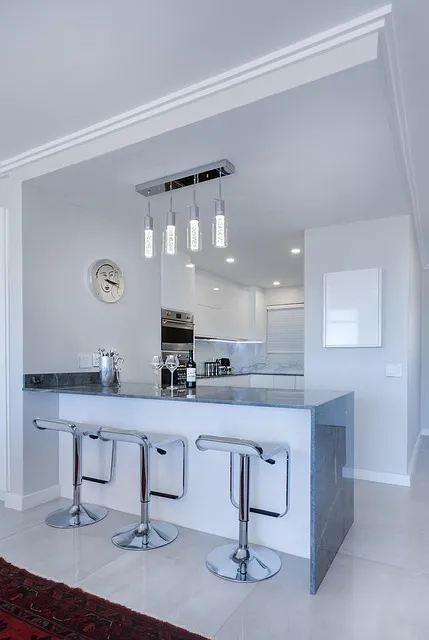
At no point did anyone make a single decision to spend the weekend this way. The decisions were made in advance — by the accumulated weight of things in a home that require management regardless of whether they’re used. This is the first and most important thing to understand about possessions: they are not passive. They are not background. Every object in a home is making an active claim on its owner’s resources, whether that owner is consciously attending to it or not. The object doesn’t care that you’re busy. It doesn’t stop needing cleaning, maintenance, organization, and mental cataloguing just because there’s somewhere else you’d rather be. It simply continues extracting its toll from the total available supply of time, space, money, and attention.
The reason this happens invisibly is that no single item’s cost is dramatic enough to register as a problem. The toaster takes up eight inches of counter space. The camping gear fills two shelves in the garage that never gets entered. The exercise bike costs maybe forty dollars a year in electricity and floor space. But there are forty toasters in spirit — forty different objects each extracting a small, barely-perceptible toll. The total toll is not small. A 2019 study published in Personality and Social Psychology Bulletin by Darby Saxbe and Rena Repetti at the University of Southern California found that women living in cluttered homes showed elevated cortisol throughout the entire day, not just in the moments when they were interacting with the clutter. The clutter didn’t have to be visible. It didn’t have to be thought about. Its mere presence in the home maintained a measurable physiological stress load from morning to night. Possessions do this to their owners right now, whether or not anyone notices.
Marcus Finley eventually did something about his garage. Not elegantly, not all at once, and not because he read a book about minimalism. He did it because he calculated — roughly, over coffee one morning — that he was spending approximately six hours per month managing objects he used fewer than twelve times a year. Six hours a month is seventy-two hours a year. At a conservative valuation of his time, he was donating the equivalent of almost two full workweeks annually to stuff that wasn’t doing anything for him. That calculation ended the argument his possessions had been quietly winning for years. The rest was logistics.
The Ownership Ledger: How to Measure What Every Possession Costs You

The four axes are Financial, Spatial, Temporal, and Cognitive. All four are needed. Miss any one and the accounting is wrong, and wrong accounting leads to the same outcome as no accounting: objects that should leave staying indefinitely because the real numbers were never run.
Financial cost is the axis everyone knows but rarely calculates correctly. Most people stop at purchase price, which is almost always the smallest component. A dryer costs sixty to eighty dollars a year in electricity. A car — accounting for the full stack of payments, insurance, fuel, maintenance, registration, depreciation, and parking — runs between eight and twelve thousand dollars annually for the average American household, a figure that appears in the Bureau of Transportation Statistics’ annual Consumer Expenditure Survey and that most car owners have never sat down and added up. A cable modem needs replacing every four years. A dishwasher requires descaling solution, replacement racks, and eventually a service call. A treadmill costs about ninety dollars a year in electricity even when it isn’t used for anything except storing laundry. The accurate financial cost of any possession is: purchase price + annual operating cost + expected maintenance over ownership period, divided by years owned. Run that calculation on any five infrequently used objects in a home and the results will be uncomfortable.
Spatial cost is the one people consistently undervalue because housing cost feels like a fixed number — the mortgage or rent gets paid regardless. But space is not free simply because it’s already been paid for. A proportional share of housing cost is being paid for every square foot possessions occupy. Take monthly housing cost, divide by total square footage, and multiply by the floor area consumed by things untouched in six months. For someone in a median U.S. market paying $1,800 per month for 1,200 square feet, every 100 square feet of occupied-but-unused storage costs $150 per month. A treadmill typically occupies around 15 square feet. At that rate, it costs $22.50 per month in pure spatial terms — before electricity, before maintenance, before the cognitive load of walking past it every day. Over five years, that treadmill has cost nearly $1,350 in housing space alone, on top of the purchase price.
Temporal cost is where the ledger turns brutal for most households. Every possession requires time: cleaning it, maintaining it, repairing it, moving it to get to something behind it, searching for accessories or replacement parts, and simply deciding whether to keep or discard it every time it enters the visual field. UCLA’s Center on Everyday Lives of Families conducted a four-year ethnographic study of 32 middle-class Los Angeles families, published in 2012, and found that mothers’ stress hormones spiked consistently during time spent in their homes — and the spike correlated directly with object density. They were measuring cortisol. What they were really measuring was temporal cost: the accumulating drain of managing hundreds of objects that each demanded small amounts of attention and action. Twenty minutes per year per unused object, spread across a hundred such objects, is thirty-three hours per year. Nearly an entire week of waking hours spent managing things that contribute nothing.
Cognitive cost is the axis that most directly determines how capable a person feels inside their own home. Neuroscientists at Princeton University published a study in the Journal of Neuroscience in 2011 establishing that visual clutter actively competes for neural processing resources in the visual cortex — the same way multiple applications compete for processor cycles on a computer. Every visible object not actively in use is running a background process in the brain, and each one reduces available capacity for focus, decision-making, and sustained attention. This is not metaphor. This is a documented, measurable reduction in cognitive performance caused directly by the presence of objects in the visual field that do not need to be there. Clutter doesn’t just look bad. It makes you measurably worse at thinking. Every time the Ownership Ledger removes something that doesn’t earn its place, counter space isn’t the only thing being freed up. Processing power is too.
The Ownership Ledger asks a single governing question for any object under evaluation: does the value this object delivers exceed the combined cost on all four axes? Not on one axis. All four. A kitchen gadget that costs fifteen dollars a year to run, takes up twelve inches of counter, requires five minutes of cleaning per month, and sits in the visual field every morning — that gadget needs to be delivering real, regular, measurable value to pass. Most don’t. And the ones that don’t are freeloaders, and freeloaders get cut.
The Kitchen Appliance Inventory and Why Most of It Can Go

Run each of these through the Ownership Ledger and the pattern becomes clear immediately. The food processor: used for large-volume chopping when cooking for a crowd, which happens six times per year. Financial cost: roughly forty dollars annually in electricity and cleaning supplies, plus forty dollars per year in depreciation on a two-hundred-dollar machine. Spatial cost: it occupies a full cabinet shelf and sixteen inches of counter when in use. Temporal cost: thirty minutes to set up, use, disassemble, and wash the four components after each of those six uses — three hours annually. Cognitive cost: every time that cabinet opens, the food processor registers as an item requiring management. For six uses per year, the Ownership Ledger returns a clear verdict: negative-ROI possession. A sharp knife and ten extra minutes per session produces the same output at zero ongoing cost, zero storage requirement, and zero counter clutter.
The microwave is the one that generates the most resistance, because it has become so embedded in daily routine that removing it feels like a lifestyle amputation. But the microwave, evaluated honestly, does one thing: it heats food quickly at the cost of quality. Research published in the Journal of Agricultural and Food Chemistry by Jiwan Sidhu and Bhavna Sharma in 2018 documented that microwave heating produces greater degradation of heat-sensitive vitamins (B1, B6, B9) and denaturation of certain proteins compared to stovetop or oven methods, particularly in liquid-based foods. The microwave also generates the specific kind of small convenience that erodes the larger habit: when reheating leftovers takes ninety seconds instead of four minutes, batch cooking in larger quantities stops feeling worth the effort of reheating, and eventually batch cooking stops altogether, and gradually the quality of what gets eaten declines along with the relationship to the kitchen as a place of actual activity. This is what every convenience machine does at scale: it optimizes one small transaction while quietly degrading the larger practice it belongs to.
The kit that actually runs a competent kitchen: a sharp chef’s knife, a cutting board, a cast iron skillet, a Dutch oven, a large pot, a wooden spoon, a spatula, a sheet pan. Eight items. With those eight items and a functioning stove, virtually any meal a human being needs to eat can be executed — roast chicken, braise short ribs, bake bread, make soup, sear fish, simmer any grain, fry an egg. Great-grandparents fed families of eight with this equipment. They were not deprived. They were competent, and the competence was inseparable from the constraint. The discipline of doing more with less does not stay quarantined to the kitchen. It bleeds. It becomes the default mode for approaching every resource in a life — time, money, attention, energy — and that default mode is the operating system of a person who runs their life rather than being run by it.
Execute what the Ownership Ledger calls the Appliance Audit this week. Open every cabinet. Pull every kitchen gadget onto the counter. For each one, ask two questions: how many times has this been used in the last ninety days, and can something already owned do this job? If the answer to the first question is fewer than four times and the answer to the second is yes, the item fails the audit. Box it. Drive it to the donation center. Do not negotiate. The negotiation is the trap — every item that gets a “well, maybe I’ll start using it more” verdict has just bought another twelve months of squatter’s rights on counter space and cognitive load. Either it earned its place in the last ninety days or it didn’t. There is no third category.
“It is not the man who has too little who is poor, but the one who hankers after more.” — Seneca
The 90-Day Protocol: A System for Cutting What’s Already There
- Friday evening — Tag. Walk every room with a roll of blue painter’s tape. Tag every item not used in ninety days. Move fast. Do not deliberate. The only job is observation, not judgment. If it takes thought to decide whether it’s been used, tag it. The thinking happens tomorrow. Tonight is reconnaissance.
- Saturday morning — Sort. Every tagged item goes into one of three piles. Pile A: can leave immediately — donate, sell, recycle, trash. Pile B: function is already covered by something else already owned (redundant). These get a seven-day reprieve: use them before next Saturday or they become Pile A. Pile C: items carrying emotional attachment despite no use. These go into a sealed box with today’s date written on the outside. If the box doesn’t get opened in ninety days, it leaves the house unopened. Do not renegotiate.
- Saturday afternoon — Price and post. Any Pile A item worth more than thirty dollars gets listed for sale. The rest goes directly to donation or trash. Don’t let the possibility of future sale become a reason to keep things in the house indefinitely — set a fourteen-day deadline. If it doesn’t sell in fourteen days, it gets donated.
- Sunday morning — Remove. Pile A items leave the house before noon. Drive them to the donation center. Carry the trash to the curb. Post them for sale if that hasn’t happened yet. The physical act of removal is not symbolic — it is structural. As long as those objects remain in the house, the brain is still cataloguing them as items requiring decisions. Get them out of the building. Feel the weight lift.

The rule: any object not used in ninety days, and not seasonal, does not belong in the home. Not as a suggestion. As a policy. The ninety-day window is calibrated deliberately — three months covers a full cycle of normal life: work weeks, weekends, social events, cooking rotations, exercise habits, projects, seasonal mood shifts. If an object did not earn a single use in ninety days of real, normal living, it is not part of the life it’s sitting in. It is a squatter. Squatters get evicted.
Seasonal items receive a structured exemption: the snow shovel, winter gear, holiday decorations. But even the seasonal exemption deserves scrutiny under the Ownership Ledger. How many strands of lights actually get deployed? How many winter coats get rotated through when only two ever get worn? If seasonal storage exceeds two standard bins, there’s more than gets used. Cut within the exemption, not just outside it.
The execution schedule:
Most people who run this protocol for the first time are stunned by two things. First, by how much blue tape appears on Friday night — the sheer volume of tagged items in a home that felt normal an hour ago. Second, by how little any of it gets missed once it’s gone. The anxiety about loss is almost entirely in the anticipation, not in the loss itself. Once the objects are out the door, the predominant feeling is relief, not regret. The space that opens up is not empty. It is available. And available space — like available time, like available money — is the raw material of a deliberate life. When less becomes more, managing an inventory stops and building something starts.
The 90-Day Protocol runs on a cycle. Every quarter, the house gets walked again. The second round generates less tape than the first. The third generates less than the second. Within a year, essentially every object in the home earns its place, and the quarterly audit takes an hour instead of a weekend because the dead weight never accumulates to critical mass.
Identity Objects and the Guilt Trap
The hardest items to move through the 90-Day Protocol are not the expensive ones. They are the ones tangled in identity and guilt. The guitar from three years ago when learning to play was the plan. The oil paints still in the original tin from the year painting was going to start. The running shoes bought during a January resolution. The books displayed not because they get referenced but because owning them signals the kind of person someone wants to be. These objects are not possessions. They are monuments to the person someone intended to become and didn’t, and every day they sit in a home they emit a low-level signal: the follow-through didn’t happen.
This is the guilt trap, and it is one of the most powerful mechanisms keeping people anchored to clutter. The logic goes: “Four hundred dollars went into that guitar. Getting rid of it means admitting the money was wasted and the musician never showed up.” So the guitar stays. It occupies a corner. It collects dust. Every time it’s seen, a small flicker of shame crosses awareness — not dramatic enough to act on, just persistent enough to contribute to the ambient background noise of a home that doesn’t feel quite right.
The sunk cost fallacy is not a metaphor here — it is the precise cognitive error at work. The four hundred dollars is gone regardless of whether the guitar stays or goes. That money cannot be recovered by keeping the guitar. What can be changed is the ongoing cognitive and emotional toll of living with a shrine to an abandoned aspiration. The Ownership Ledger entry for the guitar: financial depreciation (near zero — instruments hold value if maintained, nothing if neglected), spatial cost (corner of bedroom), temporal cost (dusting, moving when vacuuming), cognitive cost (elevated — identity attachment creates disproportionate processing overhead). On the return side of the ledger: zero. The guitar produces nothing. The aspiration is not stored inside it.
Releasing the guilt around possessions requires a specific separation: the object is not the aspiration. The aspiration may still be valid. Learning guitar someday might genuinely still be wanted. But the physical guitar does not advance that aspiration — it creates just enough illusion of preparation to substitute for actual commitment. The guitar in the corner is a prop in a fantasy of always being “about to” start learning. Remove the prop and the fantasy resolves into a binary: either the aspiration is wanted badly enough to actually pursue, or it isn’t. Both answers are acceptable. The one thing that is not acceptable is using an object as a surrogate for a decision that hasn’t been made. Cut the prop. If the aspiration is real, it will survive without the equipment.
The same principle applies to inherited objects and gifts. The china left by a grandmother, kept in a box in the attic because donating it would feel disrespectful — grandmothers wanted their china used at dinners, not maintained in a storage unit as a shrine. The exercise equipment given as a Christmas gift — the intention was health, not the ownership of equipment. The object is not the love. The love exists in the memory and the relationship, not in a thing sitting in a garage. Releasing the object does not dishonor the intention. Keeping an unused object does not honor it either. It just keeps something being maintained that serves nothing, out of loyalty to a feeling that was never actually housed in the thing.
The Utility Gate: The Four Questions That Stop Clutter Before It Starts

Gate 1: Does this serve a function nothing currently owned already serves? This is the redundancy filter, and it eliminates the single largest category of household clutter at the source. Most impulse buys, upgrade purchases, and “while I’m here” acquisitions fail this gate instantly. A way to make coffee already exists. A blender already exists. Three coats already exist. Redundancy feels harmless in the moment — it’s just one more item — but redundancy compounds the way clutter compounds: slowly, invisibly, until the accumulated mass becomes unmanageable. If the answer to Gate 1 is no, that’s it. The item stays in the store.
Gate 2: Will this get used at minimum once per week, on average? Objects used daily are tools. Objects used weekly are equipment. Objects used monthly are rental candidates — they should be borrowed or rented when needed, not owned. Objects used less than monthly are, with narrow exceptions, clutter in waiting. Most aspirational purchases fail this gate: the camping gear for the trip taken once a year, the kitchen gadget for the recipe made four times annually, the specialty fitness equipment for the protocol that gets maintained for three months before abandonment. Honesty matters here. Not about intended use. About actual use.
Gate 3: Does owning this make someone measurably better at something that matters? Not theoretically. Not aspirationally. The cast iron skillet makes for a better cook because it gets used every day. Quality running shoes make for a faster, more comfortable runner because running happens four times per week. These pass Gate 3. The guitar makes for a better musician only if it gets played — and if it hasn’t been played in ninety days, it fails Gate 3 independent of stated intentions. The standard is evidence of current practice, not declaration of future commitment.
Gate 4: Can the total Ownership Ledger cost — all four axes — be justified given the value delivered? This is the financial gate, but expanded to the full ledger. A fifty-dollar tool used three times per week generates an excellent return across all four axes. A three-hundred-dollar appliance used twice per year generates a poor return even though its purchase price is modest relative to income. The math is straightforward. The only obstacle is the willingness to run it instead of buying on impulse and doing the accounting never, which is the consumption pattern that most modern marketing is designed to produce.
The Utility Gate changes the relationship to acquisition in a way that’s difficult to explain until it’s been run consistently for two months. The impulse to buy something starts feeling different. It doesn’t disappear — the marketing still works at desire — but it now has to pass four concrete tests before becoming a purchase, and most impulses can’t pass even the first one. The gap between wanting something and needing it becomes noticeable, and that gap turns out to be enormous. Simplifying is not deprivation. It is clarity about the difference between what serves you and what you were sold.
What the Ownership Ledger Produces: The Results Are Not Subtle
Darby Saxbe’s cortisol research at USC established that clutter maintained a stress load throughout the day. The inverse of that finding — that clearing clutter reduces the stress load — has been confirmed repeatedly. A 2010 study in Environment and Behavior by researchers Sheryl Lepore and Gary Evans found that subjects who spent time in ordered environments showed lower cortisol levels, better working memory performance, and faster cognitive recovery from stressful tasks than subjects in disordered environments. The mechanism is not psychological in the motivational sense. It is neurological: an ordered environment reduces the background processing load on the visual cortex and prefrontal cortex, leaving more available capacity for the work that actually matters.
In practical terms, what Marcus Finley reported after running the 90-Day Protocol and Utility Gate for one full quarter: his weekend reclaimed approximately five hours per month from maintenance tasks. His grocery and household spending dropped by roughly three hundred dollars per month because the Utility Gate blocked most impulse purchases. He stopped losing things, because when fewer objects are owned, each object has a clear location and stays there. His home felt larger — not because he measured and confirmed it was, but because available space and occupied space produce categorically different experiences, and the brain registers the difference immediately. He described the specific feeling as: “I can think in here now.”
That last one is worth sitting with. The ability to think clearly in your own home — to sit down with a problem and work on it without the low-grade interference of visual clutter competing for attention, without the background awareness of a hundred unresolved maintenance tasks, without the ambient guilt of objects being avoided — is not a small improvement. It is a restoration of cognitive function that most people living in fully cluttered homes have quietly stopped expecting. They adapted to the interference the way anyone adapts to engine noise on a long flight: after a while it stops registering, but the body is still managing it, and the moment the noise stops, the relief is immediate and total.
The financial results compound in ways that surprise most people. The Utility Gate blocking routine impulse purchases produces savings that, redirected to a single meaningful goal, become significant within six months. The reduction in maintenance spending — the cleaning supplies, replacement parts, electricity, repair costs for objects that shouldn’t be owned in the first place — adds up quickly once it’s actually tracked. The decision fatigue reduction is harder to measure but no less real: fewer objects in a home means fewer daily micro-decisions about management, and research by Roy Baumeister at Florida State University established clearly that decision fatigue is cumulative and real — every minor decision depletes the same cognitive resource used for major ones. Strip the minor decisions out of the environment and the major ones get noticeably easier. Understanding what kind of relationship you want with your possessions determines what kind of results are available.
The Adaptation: Running This in a House That Isn’t Just Yours
Everything described so far is straightforward to implement alone. It gets substantially more complicated living with other people who have different relationships to their possessions, different sentimental attachments, and different levels of comfort with the idea of the Ownership Ledger as a household operating standard. Here is how to adapt the framework without turning it into a conflict.
Start with your own domain. Your bedroom, your clothing, your workspace, your car — these are areas where the 90-Day Protocol can run without negotiating anything with anyone. Don’t start with shared spaces if there is any resistance in the household. Don’t start by explaining the Ownership Ledger to a partner and then immediately applying it to their grandmother’s china. Start where jurisdiction exists, run the protocol fully, and let the results speak before expanding the conversation. A home that is sixty percent decluttered feels measurably different from one that is not. That experience is a far more effective argument than any framework.
With children, the Utility Gate becomes a parenting tool. Before any toy purchase, run Gate 1 and Gate 2 in age-appropriate language: “Do you have something that does the same thing? Do you play with it at least once a week?” Children who grow up with these questions develop a fundamentally different relationship to acquisition — they learn to evaluate rather than accumulate, and research by Tim Kasser at Knox College on materialism and well-being suggests that children raised in households with lower materialism report higher satisfaction in adulthood across measures of relationships, autonomy, and life purpose. The Ownership Ledger is not just a home management tool. Applied to child-rearing, it is a values transmission mechanism.
For shared spaces — the living room, kitchen, garage — the most productive approach is shared accounting rather than unilateral action. Run the Ownership Ledger calculation together on a single item: take something neutral, calculate all four costs on the whiteboard, and let the math do the persuasion. Most people who run the numbers on a specific object thought to be innocuous are genuinely surprised. Once the methodology is understood on a neutral item, applying it to contested items becomes a conversation about numbers rather than about preferences, and conversations about numbers are almost always more productive than conversations about what someone’s possessions mean to their identity.
The most important adaptation for real life: treat this as a practice, not an event. The Ownership Ledger and the 90-Day Protocol are not a project with a completion date. They are an operating system that runs continuously. The quarterly audit becomes a ninety-minute walk-through with a roll of tape. The Utility Gate becomes automatic — four questions asked without writing them down, in the thirty seconds before something gets added to a cart online or placed into a physical basket. The first time through, it takes a weekend. After six months, it takes minutes. After a year, dead weight stops accumulating because the gate fires before acquisition, not after. That is the adaptation: not a dramatic restructuring of a home but a permanent change in the decision architecture around what gets brought into it. Most of what’s being kept isn’t needed, and most of what would otherwise get bought isn’t needed either. The Ownership Ledger just makes that visible in numbers rather than feelings.
“The things you own end up owning you.” — Chuck Palahniuk
A home is either a launchpad or a warehouse. The Ownership Ledger tells you which one it is right now. The 90-Day Protocol and the Utility Gate determine which one it will be in ninety days. There is no third category and no later. Maintaining the change requires the same thing maintaining any change requires: a system that runs automatically, without relying on motivation or willpower. This is the system. Run it.
Common Questions About Possessions Own Cut: Possessions, the Ownership Ledger, and the 90-Day Protocol
What is the Ownership Ledger and how is it different from standard decluttering advice? The Ownership Ledger is a four-axis cost accounting framework that evaluates every possession across financial, spatial, temporal, and cognitive costs simultaneously. Standard decluttering advice asks for an assessment of sentiment (does this spark joy?) or use frequency (has this been used recently?). The Ownership Ledger asks whether an object’s measurable return across all four axes exceeds its measurable cost. A sentimental item that generates high cognitive load from guilt may spark joy in theory while costing mental bandwidth every time it’s seen. The Ledger captures that cost. Feeling-based frameworks don’t.
How do you calculate the cognitive cost of an object you own? Precise calculation isn’t possible, which is why most people ignore it — but it can be estimated directionally. Notice the internal response the next time a room gets walked through. Which objects get registered, followed by a feeling about them? An unplayed instrument, unused exercise equipment, a stack of aspirational books — if seeing the object produces any response other than neutrality or genuine use-satisfaction, it carries cognitive cost. Research from Princeton’s neuroscience department established that each additional irrelevant visual stimulus in an environment competes for neural processing resources in the visual cortex. The accurate proxy for cognitive cost is the emotional charge an object carries. Guilt, avoidance, vague unease, the slightly deflated feeling of walking past something that was supposed to get dealt with — these are the cognitive cost signals. High charge, low use: the object fails the Ownership Ledger.
Is the 90-day rule too aggressive? Some things get used once a year but are genuinely needed. Genuinely seasonal items — snow gear, holiday decorations, camping equipment for a trip actually taken — receive the seasonal exemption. The test for a legitimate seasonal exemption is: did this object get used during its season this year? If yes, it earns a pass with a storage requirement: dedicated, labeled seasonal storage, not distributed through general living space. If something is called seasonal but didn’t get used during its actual season this year, it failed the exemption. “Camping might happen next year” is not a seasonal use case. “Camping happened in August and will again” is. The ninety-day window is calibrated for this distinction — it is not arbitrary but it is not negotiable for items that fall outside genuine seasonal patterns.
What do you do with items that have high sentimental value but zero practical use? A curated collection of items with genuine emotional significance is legitimate — a box of photographs, objects tied to specific significant people or events. The problem is that most people treat everything as sentimentally significant, which is another way of saying nothing gets cut. The honest test: is this object tied to a specific memory or person that gets actively thought about and valued? Or is it associated with a general period of life, a former identity, or an abandoned aspiration? The first category earns curated storage. The second category belongs in the sealed box from the 90-Day Protocol’s Pile C: sealed, dated, out of sight. If it doesn’t get opened in ninety days, the memory is alive and the object isn’t carrying it. Strategies for releasing objects that feel like they should be kept but genuinely can’t are worth understanding before running the protocol, so the guilt doesn’t abort the process halfway through.
How do you run the Utility Gate with a partner who shops differently? The Utility Gate works best as shared accounting rather than unilateral enforcement. Run the four questions on a specific recent purchase together — something neutral both parties acknowledge ended up unused. Let the numbers land. Once a partner has seen the methodology produce an uncomfortable but accurate result on a safe item, applying it to future acquisitions becomes a shared framework rather than one person’s restrictive rule. The conversation changes from “do we need this?” (which invites rationalization) to “does this pass Gates 1 through 4?” (which invites analysis). People who disagree on whether something is “needed” often reach faster consensus running a shared checklist than arguing from preference. Starting with easy wins builds the shared vocabulary before tackling contested items.
Does living with fewer possessions actually improve focus and productivity, or is that overstated? The Princeton Visual Cognition Lab’s 2011 research in the Journal of Neuroscience is unambiguous: irrelevant visual stimuli directly compete for neural processing resources, and removing them produces measurable improvements in sustained attention and task completion rate. Saxbe and Repetti’s cortisol study at USC shows the physiological stress load maintained by clutter throughout the day. Neither of these findings is subtle or contested in the literature. The effect size is large enough to be noticeable in daily experience within a few weeks of running the protocol, not just measurable in a lab. Most people who complete a full quarter of the 90-Day Protocol and Utility Gate report feeling meaningfully clearer-headed in their home environment — not because of motivation or the positive psychology of “fresh starts” but because the brain is processing fewer irrelevant background signals every hour of the day.
What should I do with possessions that belong to other people stored in my space? This is the most common source of stalled decluttering in households — other people’s objects occupying space under the implicit understanding that they will eventually be retrieved. Set a deadline: ninety days from today, any object belonging to another person that is stored in the living space will be boxed and left at their door, donated, or discarded. Communicate this clearly and in advance. Most people respond to a deadline in a way they never respond to an open-ended storage arrangement — they either retrieve the objects or release them. What cannot happen productively is continuing to pay spatial, temporal, and cognitive costs on objects that aren’t yours and aren’t serving anyone, indefinitely, out of social discomfort about raising the subject. A home is not a storage facility. Every square foot of it is real estate being paid for. It should serve the people who live in it.
Related: Minimalist Goals That Compound: How to Simplify Without Creating Another Burden
Editorial StandardsCorrectionsMedical DisclaimerAbout Our ContentAffiliate DisclosureSite Map