
The grocery receipt is sitting on the counter. Lisa Chen stares at it the way you stare at a speeding ticket — not surprised, exactly, but still stung. $347. For one week. Two adults, one teenager. She does the math in her head: $1,388 a month on food, before restaurants. Before the DoorDash charges that show up on the credit card statement in amounts she prefers not to add up. She knows, intellectually, that something has gone wrong. She just can’t locate exactly where.
This was March 2019. Lisa was a middle school teacher in Austin, Texas, earning $54,000 a year. Her husband ran a small landscaping business. They owned their house, had two functional cars, took one vacation a year. By every surface measurement, they were doing fine. But they weren’t saving anything. The emergency fund sat at $800. The credit card carried a $4,200 balance that never seemed to move. The retirement accounts were technically open but practically empty. She had the feeling, familiar to a lot of households, of running hard and staying in place — of making a reasonable income and somehow having nothing to show for it.
She spent two hours that Saturday going through six months of bank statements. When she was done, she had a number: $2,340 per month on food. Total. Groceries, restaurants, coffee, lunch at work, the $40 Friday pizza delivery that had become a ritual. For a family of three. That was more than they were paying on their mortgage.
Within eight months of that Saturday, Lisa had cut their food spending to $960 per month without anyone in her household feeling deprived. She did it with a handful of behavioral changes that cost nothing to implement. The $1,380 monthly difference went straight to the emergency fund, then the credit card, then the retirement account. In twelve months, the credit card was paid off. In eighteen months, they had a $6,000 emergency fund. In three years, the retirement accounts had a number in them that no longer felt embarrassing to look at. All from rethinking how they approached saving money on food.
This article is the system she built. It’s called the Grocery Intelligence Framework, and it addresses the food budget the way an engineer addresses a leaking pipe — not with motivation or guilt, but with diagnosis and concrete fixes. The math, the traps, the proof, and the questions nobody asks until they’re staring at a $347 receipt.
The Actual Math: What American Households Really Spend on Food
- Budget Killer 1: The Convenience Tax. Pre-cut vegetables, individual-serving snack packs, bottled water, restaurant meals instead of cooking — each one carries a markup of 200 to 500 percent over the cost of the raw ingredients. A bag of pre-shredded cheese costs roughly twice what a block of the same cheese costs. A meal kit costs $10 to $15 per serving for food available at the grocery store for $3. The convenience is real. The cost is also real, and most households pay it dozens of times per week without noticing each individual transaction.
- Budget Killer 2: The Disorganization Premium. This is the most expensive item on most family grocery bills, and it’s the one nobody sees. It includes: the ingredients bought for a recipe and then forgotten, the produce that went bad before anyone got to it, the second jar of mustard purchased because the one in the back of the fridge couldn’t be found, the six dinners a month ordered as delivery because nothing was planned and no one wanted to figure it out. The USDA estimates food waste costs the average household $1,500 per year. Most of that isn’t overbuying. It’s disorganization dressed as consumption.
- Budget Killer 3: The Retail Environment Tax. Grocery stores are engineered for maximum spending. End caps display products with margins high enough to justify the prime real estate. Eye-level shelves are sold to premium brands. The bakery smell near the entrance triggers appetite, increasing impulse purchases. Checkout lanes are lined with high-margin impulse items. None of this is accidental. It is the product of decades of behavioral research, applied to the singular goal of extracting more dollars from each visit than was planned. Walking into a grocery store without a list and a plan is like walking into a casino without a gambling limit.
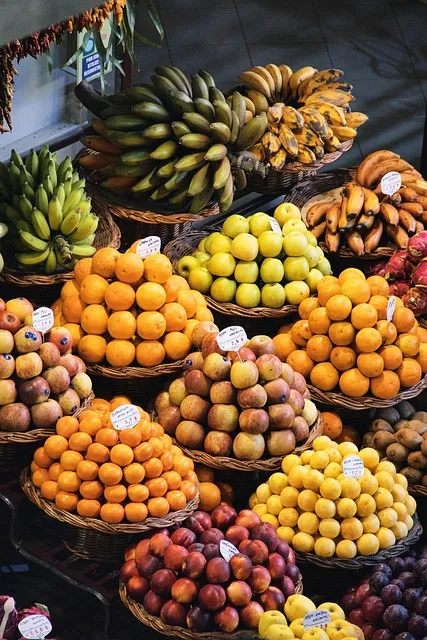
Now run the compound interest math on that food spending. Redirect $400 per month from food waste and convenience spending into a low-cost index fund at a historical 7 percent annual return, and over 20 years that’s $208,000. Not from a salary raise. Not from a side hustle. From buying less rotting lettuce and making more sandwiches at home. The USDA’s Economic Research Service estimates that American households throw away between 30 and 40 percent of the food they purchase. On an $800 monthly food budget, that’s $240 to $320 disappearing into the trash every month without providing a single meal in return.
The Grocery Intelligence Framework identifies three budget killers that account for the majority of food overspending in most households. Once the three are understood, the fixes become obvious.
These three forces together explain most of the gap between what households should be spending and what they actually spend. The Grocery Intelligence Framework attacks all three simultaneously, and the combined savings are where the real numbers come from.
Cost-Per-Serving: The Only Metric That Matters for Grocery Budgets
- Protein comparison. A 10-pack of chicken thighs ($8 at most grocery stores) yields 10 individual portions, or 5 two-piece servings — roughly $0.80 to $1.60 per serving depending on portion size. A rotisserie chicken ($6 to $8) yields four dinner portions and enough scraps for chicken salad the next day — $1.20 to $1.60 per serving, plus stock if the bones get used. A $12 pork shoulder feeds six to eight people — $1.50 to $2.00 per serving. Meanwhile, a $7 package of deli turkey yielding four sandwiches costs $1.75 per serving. The pork shoulder, the chicken thighs, and the rotisserie chicken all win. The deli meat loses by a significant margin despite the lower sticker price.
- Produce comparison. A $5 bag of organic spinach yields six side servings at $0.83 each. A head of cabbage at $1.50 yields roughly twelve servings (coleslaw, stir-fry, soup, braise) at $0.125 each. A $4 frozen pizza feeds two adults at $2.00 per serving. The spinach is a better deal than the pizza. The cabbage makes the spinach look expensive. This is the counterintuitive reality of the Grocery Intelligence Framework: the foods that feel indulgent (a big cut of meat, a full head of fresh produce) often cost less per meal than the foods that feel affordable (packaged snacks, frozen convenience items, deli counter purchases).
- The staple floor. Every grocery store has a set of items so inexpensive per serving that building meals around them immediately restructures a budget. Dried black beans: $1.50 per pound, roughly 8 servings, $0.19 per serving. Brown rice: $3 to $4 for a 5-pound bag, approximately 22 servings, $0.14 to $0.18 per serving. Eggs: $0.25 to $0.40 each at standard prices, delivering 6 grams of protein, healthy fats, and vitamins A, D, and B12 — arguably the most nutritionally dense food available per dollar. Chicken thighs: $1.50 to $2.50 per pound, depending on region. Oats: $0.10 to $0.15 per serving for a breakfast that actually keeps hunger at bay until noon. These are not compromise foods. These are the foods that built every civilization before the prepared-food industry convinced people that cooking from scratch was either too difficult or beneath them.
Most people shop by sticker price. The bag of chips is $2.49. The pork shoulder is $12. The bag of chips wins. This is backwards, and it’s one of the most reliable ways to consistently overspend on food while still feeling careful with money.
The metric that actually matters is cost-per-serving. Price divided by number of meals or portions realistically produced from a package. Once this number starts getting calculated, the entire grocery store reorganizes itself. Run the actual math on a few common comparisons:
The cost-per-serving calculation takes ten seconds per item and takes three or four shopping trips to become automatic. After that, it’s the filter that runs in the background every time something comes off the shelf, and it quietly redirects hundreds of dollars per month toward food that delivers more value and less waste. This is the first pillar of the Grocery Intelligence Framework, and it’s worth implementing before anything else, because it changes how every purchase that follows gets seen.
The Grocery Intelligence System: The Exact Weekly Protocol
- The Fridge and Pantry Audit (8 minutes). Before planning anything, open the refrigerator and pantry and take inventory. What needs to be used before it goes bad? What’s already there in multiples from buying without checking first? Write down both lists: “use first” items and “already have” items. The “use first” list becomes the foundation of at least two or three of the week’s meals. The “already have” list prevents the fifth jar of cumin from landing in the cart. This step alone — just looking before buying — eliminates a significant portion of household food waste and redundant purchasing.
- The Five-Meal Plan (10 minutes). Plan five dinners for the week, not seven. Two nights are covered by leftovers, a meal out, or a leftover-reinvention (last night’s roast chicken becomes tonight’s chicken tacos). Five is achievable. Seven invites failure and leads to waste when Wednesday’s planned salmon gets bumped by a long work day and sits in the fridge until it goes bad. Build two of the five meals around the “use first” items from the audit. Build two of them around the cheapest proteins available that week — check the weekly circular before planning, because a store special on pork shoulder or whole chickens changes the calculus significantly. The fifth meal can be whatever the family actually wants to eat. One “fun” meal per week is not a budget problem. It’s a sustainability feature — it keeps people engaged with the system.
- The Shopping List (7 minutes). Build the list from the five-meal plan, adding breakfast and lunch staples at the bottom. The list is not aspirational. It is the exact items needed for exactly what’s been planned. Nothing extra. Every item that goes into the cart but wasn’t on this list is a tax voluntarily paid to the grocery store’s behavioral engineering team. Write the list in store-layout order for a familiar store (produce, protein, dairy, pantry) — this reduces the number of aisles browsed, which reduces impulse purchases. Non-negotiable rule: eat a full meal before going to the store. Ghrelin, the hunger hormone that spikes on an empty stomach, directly impairs the prefrontal cortex — the part of the brain that says “no” to things. Shopping hungry is chemically equivalent to shopping with reduced willpower. Eat first.
- The Component Cook (variable, Sunday or Monday evening). When one protein is already being cooked, cook double. The extra portions become tomorrow’s lunch and the base of a completely different meal later in the week. One roasted chicken becomes dinner, sandwiches, and the foundation of a soup or a rice bowl. One large batch of rice covers four meals. One hour of active cooking extracts three to four meal-equivalent units from the same work session. Professional meal preppers call this “component cooking.” The Grocery Intelligence Framework calls it the multiplier — the habit that takes thirty minutes of grocery planning and converts it into two extra hours of free time during the week while simultaneously reducing food waste to near zero, because everything cooked gets eaten across multiple planned meals.

The system has four steps, done in sequence once a week. Not seven steps. Not a subscription app. Not a complicated spreadsheet. Four steps on paper, before the store.
Lisa Chen’s household ran this system for three months before it became fully automatic. In the first week, they saved $60 versus their previous grocery trip. By month three, the system took fifteen minutes because they’d built a rotation of twenty meals their family actually liked and the planning step had simplified to selecting from a familiar menu rather than inventing new meals each week.
The compounding effect of habit formation is what makes the Grocery Intelligence Framework sustainable where willpower-based approaches fail: after sixty days, the system runs itself.
Retail Environment Traps: How Grocery Stores Engineer Your Spending
- Eye-level shelf placement. Brands pay a premium to be positioned between chest and forehead height — the range eyes naturally fall on while walking. The identical product, often from the same manufacturer, sits on the bottom shelf with a store-brand label at 30 to 40 percent less. The quality difference is, in most cases, zero. The price difference is entirely about marketing costs and shelf fees. Bend the knees. Four minutes per shopping trip spent looking at the bottom two shelves and the savings add up faster than expected.
- The bakery effect. The warm-bread smell near grocery store entrances is not accidental. Research published in the journal Appetite showed that ambient food odors increase purchases of unplanned food items. The smell triggers hunger cues, which impair impulse control, which is why the deli counter starts looking appealing for a quarter pound of something never intended at the door. Knowing this doesn’t create immunity. It does allow a rule to be built (stick to the list, exit the area) rather than relying on willpower in the moment.
- The checkout gauntlet. The lane between the cart and the register is lined with the highest-margin impulse items in the store: candy, magazines, bottled beverages, small snacks. These items are placed there because thirty minutes on your feet have already happened, decision-making is fatigued, and a candy bar requires almost no deliberation. The psychology of the grocery store’s checkout design is essentially a tax on shopping fatigue. The defense is mechanical: look straight ahead. Kids along for the trip get a defined small budget before entering the store, held to firmly — if the budget is spent, it’s spent.
- The “deal” trap. Buy-one-get-one and three-for-$10 promotions are only deals if that quantity was going to be bought anyway and can actually be consumed before it expires. A BOGO on chicken breasts saves money if the second pack gets frozen and used. It costs money if half of it gets freezer-burned from improper portioning before freezing. A three-for-$10 yogurt promotion saves money if the household eats yogurt daily. It costs money if two of the three sit until their date passes because the household only uses one per week. Every “deal” that ends in waste was never a deal. It was a loss with clever packaging. The Grocery Intelligence Framework test for every promotion is simple: will all of this actually get consumed before it expires? If the answer isn’t a confident yes, the deal stays on the shelf.
- The organic premium question. The Environmental Working Group publishes annual “Dirty Dozen” and “Clean Fifteen” lists identifying which produce carries the highest and lowest pesticide loads respectively. The strategic approach: buy organic for items where the outer layer gets consumed and pesticide residue is typically highest (strawberries, spinach, apples, grapes, cherry tomatoes, bell peppers), and buy conventional for items with thick peels that don’t get eaten (avocados, pineapples, onions, cabbage, frozen peas, sweet corn). This one distinction — applied consistently — delivers the majority of the health benefit of organic produce at a fraction of the cost of buying everything organic. Emotion has no place in this calculation. The EWG data does.
Understanding why grocery spending runs over budget is not self-help. It’s practical intelligence about the environment being operated in. Grocery stores are one of the most behaviorally optimized retail environments ever designed, and the optimization has a single purpose: get shoppers to spend more than planned.
The tactics are well-documented and worth knowing:
The Food Waste System: Eliminating the $1,500-Per-Year Silent Leak
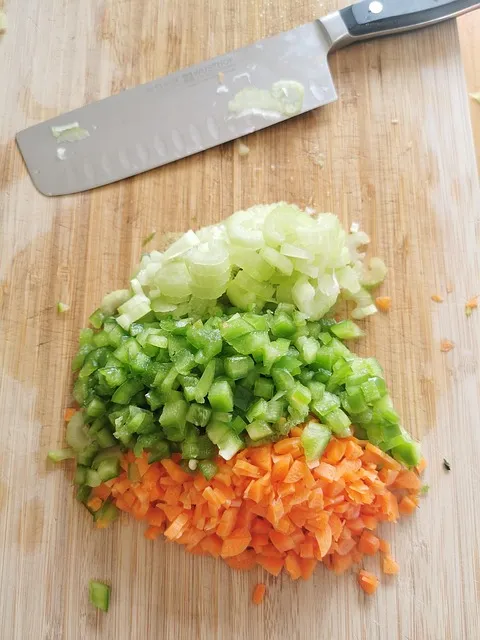
Three systems eliminate most household food waste:
FIFO: First In, First Out. This is the inventory management principle used by every professional kitchen and food distribution operation in the world, and there is no logical reason a home refrigerator should operate by a different standard. New groceries arriving means older items move to the front and new items go behind them. New milk goes behind the old milk. Fresh produce goes in front of last week’s produce. New condiments go in the back, older ones come forward. This takes roughly sixty seconds per grocery trip and prevents the single most common cause of household food waste: the item that gets pushed to the back and forgotten until it’s no longer safe to eat.
The label-and-date system. Every container of leftovers that goes into the refrigerator gets labeled with contents and date before the refrigerator door closes. Not after. Before. A roll of painter’s tape and a Sharpie in the silverware drawer cost three dollars and eliminate the “mystery container” problem permanently. Leftovers that are labeled and dated get eaten at a significantly higher rate than unlabeled containers, because the decision to eat them doesn’t require opening them and evaluating whether they’re still good — the information is on the outside. Pack leftovers in single-serving containers that are microwave-safe. Make reheating require zero effort, because the single biggest predictor of whether a leftover gets eaten is how easy it is to heat up.
The freezer as an extension of the grocery system, not a holding area for things nobody wants to make decisions about. Most household freezers are full of things put there with good intentions and no realistic chance of being eaten. The Grocery Intelligence Framework uses the freezer as a deliberate extension of the meal plan, not a graveyard for impulse purchases. Proteins that won’t get cooked within three days get portioned (not thrown in whole) and frozen immediately when they arrive home from the store. Bananas starting to over-ripen go directly into a labeled bag in the freezer for banana bread or smoothies, not onto the counter to get more overripe. Chicken bones, vegetable scraps, and aromatic trimmings go into a dedicated gallon freezer bag; once it’s full, everything needed for a deeply flavored homemade stock is right there. Berries approaching the end of their viability go into a freezer bag for smoothies. Nothing goes into the freezer unlabeled or undated. The freezer functions as a planned resource, not a delay mechanism.
The combined effect of these three systems is substantial. Households that implement FIFO, the label-and-date protocol, and planned freezer use consistently report food waste reductions of 50 to 70 percent within the first month. On an $800 monthly food budget with previously 25 percent waste, that’s a reduction from $200 per month wasted to $60 to $100 per month — a real saving of $100 to $140 per month from behavioral changes that cost nothing except attention.
The Dining-Out Math: What Restaurant Spending Actually Costs You
Groceries are half the food budget equation. The other half is the one most households refuse to examine honestly: restaurant, takeout, and delivery spending. The Bureau of Labor Statistics data shows the average American household spends $3,639 per year dining out. For households in major metropolitan areas, the figure often doubles. And unlike groceries — where a $5 purchase of spinach yields six servings of nutrition — every restaurant dollar buys exactly one meal, marked up 300 to 500 percent from the cost of the ingredients that comprise it.
Run the weekly math. A $15 lunch three days a week is $2,340 per year. A $50 family dinner every Saturday is $2,600 per year. Two cups of coffee bought daily at $5 each is $3,650 per year. Combined, that’s $8,590 per year in food spending that produces zero savings, zero investment, and zero wealth-building effect. Over a decade, at 7 percent invested return, that $8,590 per year becomes roughly $120,000. That is not a rounding error. That is a down payment, a college fund, or five years of early retirement shaved off the back end.
The practical intervention is not elimination. Eliminating restaurants entirely is both unsustainable and unnecessary. The intervention is designation. Choose one meal per week as the intentional dining-out meal. Make it something worth looking forward to, somewhere genuinely worth going. Every other meal gets cooked. This single change — from eating out three to five times a week to once — typically saves a household $300 to $500 per month. And the counterintuitive benefit: the one weekly restaurant meal becomes dramatically more enjoyable than the four routine ones used to be. Scarcity creates appreciation. When dining out is a deliberate choice rather than a default response to disorganization, it becomes a pleasure instead of a habit.
For lunch at work, the solution is mechanical: pack it. Every day. Last night’s leftovers, a grain bowl prepped on Sunday, a sandwich made in four minutes before leaving. The cost difference between a brought lunch ($2 to $3 per day) and a purchased lunch ($12 to $18 per day) is $2,000 to $3,500 per year. That calculation changes every year it gets delayed. There is no investment strategy available to a person of ordinary means that generates $3,000 per year on ten minutes of daily effort. Packing lunch does, consistently, for anyone willing to do it.
The framework for tracking dining-out spending is simple: review bank and credit card statements monthly and total every food transaction that wasn’t a grocery store. That total is the dining-out number. Most people who do this for the first time are genuinely surprised — not because they didn’t know money was being spent eating out, but because the cumulative number is consistently higher than the mental estimate. The 50/20/30 budget framework recommends allocating no more than 10 to 15 percent of take-home income to food total. For a household taking home $5,000 per month, that’s $500 to $750. Once the actual number gets seen against that benchmark, the gap explains itself.
The Protein Problem: Eating Well on a Tight Food Budget Without Hunger
The most common objection to cutting the food budget is protein. Meat is expensive. Eating well requires expensive protein. Therefore, cutting the food budget means eating worse. This argument sounds logical and is almost entirely false — because it conflates expensive protein with adequate protein, two things with no meaningful relationship to each other.
Chicken thighs are the most undervalued item in any grocery store. They are fattier than breasts, which makes them more forgiving to cook, more flavorful in virtually every application, and more satisfying in smaller portions. They cost $1.50 to $2.50 per pound depending on location and whether they’re on sale. They are not a compromise. Ask any working cook which cut is preferred, and very few will say breast. The obsession with boneless skinless chicken breast is a marketing achievement, not a culinary one, and it costs American households hundreds of dollars per year in unnecessary premium spending.
A whole chicken at $6 to $8 yields four dinner portions, the next day’s lunch sandwiches, and the raw material for a stock that becomes the base for two additional meals — soup, risotto, braised greens, grain dishes. Six meals from a single $7 bird. A pork shoulder at $1.50 per pound and weighing 4 to 5 pounds costs $6 to $7.50 and feeds eight people. These are not budget foods. They are the foods serious cooks have always preferred, precisely because they deliver more flavor, more versatility, and more total food per dollar than the premium cuts positioned at eye level.
Eggs deserve particular mention. At current standard prices — $0.25 to $0.40 per egg even in the elevated-price environment of recent years — eggs deliver 6 grams of complete protein, healthy fats, and vitamins A, D, B12, and choline for roughly the cost of a quarter. A three-egg omelet with whatever vegetables are in the fridge is a complete, satisfying meal for under $2. Cutting the food budget without sacrificing nutrition means eggs should appear in the meal plan multiple times per week. They are the most nutritionally efficient food available at any price point.
Legumes — beans, lentils, chickpeas — complete the picture. A pound of dried lentils costs $1.50 and produces eight servings with 18 grams of protein each. Combined with rice (which provides the complementary amino acid profile to create a complete protein), this is a meal so inexpensive it barely registers in a budget calculation. A pound of dried black beans costs $1.50 and feeds a family of four with multiple applications: tacos, rice bowls, soups, dips. The argument that eating adequately requires expensive meat is a myth maintained by people who haven’t learned to cook beans — and learning to cook beans well takes about twenty minutes of research and two practice attempts.
This is not an argument for eliminating meat or adopting any particular dietary philosophy. It’s an argument for the cost-per-serving framework applied consistently to protein: a category where the premium end bears almost no relationship to the nutrition or satisfaction delivered, and where modest shifts in purchasing patterns produce disproportionately large budget improvements. The Grocery Intelligence Framework doesn’t dictate what to eat. It calls for running the math on what’s being eaten and making conscious choices rather than default ones.
Seasonal Buying: The Strategy That Cuts Produce Spending in Half
There’s a reason great-grandparents didn’t eat strawberries in December. Produce out of season has to be grown in a heated greenhouse or shipped from the southern hemisphere, and every mile of that logistics chain adds to the price. In-season produce, by contrast, is abundant, locally available, and priced accordingly. The cost difference isn’t marginal — it’s 50 to 100 percent or more on many items. A pound of tomatoes in July costs $1.50 and tastes like a tomato. The same “tomato” in January costs $3.50 and tastes like the truck it arrived on.
The seasonal buying framework requires knowing roughly what grows when in a given region and building meal planning around that calendar rather than against it. In practice, this is not complicated:
Spring brings asparagus, peas, spinach, spring onions, and strawberries at their peak quality and lowest prices. Meals built around these mean spending less for better food.
Summer is the peak abundance window: tomatoes, corn, zucchini, cucumbers, peaches, blueberries, green beans, bell peppers. Summer produce is the most inexpensive produce of the year for anyone buying what’s in season rather than what’s wanted regardless of season.
Fall brings apples, squash, sweet potatoes, Brussels sprouts, root vegetables, and hearty greens at their best. These are also among the most storage-stable items available — a butternut squash bought in October stores for two to three months, delivering value across multiple meal plans.
Winter means cabbage, citrus, kale, leeks, beets, and turnips — affordable, nutritious, and completely underutilized by most households that haven’t learned to cook them. Cabbage, at $0.50 to $1.50 per head and twelve or more servings, is arguably the best-value vegetable available at any time of year.
Farmers’ markets amplify the seasonal advantage. Produce at a farmers’ market was typically picked within 48 hours — not two weeks ago in a different country. It hasn’t been waxed to maintain shelf appearance under fluorescent lights. And in the final hour before a farmers’ market closes, vendors consistently offer significant discounts rather than haul unsold inventory back to the farm. A market that closes at 1 PM is worth arriving at by 12:15. The deals available in those forty-five minutes are reliable enough to build into a weekly routine.
The Grocery Intelligence Framework treats seasonal buying as the produce layer of the cost-per-serving calculation: in-season items have the lowest cost-per-serving of any time of year, by definition. Out-of-season items have inflated cost-per-serving and typically inferior flavor. Shopping seasonally isn’t about limiting anything. It’s about aligning purchasing with reality rather than against it — which is what every other intelligent financial decision looks like.
The Proof: What $400 Per Month in Food Savings Compounds To
Lisa Chen’s story is instructive precisely because it isn’t dramatic. She didn’t discover couponing or adopt an extreme diet or stop eating food she enjoyed. She implemented the Grocery Intelligence Framework systematically, and the results were arithmetic rather than miraculous.
Month one: She ran the fridge and pantry audit before every shopping trip and eliminated redundant purchases. She reduced the family’s restaurant spending from approximately twelve meals out per month to four. She started packing her lunch for work five days a week. Combined savings: $420. The number surprised her.
Month two: She implemented the five-meal plan and the Sunday component cook. Food waste — previously running at roughly 25 percent of grocery spending — dropped to under 10 percent as planned meals consumed what they’d bought. The shift to chicken thighs, whole chickens, and dried beans for at least half their protein needs reduced grocery spending by another $80 per month. Combined savings versus month one baseline: $480.
Month three: Seasonal buying became a habit. She started shopping at a local farmers’ market on Saturday mornings, arriving in the last hour for end-of-day discounts. Her produce quality went up and her produce spending went down. She built a ten-meal rotation her family liked, which reduced planning time to fifteen minutes and eliminated the decision fatigue that had previously led to last-minute delivery orders. Combined savings versus baseline: $520.
By month eight, the credit card balance was gone. The $4,200 that had been sitting there accumulating interest — roughly $75 per month in interest charges, on top of everything else — was paid off entirely from the redirected food budget savings. The emotional weight of that change was, Lisa reported, larger than the dollar amount suggests. The credit card debt had been a low-grade stress for four years. The food savings eliminated it in eight months without any reduction in quality of life that anyone in her household could identify.
Run the math forward. $400 per month in food savings redirected to investment — a low-cost index fund growing at a historical 7 percent — produces the following:
Year 1: $4,800 contributed, approximately $5,100 with growth.
Year 5: $24,000 contributed, approximately $28,600 with growth.
Year 10: $48,000 contributed, approximately $69,000 with growth.
Year 20: $96,000 contributed, approximately $208,000 with growth.
Year 30: $144,000 contributed, approximately $486,000 with growth.
$486,000 from food savings. Not from a salary increase. Not from stock picks. Not from a business. From buying chicken thighs instead of breasts, packing a lunch five days a week, and spending thirty minutes on Sunday planning the week’s meals. The compound interest effect on redirected spending is one of the most consequential financial forces available to an ordinary person, and food spending is one of the three or four largest and most controllable line items in any household budget. The other controllable large items — housing and transportation — require major life decisions to change. Food requires a list, a Sunday evening, and the willingness to treat a grocery store as a mission rather than a leisure activity.
That is the Grocery Intelligence Framework in practice: not a sacrifice, not a restrictive diet, not an extreme lifestyle. A system. The same thing that differentiates people who build financial independence from people who wonder where the money went is almost always not income. It’s systems — the ones built, run consistently, and left to compound over time. Food is where most households have the most room to build, and the most to gain from building.
The Common Traps That Kill Grocery Budgets Even for Disciplined People
The Grocery Intelligence Framework is straightforward enough that most households can implement it in one week. It’s also undermined in predictable ways that are worth cataloging in advance.
Trap 1: The meal plan that’s too ambitious. Seven dinners get planned, all of them requiring fresh ingredients and some actual cooking effort. Wednesday arrives, exhaustion sets in, one of the planned meals requires forty minutes of active work, and DoorDash is already on the phone. The solution is to plan one or two “low-effort nights” deliberately — meals so simple they take twenty minutes regardless of how tired anyone is. A can of quality tuna with olive oil and lemon over pasta. Eggs and toast. A quesadilla from whatever’s in the fridge. These are not failures. They are planned features of a sustainable system. The meal plan that acknowledges human exhaustion beats the aspirational one that breaks under it.
Trap 2: The bulk-buying miscalculation. Warehouse stores are excellent for a specific category of items: non-perishables used consistently (rice, olive oil, canned goods, dried beans, toilet paper) and proteins that actually get frozen and used within three months. They are expensive traps for everything else. A five-pound container of salad greens is not a deal if half of it wilts before it gets eaten. Ten pounds of bananas is not a deal if eight of them go overripe because the household eats two bananas per day. The question to ask before every bulk purchase is the same as the one for every promotional deal: will all of this actually get consumed within its useful lifespan? Bulk buying wins on staples. It loses on perishables unless the consumption rate is very high and very consistent.
Trap 3: The “healthy eating is expensive” belief. This belief, common and wrong, leads households to spend more on food rather than less, by treating expensive as a proxy for nutritious. Whole grains are cheap. Legumes are cheap. Fresh vegetables in season are cheap. Eggs are cheap. The expensive food isn’t the healthy food — it’s the convenient food, the branded food, the food that has been processed, portioned, packaged, and marketed. The most nutritionally dense foods in the grocery store are consistently among the cheapest: dark leafy greens, dried beans, eggs, oats, seasonal produce, whole cuts of meat. The Grocery Intelligence Framework doesn’t require choosing between health and budget. It requires rejecting the prepared-food industry’s claim that health requires premium spending.
Trap 4: Tracking spending without changing behavior. A number of households go through the exercise of tracking their food spending, arrive at a large and alarming number, feel motivated to change, and then change nothing specific. Awareness without a system produces temporary discomfort and then reversion. The Grocery Intelligence Framework is a system — it specifies exactly what to do (the audit, the five-meal plan, the list, the component cook) so that “change” means “run these four steps” rather than “feel differently about groceries.” Behavioral change doesn’t happen at intention. It happens at process. Once the process runs for sixty days, it becomes automatic, and the savings sustain themselves without ongoing effort.
Trap 5: Optimizing groceries while ignoring restaurants. A tight, disciplined grocery operation can still coexist with 40 percent overspending on food overall, if the dining-out budget never gets examined. Both sides of the equation matter. Cutting grocery spending from $600 to $400 per month while dining-out spending sits at $800 per month is productive but incomplete. The Grocery Intelligence Framework addresses both because the math is unambiguous: restaurant spending per meal is three to five times higher than home-cooked cost per meal, and the aggregate of that difference, compounded over years, is where the real financial transformation lives.
Common Questions About Small Changes Lead About Saving Money on Food and Groceries
How much should a family of four spend on groceries per month? The USDA publishes monthly food cost plans by household size and spending level. For a family of four with two adults and two school-age children, the USDA “thrifty plan” (2024) sets $973 per month as a benchmark for nutritionally adequate eating with careful planning. The “low-cost plan” runs $1,271 per month. Households spending above the moderate-cost plan ($1,609 per month) should look at specific categories: how much is going to convenience foods, pre-cut produce, and name brands versus store brands for equivalent products.
What’s the fastest way to cut a grocery bill immediately? Three changes that produce visible results within one week without any planning system: switch proteins from premium cuts (boneless skinless chicken breast, ribeye) to equivalent-nutrition options at lower cost (chicken thighs, pork shoulder, eggs, legumes); switch at least five items from name brands to store brands (most are manufactured in the same facilities with the same ingredients); and stop buying any beverages at the grocery store other than coffee and tea — eliminating bottled water, juice, soda, and sports drinks reduces average grocery bills by $50 to $100 per month immediately. These three changes require no planning, no lifestyle adjustment, and no sacrifice of nutrition or satisfaction.
Is meal prep actually worth the time investment? The time calculation is important here. A thirty-minute Sunday planning session prevents approximately forty-five to ninety minutes of reactive decision-making during the week (the time spent figuring out dinner each night, plus the time spent making last-minute grocery runs or waiting for delivery). It also prevents the financial cost of those reactive decisions — typically three to four times the cost of a home-cooked meal. The net time effect of meal planning is positive for most households: less total time gets spent thinking about food during the week than without the system, and considerably less money gets spent. The startup cost is real. The ongoing benefit is larger.
How do you stop wasting food at home? The FIFO method (First In, First Out), implemented consistently, eliminates the majority of household food waste caused by forgotten items. Label every leftover with date and contents before it goes in the refrigerator. Keep a dedicated “use first” section at the front of the fridge for items approaching the end of their useful life, and plan at least one meal per week specifically designed to use these items. The University of Vermont Extension estimates that these three behavioral changes alone reduce household food waste by 50 percent within the first month of implementation.
Is organic food worth the extra cost on a tight budget? Strategically, yes for a subset of items. The Environmental Working Group’s Dirty Dozen list identifies produce with consistently high pesticide residues where organic purchasing is defensible from a health standpoint: strawberries, spinach, kale, peaches, pears, nectarines, apples, grapes, bell peppers, cherries, blueberries, and green beans. Their Clean Fifteen identifies items with minimal pesticide exposure where conventional is effectively equivalent: avocados, sweet corn, pineapples, onions, papaya, sweet peas, asparagus, honeydew, kiwi, cabbage, mushrooms, mangoes, sweet potatoes, watermelon, and carrots. Buying organic selectively on the Dirty Dozen and conventional on everything else captures most of the health benefit at a fraction of the cost of buying all organic.
What are the best foods to buy to save money on groceries? Ranked by cost-per-serving value: dried beans and lentils ($0.15 to $0.25 per serving), brown rice and oats ($0.10 to $0.20 per serving), eggs ($0.25 to $0.40 per unit), seasonal vegetables at peak season ($0.20 to $0.60 per serving), cabbage ($0.12 to $0.18 per serving), chicken thighs ($0.75 to $1.50 per serving), pork shoulder ($0.75 to $1.25 per serving), canned fish — tuna, salmon, sardines ($0.50 to $1.00 per serving). Meals built around these items cost $2 to $5 per serving for complete, nutritionally dense food. Meals built around premium proteins, convenience foods, and out-of-season produce cost $8 to $15 per serving or more. The difference, applied daily, is the Grocery Intelligence Framework’s financial engine.
How do you save money on food when you’re too tired to cook? This is the most honest question in grocery budgeting, and it deserves an honest answer: the problem isn’t cooking. It’s the absence of a low-friction option on tired days. The Grocery Intelligence Framework solves it through component cooking on Sunday — cooked rice, roasted vegetables, and pre-cooked protein waiting in the refrigerator mean that meal assembly on a tired Tuesday takes eight minutes, not forty. The alternative that most households default to — delivery or takeout — costs $15 to $25 per person for food that is frequently not as satisfying as a simple home-assembled meal from prepared components. Design the kitchen for the Tuesday-night-tired version of the household, and delivery almost never gets ordered. That design is the component cook, done once a week on a day with the energy for it.
How much can you realistically save on food by cooking at home? The data from the USDA, the Bureau of Labor Statistics, and multiple household budget studies converge on a consistent figure: home-cooked meals cost between 60 and 80 percent less per serving than equivalent restaurant meals, and 40 to 60 percent less than meal delivery services. For a household currently spending $1,000 per month on food with $300 of that at restaurants, shifting to one intentional dining-out meal per week while cooking the rest yields a realistic saving of $150 to $200 per month. For households with higher restaurant spending, the saving is proportionally larger. The households that consistently build long-term financial security on ordinary incomes are, almost without exception, the ones who learned to control the food budget — not because food is their biggest expense, but because it’s the most controllable large expense most people have, and discipline in controllable areas compounds across every area of financial life.
Editorial StandardsCorrectionsMedical DisclaimerAbout Our ContentAffiliate DisclosureSite Map