
1868. The Meiji government of Japan issued a series of decrees that effectively ended twelve hundred years of samurai rule. The class was abolished. The stipends were cut. The right to carry swords in public — the most visible marker of samurai identity — was revoked in 1876 by the Haitorei Edict. Men whose families had been warriors for thirty generations were told to become farmers, merchants, civil servants. The sword, the code, the entire architecture of what it meant to be a man in Japan was officially dismantled in less than a decade.
What happened next is the part that doesn’t show up in most history books. Thousands of samurai complied quietly. They traded their swords for abacuses and got on with it. But thousands didn’t. They held on to Bushido — not as policy, not as law, but as the only framework for living they had ever known or respected. Some died in the Satsuma Rebellion of 1877, the last armed uprising of the samurai class, led by Saigo Takamori, a man who had helped create the Meiji government and then turned against it when he realized what it was destroying. He was outnumbered, outgunned by conscript soldiers with modern rifles, and he knew it going in. He fought anyway. Because Bushido didn’t ask whether you could win. It asked whether the fight was right.
Saigo died at Shiroyama. His forces, maybe five hundred men against thirty thousand government troops with artillery, held their ground for as long as their ammunition lasted. Then they charged with swords. Not because they were stupid. Because they were samurai, and dying in battle with your code intact was preferable to living with it abandoned.
That was 1877. One hundred and forty-eight years ago. And here we are, in 2025, with millions of men across the West buying copies of the Hagakure and the Book of Five Rings, watching samurai documentaries, building morning routines around Bushido principles, and naming group chats after warrior codes from a culture most of them couldn’t place on a map until recently. The question worth asking is not whether this is culturally appropriate or historically accurate. The question is why. Why does a code built for professional killers in feudal Japan resonate so powerfully with men who work at desks, drive SUVs, and fight no battles more lethal than a performance review?
The answer reveals something true and uncomfortable about what modern culture has done to men — and what Bushido, specifically, is offering as an alternative. This is not a surface-level breakdown of “seven virtues you can live by.” That version of this article exists in a thousand places. What follows is an honest examination of the Bushido code — what it actually said, what modern men are looking for in it, where the cultural moment is getting it right, where it’s getting it dangerously wrong, and what a serious engagement with it looks like in a life that doesn’t involve swords.
The Pattern: Why Warrior Philosophy Is Having a Moment

To understand the function, the thing that dissolved has to be understood first. The postwar framework for masculinity — provider, protector, breadwinner, head of household — was genuinely limiting in ways that deserved criticism. The critique was legitimate. What replaced it was less clear. Men were told what they shouldn’t be, at considerable volume and consistency, without a coherent vision of what they should be instead. “Be more emotionally available” is not a code. “Dismantle toxic masculinity” is a directive about what to remove, not what to build. The absence of a positive framework for masculine virtue created a vacuum, and Bushido, along with every other warrior code currently having a moment, is what rushed in to fill it.
This is the pattern. It happened in Rome when the empire’s soft period produced Stoics. It happened in medieval Europe when chivalric codes emerged from warrior societies trying to channel violence toward something meaningful. It happens every time men lose their orientation and reach for the clearest available model of disciplined, purposeful, honorable living. Warrior philosophy keeps getting rediscovered because it keeps answering the same question: not how to be comfortable, but how to be worth something.
Bushido specifically offers something the Western warrior traditions don’t: a complete integration of hard and soft virtues. The seven pillars — Gi (righteousness), Yu (courage), Jin (benevolence), Rei (respect), Makoto (honesty), Meiyo (honor), and Chugi (loyalty) — are not a list of aggressive virtues with gentleness bolted on as an afterthought. Benevolence is a warrior virtue. Respect is a warrior virtue. The samurai who could not write poetry was considered as incomplete as the samurai who could not fight. The code explicitly demanded both the blade and the brush, both the capacity for violence and the capacity for beauty. That integration is genuinely rare in masculine identity frameworks, and it is exactly what the current cultural moment is hungry for.
But here’s where the pattern gets complicated. Every time a warrior code gets popularized, it also gets distorted. The popularization extracts the dramatic elements — the stoic endurance, the physical hardness, the willingness to fight and die — and quietly leaves behind the elements that are harder to post on Instagram. Nobody is building a following around Rei (disciplined courtesy and attention) or Jin (the warrior’s obligation to actively serve the vulnerable). The code that gets popularized is always a partial code, and partial codes produce partial men. Understanding Bushido the way it was actually constructed, and what it actually demanded, requires looking at it without the romanticization filter.
The Seven Virtues, Unfiltered: What Bushido Actually Required
Inazo Nitobe codified Bushido’s seven virtues in his 1900 book “Bushido: The Soul of Japan,” written in English for a Western audience. The book was a deliberate act of cultural diplomacy — Nitobe wanted Westerners to understand that Japanese civilization had its own sophisticated moral code, comparable to Western chivalry. His framing was partly idealized. The actual conduct of historical samurai was, as always, messier than the code. But the code itself was real, taught in earnest, and practiced with varying degrees of seriousness by men who staked their lives and their honor on it.
Gi — Righteousness was the first virtue because it arbitrates all the others. In moments where the remaining six virtues conflict, Gi is the tiebreaker. A samurai practices courage — but courage in service of what? Courage requires Gi to direct it. He practices loyalty — but loyalty to what when the lord commands something dishonorable? Gi answers. The virtue is not “follow the rules” but “know what is right and do it, regardless of what the rules say.” This was a genuinely radical position in a feudal society built on hierarchy and obedience. Gi said that moral clarity in the individual warrior mattered more than compliance with authority. That there is a right action in every situation, discoverable through honest reflection, and that finding it and acting on it is non-negotiable.
The modern application of Gi is not complicated, but it is demanding. Most men in modern life don’t face moral dilemmas about whether to obey corrupt lords. They face quieter tests: whether to speak up when a meeting goes in the wrong direction, whether to return the extra change, whether to tell the full truth in a conversation where the partial truth is more comfortable. Gi says these small tests matter as much as the dramatic ones. The man who does the right thing only when the stakes are high has never actually developed Gi. He’s just risk management with a conscience.
Yu — Courage in Bushido was divided into two forms, and the samurai considered the second the harder one. Martial courage — the willingness to face physical danger — was necessary and trained. But moral courage — the willingness to face social, professional, or relational danger for what is right — was considered the higher discipline. A samurai who fought without hesitation but couldn’t tell his lord an uncomfortable truth had only half the virtue. The application in modern life requires almost no translation. Most men will never face combat. Every man will face moments where the truth costs something, where the right position invites backlash, where standing on principle means standing alone. Those are the battles of civilian life, and they require courage as real as anything on a battlefield.
Jin — Benevolence is the virtue that most modern warrior-culture consumers quietly ignore, and it is the virtue that most distinguishes Bushido from a mere toughness code. The samurai were expected to actively care for the weak, the poor, and the vulnerable — not as charity, but as duty. Strength creates obligation. The capable man owes service to the incapable. This is not softness bolted onto a hard code. It is the entire point of developing capability: so that it can be used in service of those who don’t have it. A warrior who has trained his body, developed his discipline, built his resources, and uses all of it exclusively for his own advancement has failed the most fundamental test of Bushido. He’s built a temple to himself. And as the samurai knew, temples to the self have a way of becoming tombs.

Makoto — Honesty in Bushido was absolute to a degree that modern culture struggles to comprehend. A samurai’s word made written contracts unnecessary. If he said something, it was true. If he committed to something, it was done. Breaking either was worse than death, because it destroyed honor, and honor was considered more essential than life. The modern equivalent is not about contract law. It’s about the gap between public presentation and private reality. Most men maintain several of these gaps simultaneously: the version projected at work, the version shown to family, the version offered in relationships, and the version that exists when no one is watching. Makoto demands that those versions converge. Not perfect, but consistent. The same man in every context, whether or not that man photographs well.
Meiyo — Honor was the virtue that tied the others together, and Bushido’s definition of it is important to get right. Honor, in the samurai sense, is not reputation. It is the alignment between values and actions. A man has honor when he does what he believes is right, consistently, in private as much as in public. Sterling reputation and zero honor can coexist if private actions contradict public image. Public reviling and perfect honor can coexist too, if actions align with genuine values. This internal definition of honor is the inverse of how modern culture usually uses the word, and it is the more useful version. Reputation is what others think of you. Honor is what you’ve actually built when no one is watching.
Chugi — Loyalty was the virtue that gave all the others operational teeth. The samurai’s loyalty to his lord was legendary to the point of mythology — the forty-seven ronin who spent two years planning the revenge of their dead lord, then willingly surrendered to execution afterward, are the most famous expression of Chugi in Japanese history. The modern application doesn’t require that level of literally fatal commitment. What it does require is something modern culture is genuinely bad at: commitments that survive inconvenience. Loyalty flows easily to employers who pay well, friends who are fun, partners who meet needs, and principles that don’t cost anything. The moment any commitment becomes difficult, the exit gets exercised and called personal growth. Chugi says that all meaningful commitments go through seasons of difficulty, and staying through those seasons — not blindly, not in situations of genuine harm, but through ordinary difficulty — is what commitment actually means.
The Data: What Happens to Men Without a Code
The cultural interest in warrior philosophy does not emerge from nostalgia. It emerges from measurable decline, and the numbers make clear why men are reaching for frameworks that provide structure, purpose, and explicit standards.
Male suicide rates in the United States are approximately 3.9 times higher than female rates, according to the CDC’s 2022 data. Men account for nearly 80% of all suicides. The male loneliness epidemic is documented and accelerating: the Survey Center on American Life found in 2021 that the percentage of men with no close friends had increased from 3% in 1990 to 15% in 2021 — a fivefold increase in three decades. The labor force participation rate for prime-age men (25-54) has been declining for sixty years and sits at its lowest sustained level in American history.
These are not abstract sociological statistics. They are the human cost of a framework collapse. When the existing identity structures for men were criticized and partially dismantled — legitimately, in many cases — without replacement structures being offered, men did not simply adopt more flexible, less “toxic” identities. Many of them lost their orientation entirely. They withdrew. They disengaged from education (women now earn 60% of bachelor’s degrees and 57% of master’s degrees in the US). They retreated from relationships. They found ersatz community in online spaces that provided belonging without responsibility. And in the worst cases, they concluded that life without purpose and without a place in the social structure was not worth continuing.
This is what the demand for warrior philosophy is responding to, and it is a legitimate demand. Men need frameworks that provide positive vision, explicit standards, and connection to something larger than themselves. The research on this is consistent. Roy Baumeister’s work on meaning and purpose, published across multiple decades in journals including Psychological Review, demonstrates that men in particular derive meaning from having a role that requires them — a mission, a community, a set of standards they are accountable to. Victor Frankl’s logotherapy, developed from his observations in Auschwitz, reached the same conclusion from the other end: the men who survived were those who had something they were responsible for beyond their own survival. Meaning is not discovered. It is created through commitment and service.
Bushido, at its core, provides exactly what this research identifies as the ingredients for male flourishing: a code that is demanding enough to be meaningful, explicit enough to be actionable, connected to a tradition larger than the individual, and oriented outward toward service and community rather than inward toward optimization and self-improvement. The modern discipline-culture version of this — wake up at 4:30 AM, cold plunge, lift weights, journal, optimize your dopamine — is not wrong, but it is incomplete. It provides the how without the why. And without the why, the how eventually collapses, because discipline without purpose is just another word for suffering.
The Japanese data point that gets overlooked in most Bushido discussions: during the Edo period (1603-1868), when the samurai class was most thoroughly shaped by Bushido principles, Japan experienced 265 years of internal peace. This is partly explained by political consolidation, but it is also explained by the fact that the warrior class was governed by a code that channeled their capacity for violence into productive roles: governance, administration, education, the arts, and community service. A trained warrior class with a code is an enormous social resource. A trained warrior class without one is a social catastrophe. The same principle applies to modern men with the drive, competitive instinct, and capacity for disciplined action that are the psychological inheritance of that warrior lineage — channel them with a code, or watch them turn destructive.
Miyamoto Musashi: The Practitioner Who Proved the Code
But the part that matters for this conversation is what happened after the fighting. Musashi became a painter, calligrapher, sculptor, and philosopher. His ink paintings are considered national treasures in Japan. His calligraphy is studied as high art. His philosophical treatise, The Book of Five Rings, is read by business executives, military strategists, and scholars nearly four centuries after he wrote it. He wrote it at age sixty, alone in a cave, having spent decades distilling everything he’d learned about strategy, discipline, and the nature of mastery into a text that would outlive him.
This trajectory — warrior to artist to philosopher — is not a coincidence. It is Bushido working as designed. The code does not produce specialists in violence. It produces integrated human beings for whom discipline is a way of engaging with reality, not a domain-specific skill. The precision Musashi developed in swordsmanship — the total presence, the elimination of wasted movement, the relentless refinement of technique — transferred directly into his painting, his writing, and his philosophy. Sword discipline and art discipline were never separate categories for him. He had discipline, which expressed itself through whatever medium he engaged.
His most important principle, for modern purposes, is the one that most people read past: “Do nothing that is of no use.” In a culture built on distraction, on filling every moment with stimulation and productivity theater, this principle is genuinely difficult. It requires being able to distinguish between what is useful and what merely feels productive. Most men’s lives contain enormous amounts of the latter: busy-work that generates the sensation of progress without producing it, social media engagement that provides the feeling of connection without the substance, consumption of self-improvement content that provides the feeling of growth without the actual growth. Musashi would have recognized the pattern immediately and had no patience for it. The Book of Five Rings is itself a demonstration of the principle: it is 225 pages with no filler, no hedging, and no performance of wisdom. Every sentence does something. That is the standard Bushido sets.
His second key principle: “In strategy, it is important to see distant things as if they were close and to take a distanced view of close things.” This is the strategic perspective that transforms how you engage with daily life. The undisciplined man oscillates between obsessing over immediate problems and fantasizing about distant goals. The Musashi-disciplined man holds both simultaneously: clear vision of the long objective, precise execution of the present task, and the cognitive flexibility to move between scales without losing either. That capacity — simultaneously strategic and tactical, zoomed out and zoomed in — is what distinguishes men who build things from men who talk about building things.
The Practice Most Men Skip: Memento Mori, Samurai Style

The death meditation Tsunetomo describes is not morbid theater. It is a daily practice: every morning, the samurai sits with the physical reality of his own death. He visualizes it in concrete, embodied detail — not as abstraction, but as felt experience. Then he rises and goes about his day, having already died. This practice accomplishes three things that no other discipline practice reliably achieves.
First, it eliminates the fear of death by making it familiar. Not suppressed. Eliminated. The thing confronted every morning loses its power to ambush. The samurai who has sat with his death a thousand times is free to act without the paralysis that mortality anxiety creates. He can take necessary risks. He can speak difficult truths. He can commit fully to dangerous things, because the danger is already accounted for. He’s not avoiding death. He’s already past it.
Second, it clarifies priorities with a precision that no other tool matches. Genuine contemplation that today might be the last — not as a cliche but as a felt reality — burns the trivial away immediately. The grudge nursed for months. The status competition with a colleague who doesn’t matter. The anxiety about what people think of the car, the job title, the Instagram metrics. None of it survives contact with genuine mortality awareness. What remains is what actually matters: the people loved, the work that’s meaningful, the values worth dying aligned with. Five minutes of this clears the noise that three hours of journaling doesn’t reach.
Third, it makes discipline the obvious choice rather than the hard one. A man who really knows he is going to die — in his body, not just his intellect — doesn’t need motivational content to get up early. Finite time makes wasting it on things that don’t matter genuinely intolerable, not from being hard on himself, but from honesty about the arithmetic. This is what the Stoics called memento mori, and it was central to Marcus Aurelius’s daily practice, to Seneca’s philosophy, to every major Stoic text. The samurai version is more visceral and more embodied. Not “remember you will die someday” but “sit with the physical reality of your violent destruction every morning until it no longer paralyzes you and everything that doesn’t matter falls away on its own.”
Research in terror management theory — developed by Greenberg, Solomon, and Pyszczynski in the 1980s and expanded across hundreds of studies since — confirms that the relationship people have with their own mortality is one of the primary determinants of how they live. People who avoid confronting death tend to make their choices based on what manages the anxiety of mortality: status-seeking, approval-seeking, conformity. People who have genuinely integrated their mortality tend to make choices based on what actually matters to them. This is the psychological mechanism behind the death meditation, and it works whether or not a word of the Hagakure has been read.
The Position: What Modern Men Are Getting Right and Wrong About Bushido

What modern men are getting right: The recovery of explicit standards. One of the genuinely damaging legacies of the last several decades of masculine identity discourse is the erasure of explicit standards for masculine conduct. The critique of “toxic masculinity” focused heavily on what was wrong without providing clear alternatives. Bushido offers something specific: seven named virtues with centuries of articulation behind them, a practice framework for each, and a tradition of men who took the code seriously enough to die for it. Having explicit standards — knowing what you stand for, what you refuse to compromise, what constitutes a failure of character — is not optional for a functioning masculine identity. It is the core of one. Men reclaiming this through Bushido, Stoicism, or any other coherent philosophical tradition are doing something essential, not regressive.
What modern men are getting right: The integration of discipline and meaning. The best modern engagement with Bushido goes beyond habit optimization into the territory of character development. The question is not “what is my morning routine” but “what kind of man am I becoming.” Not “what are my fitness metrics” but “did I act with honor today.” This is a fundamentally different orientation than the self-optimization culture that dominates most men’s content, and it is a more honest one. Impressive metrics and a selfish, dishonest, disloyal character can coexist. Genuine Bushido practice and that same character cannot. The code demands too much of the interior.
What modern men are getting wrong: Selective extraction. The aesthetic of warrior culture is everywhere in men’s spaces. The substance of Jin (benevolence) is nearly absent. Rei (disciplined courtesy and total presence for others) is rarely mentioned. Makoto (radical self-honesty about actual failures and blind spots) is available in comfortable doses. The practices that require nothing but internal toughness — cold showers, early rising, physical training — get endless airtime. The practices that require something harder — genuine service to others, honest self-examination about character failures, loyalty that persists when it costs — are much quieter. This selective extraction produces men who are physically disciplined and characterologically shallow, which is the opposite of what Bushido actually prescribed. A samurai who was hard but not honorable was considered a disgrace to the code. The code was explicit about this.
What modern men are getting wrong: The romanticization of the historical record. Historical samurai were professional soldiers embedded in a feudal system built on violence, class hierarchy, and political coercion. The forty-seven ronin are legendary precisely because their fidelity was exceptional, not because it was typical. Many samurai were corrupt, brutal, and politically self-serving. The Bushido code as popularly understood was largely codified during the Edo period, a time of extended peace when the samurai class had no wars to fight and needed a peacetime identity. Much of it is aspirational rather than descriptive of how samurai actually behaved. Engaging with the code seriously means taking the ideals seriously and the mythology skeptically. Take the principles. Leave the fantasy. A discipline practice that needs validation from heroic historical narrative rather than from whether it actually makes a better man means the code isn’t doing its job.
What the code demands that the modern version rarely delivers: outward orientation. Bushido was not a self-improvement system. It was a social contract. The samurai’s virtues were in service of his lord, his community, and the social order. He did not develop discipline so that he could perform optimized living for an audience. He developed it so that he could fulfill his role in a system that depended on him. Modern men are inheriting the discipline vocabulary without the service orientation, which produces impressive personal metrics and a missing sense of purpose. The research is consistent on this: studies published in the Journal of Positive Psychology find that other-oriented purpose (having a mission that serves beyond the self) is a stronger predictor of psychological well-being and resilience than self-oriented achievement. The samurai knew this by experience. The modern man is rediscovering it slowly, usually after the self-optimization project leaves him accomplished and empty.
The position is this: Bushido is worth taking seriously, completely, without the romantic distortions that make it more palatable and less useful. The men who will actually benefit from it are not the ones who adopt the aesthetic. They are the ones who sit with the death meditation until it stops being uncomfortable, who practice Jin by actively serving people who cannot help them in return, who apply Makoto to the parts of their self-image they most want to protect, and who stay loyal to commitments through the seasons when loyalty costs something. That is a demanding standard. It was designed to be. The code that costs nothing produces nothing. The code that requires everything produces the kind of man that every worthwhile culture has needed and most have struggled to build.
The Bushido Operating System: A Practical Daily Practice

The morning practice has two components. First, five minutes of the death meditation. Sit quietly. Contemplate death in concrete terms. Not morbidly — practically. Death is coming. The timing is unknown. Given this, what matters today? What doesn’t? Let the trivial burn away before the day starts rather than chasing it through the day. This single practice, done consistently, will change the relationship with distraction and time-wasting more than any productivity system ever built.
Second, seven questions — one for each virtue. Not all of them need answers every day. They need to be asked. Gi: What is the right action being avoided? Yu: What fear needs facing today? Jin: Who needs something that can be provided? Rei: Which interaction gets complete attention? Makoto: Where has dishonesty with the self crept in? Meiyo: Is alignment with values holding, or is something off? Chugi: What commitment is tempting to break that needs honoring? Asking the questions orients attention. Attention determines action. Ask “what fear do I need to face today?” and fear gets noticed and engaged. Skip the question and avoidance happens automatically, unnoticed.
Throughout the day, the single most impactful Bushido practice is Rei: full attention in every interaction chosen to receive it. Phone away. Eye contact. Listening to understand rather than to respond. Using the person’s name. Being actually present. This is harder than it sounds and more transformative than it seems. The quality of relationships — all of them, personal and professional — is determined almost entirely by the quality of attention brought to them. Most men are physically present and mentally elsewhere most of the time. The discipline of Rei addresses this directly and practically.
When facing decisions, run them through the Gi filter: not what is convenient, not what advances status, but what is right. Not every decision has a clear moral dimension. More do than most men think. The small choices — how someone who can do nothing for you gets treated, whether corners get cut when no one will know, whether the complete truth gets told in a conversation where the partial truth is safer — are where Gi lives. The dramatic moral tests are rare. The small ones happen dozens of times a day, and they are where character is actually built, one micro-decision at a time. This connects to the principle of extreme ownership: consistent ownership of decisions at the micro level lets the macro level take care of itself.
The evening practice has one question: did today’s actions align with the code? Not “was it perfect?” — the samurai was not aiming for perfection. He was aiming for honest engagement with his standards and genuine effort to meet them. Where was Gi practiced? Where was there compromise? Where did Yu show up? Where was there hiding? Where was Jin present in the day? Where was it absent? This review is not self-punishment. It is data collection. Intelligence gathered on personal patterns so tomorrow’s engagement can be more precise than today’s. The samurai who reviewed his conduct and adjusted improved faster than the one who didn’t. Same principle. Different battlefield.
The weekly practice, which most people skip because it is uncomfortable: one session of deep self-examination using Makoto. Answer in writing, with no audience and no performance. What is being avoided right now? What is being called fine that isn’t? Where is virtue being performed rather than practiced? What promise got broken this week, and why? The goal is not to produce a coherent narrative that looks good. The goal is to close the gap between the man being performed and the man actually present. Every gap between those two men is a fault line. Makoto is the discipline of closing fault lines until the performance and the reality converge. This is a lifetime project, not a weekend retreat. It’s also the one that changes everything else, because a man honest with himself about his failures can improve them. A man defending a fiction can only protect it.
If a deeper look at the deliberate practice framework that this kind of character work requires is worth taking, the samurai had a concept called shugyou — austere training for character development, not just physical skill. The structure of systematic problem-solving combined with consistent kaizen improvement is the modern equivalent, applied to interior work rather than external performance. The warrior’s code applied to purpose and service gives this practice its direction. Without direction, even disciplined practice circles. The code points north.
Where Bushido and Stoicism Converge — and Diverge
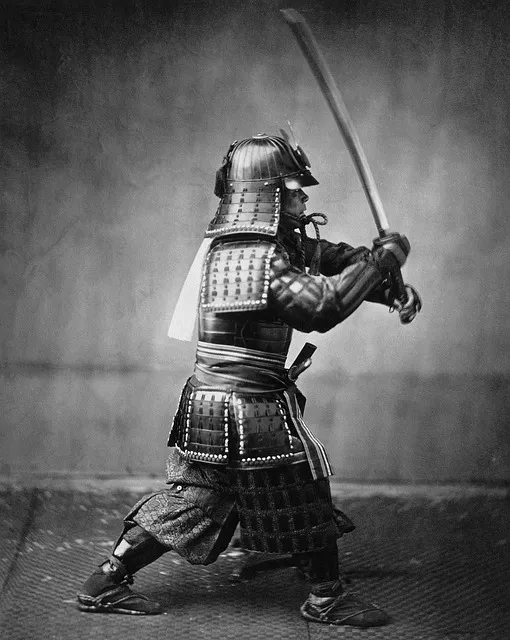
The differences are worth understanding, because they affect how each tradition gets used. Stoicism is more individualistic: the Stoic’s primary obligation is to his own rational nature, his own virtue, his own relationship with the ruling faculty of his mind. Marcus Aurelius’s Meditations — written as private notes, never intended for publication — are deeply personal, focused almost entirely on the emperor’s internal state. The Stoic seeks freedom: freedom from passion, from external disruption, from the opinions of others. The practice is primarily inward.
Bushido is more relational: the samurai’s primary obligation is to his lord, his community, and his code. His discipline is in service of a social role, not just personal virtue. Where Stoicism says “tend your inner garden and everything else will follow,” Bushido says “your inner garden exists to produce fruit that feeds others.” This distinction matters practically. Exclusive engagement with Stoicism can develop a highly refined interior life that is still fundamentally self-contained. Engagement with Bushido pulls outward, toward the code’s explicit demands for service, loyalty, and active care for others.
Both traditions handle suffering in ways that modern culture desperately needs. Modern culture treats suffering as a problem to be solved, an injustice to be eliminated, evidence that something has gone wrong. Both Bushido and Stoicism treat suffering as an inherent feature of a meaningful life — something to be engaged, metabolized, and transformed rather than avoided. This is not nihilism. It is honesty about the nature of existence, and it is profoundly liberating for men who have been operating under the implicit belief that struggle shouldn’t be necessary, that difficulty indicates failure, that discomfort is the enemy. Difficulty is not the enemy. Difficulty without a framework is the enemy. Both traditions provide the framework. The stoic discipline framework applied alongside Bushido virtues produces something more complete than either tradition alone: the Stoic’s interior stability combined with the samurai’s outward orientation and relational commitment.
The practical synthesis: use Stoicism for the relationship with what cannot be controlled — circumstances, outcomes, others’ opinions. Use Bushido for the relationship with what can be controlled — character, commitments, obligations to others. The dichotomy of control from Stoicism identifies where to direct energy. The seven virtues of Bushido identify what to build there. Together, they constitute something close to a complete operating system for a man who wants to live with purpose, discipline, and honor in a world that provides none of those things automatically and an enormous amount of pressure to abandon all three.
FROM THE LIBRARY ›
Bushido: The Soul of Japan Summary: Key Takeaways and What to Do Next
What People Ask About Samurai Code Discipline About Bushido and Samurai Discipline
What are the seven virtues of Bushido and how do they apply today?
The seven Bushido virtues are Gi (righteousness), Yu (courage), Jin (benevolence), Rei (respect), Makoto (honesty), Meiyo (honor), and Chugi (loyalty). Their modern applications are more interior than martial: Gi means doing the right thing when it costs something, not just when it’s convenient. Yu means facing social and professional fears, not just physical ones. Jin means using capability in active service to others, not just self-improvement. Rei means bringing full, undivided attention to the people in front of you. Makoto means closing the gap between public presentation and private reality. Meiyo means defining values clearly and living aligned with them regardless of external pressure. Chugi means honoring commitments through seasons of difficulty, especially the commitments made to oneself. None of these require a sword. All of them require consistent practice and genuine interior work.
Is it culturally appropriative for Western men to practice Bushido?
Engaging seriously with a philosophical tradition from another culture — reading primary texts, understanding historical context, practicing the principles with genuine commitment — is not appropriation. It is what human beings have done with every valuable idea across all of history. The Roman Stoics borrowed from Greek philosophy. The Japanese themselves imported Confucian and Buddhist ethics into Bushido. The cross-pollination of ideas across cultures is how civilization advances. What is problematic is the shallow aesthetic engagement: buying samurai merchandise, using warrior imagery as personal branding, adopting the surface without engaging the substance. A relationship with Bushido that begins and ends with a katana on the wall and a motivational quote in a bio has taken a rich philosophical tradition and turned it into decor. Read the Hagakure, the Book of Five Rings, and Inazo Nitobe’s codification. Understand what the code actually demanded. Then practice it with seriousness. That is honorable engagement, not appropriation.
How does Bushido differ from just being a tough guy or pursuing extreme discipline?
The difference is the outward orientation and the explicit moral framework. Extreme toughness culture is largely self-referential: the goal is to be harder, more resilient, more capable than other men. The metrics are physical and performative. Bushido is oriented toward service and governed by specific ethical standards. Jin (benevolence) requires active care for the vulnerable — not as an optional add-on, but as a core warrior duty. Rei requires disciplined attention to others. Chugi requires loyalty that persists when loyalty is expensive. Gi requires doing what is right when doing what is advantageous would be easier. Extraordinary physical and mental toughness can develop alongside a comprehensive failure of Bushido’s standards. The code is not impressed by deadlifts or ice bath protocols. It is concerned with character, relationships, service to others, and the alignment between stated values and actual behavior. That is a different standard than toughness culture typically sets.
How do you handle conflicts between Bushido virtues — for example, honesty versus loyalty?
Gi (righteousness) serves as the tiebreaker when the other virtues conflict. The samurai tradition was explicit about this: righteousness arbitrates all moral conflicts. When Makoto (honesty) conflicts with Chugi (loyalty), the question becomes: “What is the right action here?” Sometimes the right action is honest, even when it damages loyalty — telling a trusted friend his plan is fatally flawed serves him better than agreeable silence. Sometimes the right action is loyal restraint, not weaponizing honesty for cruelty or self-interest. The critical principle is that no virtue can be used as an excuse to avoid the harder practice of another. “Benevolence” cannot be a cover for avoiding difficult truths. “Honesty” cannot be a license for cruelty dressed as candor. Working through these conflicts honestly, over time, is itself a discipline that develops judgment. A samurai who had practiced this discernment for decades could work through virtue conflicts with a precision that a man who had never examined them could not match. This is why Bushido was a life practice, not a weekend course.
What primary texts should someone read to understand Bushido seriously?
Start with three texts. First, Inazo Nitobe’s “Bushido: The Soul of Japan” (1900) — it is the most systematic English-language codification of the seven virtues and provides the intellectual framework. Second, the Hagakure by Yamamoto Tsunetomo — this is the rawer, more personal text, written from experience rather than as academic codification. It is blunter, stranger, and more honest than Nitobe. Third, Miyamoto Musashi’s “The Book of Five Rings” — not strictly a Bushido text but the most powerful application of samurai discipline to practical strategy and mastery in any domain. Reading these three in order gives the framework, the interior experience, and the practical application. Modern commentaries from scholars like Karl Friday (for historical accuracy) help strip the mythology from the principles. The mythology is seductive. The principles, stripped of mythology, are more useful and more demanding.
Can Bushido principles apply to men who have no interest in martial arts or combat?
More effectively, in many ways. The samurai’s original challenge was channeling a capacity for violence into something honorable and socially useful. Modern men who have no violent capacity to channel are working with the underlying principles in a more direct form: how does discipline, courage, and service orientation develop in a life that provides no external structure demanding it? The samurai had lords, codes, duties, and social roles that enforced the code from outside. The modern man has to enforce it internally, which requires a more developed interior practice. The daily death meditation, the seven virtue questions, the weekly self-examination — these are not military exercises. They are character practices applicable directly in any profession and any life situation. Musashi’s principle “the way of strategy applies to everything” was not metaphorical. He meant that the discipline of total presence, strategic thinking, and relentless refinement developed through swordsmanship expressed itself equally in painting, writing, and philosophy. The same transfer applies in reverse: genuine discipline developed in daily life, relationships, and work is Bushido in practice whether or not a sword has ever been held.
What makes Bushido different from other masculine discipline frameworks online?
The completeness and the cost. Most popular discipline frameworks are self-contained: they optimize the individual’s performance, health, productivity, and personal development. They have nothing to say about what’s owed to others, how to handle people who can do nothing in return, what obligations exist to community, or what constitutes a failure of character rather than a failure of execution. Bushido has explicit standards for all of these. Jin demands active service. Rei demands genuine attention and courtesy toward everyone, not just people who matter to the metrics. Chugi demands loyalty that persists through difficulty. These are costly practices, and that cost is the point. The code that requires nothing changes nothing. The code that requires genuine sacrifice — of convenience, of status, of comfort — is the one that actually produces the kind of man the code describes. A discipline framework that has never cost anything meaningful was never really discipline. It was performance. Bushido, taken seriously, will cost something. That is its primary credential.