
Marcus Aurelius ruled the Roman Empire for nearly two decades, from 161 to 180 AD. The last of the Five Good Emperors, and the only Roman emperor whose private journal survived intact. That journal — the Meditations — was never written for publication. It was a nightly practice of self-correction, composed in a military tent on the Danube frontier while plague killed hundreds of thousands, barbarian tribes pressed the borders, and trusted generals staged mutinies. The Stanford Encyclopedia of Philosophy identifies Stoicism as a philosophy of active engagement with reality, not retreat from it. Marcus Aurelius quotes prove that claim better than any academic argument could.
That context matters more than most people realize. These aren’t the comfortable reflections of a philosopher with an armchair and unlimited time. These are the words of a man holding civilization together with his bare hands, reminding himself every night not to become the monster that power, grief, and exhaustion were trying to make him. When he writes about discipline, death, and what truly matters, he’s writing from inside the fire — not from a safe distance.
What makes these quotes so enduring is their brutal practicality. Marcus doesn’t theorize. He issues commands to himself. Every line reads like an order from a commander to his own faltering will. “Do this.” “Remember this.” “Stop doing that.” No audience, no performance, no attempt to sound wise. Only a human being trying to stay good in a world that rewards cruelty — trying to stay present in a world built to distract, trying to stay alive in a world determined to kill him.
The 100 Marcus Aurelius quotes collected here are drawn from all twelve books of the Meditations, along with a handful of sayings attributed to Marcus by Cassius Dio and the Historia Augusta. Organized by theme, because Marcus himself returned to the same themes obsessively: death, duty, self-mastery, the shortness of time, the worthlessness of fame, and the absolute necessity of doing what’s right regardless of circumstance. Not decorative quotes for a wall poster. Operational instructions for staying human under pressure.
On Discipline and Self-Mastery

“You have power over your mind, not outside events. Realize this, and you will find strength.” — Meditations, Book VI
This is the foundational principle of everything Marcus believed. Strength isn’t control over the world. It’s control over the response to the world. Every other quote on this page flows from this single insight.
“At dawn, when you have trouble getting out of bed, tell yourself: I have to go to work — as a human being. What do I have to complain of, if I’m going to do what I was born for?” — Meditations, Book V, 1
Marcus wasn’t a morning person. He admits it openly. The discipline isn’t in wanting to get up. It’s in getting up anyway, because the work is real and the function of being human doesn’t pause for a mood.
“Waste no more time arguing about what a good man should be. Be one.” — Meditations, Book X, 16
One of the most quoted lines in the Meditations, for good reason. The gap between discussing virtue and practicing it is the gap where most people spend their entire lives. Talking about deliberate practice and doing it are separated by only one thing: the decision to begin.
“The impediment to action advances action. What stands in the way becomes the way.” — Meditations, Book V, 20
Ryan Holiday built an entire book around this principle. Marcus stated it in fourteen words. The obstacle being avoided is the exact training needed. The resistance felt isn’t a signal to stop. It’s the curriculum.
“Be tolerant with others and strict with yourself.” — Meditations, Book V, 33
The mark of a disciplined man isn’t holding everyone to impossible standards. It’s holding himself to standards he’d never impose on anyone else. The reversal of this — lenient with yourself, harsh with others — is the psychology of every tyrant who ever lived.
“Not to feel exasperated, or defeated, or despondent because your days aren’t packed with wise and moral actions. But to get back up when you fail, to celebrate behaving like a human — however imperfectly — and fully embrace the pursuit that you’ve embarked on.” — Meditations, Book V, 9
Discipline isn’t perfection. It’s the willingness to keep showing up after imperfection. This distinction separates the men who build lasting character from the men who quit when they fall short of the ideal version of themselves.
“The soul becomes dyed with the color of its thoughts.” — Meditations, Book V, 16
You become what you think about repeatedly. Marcus knew that the discipline of excellence isn’t just about actions. It’s about the quality of inner dialogue, because that dialogue shapes everything downstream.
“If it is not right, do not do it. If it is not true, do not say it.” — Meditations, Book XII, 17
The simplest ethical framework ever articulated. Two rules. No exceptions. No situational qualifications. Actually living by this is harder than any physical training you’ll ever do.
“Never esteem anything as of advantage to you that will make you break your word or lose your self-respect.” — Meditations, Book III, 7
Every compromise of integrity feels small at the time. Marcus warns that no external gain is worth the internal cost of becoming someone unrespectable. The accumulation of small compromises is how a man destroys himself quietly, over years, without any single catastrophic event.
“Look well into thyself; there is a source of strength which will always spring up if thou wilt always look.” — Meditations, Book VII, 59
The strength needed is already there. Discipline isn’t about importing something from outside. It’s about accessing something buried under years of accumulated noise and distraction.
“To be like the rock that the waves keep crashing over. It stands unmoved and the raging of the sea falls still around it.” — Meditations, Book IV, 49
Not cold. Not unfeeling. Unmoved. There’s an enormous difference between equanimity and numbness. The rock doesn’t deny the sea. It doesn’t run from the sea. It simply doesn’t surrender to it. That’s the entire discipline in one image.
“To accept without arrogance, to let go with indifference.” — Meditations, Book VII
Receive good fortune without ego. Release bad fortune without bitterness. Both require the same core discipline: refusing to let circumstances — positive or negative — define character.
“Do not indulge in dreams of having what you have not, but reckon up the chief of the blessings you do possess.” — Meditations, Book VII, 27
Gratitude isn’t soft. It’s a discipline that prevents the corrosive effect of endless wanting. Whoever’s consumed by what he lacks will never experience what he has. Marcus understood that inventory of existing resources is the starting point of every effective strategy.
“Dig within. Within is the wellspring of Good; and it is always ready to bubble up, if you just dig.” — Meditations, Book VII, 59
Nothing broken here. Nothing needing fixing from the outside. Excavation from the inside is what’s required. The good is already there, buried under years of accumulated fear, habit, and distraction. The discipline is the digging.
“No man is free who is not master of himself.” — Attributed, echoed throughout the Meditations
Freedom isn’t the absence of constraint. It’s the presence of self-command. A man enslaved by his appetites is no freer than a man in chains — the only difference is the chain is invisible and self-built.
On Death and Impermanence
Marcus Aurelius was obsessed with death. Not morbidly — functionally. He buried multiple children, watched plague kill hundreds of thousands during his reign, and lived in a body chronically ill. The memento mori passages in the Meditations aren’t the product of a depressed man staring into the abyss. They’re the product of a man who looked clearly at the abyss, accepted what he saw, and decided that clarity about mortality was the only honest basis for action. Grief is something men avoid processing. Marcus processed it publicly, in writing, every night.
“It is not death that a man should fear, but he should fear never beginning to live.” — Meditations, Book XII
The real tragedy isn’t that life ends. It’s that most people never actually start. They sleepwalk through decades, waiting for permission, for the right moment, for conditions that will never arrive. They die having never shown up.
“Think of yourself as dead. You have lived your life. Now, take what’s left and live it properly.” — Meditations, Book VII, 56
This is the memento mori practice at its most practical. Assume the old life is over. Whatever time remains is bonus. Spend it as though it matters — because it does, and because pretending otherwise is the most common human self-deception.
“Alexander the Great and his mule driver both died and the same thing happened to both.” — Meditations, Book VI, 24
Death is the great equalizer that ego refuses to accept. Marcus returns to this theme constantly because the temptation of power — his power, anyone’s power — is to believe exemption from the universal laws that govern everyone else.
“Do not act as if you were going to live ten thousand years. Death hangs over you. While you live, while it is in your power, be good.” — Meditations, Book IV, 17
Urgency without panic. Marcus doesn’t say hurry. He says be good now, because later can’t be guaranteed. Not anxiety. Clarity — the kind that comes from facing the actual terms of human existence instead of pretending they’re different.
“Loss is nothing else but change, and change is Nature’s delight.” — Meditations, Book IX, 35
Every loss is a transformation. The thing grieved didn’t disappear. It became something else. Marcus found this reframe necessary after burying children, watching empires shift, and watching men he respected become men he barely recognized.
“How small a part of the boundless and unfathomable time is assigned to every man! For it is very soon swallowed up in the eternal.” — Meditations, Book VI, 15
Perspective is the antidote to self-importance. Your problems, your achievements, your entire existence — cosmically negligible. Not depressing. Liberating. The emperor of Rome knew his time was brief. He acted anyway. So can you.
“Perfection of character is this: to live each day as if it were your last, without frenzy, without apathy, without pretense.” — Meditations, Book VII, 69
Not recklessness. Not despair. Full presence. Living as though this day matters without the theatrics of someone performing urgency for an audience that isn’t watching and wouldn’t care if it were.
“Soon you’ll be ashes, or bones. A mere name, at most — and even that is just a sound and an echo.” — Meditations, Book V, 33
Marcus was the most powerful man on earth when he wrote this. If the emperor of Rome could face his own insignificance with equanimity, so can everyone else. The refusal to do so is a form of vanity disguised as self-respect.
“Time is a sort of river of passing events, and strong is its current; no sooner is a thing brought to sight than it is swept by and another takes its place.” — Meditations, Book IV, 43
Nothing stays. Not the pain, not the joy, not the triumph, not the failure. The current carries everything. The only question is what happens while still above the surface.
“Pass then through this little space of time conformably to nature, and end thy journey in content, just as an olive falls off when it is ripe, blessing nature who produced it, and thanking the tree on which it grew.” — Meditations, Book IV, 48
The ideal death in Marcus’s framework isn’t heroic or dramatic. It’s natural, grateful, quiet. Ripen. Fall. Be thankful for the tree. Not resignation. The hardest form of acceptance.
“The universe is change; our life is what our thoughts make it.” — Meditations, Book IV, 3
Change isn’t something that happens to a stable world. Change is what the world is. Experience of it depends entirely on the frame the mind applies. Two men watching the same thing — one experiences catastrophe, the other opportunity. The difference is internal.
“Everything is ephemeral, both memory and the object of memory.” — Meditations, Book IV, 35
Not only do things pass — the memory of things passes too. Even legacy will be forgotten. Build for meaning, not for the approval of people who won’t exist to give it.
“Life is warfare and a stranger’s sojourn, and after-fame is oblivion.” — Meditations, Book II, 17
War, exile, then erasure. Marcus summarizes the human condition in eleven words. Not to despair, but to clarify: given this reality, what happens with the time between arrival and disappearance?
On Duty and Purpose
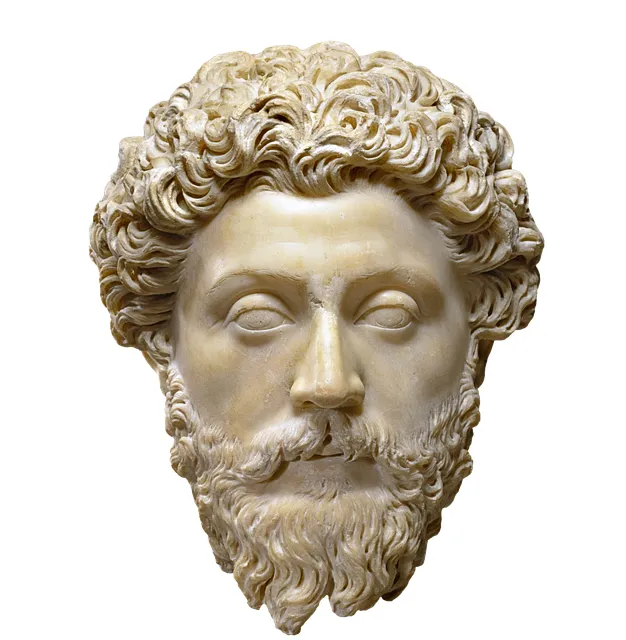
“What we do now echoes in eternity.” — Meditations, Book V (paraphrased)
Actions outlive the person who takes them. Not because they’ll be remembered, but because every choice changes the trajectory of everything that follows. The ripple doesn’t require awareness of it to exist.
“Concentrate every minute like a Roman — like a man — on doing what’s in front of you with precise and genuine seriousness, tenderly, willingly, with justice.” — Meditations, Book II, 5
Full presence. Full effort. Not because the task is grand, but because half-effort corrupts the character of the person performing it. How any task gets executed is how every task gets executed. No category exists where inattention is acceptable.
“Execute every act of thy life as though it were thy last.” — Meditations, Book II, 5
Not about urgency. About quality. If this were the last email ever sent, the last conversation ever had — would more care go into it? Of course. The question is why that care isn’t already being brought.
“A man’s worth is no greater than the worth of his ambitions.” — Meditations, Book VII, 3
Small ambitions produce small men. Not because scale is everything, but because what gets pursued reveals what’s believed to be deserved. Low ambition is usually disguised fear.
“In the morning when thou risest unwillingly, let this thought be present: I am rising to the work of a human being.” — Meditations, Book V, 1
The most fundamental reframe of laziness ever written. Not going to a job. Not grinding through obligations. Fulfilling the function of being human. That function doesn’t pause until motivation shows up to honor it.
“The happiness of your life depends upon the quality of your thoughts.” — Meditations, Book V (paraphrased)
Not the quantity of achievements, not the size of a bank account, not the opinion of the crowd. The quality of thoughts. Either the most radical thing you’ve heard this year, or a principle already known and consistently failed to be lived by.
“Let not your mind run on what you lack as much as on what you have already.” — Meditations, Book VII, 27
The disciplined mind focuses on available resources, not missing ones. Not optimism. Operational clarity about where actual use is. Obsessing over what’s lacking makes what’s already available unusable.
“The best revenge is not to be like your enemy.” — Meditations, Book VI, 6
Revenge corrupts the avenger. The only true victory over someone who’s wronged you is remaining the kind of person who wouldn’t do what they did. This requires more strength than retaliation, and produces more lasting satisfaction.
“If someone is able to show me that what I think or do is not right, I will happily change, for I seek the truth, by which no man was ever truly harmed.” — Meditations, Book VI, 21
Intellectual humility from the most powerful man in the world. Being wrong isn’t a threat. Remaining wrong because ego won’t allow correction — that’s the real danger, and it compounds over time.
“Dwell on the beauty of life. Watch the stars, and see yourself running with them.” — Meditations, Book VII, 47
Marcus wasn’t all grim determination. He found genuine wonder in existence. Duty and delight aren’t opposites. The disciplined life creates space for real awe — unavailable to the undisciplined man too distracted to notice the stars.
“Reject your sense of injury and the injury itself disappears.” — Meditations, Book IV, 7
The event didn’t hurt anyone. The judgment of the event did. Remove the judgment, and the suffering dissolves. Not suppression. The reappraisal technique cognitive reframing has been trying to teach for decades, already fully formed in the second century.
“Each thing is of like form from everlasting and comes round again in its cycle.” — Meditations, Book II, 14
Nothing being faced is new. Every struggle has been faced by someone before. Every temptation has been resisted. Every grief has been survived. Nobody’s the first person to carry this weight, and nobody’s alone carrying it.
On Other People and Relationships
Marcus governed a civilization and a court simultaneously, and he had no illusions about what both required. The sections of the Meditations dealing with other people aren’t idealistic. They’re brutally realistic about human nature — the meddling, the ingratitude, the dishonesty — while arriving at a conclusion that would unsettle most realists: love them anyway. Not because they deserve it, but because Stoic relationship practice requires character to remain independent of other people’s conduct. Harder than war. Marcus knew that too.
“When you wake up in the morning, tell yourself: the people I deal with today will be meddling, ungrateful, arrogant, dishonest, jealous and surly.” — Meditations, Book II, 1
Not cynicism. Preparation. Marcus doesn’t say hate them for it. He says expect it, and maintain character anyway. The discipline is in the response, not the expectation. Emotional intelligence begins here: knowing what’s coming before it arrives.
“Begin each day by telling yourself: today I shall be meeting with interference, ingratitude, insolence, disloyalty, ill-will, and selfishness — all of them due to the offenders’ ignorance of what is good or evil.” — Meditations, Book II, 1
Note the compassion hidden inside the realism: they don’t know better. The job isn’t to punish their ignorance but to transcend it. Marcus ruled millions of people. He found a way to feel genuine compassion for people actively trying to destroy him.
“Whenever you are about to find fault with someone, ask yourself the following question: What fault of mine most nearly resembles the one I am about to criticize?” — Meditations, Book X, 30
Self-examination before judgment. Not because others are blameless, but because personal flaws should moderate the force of critique. The man quickest to identify failings in others has usually arranged his life so he never examines his own.
“How much time he gains who does not look to see what his neighbor says or does or thinks, but only at what he does himself.” — Meditations, Book IV, 18
Comparison is the most reliable method of destroying your own progress. Marcus, surrounded by flatterers and schemers, knew that watching others was the fastest path to losing yourself. The modern attention economy has industrialized this problem into a permanent state of distraction.
“Adapt yourself to the things among which your lot has been cast and love sincerely the fellow creatures with whom destiny has ordained that you shall live.” — Meditations, Book VI, 39
Nobody gets to choose their era, their circumstances, or, often, their companions. Love them anyway. Not because they deserve it, but because bitterness at unchosen circumstances destroys faster than the circumstances themselves.
“People exist for one another. You can instruct or endure them.” — Meditations, Book VIII, 59
Two options. Teach, or tolerate. No third option where control over other people exists. Marcus literally commanded legions. He understood better than anyone that command isn’t control, and that attempting to control what can’t be controlled is madness.
“It never ceases to amaze me: we all love ourselves more than other people but care more about their opinion than our own.” — Meditations, Book XII, 4
A devastating observation. Priority goes to the self in every practical way, then emotional well-being gets handed to strangers who don’t know you, wouldn’t grieve you, and are too busy worrying about their own reputation to think about yours for more than a moment.
“The opinion of ten thousand men is of no value if none of them know anything about the subject.” — Meditations (attributed, Book IX)
Consensus means nothing without competence. Ten thousand people agreeing on something they don’t understand is collective ignorance with a megaphone. The algorithm rewards agreement, not accuracy. Marcus warned us about this seventeen centuries before social media made it the default condition of public discourse.
“If anyone can refute me — show me I’m making a mistake or looking at things from the wrong perspective — I’ll gladly change. It’s the truth I’m after.” — Meditations, Book VI, 21
Ego is the enemy of growth. Marcus actively invited correction because being right mattered more than appearing right. The inverse — appearing right regardless of whether it’s true — is the psychology of every failed leader in history.
“Choose not to be harmed — and you won’t feel harmed. Don’t feel harmed — and you haven’t been.” — Meditations, Book IV, 7
Not gaslighting yourself. Recognizing that harm requires participation. The external event is neutral. The interpretation makes it injury or education. A choice exists about which story gets told.
On Adversity and Resilience
“The art of living is more like wrestling than dancing, in so far as it stands ready against the accidental and the unforeseen, and is not apt to fall.” — Meditations, Book VII, 61
Life isn’t choreography. It’s combat. The disciplined person doesn’t rehearse beautiful movements for circumstances that never arrive. They train to absorb impact and stay standing when the unexpected — which always comes — arrives.
“A blazing fire makes flame and brightness out of everything that is thrown into it.” — Meditations, Book X, 31
The strong convert obstacles into fuel. The weak get consumed by the same material. The difference isn’t the obstacle. It’s the temperature of the fire — entirely within your control to maintain.
“Accept the things to which fate binds you, and love the people with whom fate brings you together, and do so with all your heart.” — Meditations, Book VI, 39
Resilience isn’t gritting your teeth through despised circumstances. It’s learning to embrace the life actually present rather than the one imagined as the correct one. The American Psychological Association defines resilience as adaptation to adversity. Marcus called it loving what is.
“Here is a rule to remember in future, when anything tempts you to feel bitter: not ‘This is misfortune,’ but ‘To bear this worthily is good fortune.'” — Meditations, Book IV, 49
The reframe that changes everything. The event is neutral. The capacity to endure it with dignity — that’s where fortune lives. Whoever transforms suffering into character has gained something the comfortable man never will.
“Never let the future disturb you. You will meet it, if you have to, with the same weapons of reason which today arm you against the present.” — Meditations, Book VII, 8
Anxiety about the future is a failure to trust one’s own capacity. Today got handled. Tomorrow will too. The same mind that got you here gets you there. Post-traumatic growth is proof that the very events feared most can become the source of the greatest strength.
“Nothing happens to any man that he is not formed by nature to bear.” — Meditations, Book V, 18
You were built for this. Not because the universe is kind, but because the organism that is you has survived every previous crisis. The evidence of resilience is the fact of still being here, still reading, still looking for better tools.
“Our actions may be impeded, but there can be no impeding our intentions or our dispositions. Because we can accommodate and adapt.” — Meditations, Book V, 20
They can block what gets done. They can’t block what gets become. Character remains sovereign even when circumstances don’t. This is the core promise of Stoic resilience: the inner life is inviolable.
“External things are not the problem. It’s your assessment of them. Which you can erase right now.” — Meditations, Book VIII, 47
The most radical claim in Stoic philosophy: suffering is optional. Not because life is easy, but because judgment is voluntary. Also the most difficult claim to actually implement — which is why Marcus wrote it down every night.
“It is in your power to withdraw yourself whenever you desire. Perfect tranquility within consists in the good ordering of the mind, the space of your own.” — Meditations, Book IV, 3
A fortress exists inside every man. Marcus, who lived surrounded by enemies and obligations with no prospect of actual solitude, found refuge not by escaping but by mastering the interior landscape. The inner retreat is always available. Most people never learn to use it.
“That which is not good for the swarm, neither is it good for the bee.” — Meditations, Book VI, 54
Individual resilience serves the collective. Strength isn’t just for the one who holds it. It’s for everyone who depends on him. That adds weight to the obligation, and real weight to the reward of doing the work.
“Do not think that what is hard for you to master is humanly impossible; and if it is humanly possible, consider it to be within your reach.” — Meditations, Book VI, 19
If any human being has ever done the thing being attempted, it’s possible for a human being to do it. You are a human being. The logic is airtight. The only remaining question is whether the conclusion it demands gets honored.
On Fame, Ambition, and Ego

“How much more grievous are the consequences of anger than the causes of it.” — Meditations, Book XI, 18
The thing that caused the anger cost an hour. The anger itself costs days, relationships, and pieces of character that don’t come back. Transforming anger rather than expressing it isn’t weakness. It’s cost-benefit analysis applied to the soul.
“Ambition means tying your well-being to what other people say or do. Self-indulgence means tying it to the things that happen to you. Sanity means tying it to your own actions.” — Meditations, Book VI, 51
Three definitions, three destinies. Anchor well-being to external validation and the result is a slave who changes masters with every opinion. Anchor it to personal conduct and the result is free — genuinely free, in the only way that holds under pressure.
“Everything is ephemeral, both memory and the object of memory.” — Meditations, Book IV, 35
Not only do things pass, but the memory of things passes too. Even legacy will be forgotten. Build for meaning, not for the approval of an audience that won’t exist to grant it.
“Run down the list of those who felt intense anger at something: the most famous, the most unfortunate, the most hated, the most whatever: Where is all that now? Smoke, dust, legend… or not even a legend.” — Meditations, Book XII, 27
Every person who ever felt what’s being felt right now is dead. Their rage, their grief, their burning ambition — dust. This will follow. Not nihilism. An invitation to stop wasting the only time available on emotions that serve no purpose and produce no change.
“Think of the life you have lived until now as over and, as a dead man, see what’s left as a bonus and live it according to Nature.” — Meditations, Book VII, 56
Ego depends on continuity — the story of who you are and what’s been built. Marcus severs that continuity deliberately. Starting from zero, right now. What happens with what remains? That question, asked seriously, cuts through every self-important narrative.
“Do what you will. Even if you tear yourself apart, most people will go on doing the same things.” — Meditations, Book VIII, 4
Outrage changes nothing. Example might. But the desperate need for others to behave differently, to recognize your worth, to adjust to expectations — that’s wasted energy that burns while the work waits.
“How ridiculous and how strange to be surprised at anything which happens in life.” — Meditations, Book XII, 13
Surprise is a failure of preparation. Understand the nature of the world — that it’s chaotic, painful, impermanent — and nothing should catch you off guard. The man perpetually surprised by difficulty hasn’t been paying attention.
“Don’t go on discussing what a good person should be. Just be one.” — Meditations, Book X, 16 (alternate translation)
Theory without practice is intellectual entertainment dressed up as growth. Failure in action teaches more than success in theory. Marcus was allergic to men who could articulate virtue better than they could perform it.
“The things you think about determine the quality of your mind. Your soul takes on the color of your thoughts.” — Meditations, Book V, 16
Guard the inputs. What gets consumed, what gets dwelled on, what gets replayed — none of it neutral. These are the pigments painting character over time, slowly and irreversibly, until the man becomes indistinguishable from the thoughts cultivated.
“Receive without pride, let go with indifference.” — Meditations, Book VIII, 33
The two-part discipline of ego management. Neither cling to what arrives nor define yourself by what departs. Both are weather. You are the mountain. Easy to state, extraordinarily difficult to inhabit consistently under real conditions.
“All things fade and quickly turn to myth.” — Meditations, Book IV
Even the true story of a life becomes a distorted legend, then a faint rumor, then nothing. The emperor of Rome, whose face was on the coins, whose orders moved armies — nothing. Build for meaning while still here to build it.
On Time and Presence
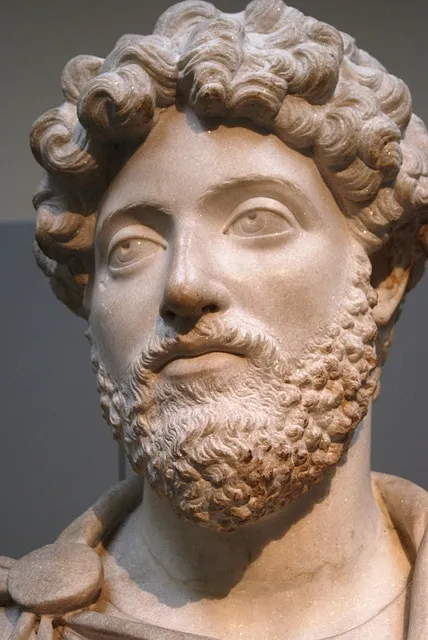
“Give yourself a gift: the present moment.” — Meditations, Book VIII, 44
The simplest form of generosity practicable is giving yourself your own full attention. Most people are never fully where they are. Marcus says this is the most basic form of self-abandonment — happening dozens of times a day in most men’s lives.
“Very little is needed to make a happy life; it is all within yourself, in your way of thinking.” — Meditations, Book VII, 67
The emperor of the Roman Empire, who had access to every luxury in the known world, concluded that happiness requires almost nothing external. Read that slowly. Let it settle. Then ask what’s currently being waited on before contentment gets permitted.
“Even if you’re going to live three thousand more years, or ten times that, remember: you cannot lose another life than the one you’re living now.” — Meditations, Book II, 14
Only the present moment can be lost, because it’s the only moment there is. The past is already spent. The future doesn’t yet exist. This moment is the only thing that can be wasted — and most people are currently in the process of wasting it.
“Life is short. That’s all there is to say. Get what you can from the present — thoughtfully, justly.” — Meditations, Book IV, 26
No elaborate philosophy needed. Life is short. Act accordingly. The “thoughtfully, justly” qualifier is what separates this from mere hedonism. Speed without direction is chaos. Urgency without integrity is destruction.
“How trivial the things we want so passionately are.” — Meditations, Book V, 10
Zoom out far enough and the thing consuming mental energy right now is embarrassingly small. Marcus practiced this zoom-out daily. Not pessimism. Proportion — a faculty most modern men have completely atrophied from disuse.
“Don’t be disturbed. Uncomplicate yourself.” — Meditations, Book IX, 31
Four words. The entire productivity industry in reverse. Most stress is self-generated complexity. Strip it away. The disciplined life is the simple life — and simplicity, paradoxically, requires more discipline than complexity.
“Confine yourself to the present.” — Meditations, Book VII, 8
Three words that contain every mindfulness teaching ever written. Not in the past. Not in the future. Here. The discipline of staying here — against every pull of regret and anticipation — is a daily practice that never becomes effortless.
“Do every act of your life as if it were your last.” — Meditations, Book II, 5
Not dramatic. Practical. Bring terminal seriousness to mundane tasks, and the quality of an entire life changes. Not someday. Today. Starting with whatever’s in front of you right now.
“Every moment think steadily as a Roman and a man to do what thou hast in hand with perfect and simple dignity.” — Meditations, Book II, 5
Dignity isn’t ceremony. It’s the quality of attention brought to the task in front of you. Answer the email with dignity. Have the difficult conversation with dignity. That’s the practice — repeated ten thousand times until it becomes who you are.
“When you arise in the morning, think of what a privilege it is to be alive, to think, to enjoy, to love.” — Meditations, Book II (alternate translation)
Marcus returns to this thought repeatedly across the twelve books. Before the obligations begin, before the noise starts, there’s the simple fact of consciousness. He needed the reminder. So does everyone else.
On Nature, Reason, and the Cosmos
The final dimension of Marcus Aurelius’s philosophy is the widest lens: the cosmos itself as teacher and standard. He was a deeply cosmopolitan thinker who saw the Roman Empire as one expression of a universal rational order. The universe, for Marcus, wasn’t hostile or indifferent. It was a system of interconnected change governed by reason — and the human task was to align with that system rather than resist it. This is where the inner locus of control philosophy finds its ultimate grounding: part of something larger than the self, and the demand of that belonging is acting accordingly.
“The best answer to anger is silence.” — Meditations, Book XI, 18
Not suppression. Strategic restraint. Silence gives anger no fuel, no audience, no foothold. Most conflicts escalate because both parties refuse to stop speaking. Whoever can be silent when they most want to speak has genuine power over themselves and the situation.
“Look at the stars lighting up the sky — no one of them is alone.” — Meditations, Book VII, 47
Part of a system larger than the self. Marcus found grounding not in religion but in cosmology — the knowledge of being a node in an infinite network. The isolation men feel in modern life is, in Marcus’s framework, a perceptual error. Never actually separate from everything else. Just forgotten.
“The happiness of those who want to be popular depends on others; the happiness of those who seek pleasure fluctuates with moods outside their control; but the happiness of the wise grows out of their own free acts.” — Meditations, Book VI, 51
Three tiers of happiness. The lowest depends on others. The middle depends on sensation. The highest depends on character. Only one of these stays within control under all conditions. Marcus chose that one. That choice is available to every person alive, regardless of circumstance.
“Observe constantly that all things take place by change, and accustom thyself to consider that the nature of the Universe loves nothing so much as to change the things which are, and to make new things like them.” — Meditations, Book IV, 36
Resistance to change is resistance to reality. The universe creates and destroys without sentiment. Align with that process and the current stops being fought. Every rigid man eventually breaks. Every adaptable man eventually prevails.
“All things are interwoven with one another; a sacred bond unites them; there is scarcely one thing that is isolated from another.” — Meditations, Book VII, 9
Interconnection isn’t a spiritual platitude. It’s a physical fact. Actions ripple outward in ways impossible to track or predict. Act as though everything’s connected — because it is, and because the pretense of isolation is both false and costly.
“Nowhere can man find a quieter or more untroubled retreat than in his own soul.” — Meditations, Book IV, 3
No cabin in the woods required. No expensive far-off meditation retreat. The retreat is inside, available at any moment. The only admission fee is the discipline to turn inward — harder than booking a flight, which is why most people book the flight instead.
“Men seek retreats for themselves: houses in the country, seashores, mountains. But this is altogether a mark of the most common sort of men, for it is in thy power whenever thou shalt choose to retire into thyself.” — Meditations, Book IV, 3
The ultimate answer to escape fantasies. Geography can’t outrun the self. The man who brings a disordered mind to the beach finds disorder at the beach, rearranged into new forms. Nature has genuine restorative power — Marcus acknowledged this — but the inner work has to be done wherever you are.
“Never regard something as doing you good if it makes you betray a trust, or lose your sense of shame.” — Meditations, Book III, 7
The cost-benefit analysis of integrity is always the same. No external gain justifies internal corruption. Marcus makes this absolute. No exceptions. Whoever finds the exception is already lost.
“The things that are common to all are more important than those that are specific to an individual.” — Meditations, Book VI, 44
Unique problems aren’t as unique as ego insists. The common human experience — struggle, loss, love, death — matters more than any particular version of it. Both humbling and clarifying.
“The wise man sees in the misfortune of others what he should avoid.” — Attributed to Marcus Aurelius
Other people’s failures aren’t entertainment. They’re curriculum, delivered for free. Every disaster witnessed is a lesson in what not to do. Whoever pays attention to the failures around them is learning from a teacher charging someone else the tuition.
“You are a little soul carrying about a corpse.” — Meditations, Book IV, 41 (quoting Epictetus)
Startling and deliberate. Marcus reminds himself that the body is a burden, not a treasure — a vehicle, not a destination. Not nihilism. The perspective that produces genuine fearlessness, because the thing being protected was never the point.
What Marcus Aurelius Built in the Dark
There’s a reason the Meditations have survived nineteen centuries when most of what Marcus Aurelius actually accomplished — the military campaigns, the administrative reforms, the legal decisions — exists only in fragments and academic footnotes. The philosophy outlasted the empire. The private journal outlasted the public monument. Not an accident.
What Marcus built in those tent-written pages was a complete system for remaining human under inhuman conditions. Not happy — human. Not comfortable — functional. Not admired — worthy. The distinction matters because most people are pursuing the wrong target. They want the feeling of security without the discipline that produces actual resilience. They want the appearance of strength without the daily practice that generates it. Marcus was too honest, and too experienced, to accept those substitutes.
The recurring theme across all 100 quotes is sovereignty. Not sovereignty over the world — Marcus understood that was impossible and spent considerable effort reminding himself of it. Sovereignty over the interior. Over the judgment. Over the response. The process of becoming unbreakable begins exactly there: with the recognition that the only territory ever actually owned is the mind, and the decision to take that ownership seriously.
Two thousand years later, the pressures are different and the same. Comfort culture has made the interior work harder by removing most of the external pressures that historically forced men to develop character. When nothing forces endurance, training has to be chosen. Marcus chose to train every night, in writing, until the philosophy was no longer a system practiced but a man he had become.
That’s what these quotes are pointing toward. Not a collection of inspiring sentences. A standard. The question they collectively ask is simple: is life being lived in accordance with the best version of what a human being can be? If not, what’s being waited for? The emperor of Rome didn’t wait for easier conditions. He wrote his philosophy in a military tent while the empire burned, and he held the line.
Hold yours.
100 Marcus Aurelius: Your Questions Answered

What is the single most powerful Marcus Aurelius quote for building discipline?
“You have power over your mind, not outside events. Realize this, and you will find strength” (Meditations, Book VI) is the foundational principle. Every other discipline teaching Marcus offers flows from this one claim. Internalize it — actually internalize it, not just remember it — and the practice of self-mastery becomes structurally different. The world stops being the fight. The only variable that can actually be moved becomes the work.
Did Marcus Aurelius write the Meditations for publication?
No. The Meditations were private journal entries titled “Ta eis heauton” — Things to Himself — in the original Greek. Written primarily during military campaigns on the Danube frontier between approximately 170 and 180 AD. Marcus never intended anyone else to read them. That’s precisely what makes them so honest. No performance, no public audience, no positioning. Only a man telling himself the truth.
What language did Marcus Aurelius write in, and why does it matter?
Marcus wrote the Meditations in Koine Greek, not Latin — the language of the Roman state he governed. Greek was the language of philosophy and serious education among the Roman elite. His choice signals that these were philosophical exercises, not political documents. He was writing as a student of Stoicism, not as an emperor. The fact that he chose to write privately, in the language of philosophers rather than the language of power, tells you everything about what these notes were actually for.
How does Marcus Aurelius differ from Epictetus and Seneca?
All three are Stoic philosophers, but their circumstances create radically different lenses. Epictetus was a former slave who taught resilience from the position of someone who had nothing to lose and everything to endure. Seneca was one of the wealthiest men in Rome, writing about the detachment from wealth he could never quite achieve himself. Marcus was the emperor — the man with supreme power who practiced Stoicism precisely because power is the most corrupting force known to human beings. Epictetus from the bottom, Seneca from the middle, Marcus from the absolute top. Together, they form a complete map of how Stoic principles function across every condition of human life.
Are all of these Marcus Aurelius quotes verified from the Meditations?
The majority are direct translations from the twelve books of the Meditations, though translations vary significantly among scholars — Gregory Hays, Robin Hard, George Long, and others render the same passages quite differently. A small number are attributed to Marcus by ancient historians like Cassius Dio or are commonly attributed paraphrases that capture the spirit of specific passages without being verbatim translations of a single line. Where attribution is uncertain, it’s noted. The Meditations themselves are fully available online through MIT’s Internet Classics Archive for anyone who wants to verify the source directly.
Why does Marcus Aurelius keep repeating the same themes throughout the Meditations?
Because he needed the reminders. This is the most humanizing thing about the Meditations: Marcus wasn’t a finished product writing down his wisdom for posterity. He was a man actively struggling with the same tendencies that struggle everyone — vanity, distraction, anger, fear of death, the hunger for approval. He repeated the themes because the themes required repetition to sink in. The Meditations aren’t a manual. They’re a training log. Every entry is a rep. The man who wrote them wasn’t enlightened. He was working.
What is the best modern translation of Marcus Aurelius’s Meditations?
Gregory Hays’s translation (Modern Library, 2002) is widely considered the most readable and contemporary rendering. Robin Hard’s Oxford World’s Classics translation is more faithful to the literal Greek. George Long’s Victorian translation, which shaped most of the famous quotes in public circulation, has a gravitas the modern translations can sometimes lack. For a first read, Hays. For serious study, compare all three. The differences between translations often reveal layers of meaning that any single rendering misses.
For a comprehensive examination into what the Meditations actually teach about self-discipline that most commentators miss, read What Marcus Aurelius Can Teach You About Self-Discipline (That Ryan Holiday Won’t).
For the complete framework on applying Stoic principles to modern conditions, read Stoic Discipline in the Modern World: Ancient Wisdom for a Dopamine-Addicted Age.
For the practical guide to building unshakable emotional control using Stoic methods, read The Stoic Guide to Emotional Mastery: Feel Everything, Be Ruled by Nothing.
For the broader resilience framework Marcus Aurelius would recognize, start with The Four-Step Process to Becoming Entirely Unbreakable.
Related: 75 Loneliness Quotes for Men
Related: Richard Branson's Discipline Routine: What He Does Daily