
Rome, 161 CE. Marcus Aurelius has just become emperor — the most powerful position in the known world — and his first documented act is asking the Senate to share the role with his adopted brother Lucius Verus. He doesn’t want the power. He writes, privately, in Greek, in a journal no one is ever supposed to read: “Begin the morning by saying to thyself, I shall meet with the busy-body, the ungrateful, arrogant, deceitful, envious, unsocial.” Priming himself for difficulty the way a boxer wraps his hands before a fight. Nobody is watching. Nobody will ever read this. He does it anyway.
Sixty years earlier, Seneca sat in his palatial estate — one of the largest private fortunes in Rome, accumulated partly through questionable financial dealings and partly through proximity to emperors — and wrote to his friend Lucilius: “It is not that we have a short time to live, but that we waste a great deal of it.” Writing for an audience, this one. The prose is polished. The argument airtight. The irony of a man worth the modern equivalent of several hundred million dollars lecturing about wasted time is not lost on ancient or modern readers, and Seneca himself addresses it — with the kind of rhetorical skill that makes clear he was ready for the attack before it even launched.
These two men were the most famous marcus aurelius vs seneca philosophers of the Stoic tradition, and for two thousand years people have argued over which one was better, more consistent, more worth reading. Wrong question. The real question — the one that actually changes how philosophy gets practiced — is: what kind of adversity is currently being faced, and which forge shaped the tool needed for it?
That’s the framework here. Call it the Two-Forge Model: the idea that Marcus and Seneca didn’t practice the same Stoicism. Two distinct versions of it, shaped by radically different forges. Marcus’s forge was supreme, isolated authority. Seneca’s forge was dangerous proximity to power without any of its protections. Both forges produce strength. Different kinds of strength. Knowing which forge made which tool tells you exactly which one to reach for when the world is on fire.
The Two-Forge Model: Why the Same Philosophy Produced Two Different Men
| Aspect | Marcus Aurelius | Seneca |
|---|---|---|
| Core Philosophy | Defined in article | Defined in article |
| Best For | See breakdown below | See breakdown below |
| Scientific Backing | Named studies cited | Named studies cited |
| Difficulty Level | Varies by implementation | Varies by implementation |
| Our Verdict | Read the full analysis below | |

Seneca was forged by dangerous proximity. Brilliant, politically connected, enormously wealthy, and for eight years the de facto co-ruler of the Roman Empire as chief advisor to Nero — a man who murdered his own mother, had his first wife executed, and eventually ordered Seneca’s death too. Seneca couldn’t just retreat into his principles. Every day required navigation: how much to compromise, when to push back, what to protect, where the line got drawn. His Stoicism is the philosophy of a man who had to find virtue inside a corrupt system rather than above it. A fundamentally different problem. In many ways, a harder one.
The Two-Forge Model says: stop asking which philosopher was better, start asking which forge matches the current situation. Authority that needs resisting from the inside? Marcus is the tool. Navigating a system that wasn’t built by you, full of pressures and compromises, trying to hold integrity without losing position or life? Seneca is the forge. Most people need both, in different seasons. The skill is knowing which one to pull off the shelf when the pressure hits.
What Marcus Aurelius’s Stoicism Actually Is (And What the default assumption Get Wrong About It)
Most people encounter Marcus through Ryan Holiday’s books or through Instagram quotes overlaid on photographs of mountains. Both presentations, useful enough as introductions, strip out the part that makes Marcus remarkable: his consistent, documented failure to live up to his own philosophy.
The Meditations is a journal of struggle. Not a record of triumph. He writes in Book 2: “You have power over your mind, not outside events. Realize this, and you will find strength.” Two pages later, he’s reminding himself not to be irritated by the people around him, not to be distracted by spectacles and entertainments, not to let the flattery of courtiers inflate his sense of importance. Needing to re-learn the same lessons because he keeps forgetting them under pressure — probably the most honest thing a Stoic philosopher has ever written. The Meditations isn’t a finished product of philosophical mastery. It’s a daily maintenance manual for a man who kept breaking down.
Three themes dominate Marcus’s version of Stoicism. First: impermanence as discipline. Constant meditation on death, decay, the transience of everything humans care about. “How many a Chrysippus, how many a Socrates, how many an Epictetus, have time already swallowed up?” Not morbidity. A practical tool — remember that everything ends, and the trivial irritations of daily life lose their grip. The discipline of perspective is Marcus’s signature move: zoom out until the problem shrinks to its actual size.
Second: duty as identity. Marcus understood himself primarily as someone with obligations — to Rome, to the people under his authority, to the philosophical tradition he’d been trained in. His personal preferences were genuinely beside the point to him, in a way modern people find hard to credit, trained as we are to see preference-satisfaction as the point of life. Marcus thought the point of life was function. A human being, and human beings are social animals with rational minds. The task is to function as one. Everything else is commentary. Connects to his daily discipline routine — not habits performed to optimize performance, but a daily recommitment to the role he’d been given.
Third: perception as the only real battlefield. The most cited Marcus quote — “the impediment to action advances action; what stands in the way becomes the way” — is a statement about perception. The obstacle isn’t out there. The judgment about the obstacle is the actual problem, and the judgment is the one thing that can always be changed. Elegant in theory. Brutally difficult in practice, which is why Marcus kept writing it down. He needed to hear it again. So does everyone else.
What Seneca’s Stoicism Actually Is (And Why His Contradictions Are the Point)

What makes Seneca’s Stoicism distinct in the Two-Forge Model is its engagement with the world rather than retreat from it. Where Marcus wrote for himself, Seneca wrote for Lucilius — a real person, with a real career, dealing with real professional and social pressures. Which means Seneca’s letters are solutions to specific problems anyone will actually run into. His essay “On Anger” — De Ira — is probably the most practically useful piece of philosophical writing in the Western canon. Three books, covering: what anger is and why it’s destructive, how anger distorts judgment in real time, and specific protocols for preventing and defusing it. Written while advising Nero. The irony of writing anger management for one of history’s most rageful employers isn’t subtle, and Seneca wasn’t a man who missed irony.
His Letters to Lucilius — 124 letters, written in the last years of his life when Nero had stripped him of political influence and he was essentially under house arrest — are the closest thing available to real-time Stoic coaching. Specific problems get addressed: how to handle a crowd that laughs at your seriousness, what to do when health deteriorates, how to spend a day in useful solitude, how to think about the approach of death when it’s no longer hypothetical. Not abstract philosophical positions. The letters of a man who learned, at considerable personal cost, what actually works when principles meet pressure. The application of Stoicism to daily relationships that Seneca pioneered is something Marcus largely avoided — Marcus treated people as obstacles to work through around, while Seneca engaged with the full complexity of human social dynamics.
Five Real Differences Between Marcus and Seneca (That Actually Affect Your Practice)

- Difference 2: Emotional strategy. Marcus tends toward what would now be called cognitive reframing — changing how a situation gets thought about until the emotional charge dissipates. “If you are distressed by anything external, the pain is not due to the thing itself, but to your estimate of it; and this you have the power to revoke at any moment.” Seneca engages the emotion more directly. His anger management protocol in De Ira involves feeling the anger, recognizing its physical signs, delaying response, then deploying specific counter-arguments. Both strategies work. Marcus’s is more elegant. Seneca’s is more reliable under real pressure, because it accounts for the fact that nobody simply decides not to be angry when cut off in traffic. The transformation of anger Seneca describes involves a sequence of concrete steps, not a single act of philosophical will.
- Difference 3: Relationship to compromise. Marcus had the luxury of absolute authority, which meant rarely having to compromise. Believe something was right, and he could just do it. His Stoicism is a philosophy of restraint — restraining yourself from abusing power available at any moment. Seneca had no such luxury. Deciding daily how much of a corrupt system to participate in while maintaining some interior integrity. His Stoicism is a philosophy of navigation — staying functional and ethical inside a structure not built by you and not exitable. An employee, a parent, someone embedded in a family system not chosen — that’s Seneca’s problem, and it’s probably yours too. His solutions were paid for in blood.
- Difference 4: Time orientation. Marcus is oriented toward the present moment, filtered through awareness of impermanence. His temporal lens: remember this will pass, act now according to your nature. Seneca is preoccupied with time as a resource being spent. “Omnia, Lucili, aliena sunt, tempus tantum nostrum est.” (All things are foreign to us, Lucilius; time alone is ours.) His essay “On the Shortness of Life” argues at length that most people are rich in money and bankrupt in time, and don’t notice until they’re dying. Procrastination, distraction, the general sensation that life is accelerating without purpose — Seneca’s temporal philosophy is more directly applicable to that than anything Marcus wrote. The destruction that comes from wasted time is precisely what Seneca diagnosed two thousand years before smartphones.
- Difference 5: Social intelligence. Marcus was a loner who tolerated people as a duty. His instructions for dealing with difficult people — essentially “remember they are acting according to their nature and you are too” — are philosophically correct and socially useless in a meeting where someone is actively sabotaging you. Seneca understood social dynamics with a sophistication that reads as contemporary. He knew how flattery works, how to manage a volatile superior, how to give feedback that lands, how to handle an insult without swallowing it or escalating it. Navigating complex human problems at work or at home? Seneca’s social intelligence is the sharper tool. Marcus is better for after the meeting, when equilibrium needs restoring.
Applying the Two-Forge Model: Which Tool for Which Situation
The Two-Forge Model becomes practical mapped against specific life situations. Here’s the mapping that’s proven most useful, drawn from both the philosophical texts and the situations they were actually written for.
Reach for Marcus when:
- A position of authority is creating the pull to abuse it. Marcus’s daily reminder that power is a burden, not a reward, is the philosophical equivalent of a circuit breaker. Read Book 4 of the Meditations before any important decision where authority creates unfair advantage.
- Grief, serious illness, or existential weight is in play. Marcus confronted death with more sustained directness than any other philosopher. No false comfort offered — but he’ll sit in the reality of loss and show how to keep functioning through it.
- Perspective is needed on what actually matters. When everything feels urgent, Marcus’s practice of zooming out to the cosmic scale — “soon all of this will be forgotten by people who are themselves soon forgotten” — deflates most crises to their actual size.
- Consistency in deliberate practice is the struggle. Marcus’s journal shows that even the most disciplined person in history needed daily recommitment. The struggle isn’t failure. It’s the practice.
Reach for Seneca when:
- Anger needs a protocol, not a principle. De Ira is three books of specific, field-tested anger management. Read Book 3 for the tactical tools. The box breathing protocol modern performance coaches recommend is doing Senecan work — creating a gap between stimulus and response while the anger’s physiological intensity drops below the threshold for destructive action.
- Time feels like it’s slipping away and the reason isn’t clear. “On the Shortness of Life” shows where it went. The deliberate practice Seneca advocates for reclaiming time is specific: audit the hours, eliminate the commitments that own you without enriching you, guard the resulting freedom like the finite resource it is.
- A difficult person needs navigating — a toxic boss, a manipulative colleague, a family member whose behavior can’t be changed. Seneca navigated Nero for eight years. His letters on dealing with difficult people aren’t abstract. They’re operational.
- Philosophical practice needs to feel accessible from the start. Seneca’s letters are the most readable entry point in classical philosophy. Each one complete in itself, addressing a real problem, ending with a quotable summary. Bounced off Marcus’s austerity already? Seneca is the door.
The deeper principle: the Two-Forge Model says philosophical tools, like physical tools, have specific uses. Using the wrong one doesn’t mean the tool is bad. It means it’s being asked to do something it wasn’t designed for. A hammer isn’t inferior to a scalpel. Just don’t use it for surgery.
The Hypocrisy Question: Was Seneca a Fraud?
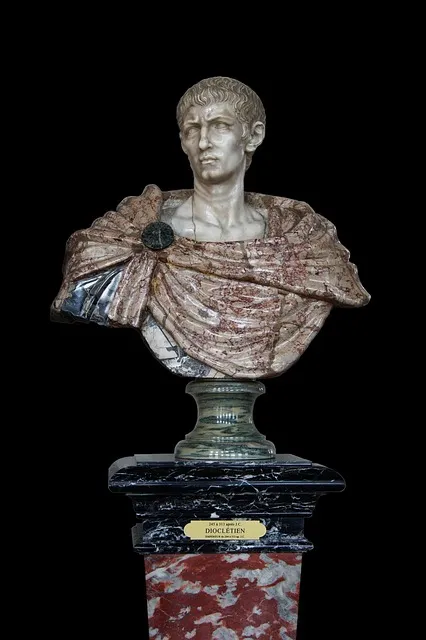
The defense: Seneca never claimed to be virtuous. He claimed to be a student, still failing, still working at it. “I am not yet wise, and indeed shall not be perfect even after my death,” he writes. He explicitly addresses the wealth accusation in his 17th letter to Lucilius: philosophy doesn’t require poverty, it requires the ability to lose wealth without being destroyed. A man who clings to his fortune while preaching its indifference is a fraud. A man who accumulates wealth while genuinely able to walk away from it — and then actually walks away when forced — is demonstrating exactly what he preached.
Nero ordered Seneca’s death in 65 CE, following the Pisonian conspiracy (in which Seneca may or may not have been involved — the historical evidence is disputed). Seneca opened his veins calmly, dictated philosophical observations as he bled, attempted to comfort his weeping wife and friends, and died after a process that took several hours due to his advanced age and weakened circulation. According to Tacitus, no Seneca sympathizer, the death scene was composed, deliberate, entirely consistent with the philosophy Seneca had been teaching for decades. The final exam was unambiguous. He passed.
What the hypocrisy charge misunderstands is what philosophy is for. Not an achievement to be displayed. A practice to be maintained under pressure. Seneca’s value isn’t that he was perfect. His value is honesty about the gap between principle and practice while closing that gap throughout his life — imperfectly, in full public view, in one of the most dangerous political environments in Roman history. More useful to most people than Marcus’s cleaner record, because most people aren’t emperors who can simply decide to do the right thing without negotiating with anyone. Most people are embedded in systems they didn’t build, navigating pressures they didn’t choose, trying to hold some interior line they won’t cross. Seneca’s life is the playbook for exactly that situation. And his death proved he wasn’t making it up.
Morning Marcus, Evening Seneca: The Daily Protocol

Seneca’s evening review practice is described in his essay “On Anger.” “When the light has been removed and my wife has fallen silent, aware of the habit that’s now mine, I examine my entire day and go back over what I’ve done and said, hiding nothing from myself, passing nothing by.” Three questions reviewed: Where did the day fall short? What could have gone better? What went well? Not therapy. Quality control. The internal locus of control that defines Stoic practice isn’t built by believing you control things. It’s built by reviewing your choices each day and gradually making better ones — the same way any skill improves, through deliberate practice applied to the right target. Seneca also recommends reading one letter per evening — his own letters designed exactly for that purpose. One letter, one idea, fifteen minutes. Applied over a year, a complete philosophical education.
Combined: five minutes of Marcus in the morning primes expectations. Seneca’s evening review extracts the day’s lessons. The morning prepares for adversity; the evening mines it for wisdom. Use Marcus’s impermanence meditation when a setback needs perspective; use Seneca’s anger protocol when a situation needs navigation. The mental fortitude that results from eighteen months of this practice isn’t the kind read about in a book — it’s the kind noticed one day in how something gets handled that would have wrecked you a year ago.
The One Thing Neither of Them Will Tell You
Here’s the insight that doesn’t appear in any Stoicism book, because it requires stepping outside both traditions and looking at them together.
Marcus and Seneca both had something most people lack: a clear account of their obligations. Marcus knew exactly what he owed Rome and the people in his care. Seneca knew exactly what philosophical standard he was trying to meet, even while repeatedly falling short of it. Their Stoicism worked, in both cases, because it was being applied to a specific life with specific commitments and specific stakes. The philosophy gave structure to a life that already had structure.
The failure mode of modern Stoicism — the kind practiced by people who collect quotes but don’t change behavior — is applying it to a vague, uncommitted life and expecting it to supply the commitment. Doesn’t work that way. No philosophy does. Frankl didn’t find meaning in Auschwitz through abstract principle. He had a specific manuscript to reconstruct, specific people he was responsible for, a specific scientific framework being tested in real time. The philosophy gave form to the responsibility. The responsibility gave the philosophy something to do.
The Two-Forge Model points toward this conclusion: before deciding which Stoic to read, ask what’s being committed to. What specific obligation is being carried that requires either Marcus’s restraint or Seneca’s navigation? A life with no specific stakes, no real commitments, no people depending on anything concrete — then Marcus and Seneca are both entertaining history lessons. A life with specific stakes — which it has, if you’re being honest — and the philosophy plugs into those stakes and starts doing its actual work. No need to read both philosophers cover to cover. Read the two pages that apply to whatever problem is actually being faced today, then go do something about it. That’s what Marcus did. In a tent. On campaign. Alone. Every morning for nineteen years.
The capacity to transform difficulty into growth that both men modeled is less about philosophy and more about commitment. The philosophy is the method. The commitment is the engine. Both are needed, in that order.
The Two-Forge Model and the Full Resilience Toolkit
The Two-Forge Model sits inside a larger system. Understanding Marcus’s forge connects directly to Extreme Ownership: his philosophy of restraint under authority is a specific application of the principle that every outcome in your domain belongs to you, including the ones produced by your power. Understanding Seneca’s forge connects to working the problem: embedded in a system you didn’t build, the Senecan approach is relentless focus on what can actually be changed, not what’s wished were different.
Both forges feed mental fortitude through different channels. Marcus builds it through daily confrontation with what cannot be controlled. Seneca builds it through daily navigation of what can be. The internal locus of control that researchers like Julian Rotter identified as the strongest predictor of long-term performance is exactly what both men were developing — Marcus by restraining his use of the control he had, Seneca by expanding his use of the control available to him inside a constrained situation.
Deepening either forge: the Marcus Aurelius Meditations summary gives the philosophical architecture before diving into the primary text. And if the application of Stoicism to your closest relationships is where traction is most needed, Seneca’s letters — particularly 7, 11, 47, and 77 — are the most direct route in. The philosophy is ancient. The problems it addresses are not.
Sources & Further Reading
- Baumeister, R.F. (1998). Ego depletion. Journal of Personality and Social Psychology
- Lally, P. et al. (2010). How are habits formed. European Journal of Social Psychology
Marcus Aurelius Seneca: Your Questions Answered: Marcus Aurelius vs Seneca

Which book should I read first — Meditations or Letters to Lucilius? Read Marcus’s Meditations first, in the Gregory Hays translation, to understand what Stoic practice feels like from the inside — including the daily struggle, the repetitions, the honesty about failure. Then read Seneca’s Letters, starting with Letters 1, 7, and 77 for maximum practical impact. Want a single Seneca essay before committing to the letters? “On the Shortness of Life” (De Brevitate Vitae) is the one — it will permanently change how time gets accounted for.
Why is Seneca accused of hypocrisy, and does it undermine his philosophy? The charge: preached Stoic simplicity while accumulating enormous wealth and advising a tyrant. The defense — which Seneca himself made, explicitly — is that Stoicism doesn’t require poverty, it requires the ability to lose wealth without being destroyed. His death in 65 CE, when Nero stripped him of everything and ordered his execution, demonstrated the claim. He died composedly, without resistance, dictating philosophical observations as he bled. The philosophy held under the one pressure that exposes all frauds. His contradictions while living don’t undermine his philosophy. They’re evidence of what philosophy looks like in an imperfect life — which is every life.
What is Marcus Aurelius best known for in Stoic philosophy? Three contributions define Marcus’s Stoicism: the practice of negative visualization (meditating on loss and death to reduce attachment and clarify what matters), the discipline of perception (events are neutral, only judgments create suffering), and the concept of the obstacle as the way (adversity as the specific material character gets built from). His Meditations is also the most honest document of what daily Stoic practice looks like — not a performance of wisdom, but a daily struggle against the same weaknesses everyone has, conducted by the most powerful man in the world. That combination of power and honesty is unique in philosophical literature.
What is Seneca best known for in Stoic philosophy? Seneca’s primary contributions are his psychology of anger (De Ira), his philosophy of time (“On the Shortness of Life”), and his practical method of philosophical correspondence — the 124 letters to Lucilius covering the full range of lived Stoic practice. Significantly better psychologist than Marcus. Better writer, too. His innovation was making Stoicism conversational, warm, applicable to the full complexity of social and political life rather than the interior life of an isolated emperor. His formula for dealing with difficult people, managing time as a finite resource, and maintaining philosophical integrity inside a corrupt system remains useful in any century.
Can you practice both Marcus Aurelius and Seneca’s approaches at the same time? Yes — the most effective Stoic practice draws on both. The Morning Marcus / Evening Seneca protocol described in this article is one practical structure: Marcus’s morning priming to set expectations for difficulty, Seneca’s evening review to extract lessons from the day. Within that structure, Marcus for perspective on what matters and for confronting mortality honestly; Seneca for specific protocols when anger, time management, or difficult people are the operational challenge. The Two-Forge Model says both tools stay in the kit, selected by the job, not by philosophical loyalty.
How does Seneca’s philosophy of time apply to modern life? Seneca’s central argument — that most people are unconsciously bankrupt in time while obsessing over money — is more applicable now than in 65 CE, because the modern attention economy has industrialized the process of stealing time without anyone noticing. Three categories of time-wasters get identified: those busy with things that don’t matter, those always preparing to live rather than living, and those pursuing pleasure so relentlessly they never arrive anywhere. The phone addiction that fragments modern attention is Senecan waste at industrial scale. His prescription — guard your time like your most valuable possession, because it is — is identical to what the most effective people in any era have practiced.
Editorial StandardsCorrectionsMedical DisclaimerAbout Our ContentAffiliate DisclosureSite Map