
The world is loud and getting louder. Every notification, every group chat, every algorithm-curated feed is engineered to keep a man tethered to the opinions, emotions, and agendas of other people. In this noise, the man who can sit alone with his own thoughts isn’t damaged. He’s rare. Rare because he has access to the one resource the crowd will never possess: uninterrupted clarity about who he actually is.
History’s most formidable minds didn’t achieve greatness in committees. Thoreau walked into the woods and emerged with philosophy that still dismantles convention two centuries later. Tesla sat alone in his laboratory for weeks at a time and saw the future of electrical transmission before anyone else could sketch the outline. Einstein rewrote the laws of the universe on a notepad in a patent office where no one bothered him. Nietzsche wandered the Swiss Alps in solitude and produced ideas that would reshape Western thought forever. These weren’t antisocial men. They were men who understood that the deepest work — the work that changes everything — happens alone.
Solitude is not the absence of people. It’s the presence of yourself. The only state in which a man can hear his own instincts without the distortion of groupthink, approval-seeking, or social performance. The man who fears being alone fears himself. The man who chooses solitude has already confronted that fear and found something better waiting on the other side: sovereignty over his own mind.
These 75 solitude quotes come from philosophers, scientists, warriors, poets, and mystics — men and women who didn’t merely tolerate aloneness but actively sought it as the forge in which their most important work was shaped. They’re organized across seven themes: the power of being alone, self-reliance and independence, creative isolation and deep work, walking your own path, silence and stillness, the strength in withdrawal, and solitude as the road to mastery. Read them slowly. The ones that hit hardest are the ones needed most right now.
On the Power of Being Alone
“I never found a companion that was so companionable as solitude.” — Henry David Thoreau
Thoreau wrote this from his cabin at Walden Pond, where he spent two years alone by deliberate choice. Not running from people. Running toward something human company couldn’t provide — the undiluted experience of his own existence. The man who can say this honestly has unlocked a freedom most men never taste, because they never stop moving long enough to taste it.
“The soul that sees beauty may sometimes walk alone.” — Johann Wolfgang von Goethe
Goethe understood that depth of perception comes at a social cost. The man who notices what others miss — the deeper pattern, the hidden connection, the truth beneath the surface noise — will sometimes find no one walking beside him. Not a punishment. The price of vision. Worth every step.
“Whosoever is delighted in solitude is either a wild beast or a god.” — Aristotle
Aristotle gave both options and let the reader choose. The crowd assumes it’s the beast. They can’t fathom that a man would choose aloneness from strength rather than weakness. Let them assume. Which one, is already known — their confusion is irrelevant.
“The best thinking has been done in solitude. The worst has been done in turmoil.” — Thomas Edison
Edison held 1,093 patents. Every single one originated in sustained, focused, solitary thought. The lab wasn’t a social club — a monk’s cell with electricity. Breakthroughs didn’t arrive in brainstorming sessions. They arrived in hours of silence interrupted only by the scratch of a pencil on paper.
“All of humanity’s problems stem from man’s inability to sit quietly in a room alone.” — Blaise Pascal
Pascal wrote this in 1654 and it’s only become more true with each passing century. Wars, debt, addiction, broken relationships — trace them back far enough and there’s a man who couldn’t tolerate his own company. The ability to sit still in a quiet room is the most underrated skill a man can develop, and the cheapest to acquire.
“In solitude the mind gains strength and learns to lean upon itself.” — Laurence Sterne
Sterne saw solitude as a training ground, not a retreat. The mind that always leans on other minds never develops its own load-bearing capacity. Like a muscle never tested under weight, it stays weak. The man who regularly spends time alone builds a cognitive independence no committee can replicate.
“Be alone, that is the secret of invention; be alone, that is when ideas are born.” — Nikola Tesla
Tesla spent decades working in states of intense isolation. He visualized entire machines operating in his mind before touching a single component. He understood the creative process requires a kind of silence physically impossible to achieve in the presence of others. Ideas don’t arrive by consensus. They arrive in solitude, fully formed, like dispatches from a deeper intelligence.
“The greatest thing in the world is to know how to belong to oneself.” — Michel de Montaigne
Montaigne retired from public life at thirty-eight and spent the rest of his years in a tower library writing essays. He didn’t belong to the court, the church, or the crowd. He belonged to himself. That self-possession — the ability to sit with your own thoughts without needing external validation to feel complete — is the foundation every other form of strength is built on.
“I live in that solitude which is painful in youth, but delicious in the years of maturity.” — Albert Einstein
Einstein admitted what most men won’t: solitude in your twenties can feel like exile. But the man who endures that early discomfort discovers something remarkable in his thirties and forties — the aloneness that once felt like punishment now feels like privilege. Grown into it. Earned it. Not everyone does either.
“A man can be himself only so long as he is alone; and if he does not love solitude, he will not love freedom; for it is only when he is alone that he is really free.” — Arthur Schopenhauer
Schopenhauer connected solitude directly to freedom and authentic identity. In the presence of others, you perform. You calibrate your words, your posture, your opinions to the audience in the room. Only when the audience disappears does a man finally meet who he actually is. Doesn’t like that man? He’ll always need a crowd to hide inside.
“Without great solitude no serious work is possible.” — Pablo Picasso
Picasso produced over 50,000 works of art across his lifetime. Not the product of socializing. The product of long, obsessive, uninterrupted hours in the studio. Serious work — the kind that outlives you — demands a seriousness of focus only available alone, with the work and nothing else.
On Self-Reliance and Independence
“It is easy in the world to live after the world’s opinion; it is easy in solitude to live after our own; but the great man is he who in the midst of the crowd keeps with perfect sweetness the independence of solitude.” — Ralph Waldo Emerson
Emerson’s masterclass, compressed into one sentence. The hermit avoids the test entirely. The conformist fails it entirely. The great man passes through the crowd without losing himself, carrying his solitude like an internal compass no social pressure can redirect — even surrounded on all sides.
“Trust thyself: every heart vibrates to that iron string.” — Ralph Waldo Emerson
Two words most men spend their entire lives unable to execute. Trust thyself. Not your parents’ plan, not your employer’s opinion, not the crowd’s approval. Your own instinct. The iron string vibrates when you’re alone and quiet enough to hear it. Goes silent the moment other people’s expectations drown it out.
“The individual has always had to struggle to keep from being overwhelmed by the tribe.” — Friedrich Nietzsche
Nietzsche saw the tribe not as a support system but as a gravitational field pulling the individual toward mediocrity. The struggle to maintain your own identity, your own values, your own direction against collective pressure — that’s the central battle of every man who refuses to be average. Solitude is where that battle gets won.
“He who would be a man must be a nonconformist.” — Ralph Waldo Emerson
Not a rebel for rebellion’s sake. A nonconformist because conformity requires surrendering independent judgment. The man who agrees with everything agrees with nothing. He’s traded his own mind for the comfort of belonging, and Emerson rejected that trade as the worst bargain a man can make.
“I care for myself. The more solitary, the more friendless, the more unsustained I am, the more I will respect myself.” — Charlotte Bronte
Bronte understood the inverse relationship between social dependence and self-respect. Every time emotional stability gets outsourced to another person, a fraction of autonomy goes with it. The man who can sustain himself alone — who can sit with his own discomfort without reaching for a phone, a bottle, an audience — doesn’t need anyone’s permission to feel whole.
“You have power over your mind — not outside events. Realize this, and you will find strength.” — Marcus Aurelius
The Roman emperor and Stoic philosopher wrote this in his private journal, never intended for publication. The purest expression of self-reliance in classical philosophy. You cannot control the world. You can control your response to it. That control gets cultivated in solitude, tested in chaos, refined over a lifetime of deliberate practice.
“The strongest man in the world is he who stands most alone.” — Henrik Ibsen
Ibsen wrote this for Dr. Stockmann in An Enemy of the People — a man who tells the truth and gets dismantled by the community for it. The line has survived because it’s accurate. The man who stands alone doesn’t need the crowd to validate his position. That independence — the willingness to be right while everyone else is wrong — is the deepest form of strength there is.
“If you are lonely when you are alone, you are in bad company.” — Jean-Paul Sartre
Sartre’s observation is surgical. Loneliness in solitude isn’t about the absence of others — it’s about the poverty of a man’s relationship with himself. The man who’s built a rich inner life is never lonely when alone. The man who’s neglected it is lonely even in a crowded room. The problem is never the room. Always the interior.
“What a lovely surprise to finally discover how unlonely being alone can be.” — Ellen Burstyn
Most men never make this discovery because they never stay alone long enough to make it. Every silence filled with noise, every gap with distraction, every evening with company. The man who finally lets the silence settle discovers that aloneness isn’t the enemy he was taught it was. It’s a doorway. Most men just never stand at it long enough to see it open.
“Do not go where the path may lead, go instead where there is no path and leave a trail.” — Ralph Waldo Emerson
Trailblazing is inherently solitary. The path that already exists was made by someone else for someone else. The man who insists on his own direction walks alone — not because he was abandoned, but because no one else has developed the courage to follow where there’s no precedent and no guarantee of arrival.
On Creative Isolation and Deep Work


“I think 99 times and find nothing. I stop thinking, swim in silence, and the truth comes to me.” — Albert Einstein
Einstein’s creative process wasn’t relentless analysis alone. It was relentless analysis followed by deliberate silence. The mind solves its deepest problems in quiet the way the body heals in sleep — through processes requiring the absence of interference. The man who never stops thinking never gives his deepest intelligence room to operate.
“One can be instructed in society, one is inspired only in solitude.” — Johann Wolfgang von Goethe
The distinction is critical and underappreciated. Society teaches what already exists. Solitude reveals what doesn’t yet exist. Instruction is repetition. Inspiration is creation. Both have value, but the man wanting to build something genuinely new has to spend significant time away from the instruction of others — time no one gives back if it gets wasted.
“In order to understand the world, one has to turn away from it on occasion.” — Albert Camus
Camus wasn’t advocating withdrawal from life. He was advocating the strategic retreat that lets perspective form. You can’t see the true shape of a mountain while standing on its summit. You have to step back. The man who never steps back from the world can process its noise but never truly understand its structure.
“Writing is utter solitude, the descent into the cold abyss of oneself.” — Franz Kafka
Kafka’s description applies to every form of serious creative work. Cold down there. Uncomfortable. The abyss of yourself contains material most men would rather not examine directly. But the man who descends into it and brings something back up — that’s where every enduring piece of work originates. The abyss isn’t the obstacle. It’s the source.
“My imagination functions much better when I don’t have to speak to people.” — Patricia Highsmith
Highsmith was blunt about the cost of social interaction on creative output. Speech requires processing power. It redirects mental resources from internal generation to external communication. The man who guards his silence isn’t being antisocial — he’s managing his most finite resource with the same discipline a serious athlete manages training load.
“Conversation enriches the understanding, but solitude is the school of genius.” — Edward Gibbon
Gibbon spent twenty years writing The Decline and Fall of the Roman Empire, much of it in solitary scholarship. His observation separates two functions precisely: conversation refines existing ideas; solitude generates new ones. The complete man does both, but knows which process requires isolation and protects that time accordingly.
“I have to be alone very often. I’d be quite happy if I spent from Saturday night until Monday morning alone in my apartment. That’s how I refuel.” — Audrey Hepburn
Even one of the most celebrated social figures of the twentieth century needed extended solitude to function at full capacity. If Audrey Hepburn required thirty-six unbroken hours of aloneness to recharge, the idea that anyone can operate indefinitely without any isn’t ambition. It’s a system running toward failure without knowing it.
“Music is the silence between the notes.” — Claude Debussy
Debussy understood the space between things is where meaning lives. Same principle applies to creative work and to a man’s inner life. The man who fills every gap with noise destroys the very silence from which his best ideas, clearest insights, and most important realizations would have eventually emerged.
“All men’s miseries derive from not being able to sit in a quiet room alone.” — Blaise Pascal
Pascal returned to this observation repeatedly because he recognized it as foundational. The man who can’t sit still will buy things he doesn’t need, pursue relationships he doesn’t want, chase status he doesn’t value — all to avoid the unbearable quiet of his own unoccupied mind. The solitude he runs from is the very thing that could save him.
On Walking Your Own Path
“If a man does not keep pace with his companions, perhaps it is because he hears a different drummer. Let him step to the music which he hears, however measured or far away.” — Henry David Thoreau
The central manifesto of the man who walks alone. Not broken for hearing something others don’t. Not wrong because the rhythm doesn’t match the crowd’s march. The music heard is real. Follow it — even alone, especially then.
“Two roads diverged in a wood, and I — I took the one less traveled by, and that has made all the difference.” — Robert Frost
The less-traveled road is less traveled for a reason: harder, lonelier, no guaranteed destination. But every man who chose it and survived says the same thing Frost did. It made all the difference. Not because the road itself was superior. Because the walking belonged to him, and only him.
“The person who follows the crowd will usually go no further than the crowd. The person who walks alone is likely to find himself in places no one has ever been before.” — Albert Einstein
Einstein was describing his own intellectual trajectory. Relativity didn’t emerge from a committee. It emerged from a man sitting alone, asking questions the crowd considered absurd. The man who walks alone discovers territory the crowd, by definition, can never reach — because the crowd always stops at the edge of what’s already been mapped.
“There is a pleasure in the pathless woods, there is a rapture on the lonely shore, there is society where none intrudes, by the deep sea, and music in its roar; I love not Man the less, but Nature more.” — Lord Byron
Byron clarified that choosing solitude isn’t misanthropy. Not loving humanity less. Loving the natural world and his own unmediated experience of it more. The man who walks alone in the hills isn’t running from civilization. He’s running toward something civilization hasn’t figured out how to commodify or package yet.
“I went to the woods because I wished to live deliberately, to front only the essential facts of life, and see if I could not learn what it had to teach, and not, when I came to die, discover that I had not lived.” — Henry David Thoreau
The sentence that launched a thousand retreats into the wilderness, and it endures because the fear it names is universal. The fear of arriving at death and discovering the life lived wasn’t yours — that it was a series of accommodations to other people’s expectations. Thoreau went to the woods to make sure that would never be said of him.
“The only way to deal with an unfree world is to become so absolutely free that your very existence is an act of rebellion.” — Albert Camus
Camus defined freedom not as a political condition but a personal one. The man truly free — free in his thinking, free in his solitude, free in his refusal to perform for others’ comfort — is a walking rebellion against every system that depends on compliance. That kind of freedom gets built in isolation and maintained there.
“I will not let anyone walk through my mind with their dirty feet.” — Mahatma Gandhi
Gandhi protected his mental space the way a warrior protects his perimeter. The man who lets every opinion, every criticism, every cultural narrative walk through his mind unchallenged will never produce a single original thought. Solitude is the guard at the gate. Without it, the perimeter’s open and everything gets in.
“You must go on, I can’t go on, I’ll go on.” — Samuel Beckett
Three clauses capturing the entire interior experience of walking a solitary path. The obligation to continue. The feeling that you can’t. The decision to do it anyway. Every man who’s chosen his own road over the comfortable highway has cycled through this exact sequence. The going on — despite feeling unable to — is what defines the walk.
“Do not wait for leaders; do it alone, person to person.” — Mother Teresa
Even a woman who spent her entire life in service to others understood waiting for a leader is a refined form of paralysis. The man who acts alone, without permission or precedent, moves faster and more authentically than any committee convened for the same purpose. Waiting for authorization is how ordinary things stay ordinary.
On Silence and Stillness

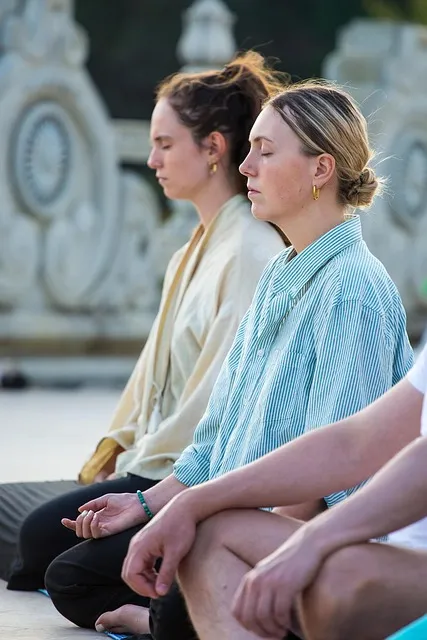
“It is in your power to withdraw into yourself whenever you desire. Perfect tranquility within consists in the good ordering of the mind, the space of your own.” — Marcus Aurelius
Marcus Aurelius was emperor of Rome — the most demanding position in the ancient world — and he retreated into inner solitude every day. If a man responsible for governing an entire civilization could carve out stillness within himself, the excuse for not doing the same doesn’t hold up under examination.
“Nowhere can man find a quieter or more untroubled retreat than in his own soul.” — Marcus Aurelius
The Stoic emperor pointed inward because outward retreat isn’t always possible. You can’t always leave the city, the office, the obligations. But you can always enter the territory of your own mind. That retreat is available at every moment of every day, requiring no travel, no expense, no one’s permission to access.
“The monotony and solitude of a quiet life stimulates the creative mind.” — Albert Einstein
Monotony is deeply underrated. The man living a quiet, repetitive, solitary life has freed enormous cognitive resources from the constant task of managing social complexity. Those resources become available for deeper work. Einstein’s daily routines were deliberately monotonous because novelty is the enemy of sustained, generative thought.
“Quiet people have the loudest minds.” — Stephen Hawking
Hawking, who spent much of his life unable to speak freely, understood the volume of your voice has nothing to do with the power of your thinking. The quiet man in the corner of the room may be processing more deeply than everyone currently talking combined. Silence isn’t absence. It’s concentration wearing no costume.
“Speak only if it improves upon the silence.” — Mahatma Gandhi
Most speech doesn’t improve on silence. It fills space. Manages anxiety. Performs social function without communicating anything of lasting substance. The man who tests every sentence against this standard finds himself speaking far less and being heard far more — a reasonable trade.
“Within you there is a stillness and a sanctuary to which you can retreat at any time and be yourself.” — Hermann Hesse
Hesse spent years in psychoanalysis and solitary writing in the Swiss countryside. He found the sanctuary he described not in geography but in practice — the daily return to inner stillness. The man who builds this sanctuary within himself carries his refuge everywhere he goes, regardless of what’s happening in the world around him.
“In the attitude of silence the soul finds the path in a clearer light, and what is elusive and deceptive resolves itself into crystal clearness.” — Mahatma Gandhi
Gandhi observed one full day of silence every week for decades. Not being spiritual for show. Running a regular diagnostic on his own thinking. The clarity he described isn’t mystical — it’s the natural, predictable result of removing noise long enough for the underlying signal to become visible again.
“True silence is the rest of the mind, and is to the spirit what sleep is to the body, nourishment and refreshment.” — William Penn
Penn compared mental silence to physical sleep, and the comparison holds. Both restorative. Both non-negotiable for sustained performance. The man depriving himself of silence deprives his mind of the recovery it needs to function at the level he demands of it. Sleep deprivation has visible consequences. Silence deprivation has invisible ones — just as corrosive over time.
“Learn to be alone and to like it. There is nothing more freeing and empowering than learning to like your own company.” — Mandy Hale
Practical instruction, not philosophy. A learnable skill, not an innate trait. Developed the same way any other skill gets developed — through practice, discomfort, repetition. Start with an hour. Then a morning. Then a full weekend. The man who genuinely likes his own company has achieved something most men never attempt and fewer complete.
On the Strength in Withdrawal
“The more powerful and original a mind, the more it will incline towards the religion of solitude.” — Aldous Huxley
Huxley saw the pattern across every era of recorded history: the most powerful minds consistently gravitate toward solitude. Not because they’re damaged. Because they need the space. A mind generating at a higher frequency requires more silence to function at full capacity — the same way a more powerful engine requires more fuel and more maintenance.
“I restore myself when I’m alone.” — Marilyn Monroe
One of the most publicly consumed human beings in history needed solitude to rebuild what the world took from her. If the woman everyone wanted around craved aloneness to restore herself, the lesson is unambiguous: solitude isn’t about being unwanted. It’s about recovering what constant social performance depletes.
“Sometimes you need to sit lonely on the floor in a quiet room in order to hear your own voice and not let it drown in the noise of others.” — Charlotte Eriksson
Not a comfortable image. Sitting on the floor of a quiet room doesn’t look impressive. Doesn’t photograph well. But it’s where the man who’s lost himself goes to find himself again. The floor, the silence, the solitude — not symbols of defeat. Conditions for recovery.
“Talent is nurtured in solitude; character is formed in the stormy billows of the world.” — Johann Wolfgang von Goethe
Goethe separated the two processes with precision. Talent gets built in solitude. Character gets built in conflict. The complete man does both — retreats to develop his gifts, then returns to the world to test his backbone against real resistance. Neither process replaces the other, and skipping one leaves the man incomplete.
“Loneliness is the poverty of self; solitude is the richness of self.” — May Sarton
The most important distinction in the entire conversation about being alone. Loneliness is a deficit — empty, looking for someone to fill the gap. Solitude is an abundance — full, choosing to protect that fullness from dilution. Same physical state. Entirely different internal architecture. The difference is everything.
“I find it wholesome to be alone the greater part of the time. To be in company, even with the best, is soon wearisome and dissipating.” — Henry David Thoreau
Thoreau wasn’t antisocial. He had friends, visitors, rich conversations. But he saw clearly that even the best company costs energy. The man who spends most of his time alone preserves his energy for the work, the thinking, the self-examination that matter most — the things that actually move the needle.
“People who need solitude have no need of the irony of being with friends.” — Friedrich Nietzsche
Nietzsche noticed the irony built into most social interaction: physically with others and yet performing a version of yourself, which means further from your actual self than if you were alone. The man who needs solitude has moved past this performance and wants the genuine article — unmediated access to his own experience.
“The time you enjoy wasting is not wasted time.” — Bertrand Russell
Russell defended the right to unproductive solitude. Not every hour alone must be spent on great work. Sometimes a man sits and does nothing productive. Sometimes he stares at a wall. That time isn’t wasted if it restores him. The cult of productivity will say otherwise. The cult of productivity is wrong and exhausted.
“Solitude is strength; to depend on the presence of the crowd is weakness. The man who needs a mob to nerve him is much more alone than he imagines.” — Paul Brunton
Brunton reversed the conventional framing. The man surrounded by people who requires them to feel alive is the truly isolated one — isolated from himself. The man sitting alone in a room, content with his own thoughts, is the connected one. Connected to the only person whose company he can never permanently escape.
“Let me be a free man — free to travel, free to stop, free to work, free to trade where I choose, free to follow the religion of my fathers, free to think and talk and act for myself.” — Chief Joseph
Chief Joseph of the Nez Perce understood freedom as a total condition, not a partial one. The man who walks alone does so because freedom isn’t a committee decision. Free in your solitude, or performing freedom for an audience. Not the same thing, and the difference is everything.
On Solitude and Mastery
“There is nothing outside of yourself that can ever enable you to get better, stronger, richer, quicker, or smarter. Everything is within.” — Miyamoto Musashi

“Think lightly of yourself and deeply of the world.” — Miyamoto Musashi
Musashi’s instruction for the solitary man: release the ego, never release the depth of inquiry. The man alone has the rare opportunity to think deeply about the world without the distortions of social posturing. He observes clearly because he isn’t performing for anyone. That clarity is the swordsman’s actual edge — sharper than any blade.
“One must be a sea, to receive a polluted stream without becoming impure.” — Friedrich Nietzsche
Nietzsche described the internal capacity sustained solitude builds over time. The man who spends enough time alone becomes vast enough to absorb negativity, criticism, and ambient chaos without being contaminated by it. A sea, not a puddle. And seas form in the deep, unwitnessed places where no one’s watching.
“The wise man delights in solitude, but the fool is terrified by it.” — Arthur Schopenhauer
Schopenhauer divided men into two categories based on a single data point: their honest reaction to being alone. The wise man seeks solitude because he has work to do and a self worth sitting with. The fool flees it because he has nothing inside worth being alone with. Reaction to aloneness is a more accurate personality test than anything available in print.
“If you are afraid of being lonely, don’t try to be right.” — Jules Renard
Renard exposed the hidden price of intellectual honesty. The man who insists on saying what he actually sees — even when it contradicts the group, especially then — will often find himself standing alone. That aloneness isn’t a punishment for being wrong. It’s the toll for being right when the crowd isn’t yet ready to hear it.
“We live, in fact, in a world starved for solitude, silence, and privacy: and therefore starved for meditation and true friendship.” — C.S. Lewis
Lewis made a connection that surprises most people: solitude and genuine friendship are linked, not opposed. His argument was that real friendship requires two complete selves. A man who’s never spent enough time alone to become a complete person brings a half-formed man to every relationship — and half-formed men can’t form whole friendships.
“The greatest battles are fought in the silence of the mind.” — Author Unknown
No one sees the real war. It happens silently, inside, between the man you are and the man you’re capable of becoming. The crowd can’t help in this battle. Friends can’t help. Coaches can’t help. Fought alone, in silence, and the outcome of that invisible war determines every visible result in a man’s life.
“Almost everything will work again if you unplug it for a few minutes, including you.” — Anne Lamott
Lamott described solitude as a system reset — a reboot for the human operating system. The man who never unplugs from the grid of social obligation runs on corrupted software. Decisions made from fatigue, reactions from accumulated irritation, thinking from accumulated noise. Unplug. Even briefly. The system needs the downtime to work correctly.
“Solitude is the profoundest fact of the human condition. Man is the only being who knows he is alone.” — Octavio Paz
Paz, the Nobel laureate, elevated solitude from a lifestyle preference to an existential truth. Every man is fundamentally alone. The question isn’t whether to accept that fact — it’s what gets built from it. The man who uses his essential aloneness as a foundation rather than fighting it as a flaw achieves something the crowd, by its nature, never will.
“Your innermost sense of self, of who you are, is inseparable from stillness. This is the I Am that is deeper than name and form.” — Eckhart Tolle
Tolle points to the identity beneath the identity — the one that exists once job title, social roles, reputation, and stories are all stripped away. That deeper self is only accessible in stillness. The man who never sits still long enough to find it spends his entire life identifying with things that can be taken from him.
Sources & Further Reading
- Baumeister, R.F. (1998). Ego depletion. Journal of Personality and Social Psychology
- Lally, P. et al. (2010). How are habits formed. European Journal of Social Psychology
What People Ask About Solitude Quotes Men
Is wanting to be alone a sign that something is wrong with me?
No. The desire for solitude is a sign of self-awareness, not dysfunction. Research consistently distinguishes between chosen solitude — associated with higher creativity, emotional regulation, and life satisfaction — and forced isolation, which carries genuine psychological costs. The key variable is agency. Choosing to be alone because it restores you is a healthy and intelligent instinct. Protect it against the social pressure that will inevitably frame it as a problem.
What is the difference between solitude and loneliness?
Solitude is a chosen state of being alone in which you’re engaged with yourself — your thoughts, your work, your recovery. Loneliness is an unchosen state of disconnection in which the absence of others feels like deprivation. A man can be profoundly lonely in a crowded room and deeply content alone on a mountain. The difference isn’t circumstantial. It’s internal. Build a genuine relationship with yourself, and solitude becomes a resource. Neglect that relationship, and any time alone becomes loneliness by default.
How much solitude is enough?
No universal prescription — the requirement varies by person and by season of life. The most reliable signal is mental clarity: when thinking gets foggy, reactions get disproportionate, or creative output dries up, that’s almost certainly solitude-deficiency. Treat it like sleep — not a luxury to schedule when convenient, but a non-negotiable condition of functioning well. Most men underestimate how much they need and discover the truth only after going too long without it.
How do I explain my need for solitude to people who do not understand it?
No justification is owed for how a man recharges. But if the relationship matters enough to explain, direct honesty works: “I need time alone to think clearly and show up as my best self. This is not about avoiding you — it is about maintaining the version of me that is worth being around.” Most people who genuinely care will understand this. The ones who can’t accept that space is required are, incidentally, providing evidence about why it’s required.
Can a man be strong and still feel lonely sometimes?
Yes — and any man who claims otherwise is either lying or hasn’t been honest with himself. Strength doesn’t eliminate loneliness. It gives you the tools to move through it without being paralyzed. Every major figure quoted in this collection experienced real loneliness. Thoreau had melancholy winters at Walden. Nietzsche wrote letters describing his isolation in terms that were anything but triumphant. Tesla spent holidays entirely alone. The difference between these men and those destroyed by loneliness is that they continued their work regardless. Feeling lonely is human. Letting it stop you is a choice.
Is solitude compatible with having close relationships?
Not only compatible — a prerequisite for genuine ones. C.S. Lewis made this argument directly: real friendship requires two complete selves, and becoming a complete self requires spending significant time alone. A man who’s never sat with his own thoughts long enough to know what he actually believes and values will inevitably build relationships based on performance rather than authenticity. Solitude doesn’t compete with love. It makes a man capable of it.
These solitude quotes point toward a single truth: the man who’s learned to be alone with himself is the man with the most to offer when he chooses to be with others. Building that capacity for self-reliance? 75 Adversity Quotes That Will Make You Stronger maps what that road looks like when it gets hard. For the philosophical framework behind why deliberate isolation produces strength, Seneca’s daily discipline routine shows what that practice looked like for one of history’s most clear-eyed thinkers. And for the code the greatest solitary warriors lived by, 75 Warrior Quotes for Modern Men covers the ground between aloneness and mastery. The man who walks alone isn’t missing anything. He’s building everything.
Related: Andrew Huberman's Discipline Routine: What He Does Daily
Related: Hot Yoga vs. Regular Yoga: Why Heat Changes Everything