
Barely lit room. January, 1964, Madison Square Garden — Cassius Clay was supposed to lose. Odds said 7-to-1. The boxing press had already written their headlines in pencil, that’s how certain they were. Sonny Liston was the most feared man in the sport, a man who’d destroyed Floyd Patterson in the first round twice. Clay was 22, loud, untested. His trainer Angelo Dundee later said that in the dressing room before the fight, Clay’s pulse was so elevated from anxiety that Dundee actually considered pulling him. And then Clay walked out. And then he refused to lose.
Won in seven rounds. Liston didn’t come out for the eighth.
What happened in that ring wasn’t physical, not really. The physical part — footwork, combinations, conditioning — that was months of work already banked. What happened in the moment was colder than that, harder to name. It was refusal, in the face of overwhelming external consensus, to accept the story the world had already written about him. Every crowd member in that arena, every sportswriter at ringside, every oddsmaker in Vegas had already decided the outcome. Clay decided differently. And the gap between what the world had decided and what he decided — that’s where determination quotes for men actually live. Not on posters. Not in Instagram bios. In that gap, held open by nothing but will.
This collection of 75 determination quotes is organized around what gets called here the Iron Will Stack — eight layers of determination, each one deeper and harder than the last. Don’t just read the quotes in the Iron Will Stack. Use them at the specific layer where you’re currently stuck. Most quote collections dump everything in a pile and let you sort it. That’s not useful on mile 22 of a marathon, lying on a bathroom floor, or staring at a fourth consecutive rejection email. What’s useful is knowing exactly which quote fits this moment.
Read what applies. Carry one line. Return for the next layer when needed.
The Iron Will Stack: How to Use This Collection
Most men encounter quotes the wrong way. They scroll past a hundred in a weekend, feel briefly fired up, change nothing. The quotes don’t fail — the application method does. A quote isn’t a motivational speech. It’s a compressed instruction, and like any instruction, only useful when matched to a specific situation.
The Iron Will Stack has eight layers, each corresponding to a distinct phase of the determination cycle. The layers: Foundation (understanding what determination actually is), The Decision (the moment of choosing to begin or continue), Refusal to Quit (when the exit is visible and tempting), Mental Toughness Under Fire (when external pressure’s heaviest), Obstacle Contact (hitting the wall), Long-Term Determination Quotes Men Strategy (persistence compounding over months and years), Inner Creed (identity-level determination), and The Last Inch (when hope’s nearly gone).
Each section below is labeled with its layer. Before reading, figure out which layer applies right now. Start there. Read down. Carry one line into whatever’s being faced today.
This isn’t about inspiration. It’s about building the architecture of an unbreakable will — one layer, one quote at a time, until the stack runs automatic. The men who forged an inner locus of control didn’t inherit it. They built it. What follows are their construction notes.
Layer 1 — Foundation: What Determination Actually Is
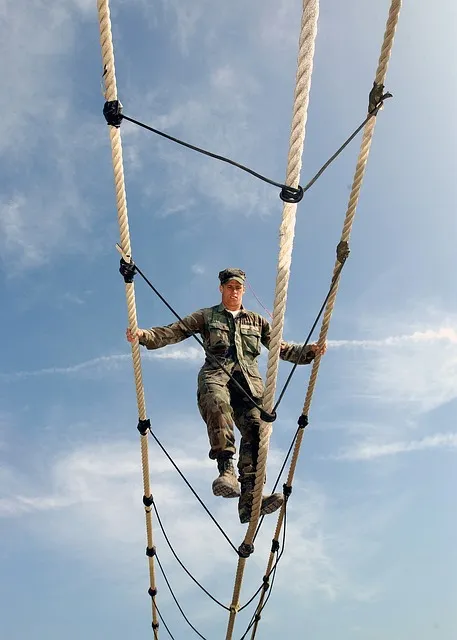
“Nothing in this world can take the place of persistence. Talent will not; nothing is more common than unsuccessful men with talent. Genius will not; unrewarded genius is almost a proverb. Education will not; the world is full of educated derelicts. Persistence and determination alone are omnipotent.” — Calvin Coolidge
Coolidge eliminated every alternative, one by one. Talent fails. Genius fails. Education fails. Only persistence and determination have no failure mode. He used the word omnipotent — all-powerful. Not hyperbole. An observation from a man who watched people succeed and fail for decades from the highest offices in the country.
“Determination is not a feeling. It is a decision.” — Unknown
The feeling version of determination is motivation. Comes and goes. The decision version is what’s still there on the day nothing’s felt — enthusiasm gone three weeks, results not showing up, no part of you wanting to continue. That’s the day it becomes clear which one was actually being run.
“Continuous effort — not strength or intelligence — is the key to unlocking our potential.” — Winston Churchill
Churchill had a lifetime of setbacks that would’ve ended most political careers for good. Kept going anyway. His observation: the key variable is continuous effort. Not intelligence, not strength, not connections, not timing. Effort, sustained over time, without interruption. That’s the mechanism. Everything else is noise.
“Determination is the wake-up call to the human will.” — Anthony Robbins
Before determination, the will’s dormant. Potential sits there the way a battery holds charge — present, not connected. Decide, truly and finally decide, and the circuit closes. The will activates. An activated will is a completely different thing from a dormant one. You’ve felt both. You know the difference already.
“A determined soul will do more with a rusty monkey wrench than a loafer will accomplish with all the tools in a machine shop.” — Robert Hughes
The tools argument is the most common excuse dressed up as analysis. Better tools, better conditions, better timing, better resources. Hughes disposed of it in one sentence. The loafer with perfect tools produces nothing. The determined man with a rusty wrench produces something. Every single time. The tool was never the variable.
“The difference between the impossible and the possible lies in a person’s determination.” — Tommy Lasorda
The boundary between impossible and possible isn’t fixed. It moves. Not determined by physics or circumstance — determined by the determination of the person pushing against it. “Impossible” is always a current status report. Never a permanent verdict. Determination writes the next report.
“People of mediocre ability sometimes achieve outstanding success because they don’t know when to quit.” — George Allen Sr.
Lands differently depending on the ego reading it. If the story’s been “waiting for conditions worthy of my talent” — this one’s a slap. Mediocre ability plus not quitting beats exceptional ability plus quitting. Men who built things of lasting value were almost never the most talented in the room. They were the ones still in the room after everyone else had left.
Layer 2 — The Decision: The Moment It Begins
A specific moment sits before everything else — the decision to begin, or to continue when stopping would be rational. Often the hardest layer, because the decision happens before evidence arrives. Before knowing it’ll work. Before results justify the cost. This layer is about what it takes to make that decision and hold it.
“You can’t be that kid standing at the top of the waterslide, overthinking it. You have to go down the chute.” — Tina Fey
Funny until it’s obvious how many men are standing at the top of every meaningful decision in their life, analyzing the angle and speed, researching the slide design, waiting for a certainty that never comes. At some point determination is just going down the chute. The analysis was never going to get anyone there. The launch is the only thing that will.
“I have learned over the years that when one’s mind is made up, this diminishes fear.” — Rosa Parks
Parks didn’t stay in that seat because she was fearless. She stayed because she was decided. And the decision, once made completely, reduced the fear to something manageable. Fear’s loudest in the space before the decision. Once it’s made — fully, not tentatively — fear loses most of its power. The undecided man is afraid. The decided man is moving.
“Only those who attempt the absurd can achieve the impossible.” — Albert Einstein
Deciding to attempt something reasonable people call absurd takes a specific kind of determination — the kind that’s stopped needing external validation. Decide without permission. Attempt without consensus. And occasionally achieve what consensus said was impossible. The reasonable men watch from the audience. The absurd men stand in the arena.
“Some succeed because they are destined to, but most succeed because they are determined to.” — Henry Van Dyke
Destiny is a story. Determination is a daily action. A man waiting to be destined waits forever. A man who decides to be determined starts today. From the outside, the outcome looks identical to destiny. From the inside, it’s manufactured, one decision at a time, out of nothing.
“Defeat is not the worst of failures. Not to have tried is the true failure.” — George Edward Woodberry
Men who never made the decision carry the worst outcome — not the ones who tried and failed. Defeat after attempt is data. Experience. Raw material for the next attempt. Not attempting is the only failure that produces nothing. It’s also the only one that’s permanent.
“In the confrontation between the stream and the rock, the stream always wins — not through strength but through persistence.” — H. Jackson Brown Jr.
Deciding to be the stream is a decision about nature, not resources. Not about being bigger than the rock. About deciding to keep moving, softly and continuously, in one direction. The rock eventually gives. Not optimism. Geology.
Layer 3 — Refusing to Quit: When the Exit Is Visible

“Never, never, never give up.” — Winston Churchill
The three nevers aren’t redundant. They cover three specific surrender scenarios: when the task is hard, when the outcome’s uncertain, when everyone around you has already quit. Never the first time. Never the second. Never the third. No exceptions, no clauses, no asterisks. Three nevers. Zero exceptions.
“I hated every minute of training, but I said, ‘Don’t quit. Suffer now and live the rest of your life as a champion.'” — Muhammad Ali
Ali admitted the hatred outright. Didn’t pretend. Didn’t reframe the suffering as joy. Hated it, catalogued the hatred honestly, kept going because the alternative was worse. Determination without delusion — clear-eyed about the cost, clear-eyed about the alternative, choosing to pay anyway. A man who tells you determination feels good has never actually tested it.
“Many of life’s failures are people who did not realize how close they were to success when they gave up.” — Thomas Edison
Edison’s warning is the cruelest part of quitting — there’s no way to know how close you were. The breakthrough might’ve been the next attempt. The deal, the next call. The relationship, one more honest conversation away from turning. The exit taken might’ve sat fifty feet from the destination. Nobody ever finds out. That uncertainty is the entire point, and it’s about the best argument against quitting there’s ever been.
“You just can’t beat the person who never gives up.” — Babe Ruth
Ruth’s arithmetic is simple. Struck out more than anyone in baseball history at the time, hit more home runs than anyone too. A man who doesn’t quit eventually outlasts everyone who does. Not necessarily faster, smarter, more talented. Just still there when the others are gone. Over a long enough stretch, still being there becomes the decisive advantage.
“If you’re going through hell, keep going.” — Winston Churchill
Churchill’s instruction for the worst part: don’t stop and build a camp. The middle of the hardest thing is the worst possible place to make decisions about stopping, because perception of the distance remaining is at its most distorted right then. Keep going. The exit’s ahead, not behind. The only path out of hell is through it, and the only failure available is stopping in the middle.
“Fall seven times, stand up eight.” — Japanese Proverb
The math is the point. One more standing than falling. Not “stand up immediately after every fall” — that’s for people who’ve never really fallen. No timing specified. Stand up seven times if that’s what it takes. Take as long as needed. The final entry in the ledger just has to be upright.
“Don’t be discouraged. It’s often the last key in the bunch that opens the lock.” — Unknown
Every key tried isn’t a failure. It’s a key eliminated. The set is finite. The determined man works through it. The man who quits threw the keyring away and concluded no key exists — a conclusion with no possible evidence behind it, since he stopped looking before he could know.
“Courage is not having the strength to go on; it is going on when you don’t have the strength.” — Theodore Roosevelt
Roosevelt separated courage from surplus. Anyone continues with reserves left. Courage is the thing keeping you moving in deficit — tank empty, logic saying stop, body and mind both filing complaints with management. That’s when determination proves it’s real. Comfortable continuing doesn’t count for much.
Layer 4 — Mental Toughness Under Fire: When Pressure Is Heaviest
There’s a specific pressure that comes from outside: the critics, the statistics, the people who’ve decided you’re going to fail, the circumstances objectively unfavorable. Mental toughness isn’t the absence of awareness of that pressure. It’s the ability to continue anyway, clear-eyed, without pretending the pressure isn’t there. These quotes come from men and women who operated under the heaviest external pressure on record.
“It is not the critic who counts; not the man who points out how the strong man stumbles. The credit belongs to the man who is actually in the arena.” — Theodore Roosevelt
Critics are always there, always comfortable. The man in the arena is dusty, bloody, still fighting. Roosevelt’s point isn’t that critics are wrong — sometimes they’re right about specific things. His point is that their correctness is irrelevant to the outcome. The outcome comes from the man in the arena, and the critics’ analysis, accurate or not, changes nothing. Ignore them not because they’re wrong, but because their opinion doesn’t touch the result.
“Strength does not come from physical capacity. It comes from an indomitable will.” — Mahatma Gandhi
Gandhi brought a colonial empire to its knees weighing less than a hundred pounds. Physical dimension irrelevant. The will was the weapon. Indomitable — a will that cannot be dominated, not by circumstance, not by pain, not by external pressure, not by a billion opinions that have already decided this can’t work. Cannot be dominated because the man holding it decided it cannot be.
“The world breaks everyone, and afterward, many are strong at the broken places.” — Ernest Hemingway
Hemingway wasn’t writing about resilience as a concept. He was describing a physical property of repaired material. Bones that break and heal correctly are denser at the fracture site. The places a man has broken and continued become his structural advantages. The pressure that broke you is the same pressure that, in retrospect, built you. Not poetic consolation. Mechanics.
“You may have to fight a battle more than once to win it.” — Margaret Thatcher
Thatcher, dismissed and underestimated and written off multiple times before becoming the longest-serving British Prime Minister of the 20th century, understood repetition. The battle doesn’t end when you lose it. It resets. Fight it again. As many times as the victory demands. A man expecting to win on the first attempt isn’t mentally tough — he’s inexperienced.
“The human body can withstand virtually anything. It’s the mind you have to convince.” — Unknown
The body doesn’t quit. It sends signals the mind reads as quit commands, and the mind executes them. Mental toughness is overriding the interpretation — reading the signal as information rather than instruction. The body’s saying it’s uncomfortable. Not the same as saying stop. The determined man learns the difference. Every hard physical challenge is just an extended lesson in that exact distinction.
“Mental toughness is spartanism with qualities of sacrifice, self-denial, and dedication.” — Vince Lombardi
Lombardi tied mental toughness to daily practice, not temperament. Built through sacrifice — choosing the harder thing when the easier one’s available. Through self-denial — not because comfort’s wrong, but because the reflex of choosing discomfort when it serves the goal is the reflex of the unbreakable man. Through dedication — the daily return to the work regardless of feeling. Practices. Not personality traits.
“Pain is weakness leaving the body.” — United States Marine Corps
The Marines reframed the signal. Pain isn’t a stop command. It’s a progress report. The burn in the muscles is weakness departing. The discomfort of a difficult conversation is avoidance leaving the system. The determined man doesn’t read pain as a warning something’s wrong. He reads it as confirmation something’s happening. Applied consistently, that reframe changes the entire experience of hard work.
“Character cannot be developed in ease and quiet. Only through experience of trial and suffering can the soul be strengthened, ambition inspired, and success achieved.” — Helen Keller
Keller was deaf and blind. Understood trial from the inside, not from a comfortable observation point. Her conclusion leaves zero room for debate: character requires difficulty. No shortcut through ease to the kind of man who can handle actual adversity. The forge isn’t optional. The heat is the mechanism. A man who avoids the fire stays soft.
Layer 5 — Obstacle Contact: When You Hit the Wall
The wall isn’t a metaphor. Every man who’s pursued something genuinely difficult has hit a specific moment where forward progress stopped completely — the method stopped working, resources ran out, the strategy failed, or the situation went objectively worse than at the start. This is obstacle contact. These quotes are specifically for that moment, which is also, without exception, the most important moment in any significant endeavor.
“The impediment to action advances action. What stands in the way becomes the way.” — Marcus Aurelius
Aurelius governed Rome through a plague, military campaigns on multiple fronts, constant political threat. Not philosophical theory — operational notes to himself. The obstacle isn’t blocking the path. It is the path. The determined man doesn’t go around it. He goes through it. And going through develops capabilities that going around would never have produced. The obstacle is the curriculum. The determined man enrolls.
“Obstacles don’t have to stop you. If you run into a wall, don’t turn around and give up. Figure out how to climb it, go through it, or work around it.” — Michael Jordan
Jordan got cut from his high school basketball team. Ran into walls consistently his whole career, including six straight years with no NBA championship. Three options at every wall: climb, go through, work around. The fourth option — quit — is conspicuously missing from the list. Not an oversight. A worldview. The wall’s a puzzle. The determined man solves it.
“When you come to the end of your rope, tie a knot in it and hang on.” — Franklin D. Roosevelt
Roosevelt led a nation through the worst economic collapse in its history and a world war, from a wheelchair. His advice for the man at the limit is surgical: don’t let go. No need to climb right now. No need to advance. Need to hold. Tying the knot is refusing to fall further when forward movement’s temporarily impossible. Sometimes determination isn’t advancing. Sometimes it’s not retreating.
“If you can dream it, you can do it.” — Walt Disney
Disney was fired from a newspaper for “lacking imagination,” went bankrupt twice, was told his idea for a talking mouse was idiotic. Obstacles consistent and significant. He kept building anyway. Not naive optimism — the operational record of a man who ran directly through every obstacle his industry threw at him and built something that outlasted everyone who said it couldn’t be done.
“Life’s challenges are not supposed to paralyze you, they’re supposed to help you discover who you are.” — Bernice Johnson Reagon
The obstacle reveals the man. The challenge isn’t the problem — it’s the test. Hit the wall and find out what you’re actually made of, which is about the most valuable information there is. Most men spend years not knowing their own capabilities because they’ve never been tested at the real limit. The wall is the test. The determined man runs toward it, because he wants the data.
“Our greatest weakness lies in giving up. The most certain way to succeed is always to try just one more time.” — Thomas Edison
Edison failed roughly ten thousand times before landing a working light bulb filament. Didn’t count the failures as failures. Counted them as data about what didn’t work. At obstacle contact, the determined man asks: what did I just learn? Then applies the learning. One more attempt, informed by the last failure. Then one more. The wall’s made of information, and every contact extracts some.
“Turn your wounds into wisdom.” — Oprah Winfrey
Winfrey was fired from her first television job and told she was “unfit for TV.” Converted the wound into the insight that drove everything built afterward. Not an instruction to pretend wounds don’t hurt. An instruction to treat the pain as raw material. Something valuable was extracted from this difficulty. Find it. Carry it. Apply it. The wound that teaches nothing is the only waste. The wound that becomes wisdom is an asset.
“The harder the conflict, the greater the triumph.” — George Washington
Washington endured Valley Forge, lost more battles than he won, commanded a chronically underfunded army against the greatest military power in the world. He won. Not consolation — an empirical claim about the relationship between difficulty and the value of the outcome. Easy triumphs are forgotten. Triumphs earned through maximum hardship become legacies. The size of the obstacle is the size of the victory on the other side.
Layer 6 — Long-Term Determination Quotes Men Strategy: Compounding Persistence
“Success is the sum of small efforts, repeated day in and day out.” — Robert Collier
Collier’s definition of success is the most accurate and least satisfying one available. Small efforts. Daily. Repeated. Not dramatic, not spectacular, not inspiring. The accumulated weight of ten thousand small daily efforts produces results that look like overnight success from outside — because the person watching only sees the endpoint, not the seven boring years of daily work before it.
“Dripping water hollows out stone, not through force but through persistence.” — Ovid
Ovid made this observation two thousand years ago, and it’s held up ever since. Water isn’t powerful. Rock is hard. Time and persistence decide the whole confrontation. The determined man isn’t trying to out-power the obstacle. He’s applying consistent, gentle, relentless pressure in one direction for as long as it takes. The stone doesn’t get a vote in what eventually happens.
“I am a slow walker, but I never walk back.” — Abraham Lincoln
Lincoln failed at business twice, lost eight elections, had a nervous breakdown, became the 16th President of the United States. Not fast. Not brilliant in any flashy, easily recognized way. Moved in one direction. Always forward. A man who never walks back eventually arrives at any destination, regardless of speed. Speed’s nice. Direction is non-negotiable.
“Perseverance is not a long race; it is many short races one after the other.” — Walter Elliot
The long game feels impossible to most men because they frame it as a marathon. It’s not. It’s a series of sprints — each finite, each survivable, each followed by the next. No need to endure forever. Just today. Then tomorrow. The long game is built entirely from short games, built entirely from individual decisions, built entirely from the next five minutes. Shrink the frame. Win the current sprint.
“Energy and persistence conquer all things.” — Benjamin Franklin
Franklin’s two-variable formula: energy and persistence. Energy alone produces bursts. Persistence alone produces slow crawls. Together, they produce what Franklin personally demonstrated — a remarkable life built from continuous daily effort across eight decades. He never stopped working on something. The projects changed. The energy and persistence didn’t.
“Great works are performed not by strength but by perseverance.” — Samuel Johnson
Johnson compiled the first comprehensive English dictionary alone, over nine years, on a project everyone told him was impossible for one man. One word at a time, one day at a time. Not strength — he wasn’t physically imposing. Not speed — nine years. Perseverance that simply refused to stop until the work was done. The great works that lasted were built exactly this way. All of them.
“Through perseverance many people win success out of what seemed destined to be certain failure.” — Benjamin Disraeli
Disraeli was twice Prime Minister of Britain despite being Jewish at a time that was career-ending in British politics. Didn’t change the circumstances. Persevered through them. What looks like certain failure from outside is often provisional. The destination labeled “certain failure” has a service entrance, and only perseverance ever finds it.
“Let me tell you the secret that has led me to my goal. My strength lies solely in my tenacity.” — Louis Pasteur
Pasteur revolutionized medicine with germ theory, pasteurization, vaccines for rabies and anthrax. Attributed none of it to intelligence, talent, or education. Solely tenacity. One word. The man who grabs a problem and refuses to let go until it yields is the man who eventually changes the field. The problem doesn’t have to cooperate. Tenacity outlasts the resistance.
“Permanence, perseverance, and persistence in spite of all obstacles, discouragements, and impossibilities: it is this that in all things distinguishes the strong soul from the weak.” — Thomas Carlyle
Carlyle named three Ps defining the strong soul. Permanence — the commitment itself. Perseverance — its daily maintenance. Persistence — the specific refusal to stop with obstacles, discouragement, and impossibility all present at once. Every man gets sorted by this test at some point. Most don’t realize they’ve been sorted until it’s already over.
Layer 7 — Inner Creed: Identity-Level Determination
At a certain point, determination stops being a practice. It becomes a self-concept. A man at Layer 7 doesn’t decide to be determined every morning — he simply is, the way he’s left-handed or six feet tall. Not a discipline anymore. An identity. This layer covers the statements that, genuinely internalized, constitute that identity. Not affirmations. Descriptions of a kind of man — and reading them carefully is the beginning of becoming him.
“I am the master of my fate, I am the captain of my soul.” — William Ernest Henley
Henley wrote Invictus from a hospital bed after having his leg amputated. Not speaking from comfort or prosperity. Speaking from the absolute bottom of his circumstances, a place no reasonable man could claim mastery over anything. That’s the point. Mastery of fate and captaincy of soul aren’t claims about external circumstances. They’re declarations about the one thing no one can take — how you respond to circumstances you didn’t choose. This is the working-the-problem identity at its most fundamental.
“He who has a firm will molds the world to himself.” — Johann Wolfgang von Goethe
Goethe inverted the usual relationship. Most men get molded by the world — shaped by circumstance, opportunity, what other people decide about them, random events. A man with a firm will reverses the polarity. He molds the world to his intentions. Not because he controls everything, but because his will acts continuously on everything within reach, and over time that continuous action reshapes the environment. The world’s softer than it looks to the determined man, because he keeps pressing.
“I am not what happened to me, I am what I choose to become.” — Carl Jung
Jung separated identity from history. The determined man doesn’t carry his past as his primary self-description. He carries his direction. Not denial of what happened — a fundamental choice about what defines him. The event happened. The response is ongoing. Identity’s located in the response, not the event. This distinction is the foundation of post-traumatic growth and every meaningful comeback in human history.
“Stubbornly persist, and you will find that the limits of your stubbornness go well beyond the stubbornness of your limits.” — Robert Brault
Limits are less stubborn than they appear. They present as walls, but most turn out to be doors — stubbornness is the key. The determined man discovers this experimentally, persisting past the point he expected a hard ceiling and finding the ceiling wasn’t where he thought. Happens enough times, and eventually he stops taking ceilings seriously, because the track record of breaking through outruns the record of being stopped.
“Be like a postage stamp. Stick to one thing until you get there.” — Josh Billings
The stamp doesn’t redirect halfway. Doesn’t get interested in other envelopes. Single-minded adhesion to one destination is the simplest and most effective form of determination — and also the rarest, because most men have been told since childhood that versatility and optionality always beat commitment. Billings knew otherwise. The stamp always arrives. The man still evaluating other envelopes never does.
“Hardships often prepare ordinary people for an extraordinary destiny.” — C.S. Lewis
The identity-level version of this insight: the hardship isn’t an accident. It’s preparation. A man who internalizes that stops treating difficulty as punishment and starts treating it as curriculum. Not being broken. Being built. The degree of difficulty is proportional to what’s being constructed. Ordinary challenges produce ordinary preparation. The hardship that feels like it might finish you is preparation for something ordinary preparation could never have equipped you for.
“Determination is the alarm clock that awakens the angel inside you.” — Matshona Dhliwayo
Everyone’s got a version of themselves capable of far more than current performance suggests. Not absent. Dormant. Determination is what wakes it up. Not talent, not luck, not timing, not circumstances. The decision to be determined is the alarm. The angel — the best man anyone’s capable of becoming — has been waiting. The only thing required to wake him is the decision to try, really try, without a fallback plan.
Layer 8 — The Last Inch: When Hope Has Nearly Gone
This is the deepest layer. Men here aren’t discouraged — they’re past discouraged, in a place where hope’s become a technical term for something that may not even be available. Viktor Frankl was here. Mandela was here. The men in POW camps who survived while others didn’t were here. These quotes aren’t inspirational. They’re survival tools for men where inspiration’s burned off and what remains is either pure will or surrender. Use them carefully. They’re heavy.
“Most of the important things in the world have been accomplished by people who have kept on trying when there seemed to be no hope at all.” — Dale Carnegie
Carnegie wasn’t writing motivation content. He was making a statistical observation about when breakthroughs actually occur. The important things — not easy, important — happen in the specific condition of no apparent hope. Meaning the absence of hope isn’t a signal to stop. It may be the signal you’re close. Men who quit when hope vanished will never know what they were one step from. Carnegie was cataloguing the men who stayed.
“When the world says, ‘Give up,’ hope whispers, ‘Try it one more time.'” — Unknown
The world is loud. It has facts, statistics, consensus, testimony from everyone who tried before. Hope is quiet. Almost nothing to it — just the whisper that maybe. The determined man chooses the whisper, not because it’s louder, but because the loud voice has never once actually known what the next attempt would produce. The whisper at least allows the possibility. That’s enough. The next attempt is the only intelligence that matters.
“Our greatest glory is not in never falling, but in rising every time we fall.” — Confucius
Confucius located glory in the rising, not perfect footing. A man who’s never fallen has never attempted anything worth falling for. A man who rises every single time — from small failures and catastrophic ones, embarrassing stumbles and total collapses — has demonstrated something more impressive than perfect footing. He’s demonstrated that falling isn’t terminal. Proof of indestructible will, visible only to the man who’s actually fallen.
“The iron ore thinks itself needlessly tortured in the furnace, but the steel blade looks back and knows better.” — Unknown
The ore can’t understand what the heat’s doing to it. From inside the furnace, transformation feels like destruction. The blade — what the ore becomes — understands in retrospect the heat wasn’t punishment. It was process. Men deepest in the furnace right now can’t see what they’re becoming. The ones who came out the other side all say the same thing: the furnace was necessary. Every degree of it. The blade justifies the fire.
“You may encounter many defeats, but you must not be defeated.” — Maya Angelou
Angelou separated the event from the identity. Defeats happen to you. Being defeated is chosen. The determined man experiences defeat as often as anyone — often more, because he attempts more. But he carries it differently. The defeat’s a chapter. Being defeated would end the book. He refuses the ending while absorbing the chapters. No chapter count limit on men who refuse defeat.
“Do not pray for an easy life, pray for the strength to endure a difficult one.” — Bruce Lee
Lee’s inversion is the clearest possible statement of the Layer 8 orientation. The man at the last inch isn’t asking for the difficulty to end. He’s asking for strength to continue through it. Not because the difficulty’s good, but because asking for it to end is a form of surrender, and asking for strength to endure it is the only prayer that’s ever actually been answered. The easy life produces men who can’t survive what’s currently being endured. It’s not the goal.
“I know the price of success: dedication, hard work, and an unremitting devotion to the things you want to see happen.” — Frank Lloyd Wright
Wright used the word “unremitting” — without pause, without rest, without interruption. This is the Layer 8 standard. Not dedication when motivated. Not hard work when results show up. Unremitting devotion. The word implies the devotion doesn’t depend on conditions. Constant, regardless of whether conditions deserve it, regardless of whether hope’s present, regardless of what the world says about the odds. Unremitting. The last inch requires exactly this.
“Tough times never last, but tough people do.” — Robert H. Schuller
The asymmetry is the point. The difficulty is temporary. You are not. The crisis ends. The question is whether you’re still intact when it does. The determined man at Layer 8 isn’t trying to feel better. He’s trying to outlast. Outlasting a difficulty with a natural endpoint is about the most achievable victory available, and it’s available to every man who simply refuses to stop existing before the difficulty does.
How to Deploy the Iron Will Stack: A Practical Protocol
Reading 75 quotes once is decorative. Using them is different. The Iron Will Stack was built to be deployed at specific moments, not consumed as content. Here’s the protocol for turning these quotes into operational tools.
-
Identify your current layer before you read. Before opening this article, answer one question: where are you in the determination cycle? Just beginning (Layer 1-2)? Tempted to quit something already underway (Layer 3)? Under heavy external pressure (Layer 4)? Stuck at a specific obstacle (Layer 5)? Grinding through a long timeline with nothing visible (Layer 6)? Working on who you are, not just what you do (Layer 7)? In the last-inch, nearly-hopeless zone (Layer 8)? The layer determines which quotes are currently useful. The rest wait for later.
-
Extract one line. Just one. Read the relevant layer section. One quote lands harder than the others — not because it sounds better, but because it describes exactly where things stand. Write it down. On paper, not in a notes app. The physical act of writing anchors it differently than typing. Carry that line for the next 72 hours. Not to memorize it. To have it present when a decision about continuing or stopping needs to be made. Deliberate practice works the same way — narrow the focus until working on one specific thing.
-
Apply it at the point of resistance, not before. The quote isn’t for the morning when motivation’s running. It’s for the 3 PM moment, six hours into work with nothing to show, when the rational case for stopping is genuinely strong. That’s when it gets deployed. Not as a chant, not as a mantra — as a direct instruction from someone who was in a harder situation and kept going anyway. The instruction is: keep going.
-
Use the layer progression as a long-term map. Nobody lives at Layer 8 permanently. Most of life is Layer 1-3 — establishing, continuing, resisting early exits. But show up unexpectedly deep in the stack — in the furnace, at the last inch, past hope — and there’s at least a map of where you are and what equipment exists for that position. The map doesn’t make the territory easier. It means not being lost in it. And not being lost is most of the battle, especially at the deep layers where disorientation’s as dangerous as the difficulty itself. Embracing the difficulty requires knowing what kind of difficulty is being faced.
-
Return to Layer 1 after every major victory. The most common mistake after a significant breakthrough is carrying Layer 8 energy into a Layer 1 situation. A man who just survived something extremely difficult can start needing extreme difficulty to feel engaged. That’s the failure mode of hard experience. Return to the foundation. Rebuild from the beginning. Ask again what determination actually is, what the decision actually costs, what the early exits look like. The man who can cycle back to Layer 1 after Layer 8 is the man with the widest range — capable of sustained building in calm conditions and survival in extreme ones. That range is the full expression of an iron will.
The Iron Will Stack isn’t a replacement for action. It’s compressed wisdom from men who acted — often at costs most of us will never face — and observed what they found on the other side of maximum effort. Their notes are encoded in these quotes. The Stack organizes them by when they’re needed. What happens with them next is entirely up to whoever’s holding the notes. Always was.
Sources & Further Reading
- Baumeister, R.F. (1998). Ego depletion. Journal of Personality and Social Psychology
- Lally, P. et al. (2010). How are habits formed. European Journal of Social Psychology
What People Ask About Determination Quotes Men About Determination
What is the difference between determination and stubbornness? Determination refuses to abandon the goal while staying flexible about the method. Stubbornness refuses to change anything — approach, strategy, direction — even once the evidence clearly shows the current path doesn’t work. The determined man fails fast, learns, redirects. The stubborn man fails the same way repeatedly and calls it persistence. This matters practically: determined men build things. Stubborn men become cautionary tales. The Iron Will Stack is built for the former — adapting the method, never abandoning the mission.
Can determination be developed, or is it a fixed trait? Built, not inherited. Psychologist Angela Duckworth’s research on grit at the University of Pennsylvania found that grit — closely related to determination — is malleable and responds to practice. Systematic exposure to progressively harder challenges builds the neural pathways of persistence. Start with small commitments kept: the cold shower, the daily writing, the early alarm. Each one honored builds infrastructure for the larger ones. The men quoted here weren’t born with their determination. They built it, usually under conditions leaving no other option.
How do you stay determined when results refuse to appear? Track inputs, not outputs. Results are lagging indicators — showing up weeks, months, years after the effort that created them. The determined man measures what he controls: hours worked, reps completed, attempts made, skills practiced. When the inputs are accumulating, absent visible outputs is data about timing, not about whether the work is working. The Layer 6 quotes here are specifically for this gap — the period between effort and payoff where most men quit. The payoff’s almost never absent. Almost always delayed. The men who stayed found out.
What do you do when determination itself runs out? First, distinguish between determination running out and exhaustion masking it. Rest isn’t surrender. Sleep, eat, recover, return. True determination failure — the moment the will itself is gone — requires returning to the original reason. Not the goal. The reason behind it. Layer 7 and 8 address this specifically: when external motivation’s gone, all that’s left is identity-level commitment. Who are you when nothing’s working? The man who answers “someone who keeps going” has found the deepest form of determination available. Doesn’t feel like fire. Feels like gravity. Quiet, constant, not dependent on how it’s felt about.
Is determination always a virtue, or can it become destructive? Determination applied to the wrong goal is persistence in the wrong direction. The critical distinction is between quitting the goal and quitting the method. Abandoning a goal that’s genuinely wrong — morally, strategically, practically — isn’t failure. It’s course correction. The Iron Will Stack isn’t an argument for staying on a path provably wrong. It’s an argument against abandoning a correct path because the difficulty’s temporarily overwhelming. Know which situation’s actually in play. If the goal’s worth having, determination is the tool. If the goal itself is the problem, no amount of determination fixes it.
How is determination different in its Layer 1 form versus its Layer 8 form? Layer 1 determination is a decision — the commitment to begin and continue, made while conditions are still manageable. Requires discipline and consistency, moderate emotional weight. Layer 8 determination is harder to name — closer to survival than discipline. Operates without hope, without external validation, without any reasonable expectation of success. Men who accessed Layer 8 and survived — Frankl, Mandela, the men in POW camps who came home — almost universally describe it not as performance but as refusal. Not “I will succeed” but “I will not stop.” The content of the refusal shifts across layers. The form stays constant: the next step, taken.
How do determination quotes actually help in practice? A quote’s a compressed instruction from someone who operated in conditions maybe not yet faced. Useful the same way a field manual is — not because reading it makes anyone capable, but because having the instruction present at the moment of decision changes the decision. The Iron Will Stack’s value is in the matching — at Layer 5, obstacle contact, the Aurelius quote about the impediment becoming the way isn’t motivational content. It’s specific instruction on how to orient to the wall right in front of you. The instruction changes the action. The action changes the outcome. Start with the four-step unbreakable process to build the container these quotes operate inside.
Which single determination quote should I carry first? Start with Coolidge. “Persistence and determination alone are omnipotent.” Not the most poetic — it isn’t. The most empirically defensible. He systematically eliminated every alternative and left only two variables. Carry it until it becomes how success gets explained internally. Once Coolidge is internalized, move to Churchill’s three nevers. Then Aurelius on the obstacle. The stack builds in that order for a reason. Foundation before creed. Decision before endurance. Endurance before identity. Identity before the last inch. Don’t rush the layers. Each needs to be solid before the next one means anything.
Read 100 Perseverance Quotes for Men Who Refuse to Quit.
Read 150 Quotes About Not Giving Up (For the Moment You Almost Quit).