
A man named James Stockdale was shot down over North Vietnam on September 9, 1965. Ejected from his A-4 Skyhawk at low altitude, dislocated his back on the way down, landed in a small village where the local population beat him before the military arrived. Blindfolded, put in leg irons, loaded into a truck. As it pulled away, heading toward what he knew would be years of captivity and torture, Stockdale had one thought. Later described it as the strangest moment of his life — not fear, not despair, but a kind of terrible clarity. He told himself, quietly, without drama, that he was going to make his imprisonment mean something. Study it. Mine it. Emerge as the person he couldn’t have become any other way.
He spent 2,714 days as a prisoner of war. Tortured over twenty times. Saw men break. Saw men die. Also saw something unexpected — the prisoners who survived with their minds and dignity intact weren’t the ones who believed most fervently rescue was imminent. The ones who collapsed fastest were the optimists — the men telling themselves they’d be home by Christmas, then Easter, then Thanksgiving, shattering as the calendar kept moving. The ones who endured stripped away false hope, accepted the full weight of their reality, and then found a reason to build something anyway. Stockdale called it the Stockdale Paradox when Jim Collins interviewed him decades later — retain absolute faith you will prevail, while simultaneously confronting the most brutal facts of your current reality.
That paradox is what the 75 adversity quotes collected here are actually about. Not motivation. Not the kind of inspirational wallpaper that dissolves the moment real difficulty shows up. These are adversity quotes from concentration camps, boxing rings, battlefields, prison cells, hospital beds — words forged under conditions that would destroy most people, which is exactly why they hold up when conditions get brutal. Think of these quotes as The Pressure Library: a curated set of insights from people who paid maximum price for maximum clarity, organized by the specific adversity challenge currently being faced.
On Rising to the Challenge: Adversity Quotes From the Arena

“The impediment to action advances action. What stands in the way becomes the way.” — Marcus Aurelius
Marcus Aurelius wrote this in his private journal — not for publication, not for posterity. On campaign on the frozen Danube frontier, dealing with a plague that had already killed millions, a son he could see was going to be a disaster, an empire beginning its long decline. Surrounded by obstacles. His answer was to stop treating them as obstacles. The block in the path is the path. The problem being avoided is the assignment.
“It is not the critic who counts; not the man who points out how the strong man stumbles, or where the doer of deeds could have done them better. The credit belongs to the man who is actually in the arena.” — Theodore Roosevelt
Roosevelt delivered this at the Sorbonne in 1910, one year after leaving the presidency. He’d been shot, lost his wife and mother on the same day, charged uphill into Spanish gunfire at San Juan, and been mocked by the Eastern establishment his entire career. He’d earned the right to say this. The man outside the arena always has a cleaner record. He also has nothing built.
“Success is not final, failure is not fatal: it is the courage to continue that counts.” — Winston Churchill
Churchill was voted out of office immediately after winning World War II. Just led his country through its most existential crisis, and the British public replaced him before the celebrations ended. His answer was to go home and paint. Then write. Then, six years later, return to power. He understood what the standard approach to a single catastrophic failure can’t see: the scoreboard’s never final.
“I hated every minute of training, but I said, ‘Don’t quit. Suffer now and live the rest of your life as a champion.'” — Muhammad Ali
Ali didn’t pretend the grind was glorious. He hated it. The roadwork at four in the morning. The sparring when his body was spent. He simply understood the transaction with total clarity — a defined period of suffering in exchange for a permanent identity. A man who endures the process becomes the product. A man who skips it becomes the spectator.
“Courage is not the absence of fear, but the triumph over it.” — Nelson Mandela
Mandela admitted to being afraid. Said it in his autobiography, in interviews, in private letters surfacing after his death. Twenty-seven years in a cell on Robben Island and still afraid. The point is he did the work anyway. Fear and action aren’t mutually exclusive. Fear’s the cost of entry. The arena charges it at the door.
“Do not pray for easy lives. Pray to be stronger men.” — John F. Kennedy
Kennedy paraphrased Phillips Brooks in a 1963 National Prayer Breakfast address. The distinction’s everything — asking for a lighter load is asking to stay the same size. Asking for more capacity is the only prayer that produces growth. The load reveals you. Doesn’t determine you.
“He who has a why to live can bear almost any how.” — Friedrich Nietzsche
Viktor Frankl cited this exact line as the thesis that got him through Auschwitz. Nietzsche never faced what Frankl faced, but he saw the mechanism clearly — purpose doesn’t remove suffering. It provides a frame large enough to contain it. Without purpose, suffering’s just damage. With it, suffering’s tuition. The man who can’t name what he’s suffering for is the man most likely to stop.
“When you come to the end of your rope, tie a knot and hang on.” — Theodore Roosevelt
There are moments in every man’s life when the strategy’s failed, the reserves are exhausted, and the next step isn’t visible. Roosevelt says the move isn’t advancing or retreating — just hold. Sometimes survival’s the whole game. Sometimes the knot is the victory, and everything else builds from there.
On What Does Not Kill You: Adversity Quotes on Transformation Through Pain
The Nietzsche line is the most quoted piece of adversity wisdom in human history. It’s also, statistically, the most misunderstood. People repeat it as though suffering’s harmless. What it actually means is more specific and more demanding — stress that doesn’t destroy the system causes the system to adapt upward. Not automatic. Requires processing the difficulty rather than burying it, extracting the lesson rather than preserving the wound, moving forward rather than returning to it.
“That which does not kill me makes me stronger.” — Friedrich Nietzsche
Written in Twilight of the Idols in 1888, one year before Nietzsche’s mental collapse. Written at the edge of his own destruction. Not bravado. Hard-won observation — an organism surviving stress at the edge of its capacity comes back altered, upward. Bones that bear weight become denser. Minds that work through crisis develop judgment. The adaptation’s real. Just requires surviving first.
“The world breaks everyone, and afterward, some are strong at the broken places.” — Ernest Hemingway
Hemingway wrote this in A Farewell to Arms from direct experience. 200 pieces of shrapnel in his legs from a World War I mortar explosion, multiple marriages survived, the Spanish Civil War witnessed, a series of illnesses and accidents that would’ve ended most men. The broken places don’t stay broken given time and use. They calcify harder than before.
“When we are no longer able to change a situation, we are challenged to change ourselves.” — Viktor Frankl
Frankl wrote this after surviving Auschwitz and Dachau and the murder of his wife, mother, and brother. The logic’s airtight — when the external world’s immovable, the only frontier available is internal. And that frontier, Frankl discovered under conditions that make the worst days look like mild inconvenience, is genuinely limitless. A man who can’t change his circumstances still has the entire territory of his own mind.
“Everything can be taken from a man but one thing: the last of the human freedoms — to choose one’s attitude in any given set of circumstances.” — Viktor Frankl
This is the thesis of Man’s Search for Meaning, which Frankl dictated in nine days after liberation, having composed it sentence by sentence in his head during forced labor in the camps. The Nazis took his name, his family, his manuscript, his clothes. They couldn’t get to the gap between what happened to him and how he chose to respond. Nobody can. That gap’s the last thing belonging entirely to any one person.
“I am not what happened to me. I am what I choose to become.” — Carl Jung
Jung drew the sharpest possible boundary between circumstance and identity. History’s data. Not destiny. A man who defines himself by what was done to him has handed his identity to adversaries who may be long dead. A man who defines himself by what he chooses to build has reclaimed it. Not denial. Sovereignty.
“Smooth seas do not make skillful sailors.” — African Proverb
Nobody ever learned to work through in calm water. The skills that matter under real pressure — composure, adaptability, judgment when the stakes are highest — only develop in storms. A man who’s only sailed in good weather doesn’t have skills. He has luck. A man who’s sailed through hurricanes carries something nobody can give and nobody can take.
“Out of suffering have emerged the strongest souls; the most massive characters are seared with scars.” — Khalil Gibran
The men worth following aren’t the untouched ones. Untouched means untested. Scars are a record of battles survived, lessons earned. A man with no scars either fought nothing or was kept safe from everything. Neither’s a résumé. The most formidable people anyone will ever meet carry histories of difficulty worn into wisdom.
“In the depth of winter, I finally learned that within me there lay an invincible summer.” — Albert Camus
Camus grew up in Algiers without running water, lost his father to World War I before he could speak, contracted tuberculosis at seventeen, won the Nobel Prize at forty-four. His invincible summer wasn’t a metaphor. A discovery made under the worst conditions he could describe — the light carried is self-generated, and no external winter can extinguish it. Just has to be found, and it’s almost always found in winter.
On Embracing the Struggle: Adversity Quotes for When You Would Rather Not
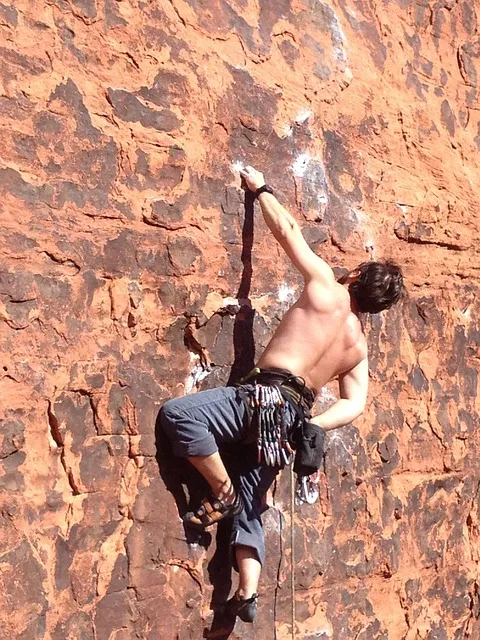
“Do not wish for an easy life. Wish for the strength to endure a difficult one.” — Bruce Lee
Lee didn’t theorize about difficulty. He trained to the point of physical collapse so regularly it was baseline. When a training injury ruptured a disc in his back and doctors said he’d never kick again, he came back stronger, because he’d been preparing for exactly that kind of crisis. The strength to endure is built in training, not in the moment of the test.
“It’s not whether you get knocked down, it’s whether you get up.” — Vince Lombardi
Lombardi won five NFL championships watching men get knocked down on every single play and understanding the differentiator wasn’t who avoided being hit but who stood up fastest. Getting knocked down is physics. Getting up is will. One of those isn’t controllable. The other entirely is.
“We suffer more often in imagination than in reality.” — Seneca
Most adversity happens in the head before it happens in the world, and often never reaches the world at all. A man exhausting himself fighting hypothetical disasters has nothing left for the actual ones. Seneca’s prescription was relentlessly practical: deal with what’s directly in front of you. The imaginary problems take care of themselves, which usually means disappearing entirely.
“Only a man who knows what it is like to be defeated can reach down to the bottom of his soul and come up with the extra ounce of power it takes to win when the match is even.” — Muhammad Ali
Ali lost to Joe Frazier at Madison Square Garden. Lost to Ken Norton, who broke his jaw. He knows what the canvas tastes like, what it smells like, the specific humiliation of being helped to your corner while the crowd cheers someone else. That knowledge gave him access to reserves an undefeated man can’t find because he doesn’t know they exist. Defeat’s an investment in future capacity.
“The ultimate measure of a man is not where he stands in moments of comfort and convenience, but where he stands at times of challenge and controversy.” — Martin Luther King Jr.
King delivered this while facing water cannons, police dogs, credible death threats. Comfort reveals nothing about character — anyone can be decent when the stakes are zero and the cost is nothing. The test comes when acting with integrity costs something immediate and personal. The only measurement telling the truth about who you are.
“I never saw a wild thing sorry for itself. A small bird will drop frozen dead from a bough without ever having felt sorry for itself.” — D.H. Lawrence
Self-pity’s a uniquely human invention, and a uniquely human tax. No animal in nature spends energy lamenting its conditions. It adapts or it dies. Strip self-pity from the operating system and you don’t become heartless — you become efficient. The energy that was going to the grievance goes to the solution instead. That reallocation is enormous.
“If you’re going through hell, keep going.” — Winston Churchill
The worst possible move in a crisis is stopping. Stopping in hell means staying in hell. Churchill’s logic is ruthlessly linear — the only exit is forward. Not backward to what it was before, not sideways into analysis, not downward into despair. Forward. The exit’s always ahead, never behind, and stopping only extends the stay.
“There is no education like adversity.” — Benjamin Disraeli
Disraeli became British Prime Minister twice despite being born Jewish in deeply anti-Semitic Victorian England. Mocked in Parliament on his first speech, dismissed by the aristocracy for decades, underestimated at every turn. Every rejection taught him something privilege never could have. By the time he reached power he’d been educated by decades of friction into a precision instrument. The classroom was miserable. The degree was priceless.
On Obstacles as Opportunity: Adversity Quotes on Finding the Blueprint in the Wreckage
Every significant reversal creates something most people don’t look for — a gap where something new can grow. The previous structure occupied space. When it collapses, the space opens. The men in this section weren’t optimists in the shallow sense. They were people who looked at genuine wreckage and started reading it as architecture.
“In the middle of difficulty lies opportunity.” — Albert Einstein
Einstein fled Nazi Germany with nothing but his mind and rebuilt his entire life in a foreign country at middle age. Not experienced philosophically. Experienced as survival, as navigating bureaucracy in a language barely spoken, as starting over. His observation wasn’t abstraction. It was a survival mechanism that turned out to be universally true.
“Kites rise highest against the wind, not with it.” — Winston Churchill
The resistance being cursed is also the mechanism of elevation. A kite in still air lies flat on the ground. Needs opposing force to climb. The headwind, the obstacle, the person who said no, the structure that fell apart — all of it’s generating the force required. The question’s whether it’s used correctly.
“I can be changed by what happens to me. But I refuse to be reduced by it.” — Maya Angelou
Angelou draws the line precisely. Change’s inevitable — adversity alters you. Not the question. The question’s whether the alteration makes you larger or smaller. Expansion or contraction. A man who insists on refusing reduction doesn’t pretend adversity didn’t happen. He decides what it means going forward. That decision’s available to everyone and exercised by very few.
“Our greatest glory is not in never falling, but in rising every time we fall.” — Confucius
The undefeated record isn’t the achievement. The recovery pattern is. A man who’s never fallen has never risked anything worth risking. A man who falls and rises, falls and rises, builds something the untested man can’t access — the genuine, hard-won knowledge that no fall’s final. That knowledge is structural. Changes how risk gets taken going forward.
“There is no better than adversity. Every defeat, every heartbreak, every loss, contains its own seed, its own lesson on how to improve your performance the next time.” — Malcolm X
Malcolm X was imprisoned at twenty. In a prison cell, he educated himself from near-illiteracy to one of the most powerful orators of the twentieth century. He didn’t emerge from prison in spite of the adversity. He emerged because of what he chose to extract from it. Every defeat contained a specific lesson about a specific inadequacy. He ran through the entire curriculum.
“He knows not his own strength who hath not met adversity.” — William Samuel Johnson
Everyone’s running on speculation about their own capacity until the test arrives. The untested man doesn’t know who he is — he knows who he thinks he is, a very different thing. Adversity converts speculation into knowledge. Survive something genuinely believed would destroy you, and you carry a data point no amount of self-reflection could have provided.
“The best way out is always through.” — Robert Frost
No shortcut around the hard thing. No clever workaround, no angle bypassing the direct confrontation. The shortest distance between the current position and the other side of the problem is a straight line directly through its center. Men who keep looking for a cleaner path extend their time in the difficulty. The men who walk straight through are the ones who come out the other side.
“Adversity is the first path to truth.” — Lord Byron
Comfort tells you plans are sound, relationships are solid, assumptions about yourself are accurate. Adversity strips those stories away. A brutal editor, but an honest one. The truths it reveals — about what you actually are under pressure, who actually shows up when things fall apart, what’s actually wanted badly enough to fight for — are worth more than any comfortable fiction that preceded them.
On Character Through Fire: Adversity Quotes on Who You Become

“Nearly all men can stand adversity, but if you want to test a man’s character, give him power.” — Abraham Lincoln
Lincoln inverts the standard assumption with such force it deserves a full stop. Most men can white-knuckle through difficulty. Adversity’s the easier test because it arrives without warning and leaves no choice — survive it or don’t. Power’s harder because it’s entirely optional. What a man does with the ability to do anything he wants, no external accountability, tells you everything adversity might not. A man forged by adversity before receiving power is the one who wields it without losing himself.
“Character cannot be developed in ease and quiet. Only through experience of trial and suffering can the soul be strengthened, ambition inspired, and success achieved.” — Helen Keller
Keller lost her sight and hearing before she was two. Couldn’t speak, couldn’t read, couldn’t connect with the world at all until Annie Sullivan broke through when Keller was seven. Her authority on this subject is unimpeachable. She built her entire character in the most extreme difficulty imaginable, no shortcuts, no alternative. And accomplished more than most people with full use of every sense ever will.
“Strength does not come from winning. Your struggles develop your strengths. When you go through hardships and decide not to surrender, that is strength.” — Arnold Schwarzenegger
Schwarzenegger grew up poor in post-war Austria, moved to America speaking broken English with almost no money, became the most decorated bodybuilder in history, then a movie star, then a governor. He knows the mechanism from the inside — strength isn’t built by winning. It’s built by continuing when winning seems genuinely out of reach, when the gap between where you are and where you need to be looks too large to cross, and you cross it anyway.
“Adversity introduces a man to himself.” — Albert Einstein
You meet your actual self when things fall apart — not the curated version presented to others, not the comfortable story told on ordinary days, but the version that shows up when the stakes are real and the margin for error is gone. That meeting’s uncomfortable. Also the most important meeting anyone will ever have, because nothing can be built on a version of self that’s never been verified.
“Fire is the test of gold; adversity, of strong men.” — Martha Graham
Graham revolutionized modern dance and performed into her seventies, working through arthritis, through industry prejudice, through the physical demolition of age. Her metaphor’s precise in the way metallurgical metaphors always are — gold’s verified by fire, not appearance. A man claiming strength without having been tested is making an unverified claim. Adversity is the assay. Not cruel. Just accurate.
“You may have to fight a battle more than once to win it.” — Margaret Thatcher
Thatcher won three consecutive elections as Britain’s first female Prime Minister, each requiring a different fight against a different configuration of opposition. She understood something impatient men miss — some battles don’t end with a single decisive victory. The opponent regroups. The problem resurfaces. The same ground must be held again. A man expecting a clean, permanent win is perpetually disappointed. A man expecting to fight again is perpetually prepared.
“The human capacity for burden is like bamboo — far more flexible than you’d ever believe at first glance.” — Jodi Picoult
The body and mind have reserves that only activate under extreme load. Never discovered in ordinary conditions. Not accessible from comfort. Adversity’s not cruelty — it’s the only mechanism for finding out how much can actually be carried, which turns out to be considerably more than believed before the test arrived.
On Never Breaking: Adversity Quotes on Perseverance When Stopping Feels Like Logic
There will be a moment in the adversity — almost certainly more than one — when stopping seems not just reasonable but correct. When the evidence genuinely supports the case for quitting. When the people around you would understand if the whole thing got walked away from. These quotes come from people who faced that exact moment and identified something worth more than relief.
“I was in the darkness, so darkness I became.” — David Goggins
Goggins didn’t escape his adversity. He absorbed it. Abused as a child, poor, obese, working a job he hated, held back by a learning disability not yet diagnosed — he stopped trying to escape the dark and started using it as fuel. He became the only member of the U.S. Armed Forces to complete Navy SEAL training, Army Ranger School, and Air Force Tactical Air Controller training. That transformation didn’t happen through positive thinking. It happened by picking up the worst things in his life and using them as weight to get stronger. The full framework for converting failure into fuel is worth reading in full.
“The brick walls are there for a reason. The brick walls are not there to keep us out. The brick walls are there to give us a chance to show how badly we want something.” — Randy Pausch
Pausch delivered his Last Lecture at Carnegie Mellon knowing he was dying of pancreatic cancer. Had months. Spent them explaining how to live. The wall’s a filter, not a barrier. It separates men who want something from men who want it badly enough to bleed for it. If it keeps you out, it wasn’t wanted enough. Not a failure of the wall. Honest information about the hunger.
“I am the master of my fate, I am the captain of my soul.” — William Ernest Henley
Henley wrote “Invictus” from a hospital bed where doctors had just amputated his leg below the knee to arrest the spread of tuberculosis. Twenty-five years old. He looked at the wreckage of his body and wrote a declaration of sovereignty over his own mind. Not the body — the body was damaged and nothing could be done about that. The mind. That declaration, from the worst possible position, is one of the most concentrated pieces of human defiance ever produced.
“It does not matter how slowly you go as long as you do not stop.” — Confucius
Speed’s a luxury. Direction’s optional once known. The only non-negotiable thing is forward motion. A man moving at one mile per hour toward where he needs to be will eventually arrive. A man who was moving at sixty and stopped never will. Adversity slows things down. The only catastrophic response is stopping entirely.
“Perseverance is not a long race; it is many short races one after the other.” — Walter Elliot
A man looking at the full distance of his struggle and trying to hold it all in mind at once gets crushed by the weight of it. A man looking only at the next step, then the next, then the next, arrives at the same destination without the psychological avalanche. Perseverance isn’t enduring a marathon. It’s surviving this hour, then the next one. Enough hours stacked correctly is a life.
“A hero is an ordinary individual who finds the strength to persevere and endure in spite of overwhelming obstacles.” — Christopher Reeve
Reeve played Superman on screen and then fell off a horse and was paralyzed from the neck down at forty-two. Spent the rest of his life raising hundreds of millions for spinal cord research, testifying before Congress, refusing to be defined by his condition. His definition of heroism has an unusual authority — not extraordinary ability. Ordinary people who refuse to quit when every rational argument says they should. That definition includes anyone reading it.
“Fall seven times, stand up eight.” — Japanese Proverb
The math is the entire message. One more standing than falling. That’s the complete formula. Not strategy, not talent, not favorable conditions — the arithmetic of refusing to let the total stands equal the total falls. Master this equation and you’re structurally unbeatable, because permanent beating only happens if you stay down. The proverb doesn’t promise no more falls. It just tells you what to do when they happen.
“I have not failed. I’ve just found 10,000 ways that won’t work.” — Thomas Edison
Edison reframed failure as data collection, which wasn’t a coping mechanism. It was a production strategy. Ten thousand failed experiments is a research database of extraordinary value. Every eliminated approach narrows the field. A man who quit after the first failure wasted the entire investment of the attempt. A man who runs ten thousand experiments and extracts a lesson from each eventually builds an asymmetric advantage that looks like genius from outside and relentless documentation from inside.
On the Forge of Hard Times: Adversity Quotes on What Gets Built in the Dark

“Hard times create strong men, strong men create good times, good times create weak men, and weak men create hard times.” — G. Michael Hopf
Hopf put this in a novel but it describes a historical pattern predating literature. The generation surviving crisis builds resilience enabling prosperity. The generation born into that prosperity is shielded from the crisis that built their parents. They develop softness. And the softness invites the next crisis. Understanding which phase of this cycle is currently active isn’t an abstract historical question. It’s operational information about what needs building — and most evidence suggests the answer is: the thing comfort’s currently preventing from being built.
“Tough times never last, but tough people do.” — Robert H. Schuller
A statement about duration. The crisis has an expiration date. You don’t. A man who understands this has a structural advantage in any protracted difficulty — knowing that simply outlasting the adversity wins by default. Not a race against the problem. Outlasting it. That reframe’s the difference between exhaustion and patience.
“Hardships often prepare ordinary people for an extraordinary destiny.” — C.S. Lewis
Lewis lost his mother at nine, was wounded in World War I, watched his wife die of cancer fifty years later. He knew hardship as a recurring feature of a life, not an exceptional interruption. His observation across all of it — difficulty isn’t random punishment. It’s preparation for something not yet visible. The hardship currently being endured may be the exact training required for what’s coming, which is exactly why the connection can’t be seen from inside it.
“He who sweats more in training bleeds less in war.” — Spartan Warrior Creed
The Spartans understood voluntary adversity — chosen difficulty, deliberate discomfort — is insurance against involuntary adversity. A man who trains hard when nobody’s watching is prepared when everyone’s watching. The cold shower, the early run, the hard conversation initiated before it becomes unavoidable — all of it is pre-payment on a debt that will eventually be collected. The question’s whether it’s paid on your terms or theirs. This is the core logic behind a structured discipline protocol and why deliberate cold exposure works as a training mechanism for discomfort tolerance.
“I’ve missed more than 9,000 shots in my career. I’ve lost almost 300 games. Twenty-six times I’ve been trusted to take the game-winning shot and missed. I’ve failed over and over and over again in my life. And that is why I succeed.” — Michael Jordan
Jordan’s failure résumé is more impressive than most people’s success résumé, and that’s not incidental. Each missed shot recalibrated his mechanics. Each loss sharpened his hunger. Each blown game-winner forced him to confront a specific inadequacy and work on it in isolation until it became a strength. A man who’s failed 9,000 times and extracted a lesson from each failure has been refined 9,000 times. That’s why he’s the greatest. The failures were the curriculum.
“Prosperity is a great teacher; adversity is a greater.” — William Hazlitt
Both teach. But the lesson burned in during a crisis has a permanence comfort-learned lessons rarely achieve. Whatever got learned during the hardest years is what still gets remembered. The lessons learned in the easiest years have mostly faded. Adversity teaches with a specificity and depth no comfortable experience can match, because the stakes during adversity are high enough that the brain refuses to forget.
“What lies behind us and what lies before us are tiny matters compared to what lies within us.” — Ralph Waldo Emerson
Emerson shifts the entire frame. The past isn’t the sentence. The future isn’t the sentence. What’s carried within — character built through difficulty, competence earned through failure, resilience developed through surviving things nobody wanted to survive — is the only resource that actually determines what gets built going forward. The external conditions are the setting. The internal resource is the story.
On the Warrior Mindset: Adversity Quotes on Self-Mastery Under Pressure
The warrior isn’t the man who feels no fear or pain. That man doesn’t exist, and if he did he’d be a liability in any real crisis, because he has no calibration for genuine danger. The warrior’s the man who’s developed a specific relationship with difficulty — he uses it rather than fleeing it, extracts from it rather than being consumed, maintains operational capacity through it rather than waiting for it to pass. These quotes come from people who understood that relationship from the inside.
“No man is free who is not master of himself.” — Epictetus
Epictetus was born a slave. His leg was broken by his master — deliberately, to see if he’d react — and Epictetus said calmly as it snapped: “You are going to break it.” Limped the rest of his life. From absolute external disadvantage, he taught the most powerful men in Rome how to think. His central insight — freedom has nothing to do with external conditions. A man controlled by his impulses, his fears, his need for approval, or his emotional reactivity is enslaved regardless of circumstances. Mastery of self is the only freedom that can’t be taken away. This connects directly to why emotional discipline is a foundational skill and why inner locus of control is the foundation everything else builds on.
“You must not only aim right, but draw the bow with all your might.” — Henry David Thoreau
Thoreau adds force to direction, a distinction most people underestimate. Knowing what to do is insufficient. Execution needs everything available. A man who aims perfectly but draws weakly misses just as completely as a man who draws hard and aims poorly. Adversity demands both precision and power. Half measures produce half results in comfortable conditions and catastrophic results in difficult ones.
“I don’t count my sit-ups. I only start counting when it starts hurting. That is when it really counts.” — Muhammad Ali
Ali understood the reps before the pain are warm-up. The actual training begins at the threshold of discomfort. Applies everywhere. In business, the real work begins when the easy wins are exhausted and the hard thing being avoided demands attention. In relationships, real work begins when the postponed conversation becomes unavoidable. The growth zone starts exactly where the comfort zone ends. Everything before the line is maintenance.
“I have been through some terrible things in my life, some of which actually happened.” — Mark Twain
Twain’s humor delivers one of the sharpest psychological observations on this list. Most of the adversity consuming energy never materialized. Full emotional intensity spent on scenarios existing exclusively in the imagination, sometimes for extended periods. A man who can distinguish actual adversity from anticipated adversity conserves enormous energy for the battles that arrive — because the ones that do arrive are hard enough without the ones invented in the weeks before they showed up.
“Suffering is the sole origin of consciousness.” — Fyodor Dostoevsky
Dostoevsky was sentenced to death at twenty-eight, stood before a firing squad, received a last-second reprieve, spent four years in a Siberian labor camp. That experience didn’t diminish him — it sharpened his awareness to an edge most writers never approach. His novels contain the most penetrating examination of human psychology in the literary canon, and none of them would exist without the suffering that made him genuinely conscious of what most people move through without ever fully registering. Suffering’s not the point. But it’s often the mechanism by which the point becomes visible.
“The spirit of a man is constructed out of his choices.” — Irvin D. Yalom
Yalom, one of the founding figures of existential psychotherapy, located identity in choice rather than circumstance. Not what happened. The sum of every choice made in response to what happened. Each choice during adversity is a structural brick. Choose repeatedly toward cowardice and a coward’s built. Choose repeatedly toward courage and something that holds gets built. The material’s the same for everyone. The architecture’s entirely up to whoever’s holding the tools. For the complete framework for building that architecture deliberately, the four-step process to becoming unbreakable is the place to start, alongside understanding how post-traumatic growth actually works at a biological level — because the transformation Yalom’s describing has a mechanism, and understanding it makes it faster to build.
The Pressure Library Protocol: How to Use These Adversity Quotes When It Actually Matters
Step 1: Identify your current adversity category. The sections above map to real adversity types. Facing a decision requiring courage despite fear? Rising to the Challenge section. In the middle of a setback that seems fatal but probably isn’t? The What Does Not Kill You section. Tempted to quit something worth finishing? Never Breaking. Sitting in genuinely hard conditions with no clear exit? The Forge of Hard Times. The adversity type determines which quotes have operational relevance right now. Reading all of them in crisis mode just collects quotes instead of using them.
Step 2: Select three quotes that create physical discomfort. Not quotes that are liked. Not quotes found interesting. Quotes that hit somewhere uncomfortable — calling out something being avoided, raising the stakes of current behavior, causing a shift in the seat. Those are the quotes doing work. The comfortable-feeling ones aren’t the ones needed.
Step 3: Write them by hand before anything digital in the morning. Not typed. Written. The motor act of writing engages different neural pathways than reading or typing. The physical slowness of handwriting forces individual word processing rather than scanning for familiar patterns. Three quotes, written by hand, before opening anything with a screen. Takes four minutes. The quotes stay differently than anything scrolled past.
Step 4: Use them as pattern interrupts during the adversity, not before it. The goal isn’t memorizing quotes for later recitation. The goal’s internalizing the principle so that when pressure spikes, the principle activates automatically. That internalization happens through repeated exposure during difficult moments, not review during calm ones. Catch yourself mid-crisis looking for an exit that doesn’t exist, and pull the specific quote written down that morning. Let it interrupt the spiral. Then decide what to do next.
Step 5: Replace the quotes every 30 days. A quote sitting on the bathroom mirror for six months has become furniture. Stopped being seen after week two. Rotate the Pressure Library on a monthly cycle, selecting new quotes based on the adversity currently being faced rather than what was faced last quarter. The library should be a live document, not a monument.
The research on why this works isn’t mysterious. A 2019 study published in Psychological Science found that self-distancing — viewing a difficult situation through a third-person or external frame — significantly reduces emotional flooding and improves decision quality under pressure. Adversity quotes from people who survived worse function as an extreme version of self-distancing. Reading Frankl on choosing his attitude in Auschwitz doesn’t make a bad quarter at work easier, but it reframes it against a calibration point that makes the emotional flooding much harder to sustain. Not denial. Perspective — and perspective is the first tool of any effective response to difficulty. The full framework for rewriting difficult moments in real time builds on this mechanism directly.
Adversity Quotes Will: Your Questions Answered About Adversity Quotes
What are the most powerful adversity quotes for when you feel like giving up?
The quotes carrying the most operational force during genuine crisis tend to be the ones with specific biographical context — not abstract wisdom, but words spoken or written from the middle of documented difficulty. Marcus Aurelius writing about the obstacle being the path while managing Rome’s existential decline. Viktor Frankl choosing his attitude in a concentration camp. Christopher Reeve defining heroism from a wheelchair after becoming paralyzed at forty-two. The biographical weight matters because it converts the quote from philosophy to proof: this person was actually in worse conditions and found the same exit currently being searched for. That proof does something abstract inspiration can’t. For a broader framework on building the mental capacity to use these tools under pressure, the four-step process to becoming unbreakable is the place to start.
Do adversity quotes actually help or are they just motivational wallpaper?
The distinction’s in how they’re used. A quote on a poster walked past daily without reading becomes invisible within two weeks. The same quote encountered deliberately during a specific crisis — pulled up because a specific type of difficulty is being faced and this person faced it too — functions as a cognitive anchor interrupting emotional flooding and opening space for decision-making. Research on self-distancing (Kross and Ayduk, University of Michigan, 2011) shows third-person framing during emotional difficulty significantly improves decision quality. Adversity quotes work through the same mechanism — imposing external perspective on an internal spiral. Not decoration. A tool. The problem’s that most people treat quotes as decoration. The Pressure Library protocol above is the difference.
Which philosophers wrote the most useful adversity quotes?
The Stoics — Marcus Aurelius, Seneca, Epictetus — produced the most consistently operational adversity philosophy in the Western tradition, for a specific reason: they wrote from position. Marcus Aurelius governed an empire while writing the Meditations as personal notes. Epictetus taught from a life that began in slavery. Seneca wrote most of his best work under threat of execution. Their quotes hold up because they were tested under the conditions that produced them. Viktor Frankl produced the most authoritative modern adversity writing for the same reason — Man’s Search for Meaning wasn’t theorized from safety. It was composed in a concentration camp. For deeper context on Stoic adversity philosophy, the full Marcus Aurelius collection and Seneca’s quotes on time and suffering are worth spending time with.
How is the Stockdale Paradox different from toxic positivity?
Toxic positivity is insisting everything will work out, delivered without confronting the specific evidence suggesting it might not. The Stockdale Paradox, named after Admiral James Stockdale after Jim Collins documented it in Good to Great, is the combination of two things feeling incompatible — absolute faith in ultimately prevailing, held simultaneously with unflinching confrontation of the brutally difficult current reality. The optimists in the POW camps who kept telling themselves they’d be home by Christmas broke first, because each deadline’s passage destroyed a piece of hope. Stockdale survived 2,714 days because he refused to lie to himself about the conditions while refusing to abandon conviction that the conditions would eventually change. Not positivity. A specific cognitive discipline. Also the frame that makes the adversity quotes in the “Never Breaking” section work — they don’t promise easy outcomes. They provide structural conviction in the face of documented difficulty.
What is the difference between resilience and just enduring adversity?
Endurance is surviving. Resilience is the capacity to survive and return to functional baseline, or better. Research from the American Psychological Association distinguishes the two through the concept of post-traumatic growth — the documented phenomenon where a significant percentage of trauma survivors emerge with greater psychological capacity than before, not despite processing it, but through processing it. Pure endurance produces people who survived something. Resilience produces people who were built by something. The difference’s in the extraction — was a lesson pulled from the difficulty, was a specific gap in capacity identified, was something built from what the crisis demolished? The quotes in this collection are useful to both projects, but the people who wrote them were almost universally operating in the second category. For the specific framework on converting adversity into post-traumatic growth rather than just survival, the full post-traumatic growth guide covers the mechanism and the research.
Why do adversity quotes from people who suffered more help with smaller problems?
Because proportionality’s a psychological phenomenon, not a logical one. The brain doesn’t automatically scale its distress response to match objective severity. It floods at full intensity for a missed deadline and for a terminal diagnosis, using the same neurological hardware at similar activation levels. Exposure to calibration points — Frankl in Auschwitz, Mandela in Robben Island, Stockdale in the Hanoi Hilton — doesn’t minimize the current difficulty. It repositions it within a scale the brain’s regulatory systems can actually work with. The flood becomes more manageable given evidence that people survived conditions making the current problem look different against a comparative backdrop. Not dismissal. The first tool of moving from reactive to responsive — interrupting the automatic distress response long enough for a deliberate choice about what to do next.
What adversity quotes work best for dealing with failure?
Edison’s 10,000 experiments frame is operationally the most useful for direct failure, because it converts the failure from evidence of inadequacy into data toward a solution. Jordan’s failure résumé works for failure in competitive contexts, reframing misses as calibration rather than verdict. Malcolm X’s insight that every defeat contains its own lesson is most useful for systemic failures — the business that didn’t survive, the relationship that ended, the career path that closed — because it forces an extraction question rather than a verdict. The adversity quotes least useful for failure are the ones about strength through suffering, because suffering isn’t primarily the issue with failure. The issue’s what gets concluded about yourself and what to do next. The complete framework for converting failure into momentum covers both the psychological and tactical dimensions of that question.
For deeper context on the Stoic framework underlying many of the most powerful quotes in this collection, 100 Marcus Aurelius Quotes on Discipline, Death, and What Matters is the place to go. For the kind of adversity that comes from pushing limits beyond what feels possible, 75 David Goggins Quotes That Will Destroy Your Excuses contains the most uncompromising collection of pressure-tested words available. And for building the systematic mental toughness infrastructure that makes these quotes operational rather than decorative, the full Resilient Wisdom mindset toolkit has the twelve tools that turn inspiration into architecture.