
What it actually is (and what the marketing version gets wrong)
“Anti-inflammatory diet” gets sold as a product category. A green juice. A supplement stack with a wolf or a mountain on the label. A 21-day “reset” that ends with a $200 grocery bill and nothing measurably different in the blood. None of that is what the term means, and most of it does not do what it claims.
What it actually refers to is a pattern of eating that shifts the balance between the signals in your body that trigger inflammation and the signals that resolve it. Inflammation itself is not the enemy. It is the repair crew — the response that shows up after a workout, a cut, a virus, and clears the damage so tissue can rebuild. The problem is not that inflammation exists. The problem is when it never turns off. Low-grade, chronic, background inflammation — sometimes called “inflammaging” in the research literature — sits quietly under joint pain, fatigue, mood disorders, cardiovascular disease, and a long list of conditions that get treated as separate problems when they often share this one upstream driver.
Diet is one lever on that system. Not the only one — sleep, stress load, body fat percentage, and movement all pull just as hard, sometimes harder. But food is the lever most people can adjust immediately, three times a day, without waiting on anyone.
Here is the myth-killing part. There is no single “inflammatory food” that ruins you and no single “anti-inflammatory food” that fixes you. A blueberry will not undo a diet built on seed-oil-fried snack food and sixty grams of added sugar a day. Turmeric will not offset a sedentary job and five hours of broken sleep.
The research supports patterns, not miracle ingredients — and almost every headline claiming otherwise is a supplement company’s press release wearing a lab coat.
The other myth: that this is primarily an elimination project. Cut gluten. Cut dairy. Cut nightshades. Cut, cut, cut, until what remains is six foods and a sense of moral superiority at dinner parties. For a small number of people with real, diagnosed sensitivities, targeted elimination matters. For most people the anti-inflammatory diet is closer to an addition project — more fiber, more omega-3s, more polyphenol-dense plants, more color — with a handful of specific things dialed down, not eliminated in a panic. That distinction changes everything about how the next thirty days should go.
The 20% that produces 80% of the result

- Fix the omega-6 to omega-3 ratio. This is the single biggest lever, and almost nobody starts here. Omega-6 fats (from soybean oil, corn oil, most fried and packaged food) and omega-3 fats (from fatty fish, walnuts, flax, algae oil) compete for the same enzymes in the body, and those enzymes largely determine whether the eicosanoids produced downstream promote or resolve inflammation. Ancestral diets ran somewhere around a 1:1 to 4:1 ratio of omega-6 to omega-3. The modern Western pattern runs 15:1 to 20:1, a shift researcher Artemis Simopoulos documented in a widely cited 2002 review — and that shift alone accounts for a meaningful chunk of the background inflammatory load most people are carrying without knowing it. The fix isn’t complicated: cut the seed-oil-fried food, add fatty fish two to three times a week or a fish oil supplement. Getting the dose and the quality of the product right matters more than people assume — cheap, oxidized fish oil does little — and the mechanism itself gets a full breakdown in the piece on omega-3 fatty acids and inflammatory pathways.
- Kill the ultra-processed and refined-sugar load. Not “sugar is evil.” Refined sugar and ultra-processed food drive inflammation through a few overlapping mechanisms — spiking blood glucose repeatedly, feeding advanced glycation end-products, and altering the gut microbiome in ways that increase intestinal permeability. That last one matters more than most beginners realize: a gut lining that’s leaking bacterial fragments into circulation keeps the immune system on a low simmer around the clock. This is the subtraction that pays back fastest, and it is also the one people fight hardest, because sugar is engineered to be fought for. The specific foods worth cutting first — not a full elimination list, a triage list — are covered in foods that cause inflammation: cut these first.
- Get fiber and polyphenols up, not just “vegetables” in the abstract. Fiber feeds the gut bacteria that produce short-chain fatty acids like butyrate, which has direct anti-inflammatory signaling in the colon and beyond. Most adults eat somewhere around fifteen grams of fiber a day against a functional target closer to thirty to forty. Polyphenols — the compounds that give berries, extra-virgin olive oil, and dark leafy greens their color and bitterness — work through a different but complementary route, generally by inhibiting the same COX enzymes that pharmaceutical anti-inflammatories target. Extra-virgin olive oil is worth calling out specifically: it contains a compound called oleocanthal that produces a stinging sensation at the back of the throat, and researchers only identified it because a food scientist named Gary Beauchamp noticed his own throat burned the same way it did after taking a liquid ibuprofen formula. That’s not folklore. It’s in Nature, 2005. A properly stocked plate does more of this work than any single “superfood,” and what belongs on it — ranked by strength of evidence, then expanded into the fuller list — is covered in the reading path at the end of this page.
Anyway. Back to the ranking.
4. Sleep, because it multiplies or wrecks everything above it. A single night of short or fragmented sleep raises circulating inflammatory markers measurably. A 2016 meta-analysis by Irwin, Olmstead, and Carroll in Biological Psychiatry pooled decades of data and found sleep disturbance consistently associated with elevated C-reactive protein and interleukin-6 — two of the standard inflammatory markers clinicians track. Diet cannot outrun five hours of broken sleep a night. It can barely keep pace with six.
5. Visceral fat and movement, further down the list only because most beginners reading a “where to start” page haven’t addressed the first four yet. Visceral fat is not passive storage — it is metabolically active tissue that secretes its own inflammatory cytokines, and the amount of it a person carries tracks inflammatory markers more tightly than total body weight does. Losing it is a downstream consequence of getting the first three levers right, more than a separate project. Regular moderate movement — walking, resistance training two or three times a week — adds an independent anti-inflammatory effect on top of that, through muscle tissue itself releasing anti-inflammatory signaling molecules during and after exercise. Chronic overtraining does the opposite, which is worth knowing before assuming more exercise is automatically better.
That’s the ranked list. Most people arrive wanting a supplement stack. The honest ranking puts supplements nowhere near the top five, because none of them outperform fixing the ratio and cutting the processed load — they just sit on top of it, sometimes well, sometimes uselessly.
Your first 30 days
This is a protocol, not a suggestion menu. Four weeks, escalating commitment, built so each week’s change survives into the next.
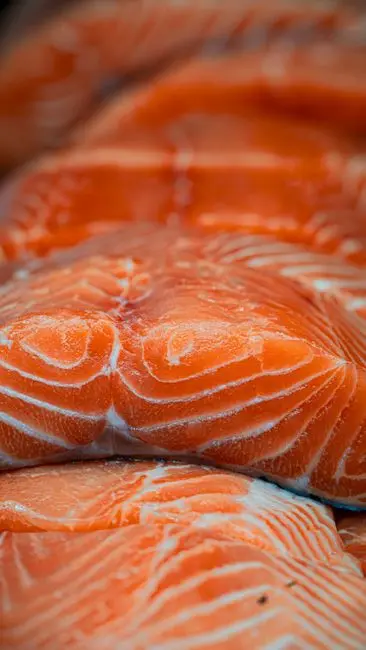
- Week 1 — Subtract before you add. Do not buy a single supplement this week. Instead: identify the three biggest sources of seed oil and refined sugar in a normal week — usually something in the fried-food-and-snack category, plus whatever sweetened drink is the daily default — and replace them, not eliminate them cold. Swap the fried lunch for a meal cooked in olive oil or butter. Swap one sugary drink a day for water or unsweetened tea. Add one serving of fatty fish this week: salmon, sardines, or mackerel. Sardines are the cheapest and most overlooked option on that list, and canned is fine. Track nothing except whether the swaps happened. That’s it for week one.
- Week 2 — Build the base plate. Every main meal now includes a fibrous vegetable and a source of color — berries, leafy greens, cruciferous vegetables, whatever is available and actually gets eaten. Add a second fatty-fish meal, bringing the week to two to three servings, or start a fish oil supplement in the 1 to 2 gram EPA-plus-DHA range with food — label-reading and quality checks are worth doing properly here, since a lot of the market is diluted or already oxidized. Breakfast is worth rebuilding specifically here, because it’s the meal most people default to cereal, pastry, or nothing — fifteen concrete options that fit the pattern are laid out in 15 anti-inflammatory breakfast ideas, and picking three to rotate solves the “what to actually eat” problem permanently.
- Week 3 through 4 — Lock the rhythm and add the sleep lever. By now the food pattern should require less decision-making. Attention shifts to sleep, because a diet change layered on five hours of fragmented sleep a night is fighting itself. Fix the load-bearing basics — consistent wake time, no screens in the final thirty minutes, a cooler room — before touching anything more advanced. The mechanism connecting sleep quality to inflammatory markers, and why this isn’t optional if the diet changes are meant to stick, is covered in the anti-inflammatory power of quality sleep. By day 30, most people are eating fish three times a week, have cut the worst processed-food sources to occasional rather than daily, and have a breakfast and base-plate pattern that runs on autopilot.
Take a guy we’ll call Marcus, 38, desk job, two kids, low-grade knee and lower-back pain he’d stopped mentioning to anyone because it felt like just how things were now. He started with the supplement — fish oil, turmeric capsules, the works — and skipped the food changes entirely, because the pills felt easier than rethinking lunch. Six weeks in, nothing had moved. Not the pain, not how he felt getting out of bed. He’d built the addition without doing the subtraction, which is the single most common way this fails. It wasn’t until he swapped the fried lunch and the daily energy drink — the two things he’d been avoiding looking at — that the knee started feeling different, and even then it took another month before it was consistent rather than “better some days.”
Mistakes that waste a year
Not that one. Not without a reason.
- Supplement-stacking on top of an unchanged diet. Marcus’s mistake, above, is the most common failure pattern seen in people who start this process. Turmeric, fish oil, quercetin, a green powder — five supplements, zero changed meals. Supplements can meaningfully support this process. They cannot substitute for it. The ratio has to move at the food level first, or the supplements are working against a headwind that outweighs them.
- Treating “whole foods” as automatically anti-inflammatory. A diet built entirely on whole-grain bread, whole-grain pasta, and fruit juice technically avoids processed food while still running a glucose load high enough to undercut the entire project. “Clean eating,” as a phrase, has come to mean almost nothing nutritionally. What matters is the actual composition of the plate, not the marketing language on the package it didn’t come in.
- Going too low-fat. Fear of fat, left over from decades of outdated dietary guidance, leads some beginners to cut fat intake broadly — including the good fats that are supposed to be increasing. Omega-3s are fats. Extra-virgin olive oil is fat. A diet that’s accidentally low-fat across the board undermines the exact mechanism this whole approach depends on.
And the quiet one: expecting a two-week timeline. Inflammatory markers move on a scale of weeks to months, not days. Beginners who don’t see dramatic change by day ten conclude the approach doesn’t work and quit right before the compounding effect would have shown up.
Underestimating alcohol. Beginners will rebuild breakfast, buy the fish oil, cut the fried lunch — and leave four or five drinks a week untouched, as if it sits outside the project entirely. It does not. Alcohol is processed by the liver in a way that produces oxidative stress and directly promotes the release of inflammatory cytokines, and it also degrades sleep architecture even when it feels like it helps someone fall asleep faster. None of this requires becoming a teetotaler. It requires actually counting the drinks instead of quietly exempting them from the accounting being done on everything else.
How to know it’s working
Short section. There isn’t much ambiguity here once the timeline is understood correctly.
Week 2: Subjective signals arrive first and are the least reliable but not nothing — less bloating, steadier energy in the afternoon, slightly better sleep onset. Don’t over-read these; they’re noisy.
Month 1: This is where joint stiffness, particularly morning stiffness, tends to shift if it’s going to. Skin inflammation — redness, breakouts tied to diet — often responds around here too. If bloodwork is being used to track progress, a high-sensitivity CRP (hs-CRP) test is the standard marker, and month one is early to retest but not too early for a baseline if one wasn’t taken at the start. What the test measures, how to request it, and how to read the result are covered in inflammation blood test: what to request.
On the numbers: the American Heart Association and CDC’s joint scientific statement puts hs-CRP under 1.0 mg/L as lower risk, 1.0 to 3.0 mg/L as average, and above 3.0 mg/L as higher risk. Movement from the top band into the middle band over eight to twelve weeks is a realistic, meaningful result. Movement from 3.0 to 0.5 in three weeks is not realistic, and a supplement claiming it should be treated with suspicion.
One caveat worth flagging before anyone retests and panics: hs-CRP is nonspecific. A cold, a minor injury, a rough night, even a hard workout the day before a blood draw can push the number up temporarily and have nothing to do with the diet pattern underneath it. A single reading taken during or right after an unrelated illness is close to meaningless. Test on an ordinary day, not a bad one.
Month 3: This is where the pattern either holds or reveals it was never fully adopted. Joint pain that responds usually keeps improving through month three rather than plateauing. For pain specifically tied to joints, a more targeted version of this whole approach exists and is worth reading once general improvement plateaus. Sleep quality, mood stability, and recovery from workouts are the other markers worth watching by this point — all of them downstream of the same reduced inflammatory load, none of them requiring a lab test to notice.
Your reading path
Start
- Anti-Inflammatory Diet Plan: Complete Protocol — the full structured version of the 30-day framework above, for anyone who wants the complete meal-by-meal build.
- Anti-Inflammatory Foods: The Definitive Ranked List — the ranked shopping-list version of the plate described above, ordered by strength of evidence.
Go Deeper
- Harnessing the Power of Anti-Inflammatory Foods to Heal from Within — the broader food list once the ranked shortlist needs expanding into real variety.
- Omega-3 Fish Oil: Dose, Quality, and When to Take — for anyone supplementing rather than eating fish three times a week, this covers dosing and how to avoid the low-quality, oxidized products that dominate the market.
- Joint Pain: Anti-Inflammatory Approach — the targeted version of this protocol for anyone whose main symptom is joint-specific rather than general.
Advanced
- Omega-3 Index: The Blood Test for Essential Fats — for tracking the ratio lever with an actual number instead of guessing from food logs.
- Inflammation: The Silent Instigator of Chronic Pain — the deep mechanism piece connecting chronic low-grade inflammation to pain conditions that get treated as unrelated.
Questions beginners ask
Is this the same as an elimination diet? No, and conflating the two is where most people go wrong early. An elimination diet removes suspected trigger foods to identify individual sensitivities. This is a pattern shift toward more fiber, more omega-3s, more polyphenol-rich plants, and less refined sugar and industrial seed oil. Elimination has its place for people with diagnosed intolerances. For most beginners it’s the wrong starting tool, and it tends to produce restrictive habits that don’t survive past month two.
Does this require going keto or low-carb? No. Some low-carb approaches reduce inflammatory load by cutting refined sugar and processed food, but the mechanism is the sugar reduction, not the carb restriction itself. Whole-food carbohydrate sources — vegetables, legumes, fruit — are not the target of this approach and cutting them provides no additional anti-inflammatory benefit over cutting refined sugar alone.
How much fish oil is actually enough? Most of the research supporting cardiovascular and inflammatory benefit clusters around 1 to 3 grams per day of combined EPA and DHA, the two active omega-3 fats — not total fish oil weight, which is usually diluted with other fats. Label reading matters more than most people expect here. The full dosing breakdown, including how to read a supplement label correctly, is in the fish oil guide linked above.
Can this actually replace anti-inflammatory medication? That’s a decision for the person weighing it against their own situation and history, and this page isn’t the place to make that call either way. What the research does support is that dietary pattern changes measurably shift inflammatory markers over weeks to months, through the mechanisms described above — the omega-6 to omega-3 ratio, gut permeability, polyphenol intake. Whether that’s sufficient on its own depends entirely on the individual case.
Why does the first week sometimes feel worse, not better? Cutting refined sugar and processed food abruptly can produce a short window of fatigue, headache, or irritability, similar to what’s reported with caffeine or sugar withdrawal, because the body has been running on a fast, volatile fuel source and is recalibrating to a steadier one. This usually resolves within five to seven days. Doing the swap gradually, as outlined in week one above, blunts this considerably compared to an all-at-once cutover.
Are anti-inflammatory supplements a waste of money? Not universally, but the ranking matters. Fish oil has the strongest evidence base of the common options. Turmeric’s active compound, curcumin, is poorly absorbed on its own — a 1998 study in Planta Medica found combining it with piperine, a compound in black pepper, increased bioavailability by roughly 2000 percent — so a curcumin supplement without piperine or a fat source is mostly wasted money. Quercetin has a smaller but real evidence base, covered in quercetin: anti-inflammatory flavonoid. None of them outperform the food-level changes; they sit on top of that foundation or they don’t do much at all.
What if nothing changes even after doing everything right? Give it the full timeline before concluding that — eight to twelve weeks minimum, not two. If markers genuinely aren’t moving after a real trial period, the driver may sit outside diet entirely: unmanaged stress load, an underlying condition, poor sleep that never actually got addressed despite good intentions. Diet is one lever among several, not a lever that overrides all the others by itself.
Does alcohol undo everything else on this list? Not entirely, but it works against the same mechanisms this whole approach is trying to shift — oxidative stress, gut permeability, sleep quality — and heavy or frequent intake can offset a meaningful share of the gains from diet changes elsewhere. Occasional, moderate drinking is a different picture than a nightly habit. The honest answer is dose-dependent, not zero-tolerance, and anyone tracking hs-CRP or joint symptoms without accounting for drinking is missing a variable that moves the numbers.