
Type “best diet for inflammation” into a search bar and the internet hands back eleven contradictory answers, most of them selling something. Cut the nightshades. Cut the seed oils. Cut everything except meat. Eat like it’s 1960s Crete. Somewhere in that noise is an actual, evidence-backed answer, and it isn’t one diet — it’s a short list of patterns that keep showing up in human trials, ranked by how much they’ve actually been tested rather than how well they trend.
This page ranks eight of them. Named, specific, with the mechanism and the caveat attached to each one.
How This Is Ranked
The order below is built on three things:
- Whether the pattern has been tested in actual human trials (not just cell cultures or mice, though those show up too, clearly labeled).
- How large and repeatable the effect on inflammatory markers has been.
- And whether an ordinary person can sustain it past three weeks.
A pattern that crushes C-reactive protein in a lab setting but nobody follows past January isn’t useful.
Popularity is not an input. Several of the diets ranked lowest here have enormous cultural momentum and almost no controlled human data behind the specific claim that they lower inflammation — that gets said plainly, not hedged around.
One honest limitation up front: inflammation research leans heavily on C-reactive protein (CRP) and interleukin-6 (IL-6) as stand-ins for “inflammation,” because they’re cheap to measure in blood. Reasonable proxies. Not the whole picture. A pattern that lowers CRP by a few tenths of a point in a six-month trial is not the same as a cure for anything. Keep that in mind through the whole list.
The Ranking
The Mediterranean pattern
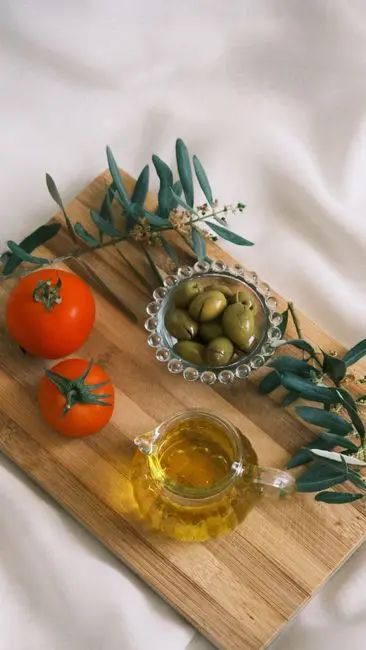
PREDIMED (Estruch et al., New England Journal of Medicine, 2013) randomized over 7,000 people at high cardiovascular risk to a Mediterranean diet supplemented with either extra-virgin olive oil or mixed nuts, versus a low-fat control diet, and found roughly a 30% relative reduction in major cardiovascular events. A large trial, a hard clinical endpoint, and blood-marker data all pointing the same direction — rare.
Follow-up analyses of blood drawn from participants reported lower circulating CRP and IL-6 in the Mediterranean-diet arms versus control.
Implementation is boring, which is the point: olive oil replaces butter and vegetable-oil blends, fish shows up two or three times a week, a legume-based meal replaces one meat-based meal, and vegetables stop being a garnish. See the anti-inflammatory diet plan for the full week-by-week build-out, and the ranked list of anti-inflammatory foods for what to prioritize inside it.
Who it suits: almost everyone, which is unusual for anything on a ranked list. Caveat: it’s a slow burn. Nobody feels different in four days on this one. Three months, maybe.
Cutting added sugar and lowering glycemic load
Mechanism first. Repeated blood sugar spikes drive advanced glycation end-products and push insulin higher, and elevated insulin is itself pro-inflammatory through several pathways — not just “sugar is bad,” there’s an actual chain of custody from the donut to the cytokine.
Liu et al. (American Journal of Clinical Nutrition, 2002), drawing on the Nurses’ Health Study cohort, found that women eating the highest-glycemic-load diets had meaningfully higher plasma CRP than women eating the lowest, independent of body weight. Observational, not a randomized trial, so causation is a step removed — but a large, well-characterized cohort, and the dose-response relationship is the kind of pattern that tends to hold up. For the mechanistic detail on how much sugar moves the needle, see sugar and inflammation: the dose that damages.
Practically: sodas, fruit juice, and refined-flour anything, not fruit itself — whole fruit comes with fiber that blunts the glycemic response. Who it suits: nearly everyone, and it stacks cleanly with the Mediterranean pattern above. Caveat: “added sugar” hides in places — bread, sauces, flavored yogurt — and most people underestimate intake by a wide margin until they read labels for a week.
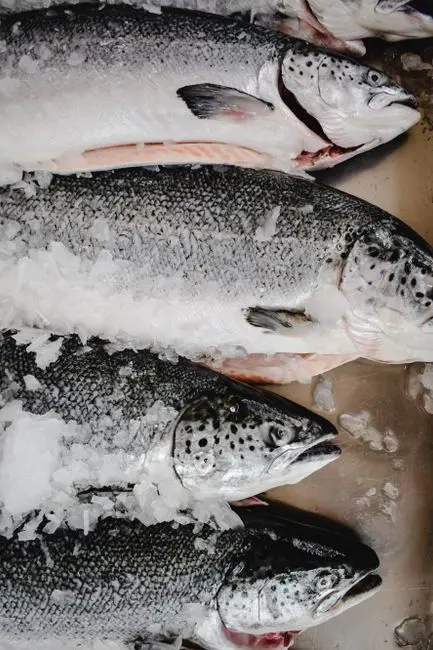
Oily fish, three times a week
EPA and DHA — the long-chain omega-3s concentrated in salmon, sardines, mackerel, and anchovies — compete with arachidonic acid for the same enzymes (COX and LOX) that build inflammatory eicosanoids, and get converted instead into less-inflammatory prostaglandins and into resolvins and protectins, a class of molecules whose entire job is actively shutting inflammation back down once it’s done its work. One of the better-mapped mechanisms in the whole field.
GISSI-Prevenzione (1999), a large Italian trial in over 11,000 heart attack survivors, found that omega-3 supplementation reduced all-cause mortality, with much of the benefit attributed to fewer fatal arrhythmias rather than inflammation directly — worth being honest about, since it’s often cited as pure anti-inflammatory evidence when the mechanism is broader. Still, downstream inflammatory marker studies with fish oil show consistent, if modest, reductions in CRP and triglycerides.
Three portions a week of the actual fish outperforms most supplement regimens for adherence and cost. Who it suits: everyone except the small percentage with a genuine fish allergy. Caveat: farmed versus wild varies in omega-3 content more than people assume, and supplement-form fish oil oxidizes fast once opened — rancid fish oil does nobody any favors.
Swapping industrial seed oils for olive oil or traditional fats
This is the most contested item on the list, and it deserves to be treated that way rather than flattened into a slogan either direction.
The mechanistic argument: linoleic acid, the dominant fat in soybean, corn, and cottonseed oil, is a precursor to arachidonic acid, which is a precursor to pro-inflammatory eicosanoids. More linoleic acid in, theoretically, more inflammatory raw material available. Clean story. The human trial data complicates it — a systematic review of randomized controlled trials (Johnson & Fritsche, Journal of the Academy of Nutrition and Dietetics, 2012) looking specifically at dietary linoleic acid and inflammatory markers found no consistent effect on CRP, IL-6, or TNF-alpha across the pooled trials. Meanwhile a reanalysis of recovered data from the Sydney Diet Heart Study (Ramsden et al., BMJ, 2013) found that replacing saturated fat with a linoleic-acid-rich safflower oil increased mortality despite lowering cholesterol — a hard-outcomes trial, not an inflammatory-marker one. The honest read: human RCT evidence that seed oils directly spike inflammation is thinner than the internet panic suggests, but the omega-6-to-omega-3 ratio argument has more going for it than the sound bite implies. The full breakdown is in seed oils and inflammation: fact vs internet panic.
Practical version: cook with olive oil or tallow instead of the vegetable-oil blend the grocery store defaults to, and don’t lose sleep over the seed oil hiding in a restaurant sauce. Who it suits: people already eating the Mediterranean pattern who want the next increment. Caveat: this is a smaller lever than sugar or the overall dietary pattern, and treating it as the main event is a mistake plenty of people make.
Turmeric and ginger at actual therapeutic doses
A pinch in a curry does essentially nothing measurable. That’s the gap between “spice” and “intervention,” and most of what gets marketed as anti-inflammatory spicing is really just seasoning.
Curcumin, the active compound in turmeric, has poor bioavailability on its own — most gets metabolized before it reaches circulation. Several meta-analyses pooling small randomized trials report meaningful drops in CRP at doses generally above 1,000 mg of curcumin a day, and consistently better results paired with piperine (black pepper extract) or delivered in a lipidated formulation that actually absorbs. Ginger has a smaller but overlapping body of trial evidence, mostly at 1–2 grams a day, largely in osteoarthritis populations. Both work partly through inhibiting the same NF-kB and COX-2 pathways plenty of anti-inflammatory drugs target — which is why dose matters so much here; sprinkle-level intake isn’t hitting those pathways in any meaningful way. More on dosing and which form actually absorbs is in anti-inflammatory spices: turmeric, ginger, and more.
Who it suits: people with joint-specific or gut-specific inflammatory complaints tend to report more from this than people using it as a general wellness add-on. Caveat: at high supplemental doses curcumin can interact with how the body handles iron and certain other compounds, so it’s a “know what’s being layered in” item, not a “throw it in with everything” item.
A whole-food low-carb pattern
Not carnivore, not zero-carb — vegetables, protein, and fat as the base, with refined carbohydrate and sugar minimized rather than eliminated to the gram. The mechanistic hook cited most is beta-hydroxybutyrate, a ketone body produced during carbohydrate restriction, shown in mouse macrophages to directly inhibit the NLRP3 inflammasome, a key driver of the inflammatory cascade (Youm et al., Nature Medicine, 2015). Mouse data. Worth saying plainly, since it gets cited constantly as if it settled the human question.
The human evidence is thinner and harder to isolate — several trials show CRP dropping on ketogenic or low-carb diets, but weight loss itself lowers CRP regardless of which diet produced it, and most low-carb trials also produce weight loss, muddying whether the carb restriction or the pounds lost did the work. Doesn’t make it useless. Makes the “ketosis lowers inflammation independent of weight” claim weaker than proponents usually present it. For the broader tradeoffs, see keto diet for weight loss: pros, cons, and who it’s for.
Who it suits: people who are also carrying excess weight, where the two effects compound usefully. Who should skip it: anyone with a history of disordered eating around restriction, and anyone who’s tried it twice already and found it unsustainable — a third attempt rarely goes differently.
The Autoimmune Protocol (AIP) elimination diet
The most restrictive pattern on this list that still has actual published human data behind it, which is exactly why it ranks here and not lower. AIP strips out grains, legumes, dairy, eggs, nightshades, nuts, seeds, and processed sugar for a period — usually four to eight weeks — then reintroduces them one at a time while tracking symptoms.
A small pilot published in Inflammatory Bowel Diseases (Konijeti et al., 2017) put patients with Crohn’s disease and ulcerative colitis on the protocol and found a meaningful proportion reached symptomatic remission by six weeks. Uncontrolled, no placebo arm, fifteen or so patients, symptom-based rather than purely biomarker-based. A real result. Not a large trial, and it shouldn’t be cited like one. The full protocol, including the reintroduction sequence, is at the autoimmune protocol diet: complete guide.
Who it suits: people with a diagnosed autoimmune or inflammatory bowel condition looking to identify personal trigger foods — closer to a diagnostic tool than a permanent lifestyle. Who should skip it: anyone without a specific inflammatory condition driving the decision. Eliminating eight food categories for eight weeks with no clear symptom to track is a lot of restriction for very little signal back.
Time-restricted eating
Compressing the eating window — commonly to eight hours a day — rather than changing what’s eaten within it. Sutton et al. (Cell Metabolism, 2018) put eight men with prediabetes on an early time-restricted eating schedule (6am–2pm) for five weeks and found improved insulin sensitivity, lower blood pressure, and reduced oxidative stress markers, even without weight loss. Small trial. Real, controlled, and one of the cleaner mechanistic studies on this list precisely because weight loss was ruled out as the explanation.
That result was for an eight-hour window, not a test of one meal a day, which is where a lot of people take this idea next because more restriction feels like more benefit. The OMAD diet compresses the window to roughly one hour and hasn’t been specifically tested for inflammation; it’s been associated, in the broader literature on very restricted windows, with a higher risk of nutrient shortfalls, gallstones, and muscle loss if protein isn’t deliberately protected. Ranked here for the moderate version — twelve or ten hours down to eight — not the extreme one.
Who it suits: people who already eat reasonably well but graze constantly, where compressing the window mostly just removes a lot of incidental snacking. Caveat: it’s a timing tool, not a food-quality tool. Compressing the window around ultra-processed food all day doesn’t do much.
What to Skip
The carnivore diet gets credited constantly in forums as an anti-inflammatory reset, and for some individuals with specific gut sensitivities, the extreme elimination probably does calm symptoms — removing dozens of food categories at once will always calm something, the same way removing every variable from an experiment calms the data. That’s not evidence the pattern is anti-inflammatory as a mechanism. There’s no controlled human trial testing carnivore against inflammatory markers, the diet removes the fiber and polyphenol sources that feed a healthy gut microbiome, and long-term data on an all-animal-product diet simply doesn’t exist yet. Worth trying as a short diagnostic elimination if something specific is being chased down. Not worth adopting on the strength of “inflammation” as the stated reason.
Blanket nightshade elimination — no tomatoes, peppers, eggplant, potatoes, ever — circulates hard on anti-inflammatory forums with almost no population-level evidence behind it. The theory rests on solanine and other glycoalkaloids; the nightshade evidence itself is much thinner than the elimination-diet communities treat it as. A genuine minority does seem to react specifically — worth tracking individually through reintroduction. Cutting them preemptively, for everyone, isn’t supported by anything close to what supports the Mediterranean pattern or added-sugar reduction above.
Also skip anything marketed as a single “anti-inflammatory superfood” doing the work of an entire dietary pattern by itself. Goji berries did not save anyone. Anyway. Back to what actually matters.
How to Actually Use This
Layer two, added once the base is genuinely running: oily fish three times a week, and the seed-oil swap in home cooking. Small moves. The anti-inflammatory breakfast ideas are a decent place to start applying this practically, since breakfast is usually where the worst habits are most automatic — a bowl of something sweet, on autopilot, before the brain’s even fully online.
Layer three is optional and situational: turmeric/ginger at real doses for joint-specific complaints, a whole-food low-carb shift for anyone also managing weight, time-restricted eating for the constant grazers. Pick based on the actual problem being solved, not because a list said so.
AIP sits by itself, last, used only if there’s a diagnosed inflammatory condition and the first two layers haven’t been enough after a real trial period — eight weeks minimum, not eight days. It’s a diagnostic tool, not a starting point. Running it first usually just produces a miserable eight weeks with no clean signal, because too many variables changed at once to know what helped.
For a reference on which specific foods reinforce or undercut all of this, the foods that cause inflammation list is the companion piece.
What Matters More Than Anything on This List
Take a guy we’ll call Dave. Forty-four, decent job, tried the whole list above roughly in order — cut the sugar, added the fish, even ran AIP for six weeks on a friend’s suggestion. Some improvement. Not much. Turned out he’d been averaging five and a half hours of sleep a night for years, work stress bleeding into a phone habit that kept him scrolling past midnight. Fixed the sleep — no dietary change, just a hard cutoff on screens and a consistent wake time — and the joint stiffness he’d been chasing with spice doses and elimination protocols improved more in six weeks of real sleep than in six months of food changes. Doesn’t mean the diet work was wasted. It was fighting a bigger variable the whole time.
Chronic psychological stress does something similar through cortisol dysregulation, and so does a sedentary pattern — regular movement is independently anti-inflammatory through mechanisms separate from weight loss. None of that is a reason to skip the dietary layer. It’s a reason to stop expecting the dietary layer to compensate for a nervous system running hot all day. Get those two things under control first, or in parallel, or the food changes above will look like they’re not working when the actual problem was never on the plate.
Common Questions
How long before an anti-inflammatory diet pattern actually shows a measurable difference?
Most of the trial data cited above measured outcomes at four to twelve weeks. Expecting a difference inside a week or two, from food alone, isn’t consistent with how these mechanisms play out.
Is it worth testing inflammatory markers before starting any of this?
A baseline hs-CRP panel, requested and tracked independently, gives an actual number to compare against later rather than relying on how joints feel on a given Tuesday. What to request on an inflammation blood test covers which markers are worth asking for.
Can more than one of these patterns be run at the same time?
Mediterranean pattern, sugar reduction, and the seed-oil swap stack cleanly and were basically designed to run together. Full AIP alongside a strict low-carb pattern at once is a lot of simultaneous restriction and makes it hard to tell which change produced which result — sequence those instead.
Is there a single “best” diet for inflammation, full stop?
No, and anyone selling one flat answer is selling something else too. The Mediterranean pattern has the deepest evidence base of anything ranked here, which is different from being the single correct answer for every person and every condition.
Does cutting gluten reduce inflammation for people without celiac disease?
The trial evidence for a general anti-inflammatory effect of gluten removal, outside celiac disease and diagnosed non-celiac gluten sensitivity, is weak. Some people report feeling better, which may reflect displacing refined wheat products with whole foods rather than gluten itself being the driver.
What’s the difference between this and a generic “eat clean” recommendation?
Specificity. Olive oil instead of soybean oil, three fish meals a week, sugar under a defined threshold, sleep protected — those either happened this week or didn’t, which is the entire reason a ranked, named list beats a vibe.
Which item on this list should someone start with if only one thing is going to change?
The sugar cut. No new shopping list, no new cooking skill, and the evidence for it is about as clean as anything ranked above.