
Most “best exercises for back pain” lists are copy-pasted from the same five stock photos: a woman doing a cat-cow, a man clutching his lumbar spine like it’s a wound. Nobody ranks anything. Nobody says why one movement earns a spot and another doesn’t. This one does — named movements, ordered by how well they hold up, with the honest weak points left in instead of edited out.
Two things before the list.
- First, “back pain” here means the ordinary mechanical kind — the stuff that shows up after too much sitting, a bad lift, or a spine that’s simply never been trained to tolerate load. It is not a stand-in for a fracture, an infection, or pain that arrived with fever or unexplained weight loss; those are a different animal and this page isn’t about them.
- Second, nothing below is a treatment. It’s a training list. Pick from it, test it on your own body, and let the response tell you what to keep.
How This Is Ranked
Ranking is based on three things, in order. First: how much of the evidence is human data rather than a mechanism that sounds good on paper. Second: how consistently the effect shows up across different populations and different researchers — not just one lab’s pet finding. Third: whether the thing is actually doable by an ordinary person with no equipment beyond a floor and maybe a kettlebell, because an exercise nobody will do is worth nothing.
Popularity is not an input. Instagram reach is not an input. A movement with 40 million views and zero mechanism behind it ranks below a boring isometric hold that’s been quietly validated for two decades. That’s on purpose.
It’s also worth saying plainly: the evidence base for back-pain exercise is not as clean as the evidence base for, say, a blood pressure drug. Chronic low back pain is famously heterogeneous — ten people with “the same” diagnosis can have ten different pain generators — so a lot of what follows is graded on biomechanical rationale plus consistent clinical observation rather than a stack of tightly controlled trials. Where the data is genuinely thin, that gets said outright instead of dressed up.
The Ranking
1. The McGill Big Three: curl-up, side plank, bird dog
Evidence here leans on McGill’s own clinical case-series work and decades of biomechanical modeling rather than a single knockout randomized trial — that’s worth saying honestly. But the consistency of the clinical observation, and the fact that the mechanism is unusually well understood, is why it sits at number one. Program it as three sets of short holds — six to ten seconds per rep, not long grinding holds — two or three times a week. It suits almost everyone starting from scratch. It does not suit someone who needs to feel like they did something; on paper, ninety seconds of holds looks like nothing.
2. The hip hinge pattern (Romanian deadlift, kettlebell deadlift)
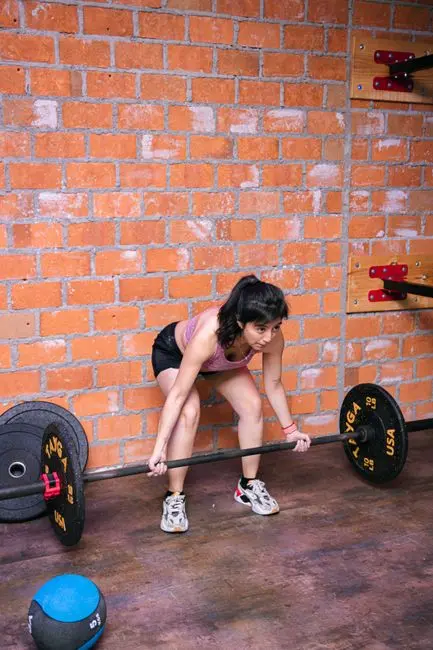
If the Big Three teaches the spine to stay still, the hinge teaches everything else to move instead — hips flexing and extending while the spine rides along in a neutral, unmoving position. That’s the actual skill missing in most people who tweak their back picking something off the floor: not weak muscles, a hip that won’t do its job, so the low back absorbs motion it was never built to absorb repeatedly. The hinge is one of the movements covered in the case for building a program around a small set of compound lifts, and for back pain specifically it doubles as both a diagnostic and a fix — if it’s taught well and still reproduces the pain, that’s useful information about what’s actually going on.
Start with a broomstick against the spine, no load, just grooving the pattern for a week. Then a kettlebell deadlift from the floor or an elevated surface, light, for sets of six to eight. Progress load slowly — weeks, not days. This suits anyone who wants durable, transferable strength rather than a purely rehabilitative exercise. It doesn’t suit someone in acute, sharp pain who can’t yet find neutral spine standing still; that person starts with the Big Three first and adds the hinge once the pattern is available pain-free.
3. Dead bug
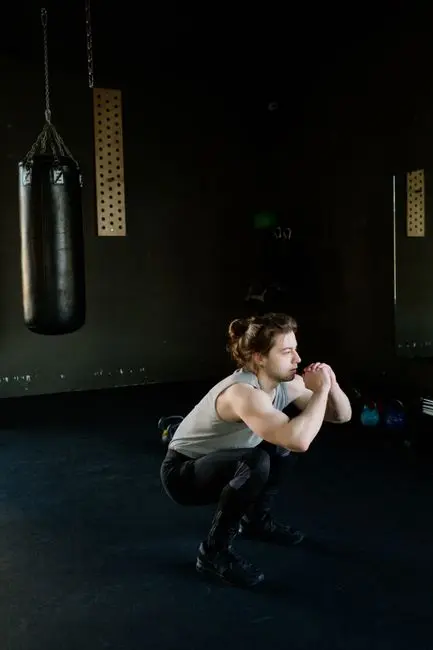
Dead bug is bird dog’s cousin, done lying down, and it’s a reasonable next step once the floor-based holds feel too easy. Back flat on the floor, opposite arm and leg lower toward the ground while the low back resists the urge to arch — same anti-extension skill as the Big Three, different starting position, lower floor-contact demand on the knees and shoulders. It’s popular in physical preparation circles for a simple reason: it’s very hard to cheat. The moment the low back lifts off the floor, the rep is over, which makes it self-correcting in a way a lot of “core” exercises aren’t.
Two or three sets of six to eight slow reps per side, breathing steadily rather than holding a breath through the movement — bracing without breath-holding is the actual target skill, and it’s the same diaphragm-first mechanism covered in the piece on how breathing mechanics shape whole-body posture. It suits beginners and anyone rebuilding confidence after a flare-up, because the range of motion is small and controllable. The caveat: it’s an entry-level drill. Someone already comfortable with heavier hinge work doesn’t need dead bug in the program; it’s a stepping stone, not a destination.
4. Glute bridge and hip thrust
A weak or lazy glute is a recurring finding in people with nonspecific low back pain — not the whole story, but a real piece of it, since a glute that won’t extend the hip properly forces the lumbar erectors and hamstrings to pick up slack they weren’t built to carry for long. The bridge (shoulders on the floor, hips drive up) and its harder cousin the hip thrust (shoulders elevated on a bench) both train hip extension directly, and glute activation research popularized by strength coach Bret Contreras has made a reasonable case that the hip thrust produces higher glute EMG output than a squat or deadlift at comparable loads.
Three sets of ten to twelve, squeezing at the top for a full second rather than bouncing through reps. It suits desk-bound people almost universally — hours of sitting is about as reliable a way to switch off glute function as anything — and it’s low-risk enough to do daily in the bridge variation. The honest limitation: it trains one muscle group’s contribution to a multi-factor problem.
Nobody fixes chronic back pain with glute bridges alone, and anyone who says otherwise is selling something.
5. Thoracic rotation and extension drills
The mid-back doesn’t get blamed enough. A stiff thoracic spine that won’t rotate or extend forces the lumbar spine — which was never designed for much rotation to begin with — to borrow motion it doesn’t have to spare, rep after rep, which is a large part of the case laid out in the argument for treating thoracic mobility as the missing link in a lot of low back complaints. Quadruped thoracic rotation (hand behind the head, rotating the elbow toward the ceiling from all fours) and the open-book stretch (lying on the side, rotating the top arm across the body) are the two simplest entries here, and both take under a minute.
Ten slow reps per side, daily if there’s time, since mobility work responds better to frequency than to intensity. It suits desk workers and anyone who spends the day in a hunched, rotation-starved position — which, this decade, is most people. The caveat is real: this is regional-interdependence reasoning, biomechanically sound but resting on less direct trial evidence than the first two items on this list. Treat it as a supporting player, not the headline act.
6. The prone press-up
Borrowed from the McKenzie method — a system built by the New Zealand physiotherapist Robin McKenzie after he stumbled, somewhat by accident, on the observation that repeated spinal extension eased pain in a specific subgroup of patients. Lying face down, pressing the upper body up on the arms while the hips stay on the floor, repeated for ten to fifteen reps: for people whose pain is worse sitting and eases standing or walking — the so-called extension-biased pattern — this can bring quick, sometimes dramatic relief within the same session.
That specificity is exactly why it ranks lower than the movements above it. It helps a real subgroup a lot and does nothing, or makes things worse, for people whose pattern runs the other way — pain that’s worse extending backward or worse standing than sitting. There’s no way to know which camp someone’s in without trying it and paying close attention to the result. Five slow reps is enough of a test. If it doesn’t ease things within that window, it’s not the right tool and repeating it harder won’t change that.
7. Loaded carries (farmer’s walk)
Pick up something heavy in each hand — kettlebells, dumbbells, a couple of filled water jugs if that’s what’s on hand — and walk. That’s the whole exercise, and it’s ranked last mainly because the direct evidence for carries specifically as a back-pain intervention is sparser than for the movements above, even though the biomechanical case is strong: carries train the spine and trunk to resist lateral flexion under real load while the rest of the body does something dynamic, which is closer to how backs actually get used outside a gym than any isolated core exercise is.
Two or three sets of thirty to forty-five seconds of walking, moderate load, upright posture, no leaning to one side. It suits anyone with a reasonably pain-free baseline who wants to build tolerance for real-world load — groceries, kids, moving furniture. It doesn’t suit someone in an acute flare; carries ask a lot of a spine that isn’t ready, and this is one to add last, once everything above it is comfortable. Anyone with known low bone density should treat load here conservatively too — a T-score in the osteoporotic range, the kind explained in how to read a DEXA scan’s T-score, is a reason to build carry load slowly rather than jumping straight to a heavy double-kettlebell walk.
What to Skip
The full sit-up, especially weighted, belongs on this list for the same reason the curl-up made the cut and the sit-up didn’t: repeated, loaded spinal flexion is a documented aggravator for a meaningful chunk of people with disc-related back pain. It’s not universally harmful — some people tolerate it fine — but there’s no upside for a beginner that the curl-up doesn’t already provide with less risk.
Lumbar extension machines, the kind bolted to a pad in most commercial gyms, get skipped for a related reason: they isolate the low back under load in a way that trains almost nothing functional and offers a decent amount of aggravation risk in exchange. If extension strength is the goal, the prone press-up and eventually a proper hinge pattern do the job with far less spine-specific loading.
Static stretching as a standalone fix — hamstring stretches, quad-pulls, the standard gym-class routine — gets overrated constantly. Tight hamstrings are frequently a symptom of a nervous system protecting an irritated spine, not the cause of the pain, and stretching the symptom while ignoring the driver is a way to feel better for twenty minutes and no longer.
And the ab wheel, appealing as it looks, is a poor beginner choice specifically for anyone whose pain worsens with flexion. It’s an advanced anti-extension exercise wearing a beginner’s costume; save it for later, if at all.
How to Actually Use This
Week two or three, add the hinge pattern, unloaded first. If it’s pain-free standing still and unloaded, add light load. This is also where dead bug or glute bridge can slot in as accessory work on non-hinge days — they’re low-fatigue enough to not interfere with recovery from anything else.
Thoracic rotation work can run daily from day one; it’s low-intensity enough that it doesn’t compete for recovery with anything else on this list. The prone press-up is the exception to sequencing — test it early, in isolation, because the result (helps a lot, does nothing, or makes things worse) tells you something diagnostic about which subgroup applies, and that information should shape everything that follows it.
Loaded carries come last, once the hinge is loaded comfortably and confidently. Give each new addition two to three weeks before judging it — not two days, and not six months either. Two to three weeks is long enough to see a trend and short enough that a bad fit doesn’t get dragged out. If something reliably makes pain worse rather than better across that window, drop it and move to the next item on the list rather than forcing it.
What Matters More Than Anything on This List
There’s also a nervous-system piece worth being blunt about. Chronic pain amplifies through stress, poor sleep, and a nervous system stuck in a defensive posture — a locked, shallow rib cage that never fully exhales, the follow-on mechanics covered in the second half of the breathing-and-posture mechanism — and that’s a real driver, not an excuse to skip the exercise list. But it cuts the other way too: reaching for a breathing app or a box-breathing routine as a standalone fix for a mechanical problem tends to fail for the same reason breathing exercises alone fail to resolve chronic anxiety — regulation helps the system that’s carrying the load, it doesn’t replace fixing the load itself. Sleep, daily walking volume, and simply moving more across an ordinary day will do more for a chronic ache than any single item ranked above, no matter how well-evidenced.
Common Questions
Is it normal for these to feel uncomfortable at first? Mild effort discomfort in the target muscles is normal — a burning side plank, a fatigued glute. Sharp, localized pain that gets worse across the set is not normal and is the signal to stop that exercise and try a different item on the list instead of pushing through it.
How long before the Big Three does anything noticeable? Most people notice a change in how confident the spine feels under light load within two to three weeks of consistent practice — not necessarily “pain gone,” but “trusts itself more.” Bigger changes in daily pain tend to track more with the total program than any single exercise.
Can any of this fix a herniated disc? No exercise reverses a disc herniation on imaging. What movements like the curl-up and the hinge pattern can do is reduce the load and irritation pattern that keeps a given herniation symptomatic, which for a lot of people is functionally what matters day to day.
Is walking enough on its own? Walking is close to free and genuinely useful — it’s rhythmic spinal loading with almost no downside — but it doesn’t specifically train the anti-extension, anti-rotation, and hip-hinge skills that the Big Three and hinge pattern target. Best used alongside the list, not instead of it.
What if bending forward is what hurts, not standing? That’s a flexion-intolerant pattern, and it’s the group the prone press-up is not built for. Lean harder on the Big Three, the hinge, and hip-dominant work, and be more cautious with anything that rounds the low back under load, including the curl-up if it reproduces symptoms.
Does any of this apply to sciatica or a pinched nerve? Sometimes, but the evidence gets thinner once pain runs down the leg past the knee. Directional-preference work like the press-up has the most documented relevance there; the rest of the list is reasonable to try but the honest expectation should be more modest and slower than for straightforward mechanical low back pain.
Do these replace strength training generally? No — they’re a starting foundation, not a ceiling. Once the patterns above feel solid and pain-free, the natural next step is broader compound strength work built around the same hinge and bracing skills, just loaded further and trained for their own sake rather than purely as rehab.