
How This Is Ranked
Seven movements. Not fifty. Most “beginner exercise” lists are actually equipment catalogs dressed up as advice — forty moves, no order, no reasoning, as if a new lifter is supposed to just absorb all of it through osmosis. That’s not a ranking. That’s a shrug with bullet points.
The criteria here are boring on purpose: how much a movement trains at once (a compound movement that loads several joints beats an isolation exercise that loads one, full stop, for a beginner), how forgiving the technical learning curve is, how safely it can be loaded on day one, and how directly it transfers to picking things up, carrying things, and not falling over — which is what strength is actually for. Popularity is not an input. Neither is what’s trending on a training app this month.
One honest caveat before the list starts: “best” here means best for someone with roughly zero training history walking into a gym for the first few months, not best for a powerlifter three years deep or a 62-year-old with a fused L4-L5. Context changes the ranking. This is the general case.
The Ranking
Goblet Squat
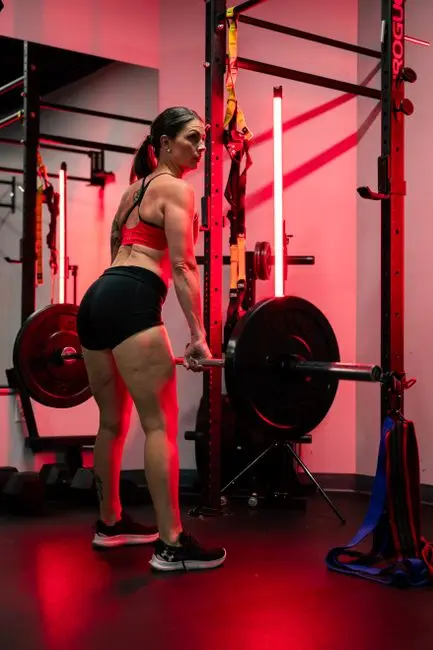
It trains the squat pattern itself — hip and knee flexion under load, ankle mobility, core bracing — which underlies basically every lower-body compound movement that comes after it. Start with just the dumbbell, twelve to fifteen reps for two or three sets, and add weight only once the depth and the upright torso are both solid, not before. Rushing load before the pattern is set is the single most common way this goes sideways; the fix is almost always to go lighter and get the depth back, not to grind through with worse form. It suits almost everyone starting from zero. It does not suit someone who already squats 200 pounds on a barbell — at that point the loading ceiling of a single dumbbell becomes the limiting factor, and it’s time to move to a barbell or trap-bar version.
Trap-Bar Deadlift
The trap bar (also called a hex bar) puts the lifter inside the load rather than in front of it, which changes the mechanics enough that the movement feels — and is — considerably more forgiving than a conventional barbell deadlift off the floor. The center of mass sits closer to the body’s own center of gravity, torso angle is more upright, and the learning curve for hip hinge mechanics is shorter. For a beginner, that’s not a minor convenience. It’s the difference between a lift that can be loaded meaningfully in week one and one that needs weeks of coaching before it’s safe to add weight.
The pattern itself — hips back, spine neutral, drive through the floor — is the highest-transfer movement on this list for anything involving picking something up off the ground, which is to say most of daily life eventually. Start light: an empty trap bar or just the handles, five sets of five, focusing entirely on keeping the back flat and the hips moving before the knees do. Add weight in small increments, and only once fifteen or so reps across a session feel clean, not grinding. It suits nearly every beginner with functional hips and a lower back that isn’t currently flared up. It does not suit someone mid-flare of an existing back issue — that’s a case for regressing to a hip hinge pattern first, covered below, before loading a full pull from the floor.
Push-Up
No equipment, no excuse, and still one of the most underrated movements a beginner can do — which is a strange sentence to write about something this common, but most people do it badly and never find out. Chest, shoulders, triceps, and a genuinely demanding core stabilization requirement, because unlike a bench press, nothing is holding the hips up except the lifter. That’s the part people miss: a sagging push-up isn’t a chest problem, it’s usually a core problem.
It’s infinitely scalable, which matters more for a true beginner than almost anything else on this list. Elevated hands against a bench or box for someone who can’t yet do a floor push-up with full range, then knees, then full push-ups, then eventually feet elevated or weighted for someone who’s outgrown bodyweight entirely. Three sets to a rep count that’s hard but clean — not the last ugly rep where the hips pike up — is the right starting target, whatever that number happens to be. It suits everyone, which is rare for anything on a ranked list. The caveat: shoulder pain during the bottom position is common in beginners with limited shoulder mobility, and the fix is almost always range of motion, not pushing through it.
Stopping a few inches short of the floor until mobility catches up beats grinding to full depth and aggravating something.
Row (Dumbbell or Cable)
The unglamorous counterweight to the push-up, and the exercise beginners skip most often. Most new lifters gravitate toward what they can see in a mirror — chest, arms, shoulders — and the entire back musculature quietly falls behind. Six months later the posture shows it: shoulders rolled forward, a pressing strength badly outpacing pulling strength.
A single-arm dumbbell row braced on a bench, or a seated cable row, trains the lats, rhomboids, and rear delts, and it’s one of the lower-risk exercises to load early because the range of motion is short and the joint stress is minimal compared to a pressing movement. Ten to twelve reps for three sets, focused on pulling with the elbow rather than the hand, and a brief pause at the top rather than a fast bounce. It suits everyone, no real exceptions. The honest caveat is more about programming than the movement itself: it’s frequently under-dosed relative to pushing work, so the fix isn’t technique, it’s volume — more rowing than the instinct suggests, roughly matched to however much pressing is happening.
Overhead Press
Standing, bar or dumbbells from shoulder height to a locked-out arm overhead. It ranks lower than the movements above it for a specific reason: shoulder mobility requirements are higher, and a beginner with a stiff thoracic spine or limited overhead range will compensate by arching the lower back, which is where the injuries on this lift tend to come from — not the shoulder itself, usually, but the low back taking load it wasn’t meant to take.
Take a guy we’ll call Marcus, three months into training, who’d built decent bench strength and assumed the overhead press would follow the same trajectory. It didn’t — his ribs flared and his lower back arched to compensate for stiff shoulders, and he pressed through a mild back ache for two weeks before finally dropping to dumbbells and spending three sessions on nothing but overhead mobility. Not a disaster. Just a detour that didn’t need to happen.
Dumbbells are the more forgiving starting tool than a barbell, since each arm can find its own path. Five sets of five to eight reps, light, with a hard rule: if the lower back arches to get the weight up, the weight is too heavy or the shoulders aren’t ready yet — regress before adding load. It suits beginners with reasonable shoulder mobility. It does not suit someone with current shoulder impingement symptoms; that’s a case to build pressing strength through other angles first and revisit this movement once the mobility is actually there, not before.
Farmer’s Carry
Pick up something heavy in each hand, walk. That’s the entire technical demand, and it’s exactly why it’s ranked this high despite being almost embarrassingly simple: there’s no learning curve to speak of, which makes it one of the safest ways to add serious loaded work to a beginner’s week. Grip strength, trap and shoulder stability, core bracing under load, and a carryover to actual daily function that most gym exercises can’t touch — carrying groceries, luggage, a kid, whatever the week throws at someone.
Two dumbbells or kettlebells, heavy enough that forty to sixty seconds of walking is genuinely hard to hold onto, for three or four sets. That’s the whole protocol. It suits nearly everyone, with one real exception: anyone with a current grip or wrist injury, where the loaded hang position will aggravate it before anything else does. The honest limitation of this exercise is that it’s a poor primary strength builder on its own — it supplements the six movements above it, it doesn’t replace them.
Hip Hinge (Romanian Deadlift / Kettlebell Deadlift)
Ranked last not because it’s a weak movement — it isn’t — but because it has the steepest technical learning curve on this list relative to how it’s usually taught, and beginners get hurt on it more from rushed coaching than from the movement itself. The hinge is hips pushing back while the spine stays neutral, weight staying close to the legs, knees only softly bent. It trains the entire posterior chain: hamstrings, glutes, spinal erectors, and it’s the foundation the trap-bar deadlift above eventually builds on.
A single kettlebell or two light dumbbells, three sets of eight to ten, moving slowly enough to feel the hamstrings stretch on the way down and stopping well short of full lockback flexibility the first few sessions. It suits beginners who’ve already got the hip hinge pattern reasonably grooved from the trap-bar work above — it’s often taught as a follow-on, not a starting point. It does not suit someone who feels sharp, shooting pain down the back of a leg during the movement rather than a stretch across the hamstrings; that’s a different problem than a training problem, and it’s worth knowing that piriformis syndrome can mimic sciatica closely enough that a beginner will assume it’s “just” tight hamstrings and keep loading a hinge that’s aggravating something else entirely. Pain that runs down the leg, not just across the back of it, is the signal to back off the loading and figure out what’s actually going on before adding more weight.
What to Skip
The leg press machine gets recommended to beginners constantly, mostly because it feels safe — the back is supported, the path is fixed, nothing can really go wrong. Which is true, and also exactly the problem. It trains almost no stabilization, teaches nothing about bracing or balance, and beginners who lean on it heavily tend to struggle when they eventually try a free-standing squat pattern, because the machine never asked their core to do anything. Fine as an occasional accessory later. Not a foundation.
The Smith machine version of anything — squat, press, bench — has the same problem in a different shape. The bar moves on a fixed vertical track, which removes the small stabilizing adjustments a barbell or dumbbell forces the body to make on every rep. Those small adjustments are most of what makes a free-weight movement useful for a beginner in the first place.
Isolation work — bicep curls, tricep pushdowns, lateral raises — isn’t wrong, exactly. It’s just premature. Chasing arm definition before the squat, hinge, press, and row patterns are solid is optimizing the 5% that shows in a mirror while skipping the 95% that builds a base. Time enough for isolation work later.
And cold plunging, sauna cycling, contrast showers — the whole recovery-optimization stack in every fitness feed now — belongs nowhere near a beginner’s first few months. Not because a cold plunge protocol is bad information. Recovery tools are for people already training hard enough to need recovering from, and three sessions a week of the movements above isn’t that yet.
How to Actually Use This
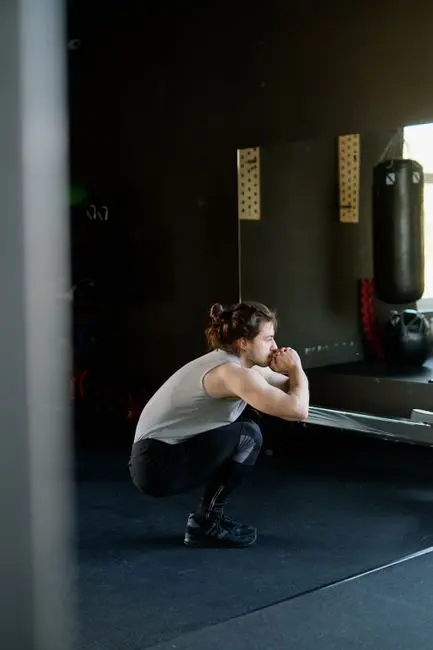
Progression matters more than exercise selection, which is a strange thing to admit on a page that’s mostly about exercise selection, but it’s true. Adding a small amount of weight or a rep or two most sessions — the actual mechanism behind how muscles adapt to training over time — will do more for a beginner over six months than swapping exercises every two weeks chasing novelty. The instinct to keep changing the program is usually boredom dressed up as strategy. Resist it for the first several months at least.
There’s a genuine and ongoing argument in the training world about whether adding more sets or adding more weight is the better lever to pull once the basics are in place — the short version, covered in more depth in the piece on progressive overload versus volume training, is that both work, and a beginner doesn’t need to resolve the debate before starting. Add weight when the reps feel easy. Add sets when time allows and recovery is good. That’s most of it.
Anyway. On coffee before training — caffeine reliably improves output on strength work, and the timing and dosing that actually moves the needle is worth getting right, but it’s a minor lever next to sleep and progression. Back to the program.
Test each movement for at least three or four weeks before judging whether it’s “working.” Most beginner frustration comes from abandoning a perfectly good exercise in week two because progress felt slow, when three or four weeks is closer to the minimum window where a pattern actually grooves.
What Matters More Than Anything on This List
Nutrition sits right behind it — just enough protein to support the tissue being trained, and enough total food to not be running a chronic deficit while trying to build strength. Iron status gets overlooked constantly, especially in beginners who’ve cut back on red meat or who menstruate; low iron shows up as unexplained fatigue and stalled progress long before it looks like an obvious symptom, and the mechanics of why iron matters for training capacity are worth understanding rather than guessing at.
Magnesium comes up constantly around muscle cramps and recovery quality, and while the evidence for it fixing performance directly is more modest than the supplement marketing suggests, the different forms and what they’re actually good for is worth knowing before assuming a random bottle off a shelf is doing anything useful.
And underneath all of it — sleep, food, the training itself — is the boring truth that consistency beats optimization every time. A book that gets cited constantly in performance circles, and for good reason, lays out roughly this same argument at length; the core ideas on stress, recovery, and sustainable output apply just as much to a beginner doing goblet squats three times a week as to anyone chasing elite performance. Nobody needs a perfect program. They need one they’ll actually do for six months without quitting in week three because a different program looked more interesting on a Tuesday.
Common Questions
Do these seven exercises need to be done in every single session? No. A reasonable split alternates — squat and press one day, hinge and row the next, both with carries tacked on — rather than cramming all seven into every workout. What matters is that each pattern gets trained at least once or twice a week, consistently, not that every session is identical.
How much weight should a true beginner start with? Less than feels necessary. The goal in the first two to three weeks is grooving the pattern, not testing a ceiling. A weight that allows twelve to fifteen clean reps with a rep or two left in reserve is the right starting point for almost every movement on this list, then progress from there.
Every time.
Is bodyweight training enough, or is added weight necessary eventually? Bodyweight work — push-ups especially — can carry a beginner further than most people expect, sometimes months. Eventually the body adapts and bodyweight alone stops providing enough of a challenge to keep improving, at which point external load (dumbbells, a barbell, resistance bands) becomes necessary to keep progressing. That point arrives sooner for some movements — squats especially — than others.
What about cardio — does it belong in a beginner strength routine at all? Some, yes, but it doesn’t need to be complicated in the first few months. A structured approach using heart rate training zones becomes genuinely useful once there’s a base of strength and conditioning to build on, but a true beginner gets more out of walking regularly than trying to zone-train from day one. Strength foundation first, precision cardio programming later.
Is soreness after these workouts a sign they’re “working”? Loosely, in the first few weeks, yes. It’s a poor long-term signal, though — soreness fades as the body adapts to a given movement even as strength keeps climbing. Chasing it as a proxy for progress usually leads to unnecessary exercise-hopping. The bar going up is the actual signal. Soreness is noise.
What’s a realistic timeline before someone sees actual strength gains? Four to six weeks for the numbers on the bar to move meaningfully, though the pattern itself often feels more controlled within two. Most early strength gains in a beginner are neurological — the nervous system getting more efficient at recruiting muscle that’s already there — before much tissue growth has happened. Not a plateau. Just how the sequence works.
Do these movements need a gym, or can they be done at home? A pair of adjustable dumbbells covers five of the seven — goblet squat, row, overhead press, farmer’s carry, and the push-up needs nothing at all. The trap-bar deadlift is the one genuine gym-equipment requirement, though a heavy dumbbell hinge is a reasonable substitute until a trap bar is available.