
Forty doesn’t announce itself. Then one day a guy who used to play pickup basketball with zero warm-up throws his back out putting on a sock. Nothing dramatic happened. That’s the part nobody warns you about — the decline isn’t an event, it’s a slope, and the exercises that used to be optional become the thing standing between “still capable” and “starting to fall apart.”
Muscle mass doesn’t wait for a diagnosis to start disappearing. It erodes gradually through the thirties and forties, then faster after that, and grip strength, balance, and single-leg stability go with it — quietly, until a curb or an icy step turns into a problem. The exercises below are ranked with that in mind. Not “what burns the most calories.” Not “what’s trending.” What actually preserves strength, bone density, and the ability to get off the floor without narrating it.
How This Is Ranked
The order below is based on three things: how well the movement transfers to real-world strength (carrying, lifting, catching yourself when you trip), how forgiving it is on joints that have twenty or thirty extra years of wear on them, and how much bang it delivers for a limited weekly training budget. Popularity is not an input. Neither is what’s easy to film for a highlight reel.
These are, almost without exception, compound movements — multiple joints, multiple muscle groups, real load. If the mechanics of why compound lifts outperform isolation work are unfamiliar, the breakdown of the six compound movements worth building a program around covers that ground in more depth than there’s room for here. This page assumes that groundwork and moves straight to ranking specific exercises against it.
One more thing, stated plainly: none of this requires youth, a gym membership with a juice bar, or joints that still feel twenty-five. It requires a barbell, dumbbells, or a kettlebell, and a willingness to start lighter than pride wants to.
The Ranking
1. Trap-Bar Deadlift
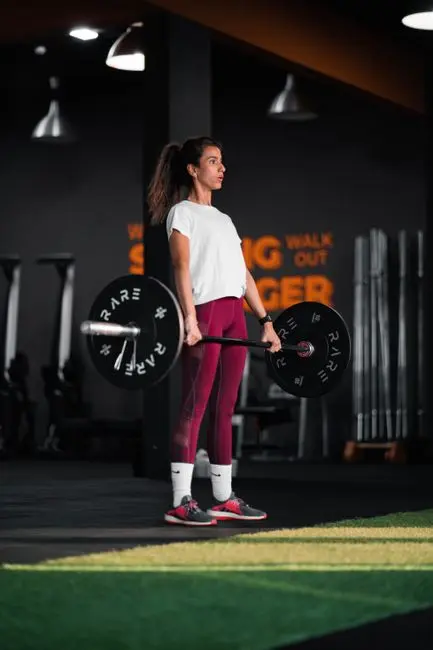
Compared to a standard barbell deadlift, the trap bar’s neutral grip and centered load path put less shear stress on the lumbar spine, which matters more the longer a spine has been in use. It also lets the torso stay more upright, so the hip and knee angles feel less like a compromise for anyone carrying stiffness from an old injury.
Program it once or twice a week, 3 to 5 sets of 5 to 8 reps, and add weight slowly — this is not the lift to chase a personal record on with sloppy form. Rest 2 to 3 minutes between heavy sets; the nervous system needs it. It suits almost everyone, from complete beginners to lifters returning after years off. The honest caveat: grip usually fails before the legs and back do, so straps become tempting fast. Use them sparingly, if at all — grip strength itself is one of the things this list is trying to preserve.
2. Bulgarian Split Squat
Take a guy we’ll call Danny, 46, who could still grind out a heavy barbell squat but noticed his left knee buckled slightly every time he stepped off a curb wrong. Bilateral squats had let a strength imbalance hide for years. Single-leg work doesn’t allow that. The Bulgarian split squat — rear foot elevated on a bench, working leg doing nearly all the load-bearing — exposes weak, unstable hips and forces them to catch up.
It trains the quads and glutes hard, but the real value past 40 is balance and single-leg strength, which correlate directly with fall risk later in life. This isn’t abstract. Most serious injuries in older adults start with a trip, not a collision.
Two to three sets of 8 to 12 reps per leg, once or twice weekly, holding a dumbbell in each hand or a single goblet-style. Danny started with bodyweight only for three weeks before adding load — his knee wobble didn’t fully resolve, but it stopped getting worse, and that was the actual win. It suits anyone with functioning hips and ankles; it’s a poor first choice for someone with acute knee pain, since the deep front-leg bend loads the knee joint significantly and a beginner without balance can lose the rep entirely.
3. Loaded Carry (Farmer’s Carry)
Pick up something heavy in each hand and walk. That’s it. That’s the whole exercise, and it’s absurd how much it does — grip, trapezius, core bracing, posture, cardiovascular demand, all at once, with almost no technical learning curve and almost no injury risk.
Grip strength deserves its own paragraph, because it’s not just a gym metric. The 2015 PURE study, published in The Lancet and covering more than 100,000 adults across 17 countries, found that grip strength predicted all-cause mortality and cardiovascular death more reliably than systolic blood pressure did. That’s not a small finding. It’s also not a guarantee that carrying heavy dumbbells extends anyone’s life — correlation, not a prescription — but grip strength as a marker of overall physical resilience is about as well-supported as anything in this space.
Pick up two heavy dumbbells or kettlebells — heavy enough that 40 to 60 seconds of walking is genuinely hard — and go, 3 to 4 sets, resting a couple minutes between. It’s suitable for essentially anyone, including people easing back into training after time off, since the load is self-limiting: grip gives out before anything else usually gets hurt. The one caveat is posture.
Letting the shoulders round forward under load defeats the purpose and can aggravate the neck; walk tall, or don’t walk at all.
4. Weighted Chin-Up
The chin-up (or, for most men returning to training after 40, the assisted or negative-only chin-up first) builds the lats, biceps, and — critically — the muscles around the shoulder blade that keep the shoulder joint stable during everyday overhead reaching. It’s one of the few exercises that directly counters the forward-rounded, desk-hunched posture that accumulates after two decades of sitting.
Muscle-building signal here runs through the same pathway resistance training generally relies on — the mTOR pathway that governs how the body responds to mechanical tension and protein intake, and which becomes more sluggish to trigger with age, meaning the stimulus has to be deliberate rather than incidental.
Three sets, as many controlled reps as possible, twice a week, adding a weight belt once bodyweight reps exceed 10 to 12 cleanly. It suits anyone who can hang from a bar without shoulder pain. It does not suit someone with an unaddressed rotator cuff issue — the overhead pulling position can aggravate an already irritated shoulder, and this is one case where starting with rows instead, and building up, is the smarter sequencing.
5. Landmine Press
Anchor a barbell in a landmine attachment (or a corner) and press it up and across the body at an angle, one arm at a time. It trains the shoulders and chest through a pressing pattern that avoids the end-range overhead position where a lot of older shoulders start complaining.
This matters more than it sounds like it should. Flat barbell bench pressing puts the shoulder into a vulnerable, externally rotated position under heavy load — fine for a 25-year-old with clean joints, less fine for someone carrying old impingement or a rotator cuff that’s never quite felt right since a shoulder injury a decade back. The landmine’s angled path is far more forgiving.
Three sets of 8 to 10 reps per side, once or twice a week, paired with a pulling movement like the chin-up above to keep the shoulders balanced front to back. It suits almost anyone dealing with shoulder cranks or stiffness. The tradeoff: it won’t build raw pressing strength as fast as a flat bench, so anyone chasing a specific bench number will need to accept a slower climb, or supplement with incline dumbbell work.
6. Kettlebell Swing
A ballistic hip hinge — snap the hips forward, let the kettlebell float to roughly chest height, control it back down, repeat. It trains explosive hip power, which fades faster with age than raw strength does, and it doubles as genuinely demanding cardiovascular work without a single mile run.
Power output — how fast force gets produced, not just how much — is one of the first things to decline after 40, and it’s also one of the most functionally important qualities for catching a stumble before it becomes a fall. Nothing on this list trains it as directly as the swing does.
Three to five sets of 15 to 20 reps, or timed intervals of 30 seconds on, 30 off, for 8 to 10 rounds. It suits most people, but it demands real technical coaching before loading up — a swing built on a squat pattern instead of a hip hinge turns into a lower-back grinder fast, and this is one movement worth learning from video or a coach before going heavy alone.
7. Weighted Step-Up
Step onto a bench or box holding dumbbells, drive through the lead leg, stand tall, step back down under control. It’s unglamorous. It’s also close to a direct rehearsal of climbing stairs, getting out of a low chair, and every other single-leg standing-up motion daily life demands more of as the decades go on.
Two to three sets of 8 to 10 reps per leg, once or twice weekly, using a box height that lets the knee track over the toe without the trail leg pushing off the ground to assist. Anyone can do this one. The caveat is that it’s easy to cheat — pushing off the back foot turns it into a glorified lunge — so form matters more than load, especially early on.
What to Skip
The leg extension machine, as a primary lower-body exercise, belongs low on the list. It isolates the quads through a knee path that puts real shear force on the joint with none of the hip and posterior-chain benefit a squat or step-up delivers. As an accessory finisher after real compound work, fine. As the main event, it’s a poor trade.
High-rep barbell complexes — the CrossFit-style circuits pairing cleans, thrusters, and snatches under fatigue — look impressive and burn a lot of calories, but they ask an untested back and untested shoulders to move a loaded bar through complex ranges of motion while gassed. For a lifter with years of technical groundwork, fine. For someone getting back into training at 45 after a decade off, it’s a fast way to get hurt learning a lesson the hard way.
Flat barbell bench press as the only pressing movement in a program deserves an asterisk, not a ban — it’s not useless, it’s just not the best default anymore once shoulders start talking back, and the landmine press above covers similar ground with less risk.
And long, slow cardio as the entire training approach — the treadmill-only guy — misses almost everything on this list. It does nothing for grip, nothing for bone density, very little for balance, and not much for the muscle mass that’s disappearing in the background the whole time. Walking is good. Walking as the sole intervention past 40 is not enough.
How to Actually Use This
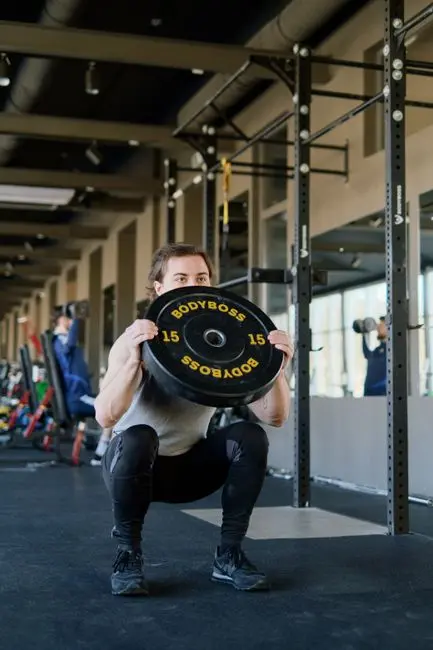
Progression matters more than variety early on. Adding weight to the same handful of lifts, slowly and consistently, outperforms chasing novelty every session — the difference between progressive overload and volume training is worth understanding before deciding which one to lean on, since men over 40 generally recover slower and tend to do better prioritizing load progression over sheer training volume.
Watch recovery closely. Soreness that doesn’t resolve within 48 to 72 hours, sleep that gets worse instead of better, or strength numbers that quietly slide backward over two or three weeks are early signs of overtraining worth taking seriously rather than pushing through. A 46-year-old body doesn’t bounce back on a 26-year-old’s schedule, and pretending otherwise is how a good program turns into a six-week layoff.
Nutrition timing around training sessions matters too, and for anyone experimenting with fasting windows, the practical overlap between intermittent fasting and strength training after 40 is worth reading before assuming a fasted heavy trap-bar session is a good idea — for some men it works fine, for others it tanks the workout entirely, and there’s no way to know which camp someone falls into without testing it deliberately rather than guessing.
Give each new addition four to six weeks before judging it. Not four to six days. Strength adaptations, tendon remodeling, and coordination all move slower than motivation does, and abandoning the Bulgarian split squat after one wobbly, humbling session throws away the exercise that would have fixed the wobble in the first place.
What Matters More Than Anything on This List
Sleep and protein intake do more heavy lifting, so to speak, than most people want to hear. Under-slept and under-fed, even the best-ranked exercise on this list stalls out — recovery happens between sessions, not during them, and a training program without adequate sleep and roughly 0.7 to 1 gram of protein per pound of bodyweight daily is fighting itself.
Here’s the part that surprises people: structured resistance training is also one of the more reliably effective tools available for mood, and not as a side effect. Research on exercise as a non-drug approach to depression has found effect sizes that hold up well against other interventions, which is one more reason consistency matters — the psychological payoff compounds right alongside the physical one, and it shows up faster than most people expect.
Anyway. None of the seven exercises above will rescue a program built on four hours of sleep, a diet of drive-through food, and a training frequency of “whenever motivated.” Fix the foundation first. The exercises are the easy part.
For anyone thinking about this in a wider frame — not just “what exercises” but “what actually changes the trajectory of aging” — the broader evidence-based longevity protocol covers where structured training fits alongside sleep, diet, and the other levers that matter. Resistance training is one piece of that picture. A necessary piece. Not the whole thing.
Common Questions
Is it too late to start strength training at 45 or 50 with no lifting background? No. Untrained muscle responds to resistance training regardless of age — the adaptations happen more slowly than they would for a 22-year-old, but they happen. The bigger risk at this stage isn’t age, it’s ego: starting with the loads a younger self used to handle instead of building the pattern first with light weight.
How many days a week is actually necessary? Two focused full-body sessions a week produce real results and are sustainable for most schedules. Three is better if recovery allows it. Five or six days of heavy compound training past 40 usually backfires before it pays off, since recovery capacity hasn’t kept pace with the volume ambition.
Do these exercises help with testosterone or hormone-related fatigue? Compound resistance training produces acute, temporary increases in testosterone and growth hormone following a session — well documented in exercise physiology research — though the lasting effect on baseline hormone levels is more modest than supplement marketing tends to suggest. It’s a legitimate lever, not a cure-all.
Will lifting affect prostate health or urinary symptoms? Training itself doesn’t directly treat prostate conditions, but general physical fitness is associated with better outcomes across a range of aging-related issues, and understanding how the prostate normally changes with age helps separate ordinary aging changes from something that needs closer attention.
Should joint pain stop training entirely? Usually not entirely — it should change the exercise selection. Swapping a flat bench for a landmine press, or a back squat for a step-up, often removes the aggravating motion while keeping the muscle group trained. Pain that’s sharp, sudden, or worsening with every session is a different situation than the dull ache of unfamiliar muscle work, and the two shouldn’t be treated the same.
What’s a realistic timeline to see visible change? Strength gains show up first, often within three to four weeks, since a lot of early progress is neurological — the nervous system getting better at recruiting muscle rather than the muscle actually growing yet. Visible physical change takes longer, usually eight to twelve weeks of consistent training, and it shows up faster in people who are also managing sleep and diet, not just showing up to lift.
Is bodyweight training enough, or is external load necessary? Bodyweight work is a fine starting point and can build real strength for months in an untrained person. Eventually, though, progress stalls without adding external load — there’s only so much stimulus a push-up can provide once it’s no longer challenging, and dumbbells or a barbell become necessary to keep the adaptation going.