
Exercise doesn’t move mood by accident. It moves it through specific, traceable channels — brain-derived neurotrophic factor climbing after a hard set, endocannabinoids flooding the bloodstream mid-run, a stress-response axis that remembers how to shut itself off, a body tired enough by 9 p.m. to actually want sleep. None of that requires an appointment or a prescription pad. It requires knowing which movements pull the hardest on those levers, in what dose, and being honest about which popular options are mostly marketing wearing gym clothes.
This is a ranking, not a mood board. Seven modalities, ordered by how well the evidence holds up, what mechanism each one is actually leaning on, and what a man does with the information starting this week. Training here is the intervention. Not a warm-up act for something else.
How This Is Ranked
Order below is set by human randomized-controlled-trial evidence first — actual depression and anxiety outcomes, not just mood questionnaires after a single session. Second criterion: replication. A finding that shows up in one small trial and nowhere else gets ranked lower than one that’s been reproduced across labs and populations. Third: mechanism plausibility — does the effect line up with something known about BDNF, endocannabinoid signaling, HPA-axis regulation, or sleep architecture, or is it a correlation nobody’s explained.
Practical factors count too. Equipment needed, injury risk, how fast someone can actually start. What does not count: how often a modality trends, what an influencer is selling this month, or how well it photographs. Marketing spend is not an input here. Never has been, never will be.
A caveat worth stating up front — most of this literature studies exercise as a standalone intervention for people with diagnosed depressive or anxiety disorders, not as a wellness add-on for a guy who’s basically fine and wants to feel sharper. Some of what follows extrapolates from clinical populations to everyday stress load. That extrapolation is reasonable, given the shared mechanism, but it isn’t identical evidence. Worth knowing the difference.
The Ranking
1. Heavy Compound Lifting
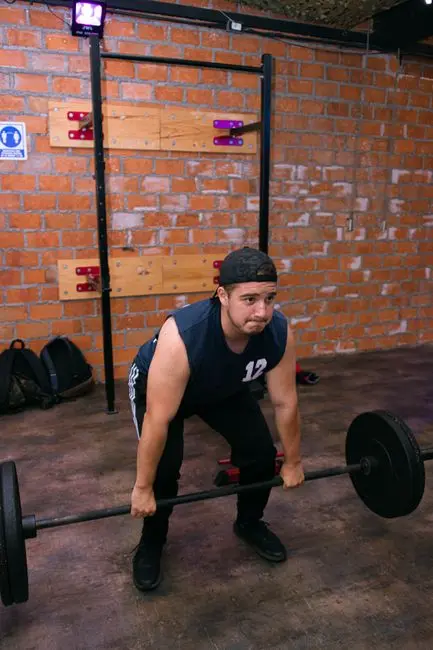
The evidence here is the strongest on this list. Gordon and colleagues ran a 2018 meta-analysis and meta-regression in JAMA Psychiatry pooling randomized trials of resistance training against depressive symptoms and found a significant, moderate-to-large reduction — and the effect held regardless of whether participants also got stronger, meaning the antidepressant effect wasn’t just riding on fitness gains. Dose: two to three sessions a week, three to five sets of five to eight reps at roughly 70-85% of one-rep max, progressive load over time. Curls with pink dumbbells don’t count. It suits men who respond to visible progress and structure — a number going up on a bar is hard to argue with. It doesn’t suit someone who needs zero equipment or wants to start today with nothing but shoes. The honest caveat: adherence is the failure point, not the mechanism. Most men who quit lifting quit from boredom or injury from bad form, not because it stopped working.
2. Zone 2 Steady-State Cardio
Sustained aerobic effort — cycling, rowing, incline treadmill, a long easy run — held at a pace where conversation is still possible, roughly 60-70% of max heart rate. This is the modality with the longest clinical track record against depression specifically. Blumenthal and colleagues ran the SMILE trial at Duke, published in the Archives of Internal Medicine in 1999: older adults with major depression randomized to aerobic exercise, sertraline, or both, three sessions a week at 70-85% heart rate reserve for sixteen weeks. Exercise alone matched the medication group by the end of the trial. The follow-up, published the next year, found the exercise group had a lower relapse rate at ten months than the medication group.
Mechanistically, this is the modality with the cleanest HPA-axis data — regular sustained aerobic work blunts the cortisol response to psychological stressors over eight to twelve weeks of consistent training, and it builds the kind of physical fatigue that increases slow-wave sleep pressure at night. Dose: thirty to forty-five minutes, three to five times a week, sustained not sprinted. It suits almost everyone — low injury risk, low skill floor, scalable to any fitness level. It’s also the one people quit fastest because it’s the least exciting thing on this list. The caveat: the effect is real but it’s slow. Nobody feels transformed after one session of zone 2. It’s a compounding return, not a hit.
3. Sprint Intervals
Short bursts of near-maximal effort — thirty seconds hard, ninety seconds easy, repeated eight to ten times — versus sustained moderate cardio. This is where the acute biochemistry gets loud. Saucedo Marquez and colleagues, in the Journal of Applied Physiology in 2015, compared high-intensity interval training against continuous moderate exercise and found HIIT produced substantially larger spikes in serum BDNF immediately post-session. Separately, the endocannabinoid research — Fuss and colleagues in PNAS in 2015 showed the “runner’s high” in mice depends on cannabinoid receptor activity, not endorphins as the old story went, and Raichlen and colleagues in the Journal of Experimental Biology in 2012 found the same endocannabinoid rise in humans during moderate-to-vigorous running but not during walking. Intensity matters for that particular lift in mood.
Dose: two sessions a week, never daily — the recovery demand is real. For anyone starting from zero, building an aerobic base first with a structured progression like a couch-to-5K style running plan before layering in true sprint work avoids the injury and burnout that comes from going hard too soon. Suits men who want time efficiency and don’t mind discomfort. Doesn’t suit anyone deconditioned, injury-prone, or already under heavy external stress — piling maximal effort onto a nervous system that’s already running hot adds load rather than relieving it. That’s the honest caveat: more isn’t better here, and overdoing intervals during a rough month can push cortisol the wrong direction.
4. Brisk Walking
Sustained walking at a pace that raises heart rate without full aerobic commitment. Lowest barrier on this list, and the epidemiological data behind it is enormous. Choi and colleagues ran a Mendelian randomization study in JAMA Psychiatry in 2019 using accelerometer data from over 100,000 UK Biobank participants and found a causal, protective relationship running from physical activity to lower depression risk — genetically predicted higher activity levels predicted lower depression, independent of reverse causation. Walking specifically carries the advantage of being the one modality almost nobody fails to adhere to, because it requires no gym membership, no technique, no recovery day.
Mechanism overlaps with zone 2 but at a lower dose — modest HPA-axis effect, meaningful sleep-pressure contribution, and outdoor walking adds a circadian light-exposure benefit the treadmill version doesn’t. Dose: thirty to forty-five minutes daily, outdoors when possible. Suits everyone, especially as an entry point for someone who hasn’t exercised in years and would injure himself attempting anything on this list above rank four. The caveat: the effect size per session is smaller than higher-intensity work.
Walking gets there through volume and consistency, not through a single dramatic session.
5. Rucking
Walking under load — a weighted pack, typically 10-20% of bodyweight, carried over distance. This one is lower on the list mostly for lack of dedicated data, not lack of plausibility. Most of what’s known comes from military and tactical-fitness load-carriage research rather than trials designed around mood outcomes specifically, so the mental-health evidence here is genuinely thin and largely extrapolated from the combination of two things that do have standalone data: resistance-style loading and zone 2 cardiovascular work stacked together.
The plausible mechanism runs through both HPA-axis conditioning from the sustained aerobic component and a mild resistance-training stimulus from the load, though at a lower intensity than a barbell session. Dose: three to four miles, once or twice a week, starting with a lighter pack and adding weight gradually. Suits men who prefer being outdoors to being in a gym and want more stimulus than plain walking without the equipment demands of a full lifting setup. Doesn’t suit anyone with existing back or joint issues who hasn’t built up load tolerance first. Honest caveat: this is the most popular item on the list right now relative to how much dedicated evidence actually exists for it.
6. Bodyweight Calisthenics Circuits
Push-ups, squats, lunges, planks, sequenced into a circuit — the no-equipment substitute for a lifting session. The mechanism is a diluted version of item one: mechanical loading, some BDNF response, some HPA-axis conditioning, but at lower absolute intensity than a loaded barbell movement, since bodyweight alone limits how much tension a trained man can generate. Most of the supporting data isn’t calisthenics-specific — it rides on the broader resistance-training meta-analyses, which include bodyweight protocols in the same pooled category as weighted training, so the effect is plausible rather than independently confirmed at this specific intensity.
Dose: twenty to thirty minutes, three times a week, circuit style — minimal rest between movements to keep intensity up. Suits apartment dwellers, frequent travelers, anyone without gym access or gym interest. Doesn’t suit someone already reasonably fit, because bodyweight-only training plateaus fast once basic strength is established — there’s no simple way to keep adding load. The caveat is exactly that ceiling: great starting point, weak long-term stimulus.
7. Cold-Water Swimming
Swimming in open water at low temperature, sometimes for only a few minutes at a time. Last on the list, and it should be — the human evidence is genuinely thin. The most cited example is a single case report by van Tulleken and colleagues in BMJ Case Reports in 2018: one woman with recurrent major depression who began a structured open-water swimming program and was able to reduce her medication over the following months, tracked alongside a research team. One case. Not a trial. Interesting, not proof.
The proposed mechanism runs through acute vagal and endocannabinoid activation from cold shock combined with the aerobic component of swimming itself, but nobody has run the dose-response study that would confirm how much cold, how often, actually moves the needle. Dose, based on what informal practice suggests rather than settled research: two to three short cold-water sessions a week, a few minutes each, building tolerance gradually. Suits men who already have some comfort with cold exposure and access to safe open water. The caveat that matters most: cold shock spikes heart rate and blood pressure sharply and fast, a real physical stressor on a heart that isn’t used to it. That’s a fact about the modality, not a hedge — it belongs on the list because the mechanism is genuinely interesting, but it’s ranked last because the evidence is the thinnest and the acute physical demand is the highest.
What to Skip
Rebounding — bouncing on a mini-trampoline — gets marketed constantly as a mood and energy fix. The actual evidence behind rebounding is about lymphatic drainage, not depression or anxiety outcomes. It may well be a fine low-impact cardio option. It is not, based on anything published, a mental-health intervention with its own supporting trials. Calling it one is the kind of claim that sounds true because the movement itself feels pleasant, which is a different thing entirely from evidence.
Standalone breathing protocols — box breathing, 4-7-8, the whole genre sold as an instant anxiety off-switch — deserve real skepticism too. The research on why breathing exercises fail to deliver the results the apps promise is not a fringe position; the acute physiological calming is real and short-lived, and it does not touch the underlying dysregulation. For anyone dealing with something closer to chronic, trait-level anxiety rather than an isolated panic spike, breathing techniques specifically fail to move the needle on sustained HPA-axis dysregulation the way physical exertion does. A few slow breaths can take the edge off a bad ten minutes. It is not doing what a forty-minute zone 2 session does to actual stress-hormone regulation over weeks.
Restorative or gentle-flow yoga marketed as a standalone depression treatment belongs in this section too. There’s reasonable evidence for yoga reducing anxiety symptoms in some populations, but the versions built entirely around slow stretching and breath, with no meaningful cardiovascular or resistance component, don’t carry the same BDNF or endocannabinoid signal that shows up in the modalities above. Vibration plates, infrared sauna sold explicitly as a mood cure, “10-minute morning stretch” routines marketed with mental-health claims attached — same problem across all of them. Pleasant. Under-evidenced for the specific claim being made.
Worth a short digression here, because it explains why this category is so noisy. The wellness industry doesn’t sell dose-response data. It sells a feeling attached to a product, and feeling calmer after ten minutes of stretching is a real, honest experience — it’s just not the same thing as a randomized trial showing sustained symptom reduction over sixteen weeks. Anyway. Back to the point: the modalities that survive scrutiny are, without exception, the ones that ask something hard of the body. That’s not a coincidence.
How to Actually Use This

Sprint intervals get added only once that base exists, and only at two sessions a week, never stacked onto a week that’s already loaded with external stress. Rucking or cold-water work are additions for someone who’s already consistent with the fundamentals and wants variety, not starting points — introducing seven modalities at once is how habits die in week two.
Test each addition for three to four weeks before judging it. Mood and sleep improvements from exercise are not same-day feedback in most cases — the HPA-axis recalibration in particular takes weeks of consistency, not one good workout, to show up. Building the consistency itself is arguably the harder problem than picking the right modality; a mediocre program done four times a week beats a perfect one done once. Anchor the new session to something already fixed in the day — right after waking, right after a specific meal, right before a specific commute — rather than leaving it to whenever motivation shows up. Motivation is not a reliable scheduling tool. Never has been.
What Matters More Than Anything on This List
Screens at night undo a meaningful share of what training built during the day. Sleep pressure built by a hard session in the afternoon gets partially burned off by ninety minutes of scrolling in bed — light exposure delaying melatonin, and the content itself keeping the nervous system in a low-grade alert state right when it’s supposed to be winding down. Getting actual control over that habit matters as much as anything covered above it, because a stimulant right before the exact window training is trying to protect will quietly cancel a good chunk of the benefit.
None of the seven items above will outrun a broken sleep schedule or a phone in bed until 1 a.m. That’s not a caveat tacked onto the end. It’s the actual floor everything else sits on.
Common Questions
Does the workout need to leave me sore for it to be doing anything?
No. Soreness is a marker of unaccustomed mechanical stress, not of BDNF release or HPA-axis conditioning. Plenty of the modalities that produce the strongest mood-relevant signals — zone 2 cardio especially — rarely produce meaningful soreness at all. Chasing soreness as a proxy for effectiveness is a good way to overtrain and a poor way to judge whether the mechanism is actually working.
If walking is this effective, why isn’t it ranked first?
Because the effect size per session is smaller than the higher-intensity items, even though the population-level evidence behind walking is huge. Walking earns its spot through near-universal adherence and a real causal signal, not because a single walk does more than a single heavy lifting session. Both things can be true at once.
How long before mood actually shifts, honestly?
Two to four weeks of consistent training is the realistic floor for a noticeable shift, and the HPA-axis and sleep-architecture changes that underlie the more durable improvements tend to build over eight to twelve weeks. Anyone expecting a single session to change how a hard week feels is setting up a disappointment that has nothing to do with whether the approach works.
What if every option on this list sounds unbearable right now?
Start smaller than feels meaningful. A ten-minute walk counts. The mechanism doesn’t require heroics to switch on — it requires repetition. Something done for ten minutes four days a week beats something ambitious that happens twice and gets abandoned.
Is doing more of this always better?
No. Training is a stressor, and stress compounds. Layering daily sprint intervals onto an already demanding, poorly-slept week adds allostatic load rather than relieving it. More sessions of the wrong intensity, at the wrong moment, can push cortisol in the direction this whole list is trying to correct.
Does time of day matter?
Morning training tends to reinforce the natural cortisol awakening response and anchor the daily rhythm, which suits most men well. Evening training works fine for plenty of people too, but intense sessions too close to bedtime can delay sleep onset for anyone sensitive to that kind of late-day stimulation. Worth testing which way the body actually responds rather than assuming.