
Search “exercises for testosterone” and the internet hands over a list of thirty things, barely distinguishable from each other, ranked by nothing more rigorous than which supplement company sponsored the article. That is the gap this page closes. Not every form of training moves the needle the same way, and the ones that get the most hype online — sprinting, mostly, thanks to a decade of fitness-influencer folklore — are not necessarily the ones with the strongest human evidence behind them.
One distinction matters more than any other and it gets blurred constantly: an acute spike in testosterone measured in blood drawn twenty minutes after a workout is not the same thing as a higher resting, baseline level measured months into a program. Plenty of exercises do the first. Almost none, on their own, reliably do the second. This page keeps that distinction in view for every item on the list.
How This Is Ranked
The ranking below runs on three inputs, in order of weight:
- What controlled human research actually shows.
- How consistently that finding replicates rather than appearing once and never again.
- And whether the protocol is something a normal person with a job and a family can sustain for months.
Popularity is not an input. Neither is how a movement looks on video or how often it gets mentioned by people selling pre-workout powder.
A quick note on mechanism before the list starts, because it explains why the order looks the way it does. Testosterone production runs through the hypothalamic-pituitary-gonadal axis — a signaling chain that starts in the brain and ends in the testes — and heavy, large-muscle-mass exercise perturbs that chain acutely through mechanical stress, metabolic byproduct accumulation, and shifts in luteinizing hormone pulsatility. How that regulatory system actually works, start to finish, is worth understanding before deciding which workout deserves the time.
Every item below gets judged on that mechanism, the acute evidence for it, and — separately, because it is a separate question — whatever thin evidence exists for sustained change. Where the sustained evidence does not exist, that gets said outright instead of implied away.
The Ranking
Back Squat

Here is the caveat every listicle drops: that spike is transient, back to baseline within roughly an hour or two, and West and Phillips, writing in the European Journal of Applied Physiology in 2010, found no meaningful correlation between the size of a lifter’s acute post-workout hormone spike and how much muscle or strength that lifter actually gained over a training block. The spike happens. It does not obviously matter for outcomes the way the marketing implies.
Programming: three to five sets of four to eight reps, loaded heavy enough that the last two reps of each set are a genuine grind, two or three times weekly. Suits anyone building general strength with no major knee or lower-back limitation. Skip it, or substitute the trap-bar version below, if squat depth aggravates an old injury — forcing the movement is not worth it.
Trap-Bar Deadlift
Mechanically similar to the back squat in muscle mass recruited — posterior chain plus quads, with a more upright torso and less shear stress on the lumbar spine than a conventional barbell deadlift. The neutral grip and centered load make it markedly more forgiving on technique, which matters because a lift someone can perform correctly under fatigue beats a “better” lift performed badly.
The acute hormonal evidence tracks closely with the squat literature: heavy pulls, short rest, large muscle mass, reliable transient testosterone and growth hormone elevation in the post-exercise window. Vingren and colleagues’ 2010 review in Sports Medicine on testosterone physiology in resistance training lays out the general pattern across pulling and squatting movements alike — intensity and total muscle mass recruited are the two variables that predict the size of the acute response, not the specific exercise chosen. Which means the trap-bar deadlift earns its rank not because it is unique, but because it delivers the same mechanism as the back squat with a lower injury barrier to entry for someone new to heavy pulling.
Programming: two to four sets of five to eight reps, heavy, once or twice weekly, rotated with squat work rather than stacked on top of it. Good fit for anyone over 40 whose lower back does not tolerate a conventional deadlift anymore. Caveat is the same as above — the acute spike is real and short-lived, and nobody has shown it reliably raises resting levels on its own.
Heavy Compound Multi-Joint Training, Generally
Not one exercise — a category, and it earns a slot because the research keeps landing on the same variable regardless of which specific lift gets tested: total muscle mass under load, taken close to failure, with rest periods short enough to accumulate metabolic byproduct. Bench press, barbell row, overhead press, front squat, pull-up, stacked together in a single session targeting most major muscle groups.
Ahtiainen and colleagues, studying strength-trained versus untrained men, found something worth sitting with: chronically trained lifters showed a blunted acute hormonal response to the same stimulus compared to untrained men doing it for the first time. Not a knock against training — a reminder that the body adapts and stops treating a stimulus as novel, part of why “do more compound lifts” cannot be a permanent strategy on its own. The six compound movements worth structuring a program around cover the mechanics in more depth than fits here.
Programming: full-body sessions three times weekly, four to six compound movements per session, moderate-to-heavy loading. Suits beginners and intermediates most — the novelty effect that drives the strongest acute response is largest early in a training history. Caveat: that novelty effect fades, and nobody has published a controlled trial showing years of compound training alone raises resting testosterone above what would be expected from the accompanying drop in body fat.
Whole-Body Resistance Circuits
Kettlebell complexes, circuit-style strength training, squat-to-press-to-row sequences performed back to back with minimal rest — the mechanism here is less about peak load and more about total metabolic demand. Short rest intervals drive lactate accumulation, implicated as a signal that upregulates luteinizing hormone pulsatility, part of the acute testosterone response pathway. This is the “short rest beats long rest” finding from the older Kraemer protocols, applied outside a pure strength-training context.
The evidence for circuits specifically is thinner than for straight heavy squats or deadlifts — most of the underlying data comes from studies manipulating rest interval within traditional resistance training, not from testing circuit formats as their own category. The acute-response logic is sound and borrowed from adjacent research; a dedicated body of circuit-specific trials does not really exist yet. Worth saying plainly rather than papering over.
Programming: 20 to 30 minutes, four to six exercises per round, 30 to 45 seconds of work with 15 to 30 seconds of rest, three rounds. Suits anyone short on time or bored by straight-set programming — this is also a solid fat-loss tool, which matters more for testosterone than the direct hormonal mechanism does. Caveat: technique degrades fast under fatigue in a circuit; sloppy form under short rest is how people get hurt.
Loaded Carries
The farmer’s walk and its variants — heavy dumbbells or a trap bar, carried for distance or time — are unglamorous, which is probably why they get skipped despite doing something almost nothing else does: demanding near-maximal grip and full-body isometric tension for a sustained duration rather than a single explosive rep. That tension-under-fatigue profile overlaps with the same acute-hormone pathway as squats and deadlifts, delivered differently.
The honest caveat: there is not a dedicated body of trials isolating loaded carries and measuring testosterone response the way there is for squats. What evidence exists is extrapolated from the same general principles — heavy load, large muscle mass, short duration, near-failure effort — rather than carry-specific study data. It belongs on this list because the mechanism is sound and it is a genuinely useful accessory movement, not because there is a named 1990s trial proving it.
Programming: three to four rounds of 40 to 60 meters or 30 to 45 seconds, loaded as heavy as grip allows while maintaining posture, tacked onto the end of a lifting session. Suits anyone whose grip strength is a limiting factor elsewhere — which, past 40, is most people. Not a standalone program. An addition.
Power Cleans and Olympic Lift Variations
Explosive, technical, full-body — the power clean and its relatives recruit the posterior chain plus a strong neuromuscular power component that slower grinding lifts do not train the same way. The rate of force development involved is genuinely unique on this list. The acute hormonal picture, though, is muddier than for the squat and deadlift, because most Olympic-lift research is designed around performance outcomes — vertical jump, sprint speed — rather than endocrine response, so the testosterone data riding along is thinner and less consistent.
What data does exist suggests explosive lifts produce a real but generally smaller acute testosterone elevation than a comparable-intensity squat session, likely because total mechanical work per set is lower in a three-rep power clean than a six-rep back squat. Ranked here, sixth, mostly on mechanism rather than a dedicated body of clean-specific hormone trials.
Programming: technical coaching first, non-negotiable — two to three sets of three to five reps, low volume, high skill demand. Suits lifters with an athletic background or access to real coaching. Not a good first exercise for someone new to a gym; the injury risk under fatigue outweighs the hormonal upside for a beginner by a wide margin.
Sprint Interval Training
Ranked last, and it is worth explaining why given how often sprinting gets held up online as some kind of testosterone hack. The mechanism is plausible — short, maximal-effort bouts drive a large acute catecholamine and cortisol response alongside whatever testosterone elevation occurs, and some of the acute post-sprint hormone data in young trained athletes does show a real, if variable, testosterone bump immediately after a session.
The problem is what happens next. Sprinting is a high cortisol stimulus, and cortisol and testosterone run in something close to an inverse relationship when the stress is chronic — push volume or frequency too high without recovery between sessions and the cortisol side starts to dominate, the opposite of what anyone doing this wants. A guy we’ll call Marcus, 44, added sprints four mornings a week on top of an already full lifting schedule, expecting a quick bump. Eight weeks in: energy down, sleep worse, follow-up bloodwork unmoved.
The fix was not more sprinting. Two sessions a week, with actual rest between them, worked better than four.
Programming, done right: six to eight rounds of 20 to 30 seconds maximal effort with 90 seconds to 2 minutes of easy recovery, once or twice weekly, never on consecutive days and never stacked onto a maximally hard lifting week. Suits people who are already recovering well from their existing training load. Does not suit anyone already under-slept, under-fed, or training six days a week already — for that person, sprints are one more stressor, not a fix.
What to Skip
Isolation work — bicep curls, leg extensions, cable flyes, the entire single-joint machine circuit — does not belong on a testosterone-focused list at all. Not because these exercises are bad; they build muscle in a targeted way and have a place in a program. But the hormonal research is consistent and has been for three decades: single-joint, low-muscle-mass exercise produces a negligible acute hormonal response compared to multi-joint compound work, going back to the original Kraemer comparisons. If the goal is specifically hormonal, an arm day is close to wasted effort toward that particular end.
Long, slow steady-state cardio — the 45-minute treadmill jog at a conversational pace — also does not earn a spot. It is genuinely useful for cardiovascular health and, done consistently, for fat loss, which matters for testosterone through a different mechanism covered below. But as a direct hormonal stimulus, low-intensity steady-state work does not produce the acute response heavy resistance training does, and there is no controlled evidence it raises resting testosterone through any mechanism other than body composition change.
And skip anything marketed as a specific “testosterone workout” — a branded circuit, an app-sold program promising a hormonal reset in three weeks. The exercises inside these programs are almost always a repackaged version of items above. Paying for the branding adds nothing the free version of a heavy squat and deadlift program does not already deliver.
How to Actually Use This
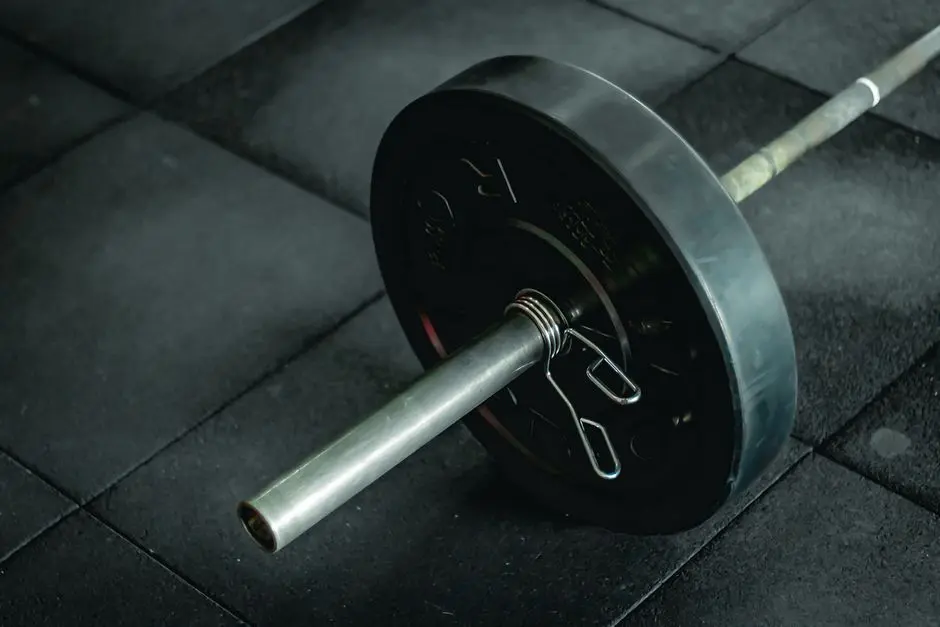
Add loaded carries as an accessory once the base three lifts are established, tacked onto the end of a session rather than programmed as a separate day. If recovery is genuinely good — sleeping well, eating enough, not already stressed thin — a whole-body resistance circuit can replace one of the three weekly strength sessions instead of adding a fourth day on top.
Sprint intervals and power cleans come last, only after the base is solid and recovery is confirmed to be handling it. Add one, not both at once, for four weeks, and evaluate before adding the second. If energy or sleep gets worse instead of better, that is the signal to pull back, not push through. Hormonal adaptation here runs on a timescale of months, not days, and the person swapping programs every two weeks because “it’s not working yet” never finds out what actually works.
What Matters More Than Anything on This List

Sleep is the biggest lever, and it is not close. The evidence on why roughly eight hours is close to non-negotiable for testosterone production is more consistent and larger in effect size than anything on the exercise list above — the bulk of daily testosterone release happens during sleep, tied to sleep architecture rather than clock time, and cutting sleep short consistently suppresses production in a way that no amount of heavy squatting compensates for.
Body composition runs a close second. Excess body fat converts testosterone to estrogen through an enzyme called aromatase, and that conversion accelerates as body fat rises — which means fat loss, achieved through any reasonable combination of diet and training, does more for testosterone in a lot of men than the specific choice of exercise ever will. This is also, incidentally, where circuits and general activity earn real credit even without a direct hormonal mechanism of their own.
Nutrition matters too, though less dramatically. What actually goes on the plate affects the raw materials available for hormone production, and specific deficiencies are worth ruling out — zinc status and vitamin D levels both have real, if modest, evidence behind them when a man is actually deficient, which is common enough to check rather than assume. Less obviously, gut health has its own connection to testosterone, through nutrient absorption and systemic inflammation feeding back into hormone regulation — worth a look, and nothing to do with how much anyone squats. Anyway. Back to the main point.
The main point: fix sleep, fix body fat, fix the obvious nutritional gaps, and the exercises above go from a marginal lever to an actual one. Skip that order and chase the exercise list first, and the result is usually disappointment followed by supplement shopping.
Common Questions
Will lifting weights actually raise my testosterone, or just spike it for an hour?
Both, and they are different claims. The acute spike after a hard squat or deadlift session is well documented and real. Whether months of consistent training raises resting, baseline testosterone is a separate question with much weaker direct evidence — most of what looks like a training-driven increase is probably the accompanying drop in body fat, not the lifting itself.
How quickly should this show up in bloodwork?
Slower than most people want. Give any program eight to twelve weeks before drawing conclusions, and test at a consistent time of day — testosterone follows a daily rhythm, and an afternoon draw reads lower than a morning one regardless of training.
Is one blood test enough to know where things actually stand?
A single total testosterone number is a weaker starting point than it looks — day-to-day variation, time of draw, and recent sleep or stress can all shift a single reading enough to be misleading. Two separate morning draws, at minimum, before making any decisions based on the number.
Does age change any of this? Somewhat. What actually changes hormonally after 40 means recovery between heavy sessions takes longer, and the case for prioritizing sleep and body composition over exercise intensity gets stronger, not weaker, with age. The ranking above still applies; the volume and frequency need adjusting downward.
Can too much training lower testosterone?
Yes, and it is a more common problem than under-training. Stacking sprints, circuits, and heavy lifting without adequate recovery drives chronic cortisol elevation, which works against testosterone rather than for it. More is not automatically better past a certain point, and that point arrives sooner than most people training hard assume.
Do I need to do all seven exercises on this list?
No. The first three — back squat, trap-bar deadlift, general heavy compound work — cover most of the available benefit. Everything after that is refinement, not requirement.
What’s the single biggest mistake men make chasing this?
Treating exercise as the whole strategy instead of one part of it. Sleep and body fat move the number more than the squat rack does. Train hard, certainly — just do not expect the training alone to outrun five hours of sleep and a diet that never gets looked at.