
Take a guy we’ll call Danny. Forty-four, corporate job, decided in January he was going to run the fat off — forty-five minutes on the treadmill every morning, nothing else changed about how he trained. By April the scale was down eleven pounds and he felt like he’d won something. Then he helped his brother-in-law move a couch and pulled something in his back doing what used to be an easy lift. Turned out the eleven pounds weren’t just fat. A chunk of it was muscle, quietly rented out to cover the calorie shortfall, and nobody had warned him that was the deal.
That’s the story this page exists to prevent — not the wrong training mode, in the wrong order, at the wrong intensity, trading away the one thing that keeps weight off for good. What follows is a ranked list of seven named training modes, best-evidenced first, down to the one that’s here mainly because it stacks well with everything above it. None of them, alone, will out-run a bad diet. Say that up front.
How This Ranking Works
The order below rests on three things, in this priority:
- What human trials actually show about fat-mass and lean-mass outcomes — not animal studies, not “makes sense mechanistically”.
- How consistently that finding replicates.
- And how practical the thing is to sustain for months rather than one highlight-reel week.
Popularity is not an input. Neither is how much a supplement company or a fitness influencer has riding on the answer.
One thing needs saying before the list starts. Exercise is a mediocre tool for creating a calorie deficit. The body compensates — eats a little more, fidgets a little less, recovers a little more sluggishly — eating into the deficit a hard workout was supposed to create. Herman Pontzer’s research comparing the Hadza, a hunter-gatherer population in Tanzania who are physically active most of the day, against sedentary Western adults found total daily energy expenditure came out roughly similar across both groups despite the enormous gap in activity level — the body adjusts other systems downward to compensate. That doesn’t make exercise pointless. It means the honest job description, in a weight-loss context, isn’t “burn the calories off.” It’s “keep the muscle dieting alone would take, and keep the metabolic and cardiovascular systems functioning while the fat comes off through eating less.”
The Ranking

Resistance Training
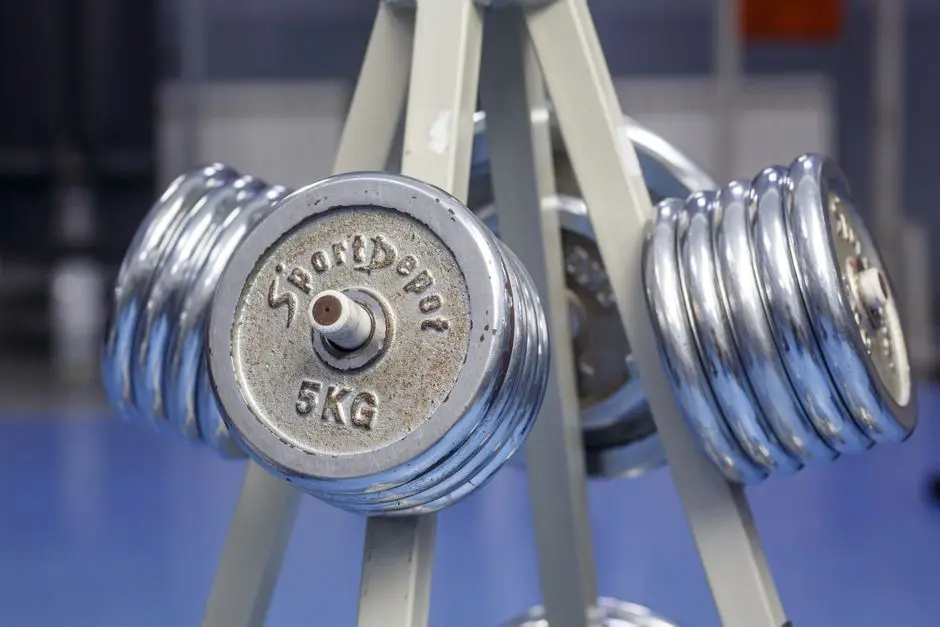
Lifting weights — barbell, dumbbell, machine, doesn’t much matter which — is the mechanism that decides what kind of weight comes off during a calorie deficit. Cut calories with no resistance stimulus at all, and the body, given no signal the muscle is needed, will happily burn some of it for fuel right alongside the fat. Give it a reason to keep that muscle — mechanical tension, progressive overload, something asking those fibers to produce real force two or three times a week — and it holds onto far more of it. That’s the whole mechanism, and it isn’t subtle.
Longland and colleagues put this to a direct test in a 2016 American Journal of Clinical Nutrition paper: young men in a substantial calorie deficit were split into a resistance-training group and an endurance-training group, both eating high-protein. The resistance group lost fat and gained lean mass at the same time. The endurance group lost fat too, but a meaningful share of the weight that came off was muscle. Same deficit. Different stimulus. Different composition of what actually left the body.
Dose: three to four sessions a week, built around a small set of compound lifts rather than a long circuit of isolation machines, progressive overload tracked honestly, protein high enough to give the muscle something to rebuild with. This is for essentially everyone losing weight, including anyone worried about bone density — loaded training is one of the few interventions that actually stimulates bone the way muscle needs stimulating. Caveat: it doesn’t torch many calories in the session itself. That was never the job.
Brisk Walking and NEAT
Non-exercise activity thermogenesis — NEAT, the calories burned by fidgeting, standing, pacing, walking to the car, all the movement that isn’t a scheduled workout — turns out to be a bigger lever than most people assume, and walking is the most controllable slice of it. James Levine’s research group at the Mayo Clinic documented substantial variation in NEAT between individuals of similar size, differences large enough to matter for weight regulation entirely apart from anything happening in a gym.
The case for walking leans less on one dramatic trial and more on volume: it’s the one item here almost nobody gets injured doing, almost nobody dreads enough to quit. Which matters more than it sounds like it should, because the exercise that produces results is the one still being done in October, not the one abandoned by February.
Dose: daily step volume somewhere in the seven-to-ten-thousand range, or thirty to forty-five minutes at a pace brisk enough to make conversation a little effortful. Every day, not three days a week — this is the one entry on the list built for daily use. It suits everyone, but especially anyone whose joints, schedule, or patience can’t absorb more intense training stacked on top of the lifting above. Caveat: the per-session calorie cost is small, so this only pays off at volume, and it’s easy to underestimate how much is actually happening without tracking it.
Zone 2 Cardio
Zone 2 — roughly the pace where breathing stays comfortable and a sentence can still be spoken, around 60 to 70 percent of max heart rate — trains the mitochondria directly. Work from physiologists including Iñigo San-Millán, who has spent years with elite endurance athletes, has mapped how sustained low-intensity aerobic training increases mitochondrial density and improves the body’s ability to burn fat as fuel at a given intensity, a capacity usually called metabolic flexibility.
Honest limitation: most of the strongest zone 2 research comes out of endurance-athlete physiology and metabolic-health studies, not dedicated fat-loss trials counting pounds lost. The extrapolation to weight loss is reasonable — better fat oxidation and a sustainable, low-injury cardio habit both support the goal — but there’s no landmark “zone 2 for weight loss” trial to point at.
Dose: three sessions a week, forty-five to sixty minutes, building duration before intensity gets added. Suits anyone who wants a cardio base without the joint cost of running, or who’s stacking cardio alongside heavy lifting and needs it to not eat into recovery. Poor fit for anyone chronically short on time — an hour is an hour, and zone 2 doesn’t compress well.
Sprint Intervals (HIIT)
Short, hard efforts — twenty to thirty seconds close to maximum, followed by rest, repeated for fifteen to twenty minutes total — trade duration for intensity. Izumi Tabata’s 1996 protocol demonstrated large VO2 max improvements from a handful of weekly sessions lasting four minutes each, and the afterburn effect (excess post-exercise oxygen consumption) is real: the body keeps burning at an elevated rate for a while once the session ends.
Here’s the part most HIIT marketing skips. A 2017 Obesity Reviews meta-analysis by Wewege and colleagues compared HIIT against moderate-intensity continuous training on body-composition outcomes in overweight and obese adults and found the two produced broadly similar results — not HIIT crushing steady cardio the way every gym flyer implies. Similar.
The afterburn is real, just smaller in absolute calories than the hype suggests.
Dose: one to two sessions a week, never back-to-back, never stacked onto a heavy lifting day without a recovery buffer — this is the one entry capable of working against the resistance training ranked first, if overdone. Best suited to people with an aerobic base and genuinely limited time; worst suited to anyone new to structured training. The real tradeoffs between HIIT and steady-state cardio are worth understanding before leaning hard into either.
Rucking
Rucking — walking with a weighted pack — takes the NEAT-friendly, joint-forgiving profile of walking and adds a resistance component on top: posterior chain, core, grip, all working isometrically the whole way. It got a wave of popularity around ex-military fitness influencers and Instagram pack reviews — steel plates versus sandbags, frame versus frameless, an entire rabbit hole that changes nothing about the physiology underneath. Anyway. Back to the loading itself.
It sits mid-list for one honest reason. Most existing rucking research comes from military occupational studies on load-carriage economy and injury risk in soldiers, not controlled trials on civilian fat loss. Treat the fat-loss case for rucking as a reasonable extrapolation from combining two things already proven higher up — walking and loading — rather than its own separately-proven intervention.
Dose: start light, ten to twenty pounds in a proper rucking pack rather than a gym bag digging into the shoulders, thirty to sixty minutes, two to three times a week, progressing load before distance. The load-carriage standards built for military training are a reasonable reference point, scaled well down. It suits anyone bored stiff by plain walking who wants a bridge between cardio and strength work without adding a whole extra gym session. Poor fit for anyone with existing back or knee trouble who hasn’t built a walking base first — load makes existing problems louder, not quieter.
Loaded Carries
Farmer’s carries, suitcase carries, yoke walks — pick something heavy up, walk with it for distance, put it down. Looks like the simplest thing on this list and might be the most underrated. The muscles doing the work — grip, traps, core, everything fighting to keep the torso upright under an asymmetric or bilateral load — sit under near-constant tension for the whole carry, a different stimulus than most lifting, where rest points are built into every rep.
Straight talk on the evidence: there’s no body of dedicated weight-loss trials on loaded carries specifically. What exists is strength-and-conditioning literature, popularized by coaches like Dan John, documenting the functional carryover and total-body work capacity carries build. It earns a spot here because of how well it stacks onto the resistance-training block ranked first, not because a trial proved it moves the scale on its own.
Dose: three to four sets of forty to sixty yards at a genuinely heavy load, tacked onto the end of a lifting session, twice a week. Suits people already lifting who want more total work without a separate cardio block, and particularly useful past forty, since grip strength and trunk stability track closely with functional independence later on. Not a tool to reach for as a first exercise habit.
Rowing
The rowing ergometer recruits legs, back, and arms in a single stroke, which is why, at a matched perceived effort, it tends to cost more calories per minute than cycling and rivals running — without the impact running puts through the knees and hips. A genuinely full-body cardio option, rarer on a list like this than it sounds.
The evidence gap is the same shape as rucking’s and carries’: plenty of exercise-physiology data on the energy cost of rowing at various intensities, next to nothing in dedicated fat-loss trials using rowing as the intervention. It lands last not because it’s a weak tool but because nobody has proven the weight-loss case for it the way Longland proved it for resistance training.
Dose: twenty to forty minutes, steady-state or intervals, two sessions a week as an alternative to walking or zone 2 — not a replacement, an option when joints need a break from impact. Strong fit for anyone with knee or hip pain ruling out running or heavy rucking. Weak fit for anyone who hasn’t learned technique, since poor form on an erg wastes both calorie yield and the lower back.
What to Skip
A few things that show up constantly in weight-loss content and don’t survive contact with the evidence above.
Ab-specific exercises for belly fat — crunches, sit-ups, the endless “twenty-minute ab burner” video. Spot reduction, the idea that working a muscle preferentially burns the fat on top of it, doesn’t hold up. The abs get stronger. The fat covering them leaves in whatever order the body decides, which has nothing to do with which muscle did the most reps that day.
The “fat-burning zone” as it usually gets sold — the claim that slow, fasted cardio is specifically superior for fat loss because a higher percentage of calories burned at low intensity come from fat. Technically true, practically irrelevant. What matters is total calories burned relative to calories eaten, not which fuel source got tapped mid-workout. An hour of slow cardio and twenty minutes of hard intervals covering the same total energy cost produce no meaningfully different fat-loss outcome because of which “zone” they happened in.
Vibration plates. Waist trainers. Sweat suits. “Detox” workout classes promising to sweat the fat out. Water weight, mostly, back within a day of rehydrating. None of it survives a controlled trial.
One more, worth naming even though it’s uncomfortable: pure cardio, zero resistance training, run for months as the entire strategy. Cardio itself isn’t the problem — several items ranked above are cardio. It’s cardio with no loading stimulus at all, stacked onto a deficit, that’s close to the worst combination for lean mass on this whole list. Danny’s treadmill routine from the top of this page — good for the heart, quietly working against the composition problem it was supposed to be solving.
How to Actually Use This

Once the base is smooth — lifting consistent, walking close to automatic — add one cardio block from the middle of the ranking: zone 2, rucking, or rowing, whichever fits the joints and schedule best. Two to three sessions a week is plenty. Test it four to six weeks before deciding it earns its place, and judge it on adherence and energy first, not just the scale.
Sprint intervals go in last, if at all, once the week has room without cutting into recovery from lifting. This is the entry most likely to get added too early by someone impatient with slower methods, and the most likely to produce burnout or a nagging injury when that happens. If time is genuinely too short for everything above, HIIT can substitute for one of the middle cardio blocks — a substitution, not an addition.
Loaded carries slot onto the end of existing lifting sessions rather than a day of their own — five extra minutes, twice a week. Protein needs to scale with all of this, particularly the resistance work; the actual protein target during a deficit runs higher than most people assume, and under-eating it quietly undoes a chunk of what the lifting is trying to accomplish.
What Matters More Than Any of This
Sleep outranks almost everything on this page and gets almost none of the attention. Poor sleep raises hunger hormones, lowers the willpower to resist them, and blunts recovery from the training discussed above. The relationship between sleep and fat loss isn’t a minor footnote — it’s close to a prerequisite, and no amount of rucking or rowing makes up for four nights running on five hours of sleep.
Meal structure matters more than most training decisions too. Not magic in the specific hour food gets eaten, but how meals get structured through the day determines whether the protein target actually gets hit, whether energy holds up for resistance sessions, and whether hunger stays manageable enough that the deficit survives past week three. Someone who nails every item above while eating one enormous meal at nine at night still underperforms someone with a mediocre plan and a well-structured eating pattern.
Anyway. Say all of that, and the ranking above still matters — just not as much as the two things that were sitting underneath it the whole time.
Common Questions
Does exercise alone cause meaningful weight loss without changing what gets eaten? Rarely, and rarely by much. The compensation effects described above tend to eat into a large share of the calories a workout appears to burn. Exercise-only weight-loss trials consistently produce smaller results than the “calories burned” number on a machine display suggests. Still worth doing — just not, by itself, the deficit-creating tool most people assume it is.
Cardio or weights — which actually burns more fat? Wrong question, honestly. Cardio burns more calories during the session itself, in most cases. Resistance training decides how much of the weight lost is fat versus muscle. Both matter, they’re just not doing the same job — the entire reason this ranking puts resistance training first instead of treating the two as competitors.
How much cardio is too much while trying to keep muscle? No universal number, but the warning signs are consistent: lifting numbers stalling, constant low-grade fatigue, appetite that won’t meet the training load. When those show up, cardio volume has outrun recovery — pull a session or two rather than push through.
Is walking really enough, or does something more intense need to happen? For a lot of people, walking plus resistance training genuinely is enough, especially early on. More intense cardio is an addition for people who’ve plateaued, not a requirement everyone eventually graduates into.
What about joint pain that rules out running or rucking? Rowing and zone 2 work on a bike keep the cardiovascular benefits without the impact. Walking, at a slower pace or shorter distance if needed, almost always still works. The ranking above deliberately includes more than one low-impact option.
How long before any of this shows up on the scale? Body-composition changes — muscle held, strength climbing — often show up before the scale moves much, since new resistance training can add a little water retention in the muscle itself. Give any new combination a full four to six weeks before judging it, and judge it on more than the number on the scale.
Do loaded carries or rucking replace a proper cardio session? They can function as one, rucking especially, since it raises heart rate meaningfully under load. But neither has the evidence base walking or zone 2 work has, so they’re better used as additions within the plan above than as the sole cardio strategy for a beginner.