
Most of these end up in a drawer by March. Not because the hardware is bad — because nobody told the buyer what the thing was actually good at before they strapped it on and started expecting it to fix their life. A tracker measures. It does not decide, diagnose, or motivate on its own, and treating a graph like a verdict is how people end up either ignoring real warning signs or panicking over noise.
This ranks seven devices and categories people actually buy, in order of how much you can trust what they tell you and how much that information is worth once you have it. Some of these are excellent at one narrow thing and mediocre at everything else. One of them is not a device at all.
How This Is Ranked
Order here comes from three things: how the device performs against a real reference standard when independent researchers test it (an ECG for heart rate, polysomnography for sleep stages, a lab blood draw for glucose), how much of that accuracy survives outside a lab, and what it actually costs to own — hardware plus whatever subscription gets bolted on afterward. Marketing copy is not an input. Neither is how many people follow the brand’s founder on social media.
Sleep stage percentages, “readiness” scores, and strain numbers are estimates built on proprietary algorithms nobody outside the company can fully audit. That doesn’t make them worthless. It means they should be read as trends over weeks, not as facts about last Tuesday. A device that is honest about its own uncertainty ranks higher than one that hands you a confident number and no error bar.
Practical factors count too — battery life, whether the core function requires a monthly fee forever, and whether a non-technical person can actually use the app without wanting to throw the phone.
The Ranking
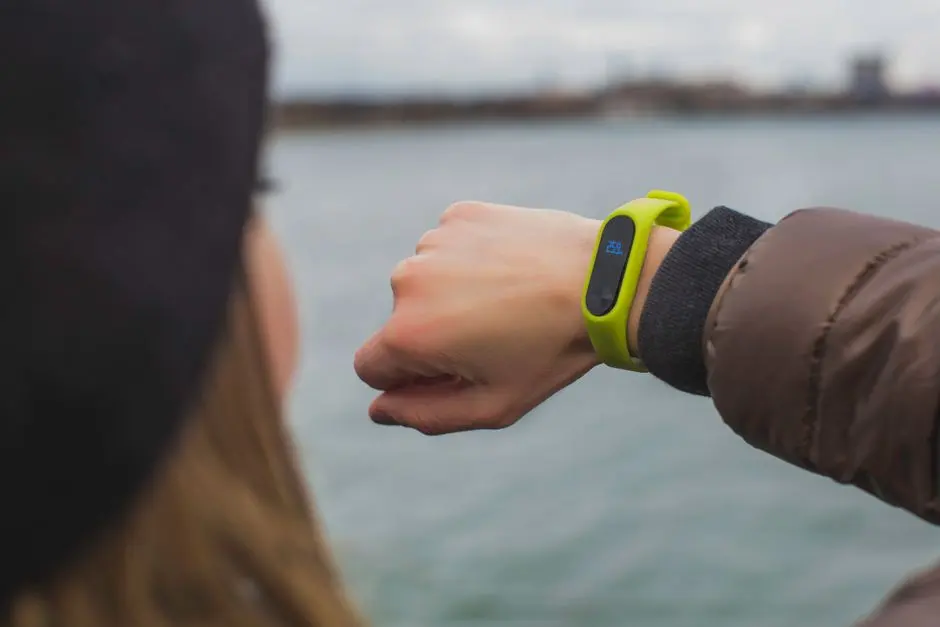
1. Chest-Strap Heart Rate Monitor (e.g. Polar H10)
A chest strap reads the electrical signal from the heart directly, the same basic principle as an ECG, rather than shining light through skin and guessing at blood flow changes the way a wrist device does. That’s why exercise physiology labs use chest straps as the reference device when they validate everything else on this list. It is, bluntly, the most accurate consumer option for heart rate and heart rate variability that exists at this price point.
What it measures well: instantaneous heart rate, beat-to-beat interval data good enough for real HRV analysis. What it doesn’t do: sleep staging, steps, GPS, any of the lifestyle features people associate with “wearables.” It’s a sensor, not a coach.
Cost is around $90, one time, no subscription, and the battery is a coin cell that lasts roughly a year. It pairs with almost everything — Garmin watches, cycling computers, most running apps — over standard ANT+ and Bluetooth.
Who it’s for: anyone doing structured cardio training, anyone who has noticed a wrist-based watch reading 40 beats too high during a hard interval (this happens constantly with optical sensors — sweat, wrist bone structure, and dark skin tone all degrade the light-based reading, and manufacturers rarely advertise that). Who should skip it: someone who wants a single all-in-one device. This is a specialist tool. The honest caveat: it’s uncomfortable for some people to wear for hours, and nobody is going to sleep in it.
2. A Bathroom Scale and a Notebook
Unglamorous. Also arguably the highest-value item on this list, and it costs about twenty dollars.
A basic scale measures body mass. That’s it — no bioelectrical-impedance body fat percentage worth trusting (those numbers swing wildly with hydration and are notoriously unreliable, smart scales included; save the extra fifty dollars). What it’s actually good for is the trend line, and the trend line is where the real signal lives. Weight fluctuates 2-4 pounds day to day from water, sodium, and bowel contents alone.
A single reading means almost nothing. Thirty readings, logged and averaged weekly, mean quite a lot.
The evidence angle here isn’t about the scale’s precision — cheap scales are precise enough. It’s behavioral. Self-monitoring is one of the more consistently observed drivers of successful long-term weight maintenance in the research on people who keep weight off for years, not months. The notebook (or a three-line spreadsheet, or a note on the phone) is doing as much work as the scale.
Who it’s for: genuinely everyone. Who should skip it: nobody, really, though people prone to obsessive daily weighing might do better with a weekly weigh-in instead of daily. The caveat: it tells you nothing about why the number moved. That’s a separate investigation.
3. Oura Ring
A ring, not a watch, which turns out to matter — optical sensors at the finger read more cleanly than the wrist because there’s less motion and better blood perfusion there. Oura leans into that advantage almost entirely around sleep and recovery.
Independent researchers comparing ring-based sleep staging against polysomnography, the lab gold standard involving electrodes on the scalp, generally find decent agreement on total sleep time and REM detection, with more slippage distinguishing light from deep sleep — the same weakness every consumer sleep tracker has, Oura included. For a head-to-head look at how it stacks up specifically on this, a comparison of Oura, Whoop, and Apple Watch on sleep-staging accuracy is worth reading before buying either.
Hardware runs roughly $300-350 depending on finish, and — this is the part people are often annoyed to discover after buying it — a subscription, currently around $6 a month, is required to see most of the data. Battery life is about a week. Who it’s for: people who care more about sleep and recovery trends than step counts or GPS runs. Who should skip it: anyone who refuses on principle to pay monthly for access to their own biometric data, which is a defensible position.
4. Garmin (Forerunner / Fenix / Venu lines)
Garmin built its reputation on endurance sports before “wellness wearable” was a category, and it shows. The underlying physiological modeling — training load, recovery time, VO2 max estimates — comes from Firstbeat Analytics, a Finnish sports-science firm Garmin acquired in 2020 with a real research pedigree in exercise physiology.
What it measures well depends heavily on the model and whether it’s paired with an external chest strap (highly recommended for anything demanding — see above). GPS accuracy for pace and distance is generally strong. VO2 max estimates are exactly that, estimates, and drift depending on how consistently someone trains outdoors versus on a treadmill.
No mandatory subscription for the core features, which is the single biggest reason it ranks above two devices below it. Price ranges enormously, from roughly $200 for an entry running watch to $700-plus for the rugged multisport lines. Battery life ranges from several days to several weeks depending on model and how many sensors are running.
Who it’s for: runners, cyclists, triathletes, anyone who wants deep training data without a recurring bill. Who should skip it: someone who just wants notifications and a clean sleep score with minimal setup — the interface has a learning curve.
5. Apple Watch
The strongest all-around ecosystem play, not the strongest specialist. The ECG app is FDA-cleared and generates a single-lead reading comparable in concept to a basic clinical ECG strip — a real, validated feature, not marketing fluff. Stanford’s Apple Heart Study, published in the New England Journal of Medicine in 2019, tested the watch’s irregular-rhythm notification feature at scale and found it functions as a screening tool, not a diagnostic one. A screen is supposed to catch more than it confirms. Worth knowing going in.
Sleep tracking is a later, weaker addition compared to Oura or Whoop, and heart rate during hard exercise has the usual optical-sensor wobble. Fall detection and crash detection are genuinely useful safety features most competitors don’t match.
No subscription required for core health features. Price starts around $249 for the SE, climbing past $400 for newer Series and Ultra models. Battery life is the weak point — about a day, sometimes less with GPS running, which undercuts overnight sleep tracking for anyone who forgets to charge it in the shower window.
Who it’s for: anyone already inside the iPhone ecosystem who wants one device instead of two. Who should skip it: dedicated sleep- or recovery-focused users, and anyone on Android.
6. Whoop
No screen, no clock face, built entirely around strain and recovery scoring derived from HRV, resting heart rate, respiratory rate, and sleep. For athletes trying to avoid overtraining, that narrow focus is arguably a strength — less to look at, one number to check each morning. A broader comparison of Oura, Whoop, and Garmin across categories covers where Whoop’s recovery model tends to agree or disagree with the others on the same person, same day.
The catch: Whoop has no purchase option. The band itself is effectively free or near it; the subscription — historically around $200-240 a year — is mandatory and permanent. Stop paying and the device stops functioning as anything but a wristband. That changes the ownership math compared to Oura, where the hardware is at least fully owned after the initial purchase.
Who it’s for: serious athletes who live and die by recovery scores and don’t mind the ongoing cost. Who should skip it: anyone who wants to own their device outright, or anyone who has already burned out on checking a recovery score every single morning like it’s a horoscope.
7. Continuous Glucose Monitor (CGM)
The most medically legitimate sensor on this list, and the one most people don’t need. A CGM — Dexcom’s Stelo and Abbott’s Lingo are the current over-the-counter options in the US — uses a small filament under the skin, worn on the back of the arm for one to two weeks, to estimate interstitial glucose continuously rather than at a single fingerstick moment. That’s genuinely different information than anything else here, and the underlying sensor technology has decades of use in diabetes management behind it.
For someone with diagnosed insulin resistance or prediabetes, the data can be clarifying — seeing which meals spike glucose and by how much is concrete, actionable, personal. It also explains why two people can eat the identical meal and get completely different glucose curves — microbiome composition is one of the bigger unseen variables driving that, alongside sleep, stress, and meal order. Some CGM users run informal self-experiments with things like the vinegar-before-meals habit, watching their own curve to see if it does anything.
For a metabolically healthy person with no dysglycemia, though, the data mostly generates anxiety over normal, expected glucose variation. Cost is real money — roughly $99 a month for Stelo without insurance, less for Lingo — for information that, absent an actual metabolic problem, changes very little about what to do next. Who it’s for: anyone with a diagnosed glucose issue wanting to see cause and effect in real time. Who should skip it: everyone else. Most people do not need one.
What to Skip
Smart rings and bands that promise to measure blood pressure without a cuff. The physics don’t support it yet at consumer price points — cuffless blood pressure estimation from wrist or finger optical data is an active research area, not a solved problem, and several products currently selling this feature have not published independent validation data that would satisfy a cardiology lab. Treat any number from one of these as decoration, not a reading.
Body composition scales claiming precise body fat, muscle mass, and “visceral fat rating” breakdowns. Bioelectrical impedance is sensitive to hydration status to the point that the same person can get readings several percentage points apart before and after a glass of water. The weight number on those scales is fine. Everything else on the screen is a rough guess dressed up as a decimal point.
Sleep trackers that assign a nightly “score” out of 100 and frame anything under 70 as a failure. This creates a real phenomenon researchers have started calling orthosomnia — anxiety about sleep quality driven by obsessive tracking, which then makes sleep worse. If checking the score is making bedtime stressful, the tracker has become the problem it was bought to solve.
Anything promising to measure stress or “recovery” as a single clean number with no explanation of the inputs. Recovery is downstream of training load, sleep, nutrition, and life stress all at once. A black-box score that collapses all of that into one digit is convenient and also not especially informative on its own.
How to Actually Use This

Give any new device two to three weeks before judging it. The first several days of data from a new wearable are frequently noisy as the algorithm calibrates to an individual baseline — resting heart rate, typical sleep timing, activity patterns. A bad first week is not a verdict on the hardware.
Take a guy we’ll call Marcus, forty-one, who bought a Whoop after a rough physical and decided the recovery score would tell him when he’d earned a hard workout. For about a month it worked — he trained on green days, backed off on red ones, felt smug about it. Then he hit a stretch of red scores that didn’t match how he actually felt, kept training hard anyway out of stubbornness, and the score kept dropping. Turned out the real problem wasn’t training load at all — he’d started a new job with a two-hour round-trip commute and was eating dinner at 9:30 most nights. The band was accurately reporting a nervous system under strain. It just couldn’t tell him why, and he spent three weeks blaming his training program before he looked at the actual schedule change.
That’s the pattern worth remembering: the device reports the number. It doesn’t investigate the cause. That part is still on the person wearing it.
Sequence matters too. Fix sleep timing and consistency before trusting a recovery score — an erratic bedtime will tank HRV readings regardless of training. Fix that first, then layer on training-load tracking once the baseline stabilizes. Adding a CGM before any of the fundamentals are handled is usually a waste of $99 a month; fix food quality and meal timing first, then use the CGM to fine-tune, not to discover the obvious.
What Matters More Than Anything on This List

The foundation that actually moves every number on every device above — sleep consistency, whole-food eating, alcohol intake, and stress load — outperforms the entire category. A person sleeping five broken hours a night and eating mostly ultra-processed food will get worse numbers on a $350 ring than a person sleeping seven consistent hours with no tracker at all. Fixing what’s actually driving those numbers, starting with gut health, tends to move heart rate variability, sleep quality, and glucose stability all at once, because they share upstream causes — the nervous system, the microbiome, inflammation — that no wearable measures directly.
That connection runs deeper than most people assume. The vagus nerve links gut and brain directly, and chronic nervous system dysregulation shows up as digestive trouble as reliably as it shows up as a depressed HRV score on a chest strap or a ring. The device sees the downstream symptom. The gut is often part of the upstream cause.
Food quality matters here too, more than any score. Certain categories of ultra-processed food reliably spike glucose and disrupt sleep architecture in ways that show up on every tracker on this list, whether or not the person wearing it ever looks at a food log. Fixing the input changes the output. Obvious, maybe. Also the thing most people skip in favor of buying a better sensor.
Common Questions
Does a wearable need to be worn every night to be useful? Not literally every night, but consistency matters more than any single reading. A device worn three random nights a week produces a trend line too noisy to interpret. Two to three weeks of near-daily wear is a reasonable minimum before drawing any conclusion from the data.
Can any of these tell someone they have a nutrient deficiency or a genetic issue? No. Heart rate, movement, and sleep staging say nothing about ferritin, B12, or a variant like the MTHFR mutation — that requires actual bloodwork, not a wrist sensor. Same goes for organ function; a tracker cannot flag early liver trouble, and treating a good sleep score as a clean bill of health on everything else is a mistake.
Is an optical wrist sensor ever accurate enough for serious training? For steady-state cardio, reasonably close. During high-intensity intervals, sprinting, or lifting, optical sensors frequently lose the signal or lag behind the actual heart rate by a meaningful margin. Anyone training by heart rate zones for real should use a chest strap during the session itself and save the wrist device for daily-life tracking.
Why does a sleep score sometimes contradict how someone actually feels? Because the algorithm is estimating sleep stages from movement and heart rate patterns, not measuring brain waves directly. Subjective sleep quality also depends on factors no wearable captures — sleep debt from the prior week, caffeine timing, room temperature, whatever happened right before bed. Trust the felt experience over the number when they disagree.
Is it worth buying a device purely to lose weight? Rarely, on its own. The evidence for wearables directly causing weight loss is thin; the value is almost entirely in the awareness and accountability they create, which a twenty-dollar scale and a notebook produce just as well for most people. Save the money unless there’s a specific training or medical use case driving the purchase.
Do these devices ever get less accurate over time? Optical sensors can drift with wear and tear, strap fit changes, and skin contact quality, and battery degradation on some devices affects sensor read frequency. A device giving oddly inconsistent readings after a year or two of daily use isn’t necessarily broken — it might just be due for a strap replacement or a firmware update, but it’s worth cross-checking against a chest strap occasionally to confirm nothing has actually degraded.