
Most men who order their own bloodwork make the same mistake twice. First they test one thing — usually testosterone, because that’s the word everyone knows — and treat the number like a verdict. Then, when it comes back unremarkable, they panic or shrug, neither of which helps, because a single hormone in isolation tells a partial story. Testosterone doesn’t operate alone. It’s bound, converted, fed by upstream signals, and shadowed the whole time by cortisol and thyroid output.
This is a ranking of the tests worth understanding before spending money on a panel — what each one measures, what a good number looks like versus what a lab will wave through as “normal,” when to draw it, and where it falls short. Nothing here is a suggestion to bring a printout to an appointment and demand a prescription. It’s the opposite — what it takes to read a lab report and know what’s actually being said, so whatever gets done next is done with information instead of a guess.
How This Is Ranked
The order below runs on three things:
- How directly each test explains male hormonal function.
- How much a “normal” lab flag actually hides.
- And how practical the test is to get and interpret without a specialist walking through it line by line.
Tests that are cheap, widely available, and answer a real question rank above tests that are exotic or answer a question nobody asked yet.
Popularity is not a criterion. Neither is which test a supplement company cites in its marketing copy to sell the product that supposedly fixes it. Some of the most heavily advertised panels — the twenty-marker “complete hormone health” kits sold direct-to-consumer — bundle in tests with weak actionability just to make the box look thorough. Thoroughness and usefulness are not the same thing.
For broader context on how these pieces fit into a full workup — not just which ones to order but in what order and why — the complete breakdown of what to test and when covers the sequencing in more depth than a single ranked list can.
The Ranking
Total and Free Testosterone
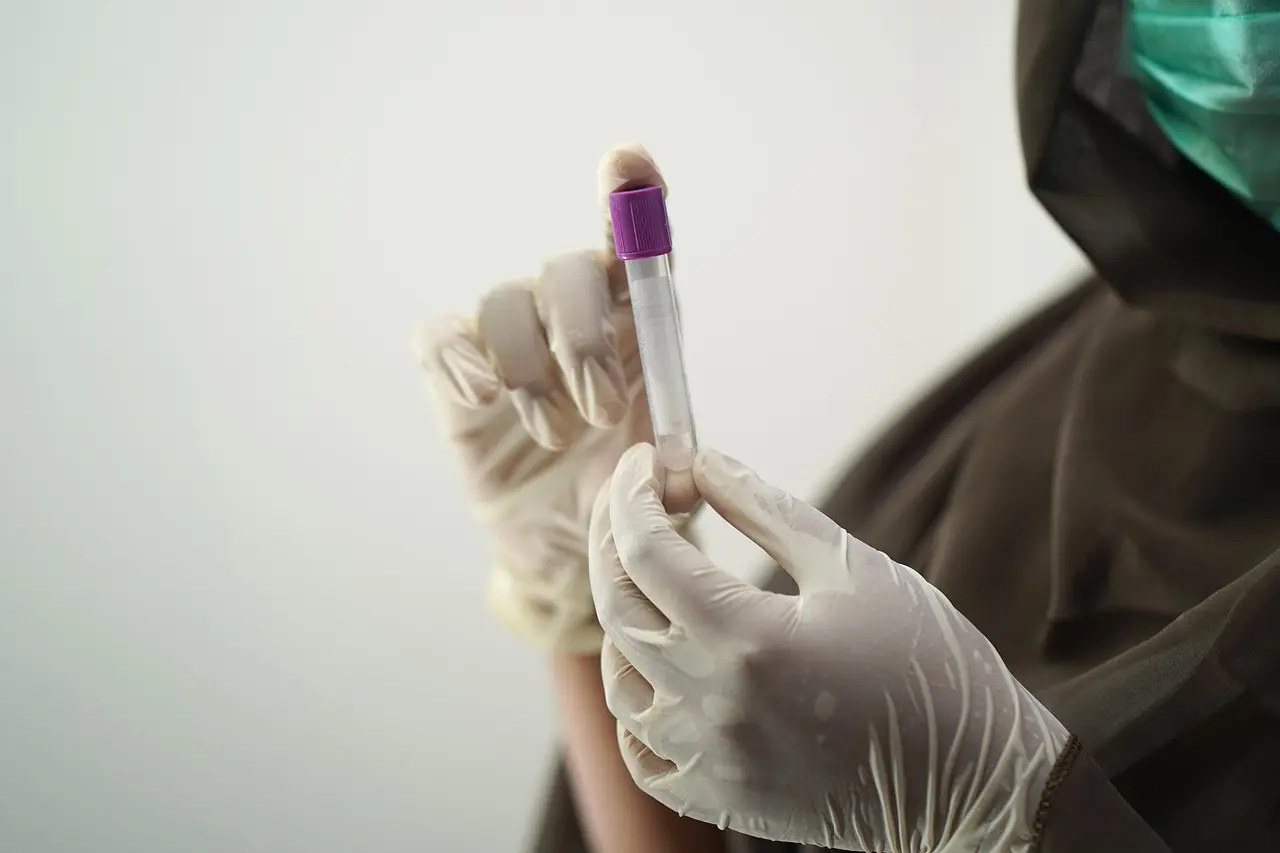
Conventional lab reference ranges for total testosterone typically run somewhere around 300 to 1,000 ng/dL, with anything below roughly 300 ng/dL flagged as low. That range is enormous — a man at 320 ng/dL and a man at 950 ng/dL are both “in range,” and they are not remotely the same. A number in the upper half, generally north of 600 ng/dL, is a more reasonable target than merely clearing the <300 ng/dL cutoff.
Draw it fasted, between 7 and 10 a.m., when testosterone is at its daily peak — afternoon draws run lower and can make a normal man look borderline. Free testosterone should be measured by equilibrium dialysis when possible; the cheaper “direct” immunoassay version is widely regarded as unreliable at the low end of the male range. The honest caveat: one draw is a snapshot, not a trend. Illness or a hard training block the day before can drag the number down temporarily, which is why a single low reading calls for a repeat before it gets treated as real.
Sex Hormone Binding Globulin (SHBG)
SHBG is the protein that does the binding referenced above. Produced in the liver, it grabs onto testosterone (and estradiol) in the bloodstream, rendering that portion inactive. High SHBG means more testosterone is locked up even if the total number looks fine. Low SHBG means more is floating free, which can make total testosterone look artificially low while free testosterone stays reasonable.
This is the test that explains the total-versus-free discrepancy, and it’s the reason ordering total testosterone alone is close to useless. Reference ranges run roughly 10 to 57 nmol/L in adult men, but the number matters less on its own than as a modifier on the testosterone result next to it.
Draw it alongside total testosterone, same morning, same fasted state. The caveat: SHBG is downstream of liver function and thyroid status, so an unusual reading isn’t always about the sex hormone axis — it can be a flag for something metabolic happening elsewhere that just shows up here first.
Insulin resistance and obesity push SHBG down. Hyperthyroidism, aging, and low-calorie dieting push it up.
Estradiol (Sensitive Assay)
Testosterone converts into estradiol through an enzyme called aromatase, most of it happening in fat tissue — which is part of why body composition matters so much to the hormone picture, more on that further down. Estradiol isn’t a villain; men need some of it for bone density, cognition, and libido. The problem shows up at the extremes, in either direction.
Here’s the part that trips people up: the standard estradiol immunoassay most labs run by default was built for female reference ranges, where estradiol sits ten to twenty times higher than it does in men. At male concentrations, that assay is notoriously imprecise. The fix is requesting a sensitive assay, run by liquid chromatography-tandem mass spectrometry (LC-MS/MS), which labs will do but frequently don’t default to unless specified. Typical male reference ranges on a sensitive assay run roughly 10 to 40 pg/mL.
Draw it with the same morning panel, fasted. The honest caveat: even with an accurate number, there isn’t strong agreement on a single “optimal” figure the way there is for testosterone — the useful read comes from the ratio between testosterone and estradiol, and from how it lines up with symptoms, more than from the number alone.
LH and FSH
Luteinizing hormone and follicle-stimulating hormone are released by the pituitary gland and tell the testes what to do — LH triggers testosterone production, FSH supports sperm production. Neither one measures testosterone directly. What they measure is where a testosterone problem, if there is one, is coming from.
If testosterone is low and LH/FSH are elevated, the testes aren’t responding to the signal — a testicular-level (primary) issue. If testosterone is low and LH/FSH are also low or low-normal, the pituitary or hypothalamus isn’t sending enough signal — a secondary issue, far more commonly tied to sleep debt, chronic stress, underfeeding, or excess body fat than to anything structurally wrong. Reference ranges run roughly 1.5 to 9.3 mIU/mL for LH and 1.5 to 12.4 mIU/mL for FSH, though cutoffs vary by lab.
This pairing is what separates “something is broken” from “something is being suppressed.” The caveat: LH and FSH are pulsatile — released in bursts, not a steady stream — so a single draw catches one moment in a rhythm that moves throughout the day. Exogenous hormone or performance-enhancing compound use will suppress both, which muddies the read for anyone who isn’t candid about what’s gone into their body over recent months.
Thyroid Panel With Free T3
Thyroid hormone sets the metabolic pace for essentially every cell in the body, testosterone production included, and a sluggish thyroid can mimic low-T symptoms closely enough to send a man chasing the wrong problem for months. Most standard panels stop at TSH (thyroid-stimulating hormone), which is a reasonable screening tool but tells nothing about whether the thyroid hormone actually being produced is getting converted into its usable form.
T4 is the storage hormone; T3 is the active one, converted out in the tissues, not the thyroid gland itself. A man can have a textbook-normal TSH and still be converting poorly — under-eating, chronic dieting, and high stress all interfere with that step. Free T3 measures the active form directly, with typical reference ranges around 2.0 to 4.4 pg/mL, and it’s the piece TSH alone will never show.
The full mechanics of how this cascade works — TSH, T4, T3, and why the conversion step is where things quietly go wrong — get a full treatment in the piece on the thyroid hormone cascade, worth reading before ordering this one. Draw it any time of day, though consistent timing across retests matters more than clock-watching. The caveat: reverse T3, a third marker some functional practitioners add, brings cost and complexity without proportional actionable insight for most men.
DHEA-S
Dehydroepiandrosterone sulfate is produced by the adrenal glands and functions as a raw-material precursor — the body converts it downstream into both testosterone and estrogen. It’s one of the few hormones that reliably declines with age, dropping steadily from the late twenties onward in a pattern researchers sometimes call adrenopause, running parallel to the slower testosterone decline that gets more attention.
Reference ranges are wide and heavily age-dependent — a healthy 25-year-old and a healthy 55-year-old are compared against entirely different baselines. Draw it fasted, morning, same panel as the rest.
The honest caveat: a low DHEA-S number is common, expected with age, and there is not strong evidence that pushing it back up with supplementation reliably improves how a man feels or functions. It’s useful context more than a lever with a clear payoff on the other end.
Four-Point Cortisol (Salivary)
Cortisol runs on a daily rhythm — high on waking, tapering through the day, lowest at bedtime — and a single blood draw catches one point on that curve, which is close to meaningless without the shape of the whole thing. The four-point version collects saliva at waking, midday, late afternoon, and bedtime to map the actual pattern rather than a single moment.
Testosterone and cortisol run something closer to an inverse relationship than a partnership — cortisol is catabolic, testosterone anabolic, and chronic elevation of one tends to come at the expense of the other. The mechanism behind that competition, and why it matters more than either hormone alone, is covered in the piece on testosterone and cortisol as two hormones in one fight.
A flattened curve — where morning cortisol doesn’t rise properly and the evening dip doesn’t happen — is the pattern most associated with chronic overload, more than a single “high” or “low” number. The caveat, plainly: this is a functional-medicine tool, not a standard endocrinology diagnostic. It hasn’t been validated to the degree serum testosterone has, and it’s possible to have a real regulation problem and still get a curve that reads as unremarkable.
DUTCH Test
The Dried Urine Test for Comprehensive Hormones collects urine on filter strips at multiple points across a day, then measures not just parent hormones but their downstream metabolites — how testosterone and estrogen are actually being broken down and cleared, not just how much of each is present. It’s the most exhaustive test on this list by a wide margin, and it’s ranked last for exactly that reason.
In theory, metabolite data adds a layer standard bloodwork can’t touch — whether estrogen is being cleared down a more or less favorable pathway, for instance. In practice, most of what a DUTCH panel reveals sits downstream of information the tests ranked above already surface, with meaningfully less consensus on what to do about it. It’s the most expensive item on this list by a wide margin, and the report runs to a dozen or more pages of metabolite ratios genuinely difficult to interpret without guidance.
Worth considering for someone who has already run the core panel, addressed the obvious levers, and is still stuck. Not a sensible starting point. The honest caveat: the evidence base behind urinary metabolite testing is thinner and newer than standard serum hormone testing, and much of what gets done with a DUTCH result downstream is more art than established protocol.
What to Skip
Fadogia agrestis has become one of the most talked-about testosterone supplements on the market, marketed on the claim that it raises LH and drives testosterone up. The mechanism is at least plausible in theory. The actual human evidence is thin — what exists is almost entirely rodent-based, at doses that don’t map cleanly onto how it’s sold and used by men. Whether it’s safe to take daily for months, the way plenty of forums recommend, hasn’t been established either way. A closer look at what the evidence actually shows is worth reading before spending money here.
Seed cycling shows up on hormone-testing keyword lists constantly, which is exactly why it’s worth naming and dismissing here. It’s a practice built around rotating pumpkin and flax seeds during one half of the menstrual cycle and sesame and sunflower seeds during the other, designed to support the rise and fall of estrogen and progesterone across a cycle men don’t have. The full breakdown of what the practice claims to do is a reasonable read out of curiosity, but as a lever for male hormone health it doesn’t apply. Skip it.
Also worth a second thought: the bundled “complete hormone panel” kits sold direct-to-consumer that test fifteen or twenty markers in one box. Some of it is genuinely useful. A meaningful chunk is filler included to make the panel look comprehensive — tests a man will have no idea what to do with once the results land. Ordering broad and sorting later isn’t wrong, but it isn’t a strategy either.
How to Actually Use This

If that panel comes back with testosterone low and LH/FSH also low, the picture points toward the pituitary-hypothalamic signal, and lifestyle factors — sleep, stress, body fat, underfeeding — become the first thing worth addressing. If testosterone is low with LH/FSH elevated, that’s a different conversation, and one this piece isn’t going to wade into, because it moves past self-directed literacy and into territory that needs a clinician’s eyes on it.
DHEA-S and four-point cortisol are second-tier — worth adding when the core panel comes back clean or ambiguous and something still feels off, not before. The DUTCH test sits further back still, a third-tier option for someone who has already worked through the first two tiers and made the obvious changes without resolution. Consider a guy we’ll call Rob, forty-four, who ran the core panel, found nothing dramatically out of range, made changes anyway — cut drinking, fixed his sleep window, lost fifteen pounds — and still felt flat. He ran a DUTCH panel next, not first. Running it first would have been expensive noise.
Whatever changes get made off a result, give it eight to twelve weeks before retesting. Hormones don’t move on a weekly timescale, and retesting at three weeks because the first week felt promising just wastes another draw.
What Matters More Than Anything on This List
Sleep is the biggest one, not close. LH pulses that drive testosterone production are tied to sleep architecture, and chronically short or fragmented sleep suppresses that signal directly — no test required to know this matters, though the LH/FSH result above will show it if it’s happening. Body composition runs a close second, since more fat tissue means more aromatase converting testosterone to estradiol. Resistance training, adequate protein and total calories (underfeeding tanks LH the same way overtraining does), and alcohol reduction round out the list of things that move these numbers more than any supplement will.
Two more deserve mention because they’re underrated and directly testable. Vitamin D functions closer to a hormone than a vitamin, and the relationship between vitamin D status and testosterone is one of the more consistently observed associations in this space. Gut health, oddly enough, plays a role too; the mechanisms connecting gut function to testosterone production run through inflammation and nutrient absorption in ways that don’t show on any hormone panel but shape every number on it.
Environmental exposure belongs on this list too, and it’s the one most men have never considered. Certain plastics, personal care products, and common household chemicals interfere with hormone signaling directly — a detailed look at which chemicals do this and how is worth reading for anyone whose estradiol comes back elevated with no obvious explanation. Anyway. None of this is as interesting as a supplement stack or a specialty test, which is probably why it gets skipped over. It’s also the part of the picture that does the most work.
Common Questions
Does it matter what time of day the blood draw happens? Yes, more than most assume. Testosterone, LH, FSH, and DHEA-S all follow a daily rhythm and peak in the morning, so a 7 a.m. draw and a 4 p.m. draw on the same man can produce meaningfully different numbers. Morning, fasted, between 7 and 10 a.m., is the standard for a reason.
Is a single low result something to worry about right away? Not by itself. Illness, poor sleep the night before, or a hard training session can shift a number temporarily. A low reading is worth a repeat draw before it gets treated as a stable pattern rather than a bad day on paper.
Do at-home finger-prick kits give results as accurate as a venous blood draw? Generally no. Capillary blood introduces more variability than a standard venous draw. For a first panel establishing a baseline, the venous draw is worth the extra step.
Can supplements throw off results before testing? Biotin, common in hair, skin, and nail supplements, is known to interfere with several immunoassay-based hormone tests and can produce falsely abnormal readings. Most labs recommend stopping high-dose biotin for two to three days before a draw.
If only one test is affordable right now, which one? Total and free testosterone with SHBG run together, since SHBG is what makes the total-versus-free comparison meaningful. That trio explains more about where things stand than testosterone alone.
Does the ranking change with age? The core panel stays the same at any adult age, but the context shifts — DHEA-S in particular needs to be read against an age-matched range, since a level unremarkable at fifty-five would be worth a second look at twenty-eight. What to test first doesn’t move; what counts as a good number within that test does.