
Walk down the anti-inflammatory aisle of any pharmacy and the shelf goes on forever. Turmeric gummies. Fish oil in three different fill sizes. A green powder that promises to “fight cellular stress” without ever saying what that means. Most of it is marketing wearing a lab coat. A smaller pile of compounds actually has trial data behind them — enough to move hs-CRP, IL-6, or TNF-alpha in a way that shows up more than once, in more than one lab.
This list sorts the real pile from the noise. Eight items made the cut, ranked by how strong the human evidence actually is, not by how loudly the bottle markets itself. A few of the biggest sellers in the category didn’t survive and get named directly, further down, so nobody wastes a few months finding that out the hard way.
How This Is Ranked
Four inputs, in order of weight. First: does a randomized, placebo-controlled human trial show the compound moving a real inflammatory marker — hs-CRP, IL-6, TNF-alpha — rather than a mouse’s paw swelling or a petri dish reading. Second: how big is the effect, and does it show up more than once. A single small trial with a dramatic number is a hypothesis wearing a lab coat, not a fact. Third: what dose actually produced the result, because supplement labels routinely sell a quarter of the amount used in the positive trials. Fourth, last, and least: whether a normal person can tolerate taking the thing daily for months, since inflammation supplementation is a slow project, not a two-week fix.
None of that runs on sales rank. Popularity and marketing budget are not inputs here, and several of the best-selling products in this category are absent from the ranking for exactly that reason — good branding, thin trial base. For anyone tracking whether any of this is doing anything at all, an inflammation blood test that reports hs-CRP is the honest way to find out. Feeling less achy and measurably lowering CRP are related, but they are not the same claim, and this list tries hard not to confuse the two.
The Ranking
Omega-3 Fatty Acids (EPA and DHA, Fish Oil)
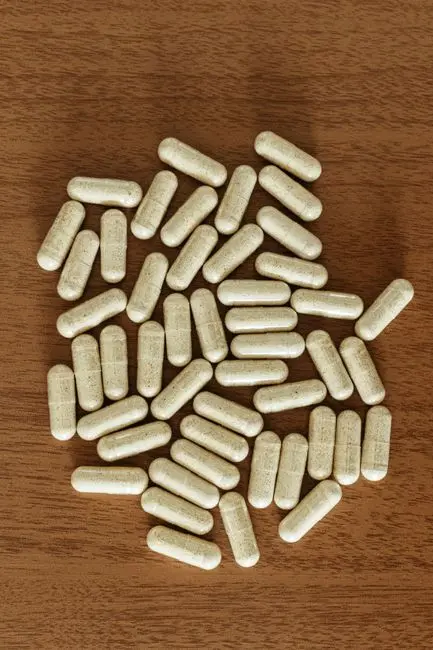
Real dose: 2 to 4 grams combined EPA and DHA daily. The ratio matters — formulations skewed toward EPA (roughly 1800mg EPA to 400mg DHA) show a stronger anti-inflammatory signal than balanced or DHA-heavy products, which lean more toward brain and eye benefits. Three months minimum before judging it. Right first supplement for joint pain, slow post-exercise recovery, or an elevated hs-CRP on a recent panel — the same exercise-induced inflammatory response covered in the post-workout supplements evidence review runs on this mechanism. Fish burps and, at higher doses, mild blood-thinning are the honest caveats.
Curcumin (Enhanced-Absorption Formulation)
The compound in turmeric that inhibits the NF-kB signaling pathway, which sits upstream of a huge share of the body’s inflammatory cytokine production — shut down NF-kB activation and a lot of downstream inflammation simply doesn’t get switched on in the first place. Multiple meta-analyses pooling dozens of randomized trials find curcumin supplementation lowers CRP, with the effect concentrated almost entirely in people who started with elevated inflammation to begin with. Osteoarthritis-specific trials using a lecithin-phytosome formulation (studied under the brand name Meriva) found pain and stiffness reductions in the same range as some standard over-the-counter anti-inflammatory options, without the same gastrointestinal cost of using those daily for months.
Here’s the part that sinks most curcumin products: plain turmeric powder is roughly 3% curcumin by weight, and unenhanced curcumin barely survives digestion. Real dose is 500 to 1000mg of curcuminoids from a formulation built for absorption — piperine-added, phytosome-bound, or nanoparticle — not a spice-rack scoop. Good for joint-specific inflammation and elevated CRP. Skip a product that doesn’t disclose an absorption-enhancing technology on the label; it’s doing very little.
Magnesium Glycinate
Magnesium is a cofactor in several hundred enzymatic reactions, several of which sit directly in inflammatory signaling pathways. Low magnesium status correlates with elevated NF-kB activation and higher CRP in population-level data, and small supplementation trials in magnesium-insufficient adults show a measurable, if modest, CRP drop after eight to twelve weeks. The honest caveat sits right there in that sentence — insufficient. This helps people who are actually low, and a genuinely large share of adults are, given how much magnesium gets stripped out of modern soil and processed food. It does very little for someone who’s already replete.
Real dose: 300 to 400mg elemental magnesium daily, glycinate form specifically, which avoids the loose-stool problem that magnesium oxide reliably causes at that dose. Cheap, well tolerated, worth a try for almost anyone — the ceiling on the benefit is just lower than omega-3 or curcumin because the mechanism is corrective, not additive. Fixing a deficiency helps. Piling more magnesium on top of a normal level does close to nothing.
Vitamin D3 (With K2)
Vitamin D receptors sit on immune cells throughout the body, and vitamin D modulates T-cell behavior and cytokine output directly. The correlational data is strong — low vitamin D tracks with high CRP in study after study. The randomized trial data is messier. The VITAL trial, a large randomized study published in the New England Journal of Medicine, gave 2000 IU of vitamin D3 daily to a mostly-replete general population and found no significant reduction in cardiovascular disease or cancer incidence. Smaller trials run specifically in deficient populations do show measurable inflammatory marker improvement, which is the pattern worth paying attention to: this only works if there’s a deficiency to correct.
Real dose: 2000 to 4000 IU daily, ideally with 100mcg of K2 to direct calcium appropriately, targeting a serum 25(OH)D level of 30 to 50 ng/mL — get it tested, don’t guess. For someone already sitting at 45 ng/mL, more vitamin D is not going to move CRP an inch. For someone sitting at 18, it might be the single highest-value item on this entire list.
The whole thing hinges on a number most people have never actually checked.
Ginger Extract (Zingiber Officinale)
Gingerols and shogaols — the pungent compounds in ginger — inhibit the same COX and LOX enzymatic pathways that curcumin partially targets, through a slightly different chemical route. Meta-analyses of osteoarthritis trials show modest reductions in joint pain and stiffness with standardized ginger extract, generally a smaller effect size than curcumin produces in the same category of trial, though the two haven’t been tested head-to-head enough to say that with real confidence. Less data exists on whether ginger moves systemic CRP the way omega-3 or curcumin does; most of the trial base is joint-specific.
Real dose: roughly 1 to 2 grams dried ginger equivalent daily, or a standardized extract around 250mg taken twice daily. Reasonable second-tier addition for joint stiffness, and it carries a mild secondary benefit for nausea and gut discomfort that the other items on this list don’t offer. Not worth building a whole protocol around in isolation — the effect size is real but small, and a lot of that benefit is available from just eating ginger in food regularly instead of capsuling it.
Undenatured Type II Collagen (UC-II)
Not the same product as the hydrolyzed collagen powder sold for skin and hair, and this is where a lot of shoppers get confused by the word “collagen” doing two different jobs. UC-II works through oral tolerance — a small, specific dose of undenatured type II collagen presented to gut-associated immune tissue trains a regulatory immune response aimed at joint cartilage. Trials in osteoarthritis populations show modest improvements in joint stiffness and function over several months. The evidence base is real but thinner than the top four items here, and the mechanism is narrow — joint-specific, not a general systemic anti-inflammatory.
Real dose is oddly tiny: 40mg per day, nothing close to the 10 to 20 grams of hydrolyzed collagen used in the skin-focused trials covered in the oral collagen evidence for skin — different molecule, different dose, different outcome measured entirely. Worth it specifically for joint stiffness, not for a general “lower my inflammation” goal, and worth checking labels carefully, because “collagen” alone on a bottle says nothing about which of these two very different products is actually inside.
Spirulina
The blue-green algae’s active compound is phycocyanin, a pigment-protein complex that shows real anti-inflammatory signaling activity in preclinical work — inhibiting some of the same pathways curcumin targets. The honest problem is the human trial base: small studies, most under fifty participants, doses ranging wildly from 1 to 8 grams daily because nobody has really standardized it yet, and results that don’t replicate as cleanly as the top of this list. It’s here because the mechanism is credible and a handful of positive human trials exist, not because the case is closed.
Reasonable low-cost addition for someone who’s already covered the better-evidenced items and wants to add something with a real, if unproven, mechanism. Not a starting point. Quality control is the other issue worth naming directly — contamination with heavy metals or microcystins has shown up in poorly regulated spirulina products, so sourcing matters more here than almost anywhere else on this list.
Green Tea Extract (EGCG)
Catechins, and EGCG specifically, show antioxidant activity and some NF-kB pathway modulation in cell-culture studies. The human trial picture on CRP is genuinely mixed — several well-run trials at standard doses show no significant change at all, and the effect that does show up tends to appear only when green tea extract is combined with exercise or a broader diet change, not when it’s taken alone as a standalone fix.
Real dose: 300 to 400mg EGCG. Worth knowing, and worth saying plainly: isolated high-dose extract above roughly 800mg daily has been associated with liver enzyme elevation in case reports, which is the one real caution on this entire list that has nothing to do with effectiveness and everything to do with safety. Fine as a minor addition to a stack already built around omega-3 and curcumin. Not worth building anything around by itself.
What to Skip
Glucosamine and chondroitin, first, because the flagship trial already answered this. The GAIT trial — Glucosamine/chondroitin Arthritis Intervention Trial, published in the New England Journal of Medicine in 2006 — tested glucosamine, chondroitin, and the combination against placebo in a large osteoarthritis population. Neither compound, alone or combined, beat placebo for the group as a whole. A small subgroup with moderate-to-severe pain showed a modest signal with the combination, which is a real finding, but it’s not enough to justify the shelf space this pairing still takes up two decades later.
CBD is next. Preclinical and animal data on cannabinoid receptors and inflammatory pathways is genuinely interesting. Human RCT data specifically measuring CRP or IL-6 change from oral CBD is thin to the point of not really existing yet — most human CBD trials measure pain, anxiety, or sleep, not inflammatory markers directly. That’s not the same claim, and it gets sold as if it were.
MSM (methylsulfonylmethane) has a handful of small, mostly industry-funded trials with inconsistent results. Alkaline “greens powder” products marketed on the idea that blood pH can be shifted by diet to reduce inflammation skip past basic physiology — blood pH is tightly regulated within an extremely narrow range regardless of what’s eaten, so the entire mechanism the marketing rests on doesn’t hold up.
Two adjacent categories are worth naming too, since they get marketed with inflammation language that doesn’t quite fit. Strict nightshade elimination gets sold as an anti-inflammatory diet move; the actual evidence for that, covered directly in nightshades and inflammation: fact or fiction, is a lot thinner than the claim suggests for most people. And stimulant-heavy pre-workout blends that lean on anti-inflammatory buzzwords in their marketing copy are solving a performance problem, not an inflammation one — see what actually works in a pre-workout for that separate, unrelated evaluation.
How to Actually Use This

Once deficiencies are handled, omega-3 and curcumin form the core of almost every reasonable stack — strongest independent evidence, two different mechanisms (resolvin production versus NF-kB inhibition), no known negative interaction. Take both with a meal that has some fat in it; both absorb better that way. Ginger and UC-II collagen are reasonable third and fourth additions for joint-specific stiffness, rather than general elevated CRP.
Test one addition at a time. Adding four things simultaneously and feeling better in six weeks means nothing — there’s no way to know which one, if any, actually did the work. Give each addition eight to twelve weeks before judging it, and if hs-CRP is being tracked, retest at that same interval rather than guessing off how joints feel that week, which is a genuinely unreliable measure day to day. For a broader view of how these fit alongside protein, creatine, and the rest of a general supplement approach, the evidence-based stack for men covers the full picture this page only addresses one slice of.
What Matters More Than Anything on This List
Dave fixed the diet first, not the supplements. CRP dropped more in the six weeks after that change than it had in the previous four months combined. He didn’t stick with it cleanly — there was a bad stretch around a work deadline where the fast food came back for two weeks and the next test showed it, which is a useful reminder that this isn’t a straight line for anyone, including people who eventually get it right.
Sleep and cold exposure sit right behind diet. Chronic short sleep alone raises IL-6 and CRP independent of everything else on this list, and no supplement stack reliably outruns five hours a night for months on end. Cold exposure’s effect on inflammatory markers is smaller and more contested than sleep’s, but it’s a real, low-cost lever worth understanding on its own terms rather than bolting onto a supplement routine as an afterthought.
One more thing worth naming honestly, because it rarely gets said in this kind of list: inflammation isn’t only a physical complaint. Elevated inflammatory cytokines are implicated in mood and cognitive symptoms too — the mechanism is covered directly in the cytokine theory of depression — which is one more reason the foundation matters more than any single capsule. A body running hot on inflammation for years doesn’t just ache. It changes how a person thinks and feels, quietly, in ways that rarely get traced back to the actual cause.
Common Questions
How long before any of this shows up on a blood test? Eight to twelve weeks minimum for most items on this list, and that’s the honest floor, not a marketing suggestion. Magnesium and vitamin D can move faster if an actual deficiency is being corrected — sometimes six weeks. Omega-3 and curcumin tend to be slower and steadier. Retesting before eight weeks is mostly testing noise, not signal.
Is it worth taking several of these at once from day one? No. Stacking everything simultaneously and feeling better in a month tells nothing about which item did the work, and if something causes an issue — the liver concern with high-dose green tea extract, for instance — there’s no way to isolate the cause. One or two additions at a time, tested properly, beats a five-item stack thrown together on day one.
Do these interact with each other? Omega-3, curcumin, and magnesium have no meaningful known interaction and are commonly taken together. The one combination worth genuine caution around is high-dose omega-3 stacked with any existing blood-thinning medication or supplement — that’s a real, additive effect worth being aware of, not a reason to avoid omega-3 outright.
Can unexplained inflammation be a thyroid problem? Sometimes. Autoimmune thyroid conditions, Hashimoto’s in particular, run with measurably elevated inflammatory markers as part of the underlying autoimmune process, separate from anything covered on this page. Anyone with unexplained elevated CRP alongside fatigue, weight changes, or cold intolerance should look at that angle specifically — the dedicated breakdown in thyroid supplements: what evidence supports covers what actually has trial support there, which is a different and more specific list than this one.
What’s the realistic first move for someone starting from nothing? Get an hs-CRP number, even a rough one, before adding a single capsule — there’s no way to judge progress without a baseline. Then fix diet and sleep for a month before adding anything from this list at all. Add omega-3 first among the supplements themselves. Everything else is refinement on top of a foundation that has to be there already.
Does exercise make inflammation worse or better? Both, on different timelines. A hard training session spikes inflammatory markers acutely for 24 to 48 hours — that’s a normal, expected part of the adaptation process, not a red flag. Regular moderate exercise over months lowers resting hs-CRP measurably. The short-term spike and the long-term benefit are not contradictory; they’re the same process viewed at two different time scales.
Is there a point where more supplementation just stops helping? Yes, faster than most expect. Once deficiencies are corrected and diet, sleep, and movement are in order, a sixth or seventh addition produces returns too small to distinguish from noise. Four well-chosen items, dosed correctly, outperform eight mediocre ones every time.