
It is 5:53 AM in Manchester, England, in the winter of 2004. The training ground is empty. The floodlights have not been turned on yet, and the pitch is still frozen at the edges. A nineteen-year-old kid from Madeira — skinny, borderline awkward, a notorious stepovers merchant — has let himself in early and is hitting free kicks in the dark. Not ten free kicks. Not twenty. He is tracking every shot, adjusting his run-up by centimeters, repositioning the ball, taking the kick again. He will still be there when his teammates arrive. He was there the day before. He will be there tomorrow.
Cristiano Ronaldo’s discipline routine has been written about thousands of times, and almost all of those articles make the same mistake: they treat it as a schedule. They list the wake-up time, the naps, the macros, the cryo chamber, the 7% body fat, and they present all of it as a set of behaviors you could copy if you committed hard enough. But the schedule is not the thing. The schedule is what the thing produces when you apply it consistently for twenty-two years.
The thing — the actual engine underneath every waking-up-early and every skipped dessert — is a structural principle that Ronaldo has never named but has lived so completely that you can see it operating in every decision he makes. Call it the Peak Architecture: a four-layer system where each layer creates the biological and psychological conditions that make the layer above it possible. Mess with any layer, and the whole structure loses integrity. Build all four layers with precision, and the compound effect accumulates into something that looks, from the outside, like supernatural talent.
This is not a celebrity biography. And this is not a schedule to copy. This is a breakdown of the Peak Architecture — the structural logic behind Cristiano Ronaldo’s discipline routine — and how a normal person, without a private chef or a personal sleep coach, can build the same architecture at a fraction of the scale and still produce results that feel, from the inside, genuinely extraordinary.
The Man Before the Method: Why Madeira Matters
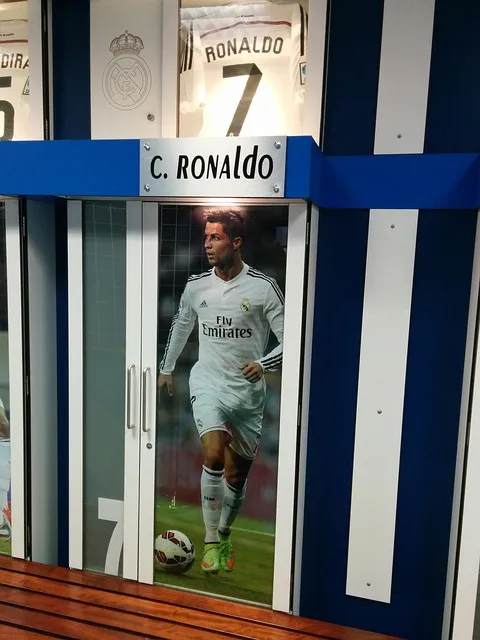
What he did with that isolation is the first and most important data point about his discipline. He trained. Not because anyone told him to, and not because he had a structured protocol. He trained because training was the one variable entirely within his control. In a new city, without his family, unable to fit into the social fabric of the academy, Ronaldo found that the pitch would always respond to effort. Kick the ball well, and it goes where you want. Train the body harder, and it performs better. The cause-and-effect relationship was so clean and reliable that it must have felt like sanctuary to a twelve-year-old with no other reliable anchors.
This is why copying Ronaldo’s schedule misses the point entirely. His discipline is not a protocol he adopted. It is a coping mechanism that evolved into a superpower. By the time he was eighteen and Manchester United were watching him in a pre-season friendly, the discipline had already been running for six years, and the compounding had already begun. Sir Alex Ferguson paid £12.24 million for what he saw on the pitch that day. What he was really buying was twenty years of accumulated investment that had already been made before the transfer was ever discussed.
The lesson is uncomfortable: whoever hasn’t started yet is already behind. Not behind Ronaldo specifically — behind the version of themselves who started building the deliberate practice habit five years ago. That version is hypothetical. There’s no going back. But the architecture can be understood well enough to start building now, and let the compounding do its work from here. This is the same insight behind every long-term resilience system worth studying: the work that looks invisible in year one is the work that looks miraculous in year ten.
Peak Architecture Layer One: The Foundation (Sleep and Recovery)
Nick Littlehales has worked with elite athletes in football, cycling, rugby, and swimming for two decades. He was the sleep coach at Manchester United when Ronaldo first arrived, and his influence on Ronaldo’s approach to rest is the reason that polyphasic sleep — sleeping in multiple shorter blocks rather than one long one — became central to Ronaldo’s recovery system.
The protocol Littlehales designed is built around ninety-minute sleep cycles. Each cycle represents one complete progression through the four stages of sleep: light sleep, deep sleep (slow-wave), and REM sleep. Rather than targeting eight hours of continuous sleep — an arbitrary figure that most sleep researchers consider poorly supported — the system targets five complete ninety-minute cycles distributed across the day. Ronaldo typically runs two cycles before midnight, one cycle overnight, and a ninety-minute nap in the early afternoon. The total: approximately seven and a half hours of sleep in multiple protected blocks.
The science behind this approach is stronger than most people realize. Matthew Walker’s research at UC Berkeley, published in Why We Sleep and in studies in Nature Reviews Neuroscience, confirms that the proportion of time spent in slow-wave (deep) sleep versus REM sleep shifts across the night — with more deep sleep occurring in the first half and more REM in the second half. A strategic afternoon nap captures additional slow-wave sleep that supports muscle repair, growth hormone secretion, and metabolic restoration: exactly the physiological processes that a professional athlete needs to repeat maximum-intensity efforts every single day. A 2019 study published in the British Journal of Sports Medicine by Fullagar et al. found that sleep extension and strategic napping in elite athletes produced measurable improvements in sprint performance, reaction time, and accuracy — outcomes directly relevant to a footballer operating at the top of the game.
The nap itself is non-negotiable in Ronaldo’s schedule. He has described it as “essential, not optional” — and the conditions he creates for it reflect exactly how seriously he takes this layer of the architecture. Blackout curtains. Room temperature between 65 and 68 degrees Fahrenheit (the range the National Sleep Foundation identifies as optimal for sleep onset). No electronic devices. A consistent start time. The nap is not a casual lie-down. It is a scheduled, protected physiological protocol — and the same principle applies to managing the cortisol-sleep feedback loop that wrecks recovery for high-output people who treat rest as optional.
Why does this matter as Layer One? Because everything else in the Peak Architecture runs on the quality of this foundation. Training intensity is a function of recovery quality. Decision-making under pressure — the kind that wins Champions League finals — is a function of prefrontal cortex performance, which is exquisitely sensitive to sleep deprivation. Emotional regulation, injury resistance, body composition, immune function, hormonal balance: every single metric that determines an athlete’s longevity degrades in proportion to the quality of sleep, and every single one improves when sleep is optimized. Ronaldo has treated sleep as a performance tool since he was in his early twenties, and he is now thirty-nine years old and still competing at the highest professional level. These two facts are not unrelated.
For context: the average male professional footballer retires between thirty-two and thirty-four. Ronaldo is seven years past that and scoring regularly in the Saudi Pro League — a division that, whatever its reputation, requires elite-level physical conditioning to compete in at any age. The foundation is holding because he has never stopped building it.
Peak Architecture Layer Two: The Fuel System (Nutrition)

Meal 2 (mid-morning, ~10 AM):
Typically tuna or another lean protein source with a salad. This is a bridge meal — modest in volume, specifically designed to maintain blood glucose stability between the morning gym session and team training, preventing the energy crash that amateur athletes experience at 11 AM when they try to train on a single early breakfast.
Meal 3 (post-training lunch, ~1 PM):
Grilled chicken or fish with rice and vegetables. The largest carbohydrate load of the day, timed to coincide with the glycogen window — the sixty to ninety minute period post-exercise when muscles absorb carbohydrates most efficiently for recovery and storage.
Meals 4-6:
Progressively lighter as the day moves toward sleep. A protein-focused afternoon snack after the nap. A dinner of fish and salad. A small pre-sleep protein serving if needed. No heavy meals within two hours of any sleep block.
The non-negotiable exclusions are more revealing than the inclusions: zero alcohol, no sugary drinks, minimal processed food, no fast food, controlled dairy. The alcohol abstinence deserves particular attention. Ronaldo has explicitly linked his abstinence to his father’s death from liver disease caused by alcoholism — but the performance rationale is independent of the personal history. Alcohol suppresses growth hormone secretion (critical for overnight muscle repair), disrupts both deep sleep and REM sleep architecture, increases cortisol, and impairs protein synthesis for up to seventy-two hours after consumption. For an athlete competing multiple times per week, a single night of drinking has downstream effects that last until the next match. Ronaldo understood this early and made a decision that most professional athletes, even at the elite level, have not made with the same consistency.
His body fat of approximately seven percent — compared to an average of ten to twelve percent for elite footballers — is the metabolic result of this system operating without exceptions for two decades. It is not the product of a crash protocol or a pre-season effort. It is the accumulated result of ten thousand individual meals being handled correctly. Former teammates who have eaten with Ronaldo across multiple clubs and national team camps tell the same story: he orders from the menu the way a surgeon selects instruments. With precision, without negotiation, and with zero visible resentment. He does not experience restriction. He has built the Peak Architecture deeply enough that the fuel choices feel like identity, not sacrifice.
This is the critical point for anyone trying to improve their own nutrition. Changing food habits through willpower is a losing strategy from the start because willpower is a finite resource that depletes across the day. Building an identity as someone who eats for performance — who considers every meal through the lens of “does this serve what I am trying to build?” — removes the daily decision. Ronaldo does not fight for self-control at the dessert table. He has simply built a version of himself for whom dessert is not a category under active consideration. That identity was built one choice at a time over years, and it is now structural. The transition from willpower-based eating to identity-based eating is one of the most underappreciated use points in high-performance living — and it applies equally to nutrition, training, sleep, and the quality of focus.
Peak Architecture Layer Three: The Engine (Training Architecture)
Ronaldo’s training structure has evolved significantly across his career, but the underlying principles have remained consistent since his Manchester United years. There are three distinct training modalities, each serving a different function within the Peak Architecture.
Personal gym sessions (pre-team training, approximately sixty to ninety minutes):
These are conducted before team training begins and focus on explosive power, structural strength, and injury prevention — the physiological substrate that all technical and tactical football skill is built on top of. Heavy compound lifts (squats, deadlifts, Bulgarian split squats) for lower body power. Plyometric work (box jumps, depth jumps, hurdle hops) for reactive strength. Extensive core work — not aesthetic core work but functional stability that allows maximum force transfer between lower and upper body during sprints, headers, and shooting.
His body fat percentage at 7% is not primarily a vanity metric. At lower body fat levels, the muscle fiber recruitment patterns that produce explosive power are more efficient, and the load carried per unit of muscular effort is reduced. Ronaldo’s physique is engineered for function. The photographs are a side effect.
Team training (approximately ninety minutes to two hours, at game speed without exception):
Every coach who has worked with Ronaldo across four different clubs — Sporting CP, Manchester United, Real Madrid, Juventus — has said some version of the same thing: he trains at the intensity level of actual matches. Not most of the time. Every session. Former Real Madrid defender Pepe described this as “terrifying and inspiring at the same time” — watching a teammate who had already won everything available to win approaching Thursday training in February with the urgency of a Champions League final.
This principle — deliberate practice at maximum intensity — has a specific neurological basis. Myelin, the insulating sheath that wraps around neural pathways and makes skilled movements faster and more precise, is deposited in proportion to the accuracy and intensity of practice, not just its volume. Low-intensity repetition produces low-intensity myelination. High-intensity repetition at the edge of skill capacity produces the kind of neural change that a cognitive neuroscientist at University College London would call structural. You do not become better at something by doing it carelessly many times. You become better by doing it precisely at full effort until the pattern is encoded deeply enough to be automatic.
Individual skill sessions (before and after official training): The legendary early arrivals and late departures are not myth. Teammates from every club period confirm the pattern. Before formal training: free kick repetitions, crossing drills, finishing practice from specific angles. After formal training: sprint repetitions, technical work on whatever element of the previous match was not at standard. This is the layer that most people see as “extra” — the optional work that separates elite from average. But within the Peak Architecture, it is not optional. It is the compounding mechanism: the place where the marginal improvement happens that, over twenty years, adds up to 900 club goals.
The recovery infrastructure surrounding all three training layers is equally systematic. Cryotherapy chambers, installed at his home, for inflammatory management post-training. Hydrotherapy — pool exercises that maintain cardiovascular fitness and range of motion without impact stress on joints. Regular sports massage and physiotherapy. The recovery is not passive. It is an active process of preparing the body for the next training session, and Ronaldo approaches it with the same intentionality as the training itself.
The result of Layer Three operating at full capacity is the career trajectory that defies biological expectation. Most professional footballers decline significantly after twenty-eight as sprint speed diminishes and the body’s capacity for high-volume training reduces. Ronaldo’s response to each phase of athletic aging has been deliberate adaptation. When pace began to decline slightly in his early thirties, he transformed his positional game, shifting from a wide winger who beat defenders with speed to a central striker who scores through movement, timing, and technical precision. The physical tools changed. The work ethic did not. And the goal-scoring output remained elite.
Peak Architecture Layer Four: The Mindset Operating System
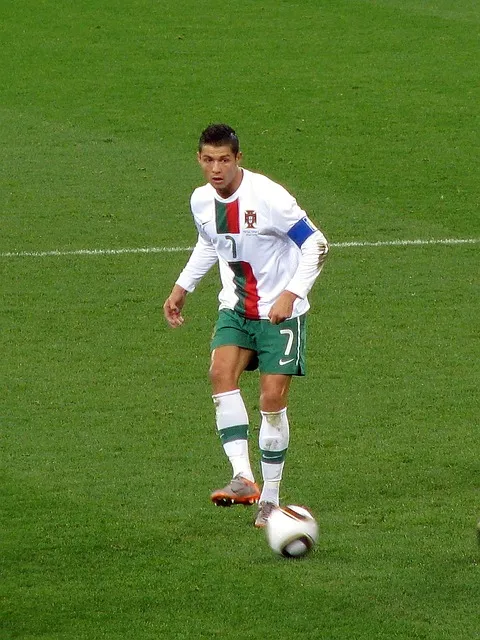
- Productive dissatisfaction: “If you think you are already perfect, then you never will be.” Five Ballon d’Or awards. Five Champions League titles. The all-time record for international goals. And Ronaldo approaches every training session as if he still has everything left to prove. This is not performative humility. It is a functional refusal to let any achievement become a ceiling. The moment a person decides they have arrived, the compounding stops. Ronaldo has somehow maintained, across two decades of accumulating trophies at every level of the game, the psychological hunger of someone who has not yet proven themselves. That hunger is the accelerant that the Peak Architecture runs on.
- Using adversity as fuel rather than explanation: Ronaldo’s relationship with criticism is unusual even by elite athlete standards. Most athletes tolerate criticism or ignore it. Ronaldo uses it. His social media post — “Your love makes me strong, your hate makes me unstoppable” — is not a clever caption. It is an accurate description of a genuine psychological mechanism. The critics who said he would never win a World Cup (he hasn’t, and he is at peace with it), the media who called him arrogant, the managers who doubted his tactical discipline — none of these inputs registered as threats to his identity, because his identity was not built on their approval. When criticism cannot threaten your identity, it loses its power to destabilize. And an opponent that cannot destabilize you is just information.
- Continuous reinvention: Every version of Ronaldo was deliberately constructed. The skinny, skill-heavy winger at Sporting CP. The powerful, goal-hungry winger at Manchester United. The complete, physically dominant striker at Real Madrid. The positional, timing-based goal scorer in his Juventus and Al Nassr years. None of these transitions happened automatically. Each required identifying a new physical or tactical limitation, designing a specific training and nutritional response to that limitation, and executing the response through the same deliberate practice framework that built the previous version. He reinvented himself because he was committed to continuous improvement as an operating principle, not because circumstances forced his hand. And this is the thing that most people never do: they reinvent themselves when they have no choice. Ronaldo did it preemptively, before performance dropped, to prevent the drop from happening.
The psychological science behind Layer Four is well-documented. Carol Dweck’s growth mindset research at Stanford confirms that individuals who define their identity through effort and learning — rather than through talent or achievement — maintain higher motivation levels across longer time horizons and recover from setbacks more quickly. Angela Duckworth’s grit research at the University of Pennsylvania — published in Journal of Personality and Social Psychology, 2007 — shows that the combination of passion and perseverance (which maps almost exactly onto intrinsic motivation and productive dissatisfaction) predicts long-term achievement more reliably than any measure of raw talent. Ronaldo is not a case study in either of these frameworks. He is the case study. The one that any textbook on high performance should open with.
What the Results Actually Show: Reading the Scoreboard Correctly
The conventional scoreboard for Ronaldo reads like this: 900+ career goals, five Ballon d’Or awards, five UEFA Champions League titles, one UEFA European Championship, one UEFA Nations League, all-time top scorer in international football history. The scoreboard is accurate. It is also the wrong thing to look at if you want to understand what the Peak Architecture produces.
The right scoreboard is longevity. At thirty-nine years old, Ronaldo is scoring twenty or more goals per season. He was competing in the 2024 UEFA European Championship, running full sprints in knockout round matches. His body fat at thirty-nine is lower than most professional athletes achieve at any point in their career. He has suffered no major muscular injuries in his late thirties — a period when his contemporaries are routinely sidelined with hamstring tears, quad injuries, and the accumulated joint damage that a twenty-year professional career produces.
This is the real output of the Peak Architecture. Not the trophies — those are the product of talent, circumstance, and team quality as much as individual discipline. Bodies do not stay at 7% body fat into their late thirties without precise, consistent nutritional discipline. Joints do not remain injury-free through a twenty-two-year career of high-impact professional football without systematic recovery management. The physical and cognitive capacity to compete at the highest professional level at an age when 99% of professional footballers have retired is not a genetic gift. It is the accumulated compound interest of a system that never took a day off.
The longevity is almost entirely the product of the system.
Morgan Housel writes in The Psychology of Money that the most powerful force in finance is compounding — not the size of individual returns, but the consistency of returns over time. The same math applies to physical training, skill development, and the locus of control that determines whether the building continues when results are invisible. The same principle governs physical performance, skill development, and career longevity. A single extraordinary training session adds nothing to a career. Twenty-two years of consistent training sessions — building on each other, compounding — produce results that look, from the outside, like they should not be humanly possible. They are not extraordinary. They are what ordinary inputs, sustained without interruption, eventually become.
How to Build Your Own Peak Architecture (Without the Personal Chef)

- Layer One (Sleep and Recovery) — the realistic version: Five ninety-minute sleep cycles distributed across the day is not happening for most people. But sleep can stop being the variable that gets compressed when hours run out. Set a consistent sleep time and wake time seven days a week — the most reliably evidence-based intervention for sleep quality improvement that exists. If the schedule allows a twenty-minute nap between 1 and 3 PM, take it; even incomplete sleep cycles produce measurable recovery benefits. Darken the bedroom, lower the temperature, leave the phone outside the door. These are not luxuries. They are the minimum viable version of Layer One, and the science of sleep architecture confirms that they produce material improvements in energy, focus, and physical performance within two weeks of implementation.
- Layer Two (Fuel) — the realistic version: Six precisely timed meals aren’t required. What’s required is eliminating the things that actively undermine performance and adding the things that support it. Pick one. Not all at once. One. The most impactful single change for most people is eliminating or dramatically reducing alcohol — not for moral reasons, but because the downstream effects on sleep quality, cortisol, and body composition are severe enough that every other nutritional effort is partially wasted while alcohol is in the picture. After that: reduce processed food, increase protein, eat breakfast before going to work. These are small decisions. Over two years of incremental improvement, they add up to a completely different body operating on a completely different energy baseline.
- Layer Three (Training) — the realistic version: Most people train somewhere between zero and four hours per week. That is fine. What matters more than volume is intensity and consistency. Whatever the training modality — running, lifting, cycling, sports — the Ronaldo principle applies: be fully present at full effort for the time committed. Thirty minutes of genuinely hard effort, every day, produces more adaptation than ninety minutes of half-effort three times a week. The recovery discipline matters proportionally less at lower training volumes, but the principle remains: treat recovery as part of the training, not the reward for it. Sleep after hard sessions. Eat within an hour of training. Stretch. These are the minimum effective recovery inputs for a non-professional, and most people skip them entirely.
- Layer Four (Mindset Operating System) — the realistic version: This one scales without modification, because it is entirely free and requires only a decision. The intrinsic motivation question — “is this for external approval, or for a standard worth meeting?” — is available to anyone at any income level. The productive dissatisfaction — refusing to treat any current achievement as a final destination — is a choice available today. The adversity-as-fuel reframe — deciding that criticism and setbacks provide information rather than deliver verdicts — costs nothing to implement. Emotional discipline of this kind is not a personality trait Ronaldo was born with. It was built through years of choosing the useful response over the natural one, one situation at a time.
One practical framework for starting: choose one element from each layer and implement it for thirty days before adding anything else. One consistent sleep time. One nutritional subtraction. One weekly workout never skipped, at full effort. One daily moment of asking whether the motivation is internal or external. That is four changes. At thirty days, evaluate what worked, compound what held, and add the next element. This is the pace at which Peak Architecture actually gets built — not in a single dramatic overhaul, but in one structural addition at a time, each one creating the conditions that make the next one possible.
The Misconception That Costs People the Most
The most expensive misunderstanding about Ronaldo’s discipline is the belief that it requires exceptional willpower. People look at the schedule — the 6 AM gym, the skipped desserts, the ninety-minute naps, the extra shooting drills in the dark — and they conclude they could never do that because they lack the willpower Ronaldo has.
This gets the causality backwards. Willpower is what’s needed when a behavior is not yet a habit. Ronaldo does not use willpower to get up early. He gets up early because his circadian rhythm has been trained to that schedule for two decades and sleeping past 7 AM would feel wrong to him, the way it feels wrong to eat dessert before dinner. He does not use willpower to skip alcohol. He abstains from alcohol because drinking is simply not a behavior that exists in his identity framework — there is nothing to resist. He does not use willpower to train at full intensity. He trains at full intensity because anything less would produce a feeling of incompletion that would undermine his sleep, his confidence, and his preparation for the next session.
The Peak Architecture is not a discipline system. It is an identity-construction system that, once fully built, generates discipline automatically as a byproduct. The kind of person who eats for performance doesn’t fight for willpower at the dessert table. The kind of person who trains every day finds that missing a session produces discomfort — which means consistency becomes easier than inconsistency. The kind of person whose motivation is internal and independent of external validation finds that criticism doesn’t destabilize — which means effort level stays stable across good patches and bad ones.
Roy Baumeister’s ego depletion research, replicated across dozens of studies, shows that self-control is a finite resource — it depletes with use across the day and replenishes with rest. This is the underlying mechanism behind environmental design as a discipline tool: reduce the number of decisions requiring active self-control, and capacity gets preserved for the decisions that matter most. Ronaldo’s system is designed to minimize self-control expenditure by converting as many behaviors as possible from deliberate choices to automatic patterns. He does not make decisions about sleep, food, or training intensity in the moment. Those decisions were made years ago, and the resulting behaviors now run automatically. The willpower was front-loaded into the identity-construction phase and is now largely unnecessary. That is the architecture. That is what took twenty-two years to build. And that is the starting point — at whatever scale a given life permits — today.
Common Questions About Cristiano Ronaldos Discipline About Cristiano Ronaldo’s Discipline Routine
What is the Peak Architecture framework and how does it apply to Ronaldo’s routine? The Peak Architecture is a four-layer model describing the structural logic behind Ronaldo’s discipline: Layer One (sleep and recovery as physiological foundation), Layer Two (nutrition as fuel management), Layer Three (training architecture), and Layer Four (mindset operating system). The framework shows that each layer creates the biological and psychological conditions required by the layer above it — which is why the system cannot be replicated by copying the schedule without understanding the underlying structure. Any one layer missing compromises the integrity of the entire architecture.
Does Ronaldo really sleep in five ninety-minute cycles instead of one long block? Ronaldo worked with sleep coach Nick Littlehales during his time at Manchester United and has continued polyphasic sleep practices throughout his career. Littlehales confirmed the approach publicly. The scientific basis is the ninety-minute sleep cycle — each cycle representing one complete progression through sleep stages. Five cycles across the day provides approximately 7.5 hours of total sleep with strategic distribution of deep sleep and REM across multiple blocks. Whether Ronaldo still runs exactly this protocol at thirty-nine depends on his current schedule, but the underlying principle of treating sleep as a performance tool rather than a default behavior has been consistent throughout his career.
What does Cristiano Ronaldo eat in a typical day and why does it matter? A standard daily sequence includes six meals: whole grain cereals, eggs, and fruit at breakfast; lean protein and salad mid-morning; grilled chicken or fish with rice and vegetables at lunch; protein-focused afternoon and evening meals. The structure prioritizes protein delivery for muscle synthesis, carbohydrate timing around training for glycogen replenishment, and caloric taper in the evening to support sleep quality. Critically, the protocol excludes alcohol entirely, eliminates processed food, and maintains zero tolerance for nutritional choices that conflict with performance goals. The food and sleep connection is especially important — his evening eating discipline directly supports the recovery quality that Layer One depends on.
How does Ronaldo maintain 7% body fat at age thirty-nine? Seven percent body fat at thirty-nine is not a physique goal — it is the metabolic result of twenty-plus years of consistent nutritional discipline and training volume. It reflects zero alcohol consumption (alcohol suppresses growth hormone and increases fat storage), a high-protein diet that preserves muscle mass during periods of caloric restriction, and a daily training volume that exceeds club requirements. Body composition at this level does not respond to short-term interventions. It is a long-run compound output of consistent daily inputs — the most accurate visible proof that the Peak Architecture has been running without significant interruption for decades.
Why does Ronaldo train before and after official team sessions? The pre- and post-session work represents the compounding mechanism within Layer Three of the Peak Architecture. Official team training addresses collective tactical and technical work. Ronaldo’s individual sessions before and after target his personal performance gaps — specific technical elements that were below his standard in the previous match, physical capacities he wants to develop ahead of the next phase of the season. This is deliberate practice in its purest form: targeted, high-intensity repetition at the edge of current capacity, focused on specific deficiencies rather than generalized effort. Over a twenty-year career, the marginal improvements produced in those extra hours compound into hundreds of additional goals.
Can a normal person apply Ronaldo’s discipline principles without a professional athlete’s resources? The four layers of the Peak Architecture scale to any budget and schedule. Layer One requires a consistent sleep time, a darkened room, and ideally a short afternoon rest period — zero cost. Layer Two requires substituting processed food and alcohol for whole food and water — a change that typically costs less than the alternative. Layer Three requires consistent, high-intensity effort within whatever time is available — not more hours, just more presence in the hours committed. Layer Four requires only a decision to shift from external to internal motivation — completely free, available immediately, and arguably the highest-use change a person can make in how they approach any sustained challenge.
What is the most important single element of Ronaldo’s discipline routine? The data points to Layer Four — the mindset operating system — as the load-bearing element. The physiological protocols in Layers One through Three are optimizations that produce marginal gains at any given level of implementation. Layer Four is what determines whether those protocols are implemented consistently for two decades or abandoned after three weeks. Intrinsic motivation, productive dissatisfaction, adversity as fuel, and continuous reinvention are the reasons that Ronaldo’s system has never been interrupted by a bad season, a poor team performance, a career setback, or the biological reality of aging. Remove Layer Four and the schedule becomes a temporary experiment. Keep Layer Four intact and the schedule becomes who you are.
How long does it take to build the Peak Architecture? Ronaldo has been building his over twenty-two years, and it is still evolving. The more practical question is: how long before results become measurable? Research by Phillippa Lally at University College London found that habit formation takes an average of sixty-six days before new behaviors become automatic. Implementing one element from each of the four layers and maintaining it for sixty-six consecutive days produces the first structural layer of a personal architecture. The results — in energy, body composition, training capacity, and emotional resilience — are measurable within ninety days. The compounding that makes results extraordinary requires years. There’s no skipping the years. There’s only starting the clock today.
NOT JUST READING ABOUT IT ›
Join the Wolf Pack — mentorship and accountability for men who are done thinking about change
The Architecture Never Stops Building
In September 2023, Al Nassr played Al Shabab in the Saudi Pro League. Ronaldo, thirty-eight years old, arrived at training the morning after the match at the same time he arrived at training the morning after every other match: before anyone else. A teammate filmed him on a phone, hitting shots from thirty yards, adjusting his run-up, hitting them again. Not because the session required it. Not because a coach was watching. Because that is what Ronaldo does every day, in the same way teeth get brushed every morning — not from discipline, not from willpower, not from motivation, but from identity. He is the kind of person who works before anyone else arrives. That identity was constructed one morning at a time over twenty-two years, and it is now so deeply encoded that the alternative — sleeping in, taking a day off, doing the minimum — would require active effort to choose.
That is the real lesson buried under all the free kick statistics and Champions League medals. Not that Ronaldo is extraordinary. But that ordinary inputs, applied consistently within a coherent structure, produce what looks like extraordinary outputs over a long enough timeline. The Peak Architecture is the structure. The consistent application is the work. And the long timeline — the part most people never reach because they stop before the compounding becomes visible — is the only truly non-negotiable ingredient.
Ronaldo’s talent isn’t the requirement. His patience with the process is. One layer at a time. One day at a time. Twenty-two years from now, someone watching will conclude that a person must have been born different. The actual explanation fits on an index card: build the architecture, and then never stop building it.
For the broader science of building elite physical discipline, read the complete guide to optimizing sleep quality — the foundation Layer One depends on. For the nutritional side of performance, food choices that support deep recovery cover the dietary principles that underpin Ronaldo’s fuel system. If the mindset operating system resonates and the full psychological architecture behind it is worth exploring, emotional discipline and the inner game of performance goes deep on Layer Four. And for a structured container to start building a personal version of the Peak Architecture, Monk Mode provides the environmental conditions that make every layer easier to implement simultaneously.
Related: Ross Edgley's Discipline Routine: What He Does Daily
Editorial StandardsCorrectionsMedical DisclaimerAbout Our ContentAffiliate DisclosureSite Map