
$87 a month. That’s what finally did it — not the moral case about consumer waste, not the documentary on plastic drowning the ocean, not the magazine piece on ecological footprint that Ryan had bookmarked and never actually finished reading. Just a number, paid faithfully, on time, for four years, to store furniture from an apartment he hadn’t lived in for years, gear for hobbies he’d quietly abandoned, and boxes he couldn’t identify without opening them. Four years of $87 a month. $4,176, total, to store things he had forgotten he owned.
The day he finally went to clear it out was a Saturday in October. He drove a rented truck out past Sacramento, backed it up to a beige building, Unit 114, and hauled the rolling door up. Then he just stood there. Did nothing, for a full minute. He recognized maybe a third of what was staring back at him. The rest had arrived in his life through some process he couldn’t reconstruct — a purchase, a gift, an impulse buy, a “just in case.” Four folding chairs, still shrink-wrapped in their original packaging. A kayak paddle. No kayak. Something like forty boxes of books he’d read once and would never open again, sitting next to twice as many boxes he was almost afraid to open, because he had no memory of the contents and suspected the honest answer was nothing.
Loading the truck took twelve hours. Seven loads went to Goodwill. Three went to the dump. Whatever was left he sold on Craigslist, for pennies on the dollar, which is more or less the going rate for a decade of unconscious accumulation. By the time Unit 114 was empty, he’d gotten his eighty-seven dollars a month back and filled a landfill with the physical record of everything he’d bought and forgotten. But it wasn’t the $87 that stuck with him on the walk to his car. It was the number on the dump receipt: 1,840 pounds. Almost a ton of objects that had done nothing, served no one, for years — sitting in a climate-controlled box, waiting for someone to admit they existed.
That ton had a footprint of its own — long before it reached the dump, long before it reached him, long before it ever reached a store shelf. Every object in that pile got extracted from the ground somewhere, manufactured somewhere, packaged, shipped, stored, and eventually thrown away. Energy burned. Water used. Land taken up and not given back. None of it showed up on a single receipt Ryan ever signed. The $87 was just the maintenance fee. The actual cost was scattered across supply chains and factories and waste facilities on three continents, running quietly in the background of his entire adult life — the same way the storage unit had.
An ecological footprint is not really a political issue, whatever cable news wants to make of it. It isn’t a lifestyle choice that better recycling habits or a solar panel on the roof can quietly absorb. It’s the sum of every extraction, every emission, and every square foot of landfill consumed by everything a person has ever bought, used, and thrown out — the physical record of a relationship with the material world. And for most people cruising through a consumer economy on autopilot, that record looks a lot like Unit 114. Full of things they forgot they owned. Costing more than they think. In ways nobody bothers to examine until the bill comes due.
Minimalism is the examination. Not an aesthetic. Not a social media trend, whatever the algorithm keeps insisting. It’s a direct intervention in the feedback loop between what a man accumulates and what that accumulation costs the planet. And unlike most environmental strategies pitched at individuals — buy the greener version, switch to bamboo, offset the flight — minimalism goes after the actual variable. Not what you buy. Whether you buy at all.
The Extraction Chain: What Every Object Actually Costs Before It Reaches Your Door

Take the upstream half first — everything that happens before a product lands in your hands. A single cotton t-shirt. Growing the cotton alone takes roughly 2,700 liters of water, enough to fill a standard bathtub thirty-six times over, plus pesticides that leach into groundwater and wipe out pollinator populations across entire farming regions. Then it gets ginned. Spun. Woven. Dyed with chemical compounds, cut, sewn — probably in a factory running on coal power under regulation nobody’s enforcing. Wrapped in plastic. Loaded into a shipping container. Hauled across an ocean on a vessel burning bunker fuel, the dirtiest petroleum product that exists, dirtier than diesel by a factor of several thousand in sulfur content alone. Trucked to a distribution center. Trucked again to a store. Displayed under fluorescent light in a climate-controlled building. That’s the upstream chain. For one shirt.
The downstream half is everything after you’re done with it. You wore the shirt a handful of times, then donated it — and in roughly 85% of cases, “donated” is doing a lot of work in that sentence. It usually means: bundled with other textile waste, shipped to a secondary market in Ghana or Chile, dumped into a textile landfill where it’ll sit for decades shedding microplastic particles into the soil and groundwater. That’s the downstream chain. The Extraction Chain ran its full length, cotton field to Chilean landfill, and the only part you actually paid for was the $18 at the register. The earth picked up the rest of the tab.
Now multiply that by the sixty-eight garments the average American buys in a year. Then stretch the framework out to electronics — a smartphone contains over sixty different elements mined out of the ground, including cobalt from the Democratic Republic of Congo and lithium from Chilean salt flats, leaving radioactive tailings ponds behind as a byproduct of extraction most people will never think about again. To furniture tossed because the trend changed, carrying a 100-year decomposition timeline in a landfill somewhere. To kitchen gadgets that looked essential on the shelf and ended up forgotten in a drawer, their manufacturing footprint permanent regardless of whether they were ever actually used. The Extraction Chain runs on every object. It doesn’t negotiate. And it doesn’t care whether anyone remembers owning the thing.
Minimalism intervenes at the only point that actually matters: the input. Nobody’s redesigning the shipping industry from a kitchen table. Nobody’s rebuilding the waste management systems of a hundred municipalities by sorting harder. What can be controlled is what comes through the front door. Every object declined is an Extraction Chain that never runs — no upstream consumption, no downstream waste, no water used, no carbon emitted, no landfill space taken up. Forget recycling what already got bought. The real move is not buying it to begin with.
The Consumption-Carbon Gap Nobody Wants to Discuss
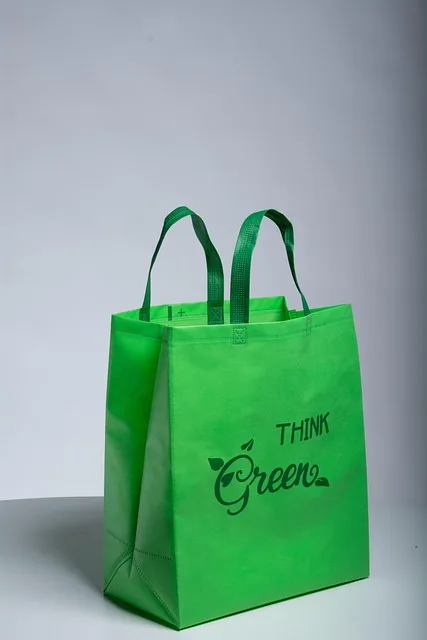
Every product carries what climate scientists call embodied carbon — the total emissions racked up during extraction, manufacturing, transport, and retail display, before the thing ever gets used for its actual purpose. A cotton t-shirt: roughly 7 kilograms of CO2 equivalent. A laptop: approximately 300 kilograms. A new car: somewhere between 6 and 35 metric tons depending on size and origin, before a single mile gets driven. A new home: 50 to 80 metric tons of embodied carbon baked into the construction before anyone’s flipped a light switch. These aren’t numbers pulled from an activist pamphlet. They’re measured. Documented. And almost entirely absent from any mainstream conversation about individual environmental action.
There’s a gap between where environmental campaigns point and where the actual damage lives. Every major campaign aimed at individual consumers zeroes in on operational emissions — the car in the driveway, the thermostat setting, whether the recyclables got sorted correctly. Real levers. Real impact. But systematically smaller than the consumption lever, which gets almost no attention, because acknowledging it honestly leads somewhere uncomfortable. Not “drive a different car.” Not “switch to LED bulbs.” Stop buying things that aren’t needed. That’s the actual message. Nobody particularly wants to be the one saying it out loud.
Sit with the math on this one for a second. If the average American cut consumption of manufactured goods by 30%, the annual CO2-equivalent reduction would run around 2.5 metric tons per person. That’s larger than the entire annual carbon footprint of the average person in India — 1.9 metric tons. One American buying 30% less erases one Indian person’s whole year of emissions. Multiply that across 130 million American households and the arithmetic produces a number no renewable energy buildout, no EV mandate, and no international climate accord is going to match on the same timeline. No new technology required. No legislation. No infrastructure spend. Just the decision, made individually, over and over, to stop acquiring things that serve no real function.
This is where green consumerism fails the test, and fails it badly. The electric car still took 6 to 12 metric tons of carbon to build. The bamboo toothbrush still crossed an ocean in a container ship burning bunker fuel. The recycled polyester jacket still burned energy getting reprocessed. “Less bad” is not “good” — it’s a slower version of the identical trajectory, arriving at the same place a few years later. And the green economy, a $3.6 trillion global industry currently growing at 8% a year, cannot, by its own structural logic, tell anyone to stop purchasing. An industry that depends on your spending is never going to deliver the message that your spending is the problem. Minimalism is the only framework built to say it plainly, without flinching.
The Waste Arithmetic: Where Your Garbage Goes and What It Does There

Here’s the thing about recycling: it’s the idea that lets most people keep a clean conscience while changing almost nothing about their behavior. The actual recycling rate for plastic in the United States sits at approximately 5-6%, depending on which measurement gets used. Not a typo. Ninety-four percent of what goes into the blue bin ends up in a landfill or an incinerator anyway. Glass does marginally better, though it’s energetically expensive to process. Paper degrades in fiber quality with every cycle, which caps how many times any given sheet can actually get recycled before it’s useless. The word “recyclable” printed on a package is a statement about theoretical chemical properties under ideal laboratory conditions. It is not, despite what the label implies, a promise about what happens to that package in the actual waste infrastructure of an actual American town.
The repair economy is the mechanism minimalism restores, and it’s the single most powerful waste-reduction lever available short of simply buying less. Grandparents didn’t throw out a boot because the sole wore through — they had it resoled. Nobody replaced a pot because a handle loosened; they riveted it back on. An entire generation got trained, over decades of marketing and deliberate planned obsolescence, to treat objects as disposable and to feel a strange kind of entitlement to constant replacement. The man who buys one cast-iron skillet and maintains it for forty years generates the waste footprint of a single purchase. The one cycling through non-stick pans every two years as the coating flakes off generates twenty times that waste over the same stretch — plus whatever chemical compounds are now leaching into the waste stream from the degraded coating.
The durability calculus holds across every product category, without exception. A safety razor with replaceable blades lasts more or less indefinitely and produces a fraction of the waste of disposable plastic razors — something like 52 plastic cartridges per person per year, none of it recyclable. A quality leather boot, resoled twice, lasts twenty years and quietly replaces about eight pairs of fashion footwear, each one dragging its own Extraction Chain behind it. A French press outlasts roughly forty single-serve coffee pod machines, each of which generates hundreds of non-recyclable aluminum and plastic capsules a year. None of these swaps require sacrifice, not really. They require the discipline to make one good decision instead of twenty cheap ones — which sounds easy until it’s eleven at night and the good decision costs three times as much up front.
“The greatest threat to our planet is the belief that someone else will save it.” — Robert Swan, the first person to walk to both the North and South Poles
Nobody’s coming to clean this up. Not the government. Not the recycling industry. Not some future carbon-capture technology that’s always five years away. Every object sent to a landfill will still be there long after the person who bought it is dead — which is a genuinely strange thing to sit with, so don’t sit with it too long. The only honest response is to reduce what gets consumed — not consume it differently, not buy the marginally greener version, but actually consume less of it. A minimalist doesn’t need to sort recycling with religious devotion, because a minimalist generates so little waste that the sorting barely matters either way. Call it what it is: solving the problem at the source, instead of managing its symptoms downstream.
The Energy Overhead: Shelter, Space, and the Hidden Cost of Owning Too Much

The average American home has grown from 983 square feet in 1950 to over 2,400 square feet today, while the average household shrank from 3.7 people to 2.5 over the same stretch. Which means more than double the square footage per person is now being heated, cooled, and lit compared to what a grandparent’s generation occupied. Every additional square foot costs roughly 7 to 10 kilowatt-hours a year in climate control alone. A household that downsizes from 2,400 to 1,200 square feet — still a generous home by any historical or global standard, worth remembering — eliminates somewhere between 8,400 and 12,000 kilowatt-hours of annual energy use. At the current U.S. energy mix, that works out to roughly 4 to 6 metric tons of CO2 a year. Not offset. Not traded away on some carbon market. Eliminated.
The connection between how much a person owns and how much space they need is direct, almost mechanical. Own less, need less room to store it, less room to display it, less infrastructure to keep it running. A 300-square-foot room holding only what actually gets used isn’t a failure of ambition — it’s an efficient use of whatever it took to build, heat, and light that room in the first place. The tiny house movement understood this long before it turned into a cable television genre. The average American home holds roughly 300,000 items, a number that on its own demands a certain amount of square footage just to keep organized. Cut the items, the space requirement drops. Cut the space requirement, the energy overhead drops right behind it. The cascade runs itself.
Transportation runs on the same logic. Someone who owns less needs less income to sustain the life they’re living. Someone who needs less income has more freedom over where to live and how to get to work. Proximity over sprawl becomes an option. Walking becomes an option where others are stuck driving. One reliable vehicle can get maintained for a decade while someone else leases a new SUV every thirty-six months — each lease dragging along 6 to 35 metric tons of embodied carbon in manufacturing alone, on top of the daily fuel burned by a vehicle sized more for status than for function. Call it the financial-ecological double benefit: the same decisions that lower the footprint tend to lower the expenses too, which increases the freedom, which opens up options a high-consumption lifestyle had already closed off.
There’s also the digital overhead nobody thinks about — the energy burned by infrastructure interacted with invisibly, all day, every day. Every email sitting on a server draws power. Every hour of streaming burns energy at a data center somewhere. Every cloud backup, every app idling in the background, every smart device pinging a remote server, adds to a digital carbon footprint estimated at 1.4 to 3.5 metric tons of CO2 per person a year, depending on usage. Fewer subscriptions. Fewer devices. Less background data running for no reason. Deliberate streaming instead of ambient noise left on because silence feels uncomfortable — small stuff, easy to dismiss as symbolic. It isn’t. It’s a direct cut in demand on a power grid that doesn’t have anywhere close to the renewable capacity to absorb the digital consumption growth already baked into the next decade.
The Ripple Radius: How One Person’s Discipline Changes an Entire Community’s Footprint

Preaching doesn’t work. It’s the fastest way to guarantee nobody listens, and it also makes minimalism look like a religion instead of a rational response to arithmetic. What actually works is living with enough obvious consistency that people can’t help but notice. The neighbor watching someone maintain the same vehicle for twelve years while he’s on his fourth lease notices something he can’t quite name — a quiet challenge to the assumption that upgrading is mandatory. The coworker watching a home-packed lunch come out of the same container for the hundredth time, while she’s spending $18 on delivery, starts doing her own math. A sibling who visits an uncluttered home and realizes they haven’t stood in a room with visible floor space since childhood — that’s a conversation worth more than any pamphlet.
The Ripple Radius doesn’t stop at direct observation. It extends into market mechanics. Reduced consumption changes purchasing patterns. Purchasing patterns, aggregated across enough households, reshape markets. A retailer losing enough customers for disposable goods recalibrates inventory. A manufacturer watching sales of cheap replaceable products decline adjusts production targets. A shipping company carrying fewer containers of consumer goods downsizes fleet capacity. None of these institutions will ever know a name. But the economic signal sent by a wallet is about as powerful a form of communication as exists in a market economy. Markets run on price and volume signals. Declining to generate the volume signal is participation in that system — not a walkout from it.
The financial angle is worth looking at directly. A household practicing genuine minimalism spends, conservatively, 30 to 40% less on consumer goods than the median American household. That money doesn’t just vanish — it gets redirected, into savings, into investments, into local supply chains instead of global ones. Buying vegetables from a farmers market instead of a big-box superstore isn’t just a better nutritional call. It’s redirecting capital away from a global supply chain with an enormous footprint, toward a local system with a minimal one. Every dollar moved from a multinational consumer goods corporation to a local craftsman, farmer, or repair shop shrinks the aggregate ecological impact of economic activity in that person’s own community. Which is just how local economies actually work.
The most powerful, most underrated node in the whole Ripple Radius is parenting. Kids learn from what they watch, not from what they’re told — a fact most parenting advice conveniently ignores. A child raised in a home where every purchase gets questioned, where broken things get repaired instead of replaced, where the standard response to “Can I have that?” is “Do you actually need it?” absorbs a relationship with material goods that shapes consumption habits for the next sixty years. One generation of minimalist parents does more to shift aggregate consumption — and by extension the aggregate ecological footprint — than any legislative initiative could manage in the same span. The ripple turns into a wave. The wave turns into a tide. And the tide doesn’t need a policy framework to keep it moving.
The Awareness Ratchet: Why Minimalism Only Moves in One Direction

The ratchet runs across every domain, not just food. It starts with clearing out one closet. Then the cheap plastic in the kitchen starts to grate — the spatulas headed for a landfill within six months, gadgets engineered to fall apart on schedule. Then energy consumption gets noticed: phantom loads drawing power all night for nothing, lights left burning in empty rooms, appliances sitting in standby mode that quietly consume 5 to 10% of their normal operating power doing absolutely nothing useful. Then the fine print on packaging starts getting read — not the marketing copy on the front, the country-of-origin and ingredients list on the back. Then the gap between what a company claims about a product and what the product actually is becomes impossible not to see. None of this requires ideology. It requires only the habit of paying attention, and minimalism installs that habit whether it was asked for or not.
The environmental awareness that grows out of minimalist practice is a different animal from the awareness produced by campaigns, documentaries, or social pressure. Those produce knowledge. Minimalism produces experience, and experience sticks in a way knowledge simply doesn’t. Knowing that repairing something beats replacing it is one thing. Repairing it with your own two hands, and feeling the satisfaction of stretching its life past whatever the manufacturer intended — that’s something else entirely. Knowing that buying less generates less waste is one thing. Watching the trash leaving a house physically shrink over weeks and months until it’s almost comical — that’s something else again. Experiential knowledge doesn’t fold to the kind of motivated reasoning that quietly dismantles intellectual knowledge the moment it becomes inconvenient.
Spend a week outside with a pack, a knife, and a fire kit. Sleep on the ground. Cook over flame. Drink water filtered by hand. Come home. The contents of a house start to look different — a clarity bordering on violent. Not guilt. Clarity. What actually serves a life becomes visible next to what just occupies space, physical and otherwise. The object that felt essential in the store looks entirely different after a week spent doing fine without it, or anything like it. That clarity is the ratchet clicking forward. And once it clicks, it doesn’t click back. Anyway — the point isn’t the camping trip. The point is what the camping trip reveals. The wilderness doesn’t teach anyone to hate their possessions. It teaches a person to see them honestly. And honest sight, pointed at the average American home, tends to produce a fairly aggressive audit.
The Stoics figured this out a long time before anyone had a word for ecological footprint. Marcus Aurelius ran the Roman Empire out of a military tent, owning fewer things than a modern teenager’s bedroom, by choice, not necessity. Seneca — one of the richest men in Rome, worth remembering — practiced voluntary poverty on a regular schedule: plain food, hard surfaces, rough clothing. Not punishment. Training. Training to need less. Training to keep functioning once comfort gets stripped away. That training built resilience. It also happened to produce, by the arithmetic of the Extraction Chain, an ecologically light existence, almost as a side effect. A man trained to thrive on less doesn’t panic when supply chains falter, when prices spike, when energy costs double overnight. He’s already operating inside margins other people are about to get forced into. Minimalism isn’t deprivation. It’s preparation, and it happens to double as the most comprehensive ecological strategy available, because it hits every vector at once — consumption, waste, energy, transportation — without needing to be told to.
The 30-Day Footprint Audit: A Concrete Reduction Protocol
Reading about ecological footprints changes nothing on its own. Running an actual protocol changes quite a bit. What follows is a thirty-day operation built to produce measurable, permanent reductions in ecological impact. Four phases. Clear objective for each. Measurable output at the end of each one.
- Phase One (Days 1-7): The Inventory. Walk through every room with a notebook and a trash bag. Catalog every object — not estimate, catalog. Write it down. Every drawer, every shelf, every closet, every cabinet, no skipping the annoying ones. Assign each item one of three categories: E for Essential (used at least monthly, directly supports daily function), V for Valued (genuine emotional significance that can be explained in one sentence, no more), and D for Dead Weight — everything else. The D-category items are gone before Day 8. Donated, sold, or, as a last resort, thrown out. Count what leaves. Weigh the trash and recycling this process generates. That’s the baseline. It’ll be needed later.
- Phase Two (Days 8-14): The Consumption Freeze. Buy nothing that isn’t food, hygiene, or a genuine emergency. Nothing. Not a book, not a tool, not a good deal spotted online at midnight. Log every purchase impulse: date, item, estimated price, stated reason. By Day 14 there will be a documented record of exactly how many times consumer impulse tried to override conscious decision-making. Look for the patterns — time of day, emotional state, specific websites or stores, social situations. The triggers are sitting right there in the data. Identifying them is half the battle of taking them apart. This phase also tends to reveal, uncomfortably, exactly what kind of consumer someone actually is, and where the specific weak points show up in practice.
- Phase Three (Days 15-21): Repair and Replace. Look at what’s left after the purge. Find every item that needs repair — a loose button, a dull knife, a wobbly chair, a dripping faucet — and fix them this week, not next month. Then identify whichever disposable systems are generating the most recurring waste in the house: paper towels, plastic wrap, single-use bags, disposable razors, paper coffee filters, plastic water bottles. Swap each one for a durable alternative. Cloth towels. Beeswax wrap. Canvas bags. A safety razor. A metal pour-over cone. A steel water bottle. The upfront cost gets recovered within months, every single time. The waste reduction is immediate, and it compounds. Most households can cut a third of their weekly waste volume through this phase alone.
- Phase Four (Days 22-30): The Energy Audit. Walk through the house with the most recent utility bill in hand. Find every phantom load — devices plugged in and unused, chargers pulling power with nothing attached, entertainment equipment sitting in standby. Put whatever’s possible onto power strips that can actually be switched off. Check the thermostat: every degree the winter heat gets lowered saves roughly 3% on the heating bill and cuts a matching slice of emissions. Check water usage: a low-flow showerhead saves approximately 2,700 gallons per person a year. Map every car trip from the last month and flag which ones could’ve been walked, biked, or folded into another errand. Cut at least three car trips a week going forward, and actually keep the discipline running past the thirty days.
At the end of thirty days, measure everything. Weigh the weekly trash output against the Day 1 baseline. Compare utility bills. Check the bank statement and calculate the drop in spending on consumer goods. Count the purchase impulses that got overridden in the consumption log. The numbers will make their own case — convincingly enough that going back to old consumption patterns won’t just feel wasteful. It’ll feel absurd. The difference between unconscious accumulation and deliberate sufficiency will have been physically lived, not just read about, and that kind of experience doesn’t really reverse. The ratchet clicks forward.
The Character Argument: Why Your Footprint Is the Most Honest Thing About You
There is a word in Stoic philosophy — autarkeia — that translates roughly as self-sufficiency. Not isolation. Not poverty. The disciplined capacity to need less from external systems while contributing more to the people and places actually nearby. A man operating in autarkeia is structurally inconvenient to any system that profits off his dependence. He doesn’t need the upgrade cycle. Doesn’t need the fashion season. The status signals that keep the consumer economy spinning don’t have much purchase on him either. He’s stepped outside the machine — not by protesting it, not by petitioning it, but simply by declining to feed it. Minimalism is the operating system of autarkeia in a modern consumer economy, and the ecological consequences of running that operating system are automatic.
Character isn’t what a person believes. It’s what they do. The ecological footprint is the physical record of what’s been done — every extraction chain set in motion, every ton of waste generated, every hectare of productive land consumed in service of a given consumption pattern. For most people, that record is the product of autopilot, not intention. Three hundred thousand objects. A storage unit full of forgotten purchases. Sixty-eight garments a year. 4.4 pounds of trash a day. None of this is a moral indictment, exactly — it’s a description of what happens when a person runs on the default settings of a consumer economy specifically engineered to maximize acquisition and minimize reflection.
Minimalism is the decision to take those settings off default. It isn’t a renunciation of the material world — more a deliberate renegotiation of the relationship with it, conducted on a person’s own terms, according to their own values, producing a physical record that reflects conscious decision-making instead of the residue of a life run on autopilot. The goal isn’t owning nothing. It’s owning only what earns its place. Sounds simple written down. Living it is a daily practice that reshapes everything it touches — finances, time, energy overhead, and the Extraction Chain set in motion every single time a purchase decision gets made.
Ryan filled a landfill with 1,840 pounds of his own forgotten consumption on a Saturday in October. That was the before. The after is quieter. Cheaper. Less encumbered. And, by the arithmetic of the Extraction Chain, considerably lighter on the only planet he’s ever going to walk on. Not because he joined a movement — there wasn’t one to join. Because he opened a storage unit, did an honest accounting, and decided to stop paying $87 a month to maintain a life he wasn’t actually living.
That’s the argument, and it ends there. Open a drawer. Pick up whatever’s on top. Ask whether it earns its place. The answer is the first step. Every step after that produces a record that looks a little more like a decision and a little less like a default. An ecological footprint is that record, whether anyone bothered to think about it or not. Make it one that got chosen.
Ecological Footprint Character Q&A: Ecological Footprint and Minimalism
What is an ecological footprint and how is it calculated? An ecological footprint is the total amount of biologically productive land and water required to sustain a given pattern of consumption and absorb the resulting waste. It’s measured in global hectares (gha) and accounts for everything consumed — food, goods, energy, water — and everything discarded. The Global Footprint Network calculates national and individual footprints using data pulled from national accounts and trade statistics. The average American footprint runs around 8.1 global hectares per person. Earth’s per-capita biocapacity sits at approximately 1.7 gha. The gap between those two numbers is the overshoot — how fast current lifestyles are drawing down natural systems relative to how fast those systems can regenerate.
How does minimalism reduce your ecological footprint beyond just buying less stuff? Buying less is the primary lever, sure, but the Extraction Chain framework points to three more mechanisms working underneath it. First: owning less requires less space, which cuts the energy overhead for heating, cooling, and lighting. Second: owning less frees up capital and time, which tends to shift spending toward experiences and local goods with smaller footprints than manufactured products. Third: the repair-and-maintain mindset baked into minimalism stretches the useful life of everything owned, multiplying the footprint reduction of each individual purchase decision made along the way. Someone who buys one durable item instead of five disposable ones has cut his footprint on that product category by more than 80%, for as long as he owns it.
Is green consumerism — buying eco-friendly products — a valid alternative to minimalism? Green consumerism reduces harm at the margins. It doesn’t touch the underlying variable. Every manufactured product carries embodied carbon regardless of what certification is stamped on the box. The electric vehicle still took 6 to 12 metric tons of carbon to produce. The organic cotton shirt still drank 2,700 liters of water. The recycled plastic product still burned energy getting reprocessed. “Less bad” is not a substitute for “less.” The embodied-carbon data makes this plain: the biggest reduction in a consumption footprint comes from not acquiring the product, not from picking a greener version of it. Green consumerism has its uses as a second-order choice — when something genuinely needs buying, buy the lower-footprint version. It shouldn’t get mistaken for a primary strategy.
What is embodied carbon and why does it matter more than operational emissions for most individuals? Embodied carbon is the total greenhouse gas emissions generated during extraction, manufacturing, transportation, and retail display — everything that happens before a product ever gets used. Operational emissions are what the product produces during actual use: the fuel a car burns, the electricity an appliance draws. For most people in wealthy countries, embodied carbon from goods consumption rivals or outpaces operational emissions entirely. A new car’s embodied carbon (6 to 35 metric tons) can equal several years of operational emissions for a moderately driven vehicle. A new home’s embodied carbon (50 to 80 metric tons) represents decades of heating and cooling emissions rolled into the foundation before move-in day. Which makes the decision of whether to buy a new item — not how efficiently it gets used afterward — the bigger environmental decision in a lot of cases.
How does the 30-Day Footprint Audit produce lasting change rather than a temporary declutter? The audit is built to install three durable mechanisms, not just deliver a one-time cleanout. The consumption freeze builds the pause reflex — the habit of putting deliberate delay between a purchase impulse and a purchase decision — which sticks around after the freeze ends because it’s been practiced long enough to carve a real neural pathway. The repair-and-replace phase changes the relationship with owned objects from disposable to maintained, which compounds as the home fills with durable goods instead of replaceable ones. The energy audit produces ongoing savings that make the new behavior economically self-reinforcing on its own. Behavioral change plus experiential learning plus financial feedback — that combination is what lets the Awareness Ratchet keep advancing without needing active effort to sustain it.
How do you handle the social pressure to consume — gifts, social events, family expectations? Social consumption pressure is real, and it deserves a tactical response rather than an ideological one. For gifts: be specific, early, and concrete. “A dinner out together would mean more than a physical gift” removes the ambiguity and puts the preference on the table before anyone’s bought anything. For social events built around consumption: show up fully engaged with the people, and just opt out of the purchasing part. Nobody at a birthday party is tracking whether a gift got bought from the registry. For family expectations around holiday consumption: propose experiences, consumables, or charitable giving as alternatives, early enough that the proposal can land without feeling like a last-minute rejection. None of this requires evangelism. It requires knowing what’s wanted and saying so clearly.
What is the single highest-impact minimalist change for someone starting from zero? Stop buying clothes that aren’t needed. Textile production accounts for roughly 10% of global carbon emissions — more than international aviation and maritime shipping combined. The fast fashion industry produces approximately 92 million tons of textile waste a year. The average American discards roughly 80 pounds of clothing annually, of which only 15% gets donated or recycled. A moratorium on new clothing — nothing new for twelve months, full stop — is the highest-use starting point for most people, because it’s concrete, it’s measurable, and it forces engagement with the repair-and-maintenance mindset underneath durable minimalism. After twelve months without new clothing, most people discover they needed something like a fifth of what they thought was necessary, and the Awareness Ratchet has clicked forward several notches, more or less on its own.
Editorial StandardsCorrectionsMedical DisclaimerAbout Our ContentAffiliate DisclosureSite Map