
The short answer
Heart rate variability goes up when the vagus nerve gets more say over the heart, and it goes down when the stress branch of the nervous system is running the show. That’s the whole mechanism in one sentence. Everything below is just the list of levers that actually move that dial, in the order they move it.
In priority order: fix sleep timing before anything else, because a single short night can knock ten to twenty percent off tomorrow’s reading. Add slow, paced breathing — roughly six breaths a minute, which happens to be close to the resonance frequency of the human cardiovascular system — for ten minutes a day. Build a base of easy, nasal-breathing aerobic work rather than stacking high-intensity sessions on top of each other. Get cold exposure into the week somewhere, even briefly. Cut back on alcohol, which suppresses vagal tone for longer than most people assume. And stop treating one day’s number as information — trends over two to four weeks are the only thing worth reacting to.
None of that is exotic. It’s also not fast, and it’s not a hack. A reader who stops here and just does those six things, consistently, for a month, will see a real shift in the trendline. The rest of the page is for the people who want to know why it works, what to actually do with numbers, and what to do when it stalls — because it does stall, for almost everyone, at some point.
Why this works

The mechanism doing the jumping has a name: respiratory sinus arrhythmia. On the inhale, vagal restraint on the heart briefly lifts and the heart speeds up a little. On the exhale, the vagus nerve reasserts itself through the sinoatrial node and the heart slows back down. That oscillation, breath by breath, is a big piece of what a chest strap or an app is picking up when it reports “HRV.” More vagal tone means a bigger swing between inhale and exhale — a bigger number. Less vagal tone, because the sympathetic nervous system is dominating, means a flatter, more metronomic beat — and a lower number.
The heart of a relaxed nervous system is, counterintuitively, less regular from beat to beat than the heart of a stressed one.
Why does the vagus lose that tug-of-war in the first place? Cortisol is a big part of it. Chronic activation of the HPA axis keeps the sympathetic branch primed and functionally mutes the vagal brake, the same way a car with the accelerator held down doesn’t respond as crisply when you tap the brake pedal. The vagus nerve itself runs from the brainstem down through the neck, chest, and abdomen, touching the heart, lungs, and gut along the way, which is the reason stress shows up as a knotted stomach and a tight chest and not just a racing pulse — it’s one nerve doing all three jobs badly at once.
Sleep matters here for a specific reason, not a vague one. Deep, slow-wave sleep is when parasympathetic activity dominates most completely across the full 24-hour cycle, and HRV during deep sleep tends to be the highest reading a person gets all day. Cut the night short, and the body doesn’t just lose hours — it loses a disproportionate share of the exact window where vagal tone gets its daily workout. Which is a big part of why one bad night shows up so clearly on a morning reading, while one good workout barely moves the needle at all.
The protocol
This is the part to actually follow, in order, for four weeks before deciding whether it’s working. Skipping to step four because it sounds more interesting than step one is how most people waste a month.
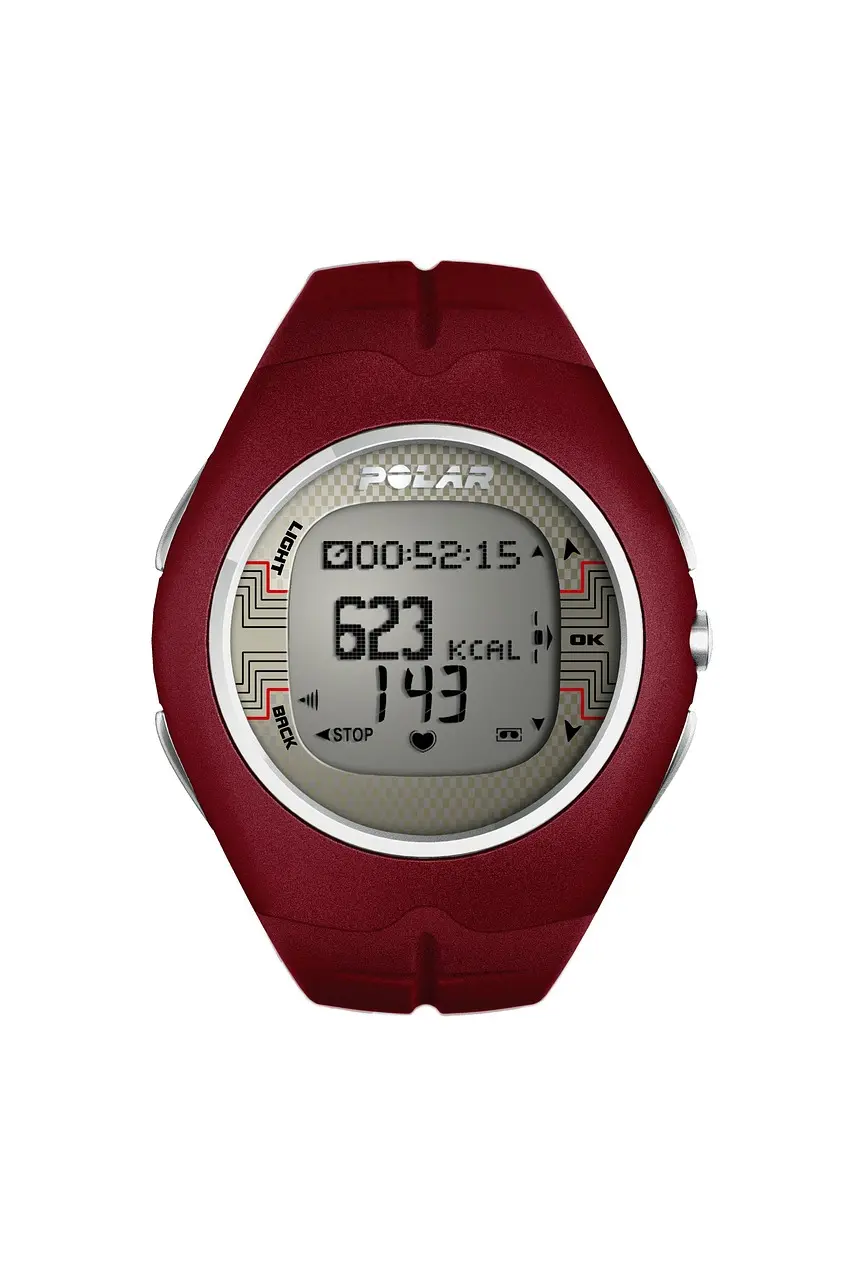
- Get a baseline first. Measure first thing in the morning, before coffee, before checking a phone, ideally lying down or seated in the same position every day. Use the same device for at least two weeks — a chest strap (Polar H10 and similar) reads the electrical signal directly and is meaningfully more accurate than wrist-based optical sensors, which estimate from blood flow and are noisier. Write down or export the daily number, but don’t look at it as a single data point yet. The goal in week one is a seven-day average, not a verdict.
- Anchor sleep and wake times within a thirty-minute window, seven days a week, including weekends. This is the highest-yield single change available and it’s also the one people skip because it sounds boring. It isn’t optional — a stable circadian rhythm is one of the few interventions with consistent evidence behind it for raising HRV, and it costs nothing.
- Practice resonance-frequency breathing for ten minutes daily. Roughly five to six breaths per minute — a four-second inhale through the nose, six-second exhale, no holds. This pace maximizes the amplitude of the inhale/exhale heart rate swing described above, because it lines up with the natural resonance of the baroreflex loop that regulates blood pressure. Morning or early evening both work; consistency matters more than timing.
- Build an aerobic base at an easy pace, three to four sessions a week, nasal breathing only, conversational effort — the pace where a sentence can be spoken without gasping. This is zone 2 work, and it trains the parasympathetic recovery system directly rather than just taxing the sympathetic one, which is what most interval training does. Tracking HRV alongside training load is also the only reliable way to know whether a given week of work is being absorbed or just accumulating fatigue.
- Add brief cold exposure two to three times a week — a cold shower for sixty to ninety seconds at the end of a normal shower, or a cold plunge if one is available. Cold exposure is one of the more direct ways to stimulate vagal afferents, particularly when combined with slow exhales during the exposure rather than the reflexive gasping most people do the first few times.
- Cut alcohol to two drinks or fewer, and never within three hours of sleep. Alcohol suppresses HRV for the better part of a day after drinking, not just overnight, and the effect is dose-dependent — a heavy night can still be visible on the readout forty-eight hours later.
- Review the trend every Sunday, not every morning. Compare the current seven-day average to the prior one. A single low morning after a bad night or a hard workout means nothing on its own. Three weeks of a rising seven-day average means the protocol is working.
Seven steps. None of them are complicated on their own. The difficulty is doing all seven at the same time for a month, which is also exactly why most people who try one or two of them in isolation report “it didn’t really do anything.”
What does not work
Meditation apps that promise a measurable HRV bump in a single ten-minute session are mostly selling the session, not the physiology. A single sitting can shift heart rate in the moment — that’s real — but a durable change in resting HRV is a trend built over weeks of consistent practice, not a number that jumps because of one guided breathing track.
Supplement stacks marketed specifically as “HRV boosters” are, with very few exceptions, unproven. Ashwagandha, magnesium glycinate, and omega-3s all have some evidence for stress-related outcomes broadly, but the specific claim “raises HRV by X points” printed on a bottle is not something to take at face value — the underlying research those claims lean on is thin, inconsistent, or run in small samples that don’t replicate well.
And stacking more high-intensity training on top of a low HRV reading, on the theory that “pushing through” builds resilience, does the opposite of what people think it does. More sympathetic load on top of an already-suppressed vagal system just deepens the suppression. This is the classic overtraining pattern, and it’s the one place where the popular advice — “no days off” — is actively working against the exact outcome it claims to chase.
What to expect
Week one is mostly noise and orientation. The number will bounce. A baseline seven-day average starts to mean something by day seven, not day two.
Weeks two through four are where the resonance breathing and sleep-timing changes start to show up in the trend, if they’re being done consistently. This is usually a modest but real shift — a seven-day average creeping upward, not a dramatic jump. Some people see it faster because they were starting from a genuinely disrupted baseline (bad sleep, heavy drinking, chronic overtraining) and fixing the biggest lever first produces an outsized early response. Someone already sleeping well and training sensibly will see a smaller, slower climb, because there’s less obvious dysfunction to correct.
Month two and three is where the aerobic base and the cold exposure habit start compounding with the breathing practice, and where resting heart rate — a related but separate number — usually starts to drop as well. This is also, honestly, where a lot of people quit, right before the compounding becomes visible, because the first month’s gains look small next to the effort involved.
A ceiling exists for everyone, and it’s worth naming honestly: age, genetics, and underlying health status set an upper bound on what any protocol will produce. A twenty-five-year-old and a sixty-year-old doing the identical program will land at very different numbers, and that’s not a failure of the protocol — it’s biology. The goal was never to hit some universal number pulled from an app’s leaderboard. It’s to move a personal trend in the right direction and keep it there.
When it is not working

The first is alcohol underestimation. Two drinks feels moderate to most people, but combined with a late dinner and a screen right up until lights-out, the suppression compounds. Cut it to zero for two weeks as a test before concluding the rest of the protocol isn’t working — this single variable accounts for more stalled progress than every other item on this list combined.
The second is training load creeping back up without noticing. Zone 2 work has a way of turning into zone 3 work over a few weeks as fitness improves and “easy” pace gets faster without the effort feeling any harder subjectively. A heart rate monitor during the easy sessions, not just during hard ones, catches this early.
The third is undiagnosed autonomic dysfunction. For a small number of people, a chronically low or erratic HRV reading isn’t a lifestyle problem at all — it’s a sign of a dysregulated autonomic nervous system that no amount of breathing practice will fully correct on its own. Persistent dizziness on standing, a resting heart rate that spikes disproportionately with minor exertion, or HRV that stays flat despite months of consistent effort are the signals that something structural, not just habitual, is going on.
The fourth is chronic stress load that has nothing to do with sleep, training, or alcohol — a job, a relationship, a financial situation that’s grinding in the background every single day. No breathing protocol out-competes a nervous system that’s getting a genuine, ongoing threat signal from its actual life circumstances. Resetting the autonomic system under those conditions usually means addressing the load itself before the physiological interventions can fully land, and that’s a harder, slower project than adding a breathing app.
Which is why deliberate downregulation practice matters more for some people than any single item in the protocol above — the breathing and the cold exposure are tools for building capacity, but they don’t remove the thing generating the stress in the first place.
Common questions
Is a low HRV dangerous? On its own, no — HRV varies enormously by age, sex, genetics, and fitness level, and a “low” number relative to some app’s population average is not a diagnosis of anything. It’s a trend marker, not a lab value with a hard cutoff. What matters is the direction of a person’s own trend over weeks, not where that number sits compared to someone else’s.
Does caffeine lower HRV? A single dose of caffeine can acutely raise heart rate and shift the autonomic balance toward sympathetic dominance for a few hours, which shows up as a temporary dip. For most people this washes out well before the next morning’s reading, but caffeine within six hours of bedtime compounds with poor sleep quality, which is the bigger driver of a bad morning number.
What’s a “good” HRV number? There isn’t a universal one, and any app or article giving a flat target number by age bracket is oversimplifying. Resting heart rate and HRV measure related but different things, and the only meaningful comparison is a person against their own baseline, tracked over time with the same device and method.
Do wrist trackers give accurate readings? They’re directionally useful for trend-tracking but noisier than a chest strap, especially during sleep when movement and positioning affect the optical sensor. If a device is going to be relied on for weeks of trend data, a chest strap for the first two to three weeks of baseline-building is worth the extra effort, even if daily tracking later switches to a wrist device for convenience.
Can breathwork alone fix a stalled number? Rarely, and this is worth being honest about. Breathing practice is one lever among several, and it tends to plateau on its own within two to three weeks if sleep, alcohol, and training load aren’t also being addressed. It’s the fastest single intervention to start, not the only one that matters.
Does age make this pointless past a certain point? No — HRV does decline with age on average, but the protocol still moves an individual’s trend in the right direction relative to where that person would otherwise be. The comparison that matters is a sixty-year-old against their own baseline from six months ago, not against a twenty-five-year-old’s number.
How long before it’s fair to say the protocol isn’t working? Four full weeks, with all seven steps genuinely in place — not three steps done well and four ignored. Anything shorter than that is judging a trend on noise, and anything with steps missing isn’t actually testing the protocol described here.