
The Short Answer
Recovery speed is decided by four things, in this order: sleep, protein intake, how well training load is managed week to week, and whether the recovery tools being used are timed correctly. That’s it. Not eight things. Not a shopping list of gadgets. Four.
Most of what actually moves the needle is boring. Sleep seven to nine hours on a consistent schedule and next-day soreness drops noticeably, strength returns faster, and the whole cycle compresses. Eat somewhere between 1.6 and 2.2 grams of protein per kilogram of bodyweight daily and muscle repair has the raw material it needs — below that range, everything else in this article works less well, because there’s nothing to build with. Manage training load so hard days are actually followed by easier ones, instead of stacking intensity on top of unresolved fatigue. And if cold plunges, saunas, or foam rollers enter the picture, time them so they support the process instead of blunting it.
Here’s the part that surprises people: the fancy stuff — cold immersion, red light panels, percussion massage guns — sits at the bottom of that priority list, not the top. They can help. Some of them measurably do. But stacking a $6,000 cold plunge tub on top of five hours of sleep is like putting a spoiler on a car with no engine. A reader who wants the short version can stop here: sleep, protein, load management, correct timing. Everything below explains why, and how to actually run it.
Why This Works
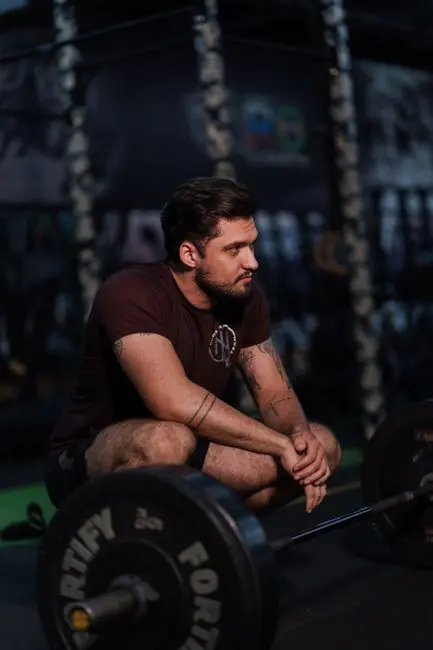
Sleep matters because the bulk of growth hormone release happens during slow-wave sleep, the deep stage that dominates the first half of a night’s sleep cycle. Cut sleep short and that pulse gets truncated. Protein synthesis — the actual rebuilding process — runs on amino acid availability, which is why the 1.6-2.2 g/kg range keeps showing up in the research. A 2018 meta-analysis in the British Journal of Sports Medicine (Morton et al.) found that muscle protein synthesis gains from higher protein intake largely plateaued around 1.6 g/kg per day in resistance-trained people, with only marginal additional benefit above that. Below it, though, the curve drops off fast.
There’s a piece of this that gets ignored: how fast the cardiovascular and metabolic system clears the byproducts of hard training also shapes how quickly someone feels ready to go again. Heart rate variability, resting heart rate recovery, how quickly blood glucose and cortisol normalize after a session — these aren’t just endurance-athlete concerns. They’re downstream of general metabolic health, and someone with a stronger aerobic base and better metabolic flexibility tends to bounce back between sessions faster than someone who trains hard but never builds an aerobic engine underneath it. The metabolic side of recovery capacity gets less attention than it should, mostly because it’s less visible than a sore quad.
Anyway. Back to the muscle tissue, because that’s what most people actually mean when they ask this question.
There’s also something called the repeated bout effect, which is one of the more useful and least discussed pieces of exercise physiology. The first time a muscle group is trained hard — especially with unfamiliar eccentric loading — the damage and soreness are disproportionate. The second time, even at the same intensity, soreness is milder. The muscle adapts its structural proteins, adds sarcomeres in series, and becomes more resistant to that specific type of damage. This is part of why the second week of a new program always feels easier than the first, even when nothing about the weight on the bar has changed.
The Protocol
This is the part worth writing down. Ten steps, in order of how much they matter.
- Sleep 7-9 hours, same wake time daily. Consistency matters more than a single perfect night. A regular wake time anchors the circadian rhythm that governs when growth hormone and cortisol get released.
- Hit 1.6-2.2 g of protein per kg of bodyweight per day. Spread across 3-4 meals of roughly 0.3-0.4 g/kg each rather than one giant serving. The body can only use so much at once for synthesis; the rest gets oxidized for fuel.
- Keep the sleep environment cool — around 65°F (18°C). Core body temperature needs to drop for deep sleep onset, and a warm room fights that.
- Use active recovery on off days: 20-30 minutes of low-intensity movement. Walking, easy cycling, a slow swim. This increases blood flow to recovering tissue without adding new damage.
- If using cold exposure, time it deliberately. For strength and hypertrophy work, wait at least 4-6 hours post-session, or skip it on lifting days entirely and reserve it for endurance sessions or non-training days. 10-15 minutes at 50-59°F (10-15°C) reduces perceived soreness without the timing conflict described below. For a fuller breakdown, a full cold-exposure protocol for athletes covers dosing and frequency in more depth.
- Sauna, 15-20 minutes, several times weekly, if tolerated. Heat exposure activates heat shock proteins, which assist in protein folding and cellular repair, and the human data on post-exercise heat use — while smaller than the cold-exposure literature — points the same direction: modest, real, not miraculous.
- Rehydrate at roughly 1.5 liters of fluid per kilogram of bodyweight lost in sweat. Weigh in before and after a hard session once to get a personal baseline; most people underestimate this by half.
- Foam roll or use self-myofascial release for 5-10 minutes on sore groups. The mechanism is more likely neurological — desensitizing the nervous system’s pain response — than mechanical “breaking up” of tissue, but the effect on perceived soreness is real and modest.
- Build in a deload every 4-6 weeks. Drop training volume by 40-50% for a week. This is where a lot of the actual adaptation consolidates, and skipping it is the single most common reason people plateau.
- Track resting heart rate every morning. A rise of more than 5-7 beats per minute above a two-week rolling average is an early signal that recovery is behind, before soreness or motivation even register it.
One factor in step two that gets skipped entirely: protein on a plate doesn’t automatically become protein in a muscle fiber. Absorption depends on gut function, and that function isn’t fixed. Anyone recently off a course of antibiotics is dealing with a temporarily disrupted microbiome, which can blunt nutrient absorption right when training recovery depends on it most — rebuilding gut health that affects nutrient absorption is worth a look for anyone whose recovery seems to have stalled around the same time as a prescription. The timing usually isn’t a coincidence.
Red light therapy deserves a mention here too, mostly because it gets asked about constantly. Photobiomodulation — low-level red and near-infrared light applied to muscle tissue — has some legitimate mechanistic support: it appears to influence mitochondrial ATP production and reduce markers of oxidative stress in small human trials. The evidence behind red light therapy for recovery is worth reading in full, because the honest summary is that it’s promising and under-studied, not proven. Anyone adding it to a routine should treat it as a minor lever, applied for 10-15 minutes post-session, not a replacement for sleep and food.
What Does Not Work

The “anabolic window.” For years the advice was to slam a protein shake within 30 minutes of finishing a workout or lose the training effect. Total daily protein intake matters far more than the timing of any single meal around a session — a 2013 review by Aragon and Schoenfeld walked back most of the urgency around this, and the field has largely followed.
Eating well across the day beats sprinting to the shaker cup.
Icing everything immediately after lifting. This is the one that trips people up most, because it seems logical — inflammation is uncomfortable, ice reduces inflammation, therefore ice helps. Except the inflammatory response after resistance training isn’t a bug. It’s the signal that triggers the repair-and-build cascade described earlier. A 2015 study in The Journal of Physiology (Roberts et al.) found that cold water immersion performed immediately after strength training blunted the anabolic signaling pathways involved in muscle growth, and over 12 weeks the cold-immersion group saw smaller strength and size gains than a group that didn’t ice at all. This is exactly the timing conflict step five of the protocol above is built around — the research on the timing research on cold plunges after training is worth reading before anyone builds a tub-first habit. Take a guy we’ll call Danny, mid-thirties, three years of consistent lifting, who saw pro athletes plunging on Instagram and started icing after every session — legs, arms, didn’t matter. His numbers flatlined for four months before anyone thought to ask what he was doing differently. He wasn’t overtraining. He was actively undoing the signal his training created, every single time.
“Sweating out toxins.” The kidneys and liver handle that. Sweat is mostly water, sodium, and a bit of urea — not a meaningful detox pathway, however satisfying the phrase sounds on a gym mirror decal.
Painkillers as a recovery strategy. NSAIDs like ibuprofen get used constantly to push through soreness and train again sooner. They do reduce the sensation of pain. What they don’t reliably do is improve the underlying repair process — and some research suggests chronic NSAID use around training may interfere with the same signaling pathways that cold immersion disrupts. Masking the signal isn’t the same as resolving it.
What to Expect
Week one of a new program or a return from time off: soreness is disproportionate, sometimes alarmingly so for something as simple as bodyweight squats. This is normal. It’s the repeated bout effect kicking in for the first time on that particular movement pattern.
Weeks two through four: soreness drops fast, strength returns to baseline faster after each session, and the overall system starts to feel like it’s keeping pace with training rather than constantly playing catch-up.
Month two through three, assuming the deload weeks actually happened: performance markers trend upward in a fairly straight line, resting heart rate stabilizes, and sleep quality — if the other habits are in place — tends to improve as a side effect of the training itself. If the deloads didn’t happen, this is usually where things start to unravel instead, and it takes six months or more to unwind chronic overreaching once it sets in. Nobody wants to hear that. It’s true anyway.
When It Is Not Working

Sleep debt that isn’t being counted. Six hours a night feels manageable for most adults for a couple of weeks before performance markers start sliding — and by the time it’s noticeable in the gym, the deficit has usually been building for a month. The fix is unglamorous: pick a wake time, protect it, and stop treating sleep as the thing that gets cut first when the schedule is tight.
Protein intake that’s lower than assumed. People consistently overestimate how much protein they’re eating by 20-30%. Tracking honestly for a week, even sloppily, usually reveals the gap.
No deload, ever. Some lifters treat a deload week as an admission of weakness. It isn’t. Skipping it long enough turns into a chronic, whole-system fatigue that looks a lot like a training problem but isn’t really one anymore — it’s closer to systemic burnout, and it doesn’t resolve on the same timeline as normal soreness does. How long burnout recovery actually takes is a longer conversation than most training plans account for, and the honest answer is longer than anyone wants.
Pain that isn’t actually DOMS. This is the one that gets missed most often. Soreness that’s sharp rather than dull, localized to a joint rather than a muscle belly, or that doesn’t improve — or gets worse — after 72 hours isn’t training soreness anymore. It’s something else. A guy we’ll call Marcus spent six weeks assuming his stiffening shoulder was just “bad DOMS” from an overhead pressing block, kept training through it, and lost most of his range of motion before anyone suggested it might not be muscular at all. It turned out to be adhesive capsulitis — frozen shoulder — a joint capsule condition with its own distinct mechanism and its own timeline, nothing like ordinary post-workout soreness. A dedicated frozen shoulder recovery protocol exists precisely because this gets misread as training soreness constantly, and the two don’t respond to the same approach at all.
Common Questions
Is being sore a sign of a good workout? No, and this is worth saying plainly because the belief is so common. Soreness reflects unfamiliar or unusually high eccentric loading, not training quality. A well-programmed session from someone experienced with a movement can produce very little soreness while still building strength effectively. Chasing soreness as a proxy for effectiveness tends to push people toward workouts that leave them too wrecked to train consistently, which is the actual thing that matters.
Can a sore muscle be trained again the next day? Usually, yes, especially at lower intensity. Mild-to-moderate soreness doesn’t mean the muscle is damaged in a way that training will worsen — performance in that muscle group will just be somewhat reduced. Sharp, localized, or worsening pain is a different signal and shouldn’t be pushed through.
Does cold plunging really block muscle growth? For strength and hypertrophy-focused training, done immediately post-session, the evidence says it can blunt the adaptation somewhat — not eliminate it, but measurably reduce it over weeks of repeated use. For endurance athletes managing next-day fatigue rather than chasing muscle growth, the calculation is different, and cold exposure tends to be less of a liability there.
How much protein does someone actually need, in plain terms? For most people training seriously, somewhere between 0.7 and 1 gram per pound of bodyweight covers it — a 180-pound person landing around 130-180 grams daily. Going higher rarely hurts, but it also stops helping past a point, and it usually just displaces other food.
Is foam rolling worth the time? Modestly, yes, for perceived soreness and short-term range of motion. It’s not doing anything to the muscle tissue structurally that a light walk wouldn’t also do, but as a 5-10 minute habit that people actually stick to, it earns its place.
What about creatine for recovery? Creatine monohydrate is one of the more well-studied supplements in sports science, typically dosed around 3-5 grams daily, and some research links it to modestly reduced markers of muscle damage and faster strength recovery between sessions, on top of its better-known effect on training performance itself. It’s a reasonable addition. It’s not a substitute for the four fundamentals above.
Does age change any of this? It shifts the ratios. Recovery capacity does decline somewhat with age — protein needs at the higher end of the range become more important, not less, and the deload frequency in the protocol above may need to move from every six weeks to every four. The mechanisms described here don’t change. The margins get tighter, that’s all.
Why does soreness sometimes show up two days later instead of the next morning? Because the inflammatory cascade that produces the sensitizing chemicals — bradykinin, prostaglandins — takes time to build after the initial muscle damage. It’s not instantaneous like a bruise from an impact. The delay is baked into the biology, which is the entire reason it’s called delayed-onset in the first place.