
Book at a Glance
Title: King, Warrior, Magician, Lover: Rediscovering the Archetypes of the Mature Masculine | Author: Robert Moore and Douglas Gillette | Year: 1990 | Pages: 192 | Rating: 4/5
The Takeaway: Is This Book Worth Your Time?
Yes. With a caveat that matters.
King, Warrior, Magician, Lover is the most structurally useful book written about masculine development in the last fifty years. Not the most poetic — that’s Robert Bly’s Iron John. Not the most practical — that title belongs to any decent book on stoicism or discipline. But for giving men a precise vocabulary to diagnose what’s actually broken in their psychology and why, Moore and Gillette produced something genuinely irreplaceable. The king warrior magician lover summary you’ll find most places online misses the entire point: this book isn’t a personality typology. It’s a developmental map. The difference is everything.
The caveat: the book is dense with Jungian terminology, and Moore and Gillette occasionally drift into academic abstraction when plain language would serve better. The practical applications are thin. They tell you clearly what the mature masculine looks like but offer limited guidance on actually getting there. This article fills that gap with the Archetypal Activation Protocol — a framework for moving from diagnosis to daily practice that the book doesn’t provide.
Read this if you want to understand the architecture of masculine psychology at a structural level. Skip it if you need step-by-step instructions and have zero patience for depth.
The Core Idea: Boy Psychology vs. Man Psychology
The entire book rests on a single distinction, and once you see it, you cannot unsee it.
Moore and Gillette argue that most men in modern Western culture are operating from boy psychology — not because they are young, but because they never completed the psychological transition to maturity that every traditional society used to demand through initiation. Boy psychology is characterized by dependence, grandiosity, irresponsibility, and the desperate need for approval. It produces men who oscillate between puffing themselves up and collapsing under pressure, men who can’t be trusted with real power because they haven’t learned to carry it without abusing it or abandoning it.
Man psychology — what Moore calls the mature masculine — is structured around four archetypal energies that every healthy adult male needs access to: the King (order, blessing, generativity), the Warrior (focused aggression, discipline, decisive action), the Magician (reflective awareness, technical mastery, strategic thinking), and the Lover (passion, connection, the capacity to feel life fully). These aren’t personality types. Every man has all four. The question is whether he accesses the mature forms or the immature shadows of each.
That shadow system is where this book earns its place on the shelf. Each archetype has two dysfunctional poles — an inflated shadow (too much of the energy with no center) and a deflated shadow (the energy collapsed and unavailable). Understanding your shadow profile is more useful than any personality test, because it tells you not just where you are but exactly what kind of broken you’re running.
The King: Blessing Without Needing to Be Right

The deflated shadow is the Weakling — the man who refuses to claim authority even when it’s his responsibility to do so. He abdicates decisions, hides behind consensus, and lets everyone around him drift without order or direction. He’s not passive because he’s humble. He’s passive because he’s terrified of the weight that comes with actually deciding things. Moore’s observation here is uncomfortable: passive men cause as much damage as abusive ones, because they create vacuums that someone worse will inevitably fill.
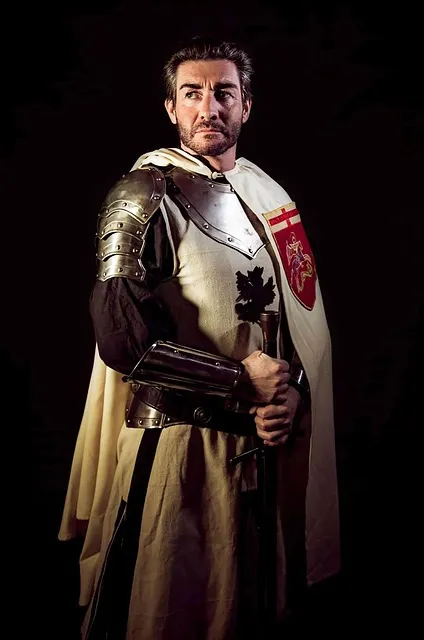
The mature King creates order for others’ benefit, not his own. He blesses — which means he sees the potential in people around him and calls it forward rather than suppressing it to protect his own position. He can hold the center when things go sideways without needing external validation that he’s doing it right. He is the thing that makes others feel that things are going to be okay, not because he promises it, but because his stability is real and visible and contagious.
In practice: the King energy shows up in how you run a meeting, how you handle a subordinate’s failure, how you respond when your household is in chaos. Does your presence make people around you more capable, or more anxious? That’s the diagnostic question. It requires zero title and zero authority. It requires a man who is genuinely ordered internally, which is what the Archetypal Activation Protocol is designed to build.
The Warrior: Aggression in Service of Something Larger
The Warrior gets the most cultural attention and the most cultural confusion, and Moore and Gillette work through this carefully. The Warrior energy is not violence. It is focused, directed aggression in service of a mission — the psychological capacity to identify what needs to be done, commit to doing it, and execute without letting discomfort, fear, or approval-seeking derail the process.
The inflated shadow is the Sadist: the man who confuses aggression with cruelty, who mistakes intimidation for strength, who finds pleasure in domination rather than accomplishment. This is the man who weaponizes the Warrior energy against people instead of problems. The deflated shadow is the Masochist: the man who has surrendered entirely, who accepts abuse, who cannot protect himself or the people he’s responsible for because all aggression — including healthy, directed, necessary aggression — has been shut down. Cultural messaging spent twenty years telling men that aggression is inherently problematic, and produced a generation of Masochists who cannot say no, cannot hold a boundary, and cannot push toward anything hard enough to achieve it.
The mature Warrior is lethal and gentle, depending on what the moment requires. He trains rigorously but for a purpose beyond the training. He knows who and what he is fighting for, and that clarity gives his aggression direction rather than randomness. Moore makes the point that a man who cannot be a Warrior cannot be a King — because kingship requires the ability to act decisively when action means conflict, loss, or pain. You cannot bless others if you cannot protect them. You cannot hold the center if anything can knock you off it.
The Warrior without the other three archetypes produces the most dangerous man in Moore’s taxonomy: technically capable, ferociously disciplined, and completely disconnected from the human cost of his actions. The Warrior needs the Lover to stay connected to why the fight matters. He needs the Magician to aim the energy at the right target. He needs the King to ensure the mission is actually worth fighting for. This integration dynamic is central to everything Moore is building, and it’s the part that most summaries skip entirely because it doesn’t fit a simple headline.
The Magician: The Awareness That Changes Everything
Of the four archetypes, the Magician is the least understood and the most practically powerful. Moore and Gillette call it “the archetype of awareness and insight,” which sounds abstract until you see what it actually does.
The Magician is the part of a man that can step outside a situation and see it clearly — including himself in it. It is reflective capacity, strategic intelligence, the ability to hold complexity without collapsing into simplicity. It’s what allows a man to stand in the middle of an emotional conversation and notice that he’s being triggered without fully becoming the trigger response. It is, in practical terms, the observer that separates stimulus from reaction — which connects directly to what Viktor Frankl called “the last human freedom” in the concentration camps.
The inflated Magician shadow is the Manipulator: the man who uses his awareness and intelligence to control rather than illuminate, who accumulates knowledge as power over others rather than as a tool for collective problem-solving. You’ve met him in negotiations, in courtrooms, in families. He is technically brilliant and fundamentally untrustworthy, because his awareness serves himself rather than the people around him.
The deflated Magician is the Innocent One, or the Naive Child: the man who refuses to develop knowledge and skill, who stays deliberately ignorant about how things actually work, who outsources his understanding of money, health, relationships, and systems to other people because being informed feels like too much responsibility. This shadow is more common than it looks. It often presents as someone who seems busy and accomplished on the surface but has never actually learned to think about his life from the outside.
In practice, Magician energy is what deliberate practice builds. The craftsman who refines his skill until it becomes mastery is running Magician energy. The therapist who holds both the client’s pain and the clinical framework simultaneously, neither collapsing into the pain nor hiding behind the framework, is in the mature Magician. For most men, the simplest access point is a daily reflection practice that forces the observer perspective: what happened today, what did I do, what pattern am I running that I didn’t choose? Twenty minutes. The Magician doesn’t develop without regular practice of stepping outside yourself.
The Lover: Feeling Life Without Being Consumed by It
The Lover is the archetype most men in the Resilient Wisdom community will be most uncomfortable with, and that discomfort is itself diagnostic.
Moore’s Lover energy is not primarily about romantic relationships, though it manifests there. It is the capacity to feel life fully — to be moved by beauty, to experience genuine passion, to stay connected to the sensory richness of being alive rather than processing everything through abstraction and purpose. The man running strong King, Warrior, and Magician energy but no Lover is productive, disciplined, and capable, and lives in an emotional desert without fully knowing it. He handles everything efficiently and feels nothing deeply. His wife eventually stops trying to reach him, not because he’s cruel but because there’s no one home behind the competence.
The inflated Lover shadow is the Addicted Lover: the man consumed by sensation, unable to delay gratification, drowning in attachment to pleasure, unable to tolerate the ordinary moments between highs. This shadow runs in addiction of every variety — substances, pornography, novelty, approval, distraction. The deflated shadow is the Impotent Lover: the man who has shut down his capacity for feeling so thoroughly that he cannot connect to anything or anyone. Not numbed by trauma necessarily (though often), but by years of treating every emotion as a weakness to be managed rather than information to be metabolized.
Moore makes an observation that lands differently for different readers: the Lover archetype is what makes the other three worth anything. The Warrior without Lover becomes a brute. The King without Lover becomes a tyrant who doesn’t know he’s become one. The Magician without Lover becomes a manipulator. The four archetypes don’t just coexist — they regulate each other, and the Lover’s function is to keep the other three connected to the human cost and beauty of what they’re doing. This is why Moore argues that the disconnection from feeling isn’t a strength. It’s the crack in the foundation that eventually collapses the building.
The Archetypal Activation Protocol: Turning the Map into Movement
-
Step 1: Daily Shadow Audit (5 minutes, morning). Each morning, before the day accelerates, ask yourself which shadow you activated most in the previous 24 hours. Be specific. Not “I was in Tyrant mode” but “I dismissed my colleague’s suggestion in the meeting without actually considering it, because I needed to be the one with the answer.” The specificity is what makes this useful. General self-assessment produces general awareness. Specific audit produces specific behavior change. Run this for 30 consecutive days and your shadow patterns will become completely transparent to you — which is the Magician doing exactly what it’s designed to do. Link this to your problem-working practice: the shadow you activate most under pressure is the one that needs the most development.
-
Step 2: Archetypal Assignment (one per week). Each week, choose one archetype to focus on activating deliberately. Week 1: King. Find three situations where you can bless someone — acknowledge their capacity, affirm their direction, create order in a small space without needing credit. Week 2: Warrior. Identify one thing you’ve been avoiding (a conversation, a decision, a physical challenge) and execute it before Friday. Full commitment, minimal friction, no renegotiation with yourself once you’ve decided. Week 3: Magician. Add a ten-minute daily reflection that asks: what pattern am I running that I didn’t consciously choose? Week 4: Lover. Schedule one experience per day that has no productivity function — music you actually listen to rather than have on as background noise, food you taste rather than consume, a conversation where you ask how someone actually is and wait for the real answer. Rotate through all four monthly. Within 90 days, you will know which archetypes come easily and which require effort — and that map is more accurate than any personality assessment you’ve ever taken.
-
Step 3: The Integration Check (2 minutes, evening). The four archetypes aren’t separate units. They are meant to function as a system, each informing and regulating the others. Before sleep, ask one integration question: “Did my strength today serve people, or did it cost them?” A Warrior day where the discipline was entirely self-serving (you trained hard, ate clean, optimized everything, and were distant and unavailable to everyone around you) is technically impressive and architecturally broken. The mature masculine shows up as strength that other people can feel as safety, order, and care — not just as a list of personal achievements that demonstrates you’re serious about yourself. This check keeps the emotional intelligence dimension alive in a framework that can otherwise become another performance metric.
-
Step 4: The Physical Anchor. Each archetype has a corresponding physical practice that activates it more reliably than any amount of thinking about it. King energy: stillness practice (meditation, structured silence, sitting without an agenda). Warrior energy: training that requires real commitment to discomfort (heavy lifting, martial arts, competitive sport, long runs that hurt). Magician energy: single-focus skill practice where you are the student rather than the expert. Lover energy: time in nature with no device, or music, or any practice that moves you physically before it means anything. These physical anchors matter because the archetypes are embodied — they live in the body as much as the mind, and the man who only thinks about King energy without ever sitting still long enough to feel it will remain theoretical. The body is where the work lands. The body is also where nervous system regulation happens, and a dysregulated nervous system will throw you into shadow regardless of how good your intellectual framework is.
-
Step 5: The 90-Day Benchmark. At the end of 90 days running this protocol, ask the people closest to you — the people who have seen you under pressure, in ordinary moments, when things went sideways — one question: “What’s different?” Not “am I better” (fishing for compliments) and not “what am I doing wrong” (inviting criticism as penance). Just: what’s different? The answer will tell you more about your archetypal activation than any self-assessment can, because the people around you experience your archetypes before you consciously run them. They feel your Warrior energy as either protection or threat. They feel your King energy as either order or pressure. They feel your Magician as clarity or manipulation. They feel your Lover as warmth or absence. Their experience of you is the most accurate data you have about where you actually are in the development map.
The Archetypal Activation Protocol isn’t a supplement to Moore’s framework. It’s the mechanism that converts the framework from description into transformation. Moore gives you the map. The Protocol is the navigation system. Without it, you’ll read the book, find your shadow profile, develop a sophisticated vocabulary for explaining why men are broken, and change nothing about yourself — which is the most common and most expensive failure mode in the self-development space. For the deeper discipline infrastructure that makes any protocol stick, the Forge Protocol provides the container.
What the Book Gets Right (and What It Gets Wrong)

First, the shadow system is genuinely brilliant. Most books on masculinity are prescriptive — this is what a good man looks like, go be that. Moore’s framework is diagnostic and dynamic. Each shadow form tells you not just that something is wrong but what kind of wrong and in which direction. The man running Tyrant shadow knows exactly what he needs to develop (the ability to bless rather than dominate) and can track his progress against a clear standard. That specificity is unusual and valuable. It connects naturally to the locus of control framework — the Tyrant is almost always running an external locus, needing external validation that he matters.
Second, the integration argument. Moore’s insistence that all four archetypes must be developed — that you cannot be a complete man by maximizing one and ignoring the others — runs directly against the modern tendency to optimize a single dimension. The man who is all Warrior and no Lover is a productivity machine in an empty house. The man who is all Lover and no Warrior is sensitive and passive and can’t protect anyone, including himself. This is not a popular argument in communities organized around masculine identity, where Warrior energy gets the most celebration and Lover energy gets the most suspicion. Moore doesn’t care about popular. He’s right, and the evidence for this integration shows up clearly in relationship research: the men who build the most durable partnerships are the ones who can be both strong and tender, both decisive and emotionally present.
Third, the boy psychology diagnosis is accurate and important. The observation that many men are functioning adults in external terms (jobs, families, responsibilities) while running the psychological architecture of adolescents (approval-seeking, grandiosity, irresponsibility, the inability to mentor rather than compete) is uncomfortable and verifiable. Look at how men respond to criticism, to authority, to the success of their peers, to the moment when someone they respect doesn’t acknowledge them. The boy patterns are visible everywhere once you know what to look for. And they cause real damage — in families, in organizations, in cultures. The book is serious about this, which is more than most treatments of masculinity manage.
Where the book falls short: the path from shadow to mature archetype is treated in broad strokes. Moore says things like “we need initiation rituals that reconnect men to the archetypal energies” without providing much guidance on what initiation looks like when you live in a suburb in 2026 and your main social infrastructure is a workplace and a gym. The Archetypal Activation Protocol above addresses this gap directly, but the gap is real and the book leaves it open.
The other criticism worth making: some of the historical and anthropological claims have been contested since 1990. Moore draws heavily on a particular reading of mythology and ritual across cultures, and some of that reading is selective. This doesn’t invalidate the psychological framework — the shadow system stands regardless of whether the anthropological backstory holds up perfectly — but it’s worth knowing that you’re reading psychology dressed as archaeology in some sections, and separating the two makes the book more useful rather than less.
The Biggest King Warrior Magician Lover Mistake
The most common mistake is treating the four archetypes as personality types rather than developmental targets. “I’m a Warrior type” is exactly the wrong takeaway. Moore’s entire argument is that wholeness requires access to all four, and the man who identifies strongly with one while dismissing the others is almost certainly in that archetype’s inflated shadow — believing his dominant mode is maturity when it is actually excess.
The Warrior-identifying man who dismisses Lover energy as soft will reliably produce the collateral damage that undisciplined Warrior energy creates: relationships that wither from emotional distance, teams that perform but don’t trust him, a life that looks impressive from the outside and feels hollow from the inside. He will call this focused and mistake it for strength, when it is actually avoidance wearing the costume of discipline. The distinction between emotional discipline and emotional avoidance is one of the most important distinctions in this entire framework.
The second mistake is using the shadow framework as a diagnostic tool for other people rather than yourself. “My boss is clearly a Tyrant” is a very satisfying use of Moore’s vocabulary and produces zero change in anything. The shadow system is designed to be applied inward, with the Magician’s observer perspective, not outward as a way of explaining why the people around you are the problem.
The moment you find yourself deploying Moore’s terminology primarily to categorize others, the Manipulator shadow has arrived and is doing a convincing impression of insight.
The third mistake is reading the book instead of practicing the framework. This is the universal failure mode of self-development literature, but it’s worth naming specifically here because Moore’s framework is particularly prone to it. The concepts are sophisticated enough to provide genuine intellectual pleasure without any behavioral change. You can explain the four archetypes, map your shadow profile, name the developmental trajectory with real fluency, and live exactly the same way you lived before. Understanding the map is not the journey. The Archetypal Activation Protocol is useful precisely because it forces the concepts into daily behavior — and behavior, repeated, is the only thing that actually changes psychology.
If you want to understand why intellectual frameworks fail without behavioral practice, see the research on how failure actually builds competence. The pattern is consistent: men who learn about resilience without practicing it remain exactly as fragile as they were before. Same dynamic here.
Who Should Read This (and Who Shouldn’t)
Read this if you want a structural framework for understanding masculine development — something more organized than Iron John‘s poetic meanderings but deeper than the typical self-help book. It is excellent for men in their thirties and forties who have achieved some external success but feel that something fundamental is missing or immature in their inner life. The shadow system alone makes it worth reading.
It’s also worth reading if you lead people — teams, families, organizations. The King and Warrior frameworks are precise enough to be operationally useful, and the distinction between mature and shadow forms will sharpen how you diagnose what’s actually happening in the dynamics around you. Most leadership problems are shadow problems in disguise: Tyrant energy masquerading as high standards, Weakling energy masquerading as servant leadership, Sadist energy masquerading as accountability.
Do not read this if you need practical, step-by-step guidance and have no patience for theoretical depth. This book tells you what the mature masculine looks like but not how to get there in concrete terms. Do not read this if you are allergic to Jungian psychology or if mythological references make your eyes glaze. And be cautious about using the archetypes as identity labels rather than developmental tools — “I’m a Warrior type” misses the entire point of the framework, which demands access to all four.
Men who are in genuine crisis — job loss, divorce, health collapse, the aftermath of a significant failure — sometimes find this book disorienting rather than useful, because the framework operates at a structural level that requires some stability to absorb. If you’re in the wreckage, start with the four-step process for becoming unbreakable before adding archetypal theory to the load. The framework is most useful as a navigation tool, and navigation requires that you know roughly where you are before you can plot a course.
5 Actionable Takeaways
- Map your shadow profile. For each of the four archetypes, identify whether you tend toward the inflated or deflated shadow. Be brutally honest. The man who says “I’m mostly in the mature forms” is almost certainly not. Ask people close to you — they will tell you which shadows they see, because they experience them directly, daily, in ways you don’t have access to from the inside. Use the Archetypal Activation Protocol’s Step 1 audit to build this map over 30 days rather than trying to construct it from a single self-assessment.
- Develop your weakest archetype deliberately. If you are all Warrior and no Lover, schedule activities that cultivate feeling: listen to music that moves you, spend time in nature without a goal, sit with your partner and ask how she feels without trying to fix anything. The archetype you resist most is the one you need most. Resistance to an archetype is almost always evidence of the deflated shadow — not of having mastered the energy but of having closed the door on it.
- Practice King energy in small moments. The next time someone comes to you with a problem, resist the urge to solve it (Magician) or fight it (Warrior). Instead, bless it. Acknowledge the person’s pain, affirm their capacity to handle it, and create space for them to find their own way. That is the King. It requires no title, no authority, and no performance. It requires only that you be genuinely, unhurriedly present — which is harder than solving the problem and worth infinitely more to the person in front of you. This connects directly to what psychological safety research identifies as the single most important factor in team performance.
- Examine your relationship with aggression. If you suppress anger entirely, you are in the Masochist shadow. If you explode regularly, you are in the Sadist shadow. The mature Warrior channels aggression toward a clear purpose with minimal wasted energy. Find a physical practice — martial arts, heavy lifting, competitive sport — that teaches you to wield force with control. The physical practice matters because aggression that isn’t channeled physically will find other outlets, and those outlets are rarely ones you’d choose deliberately. For the science behind why physical training transforms emotional regulation, see the research on constructive anger transformation.
5. Ask yourself: am I operating from boy psychology or man psychology right now? When you catch yourself seeking approval, avoiding responsibility, needing to prove yourself, or refusing to commit, you are in boy mode. Name it without judgment and ask what the mature archetype would do in this situation. The shift happens through awareness, not willpower. Willpower fights the pattern. Awareness dissolves it — because the boy pattern runs on unconscious fuel, and the moment you see it clearly, it loses most of its power over you. This is the Magician doing its job: stepping outside the pattern long enough to choose a different one.
How This Connects to the Full Resilience System
Moore’s framework sits in direct conversation with several other tools in the Resilient Wisdom system, and the connections are worth making explicit because they aren’t obvious until you see them.
The King archetype and Extreme Ownership are deeply related but not identical. Extreme Ownership says own everything in your domain. The King archetype asks a harder question: are you owning it for your benefit or for the benefit of the people you’re responsible for? A man can take extreme ownership of everything and still be running Tyrant energy — if the ownership is about his need to control rather than his genuine care for outcomes. The mature King takes ownership because he cares about what happens to the people in his domain, and that distinction shows up in whether people feel protected or managed by his leadership.
The Warrior archetype and deliberate practice are parallel frameworks. Deliberate practice is the Warrior’s relationship with skill development: focused, purposeful repetition at the edge of current capacity, sustained over time. The Masochist shadow avoids this because discomfort feels like punishment. The Sadist shadow perversely enjoys pushing so hard that the training becomes self-harm. The mature Warrior trains at the edge without tipping over it — which requires the Magician’s awareness to calibrate correctly.
The Magician archetype is the engine behind moving from reactive to responsive. The gap between stimulus and response that Viktor Frankl identified in Auschwitz is the Magician’s operating territory. You can’t develop that gap through willpower. You develop it through the consistent practice of the observer perspective — stepping outside your own reactions long enough to choose rather than simply discharge. Every reflective practice, from journaling to meditation to the evening integration check in the Protocol, is Magician training.
The Lover archetype connects most directly to emotional intelligence and the male loneliness epidemic. Men who have shut down Lover energy are the men who describe themselves as “not emotional” and who wonder why their relationships feel transactional. The research on male loneliness is consistent: men’s friendships and partnerships erode over time partly because of the social structures that support them, and partly because the Addicted Lover and Impotent Lover shadows both prevent genuine connection. The Addicted Lover is too volatile for sustained intimacy. The Impotent Lover is too absent. The mature Lover can be moved without being swept away, and that capacity is what makes depth of connection possible.
NOT JUST READING ABOUT IT ›
Join the Wolf Pack — mentorship and accountability for men who are done thinking about change
Reader Questions About King Warrior Magician
What is the main idea of King Warrior Magician Lover? The central argument is that mature masculinity requires access to four distinct archetypal energies — King, Warrior, Magician, Lover — and that most men in modern Western culture are operating from the shadow (immature) forms of these energies rather than their mature expressions. The book distinguishes between “boy psychology” (approval-seeking, irresponsible, grandiose, unstable) and “man psychology” (ordered, disciplined, aware, connected), and argues that the transition from one to the other is developmental work that modern culture has largely stopped providing through initiation rituals and mentorship structures.
What are the four archetypes in King Warrior Magician Lover and what do they mean? The King represents order, blessing, and generative authority — not dominance but the stable center that allows others to flourish. The Warrior represents focused aggression in service of a mission, the psychological capacity to commit fully and execute without flinching. The Magician represents reflective awareness and technical mastery — the ability to step outside a situation and see it clearly. The Lover represents the capacity to feel life fully, to stay connected to passion, beauty, and the human cost of one’s actions. Every man has all four; the question is whether he accesses the mature forms or their dysfunctional shadows.
What are the shadow forms of each archetype? Each archetype has an inflated shadow (too much of the energy with no center) and a deflated shadow (the energy collapsed and unavailable). King inflated: Tyrant (dominance, narcissism). King deflated: Weakling (abdication, passivity). Warrior inflated: Sadist (cruelty, domination). Warrior deflated: Masochist (inability to protect or assert). Magician inflated: Manipulator (intelligence weaponized against others). Magician deflated: Innocent/Naive (deliberate ignorance, refusal to develop competence). Lover inflated: Addicted Lover (consumed by sensation, unable to delay gratification). Lover deflated: Impotent Lover (emotionally shut down, incapable of genuine connection).
How do you apply the King Warrior Magician Lover framework in daily life? The Archetypal Activation Protocol provides a structured approach: daily Shadow Audit (which shadow did I activate yesterday?), weekly Archetypal Assignment (one archetype per week to develop deliberately), nightly Integration Check (did my strength serve people or cost them?), physical anchors for each archetype, and a 90-day benchmark asking the people closest to you what’s different. The key is moving from description to behavior — identifying your shadow profile is step one, and consistently practicing the mature forms through deliberate action is every step after that.
Is King Warrior Magician Lover anti-feminist or about male dominance? Moore explicitly rejects dominance as an expression of mature masculinity. One of the book’s core arguments is that patriarchal, abusive, or domineering male behavior is not an expression of deep masculinity but of immature masculinity — the Tyrant shadow of the King, the Sadist shadow of the Warrior. Mature masculinity, in Moore’s framework, is characterized by blessing others, protecting rather than threatening, developing mastery in service of something beyond oneself, and staying connected to the human dimension of every action. This is the opposite of the dominance model.
How does King Warrior Magician Lover compare to other books on masculinity? Robert Bly’s Iron John covers similar psychological territory with far more poetic depth and far less structural clarity. Moore gives you the framework; Bly gives you the feeling. Read both. Jordan Peterson’s work on masculine responsibility and meaning-making connects to the King and Warrior archetypes but doesn’t engage Moore’s shadow system directly. For practical application, the Warrior’s Code framework on this site integrates Moore’s Warrior archetype with the duty-and-service dimension that gives the energy its direction.
What is boy psychology vs man psychology in Moore’s framework? Boy psychology is characterized by dependence on external approval, grandiosity that collapses under real pressure, irresponsibility about commitments and their consequences, the inability to mentor rather than compete, and an underlying insecurity that drives either inflation (Tyrant, Sadist, Manipulator, Addicted Lover) or deflation (Weakling, Masochist, Innocent, Impotent Lover). Man psychology is characterized by genuine internal order, aggression in service of others, reflective capacity, and connection to feeling without being consumed by it. The transition between the two is developmental, not instantaneous, and requires deliberate practice rather than a decision.
Can women use the King Warrior Magician Lover framework? Moore himself acknowledged that the archetypes apply across genders, though the book focuses on masculine expression because the developmental crisis in men was his primary concern. The shadow system is universally applicable: any human being can be in Tyrant mode or Weakling mode, Sadist mode or Masochist mode. The specific cultural context of male initiation that Moore discusses is gender-specific, but the psychological architecture underneath it is not. Women who find the framework useful should use it freely, with the understanding that some of the cultural context is specifically about male development in Western societies post-industrialization.
Related: The How of Happiness Summary
Related: Brené Brown's Discipline Routine: What She Does Daily
Editorial StandardsCorrectionsMedical DisclaimerAbout Our ContentAffiliate DisclosureSite Map