
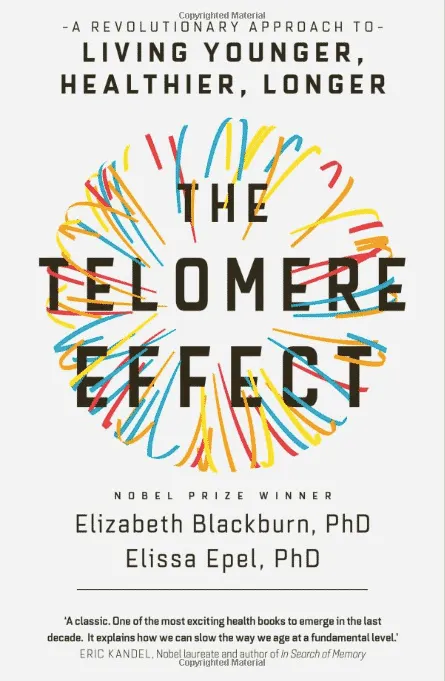
A groundbreaking book coauthored by the Nobel Prize winner who discovered telomerase and telomeres' role in the aging process and the health psychologist who has done original research into how specific lifestyle and psychological habits can protect telomeres, slowing disease and improving life.
Have you wondered why some 60-year-olds look and feel like 40-year-olds and why some 40-year-olds look and feel like 60-year-olds? While many factors contribute to aging and illness, Dr. Elizabeth Blackburn discovered a biological indicator called telomerase, the enzyme that replenishes telomeres, which protect our genetic heritage. Dr. Blackburn and Dr. Elissa Epel's research shows that the length and health of one's telomeres are a biological underpinning of the long-hypothesized mind-body connection. They and other scientists have found that changes we can make to our daily habits can protect our telomeres and increase our health spans (the number of years we remain healthy, active, and disease-free).
The Telomere Effect reveals how Blackburn and Epel's findings, together with research from colleagues around the world, cumulatively show that sleep quality, exercise, aspects of diet, and even certain chemicals profoundly affect our telomeres and that chronic stress, negative thoughts, strained relationships, and even the wrong neighborhoods can eat away at them.
Drawing from this scientific body of knowledge, they share lists of foods and suggest amounts and types of exercise that are healthy for our telomeres, mind tricks you can use to protect yourself from stress, and information about how to protect your children against developing shorter telomeres, from pregnancy through adolescence. And they describe how we can improve our health spans at the community level, with neighborhoods characterized by trust, green spaces, and safe streets.
The Telomere Effect will make you reassess how you live your life on a day-to-day basis. It is the first book to explain how we age at a cellular level and how we can make simple changes to keep our chromosomes and cells healthy, allowing us to stay disease-free longer and live more vital and meaningful lives.
At fifty-three, Sandra looked sixty-eight. Her colleague Janet, same age, same job, same basic genetics on paper — looked forty-five. They’d worked side by side for twenty-two years in the same hospital, same department, same fluorescent lighting, same vending machine coffee. Sandra smoked a pack a day from age nineteen to thirty-four, quit cold, and spent the next two decades congratulating herself on her discipline. Janet had never smoked. But that wasn’t the full story. Sandra went home every night to a marriage that was seventeen years into a cold war. She slept badly, woke anxious, and spent her weekends in a state of low-grade dread she couldn’t quite name. She ate well, took her supplements, walked her dog. Janet went home to a marriage that was genuinely good, slept eight hours with a consistency that impressed everyone who knew her, had three close friends she’d had since college, and laughed easily and often. When Sandra had her blood drawn as part of a research study, her telomere length — the molecular caps on the ends of her chromosomes that determine cellular age — measured like a woman in her late sixties. Janet’s measured like a woman in her early forties. The difference between them wasn’t luck or genetics or even the cigarettes Sandra had given up two decades ago. The difference, largely, was stress. Specifically: chronic, unresolved, biological stress. And the cells knew.
Elizabeth Blackburn won the Nobel Prize in Physiology or Medicine in 2009 for her discovery of telomerase — the enzyme that maintains and repairs telomeres, those protective caps on chromosomes that shorten every time a cell divides. In The Telomere Effect, co-written with health psychologist Elissa Epel, Blackburn translates decades of cutting-edge research into something any intelligent adult can use: a science-based framework for understanding why some people age fast and others don’t, and — critically — what you can actually do about it.
This is not a wellness book. It is not a longevity influencer’s supplement stack. It is hard science, carefully explained, about the molecular mechanisms of aging, stress, and cellular health — written with enough precision to satisfy a researcher and enough clarity to actually change the behavior of a person who wants to live better for longer. The uncomfortable truth at its center is that aging is not primarily what happens to you. It is largely what your biology does in response to how you live. And your biology has been taking notes since you were born.
Key Takeaways
- Telomeres are protective caps on chromosomes that shorten with each cell division; when they get critically short, cells stop dividing, malfunction, or die — this is cellular aging made visible.
- Telomerase, the enzyme that rebuilds telomeres, can be upregulated or suppressed by behavior, psychology, and environment — meaning biological age is not fixed.
- Chronic psychological stress is one of the most potent telomere-shorteners known to science; the effect is measurable and significant, equivalent in many studies to a decade of excess aging.
- Sleep, exercise, nutrition, and social connection all have direct, measurable effects on telomere length — these are not soft wellness recommendations but hard cellular biology.
- The stress response type matters: “threat” stress (feeling overwhelmed with few resources) accelerates telomere erosion. “Challenge” stress (engaged problem-solving) does not, and may be protective.
- Early life adversity, including maternal stress during pregnancy, affects telomere length in offspring — the cellular record of stress begins before birth.
- Your neighborhood, your work environment, and your relationship quality are not “soft factors.” They are direct inputs into your cellular aging rate.
- The Telomere Maintenance System is modifiable: specific, evidence-based interventions can slow erosion, increase telomerase activity, and in some studies, measurably lengthen short telomeres.
What Telomeres Are and Why They Matter More Than Anything Else You’ve Read About Aging
Every cell in your body contains forty-six chromosomes. At the end of each chromosome sits a telomere — a repetitive sequence of DNA (TTAGGG repeated thousands of times) that acts as a protective cap, analogous to the plastic aglet on the end of a shoelace. Every time a cell divides, the copying machinery can’t replicate all the way to the end of the chromosome — there’s a structural reason for this, called the end-replication problem — so the telomere gets slightly shorter. This is normal and expected. The body has a counter-mechanism: telomerase, an enzyme that adds new TTAGGG sequences back onto the ends of telomeres, partially reversing the shortening.
The problem is that in most adult cells, telomerase activity is insufficient to fully offset shortening. Over decades, telomeres get shorter and shorter. When they get critically short, one of several things happens: the cell enters senescence (stops dividing, but stays alive secreting inflammatory compounds), undergoes apoptosis (programmed cell death), or — in rare cases with other contributing factors — becomes cancerous. The accumulation of senescent cells, pumping out chronic low-grade inflammation, is now understood to be one of the primary mechanisms of aging and age-related disease, including cardiovascular disease, type 2 diabetes, Alzheimer’s, and several cancers.
Here’s what makes this extraordinary: telomere length is not a fixed destiny. It is a dynamic measurement that changes in response to how you live. The same person, measured five years apart, can have meaningfully different telomere lengths depending on what happened in those five years — how they slept, what they ate, how much they moved, and especially how much chronic stress they experienced and how they processed it.
Blackburn and Epel’s central argument is that telomere length is the best available biomarker of biological age — not chronological age, but the age your cells are actually functioning at. And because it’s dynamic, it’s both a measure and a target. It tells you where you are. And the science tells you how to change it.
The CREST Framework: The Five Pillars of Telomere Maintenance
Drawing from the research across the book, a coherent framework emerges for the specific factors that determine whether your telomeres shorten at an accelerated rate or maintain their length. I’ll call it the CREST Framework — five pillars whose interactions determine your biological age curve:
- Chronic Stress Load (C) — The single most powerful telomere-shortener in the research. Not acute stress (which can be protective) but chronic, uncontrolled stress: caregiving without support, toxic relationships, financial insecurity without agency, hostile work environments. The cellular cost is measurable and cumulative. Women in one landmark study who were caring for chronically ill children had telomeres equivalent to women a decade older.
- Rest and Sleep (R) — Sleep duration and quality have direct, replicated effects on telomere length and telomerase activity. Short sleep (under 7 hours), fragmented sleep, and untreated sleep apnea all accelerate telomere erosion. This is not about feeling rested — it’s about the cellular repair and immune processes that only run during deep sleep stages.
- Exercise (E) — Both aerobic exercise and resistance training upregulate telomerase and are associated with longer telomeres in multiple population studies. The effect is dose-dependent but doesn’t require extreme volume: 30-45 minutes of moderate-intensity exercise most days produces significant protective effects.
- Social Connection (S) — Isolation and loneliness are now documented as powerful telomere shorteners, with effect sizes comparable to smoking. The quality of relationships matters as much as their quantity: hostile relationships generate inflammatory stress that erodes telomeres. Good relationships — particularly in marriage and close friendship — are independently protective.
- Thought Patterns (T) — This is where Blackburn and Epel’s work gets genuinely novel. Specific cognitive habits — rumination, threat-appraisal versus challenge-appraisal, pessimistic explanatory style, hostility — have measurable effects on the biological stress response and, through it, on telomere dynamics. This is the bridge between psychology and molecular biology.
The CREST Framework is not five equal pillars. Chronic stress load (C) and thought patterns (T) are the levers with the highest leverage because they affect all the others: high stress disrupts sleep, reduces the motivation to exercise, damages social connections, and generates the cognitive patterns that maintain the stress loop. Addressing the root causes of chronic stress — relationship quality, work conditions, financial security, caregiving burden — is not a “lifestyle” choice. It is a cellular health intervention with measurable biological consequences.
Stress Biology and Why Your Mind Ages Your Body
The mechanism connecting psychological stress to telomere erosion runs through the HPA axis — the hypothalamic-pituitary-adrenal system that orchestrates the body’s stress response. When the brain perceives a threat, real or imagined, the HPA axis releases cortisol and catecholamines (adrenaline and noradrenaline). This is the fight-or-flight system — ancient, fast, and extraordinarily effective at handling acute threats.
The problem is chronic activation. When the stress system stays activated for weeks, months, or years — because the “threat” is a bad marriage or financial anxiety or a hostile work environment that doesn’t resolve — the body pays a price across multiple systems simultaneously. Chronically elevated cortisol suppresses telomerase activity directly. It increases oxidative stress, which damages DNA including telomeres. It promotes systemic inflammation, which accelerates senescent cell accumulation. It disrupts sleep, which is when cellular repair runs. And it dysregulates metabolism, immune function, and cardiovascular physiology in ways that compound the cellular damage.
This is the mechanism behind Sandra’s aged cells. The cold war marriage wasn’t just an emotional problem. It was a sustained biological stress signal running for seventeen years, systematically degrading her cellular infrastructure. Her body aged her faster than her chronological years because her nervous system was running a constant low-grade emergency that never resolved.
What Blackburn and Epel add to the standard stress-health narrative is the granularity of how stress is perceived. In a pivotal set of studies, they distinguish between threat responses and challenge responses to stressful situations. Threat response: “This is overwhelming and I don’t have the resources to handle it.” Physiologically characterized by vasoconstriction and cortisol spike — the biology of anticipating injury. Challenge response: “This is difficult and I can engage with it.” Physiologically characterized by cardiac efficiency and cortisol that peaks and clears — the biology of engaged problem-solving. Same external stressor, different perception, radically different cellular consequences. The key variable isn’t the stress itself — it’s whether you experience yourself as having agency in relation to it.
“Your telomeres don’t know the difference between a real threat and a perceived one. They respond to the biology of the stress response regardless of whether the danger is a predator on the savanna or a hostile email at 11pm. The accumulated damage is the same.”
The Early Life Record: How Childhood Stress Gets Written Into Your Cells
One of the most striking and sobering findings in telomere research is how early the cellular record begins. Children who experience high levels of adverse childhood experiences — abuse, neglect, household dysfunction, poverty, food insecurity, witnessing violence — have measurably shorter telomeres than their peers, even in childhood. This is not a small effect. Studies comparing children from high-adversity and low-adversity backgrounds show telomere length differences equivalent to five to ten years of additional aging by the time those children reach adolescence.
The mechanisms are multiple. Chronic childhood stress keeps HPA axis reactivity elevated, which chronically suppresses telomerase. Poor nutrition common in food-insecure environments lacks the micronutrients necessary for telomere maintenance. Sleep disruption from unsafe or unpredictable environments reduces repair. Social isolation and absence of consistent caregiving deprive developing stress-response systems of the co-regulation they need to develop properly.
Even more striking: maternal stress during pregnancy affects fetal telomere length. Infants born to women who experienced high levels of psychological stress during pregnancy show shorter telomeres at birth. The cellular aging process begins in the womb. This is an extraordinary finding with profound implications for how we think about social conditions — poverty, violence, food insecurity, partner abuse — as public health issues rather than personal failures.
The implication for adults carrying high adverse childhood experience loads is both sobering and, ultimately, motivating. Sobering because the cellular legacy of early life stress is real and demonstrable. Motivating because telomere dynamics are not deterministic — they are responsive to current conditions. Adults who experienced high childhood adversity but live in low-stress, high-social-support, health-supporting adult environments show telomere recovery relative to their peers who continued in high-stress conditions. The past wrote on your cells. It did not seal your fate.
How chronic stress destroys your health — and what to do about it
The Cellular Biology of Lifestyle: Sleep, Exercise, and Food
Let’s be specific about what the research actually shows for the three most modifiable lifestyle factors.
Sleep. A study of nearly 4,000 adults found that each additional hour of sleep beyond seven hours was associated with meaningfully longer telomeres. Short sleepers (under six hours) showed telomere erosion rates significantly higher than those sleeping seven to nine hours. The mechanism is multi-pronged: deep sleep stages (slow-wave and REM) are when the body runs cellular repair processes, including telomere maintenance. Sleep deprivation elevates cortisol, increases oxidative stress, and suppresses immune function — all of which accelerate telomere shortening. Critically, the quality of sleep matters, not just quantity. Fragmented sleep, even of long duration, shows similar cellular damage to short sleep. This points to untreated sleep apnea, chronic noise exposure, alcohol (which fragments sleep architecture even as it induces sleep onset), and anxiety-driven hyperarousal as specific targets.
Exercise. Multiple large-scale studies, including a study of more than 5,800 adults in the NHANES database, show that physically active adults have significantly longer telomeres than sedentary counterparts — differences equivalent to roughly nine years of biological aging. The dose-response relationship is real but non-linear: the biggest gains come from moving from sedentary to moderately active. Extreme athletes don’t have dramatically longer telomeres than people who exercise consistently at moderate intensity. High-intensity interval training (HIIT) has shown particularly robust effects on telomerase activity in several studies, likely through its acute hormetic stress response — a short, intense challenge that upregulates cellular repair systems without generating chronic elevation. The message is not “exercise more” but “move consistently, include intensity, avoid extended sedentary periods.”
Nutrition. The dietary pattern with the strongest telomere-protective evidence is the Mediterranean pattern: high in vegetables, fruits, legumes, whole grains, olive oil, fish; low in processed foods, refined carbohydrates, and red meat. The mechanism is primarily through oxidative stress and inflammation: processed, high-glycemic foods generate reactive oxygen species that directly damage telomeric DNA. Specific micronutrients with replicated telomere-protective effects include omega-3 fatty acids (significantly associated with longer telomeres in multiple studies), folate, vitamins C, D, and E, and zinc. No single supplement will substitute for a quality overall diet, but in populations with documented deficiencies, addressing them has real telomere effects.
The Mind-Telomere Connection: Where This Book Breaks New Ground
The most novel and scientifically interesting section of The Telomere Effect is its exploration of psychological variables as direct inputs into cellular aging. This isn’t metaphor. Blackburn and Epel are describing specific causal mechanisms by which the way you think affects your molecular biology.
Rumination. Repetitive, unresolved thinking about negative events — going over and over a problem, a failure, a fear — is consistently associated with shorter telomeres and lower telomerase activity. The mechanism is direct: rumination keeps the HPA axis activated after the triggering event has passed, extending the biological stress response artificially. A person who ruminates about a difficult conversation for six hours after it ends has six hours of additional cortisol exposure compared to someone who processes and moves on. Multiplied across years, the accumulated cellular cost is substantial.
Mind-wandering versus presence. Drawing on Killingsworth’s research on unhappiness and mind-wandering, and complementary telomere work, Blackburn and Epel find that mind-wandering — the default mode network running its narrative loop — is associated with shorter telomeres. Present-moment awareness, particularly cultivated through meditation, is associated with longer telomeres and higher telomerase activity. A landmark study by Blackburn’s group with a mindfulness meditation retreat found significant telomerase increases in meditators compared to controls. This is not a soft finding. It’s biology responding to a mental practice.
Threat versus challenge appraisal. As described earlier, the same objective stressor produces radically different physiological responses depending on whether it’s appraised as a threat (too big, too few resources) or a challenge (difficult but engaging, with capacity to respond). People who habitually appraise stressors as challenges — who orient toward problems with a “what can I do about this?” stance — show healthier telomere dynamics than those who habitually appraise stressors as threats. Importantly, this appraisal style is trainable. It is not a fixed personality trait.
Hostility and cynical distrust. Hostility — the tendency to perceive others’ motives as malicious and to respond with anger — is one of the most consistently replicated predictors of poor cardiovascular health and early death. Its mechanism runs precisely through telomere erosion. People high in cynical hostility show significantly shorter telomeres, independent of other risk factors. This is not a moral judgment. It’s a cellular consequence of a specific psychological orientation toward the world. The anger and distrust that hostile people carry isn’t just emotionally costly — it’s biologically costly, measured in cellular aging.
The science of habits — how to rewire your brain
Social Biology: Why Loneliness Kills and Connection Heals
The data on social connection and longevity is now so robust that it should have changed public health priorities years ago. Loneliness — perceived social isolation — is associated with mortality risk equivalent to smoking fifteen cigarettes a day. It’s twice as dangerous as obesity. It accelerates cognitive decline, increases cardiovascular disease risk, suppresses immune function, and — directly relevant here — measurably shortens telomeres.
The mechanism runs through multiple pathways. Social isolation increases HPA axis reactivity — lonely people show larger cortisol responses to identical stressors than socially connected people. Isolation also increases vigilance for social threat, which keeps the nervous system in a low-grade state of alert. And it removes access to co-regulation — the biological calming effect that physical presence and positive social interaction provides to the nervous system, an effect that operates through the vagal nerve, oxytocin, and serotonin systems simultaneously.
Marriage quality is one of the most studied social variables in telomere research, and the findings are nuanced. Being married per se doesn’t protect telomeres — the quality of the marriage does. People in high-conflict, hostile, or emotionally dismissive marriages show telomere lengths similar to or worse than single people. The cellular benefit comes from the quality of the connection: feeling known, supported, and safe with another person. This is the cellular biology of Sandra’s cold war marriage. The presence of another person in the house wasn’t protective. The sustained interpersonal hostility was actively damaging.
Close friendships outside of romantic partnership show similar protective effects. The specific element that matters is perceived social support — the belief that people who care about you are available when needed. This perception, independent of whether support is actually needed in a given moment, has direct effects on HPA axis reactivity and the biological stress response. People who feel supported face stressors with lower cortisol spikes and faster cortisol recovery. Their cells pay less for each stressor they encounter.
What You Can Actually Change: A Prioritized Action Framework
Given the science, what are the highest-leverage interventions for telomere health? Here is a frank priority hierarchy based on effect size in the research:
Priority 1: Address chronic stress at its source. Not manage it, address it. If the chronic stress in your life comes from a toxic relationship, end or fundamentally change the relationship. If it comes from work, change the work or change your situation within it. If it comes from financial insecurity, address the financial insecurity — not as a “lifestyle tip” but as the cellular health emergency it actually is. No amount of meditation will offset the cellular cost of a continuing source of chronic, uncontrolled stress. Stress management is second-line. Stress removal is first.
Priority 2: Protect sleep with the seriousness of a medication regimen. Seven to nine hours of consistent, quality sleep is not optional luxury. It is the primary cellular repair window. This means: consistent bedtime and wake time (circadian consistency matters as much as duration), eliminating alcohol within three hours of sleep, addressing any symptoms of sleep apnea, and treating anxiety that manifests as nighttime hyperarousal as the cellular health threat it is.
Priority 3: Exercise consistently, with intensity. The target is 150+ minutes of moderate-intensity exercise per week, with two or more sessions including higher-intensity intervals. The specific modality matters less than consistency and the presence of some intensity. Walking is better than nothing. HIIT adds meaningfully to walking. Resistance training adds meaningfully to cardio. The goal is not athletic performance — it’s telomerase upregulation.
Priority 4: Train your stress appraisal.. The shift from threat to challenge appraisal is trainable through cognitive behavioral practices, mindfulness training, and deliberate exposure to manageable challenges that build self-efficacy. Each time you successfully navigate a difficult situation with a challenge orientation, you are literally training the neural circuits that will determine your stress response to the next one. This is not positive thinking. It is biological training.
Priority 5: Build and maintain one genuinely good relationship. The research doesn’t require a large social network. It requires perceived support — the experience of being genuinely known and cared for by at least one other person. Investing in the quality of one close relationship has larger cellular returns than a wide shallow social network. Depth over breadth.
Why you need more sleep — and how to actually get it
The Honest Limitations of This Science
Good science requires acknowledging what it doesn’t yet know, and Blackburn and Epel are appropriately careful about this. Some important caveats:
Most telomere research uses white blood cell telomeres as a proxy for overall cellular aging. But different tissues age at different rates, and white blood cell telomeres may not perfectly represent telomere dynamics in the brain, heart, or gut — the tissues most relevant to specific age-related diseases. The proxy is good, not perfect.
Most studies are observational and correlational — they find associations between lifestyle factors and telomere length, but establishing causation is harder. Does good sleep protect telomeres, or do people with healthier cellular biology sleep better? Does social connection protect telomeres, or do people with healthier telomeres have more energy and capacity for social engagement? The causal story is plausible and supported by mechanistic research, but the evidence pyramid is not as clean as the book sometimes implies.
Individual variation is enormous. Some people’s telomeres are highly responsive to lifestyle factors; others show more genetic resistance to both erosion and recovery. The research gives population-level signals, not individual predictions. The interventions described are almost certainly net positive for everyone, but the magnitude of the cellular benefit will vary substantially from person to person.
And finally: telomere length is one biomarker of aging, not the only one. The broader hallmarks of aging — mitochondrial dysfunction, epigenetic drift, proteostasis failure, intercellular communication degradation — all matter and don’t always track together. Optimizing for telomere length is a good proxy for optimizing for overall cellular health, but it isn’t a complete picture.
Books Similar to The Telomere Effect
- Lifespan by David Sinclair — deeper into the molecular biology of aging, with more focus on genetic interventions. More technically ambitious, less psychologically comprehensive.
- The Circadian Code by Satchin Panda — the sleep and timing dimension of cellular health, with remarkable research on how eating and light timing affect biological age.
- Why We Sleep by Matthew Walker — the definitive book on sleep’s role in health, with detailed mechanism. Read this alongside The Telomere Effect for a complete picture of what sleep does at the cellular level.
- The Body Keeps the Score by Bessel van der Kolk — the psychology of chronic stress at its most severe (trauma), with complementary biology. Shows what sustained threat activation does to the nervous system over years.
- Outlive by Peter Attia — the most comprehensive practical framework for longevity medicine currently available, with rigorous discussion of exercise, nutrition, sleep, and emotional health as medical interventions.
- Younger by Sara Gottfried — focuses on hormonal and epigenetic aspects of aging, with practical protocols. Good complement to the telomere framework.
FAQ
- Can I actually reverse telomere shortening, or just slow it down?
Both, in the right conditions. Studies have documented actual telomere lengthening in people who undergo sustained lifestyle improvements — particularly combining stress reduction, exercise, better nutrition, and social support. The most cited is a small but well-controlled study by Dean Ornish’s group showing telomere lengthening in men with prostate cancer who underwent a comprehensive lifestyle intervention over five years. Lengthening is harder than slowing erosion, but it is documented and real. - How can I measure my telomere length?
Commercial telomere testing is available (companies like TeloYears and Life Length offer consumer tests), but Blackburn is cautious about over-interpreting single measurements. Telomere length varies between blood draws, between cell types, and between labs. A single result is informative but should be interpreted as a rough range, not a precise number. Serial measurements over years, using the same lab and method, are more meaningful. - How much does genetics determine telomere length versus lifestyle?
Roughly equal, based on twin studies. Genetic heritability of telomere length is estimated at 40-80%, meaning lifestyle accounts for 20-60% of the variance. This is large enough to matter enormously — the difference between the longest and shortest telomeres in a population is roughly the equivalent of 25 additional years of aging. - Is meditation really effective, or is that overstated?
The research is genuine but modest. Multiple studies, including Blackburn’s own randomized controlled trials, show significant increases in telomerase activity and improvements in psychological stress markers in meditators versus controls. The effect sizes are real, not enormous, and the quality of the research varies. Meditation is a valuable tool in a comprehensive approach, not a magic solution. - What about telomerase-activating supplements like TA-65?
TA-65 is a commercially available extract from the astragalus plant that has shown telomerase-activating effects in some studies. Blackburn does not endorse specific supplements, and the evidence for TA-65 is promising but limited to relatively small studies. The concern with artificial telomerase upregulation in cells that aren’t supposed to have high telomerase (most adult somatic cells) is theoretical cancer risk — unconstrained cell division is what cancer is. More research needed. Lifestyle interventions with a much more established safety profile are the evidence-based first choice. - Does the research show that women age faster than men at the cellular level?
The picture is complex. Women generally have longer telomeres than men at birth and throughout life, possibly due to estrogen’s effect on telomerase. But women are also more vulnerable to the telomere-eroding effects of chronic stress — particularly caregiving stress. The female longevity advantage that shows up in population statistics may be partly explained by this telomere biology, but the caregiving stress burden can substantially erode that advantage in women with heavy care responsibilities without social support. - My childhood was genuinely difficult. Is my cellular aging already fixed?
No. This is probably the most important answer in the FAQ. Adversity in childhood does leave a cellular record, and that record reflects in telomere length. But adult telomere dynamics are responsive to current conditions, not determined by past ones. Adults with high adverse childhood experience loads who live in supportive, low-stress, health-supporting adult environments show substantially better telomere outcomes than those who remain in high-stress conditions. The cells respond to the present. They are not locked into the past. - How long before lifestyle changes affect telomere length?
Studies suggest that meaningful telomerase upregulation begins within weeks of consistent exercise and stress reduction. Measurable changes in telomere length — which requires sustained upregulation to offset ongoing shortening — takes months to years. The Ornish study used a five-year intervention. Realistic expectation: three to six months of consistent behavior change to see improved telomerase activity; one to three years for measurable telomere length differences. - Is the research different for different ethnicities or populations?
Yes, and importantly so. Racial and socioeconomic disparities in telomere length are among the most robust findings in the field. Black Americans in the United States show significantly shorter telomeres than white Americans, independent of individual lifestyle factors, due to the chronic stress of systemic racism, higher exposure to environmental toxins, concentrated poverty, and neighborhood violence. This is cellular biology documenting the health cost of discrimination and inequality. The individual interventions in this book matter, but they are insufficient responses to population-level structural stressors. - What’s the single highest-leverage change for most people?
For most people, the honest answer is sleep. It’s the factor that most people chronically compromise, it has one of the largest effect sizes in the research, and improving it is more tractable than overhauling diet, exercise, or relationships simultaneously. Fix sleep first, with the same seriousness as a medical intervention. Everything else improves downstream.
The Body Keeps Score
Sandra eventually left the marriage. She was fifty-six when she did it — after her daughter’s wedding, after her youngest moved out, after she ran out of reasons to keep performing normalcy. The first two years were brutal in ways she hadn’t anticipated. But she slept. She actually slept for the first time in years. She started walking in the mornings because the mornings were finally quiet. She got a dog. She found two women she genuinely liked and saw them regularly.
When she had her blood drawn for another research study at sixty-one, her telomere length had improved measurably from the earlier measurement. Not dramatically. She wasn’t going to look forty-five. The accumulated erosion of seventeen years doesn’t reverse completely. But the trajectory had changed. Her cells were aging at a slower rate than before. The body was responding to the new conditions it found itself in.
Janet is still the same Janet she always was. Eight hours of sleep, good marriage, close friends, easy laugh. Her telomeres will probably keep doing what they’ve always done. But Sandra’s story is more instructive, because Sandra’s story is most people’s story: living inside conditions that accelerate cellular aging without fully recognizing that those conditions are choices, or could be, if you understand what’s actually at stake.
That’s the practical contribution of this book: making the invisible visible. The quality of your sleep, the character of your closest relationships, the nature of your chronic stress, the way you habitually respond to challenge — these aren’t just quality-of-life factors. They are inputs into your cellular biology, measured in the length of molecular caps on the ends of your chromosomes, writing your biological age in a language your body has been speaking all along.

