
What Strength Training Actually Is (And What the Fitness Industry Gets Wrong)
Strength training means one thing at the bottom of it: making a muscle produce more force than it used to, on purpose, over and over, until the body has no choice but to adapt. That is the entire mechanism. Everything else — the branded programs, the supplement stacks, the influencer who trains in a garage with a ring light — sits on top of that one fact or it does not matter at all.
The marketing version says something different. It says strength training is a body-transformation event with a start date and an end date, that the right program will “shock” the muscles into growing, that fat loss and muscle gain happen on the same aggressive timeline if the plan is dialed in enough. None of that survives contact with a barbell for more than a few months.
Here is the plain definition instead. A beginner is anyone who has not yet exhausted linear progression — meaning the body can still add weight to a lift nearly every session and recover in time for the next one. That window is short. Most people burn through it in three to six months. Everything below is written for that window, because it is close to the only stretch of a lifting career where progress is nearly guaranteed if the inputs are right.
Three terms get used loosely and are worth pinning down now, because the rest of this page leans on them. A compound lift moves more than one joint at once — a squat bends the hip, knee, and ankle together — and recruits far more total muscle than an isolation exercise like a bicep curl. Progressive overload is the requirement that the muscle face a slightly harder task than last time, whether that means more weight, more reps, or more total work. Linear progression is a specific beginner phenomenon: the ability to add weight to the bar practically every workout, in a straight line, session after session, because the nervous system and the muscle tissue are both so undertrained that almost any consistent stimulus forces adaptation.
There is a separate, longer-horizon framing worth naming this early, because it changes what the first year is actually for. The industry sells strength training as a short-term aesthetic project. It works far better as a decades-long insurance policy against the specific things that erode independence in old age — falls, fractures, the slow bleed of muscle mass doctors call sarcopenia. That reframing changes how a beginner should think about consistency, and it is worth returning to once the mechanics below are settled.
One more myth, since it wastes more beginner-years than any other single idea on this list: the belief that a workout has to leave someone destroyed to count. It does not. A beginner who selects load sensibly can walk out of a session having gotten measurably stronger and not be particularly sore the next day.
Soreness is a signal of novelty, not of effectiveness — a distinction almost nobody explains clearly before handing over a program and a foam roller.
The Short List That Actually Produces Results
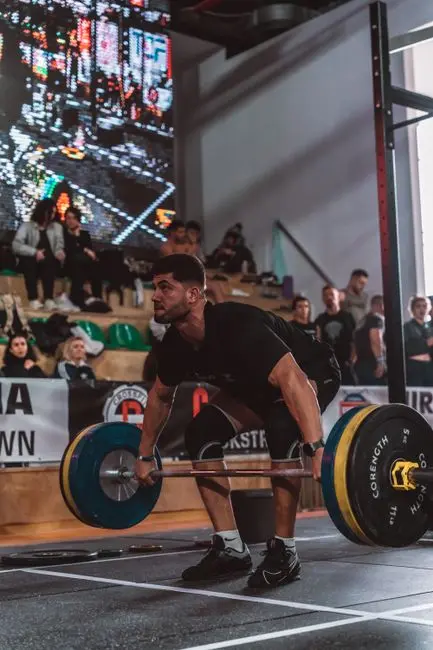
1. Compound lifts, not machines or isolation work. The squat, the deadlift, the bench press, the overhead press, and some kind of row. Five movements, give or take a variation. They recruit more muscle mass per set, they train the body to produce force the way it actually uses force outside a gym, and — this is the part beginners underrate — they are easier to add weight to consistently, because the pattern involves enough total muscle that small increases do not require heroic effort. A leg extension machine isolates the quad. A squat trains the quad, the glutes, the spinal erectors, the core, and the grip, more or less for free.
2. Progressive overload, tracked, not guessed at. The muscle does not know what a workout “felt like.” It responds to mechanical tension relative to what it has handled before. That means writing down what got lifted last time and beating it this time, even by a small amount. Guessing feels like training. Only the tracked version reliably produces adaptation. This is the single most misunderstood concept in the gym, and the full mechanism — why tension near failure signals growth while volume without tension mostly just signals fatigue — is covered in depth at Progressive Overload: How Muscles Actually Grow.
Which raises the obvious next question: overload through heavier weight, or overload through more total sets? For a beginner, mostly the former. Volume becomes the more important lever later, once the easy strength gains from simply adding weight have dried up. That is a Month Four conversation, not a Week One one, and it gets its own answer further down this page.
- Sets, reps, and frequency — kept boring on purpose. Three sets of five reps on the main lifts, three times a week, non-consecutive days, is not a beginner simplification invented to keep things easy. It is close to the actual optimal beginner protocol, because it hits the lift often enough to reinforce the motor pattern, heavy enough to drive strength, and light enough on total fatigue to allow recovery between sessions. Five reps sits in the gap between pure strength work — singles and triples, too neurologically taxing to run three times a week as a beginner — and higher-rep hypertrophy work, eight to twelve reps, which asks for more recovery capacity than most beginners have built yet. None of this is new, incidentally. Three sets of five on the big lifts has been the default beginner recommendation among strength coaches since well before “periodization” was a word gym-goers used at parties. Anyway. Back to the mechanism, because the history is interesting and not actually load-bearing here.
- Recovery — sleep first, then everything else. Muscle does not grow during the set. It grows in the 48 to 72 hours after, provided the body gets the raw materials and the downtime to do the rebuilding. Sleep-restriction research has shown measurable drops in the hormonal environment that supports muscle repair — lower testosterone, higher cortisol — after even a handful of nights of curtailed sleep. Seven hours is a floor, not a target. The mechanics of what actually happens in that recovery window are covered in full at Muscle Recovery: The Science of Rebuilding, and it is worth returning to, because most beginners treat recovery as the thing that happens automatically while they focus on the workout, and it is the opposite of automatic.
- Protein intake, roughly 0.7 to 1 gram per pound of bodyweight per day. A 2018 meta-analysis by Morton and colleagues, published in the British Journal of Sports Medicine, pooled data across dozens of resistance-training studies and found muscle gains kept improving with higher protein intake up to around 1.6 grams per kilogram of bodyweight a day — a little over 0.7 grams per pound — with negligible additional benefit above that ceiling. It does not need to be exotic. Chicken, eggs, a scoop of whey, ground beef, cottage cheese. The number matters more than the source.
Notice what is missing from that list. No training splits, no supplement stack beyond protein, no exercise selection beyond “compound.” That omission is deliberate. Those five things produce most of the outcome and get a fraction of the discussion, mostly because “eat enough protein and sleep” is a less interesting sentence than a new program name.
The First 30 Days, Week by Week
Theory is cheap. Here is what an actual first month looks like, run three times a week on non-consecutive days — Monday, Wednesday, Friday works for most schedules. Two alternating workouts, A and B, run back to back across the week.
Workout A: Squat, bench press, deadlift.
Workout B:
Squat, overhead press, and a row variation — barbell row, dumbbell row, or an assisted pull-up.
Squats appear in both because the leg drive recovers fast enough as a beginner to handle it twice a week, and because the squat is the single lift most responsible for early strength gains across the entire body. The deadlift, by contrast, appears once a week. It is far more fatiguing per set, and running it heavy twice a week as a beginner tends to backfire on recovery before it helps anything.
Week 1. This week is not about weight. It is about the bar path. Every set should be light enough that form stays identical from rep one to rep five — a genuinely embarrassing weight, if it comes to that. An empty barbell, or dumbbells, or even a broomstick for the squat pattern if the hips are not tracking correctly yet. Three sets of five on each lift. The only goal is walking out of Friday’s session moving the same way as Monday’s did. Nobody remembers their first-week numbers a year later. Plenty of people remember a hip that never quite recovered from turning the first squat into an ego contest.
Week 2. Small, consistent jumps. Five pounds on the bar for the upper-body lifts — bench, overhead press, row — each session; ten pounds for the lower-body and hip-hinge lifts, squat and deadlift, which involve more total muscle and can absorb bigger jumps without technique falling apart. Every session should feel slightly harder than the last one on the fifth rep of the last set — not impossible, just present. If a session goes badly and form breaks on rep four, repeat that weight next time instead of pushing forward. Nothing is lost by repeating a weight. A lot is lost by grinding out an ugly rep that teaches the body the wrong pattern.
Weeks 3 and 4. Same structure, same jumps, and this is where it gets interesting, because by week three the numbers on the bar stop feeling trivial and the temptation to chase a personal record instead of following the plan gets real. Resist it. Not this week. This is still linear progression territory, and the plan chasing the numbers beats the numbers chasing the plan, every time, for a beginner. By the end of week four, most first-timers are moving meaningfully more weight than they started with on every major lift — often twenty to forty percent more on the squat alone, largely from the nervous system learning to recruit the right muscles in the right order rather than from new muscle tissue. That is motor learning, not hypertrophy yet. It still counts. It is still the foundation everything after it sits on.
Two rest days minimum between sessions that hit the same lift heavy is a firm rule during this month, not a suggestion. Bodyweight walking, light mobility work, or genuinely doing nothing on off days is fine. What is not fine is treating “no gym” as “no movement at all” — some walking keeps blood moving through recovering tissue without adding meaningful fatigue on top of it.
The Mistakes That Waste a Year

Program-hopping. The single most expensive mistake in beginner strength training, and the reason it gets its own paragraph instead of a bullet point. A new program looks appealing around week four because the old one has started to feel hard — which is the entire point of the old one working. Switching resets the body’s adaptation to a new stimulus, and worse, it resets the ability to track progress against a stable baseline. A program run consistently for twelve weeks beats three programs run for four weeks each, and not by a small margin. It is the entire difference between someone with a linear progression under their belt and someone who never left week four. Here’s the thing about it: difficulty increasing is not a sign the program has stopped working. It is the clearest sign it is still working. The day the lifts stop getting harder to add weight to is the day linear progression is actually over, and that day is a real, identifiable event — not a vague feeling that shows up because the gym felt crowded on a Tuesday.
Chasing soreness as a proxy for progress. A beginner who cannot walk normally two days after leg day has not necessarily trained well. They have novel-stressed a muscle that was not exposed to that movement pattern before, which produces soreness regardless of whether the session was well-programmed or a mess. Delayed onset muscle soreness typically peaks around 24 to 72 hours after a session and fades within a week as the muscle adapts to the specific movement — a pattern documented in exercise physiology literature going back decades. It has almost nothing to do with how much stronger that session made anyone. What actually helps and what is marketing gets its own answer in the reading path below.
Chasing volume before technique is automatic. Adding sets to a squat that still breaks down at the bottom does not build more strength. It builds more repetitions of a flawed pattern, which the body then has to unlearn later — a much harder process than learning it correctly the first time. Technique first, load second, volume third. In that order. Not negotiable, not even for the beginner who insists their squat “feels fine.”
Under-eating while trying to add strength. A lot of beginners arrive at strength training already trying to lose fat, and try to do both aggressively at once — a big calorie deficit stacked on an ambitious lifting program, expecting muscle and strength gains on top of both. It is possible to build some muscle in a modest deficit as an untrained beginner; the body recomposition research is more forgiving here for someone new to lifting than for anyone already trained. But a steep deficit undercuts the recovery the muscle needs to actually adapt, and the tradeoffs of trying to do both at once deserve more room than this section has.
Anyway. One more, and then the list stops, because six mistakes is enough to hold in memory and nine is not.
Skipping the deload nobody told them they needed. Around week eight to twelve, linear progression starts sputtering for most beginners — a session gets missed, weight gets added too fast, or accumulated fatigue from weeks of near-daily strength gains simply catches up. The instinct is to push through. The better move, almost always, is to drop the weight ten percent for a week, let the nervous system and connective tissue catch up, and resume the climb from there. That single pause adds months to a beginner’s runway before the slower, harder phase of training begins.
How to Know It Is Actually Working
Strength training gives feedback on different timelines depending on what is being measured, and beginners tend to check the wrong one at the wrong time — looking in the mirror in week two for changes that will not show up until month three.
Week two: the number on the bar. Nothing else. This is the fastest, most reliable signal available, and it is why tracking every session matters more than almost anything else on this page. If the bar weight for squat, bench, and deadlift is higher at the end of week two than at the start, the program is working, regardless of how anything looks or feels. Strength is the leading indicator. Everything else lags behind it.
Month one: the movement itself gets easier to execute correctly. The bar path straightens out. The bottom of the squat stops feeling like a search for balance. This is motor learning consolidating, and it is a real, measurable form of progress even though it does not show up on a scale or in a mirror.
Month two to three: visible changes start, unevenly, and usually in this order — grip and forearms first, since they get worked in nearly every lift, then shoulders and upper back, then legs, then the rest. Body composition shifts happen slower than strength gains, and slower still for anyone not also managing their eating with any precision. A beginner chasing a visible six-pack by month two off training alone is chasing something training was never going to deliver on that timeline.
What to actually measure, if measuring anything: bar weight on the four main lifts, logged every session. Bodyweight, checked weekly, same day, same conditions — first thing in the morning works well, since it removes food and water variability. That is enough. Circumference measurements and progress photos help some people stay motivated, but they add noise more often than clarity for a true beginner, because month-to-month changes are small enough to get swallowed by measurement error and ordinary water retention.
One honest caveat, since the page has been building toward a clean success story, and that is not how this usually goes. Take a guy we’ll call Danny, 34, three kids, a desk job — started a standard beginner program in January, hit textbook linear progression for six weeks, then missed nine days over a work trip and a stomach bug back to back. His squat came back down about fifteen pounds from where it had been. He treated the whole thing as a failure and nearly quit over it. Six weeks after the break, his squat had not just recovered — it had passed the pre-break number, because he went back to the same unglamorous plan instead of shopping around for a new one. Nobody warns beginners that the comeback is the actual skill being trained, not just the first six weeks.
Where to Go From Here
Start
- DOMS: Why Muscles Hurt and Recovery — read this in week one, before the soreness hits, so it does not get mistaken for a warning sign.
- Strength Training for Longevity — the long-horizon case for why this is worth doing at all, useful once willpower alone starts running thin by week three.
Go Deeper
- Progressive Overload vs Volume Training: Which Is Better — the month-four question, once adding weight every session stops working the way it did at the start.
- Body Recomposition: Build Muscle and Lose Fat Together — for anyone trying to change body composition and strength at the same time, and the real limits of chasing both at once.
Advanced
- Creatine Beyond Muscle: Brain, Bones, and Mood — the one supplement with a genuinely deep research base, and what it does outside the weight room.
- Fasting and Muscle Loss: Will You Lose Gains? — for lifters layering intermittent fasting or extended fasts on top of a training program, and what the evidence actually says about the risk.
Questions Beginners Actually Ask
Is a gym membership necessary, or can this work from home?
The five core movements can be approximated with a barbell and a rack, which most commercial gyms have and most home setups do not without real investment. Dumbbells can substitute for most of the pattern — goblet squats, dumbbell bench press, single-arm rows — with one caveat: the deadlift pattern and heavy squat both eventually need more load than a dumbbell rack provides. A gym is not mandatory in month one. It becomes close to mandatory by month three or four, once bodyweight and light dumbbells stop being enough resistance to keep adding to.
How sore should a first workout actually leave someone?
Some soreness in the 24 to 48 hours after is normal and expected, especially for muscle groups that have never done resistance work before. Soreness severe enough to limit walking or basic daily movement for more than two or three days is a sign the first session ran too aggressive, not a sign of a good workout. The fix for next time is lighter, not different.
Is bodyweight training enough before starting with weights?
For a few weeks, yes, particularly for anyone who has never done a squat pattern before and needs to learn the motion without load complicating it. Push-ups, bodyweight squats, and a hanging or inverted row substitute reasonably well early on. Bodyweight training stops producing new adaptation quickly for most people, though — usually within four to six weeks — because the resistance stays fixed while the body gets stronger, which is the opposite of progressive overload.
What if the gym is intimidating and the squat rack always feels occupied?
Real, common, and rarely discussed directly. Off-peak hours — early morning, early afternoon on weekdays — solve most of the crowding problem by themselves. For the intimidation itself: nearly everyone in a squat rack is thinking about their own set, not evaluating anyone else’s form. That is not a comforting platitude so much as a fairly reliable feature of how attention works under physical exertion. Bring a written plan on a phone. Having something specific to look at and follow removes most of the hesitation that makes a gym floor feel like a stage.
Does training fasted burn more fat than training fed?
The difference, where it shows up in the research at all, is small and mostly washes out over a full day’s eating. What matters far more for a beginner is whether fasted training tanks the quality of the session — and for many people trying to add weight to a bar, low blood sugar does exactly that, turning a session that should build strength into one that just gets survived. If fasted training feels fine, there is no strong reason to change it. If it feels flat, eating something small beforehand is not a failure of discipline.
How long until strength training actually changes how someone looks?
Visible change on a realistic timeline runs closer to eight to twelve weeks than two, and it shows up unevenly — grip, forearms, and posture first, more visible muscle later, fat loss (if that is also a goal) slower still and mostly a function of eating, not training. Anyone measuring week to week against a mirror is measuring on the wrong timescale for what strength training changes fastest, which is the number on the bar, long before it is the reflection in it.
Is it too late to start in your 40s or 50s?
No, and the evidence runs the other direction. Older beginners often see meaningful strength gains at a similar relative rate to younger beginners in the first several months, because linear progression is driven mostly by neurological adaptation, which does not disappear with age the way some other physical capacities do. The stakes are arguably higher, too, since the muscle and bone density built this decade is what gets drawn down against later. Recovery may need to run a day or two longer between sessions than it would at twenty-five. That is a scheduling adjustment, not a disqualifier, and the strength curve does not much care how old the nervous system underneath it happens to be.