
The apartment was $200 cheaper than anything else in the neighborhood, which was the only thing Marcus noticed when he signed the lease in August 2019. He was twenty-six, freshly relocated for a new job, and needed a place in two weeks. The photos looked fine. The landlord seemed fine. The price was $1,150 a month, which was $200 below market, and that gap felt like winning.
By February he’d paid $1,300 in late fees, lost $850 of his security deposit to a dispute over damage he didn’t cause, and discovered that the heating system wasn’t covered under any maintenance obligation in his lease — a clause he’d never read. The $200 monthly savings he’d felt so clever about had been consumed entirely, plus an additional $1,950 on top. He also spent seventeen hours across six months on phone calls and emails trying to get repairs done that his landlord had no legal obligation to perform. He’d signed a lease that made the landlord’s obligations as vague as possible, and he’d signed it in twenty minutes because he didn’t want to seem difficult.
When Marcus finally moved out twelve months later, he had a mental ledger that looked nothing like the one he’d run in his head when he signed. The apartment he thought cost $1,150 a month cost closer to $1,475 when averaged across the full year. The “deal” he found cost him about $3,900 more than renting the $1,350 apartment that had felt too expensive in August.
This is how renting usually goes wrong: not through obvious disasters, but through a cascade of small oversights made under time pressure, each one seeming minor in isolation, each one costing money nobody planned to spend. Renting an apartment is one of the largest recurring financial commitments most people make, and most people treat it like picking a restaurant. What follows is the framework that turns a stressful, expensive gamble into a systematic decision made with confidence.
The Real Cost Number: What Renting an Apartment Actually Costs
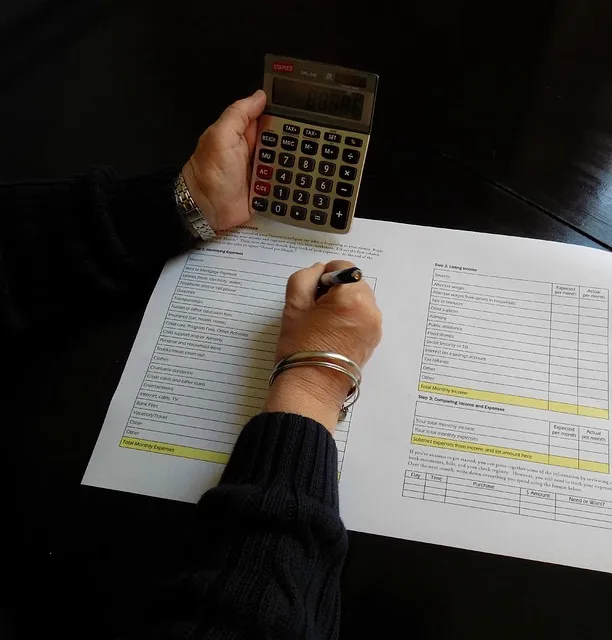
Start with the obvious: monthly rent. Now add the utilities the listing doesn’t include — electricity, gas, water, internet, trash. If these aren’t folded into rent, that’s an additional $150 to $400 per month depending on location, unit size, and climate. A 900-square-foot apartment in Phoenix with August air conditioning running costs meaningfully more than the same square footage in Portland. Budget for the worst month, not the average month.
Then there’s the upfront cost people chronically underestimate. Most landlords require a security deposit of one to two months’ rent, first month’s rent, and sometimes last month’s rent. On a $1,400-per-month apartment with a two-month deposit structure, that’s a check for $4,200 before sleeping there once. Add application fees ($35 to $75 per applicant is standard), a credit check fee if required, and moving costs — professional movers in most urban markets run $600 to $1,500 for a local move. The total upfront cost of a “normal” apartment rental can easily be $5,000 to $7,500 before the first month of actual living begins.
The U.S. Census Bureau’s standard is that households spending more than 30% of after-tax income on housing are “cost-burdened.” The Federal Housing Administration uses 31% of gross income as its upper threshold for loan qualification. But those percentages are ceilings, not targets. They measure housing burden. They don’t say what’s actually affordable given the rest of a financial life.
Here’s how to calculate a Real Cost Number with precision. Take monthly after-tax income. Subtract every non-negotiable: food, transportation, insurance, minimum debt payments, and a savings contribution of at least 10%. Whatever’s left is the actual housing ceiling — not 30% of gross, not a number hoped for after a raise that hasn’t arrived yet. The actual surplus after everything else is funded. An apartment’s total monthly cost exceeding that number means it can’t be afforded without cutting into savings or taking on debt, and both of those outcomes cost more in the long run than an extra $150 a month on a cheaper apartment.
A collection account for unpaid rent or apartment damage can drop a credit score by up to 100 points, according to FICO’s published scoring model, and it stays on the credit report for seven and a half years from the date of first delinquency. The downstream cost of that record — higher interest rates on car loans, difficulty qualifying for future rentals, higher insurance premiums — far exceeds the rent that went unpaid. The math on affording an apartment conservatively is heavily one-sided.
The Real Cost Number also includes location costs most people forget to calculate before signing. A $200 monthly rent savings that adds $180 in commuting costs (gas, tolls, transit) nets $20. Is a 15-minute longer commute each way worth $20 a month? Not rhetorical. Do the actual math before deciding. Time has a value too — commuting time is time that can’t be spent sleeping, building, or doing anything else useful. A 45-minute commute each way is 7.5 hours a week, 30 hours a month, 360 hours a year that the “cheaper” apartment is consuming. Factor that into the Real Cost Number.
The Lease Math: What You Are Actually Signing
- Early termination: Does the lease specify a buyout fee (typically one to two months’ rent) or hold the tenant to the full remaining balance? A fixed buyout fee is vastly preferable.
- Late fees: What is the grace period, if any? When does the late fee trigger? Some leases charge on the 2nd. Others have a 5-day grace period. Some stack daily fees after the first late-fee trigger. Know the exact numbers.
- Rent increases: Can the landlord raise rent mid-lease or upon renewal? Some leases auto-renew at a higher rate unless 60 days’ written notice is given. Forget to give notice, and the new price locks in.
- Maintenance responsibility: What is the landlord required to fix, within what timeframe? “Reasonable time” is not a timeframe. A heater breaking in January makes the difference between 24 hours and 14 days the difference between an inconvenience and a crisis.
- Subletting: Is it allowed? Under what conditions? This matters because subletting is often the cleanest exit strategy when circumstances change.
- Security deposit return: What conditions must be met? What deductions is the landlord permitted? How many days after move-out must the deposit be returned? Most states require return within 14 to 30 days, with an itemized statement of any deductions. Know the state’s law and make sure the lease doesn’t contradict it — because a lease less protective than state law loses to state law regardless.

The standard 12-month lease locks in a specific monthly payment regardless of what happens in life. Job loss, medical emergency, relationship change, family obligation — none of it matters to the lease. The obligation runs until the end of the term unless the contract specifies otherwise or a release gets negotiated. Understanding the financial exposure that contract creates isn’t optional prep. It’s basic self-defense.
Run this math before signing any lease. Multiply the monthly rent by the number of months remaining. That’s the maximum liability if leaving early becomes necessary and the landlord isn’t required to mitigate damages. On a $1,400-per-month, 12-month lease, the maximum exposure on day one is $16,800. Most landlords in most states are legally required to make “reasonable efforts” to re-rent, which reduces this number — but the lease defines what “reasonable” means, and a vague lease can mean the landlord does very little while still holding a tenant to full liability.
Check these specific clauses before signing anything:
Two things landlords count on: that the whole lease won’t get read, and that nobody will negotiate. Both bets pay off with remarkable consistency. Request the lease before the showing if possible and read it at home, without the leasing agent standing over anyone with a pen. Ask for clarification in writing on anything unclear. Ask for changes on anything unacceptable. A legitimate landlord understands that a lease is a serious document and will allow time to review it. The landlord who insists on an immediate signature — before someone else takes it — is the landlord who has learned that pressure closes deals that scrutiny would kill.
One negotiating move experienced renters make before signing: ask for a written early termination clause with a fixed fee. Many landlords agree to this because it’s better for them too — a clear, defined exit beats the hassle of an abandonment situation. A typical negotiated buyout is one to two months’ rent. Get it in writing and signed as an addendum to the main lease. That clause may save thousands if life changes the plan six months in.
The Total Move-In System: Build Your Apartment-Hunting Process
- Stage 1: Set parameters before looking. Run the Real Cost Number (after-tax income minus all non-housing expenses including 10% savings) before opening a single listing. Write it down. Commit to it. The most useful thing that number does is disqualify apartments that would look attractive on paper but stress finances in practice. This filter needs to be in place before the nice kitchen and the big windows start doing their persuasive work.
- Stage 2: Evaluate the location with real data. Drive the commute during actual rush hour — not a Sunday, not a Wednesday at noon. Calculate the full commuting cost including fuel, tolls, transit fares, and time. Walk the neighborhood after 9 PM. Check whether parking is available and whether it costs extra. Look up the area on a crime map (most real estate platforms carry these), but understand that crime maps show aggregate data for a zip code that may contain both safe and unsafe blocks. Walk it. Talk to someone who lives nearby. The neighborhood is the backdrop of daily life for the next 12 months. Evaluate it like it matters.
- Stage 3: Run the walkthrough checklist. A walkthrough is a systematic inspection, not a casual stroll through nice rooms. Print this list and check every item:
- Run every faucet — check pressure and how long it takes to get hot water
- Flush every toilet — watch for slow drains or running
- Test all burners, the oven, and the dishwasher
- Run the refrigerator and freezer — confirm temperature, listen for abnormal noise
- Test every light switch and electrical outlet (bring a phone charger)
- Open and close every window — check seals and whether locks engage
- Test HVAC in both heating and cooling modes
- Press the test button on smoke detectors and carbon monoxide alarms
- Open every cabinet and closet — check for mold, water stains, pest evidence
- Look under every sink for water damage or active drips
- Inspect walls and ceilings for cracks, stains, and patches indicating prior damage
- Check flooring for warped boards, stained carpet, or cracked tiles
- Test the deadbolt on every exterior door
- Check the parking situation — is the space clearly designated?
Photograph everything, including items in good condition. Timestamp the photos by emailing them immediately after the walkthrough. These photos are protection against security deposit disputes at move-out. Landlords who try to charge for pre-existing damage have a much harder time doing so when a complete, dated visual record of the unit’s condition exists. Not paranoia. The kind of systematic self-protection that saves most people several hundred to several thousand dollars.
- Stage 4: Read and negotiate the lease. Apply the lease math from the previous section. Check every clause listed. Request any wanted changes in writing. Ask about the early termination fee. Understand the late fee structure. Confirm the deposit return procedure and timeline. Never sign the same day as the tour — take the lease home, read it without time pressure, and sign only once every obligation it creates is understood.
- Stage 5: Build financial runway before signing. Before signing any lease, at least three months of total housing costs (rent plus utilities) should sit in a separate savings account untouched for any other purpose. Rent at $1,400 with utilities averaging $200 means $4,800 before signing. This is an emergency fund specific to housing. It’s the difference between a job loss creating a manageable cash-flow problem and a job loss triggering an eviction process that damages credit for seven years. Without this buffer yet, delay the move. A cheaper temporary situation for two months beats signing a lease with no runway.
- Stage 6: Present as the strongest applicant. In competitive markets, the landlord chooses from multiple qualified applicants. Get ahead by having a renter’s resume ready. A one-page document including current employment and income, rental history, references from previous landlords, credit score (pull the free report first), and any pets. Add a brief cover letter — two paragraphs explaining who’s applying and what kind of tenant they’ll be. Most applicants show up with nothing but a phone number. A renter’s resume signals organization and seriousness, and in tight markets, it’s often the factor that tips the decision. It takes thirty minutes to assemble and works precisely because so few people bother with it.
The Roommate Math: Financial Partnership Is Not Friendship
- Is their income stable and sufficient? Verify it the same way a landlord would — pay stubs or bank statements, not conversation.
- What’s their rental history? Have they paid rent reliably in previous situations?
- Can the full rent be covered alone if they can’t make a payment? This is the only scenario that provides real protection. Genuinely unable to cover the full rent alone for even one month means financial dependence on a third party’s reliability — a fragile arrangement.
- What happens if one person wants to leave early? This question needs a written answer before signing together.
Having a roommate can reduce housing cost by 30% to 50% — a meaningful number that meaningfully changes what’s financially available. A $2,000 apartment split with a roommate means paying $1,000. At a Real Cost Number ceiling of, say, $1,200, that $200 monthly cushion translates to $2,400 in preserved savings annually. The math is real.
The risk is also real, and most people miscalculate it by confusing friendship with financial reliability. The question about a potential roommate isn’t “do I like this person?” It’s “will this person pay their half on the first of every month, without drama or excuses, for twelve consecutive months?” Different questions, requiring different evidence. Friendship predicts loyalty. It says nothing about financial consistency.
Before agreeing to share a lease with anyone, get honest answers to these:
Sharing a lease with a roommate means putting the financial arrangement in writing regardless of how close the friendship is. Document who pays what and when, how shared expenses are split, what happens if one person wants to exit early, and how the security deposit gets divided at the end. A brief written agreement takes fifteen minutes and prevents the kind of ambiguity that destroys friendships. Adults who want to stay friends put the financial terms on paper. Not distrust. Respect for the relationship’s value.
One specific risk most people don’t model: the roommate finds a partner, gets a job offer in another city, or simply decides this arrangement doesn’t work for them anymore. Midway through a lease, thirty days’ notice arrives. Now the full rent belongs to someone on a unit sized for two incomes. Before signing a shared lease, know exactly what happens in that scenario. Either the lease allows finding a replacement tenant quickly, or the full payment needs to be carried alone for two to three months while one gets found, or a formal exit agreement with the co-signer is needed. The scenario isn’t unusual. Prepare for it specifically.
The Apartment Hunting Trap: How Emotion Overrides Math

Which is why signing on the same day as the tour is a mistake, regardless of how perfect the apartment seems. The emotional peak of a successful tour is exactly the wrong state for a binding 12-month financial decision. Go home. Let 24 hours pass. Review the notes. Run the Real Cost Number again with fresh eyes. If the numbers still work and the concerns still feel manageable the next morning once the excitement has settled, move forward. If something nags in the cold light of a Tuesday morning — a clause that didn’t fully register, a maintenance concern that got minimized, a gut response to the landlord that got pushed aside — trust that hesitation. It’s cheaper to keep looking than to escape a bad lease.
A few specific tactics landlords and leasing agents use are worth recognizing:
Artificial scarcity:
“We have two other showings this afternoon. Someone else applied this morning.” This may be true. It may not be. Either way, it’s designed to compress the decision timeline. The correct response is proceeding at the actual pace needed. A landlord unwilling to hold a unit for 24 hours during lease review is a landlord using scarcity to prevent clear thinking.
Let the unit go if necessary. Another one will appear.
The cheap first month:
“First month free” offers are common in markets with high vacancy. The math deserves scrutiny. Rent at $1,500 with the first month free on a 12-month lease means $1,500 × 11 months = $16,500 total, averaging to $1,375 per month. The question is whether an equivalent apartment could have been found for $1,375 without the promotion. In high-vacancy markets, frequently yes. The promotion exists because the unit needs filling, and a tenant with a strong renter’s resume in that market has real negotiating use.
The “as-is” agreement:
Some landlords show units with obvious deferred maintenance and either present it as normal or promise verbally that it’ll be fixed before move-in. Verbal promises are not binding. Get every repair commitment in writing as a condition of the lease, with a specific completion date. A landlord unwilling to put the commitment in writing likely means the repairs won’t happen. Taking possession of the unit turns any pre-existing issues into something to document and potentially fight about for the next twelve months.
Negotiating rent directly is also more available than most renters assume. A landlord with a vacancy loses money every day the unit sits empty. On a $1,500-per-month unit, each empty day costs the landlord $50. A qualified applicant willing to sign a longer lease, or willing to sign quickly, has genuine use. Ask: “I really like this unit. I’m a strong applicant with solid credit and stable income. Would you consider $1,450 per month, or waiving the parking fee?” The worst response is no. Many landlords counter with something. Even a $50 monthly reduction is $600 over the life of a standard lease — enough to cover two months of renters insurance or most of a security deposit on a future rental.
The Financial Proof: What Renting Smart Actually Buys You

Scenario A: The unprepared renter. Signs a lease at $1,500 per month without a housing emergency fund. Six months in, loses their job. Misses one month’s rent. The landlord files for eviction — which goes on the tenant’s record regardless of whether the eviction is completed. Credit score drops 80 points. Applying for the next rental, the eviction filing shows up. Rejected by two landlords before finding one willing to accept a two-month security deposit instead of one. The extra deposit: $1,500. Higher interest rate on the next car loan refinance due to lower credit score: $1,200 additional interest over three years. Total cost of the one missed payment, through downstream effects: approximately $2,700 to $4,000 above and beyond the missed rent itself.
Scenario B: The prepared renter. Same job loss, six months in. Has $5,100 in a dedicated housing emergency fund (three months of rent plus utilities). Makes the rent payment from the fund. Has ninety days to find new income before the fund runs out. Finds a new job in six weeks. Credit score untouched. No eviction filing. Security deposit on the next apartment: normal. Car loan rate: unaffected. Total financial impact of the job loss: the stress of the job search. That’s it.
The emergency fund is not a luxury. It’s the difference between those two scenarios, and the cost of building it — delaying a move by two months, taking a cheaper place temporarily, running a tighter budget for sixty days — is trivially small compared to the cost of the first scenario.
Now consider renters insurance, which most people skip because it feels like an expense for something that probably won’t happen. Renters insurance typically runs $15 to $30 per month. For that, replacement coverage on personal property (laptop, furniture, clothing, electronics) and personal liability coverage if someone is injured in the apartment. The average renter has $20,000 to $35,000 in personal property completely unprotected by the landlord’s insurance policy. The landlord’s policy covers the building structure and the landlord’s liability. Personal belongings are the tenant’s problem. A kitchen fire, a burst pipe from the unit above, a break-in — any of these can cost several thousand dollars in replacements. At $20 per month, renters insurance pays for itself after the first incident it prevents from being catastrophic.
The total financial picture of a well-prepared renter versus an unprepared one, tracked across three rental cycles, typically shows a gap of $8,000 to $15,000 — in favor of the person who did the work upfront. That gap comes from negotiated rent discounts, avoided late fees, preserved security deposits, maintained credit scores, and the compounding benefit of a housing emergency fund that never gets tapped into larger spending. The wealth-building math on renting smart is clear and consistent.
Things Consider Before Q&A About Renting an Apartment
How much should you spend on rent per month? The standard guideline is no more than 30% of gross income, but that number is a ceiling for burden, not a target for optimization. A more useful calculation: take monthly after-tax income, subtract all non-housing expenses plus a 10% savings contribution, and use whatever’s left as the real ceiling. For most people, this number is lower than 30% of gross, and that gap is worth protecting. Renting below the ceiling builds the financial margin that makes every other part of life more stable. For context, the U.S. Department of Housing and Urban Development publishes area median income data that can help calibrate what “normal” housing costs look like in any specific market.
What is a renter’s resume and do you really need one? A renter’s resume is a one-page document summarizing rental history, employment and income, references, credit score, and any relevant details (like pets or planned lease duration). One is needed in any competitive rental market, which at this point describes most urban and suburban areas in the United States. It takes about thirty minutes to assemble and signals to a landlord organization and seriousness — qualities that translate directly to “this person will pay on time and not cause problems.” In markets where landlords receive five to ten applications per unit, the renter’s resume is often the differentiating factor. It’s also a useful organizational exercise, forcing a pull-together of information (actual credit score, landlord references) worth knowing before applying anyway.
What should you look for during an apartment walkthrough? Test everything: all faucets, toilets, appliances, light switches, outlets, windows, locks, and the HVAC system. Look under every sink for water damage. Check walls and ceilings for stains, cracks, or patched areas indicating prior damage. Smell the apartment — mustiness suggests moisture problems, which often mean mold. Test the water pressure in the shower, which photos can’t show. Document every deficiency with timestamped photos and get the landlord to acknowledge in writing any items needing repair before or after move-in. These photos are the primary protection against security deposit disputes at move-out.
Can you negotiate rent with a landlord? Yes, particularly with private landlords and in markets where vacancy rates are elevated. Every day a unit sits empty costs the landlord money — on a $1,500 apartment, approximately $50 per day. A qualified applicant willing to sign promptly is worth something to a landlord, and asking for $50 to $100 per month less, a free parking space, or a waived application fee is a reasonable business proposition that many landlords accept or counter. Large corporate property management companies have less flexibility, but even they sometimes waive fees for strong applicants. The ask costs nothing. The upside is $600 to $1,200 back in pocket over a standard lease term.
What happens if you need to break a lease early? Liability depends on three things: what the lease says, what state law requires, and what the landlord is willing to negotiate. Most states require landlords to “mitigate damages” by making reasonable efforts to re-rent the unit — meaning nobody’s automatically on the hook for twelve months of rent just for leaving. The lease should specify an early termination fee (ideally a fixed number like one to two months’ rent) or describe the subletting process. If neither is in the lease, negotiate an addendum before signing. Already in a lease and needing to leave? Document the request in writing, propose a specific resolution (a buyout amount, a sublet candidate, a move-out date), and keep copies of all communications. Managing the financial aftermath of an early lease break is far easier when handled professionally and in writing throughout.
Is renters insurance worth it? The math is straightforward. Renters insurance costs $15 to $30 per month and covers personal property (typically $20,000 to $30,000 in coverage) plus personal liability. A landlord’s insurance does not cover a tenant’s belongings under any circumstances. A laptop, a TV, a sofa, a decent wardrobe — that’s $5,000 to $25,000 in personal property entirely unprotected without renters insurance. A single incident — a fire in a neighboring unit, a burst pipe, a break-in — can easily cost more than several years of premiums in a single afternoon. Already carrying auto insurance? Call the insurer before shopping around; multi-policy discounts are common and sometimes offset the entire cost of the renters policy. At $20 per month, renters insurance is one of the clearest value propositions in personal finance.
How big of an emergency fund do you need before renting? Before signing any lease, at least three months of total housing costs — rent plus utilities — should be set aside in a dedicated savings account not used for anything else. Rent at $1,400 with utilities running $200 per month means $4,800 in the account before signing. This specific buffer is separate from a general emergency fund. Its sole purpose is ensuring a job loss, a medical bill, or an unexpected expense doesn’t immediately trigger a missed rent payment and the downstream credit consequences that follow. Without this number yet, delay signing. The cost of waiting two more months in a cheaper situation is reliably smaller than the cost of entering a lease without the runway to survive a disruption. The Consumer Financial Protection Bureau’s budgeting tools can help build this target into a monthly plan.
What are the most common apartment renting mistakes? In order of financial impact: (1) signing without reading the full lease, leaving exposure to clauses that would have been negotiable or deal-breaking if caught; (2) renting above the Real Cost Number ceiling because the apartment was nicer than what was actually affordable; (3) skipping the walkthrough documentation, which almost always results in security deposit disputes; (4) signing a shared lease without a written roommate agreement; and (5) moving in without a housing emergency fund. These five mistakes account for the vast majority of the financial pain renters experience. Every one is preventable with preparation that takes a few hours, total, spread across the decision timeline. The U.S. Department of Housing and Urban Development provides renter rights resources by state worth reviewing before signing.
Editorial StandardsCorrectionsMedical DisclaimerAbout Our ContentAffiliate DisclosureSite Map