
Recovery tools and stress management practices have gone mainstream, which means anyone paying attention is now swimming in conflicting advice about Meditation vs Breathwork. The marketing makes both sound essential. The reality is more specific than that.

Both Meditation and Breathwork have legitimate applications, but they work through different mechanisms and serve different purposes. Understanding those differences is what lets a man pick the right tool for his specific situation rather than chasing whatever’s trending.
The recovery and wellness space has exploded with options, and it’s easy to spend significant money and time on practices that sound good but don’t match actual needs. Both Meditation and Breathwork have genuine science behind them, but they serve different purposes. Understanding those differences prevents investing in the wrong tool.
What follows breaks down the mechanism of each, the quality of evidence behind both, the practical considerations that affect real-world implementation, and a clear framework for choosing.
Take a guy we’ll call Dean. Thirty-seven, product manager, the kind of job where Slack notifications double as a nervous system trigger. Dean tried meditation first because a podcast told him to. Ten minutes of sitting with his eyes closed made his chest tighter, not looser — his mind wasn’t wandering peacefully, it was sprinting laps around a deadline. He quit after four days and told his wife meditation “doesn’t work” on him. What actually happened is more specific than that, and it shows up later in this piece.
WHAT IS MEDITATION?

Jon Kabat-Zinn formalized the modern clinical protocol in 1979 at the University of Massachusetts Medical Center, stripping the Buddhist framework down to an eight-week, secular curriculum he called Mindfulness-Based Stress Reduction. The structure matters: 45 minutes of guided practice, six days a week, plus one full-day retreat around week six. That’s the dose that shows up in the research. Most people doing “meditation” on a wellness app for five minutes a day are doing something adjacent to MBSR, not MBSR itself, and the outcomes diverge accordingly.
The mechanism has a name at the neuroimaging level: default mode network suppression. The DMN is the brain circuit — anchored in the medial prefrontal cortex and posterior cingulate — that’s active during mind-wandering, rumination, and self-referential thought. Judson Brewer’s 2011 study in Proceedings of the National Academy of Sciences put experienced meditators and novices in an fMRI scanner and found the experienced group showed significantly reduced DMN activity during meditation, and — more interesting — reduced DMN activity even at rest. Less time spent in the mental loop that produces rumination and anxious replay. That’s not a metaphor. It’s a measurable reduction in activity in a specific brain network.
The structural changes are the part that actually surprised the neuroscience field when Britta Hölzel published the data in 2011 in Psychiatry Research: Neuroimaging. Her team ran participants through the standard eight-week MBSR course and scanned their brains before and after. Gray matter density increased in the hippocampus — the structure responsible for learning and memory consolidation — and decreased in the amygdala, the threat-detection center. The amygdala shrinkage correlated directly with self-reported stress reduction. Eight weeks. Measurable structural change. That’s the timeline that matters, and it’s longer than most men are willing to commit before deciding whether something “works.”
Sara Lazar’s earlier 2005 study in NeuroReport found something similar in long-term practitioners: increased cortical thickness in the prefrontal cortex and insula, regions associated with attention and interoceptive awareness — the ability to accurately sense internal bodily states. The effect was most pronounced in older meditators, suggesting the practice may partially offset the normal age-related thinning of those regions.
The evidence isn’t uniformly glowing, and it’s worth being honest about that instead of only citing the favorable studies. Madhav Goyal’s 2014 meta-analysis in JAMA Internal Medicine pooled 47 randomized trials and found moderate evidence for meditation’s effect on anxiety, depression, and pain — effect sizes around 0.3, which is real but modest, roughly comparable to what you’d expect from an antidepressant in a mild-to-moderate case. Goyal’s team found no evidence meditation outperformed active treatments (exercise, therapy) in head-to-head comparisons. Meditation isn’t a miracle intervention. It’s a moderately effective one with an unusually good safety profile and a large number of small ancillary benefits that don’t always show up cleanly in a single outcome measure.
Not all meditation styles are the same intervention wearing different clothes, either. Transcendental Meditation, which uses a silently repeated mantra rather than open attention, has its own separate research trail — Robert Schneider’s team at Maharishi University published a 2012 trial in Circulation: Cardiovascular Quality and Outcomes following high-risk cardiac patients randomized to TM versus health education, finding a 48% reduction in the composite endpoint of heart attack, stroke, and death over roughly five years of follow-up. That’s a far larger effect than anything in the general MBSR literature, though TM’s research has been criticized for a smaller pool of independent replication compared to mindfulness-based approaches. Zen and Vipassana traditions, by contrast, emphasize open monitoring over mantra repetition, and show up more consistently in the attention and emotional-regulation literature (the Brewer and Hölzel studies above both used open-monitoring or body-scan style protocols). The practical takeaway: “meditation” isn’t one technique, and switching styles before abandoning the category entirely is a reasonable move if the first style tried didn’t land.
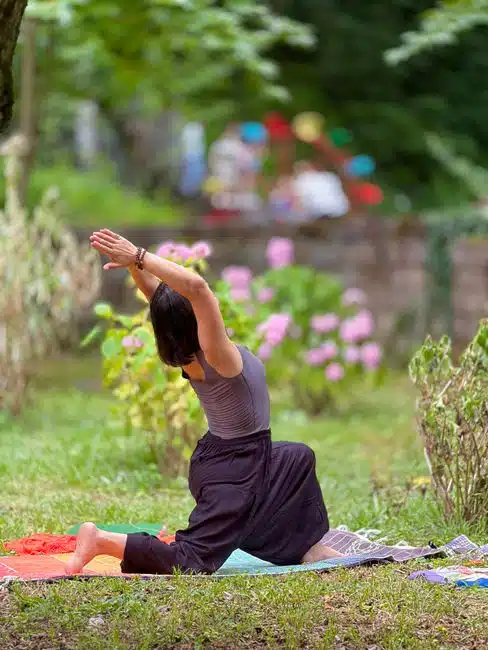
Breathwork — whether Wim Hof, holotropic, box breathing, 4-7-8, or coherent breathing — directly manipulates CO2 and O2 levels, vagal tone, and autonomic nervous system state. Unlike meditation, breathwork produces immediate, tangible physiological effects. Box breathing drops cortisol within minutes. Wim Hof’s method creates a deliberate stress response that trains resilience. The effects are acute and powerful, which makes breathwork more accessible to beginners who struggle to see results from silent sitting.
| Meditation | Breathwork | |
|---|---|---|
| Mechanism | Trains attention/meta-awareness; rewires prefrontal cortex, shrinks amygdala | Directly manipulates CO2/O2, vagal tone, autonomic state |
| Time to effect | Cumulative — measurable brain changes after 8+ weeks | Immediate — box breathing drops cortisol within minutes |
| Best for beginners | Long-term trait change | Fast, tangible results |
The mechanism runs through the vagus nerve and the baroreceptor reflex — pressure sensors in the aortic arch and carotid arteries that respond to the rhythmic pressure changes created by breathing. Extended exhalation specifically activates the parasympathetic branch by stimulating these baroreceptors, which is why almost every effective breathwork protocol shares one design feature: the exhale is longer than the inhale. 4-7-8 breathing (four-second inhale, seven-second hold, eight-second exhale) and coherent breathing built around a roughly 1:2 inhale-to-exhale ratio both exploit the same reflex arc.
Box breathing — four seconds in, four seconds hold, four seconds out, four seconds hold — got popularized through Navy SEAL training programs, where instructors like Mark Divine used it to teach operators to regulate arousal under combat stress in real time, no equipment, no quiet room required. That’s the practical edge breathwork has over meditation: it works standing up, mid-crisis, in a bathroom stall thirty seconds before a presentation.
Coherent breathing, sometimes called resonance frequency breathing, targets roughly 5.5 breaths per minute — slower than most people’s natural six-teen-plus. Paul Lehrer and Evgeny Vaschillo’s research identified this specific rate as the frequency at which heart rate variability and respiratory rhythm synchronize maximally, producing the largest measurable increase in vagal tone of any breathing cadence tested. It’s not an arbitrary number. It’s the resonant frequency of the baroreflex loop itself, and it varies slightly by individual (roughly 4.5 to 6.5 breaths per minute depending on torso size and autonomic baseline).
Then there’s the physiological sigh — a double inhale through the nose followed by a long exhale through the mouth — which Kimberly Yackle’s 2016 discovery of dedicated “sigh neurons” in the brainstem’s preBötzinger complex helped explain mechanistically. The double inhale re-inflates collapsed alveoli and produces the fastest measured drop in physiological arousal of any single-breath intervention studied: noticeable within one to three repetitions, which is why it’s become the go-to for acute panic or pre-performance anxiety.
The Wim Hof Method sits at the more extreme end — cyclic hyperventilation (30-40 forceful breaths) followed by a breath-hold on empty lungs, repeated across three to four rounds. Matthijs Kox and colleagues ran the landmark test of this in 2014, published in Proceedings of the National Academy of Sciences: trained practitioners were injected with bacterial endotoxin — the same substance used to study sepsis response — and showed a voluntary, deliberate spike in epinephrine, followed by markedly reduced flu-like symptoms and elevated anti-inflammatory IL-10 compared to untrained controls given the same endotoxin. It was the first solid evidence that a breathing technique could consciously modulate the innate immune system, something previously assumed to be entirely outside voluntary control. The catch: this protocol works by inducing an acute stress response, not a calming one. It’s activation, not relaxation, and using it as a substitute for the parasympathetic techniques above misunderstands what it’s doing.
One older breathwork protocol deserves a mention because it’s the most rigorously clinically tested of all of them: the Buteyko method, developed by Ukrainian physician Konstantin Buteyko in the 1950s, which trains reduced breathing volume and nasal-only breathing to build CO2 tolerance in asthmatics. Simon Bowler’s 1998 randomized trial in the Medical Journal of Australia found Buteyko training reduced beta-agonist inhaler use by 90% and inhaled corticosteroid use by 49% over six months compared to a control group, without any change in actual lung function measurements — meaning the benefit came from reduced hyperventilation-driven symptom perception, not improved airway mechanics. It’s a narrower application than the general stress-reduction protocols above, but it’s a useful reminder that “breathwork” spans a spectrum from acute nervous-system regulation to chronic respiratory retraining, and the evidence quality varies by which specific technique and which specific outcome is being measured.
THE ONE STUDY THAT ACTUALLY COMPARED THEM HEAD-TO-HEAD

Almost every “meditation vs breathwork” article compares them abstractly, citing separate bodies of research for each. One study actually put them in the same trial, on the same timeline, measuring the same outcomes. It’s worth more weight than everything else in this comparison combined.
David Spiegel’s team at Stanford, led by Melis Yilmaz Balban, published the result in 2023 in Cell Reports Medicine. They randomized 108 adults into four daily five-minute practices for 28 days: cyclic sighing (extended-exhale breathwork), box breathing, cyclic hyperventilation with retention, or mindfulness meditation. Every group improved mood and reduced anxiety over the month — meditation included. But the breathwork groups, cyclic sighing specifically, produced significantly greater improvements in positive affect and a measurably greater reduction in resting respiratory rate than the meditation group did, at the same five-minutes-a-day dose.
Worth sitting with that finding, because it cuts against a lot of the received wisdom in the wellness space that treats meditation as the default, foundational practice and breathwork as the beginner’s warm-up act. At matched time investment, breathwork outperformed meditation on mood outcomes in the one trial designed to actually answer the question. That doesn’t make meditation inferior across the board — the Stanford trial only ran 28 days, and meditation’s structural brain changes (per Hölzel) may compound over a longer horizon in ways a four-week trial can’t capture. But for anyone choosing where to start, and choosing based on fastest return per minute invested, the data currently points toward breathwork.
MEDITATION VS BREATHWORK: WHAT THE RESEARCH AND REAL-WORLD EXPERIENCE SHOW
The differences between Meditation and Breathwork go deeper than most surface-level comparisons suggest. A quick-reference table only gets you so far; the real decision-making information lives in the detailed breakdown that follows. Use the table for orientation, then read the analysis for the full picture.
DETAILED BREAKDOWN: WHERE EACH ONE WINS
Primary Mechanism
Meditation produces its effects through a specific physiological pathway. Understanding this mechanism helps predict who will benefit most, what conditions it addresses, and how to optimize the protocol for maximum effect. The mechanism also explains why it works for some goals and not others.
Concretely: meditation’s primary lever is top-down — attention training reshapes cortical and limbic structure over weeks to months, via the default mode network suppression and amygdala volume changes described above. It’s a cognitive-first mechanism with downstream physiological consequences.
Breathwork operates through a different pathway, targeting different aspects of recovery or stress management. This mechanistic difference is why the two aren’t interchangeable despite being marketed to similar audiences. Matching the mechanism to the specific need is the key to getting results.
Breathwork’s lever is bottom-up — mechanical manipulation of the baroreflex and vagal afferents produces an autonomic state shift within seconds to minutes, with downstream cognitive consequences (clearer thinking, reduced anxiety) following from the physiological change rather than preceding it. Bottom-up interventions tend to work faster because they bypass the prefrontal cortex, which is exactly the structure that’s often impaired under acute stress.
Evidence Base
The research on Meditation ranges from well-established findings to newer, less proven claims. Separating what’s solidly supported from what’s speculative helps calibrate expectations. Look for human studies at realistic doses and durations — not rodent studies or extreme protocols that don’t translate to daily practice.
Meditation has the deeper research base by volume — decades of trials, the Goyal 2014 meta-analysis alone synthesizing 47 RCTs. What’s solid: moderate effects on anxiety, depression, and chronic pain, consistent structural neuroimaging findings across multiple independent labs. What’s overstated: claims of dramatic personality transformation or cure-all effects that show up in marketing but not in the trial data.
The evidence for Breathwork has its own profile — some applications well-supported, others resting on preliminary data or anecdote. The responsible approach is to try what the evidence suggests while acknowledging the limits of current knowledge. Personal response matters more than any study average.
Breathwork’s evidence base is thinner in total volume but has grown rapidly since 2014, with the Kox endotoxin study and the 2023 Stanford head-to-head trial giving it unusually rigorous anchors for a practice that spent decades associated with new-age retreats rather than peer review. What’s solid: acute autonomic effects (HRV, cortisol, respiratory rate) are well replicated. What’s speculative: long-term structural or immune benefits beyond the acute window, which haven’t been studied at anything like meditation’s scale.
Practical Implementation
How easy Meditation is to implement in daily life matters as much as its theoretical benefits. Consider time commitment, equipment or facility needs, cost, and scheduling constraints. The most effective recovery practice is one that actually gets done consistently, not the one that produces the best results in a lab under ideal conditions.
Meditation needs a quiet-ish space, ten to twenty minutes, and — for most beginners — either a guided app or a class, since unstructured silent sitting has the highest dropout rate of any wellness practice tracked in adherence studies. It doesn’t require equipment. It does require protecting a block of time, which is the actual barrier for most men, not the practice itself.
Breathwork has its own practical profile. Some practices require dedicated equipment or facilities; others can be done anywhere. Some take 5 minutes; others need 20-30. Factor in actual schedule, environment, and lifestyle when deciding. A practice that fits naturally into a routine will always outperform one that requires heroic scheduling.
Breathwork’s practical advantage is portability. A physiological sigh takes fifteen seconds and can be done at a desk, in a car at a red light, or standing in line. Box breathing needs no more privacy than closing your eyes for two minutes. The Stanford trial used five minutes a day — a dose almost anyone can find, which is part of why adherence in that study was unusually high (over 90% completion across all four groups, notably including the meditation arm).
Time to Noticeable Effect
Some of Meditation’s effects are immediate — a different feeling after a single session — while others accumulate over weeks of consistent practice. Knowing the expected timeline prevents premature abandonment and helps assess whether it’s working. Set a reasonable trial period based on the research, not on impatience.
Structural brain change from meditation shows up at the eight-week mark in the Hölzel data. Subjective stress reduction can precede that, but inconsistently — plenty of beginners report the first two weeks feeling worse, not better, because sitting still with an untrained attention system surfaces the mental noise that was previously being outrun by constant stimulation. That’s not failure. That’s the practice working exactly as expected, just before the payoff arrives.
Breathwork has its own onset timeline. Acute effects may differ from chronic adaptations, and the timeline for each varies. Give any new practice at least 2-4 weeks of consistent use before evaluating. The men who benefit most from recovery tools are the ones who commit to an honest trial rather than sampling everything once.
Breathwork’s acute effects are near-immediate — cortisol reduction measurable within five to twenty minutes of a structured session, per Xiao Ma’s 2017 study in Frontiers in Psychology, which found six weeks of daily diaphragmatic breathing training improved sustained attention and lowered salivary cortisol compared to controls, with the attentional gains already trending in the right direction by week two. The chronic adaptations — the mood improvements seen in the Stanford trial — build across the full 28-day window, so single-session relief and cumulative benefit are two different timelines running in parallel.
Who Benefits Most
Not everyone responds equally to Meditation. Age, training status, stress level, sleep quality, and individual physiology all modulate the response. Understanding who tends to benefit most helps assess likely response. A man who fits the profile of a strong responder should give this practice a serious trial.
Men who are already relatively regulated — decent sleep, moderate stress, some baseline capacity for stillness — tend to be strong meditation responders from day one. Men in a genuinely dysregulated state, like Dean from the opening, often report the opposite: sitting still amplifies the internal noise instead of quieting it, because there’s no working “off switch” yet for the sympathetic activation driving that noise.
Breathwork benefits a different subset of people, though there’s certainly overlap. Current state matters: a highly stressed man with poor sleep may respond differently than a well-recovered athlete looking for marginal gains. Start with the practice that addresses the biggest current limitation.
This is precisely where breathwork earns its reputation as the better entry point for anyone chronically wired. It gives the nervous system a concrete mechanical lever — count the breath, control the exhale — instead of asking it to simply stop being activated through willpower alone, which is a request the sympathetic nervous system generally ignores.
STRENGTHS AND WEAKNESSES OF MEDITATION
Strengths:
- Specific mechanism targeting defined physiological pathways
- Growing evidence base supporting its primary applications
- Many practitioners have extensive real-world experience with it
- Can be calibrated (dose, duration, frequency) to individual needs
Weaknesses:
- Not a universal solution — works better for specific conditions
- May require equipment, facilities, or specific conditions
- Individual response varies significantly
- Some popular protocols exceed what the evidence supports
The honest summary at the study level: Goyal’s meta-analysis found meditation’s effect sizes moderate, not dramatic, and found no evidence it outperforms exercise or therapy head-to-head. That doesn’t disqualify it. It calibrates what “working” should feel like — steady improvement over months, not a lightning-bolt transformation after one app session.
STRENGTHS AND WEAKNESSES OF BREATHWORK
Strengths:
- Targets different aspects of recovery or stress management
- May be more accessible or practical for daily implementation
- Addresses needs that the alternative doesn’t cover
- Can be combined with other practices for synergistic effect
Weaknesses:
- Own limitations in terms of who benefits and by how much
- May be overhyped relative to the actual evidence
- Requires consistency for meaningful results
- Not a replacement for the fundamentals (sleep, nutrition, training load management)
The failure mode specific to breathwork is worth naming directly, because it doesn’t apply to meditation and gets glossed over in most coverage: hyperventilation-based protocols (Wim Hof-style forceful breathing followed by breath-holds) carry a real risk of shallow water blackout if practiced in or near water, and are contraindicated for anyone with uncontrolled cardiovascular disease, epilepsy, or during pregnancy, per the cautions the Wim Hof organization itself now includes on its own materials after multiple documented drowning incidents involving practitioners who combined the technique with underwater breath-holding. Box breathing, coherent breathing, and the physiological sigh carry none of that risk. The intensity of the protocol matters, not just the category “breathwork.”
WHEN TO CHOOSE MEDITATION
Building a long-term mental resilience practice, with the ability to commit 10-20 minutes daily for at least two months, is where meditation delivers compounding returns that breathwork doesn’t match. The changes to how a man relates to stress, emotion, and thought become structural.
Choose Meditation when the primary goal aligns with its specific mechanism, when the required equipment or environment is accessible, and when a consistent protocol can be sustained for at least 4 weeks. Also choose Meditation when the response to preliminary sessions has been positive — early responders tend to see the most benefit from sustained practice.
A reasonable starting protocol, based on the Kabat-Zinn structure: ten minutes daily for the first two weeks (attention span for stillness has to be built gradually, same as any other trainable capacity), stepping up to twenty minutes by week four, using a guided app rather than unstructured silence until week six or so. Track one thing — sleep quality or a simple 1-10 stress rating — and reassess at the eight-week mark, not before, since that’s the point where the structural changes in the Hölzel data actually consolidate.
WHEN TO CHOOSE BREATHWORK
Needing results now — pre-performance anxiety, acute stress response, insomnia tonight, a nervous system reset between meetings — is what breathwork is built for. It’s also the better entry point for people who have tried meditation and given up because “nothing happened.”
Choose Breathwork when the need better matches its mechanism, when practical considerations (cost, time, access) favor it, or after the alternative has been tried without meaningful results. Also consider Breathwork when it fits more naturally into an existing routine, since consistency matters more than theoretical superiority.
For acute in-the-moment stress: a physiological sigh, one to three repetitions, works in under a minute. For a structured daily practice matching the Stanford protocol: cyclic sighing or box breathing, five minutes, once daily, for at least four weeks before judging the result on mood. For pre-sleep: 4-7-8 breathing, four to eight cycles, in bed with the lights off.
Skip the hyperventilation-and-hold protocols entirely unless working with a qualified instructor and not near water.
COMMON MISTAKES MEN MAKE WITH THIS DECISION
- Neglecting sleep and nutrition while chasing recovery tools. No recovery practice compensates for 5 hours of sleep and a poor diet. Get the fundamentals right first — 7+ hours of sleep, adequate protein, managed stress. Recovery tools are force multipliers, not substitutes for the basics.
- Copying an elite athlete’s protocol. Professional athletes use recovery tools in the context of professional-level training loads, medical teams, and schedules built around recovery. What works for them may be overkill, underkill, or completely irrelevant to a different situation. Match the tool to the actual load and recovery demands.
- Not tracking the response. Without measuring something — sleep quality, HRV, soreness ratings, performance metrics — there’s no way to know if a recovery practice is working. Pick a simple metric, track it before and during the trial period, and let the data guide the decision.
- Treating a bad first session as proof the practice doesn’t work. This is Dean’s mistake from the opening, and it’s the single most common reason men abandon meditation specifically. Sitting still for the first time with an untrained, chronically activated nervous system frequently feels worse, not better — the mind hasn’t learned to observe its own noise yet, it’s just noticing the noise was always there. Dean quit at day four. Men who push through to week three or four routinely report the opposite experience. The data backs that pattern: Goyal’s meta-analysis pulled from trials that ran a minimum of eight weeks, not four days.
One consideration that rarely appears in these comparisons: current nervous system state should guide the choice. Men who are chronically stressed, anxious, or hypervigilant often respond better to breathwork initially, because it gives the mind something concrete to focus on. Sitting in stillness with a dysregulated nervous system can feel torturous and counterproductive. Breathwork provides an on-ramp. Once the nervous system starts to regulate — often after several weeks of consistent breathwork practice — meditation becomes more accessible and more valuable. Men who are already relatively calm but want greater clarity, equanimity, and self-awareness may benefit more from meditation from the start. The sequential approach — starting with breathwork and transitioning to meditation as capacity builds — is often the most effective path, though neither community typically recommends the other as a starting point.
Dean, as it happens, ended up doing exactly that, though not on purpose. After quitting meditation, a colleague mentioned box breathing before a board presentation. He tried it in a bathroom stall — four seconds in, hold four, out four, hold four, six rounds — and the tightness in his chest actually loosened enough to get through the meeting without the usual pre-talk spiral. He kept doing box breathing for about six weeks, inconsistently, some days twice, some days not at all. Around week five he noticed sitting in traffic without reaching for his phone had gotten slightly easier. He went back to a meditation app around week seven, unprompted, and this time the ten minutes felt tolerable instead of unbearable. Not transformed. Tolerable. That’s usually how the sequence actually goes — nothing dramatic, just enough nervous system slack opening up that the next tool stops feeling like torture.
HOW TO MAKE THIS DECISION FOR YOURSELF
Start with the practice that addresses the most limiting factor right now. Poor sleep holding back recovery calls for the approach that most directly improves sleep quality. Post-training soreness limiting frequency calls for the one that accelerates tissue recovery. Chronic stress as the bottleneck calls for the one that most effectively down-regulates the nervous system. Match the tool to the problem, not the trend.
Give the chosen approach a fair trial: at least 3-4 weeks of consistent practice before evaluating. The first few sessions of any new recovery method produce unfamiliar sensations that aren’t the same as results. The body needs time to adapt to the stimulus, and enough data points are needed to distinguish real effects from placebo or novelty. Track one or two simple metrics — sleep quality, soreness, HRV, or perceived readiness — and review weekly.
A wearable makes this easier but isn’t required. Resting heart rate on waking, tracked in a notes app for two weeks before starting and continuing through the trial, gives a crude but legitimate proxy for autonomic recovery — a downward trend of even two to three beats per minute over a month is a real signal, not noise. Combine it with a simple subjective rating (mood, focus, irritability, 1-10) logged at the same time each day. Two data points, tracked honestly, beat an expensive ring that gets checked obsessively and interpreted anxiously.
If the first approach doesn’t produce meaningful improvement after a genuine 4-week trial, switch to the alternative. Don’t add it on top — replace it. Stacking recovery tools without evaluating each one individually creates a confusing picture where nothing can be credited or blamed accurately. Sequential testing with clear evaluation beats simultaneous stacking every time.
THE RECOVERY HIERARCHY: WHERE MEDITATION AND BREATHWORK ACTUALLY FIT
Before spending time or money on any recovery tool, get honest about whether the fundamentals are covered. Sleep is the single most powerful recovery tool available, and it is free. Seven to nine hours of quality sleep does more for recovery than any protocol involving Meditation or Breathwork. Fewer than 7 hours means fixing that before adding anything else. The return on investment is incomparable.
Nutrition is the second tier. Adequate protein, around 0.7 to 1 gram per pound of bodyweight, sufficient micronutrients from whole foods, and proper hydration create the raw materials the body needs to repair and adapt. Without these inputs, recovery tools are trying to build without building materials. Protein, vegetables, water. Then optimize.
Training load management is the third tier. Training so hard or so frequently that recovery can’t keep pace doesn’t call for more recovery tools. It calls for less training volume, better periodization, or more strategic deload weeks. Adding Meditation or Breathwork to compensate for chronic overtraining addresses a symptom while ignoring the cause. Smart programming prevents more problems than any recovery tool solves.
Only after sleep, nutrition, and training load are managed does it make sense to invest in specific recovery practices like Meditation or Breathwork. At that point, these tools provide genuine marginal gains. They help recovery from the training that’s actually being absorbed. They reduce accumulated stress. They support the adaptations that good sleep and good food make possible. In the right context, they are valuable. In the wrong context, they are expensive distractions.
Worth a brief aside here, since it comes up constantly in men’s health circles: neither practice replaces the actual stressor-removal work. A man doing perfect box breathing every morning before walking into a job that’s genuinely, structurally untenable is managing a symptom while the cause keeps compounding. Breathwork and meditation both reduce reactivity to stress. Neither reduces the stress itself if the stress is an external situation that needs to actually change. Worth remembering before crediting or blaming either practice for outcomes that were never within its reach to control.
THE BOTTOM LINE: MATCH THE TOOL TO YOUR RECOVERY GOAL
The most effective practitioners tend to use both: breathwork as a daily activation and acute regulation tool, meditation as the deeper long-game practice. Starting with breathwork builds belief in the body’s plasticity; meditation gets added once the power of nervous system control has actually been felt, not just read about.
Start with whichever practice addresses the biggest current limitation — chronic stress points toward the one that targets nervous system regulation; poor recovery from training points toward the one that supports tissue repair and inflammation management. And remember that the most effective recovery strategy isn’t any single tool. It’s consistent sleep, good nutrition, and intelligent training load management, with specific recovery practices layered on top as targeted support.
If forced to pick one starting point with no other information: breathwork, on the strength of the 2023 Stanford data and the lower barrier to actually doing it. Five minutes, no equipment, effects felt the same day. Meditation earns its place once there’s enough nervous system bandwidth to sit still without the sitting itself becoming another source of stress. For most men starting from a genuinely depleted baseline, that order — breathwork first, meditation second — isn’t a compromise. It’s the sequence the physiology actually supports.
References
Editorial StandardsCorrectionsMedical DisclaimerAbout Our ContentAffiliate DisclosureSite Map